about facial recognition

Tel que promis, voici la première des trois entrevues-capsules que j’ai réalisé avec des auteurs de SFFQ au Salon du Livre de Montréal en novembre 2019.
Sébastien Chartrand est un jeune auteur à surveiller. Après sa trilogie du “Crépuscule des Arcanes” (L’Ensorceleuse de Pointe-Lévy, La Voyante des Trois-Rivières, et Le Sorcier de l’île d’Orléans), il passe de la fantasy historique à de la SF (une SF qui fait dans l’uchronie et le steampunk — ou plutôt de l’électropunk!) avec Geist: Les héritiers de Nikola Tesla, une des parutions de l’automne chez les Éditions Alire. (Sur son blogue vous pouvez faire une visite virtuelle de son bureau / cabinet de curiosité !)
( cette video est aussi disponible sur Vimeo )
Entrevues à venir: avec Jonathan Reynolds (auteur et coordonateur de la revue Solaris) et Yves Meynard (Chrysanthe 2. Le Prince rebelle).
Autres entrevues-capsules disponibles: Catherine Sylvestre / Francine Pelletier
[ Translate ]


Mumbai vue à vol d’oiseau. © Kiran Ambwani
Vendredi 6 décembre à 17h30 avait lieu le vernissage de “Boucler la boucle”, une exposition de photographies par Kiran Ambwani. Celle-ci “propose une version intime du quotidien des habitants des bidonvilles de Mumbai à travers le regard de ses enfants et montre la beauté et leur résilience malgré la pauvreté qui les entoure.”


En contrepartie au projet de Mumbai, Kiran Ambwani a également réalisé un projet de médiation culturelle avec des élèves de sixième année de l’École Barclay de Parc-Extension. Les étudiants ont pu ainsi s’initier à la photographie et aussi découvrir leur quartier sous un oeil nouveau, au travers l’objectif de la caméra.


C’est une exposition très intéressante qui nous montre la perception que les enfants ont de leur environnement. Cela mérite certainement un coup d’oeil (pour une fois que la salle de diffusion de Parc-Ex est bien mise à profit avec une exposition qui offre plus qu’une demi-douzaine de pièces et qui mérite un petit détour!). Malheureusement il n’y avait à peine plus d’une vingtaine de personnes au vernissage…
[ extrait de la présentation de Kiran Ambwani lors du vernissage ]
L’exposition “Boucler la boucle” se tient à la Salle de diffusion de Parc-Extension (Complexe William-Hingston , 421, rue Saint-Roch) du 6 décembre 2019 au 19 janvier 2020. 
(Sources: communiqué, culturevsp, Photo Solution, Newswire, Radio Canada International.)
[ Translate ]
[ iPhone 11 Pro, Parc Frédéric-Back, 2019/09/23 ]
Relax while watching some snails in the park…
Relaxez tout en observant des escargots dans le parc…
Mise à jour (2019/09/04): Il n’est guère facile d’identifier ce mollusque (membre de la classe des gastéropodes, de la famille des Helicidae et du genre Cepaea). Je crois toutefois qu’il s’agit d’un escargot des jardins (Cepaea hortensis) ou possiblement d’un escargot des bois (Cepeae nemoralis)…
Update (2019/09/04): It is not easy to identify this mollusk (member of the gastropod class, family Helicidae and genus Cepaea), but I believe that it is a White-lipped snail (Cepaea hortensis) or possibly a Grove snail (Cepeae nemoralis)…
(Sources: La Presse, Planet Qc, MFFPQ, Le Naturaliste Canadien (v.137 #1), Le Naturaliste Canadien (v.141 #1), inaturalist)
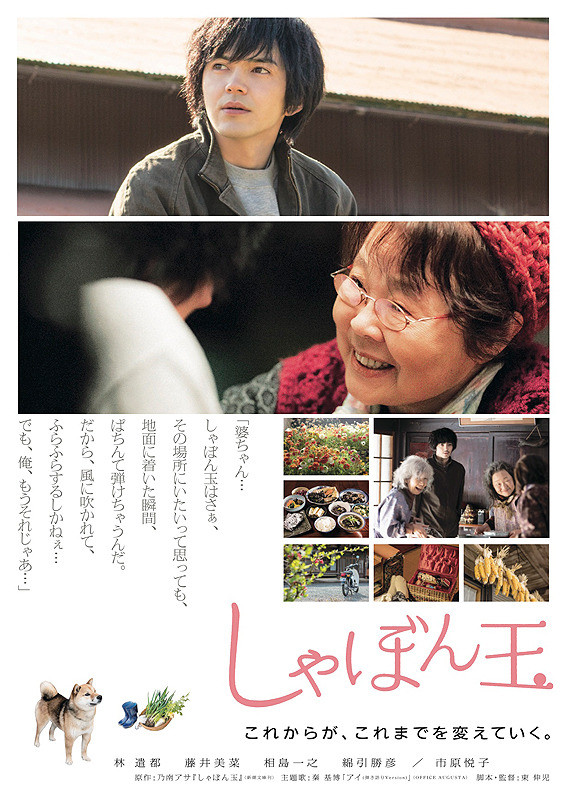
After committing robbery, Shoto’s flight from the cops takes him to the mountains of Miyazaki in southern Japan where he helps an injured elderly woman. This serendipitous encounter will softly coax him into changing and set him on the path to redemption. The Japanese countryside comes to life through beautiful cinematography in this simple and unhurried reflection on what it means to have a place where to belong.
[ From Cinémathèque québécoise ]
A petty criminal (who was shaped by his environment or bad parenting) do something bad, escape to the countryside, feels guilty, meet with nice people, sees the error of his way and seeks redemption… I must say that Where I belong doesn’t feel very original as we’ve seen this type of movie often in Japanese cinema. However, it is still a nice feel-good movie. It offers a touching story, which is beautifully shot and with good acting. It’s an entertaining flick that offers a good time. Nothing more. The best part is probably that it is showcasing the nice landscapes of Miyazaki and giving us a glimpse at the Shiiba Heike Festival.
Where I belong (しゃぼん玉 / Shabondama / lit. “Soap bubble”): Japan, 2016, 108 mins; Dir./Scr.: Shinji Azuma (based on a novel by Asa Nonami); Phot.: Wataru Miyamoto; Ed.: Shinya Tadano; Music: Yuki Hara; Cast: Kazuyuki Aijima, Mina Fujii, Kento Hayashi. ©2016「しゃぼん玉」製作委員会. 
For more information you can visit the following websites:
[ Traduire ]
She was in the news a lot lately, but I didn’t pay much attention until I saw her speech at the U.N. Climate Action Summit this morning. It was an incredible speech, beautiful and emotional. It shows that she is an incredible girl. Greta Thunberg was raised in a strongly cultured environment (her grandfather is/was an actor, her father is an actor and writer and her mother is an opera singer!) so it is not a surprise that she is well awaken to the state of the world. She started protesting alone, but finally won many followers. She gaves many speeches (you can also watch her TED speech) and published a book about them. She crossed an ocean in a sail boat to come deliver that latest speech. And yet, she is just a teenager.
She also received lots of criticisms from morons: they complained about her looks (yes, she’s sixteen but looks like she’s ten), about her mental health (she suffers from Asperger’s syndrome), accused her of not writing her own speeches, of being manipulated. She responded that such personal attacks only show that her detractors have “no argument or nothing else to say”. Indeed. And, frankly, who cares? It is simply beautiful to see such idealism, courage and determination in a young person. People should just admire that and not try to ruin it merely because they are mean or jealous.
Some people also complained that such idealism won’t amount to anything. Yes, it’s cute to see a teenage girl do all those things, but it will not move the mountains that need to be moved to succeed in saving the planet. At best, they say, it is a distraction. After all, mass shootings like Sandy Hook or Stoneman Douglas H.S. (despite the short-lived activism of some of its students) failed to change anything in the U.S. gun law… Why should it be different with this wave of protestations and manifestations ? To that I answer: Why not? What do we have to lose as we realize more and more that our planet is indeed on fire? Certainly, it cannot do any harm. It will build up and eventually the back of the proverbial camel will break…
Greta actions are great. They are an inspiration to all, but mostly to her own generation. Yes, the young people tend to be apathetic and rarely vote or express opinion. But that seems to be changing now. The U.S. mid-term elections of 2018 is the proof as more young people, more women and more minorities voted. Also more women, more minorities and younger candidates (including the infamous “Squad”) were elected. It shows that the ground is finally moving and activism is changing. Hopefully, the ball will keep rolling and might bring real change this time. And Greta will be a great inspiration.
Greta’s Books
No One Is Too Small to Make a Difference (Penguin, 2019, 80 pg, $9.99): a collection of Greta’s speech. [ Amazon • Goodreads • Penguin • Wikipedia • WorldCat ]
Rejoignez-nous : #grèvepourleclimat (Kero, 2019, 30 pg, $4.95): extracts from Greta’s speech at the 2019 Davos forum. [ Amazon • Goodreads • WorldCat ]
Our house is on fire: Scenes of a Family and a Planet in Crisis, by Malena Ernman with Greta, Beata and Svante Thunberg. (Penguin, 288 pg, £16.99, to be released on 2020/03/05; originally published in Swedish on 2018/08/23): A biography of Swedish opera singer Malena Ernman where, among other things, she recounts (with the collaboration of her husband Svante Thunberg and daughters Greta and Beata) how Greta came to be involved in climate activism. [ Goodreads • Penguin • Wikipedia ]
All this reminds me of Bill Nye The Science Guy’s speech about the planet being on fire on HBO’s Last Week Tonight with John Oliver (2019/05/12). Here’s the short clip but you can find the whole video on Youtube:
Will the people in power finally listen? Nothing individuals like us can do will help much (of course we can do our part with the three Rs: reduce, reuse, and recycle — and we can get involved in activism!). The only solution is political: we must pressure — by all means possible — the politicians so they enact the necessary changes to save the planet, to save ourselves. Changes like stopping being so darn dependant on fossil energy, like investing all we can in renewable energy (solar, wind, etc.), like passing laws to force everyone to do their part (like forbidding gas engines in car starting in five years from now for new cars, and ten years from now for ALL cars — switching to electric or fuel cell engines), or like really sticking to the Paris Agreement, like promoting sustainability at all levels, like changing society itself, like the Green New Deal, etc. This is our last chance. For the future generations.
Unfortunately, it probably won’t change anything. Humans are stupid and because of that we are most likely doomed. However, we are also driven, moved and inspired by hope…
[ Traduire ]
 Last night I watched on PBS the first episode of Ken Burns’ Country Music documentary and I was mesmerized! I don’t really like country music (or at least I thought I didn’t) but I was fascinated by this documentary about the history of country music in the USA. In fact, it is much more than that: it is the history of America and its culture — mostly of the deep America. It is very interesting and educating. Like all documentaries by Ken Burns it is very well researched. It is very interesting to see all those old pictures and footage, as well as to ear such music from another era (the documentary covers until 1996)… Certainly a must see.
Country music is certainly a pretty large musical genre that has evolved a lot and encompass many sub-genres (hillbilly, bluegrass, western, etc.) and cross-over styles. It is difficult to define and I am looking forward to learn more about it. For instance, Bob Dylan sang many songs from the country music pioneers (and adopted their style) but he is considered a folk singer. What’s the difference between country and folk? Is folk a sub-genre of country music? I am just wondering…
Country Music is an eight-part mini-series (120 mins each) that premiered September 15, 2019 and airs on PBS every week day until September 25. It is also available for streaming on PBS website (U.S. only).
To learn more about this title you can consult the following web sites:
[ Amazon • Google • IMDb • Official • PBS • Wikipedia • Youtube ]
[ Traduire ]
[ iPhone 8+, Parc Frédéric-Back, 2019/08/26 ]
Another thirty seconds of relaxation with the soundtrack of nature as we view the Frédéric-Back Park from the belvedere of the Pelican entrance…
Encore trente secondes de détente avec la musique de la nature alors que nous contemplons le parc Frédéric-Back depuis le belvédère de l’entrée du Pélican …
[ iPhone 8+, Parc Frédéric-Back, 2019/08/19 & 26 ]
If we deconstruct the soundtrack of nature in the Frédéric-Back Park in August, we discover that the orchestra is mostly made of percussion (tymbal) and string instruments (elytron): the cicada, the cricket (not illustrated here) and the omnipresent grasshopper, with a background of airliners and distant city din…
Si nous déconstruisons la trame sonore de la nature dans le parc Frédéric-Back en août, nous découvrons que l’orchestre est principalement composé d’instruments à percussion (cymbales) et à corde (élytre): la cigale, le grillon (non illustré ici) et l’omniprésente “sauterelle”, sur fond sonore d’avion et d’un lointain vacarme urbain…
La salle de diffusion de Parc-Extension (421, rue Saint-Roch) est une fois de plus l’hôte d’une exposition en arts visuels du 5 septembre au 13 octobre. Sous le commissariat de Mariza Rosales Argonza, cette exposition, intitulée Codex_Traversée du Silence est présentée dans le cadre de la 11e édition du Festival LatinArte. C’est une “prise de parole qui transcende les frontières culturelles et temporelles pour rendre visibles la pluralité et la permanence des voix ancestrales en tant qu’acte conscient afin de percer l’invisibilité“.
C’est une belle “exposition” mais c’est plutôt pauvre puisqu’on n’y retrouve que sept grandes oeuvres par Dinorah Catzalco et deux installations audio-visuelles (par Rodrigo Velasco et Teo Zamudio). Cela vaut quand même la peine d’y jeter un coup d’oeil si vous passez par la bibliothèque de Parc-Extension, qui est juste à côté…


Photos du vernissage, le 5 septembre 2019, on l’on retrouve (dans le désordre) les artistes [Teo Zamudio, Rodrigo Iván Ramírez Velasco et Dinorah Catzalco], la mairesse d’arrondissement [Giuliana Fumagalli], la Conseillère du quartier Parc-Ex [Mary Deros], et les représentants de la salle de diffusion [Martin Hurtubise], du Conseil des Arts de Montréal, et de LatinArte [Mariza Rosales Argonza].
[ Translate ]
Perché sur son fidèle Ptéroïde anti-gravité (où rien de grave ne peut l’atteindre), Arzak explore le Désert ‘B’, un monde parallèle peuplé de créatures étranges, situé aux frontières du rêve et d’une réalité au-delà du réel. Mais Arzak ne rêve-t-il pas d’un univers qui est en lui…ou en chacun de nous ?
(Texte promotionnel — voir aussi la couverture arrière de la jaquette)
Ce dessin animé est une série de quatorze capsules de 3:30 min. chacunes qui offrent un dessin minimaliste qui est terriblement animé. On y retrouve différentes aventures (et mésaventures) du célèbre guerrier solitaire et (généralement) silencieux alors qu’il parcours le désert B, affrontant l’herbe-serpent ou diverses autres créatures. C’est un peu sans queue ni tête mais les récits sont étoffés par une narration et Moebius donne, pour la première fois, la parole à Arzak. Tout comme les planches de Moebius, ces capsules sont un peu inégales en qualité (et en intérêt). L’univers d’Arzak est un peu tourné en ridicule avec des personnages clownesques (où l’on pourrait peut-être discerner une influence de Winsor McCay?).
C’est mauvais mais tout de même amusant et intriguant. À la défense de cette curiosité décevante, il faut admettre qu’elle est définitivement produite pour un public jeune alors que la série originale s’adressait aux adultes. On s’attendrait néanmoins à mieux de la part d’un créateur comme Moebius. C’est trop court et plein de potentiel inexploité (quoique le graphisme s’améliore avec les derniers épisodes). Cela aurait pu être tellement mieux…
Il est intéressant de constater que l’on voit déjà le début de la convergence des différents univers (et styles) de Giraud / Moebius avec des éléments qui rappellent Le Garage Hermétique, d’autres qui font définitivement partie du monde SF déjanté et imaginatif de Moebius — parfois hilarant et absurde, parfois mystique et obscure (avec des allusions au Arzach original ou à Edena) — et même des relents d’atmosphère western à la Blueberry. Cette série d’histoires nous laisse donc présager la suite — L’Arpenteur…
À voir par amusement ou par curiosité.
Arzak Rhapsody: France, 2002, 51 min., série télévisée d’animation (14 episodes); Dir., Scr., Des.: Moebius; Dir. Art.: Alexandre Brillant; Ass. Réal.: Francois Narboux; Mus.: Zanpano; Studio: Millimages Online; Prod.: Wolfland Pictures, Carrere Group, France 2. 
Pour en savoir plus vous pouvez consulter les sites suivants:
[ Translate ]
Thirty seconds of relaxation with a family of ducks at the botanical garden
Trente secondes de relation avec une famille de canards au jardin botanique
[ iPhone 8+, Jardin botanique, 2019/05/24 ]
Urubu à tête rouge / Turkey vulture / Cathartes aura septentrionalis


[ iPhone 8+, Parc Frédéric-Back, 2019/06/17 ]
This week-end I watched a few episodes of two puzzling Teen/YA TV drama with enigmatic titles.
Set in the year 2199, a young woman who has lost everything finds a new life at Earth’s Space Training Academy where she learns to defend the galaxy from intergalactic threats.
The first one is titled Pandora and is a Star Trek wannabe with poor special effects and quite average acting — after all they are young adults in college so maybe it’s normal if they sound contrived. With just two episodes it is difficult to judge the writing, but so far it is intriguing enough that I might watch more. After all, series like the original Star Trek or Doctor Who have managed very well despite their low-budget production. Everything is in the writing. We shall see. It airs Tuesdays on The CW at 20:00 ET. It’s too early to have a rating on aggregators (but IMDb gives it a 3.8).
To learn more about this title you can consult the following web sites:
A group of high school students navigates drugs, sex, identity, trauma, social media, love and friendship.
The second is a teen drama based on a 2012 Israeli series and is titled Euphoria. So far seven episodes have already aired but I’ve seen only the latest. It is diverse, brutal, scary even, sometimes psychedelic, but seems brilliantly written with generally pretty good acting. It is really modern: filmed video clip style, crazy fast-paced, with lots of violence and nudity, and, of course, it is making use of social media as narrative device. The main character is a bipolar drug addict who’s trying to make sense of her world… A little exhausting to watch, but promising. It airs Sundays on HBO at 22:00 ET. It has been rated 79% on Rotten Tomatoes and 8.2 on IMDb.
To learn more about this title you can consult the following web sites:
[ Traduire ]
“From acclaimed director Mamoru Hosoda (Wolf Children) comes a daringly original story of love passed down through generations. When four-year-old Kun meets his new baby sister, his world is turned upside down. Named Mirai (meaning “future”), the baby quickly wins the hearts of Kun’s entire family. Kun becomes increasingly jealous of her, until one day he storms off into the garden, where he encounters strange guests from the past and future – including his sister Mirai, as a teenager. Together, Kun and Mirai go on a journey through time and space, uncovering their family’s incredible story, in this magical and emotionally soaring adventure about the ties that bring families together and make us who we are.” (From Universal website)
Mirai (未来のミライ / Mirai no Mirai / lit. “Mirai of the Future”) is a beautiful story about good parenting and loving our siblings or family. Kun is a young boy who is jealous of his newborn sister Mirai. However, the genealogical tree that sits in the courtyard of their small house in Yokohama shows him scene of past and future life of his family members (his teenage sister, his mother, his great-grand-father, even the family dog!) so he can relate to them and learn to appreciate them better. Or this is a boy with an extraordinary imagination!
The animation is excellent and offers very realistic background illustrations that you would think it’s CGI but they are actually hand-drawn (although there is CGI in the movie). In fact, it is so crisp that it feels a little cold. For such a story about family I would have preferred a style that evoke more warmth. I particularly like the design of the modern house, conceived by the father (who’s an architect), that takes advantage of the narrow space and the hill to build in several level, with lots of steps.
Animated by Studio Chizu and distributed by Toho (GKids in North America), Mirai was created, written and directed by Mamoru Hosoda (The Girl Who Leapt Through Time, Summer Wars and The Boy and the Beast), with character designs by Hiroyuki Aoyama, animation direction by Ayako Hata & Hiroyuki Aoyama, art direction by Takashi Omori & Yohei Takamatsu and music by Masakatsu Takagi. The voice cast includes Haru Kuroki / Victoria Grace as Mirai, Moka Kamishiraishi / Jaden Waldman as Kun, Gen Hoshino / John Cho as Father, Kōji Yakusho / Victor Brandt as Grandfather, Kumiko Asou / Rebecca Hall as Mother, Masaharu Fukuyama / Daniel Dae Kim as great-grandfather, and Mitsuo Yoshihara / Crispin Freeman as Yukko the dog. 98 min., rated PG (for thematic elements including some scary images). It was favourably received by the audience (rating of 7.1 on IMDb and of 92% / 83% on Rotten Tomatoes). It’s a fine exemple of Japanese animation that everyone should see. 
To learn more about this title you can consult the following web sites:
[ Amazon — ANN — Google — IMDb — Official — Wikipedia — Youtube ]
[ Traduire ]
My wife read an interview of Waki Yamato in Fujin Kōron (a Japanese women’s public opinion magazine) where she was talking about a recent anime adaption of her manga Haikara-san. My wife, who enjoyed the manga when she was a teenager, told me she would like to see this animation. Therefore I obliged.
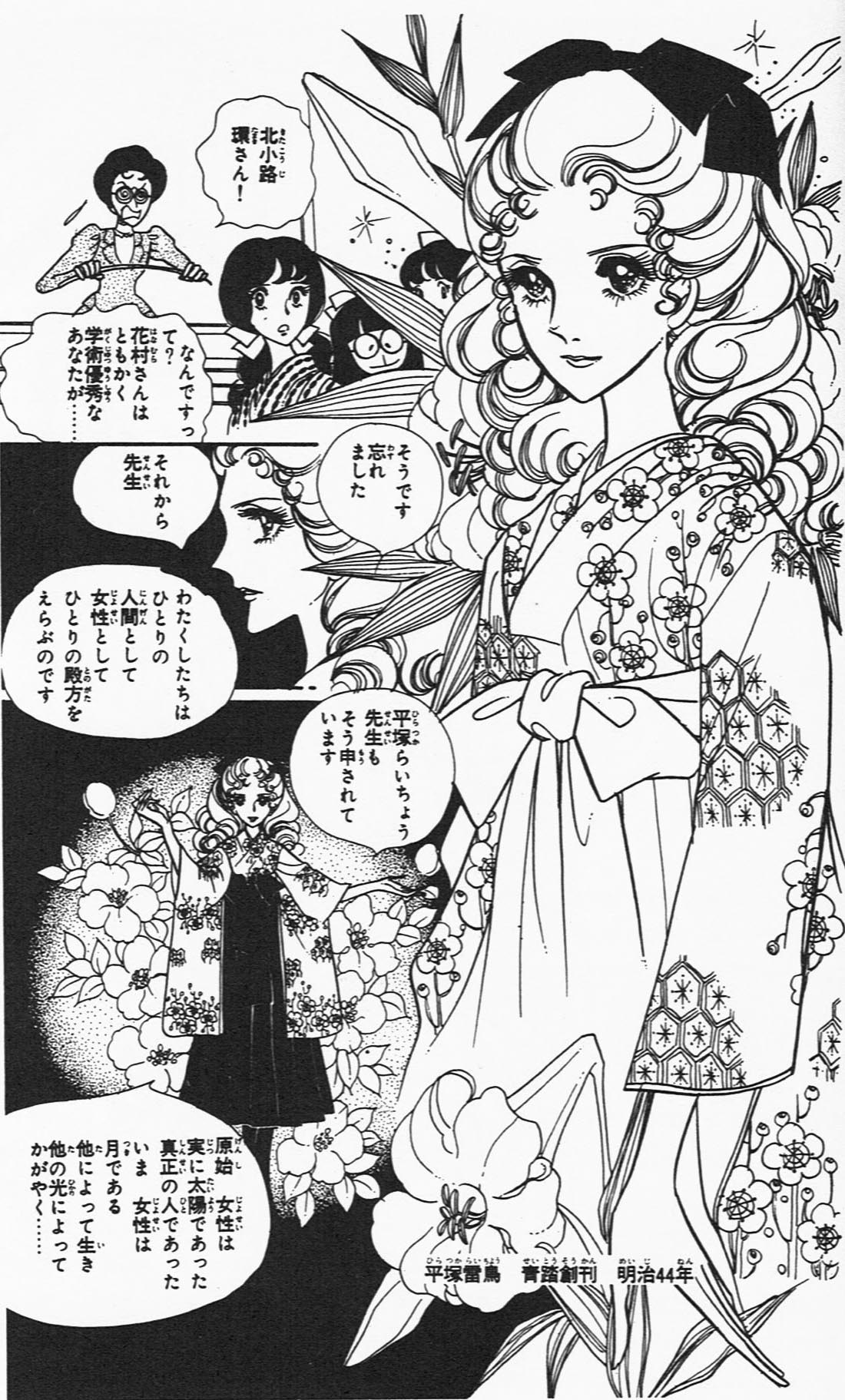
Excerpt from the manga (from Frederik L. Schodt Manga! Manga! The World of Japanese Comics, p. 90).
Haikara-San: Here Comes Miss Modern (はいからさんが通る / Haikara-san ga tōru) is one of those shōjo manga published in the 70s that I wish would be one day translated either in French or English so I could read them. This traditional shōjo style might not be very popular amongst today’s manga reader, but it was beautiful in many ways and their stories were always quite compelling. The manga was serialized in Shōjo Friend between 1975 and 1977 and compiled into 8 volumes by Kodansha. The manga was first adapted into an animated TV series (TV Asahi, 42 eps, 1978-1979), then into several live-action TV movies (on KTV in 1979, on Fuji TV in 1985, by Toei in 1987, and on TBS in 2002) and was even the subject of a Takarazuka revue in 2017. Finally, it was adapted into two anime movies: Gekijōban Haikara-san ga Tōru Zenpen – Benio, Hana no 17-sai [劇場版 はいからさんが通る 前編 ~紅緒、花の17歳~ / lit. “Theatrical version, Here comes miss modern, first part: Benio, 17 years’ flower”] (November 2017, 97 mins, already available on Blu-ray from The Right Stuf) and Gekijōban Haikara-san ga Tōru Kōhen – Tokyo Dai Roman [劇場版 はいからさんが通る 後編 ~花の東京大ロマン~ / lit. “Theatrical version, Here comes miss modern, second part: Tokyo great romance of flower”] (October 2018, 105 mins).
[ ¡ WARNING: The following MAY contain traces of spoilers! People allergic to the discussion of any plot’s elements before seeing/reading the story themselves are strongly advised to take the necessary precautions for their safety and should avoid reading further ! ]
 In the first movie, we follow the life of 17-year-old Benio Hanamura who was raised by her military father. She is a tomboy who likes to practise kendo with the girly neighbour Ranmaru (who was raised to become a kabuki actor). The story is set in the Taishō era, when Japan is trying to “occidentalize” itself. She wants to be “modern” and believes in a woman’s right to have a career and to marry for love. Unfortunately, her father want to arrange a marriage with one of his young subordinate, lieutenant Shinobu Ijuin, because their grand-parents were in love but could never marry and made the pact that the Hanamura and Ijuin families would be one day reunited. Benio refuses and tries to elope with Ranmaru, who is secretly in love with her. She also discovers that her best friend Tamaki is in love with Shinobu. She is nevertheless sent to Shinobu’s household to help and learn the domestic duties of a wife. As she is finally falling in love with him, she infuriates her father’s superior and Shinobu is sent to the front in Siberia. Not long after, he is reported missing in action or maybe dead…
The movie was written and directed by Kazuhiro Furuhashi, with character designs by Terumi Nishii, art direction by Kentaro Akiyama and music by Michiru Oshima. The cast includes Mamoru Miyano as Shinobu, Saori Hayami as Benio, Asami Seto as Tamaki, Yuuki Kaji as Ranmaru, and Unshō Ishizuka as Major Hanamura.
In the second movie, Benio tries to go on with her life and hopes that Shinobu might come back one day. In the meantime, she keeps taking care of his grandparents household and tries to find a job. After many unsuccessful attempts she is finally hired as reporter by a small newspaper headed by Tosei, a handsome but misogynistic editor (he’s literally allergic to women due to issues with his mother). She goes to Manchuria to investigate a band of rebels supposedly headed by a Japanese deserter. She meets with him and discovers he is Onijima, a friend of Shinobu in the army, who tells her how Shinobu got missing after saving his life. Later, back in Tokyo, she is covering the visit of a Russian noble couple in exile, Count Michaellov and countess Larisa. Benio is shocked to see that the count looks exactly like Shinobu. Actually, it’s him but he suffers from amnesia. Larisa saved and nursed him to replace her dead husband Sasha (who was in fact Shinobu’s younger half-brother, because Shinobu’s German mother left to marry a Russian noble—yes, I know, it’s complicated). When Shinobu eventually recovers his memory, he cannot marry Benio because he is now married to Larisa and feels indebted to her as she is dying of tuberculosis. Heartbroken, Benio decides to marry Tosei instead (who has discovered that he actually loves her). But on their wedding day the great Kanto earthquake occurs and Larisa finally dies of her disease. Benio and Shinobu can finally be reunited…
The second movie was directed by Toshiaki Kidokoro, with a script by Kazuhiro Furuhashi, character designs by Terumi Nishii, art direction by Kentaro Akiyama and music by Michiru Oshima. The cast includes, besides the cast from the first movie, Kazuya Nakai as Shingo Onijima, Maaya Sakamoto as Larisa, and Takahiro Sakurai as Tōsei Aoe.
[ ¡ END of possible spoilers warning ! ]
Haikara-San movies are beautifully animated, with crisp, up-to-date quality animation (quite different from the style of late-70s anime, which tend not to age very well—although the TV series is now also available on blu-ray in Japan). The story offers typical Japanese romantic drama filled with lots of comedy. However, despite the funny antics of the characters, the story tackles very serious subjects like feminism and war. I enjoyed it a lot and I highly recommend you to, at least, have a look. If only someone would translated the manga…
For more information you can consult the following web sites:
[ ANN — Google — IMDb — Official — Right Stuf — Wikipedia — Youtube ]
© 2017 Waki Yamato, Kodansha / “Haikara-san” Partners.
[ Traduire ]
Quasimodo’s lair is ablaze —
Hundreds of years of cultural heritage
Consumed by the hungry fire
[ Notre-Dame Cathedral on fire, The Guardian/Youtube, 2019/04/15 ]
[ Traduire ]
 First, I must say that Discovery is definitely one of the best Star Trek TV series I have seen in a long time. If we don’t count the animated series and the movies, it is the sixth Star Trek series (after Star Trek The Original Series (1966-69), The Next Generation (1987–94), Deep Space Nine (1993–99), Voyager (1995–2001), and Enterprise (2001–2005)). After The Original, none of these series were really satisfactory (in imagination, plot and action) until Discovery.
For the first time, with Discovery, the main character of a series is NOT the captain of the USS Entreprise. The series focus on Michael Burnham (played by Sonequa Martin-Green [The Walking Dead]) who is the First Officer of the USS Shenzhou in the beginning before becoming Science Specialist on the USS Discovery. Born in 2226, she is a xenoanthropologist raised on Vulcan by her adoptive parents, Vulcan ambassador Sarek (James Frain) and his human wife Amanda (Mia Kirshner). She is therefore Spock‘s foster sister! Her biological parents were killed during a Klingon raid on Doctari Alpha.
The first season, set a decade before the Original series, focuses on the Federation–Klingon war. During a rare encounter of the Shenzhou with the Klingons, Burnham uses her knowledge of Klingon and Vulcan strategy to try preventing the war but act against her captain’s orders. She fails and Georgiou is killed in the ensuing battle. Burnham is sentenced to life in prison for mutiny, but during a prison transfer her shuttle is damaged and she is rescued by the USS Discovery, commanded by Captain Gabriel Lorca (Jason Isaacs), where she is given a temporary position of Science Officer. The Discovery uses an experimental spore drive which, after sabotage, brings them to a parallel universe where Captain Georgiou is the Empress of the Terran Empire! After multiple trials and betrayals, the crew succeeds to end the war.
In season two (which is not over yet, as three more episodes remain to air), the captain of the USS Enterprise, Christopher Pike, takes emergency command of the Discovery from interim-captain Saru (Doug Jones) in order to investigate a series of mysterious signals. Spock (Ethan Peck), who appears to have suffered a mental breakdown, has had foreknowledge of those signals, which seem linked to the apparition of a mysterious Red Angel. They must find Spock before Section 31 to try to unravel the mystery…
The latest episode (“If Memory Serves”, 8th episode of the 2nd season and 23rd episode of the series, which aired on March 7th) was particularly impressive. It starts with “Previously on Star Trek” and then shows scenes from the pilot episode of the Original series (“The Cage”, produced in 1964-65 was never aired but later partly used in episodes 11 & 12, “The Menagerie”). In the original pilot, the captain of the Entreprise was not Kirk but Pike and Spock is the only crew-member who remained in the series. In Discovery, Spock brings Burnham to Talos IV so the Talosian can read his mind and show crucial information to Burnham, therefore both healing him and their relationship. That episode was quite something.
It has been relatively well received (with a rating of 7.4 on IMDb, an overall Rotten Tomatoes critic rating of 82% [but an audience score of 48%, are they mad? !!!] and the same 82% for season 2 [this time with an audience score of 29%! Unbelievable !!!]. In my point of view, it is a series that is well worth watching, even if you know nothing of Star Trek. It is simply very good science fiction. And a third season has already been commissioned.
Apparently, more live-action series are planned including one with Captain Jean-Luc Picard (Patrick Stewart) and one with Captain Philippa Georgiou (Michelle Yeoh) focusing on the activities of Section 31.
To learn more about this title you can consult the following web sites:
[ CBS — Google — IMDb — Official — Space — Wikipedia — Youtube ]
[ Traduire ]
Pour la première fois cet hiver j’ai du abandonner une randonné dans le parc parce que les conditions du sentier étaient vraiment trop mauvaise. Tout était complètement glacé. Ce genre de situation est arrivé quelques fois par le passé mais cette année les conditions des sentiers du parc sont systématiquement mauvaises. Il faut croire que la ville confie l’entretien des sentiers à la même équipe qui s’occupe de l’entretien des patinoires! J’ai essayé de marcher sur les côtés du sentier mais comme il y a eut de la neige fraîche récemment je renfonçait trop et marcher dans ces conditions était trop pénible. Il semble que cette année je doive abandonner le parc aux skieurs et aux raquetteurs. Alors je suis simplement rentré à la maison en passant par les rues (dont les trottoirs sont maintenant un peu plus praticable que la semaine dernière car il y a maintenant moins de neige mais encore beaucoup de glace et de flaques d’eau plus ou moins gelées—et glissante!).

![Le trottoir sur Iberville est régulièrement impraticable à cause de citoyens irrespectueux. Les trottoirs ne sont pas nettoyés assez fréquemment (et une telle situation appel à une contravention -- si la ville s'en donnait la peine) [2019/01/22]](https://i0.wp.com/clodjee-blog.com/wp-content/uploads/2019/02/img_4181-20190122.jpg?ssl=1 "IMG_4181-20190122")


Quand j’ai acheté un duplex dans VSP, la proximité du parc Frédéric-Back était une importante considération. Je trouve qu’il est important pour ma santé (et sur recommandation du médecin) de prendre de fréquentes marches (des problèmes de genou et de cheville m’interdisent le jogging) et de faire des randonnées occasionnelles à bicyclette (l’été seulement). Jusqu’à l’an dernier les sentiers du parc étaient suffisamment bien entretenus pour être utilisé en toutes saisons par les marcheurs, joggeurs et cyclistes en plus d’être accessible l’hiver aux skieurs et aux raquetteurs. Étrangement, cet après-midi j’ai remarqué un couple qui faisait du jogging en avançant sans difficulté sur la patinoire du sentier polyvalent alors que j’essayais moi-même de progresser en enfonçant jusqu’à mi-mollet dans la neige. Je me demandais “mais comment réussirent-ils cet exploit?” jusqu’à ce que je remarque qu’ils portaient tous deux de solides crampons à leur chaussures. Je crois que demain je vais aller m’acheter des crampons (et, pourquoi pas, je vais en réclamer le coût à la ville — car le mauvais entretien que la ville fait du parc m’empêche d’en profiter et d’y prendre ma marche de santé !)…
Comme je l’ai mentionné récemment, l’entretien des rues et des sentiers du parc est déficient ces dernières années (depuis l’arrivé de la nouvelle administration de Projet Montréal, ce qui ne semble pas être une coïncidence — non, ce n’est pas juste à cause du climat). Cessez donc de faire des économies de bouts de chandelles en étant trop parcimonieux avec l’épandage d’abrasif (ce qui est très évident dans le parc) et avec l’utilisation de sous-traitants peu motivés ou inéfficaces et donnez donc le service que vos citoyens méritent! Je ne suis pas contre de constantes augmentations de taxes (je viens d’ailleurs de payer le premier versement sur mon compte de taxe pour cette année) mais cela ne doit pas aller de pair avec une DIMINUTION constante de service! On est vraiment mal servi dans le quartier par nos politiciens qui semblent avoir l’habitude de briller par leur absence (au cours des derniers cinq ans je n’ai jamais réussi à rencontrer mon représentant de quartier, Frantz Benjamin, et je n’ai pas encore vu une seule apparition de son remplaçant, Josué Corvil; même notre député fédéral, Nicola Di Iorio, semble se foutre complètement des citoyens de sa circonscription!)… J’avais beaucoup d’espoir en voyant Projet Montréal détrôner Coderre et c’est pour cela que j’avais voté pour les mairesses Plante/Fumagalli mais jusqu’à maintenant j’ai été extrêmement déçu.
Un petit effort SVP ! Car à Montréal il n’y a pas que des automobilistes : il y a aussi des piétons et des randonneurs (qui votent…) qui aimeraient bien pouvoir utiliser trottoirs et sentiers sans risquer trop de blessures, fractures et ecchymoses !!!
Et il n’y a pas des carences seulement dans le déneigement (de la rue, des trottoirs ou des sentiers du parc — voir les billets du 01/06, 01/21 et 02/13), il y a aussi les fois où la ville ne ramasse pas le recyclage (soit parce que ça tentait pas à l’employé ou parce qu’il trouvait qu’il n’y en avait pas assez dans le bac?). Je paie toujours mes taxes alors je m’attends à ce que la ville me donne toujours du service — pas seulement quand ça leur tente! Il ne faut pas oublier non plus le manque de respect et de considérations de la ville envers ses employés — mais ça c’est une autre histoire… Maudite ville de merde!
[Mise à jour] Pour suivre l’état des choses dans le parc, voir les billets suivants:
[ Translate ]
This week-end we had the first real snow storm of the season (about 20~30 cm) as well as some very cold temperature (in the -20s °C or in the -30s °C with the chill factor). Apparently, it is the first time that we have this combination of snow storm and extreme cold weather since 1920!
Here is a time-lapse video of the storm taken between 2019/01/19 16h00 and 2019/01/20 16h00. So there you have twenty-four hours fast-forwarded in a little less than a minute:
Of course, the borough is in no hurry to pick the snow. Like I previously mentioned, in early January, the snow had not been picked up at all since the beginning of the season which caused piles of ice to form on he street making it quite challenging for the car to park. And when they did try to pick up the icy snow piles in the second week of January, the ice was so hard that it was practically impossible to remove it all, leaving an ice layer as high as the sidewalk (4 to 6 in.)! And when it snows on that, try not to get stuck when you park your car. I understand now why so many people have SUV despite living in the city!
The borough also had trouble removing the snow from the sidewalks. Yesterday I have seen the sidewalk tractor actually working only early in the morning — it passed in front of my house around 7h29. With the wind drift, the people cleaning their driveway or cars and putting the snow on the sidewalk (with total disregard for their fellow citizen who are walking) the sidewalks quickly became completely unpassable for pedestrians. I did see a sidewalk tractor around 15h37, but it was driving in the middle of the street without any snow-plow in the front or even a salt-spreader in the back. In the evening, the sidewalks had not been cleared for over twelve hours and I was worried that my wife would have trouble walking back from the bus stop after work, so I called the city’s public works to let them know and a sidewalk tractor did the job around 22h45…
It really seems that this new administration in city hall is either incompetent or inexperienced or too eager to save money. I don’t mind paying more taxes year after year if the quality of service is maintained or improves. However, if I paid more taxes and the quality of service decreases (and the quality of services has clearly decreased since the beginning of this new administration), then I am really not happy. And since, on top of that, this administration has not been treating its workers well, I seriously regret having voted for them…
[ Traduire ]
 Dans le cadre du Salon du livre de Montreal 2018, je voulais faire une série de mini (capsules) entrevues avec des auteurs (surtout de science-fiction) de chez nous. Malheureusement, l’ambiance sonore du salon n’était pas adéquate pour des entrevues, alors celles-ci ont été faite hors-site. Le principe de l’entrevue capsule est de s’en tenir à deux ou trois questions de base et que l’entrevue ne dure pas plus que trois à cinq minutes. Cela doit être compacte et bien se digérer!
Voici donc la première de ces entrevues capsules, réalisée avec Francine Pelletier. Pour en savoir plus sur cette auteure de science-fiction — à ne pas confondre avec la journaliste homonyme — et de polar (sous le pseudonyme de Catherine Sylvestre) vous pouvez consulter sa bio/bibliographie sur le site des Éditions Alire ou sur Wikipedia.
[ Translate ]


Voici une vidéo qui offre des extraits de la conférence sur la “Philosophie fiction” présenté sur l’Espace TD du Salon du Livre de Montréal le mercredi 14 novembre 2018 à 19h00 — voir mon billet “SDL: Jour 1, mercredi”. Animée par Jocelyn Lebeau, les participants incluaient Elisabeth Vonarburg, Esther Rochon, Bernard Werber et Karoline Georges. Dans cet extrait il manque les quinze première minutes ainsi que toutes les interventions de Mme Georges (retirées à sa demande)… mais cela reste une très intéressante discussion qu’il valait la peine de partager, je crois.
(Mise à jour: 2018/12/03)
J’ai retiré la video de la conférence à la demande de Karoline Georges qui affirme ne pas avoir donné son consentement pour être filmé ainsi que pour la diffusion de la conférence. Toutefois aucun consentement de la sorte n’est requis pour filmer et diffuser un événement publique, qui se déroule sur un lieu publique. J’ai vérifié ce point légal avec un ami avocat qui pratique le droit intellectuel international dans une firme importante et qui l’enseigne dans une université américaine. J’ai cependant retiré la video pour le moment par courtoisie.
Je trouve cela très dommage car cette table-ronde offrait une discussion très intéressant et que ce n’est pas tout les jours que des auteurs de science-fiction québécoise ont la chance de débattre ce genre de sujet sur une scène du salon du livre.
Je reste très pantois sur la position de Karoline Georges. Un auteur se présente au salon du livre pour faire la promotion de sa personne et de ses livres. Il est dans son intérêt de rejoindre le plus de personnes possible, chacun étant un lecteur potentiel. Lorsqu’un bibliophile (promoteur de la SFQ de longue date) assiste à une conférence publique (sur un lieu publique), l’enregistre et veut la partager parce qu’il trouve ça bon et intéressant, n’est-ce pas dans l’intérêt de l’auteur qu’elle soit diffusée? Si une personne ne veut pas être vue, elle n’a qu’à NE PAS monter sur une scène publique et prendre la parole! Beaucoup d’auteurs n’ont pas la chance d’avoir une telle tribune. Je ne comprends simplement pas.
Ce sera quoi la prochaine fois? Demander qu’on retire un commentaire de lecture parce qu’on aime pas la critique? Vous en pensez quoi, mes chers lecteurs?
Je serais particulièrement intéressé à lire ce que mes collègues du milieu SFQ en pensent… N’hésitez pas à commenter sur ce billet ou sur le fil Facebook…
(mise à jour : 2018/11/20)
[ Translate ]
Relax for two minutes while watching birds ! Filmed with a Nest Cam on October 26th 2018 between 9:19 AM and 9:30 AM. Enjoy !
[ Traduire ]
Kindergarten teacher, Chinatsu is always in a state of stress. And it is at this moment that a pupil of her class is murdered. Totally distraught, Chinatsu begins to sink into a world of illusion that she can not control. (FFM)
I don’t know what they have put in the water of that city but all the characters in this movie offer a whole catalog of mental illness: Chinatsu, a kindergarten teacher, cracks under the pressure brought by all those helicopter parents and develops schizophrenia; her acupuncture doctor, Yuichi, suffers from Capgras syndrome; Naoto, a salesman bullied by his seniors, has nomophobia; Akamatsu, the convenience store clerk, suffers from Asperger; Mitsuki, Haruka’s mother, suffer from Munchausen syndrome, etc. I guess it was the purpose of the director to show with this docudrama-style movie what it is to have such illness and how difficult it can be for the families.
It is a very dark movie and the end result is, unfortunately, barely average. The storytelling is awkward and not particularly skillful, the photography feels amateurish and the acting is so-so — although, the main actress is very charming and switching the actors who plays the two Yuichi toward the end of the movie in order to unexpectedly show the schizophrenia of Chinatsu is, I must say, quite brilliant. Also, the movie is really not well served by the poor translation (in the subtitles). When I noticed two typos in the very first sentence of the movie, I knew that this would spell trouble! (unless they made it on purpose to make us feel crazy!) If it was not already obvious with the production quality, the horrible translation really smelled of tiny budget…
Finally, to really give a last pathetic impression, the absence of a translator for the Q&A at the end of the presentation (due to the minimalistic ressources of the festival this year — what? they couldn’t even find a volunteer to take up the task?) left the poor director and main actress at the mercy of their basic English language skills and made for such a laughable exchange that you could only feel sorry for them.
However, undertaking such a difficult and serious subject requires some strength. I understand what the director was trying to achieve and I greatly appreciate his efforts (for that I give him extra points!). In a society that was repressed for so long, where you find a real epidemic of bullying (both at school and at the work place, including sexual harassment) and where an aging population is plagued by various forms of dementia, it is really not surprising to find that mental illness has become a great challenge in Japan today. Kudos to the director for trying to bring attention to this problem.
Zone Out / Regarder dans le vide (アウトゾーン / Out Zone): Japan, 2017, 115 mins; Dir.: Hiroshi Kanno; Scr.: Mari Takanashi; Phot.: Makoto Hayashi; Ed.: Aya Mitsuaka; Light.: Sousuke Yoshikado; Sound: Kazuyuki Tutiya; Mus.: Magumi Masui; Cast: Minami Matsunaka (Chinatsu), Masato Oki (Yuichi Akino), Kyoko Toyama (Kyoko), Gen Kuwayama (Naoto), Yusuke Ueda (Akamatsu), Yusuke Sugiyama (Yuichi Kagawa), Ben Hori (Hisashi Aoyama).
Screened at the Cinema Imperial (Sat. 8/25 at 16:30) as part of the “World Great” program (out of competition) of the 42nd Montreal World Film Festival. 
[ IMDb ]


[ Traduire ]

This year the Festival des Films du Monde (FFM or MWFF, Montreal World Film Festival) strangely seems slightly more organized (at least for the accreditation) than the previous couples of years. They are probably getting used to extreme austerity and benefits from plenty of movie aficionado volunteers. Also, there’s more Japanese movies than last year (but still less than the usual dozen). Unfortunately, since there are only four screens (Cinéma Impérial and Quartier Latin 10, 12 & 13) to show ALL movies, they are shown only once (twice for the titles in competition) and mostly in the afternoon — which is not compatible with my own schedule, so I’ll probably end up viewing only half of the Japanese movies. Too bad, but that’s better than nothing!
However, I was happy that the title selected as opening film was one of the Japanese movies: Samurai’s Promise. No one from the cast or crew was present for the opening ceremony, although there was plenty of actors & actresses from other Japanese and Chinese movies (as well as local dignitaries) parading on the red carpet.


The only speech was given by the president of the festival, Serge Losique. He seemed tired, but still defiant (although slightly apologetic):
“The festival is a great cathedral open to all. Our role was not to imitate whoever but to be ourselves, to be authentic. (…) Our role was also to helped small unknown countries, like Cape Verde or Sri Lanka [to promote their films]. All we want is for the public, and the journalists, to appreciate the films.”
He continues saying he doesn’t want the glamour of the other festivals but only to showcase the diversity of the world cinema. That’s why it is the “Festival des Films du Monde” [also a word-play in French meaning the festival of the people]. People are asking for stars, he says, but the stars here are the films. He also argues that the directors and actors who come to Montreal are stars in their own countries, and many more have been discovered here, at the festival, and are now stars! [I might add that I’ve seen plenty of great stars at the FFM over the years: Catherine Deneuve, Sofia Loren, Jackie Chan, Robert de Niro, Tony Curtis, Mamoru Oshii, etc.]
He also announces the new policy for the festival to chose as president of the jury a director that has previously won the Grand Prix of the Americas. Also the jury members will not necessarily be present at the festival but will screen the titles in competition via video link (although the president of the jury will always be present in Montreal). He introduces the members of this year’s jury (critic Élie Castiel, Pierre-Henri Deleau, an executive from China Film Group Corporation and another jury whose name will be revealed at the end of the festival) as well as its president, Silvio Caiozzi [Chilean director, winner of last year’s Grand Prix des Amériques], who also said a few words:
“From the beginning this festival always chose nothing but films of cinematographic excellence. Nowadays, I can feel that around the world somehow (…) [in the movie industry] the true quality of films is not looked upon, really. What they look upon is (…) what film has the big budget (…) or the politics (…) but not really the quality of the films. So, really, honestly, (…) in my opinion this is perhaps the only festival that still remains absolutely independant.”
(I understand what Serge Losique is saying here. He is trying to explain and justify his position. The festival is his life-work, his baby, and he doesn’t want to relinquish its control. Indeed, if you accept public money you have to show transparency and do things the way the government wants them to be done… Unfortunately, if he doesn’t step down, pass the mantle to someone else soon (while maybe remaining on board as advisor), the festival will die with him…)
The theatre was not full, like we’ve seen for previous years, but considering the situation, it was full enough (maybe half?). Surprisingly, there was not that many people from the local Japanese community.
It was a short ceremony, a good movie (see my separate comment), the weather was nice, Radio-Canada / CBC was there to report on the event so, all in all, it was a good day for the festival.
[ Traduire ]
 Like last year, we have visited the Settimana Italiana di Montreal (the Italian Week), festival held all over Montreal (but mostly in Little Italy, on St-Laurent street between St-Zotique and Jean-Talon streets) from August 3rd to 12th.
This year the festival celebrated its 25th Anniversary with many activities: an exhibition of all its promotional posters, a Fiat 500 car exposition, guided tours, a film festival, an opera presentation of Puccini’s “La Bohème”, a parade of the Sbandieratori Borghi e Sestieri Fiorentini (a group of Italian flag-throwers keeping alive the old military flag-waving tradition), and lots of food, musical displays and entertainments. Each local Italian association has a booth to inform about their activities. It was very interesting.
Here is a photo album and a short video (15 mins) as a memento of this year’s festival:


[ Traduire ]
 This is a video showing a wild coyote coming down my street and stopping by the neighbour’s driveway before continuing on its way (toward the Émile-Journault entrance of the Frédéric-Back Park)… It was taken on August 10, 2018, at 22h44. If you think that they are NOT coming into your neighbourhood you are wrong. Keep an eye on your kids and your small pets!
They are here… but it doesn’t means that we cannot coexist with them [PDF in French]. We have to be vigilant (some might have agressive behaviour but, like here, most will avoid human contact). However, I am against the current city policy to kill the urban invaders. After all, aren’t we the one who are destroying their habitat?
[ Traduire ]
This video offers you a quiet minute of relaxation at the Parc Frédéric-Back as the wind makes the grass dance under the sunset… Enjoy! / Cette vidéo vous offre une minute de détente au Parc Frédéric-Back alors que le vent fait danser l’herbe sous le soleil couchant… Profitez-en !
[ iPhone 8+, Parc Frédéric-Back, 2018-07-08 ]
This video offers you a quiet minute of relaxation at the botanical garden as the birds tweet around the pond… Enjoy! / Cette vidéo vous offre une minute de détente au jardin botanique alors que les oiseaux gazouillent autour de l’étang… Profitez-en !
[ iPhone 8+, Botanical garden, 2018-06-26 ]
Souvenirs de Science-Fiction Québécoise
Manga, jeu vidéo et arts mineurs
A blog about the pursuit of knowledge
A blog about the pursuit of knowledge
Émission littéraire + Suggestions + Confidences
“If you are cold, tea will warm you; if you are too heated, it will cool you; If you are depressed, it will cheer you; If you are excited, it will calm you.” ― William Ewart Gladstone
A blog about the pursuit of knowledge
Book reviews and the occasional ramblings of a book blogger
Moi et les livres... dans cet ordre
Science, réflexion et poésie
Discussion, Resources, Roundtables, & Reviews
A blog about the pursuit of knowledge
A blog about the pursuit of knowledge
A blog about the pursuit of knowledge


 Clodjee's Safe-House