Anime & manga updates

NHK World Japan continues to be a great source of information about Japanese culture with their documentary series.

The Apothecary Diaries Special

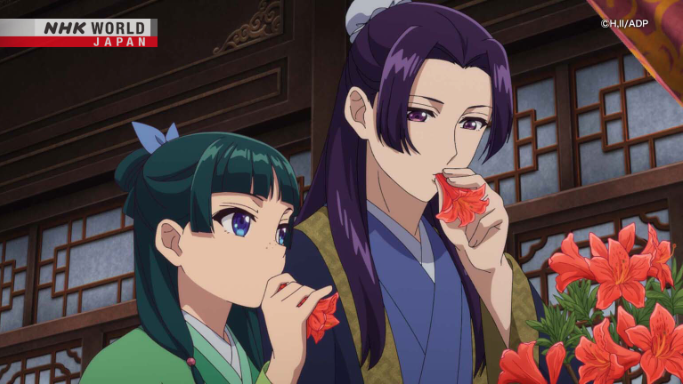
The documentary series “Anime Manga Explosion” offers a special on the manga and anime The Apothecary Diaries. It is a fantasy story based on a novel where, in a country inspired by the Tang dynasty’s China, a young girl trained as an apothecary is solving mysteries. The author (Hyūga natsu) and anime director (Naganuma Norihiro) talk about how the story and the anime were produced. This episode aired in May 24, 2025 and will be available as Video On Demand (VOD) until May 24, 2026.

Anime Sanctuaries

There was a documentary series named “Anime Sanctuaries” where the description said “Did you know that a lot of your favorite anime are based in real-life locations? Join us on a pilgrimage around Japan to the “Sanctuaries” that are the inspiration of some of the greatest anime!” Unfortunately, I missed it, there are no VOD available and no more air date. Sorry! Keep an eye and maybe they will broadcast it again.

It was probably referring to the Seichi junrei phenomenon where fans go to visit locations featured in their favourite series. It is also referred as “Anime Tourism.” You can find more information on the following sites: Anime-88 SpotsConnectDeepLogJapan TravelLivingInJapanTMDbWebJapan.

Plastic Models

The documentary series “Japanology Plus Mini“ offers an episode about Plastic Models: “Japan’s plastic models are popular worldwide. Shizuoka City leads the nation in plastic model shipments. We look at the city’s plastic model industry, from its history to the latest developments.” It was first aired on November 1 & 2, 2025 and will be available as VOD until November 1, 2026.

More Than Books

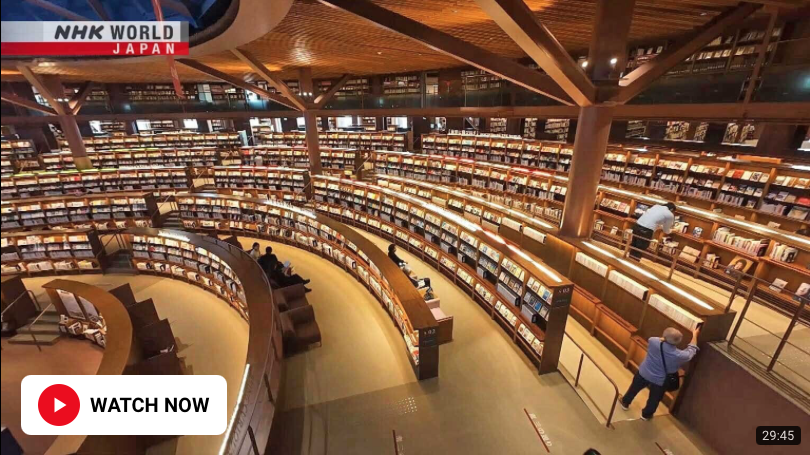
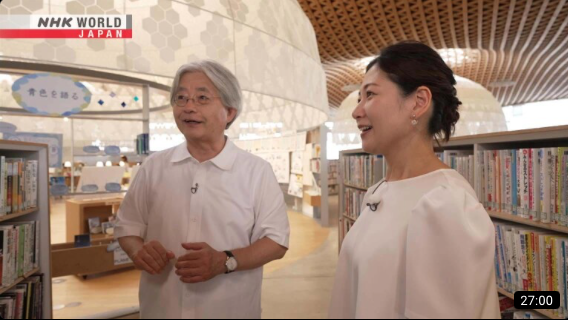
This is not about anime or manga, but it talks about a great interest of mine. The documentary series “Today’s Close-up” offers an episode about a new type of Japanese library. Titled “More Than Books: Libraries as Community Hubs” it is described as this: “So-called “lively libraries” that promote new concepts, such as allowing people to chat, eat and drink are gaining popularity, resulting in a sharp increase in users in an era of declining population. Some facilities use books and magazines to promote intergenerational exchanges and resolve local issues. In addition, some local governments have focused on their libraries’ ability to attract users by allowing people to use them for free as a key part of urban development. We visit a library in Gifu that has seen its visitor numbers increase tenfold. What is the potential for public spaces to evolve into places for everyone?” It was aired on November 6, 2025 and will be available as VOD until November 13, 2025.

Anime & manga updates [002.025.256]

Anime & manga updates

Manben: Otomo

Urasawa Naoki & Otomo Katsuhiro

Another update on Manben: The latest episode of the NHK World documentary series Manben: Behind the Scenes of Manga with Urasawa Naoki (which introduces us to mangaka like Morohoshi Daijiro, Shigeru Mizuki, Nishi Keiko, Chiba Tetsuya, or Iwamoto Nao) is about Otomo Katsuhiro, the internationally renowned legend who created a masterpiece that shaped and revolutionized manga. Urasawa discuss his work with Otomo over the original pages of his manga Domu.

The episode originally aired in Japan on March 24, 2025, but the English version just aired on September 12 and 13, 2025 and is now available to view as VOD (Video on Demand) until September 27, 2025.

Paper film: The curious origins of color Anime

“Much of the first animation came out of France in the early 20th century, but developed mainly in the United States with the rise of film. In Japan, black and white animation began in the nineteen tens, but colour didn’t become prominent until the nineteen sixties. Except for a brief little-known chapter. A U.S. researcher has rediscovered and successfully restored coloured anime created here in the nineteen-thirties. (…) In the 1930s, Japan produced animated movies on paper, not celluloid. A U.S. professor has been restoring existing films, which were known for their full color.”

This news story aired on September 4th, 2025 and is now available as VOD. The 7-min. clip is also available on Youtube.

Adapting Anime Costumes for Live-Action

Direct Talk interviews the stylist and costume designer Nakahara Sachiko who “translates the looks of popular Japanese anime and manga characters into costumes for live-action adaptations. She talks about making an impact on the global stage.” The show aired on July 22, 2025 and is now available as Video On Demand (VOD) until July 22, 2026.

History Uncovered: The Hiroshige Code

“Influential ukiyo-e artist Utagawa Hiroshige‘s “100 Famous Views of Edo“, a series of prints encoding his view of the changing face of Japan.”  Art historian Toshinobu Yasumura, Professor Timon Screech, Hinohara Kenji and Manabu Oishi discuss, interpret and explain the messages hidden in Hiroshige’s art. This episode of “Time and Tide” aired on August 30, 2025 and is now available as Video On Demand (VOD) until August 29, 2026.

[ Traduire ]

Yukari ICHIJO

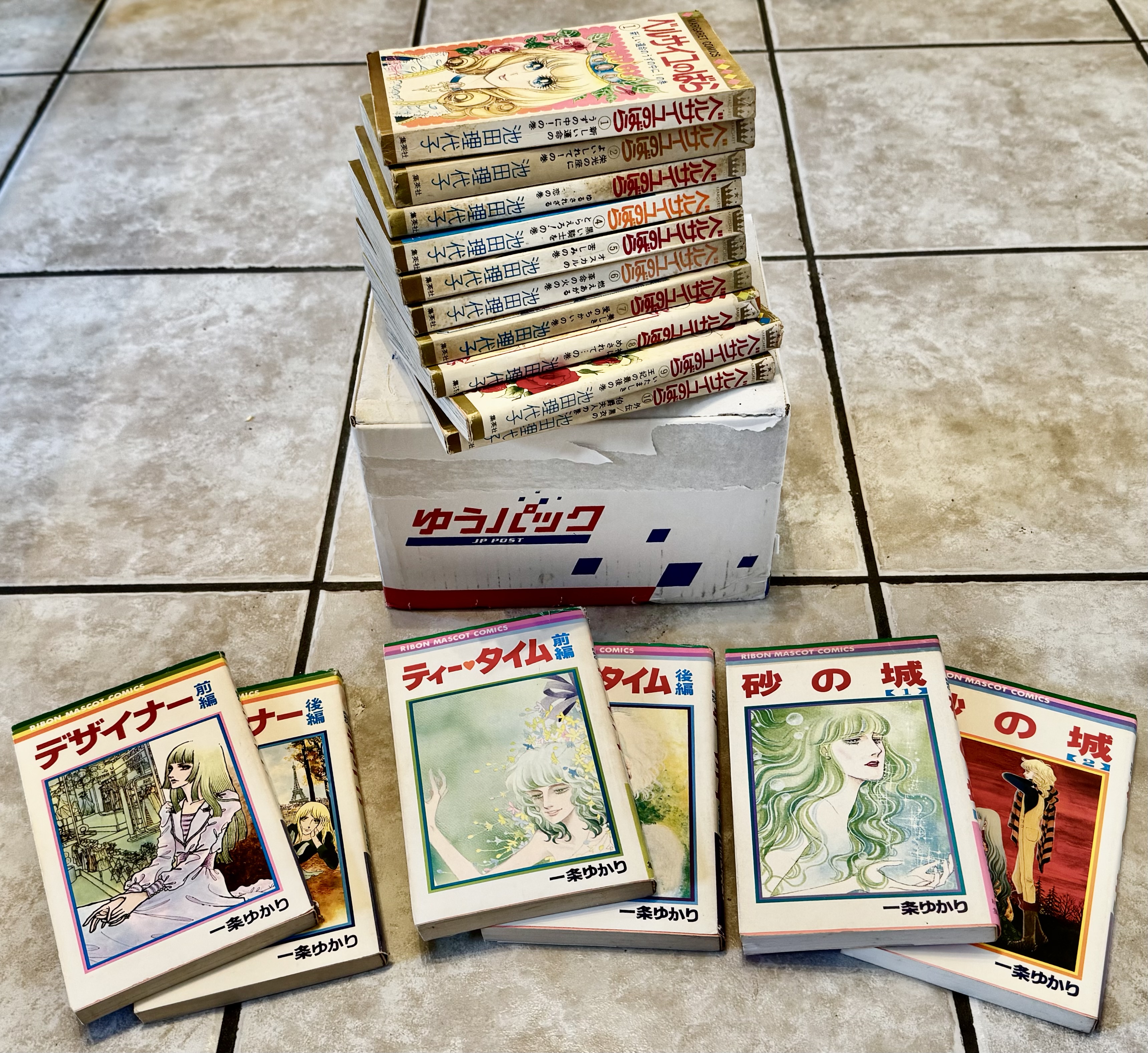
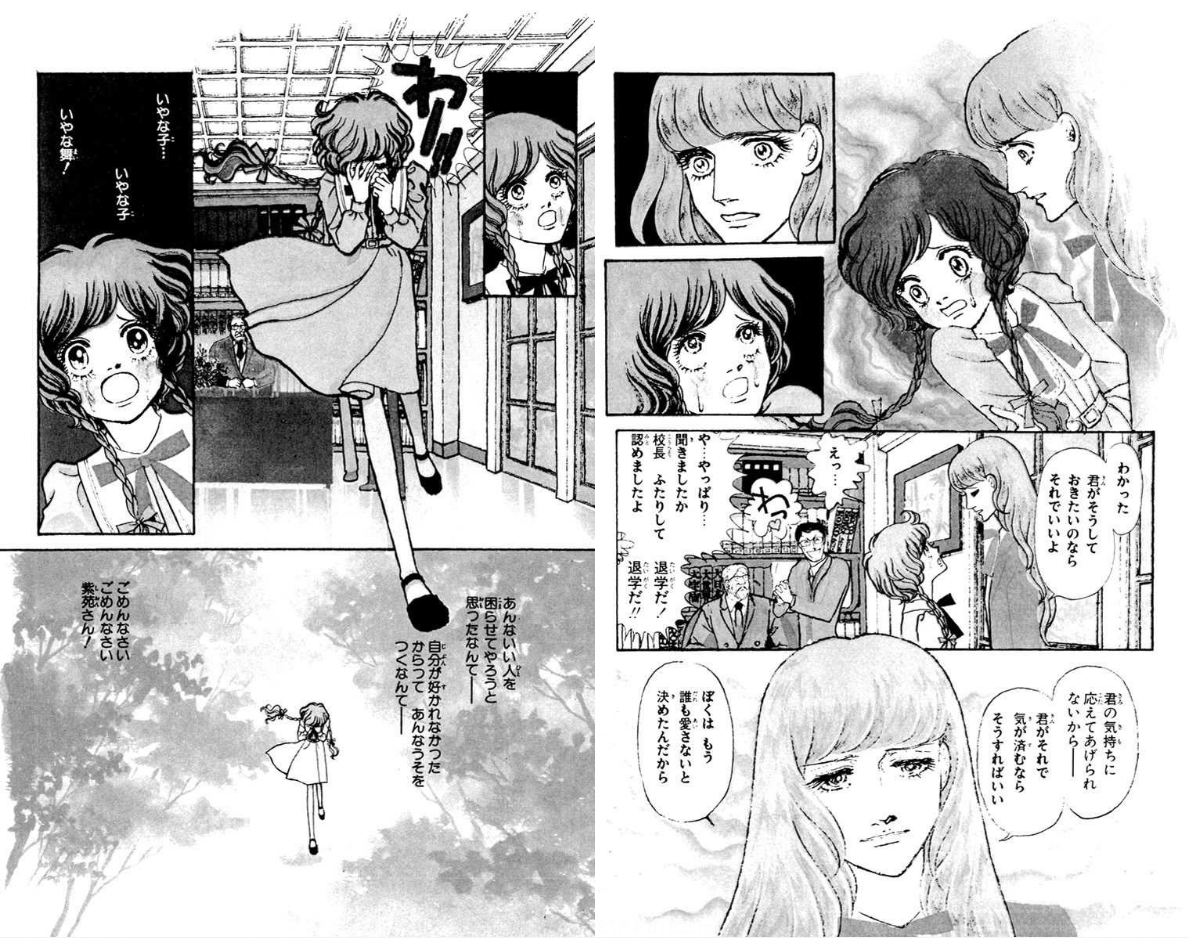
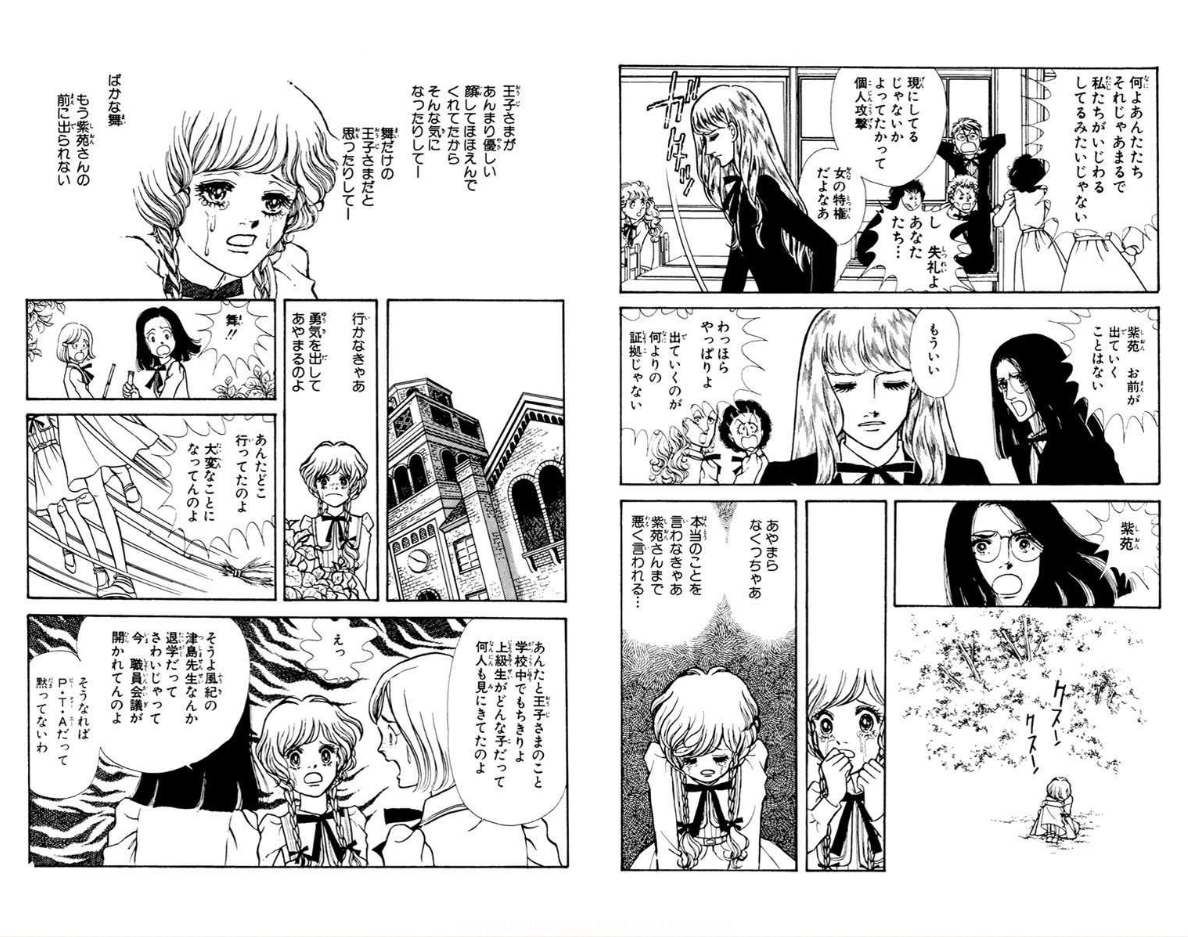
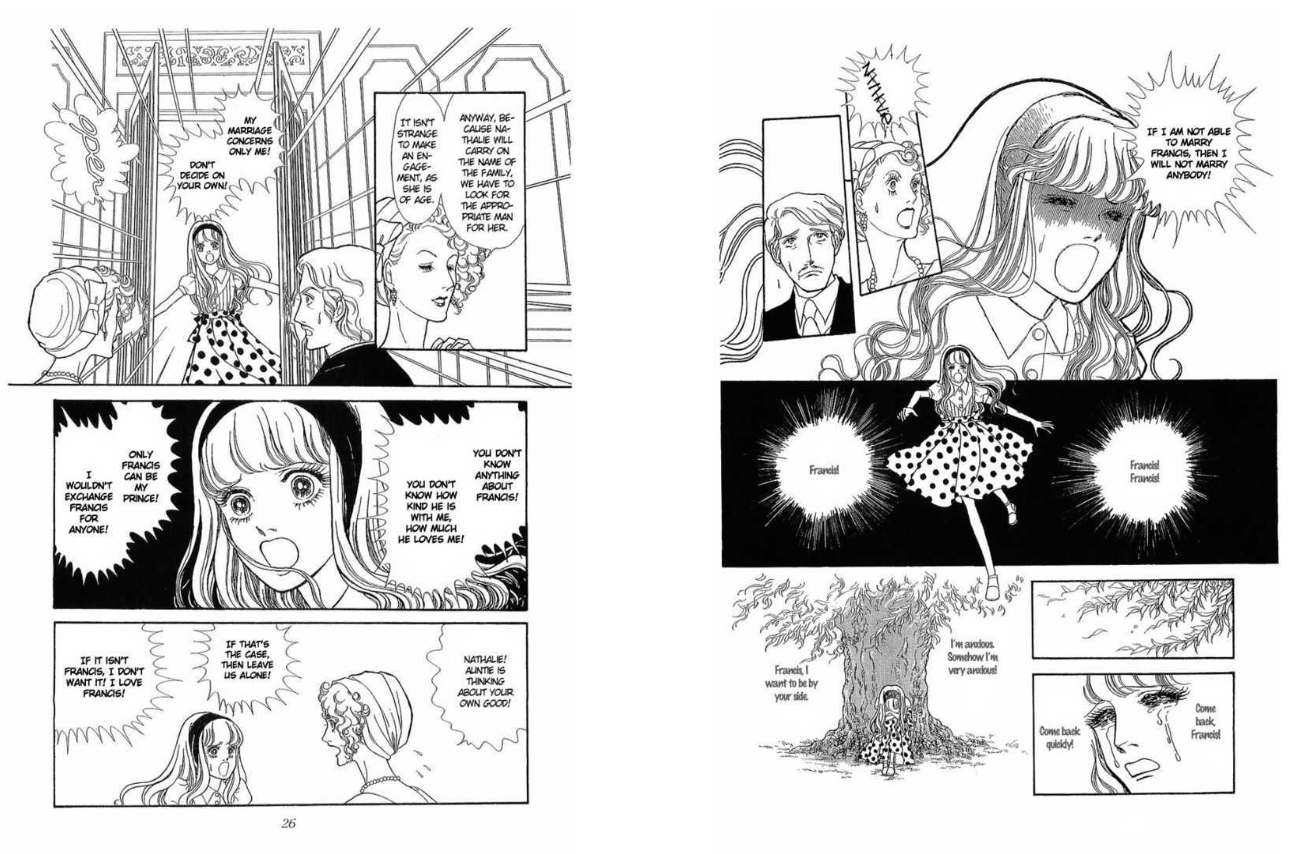
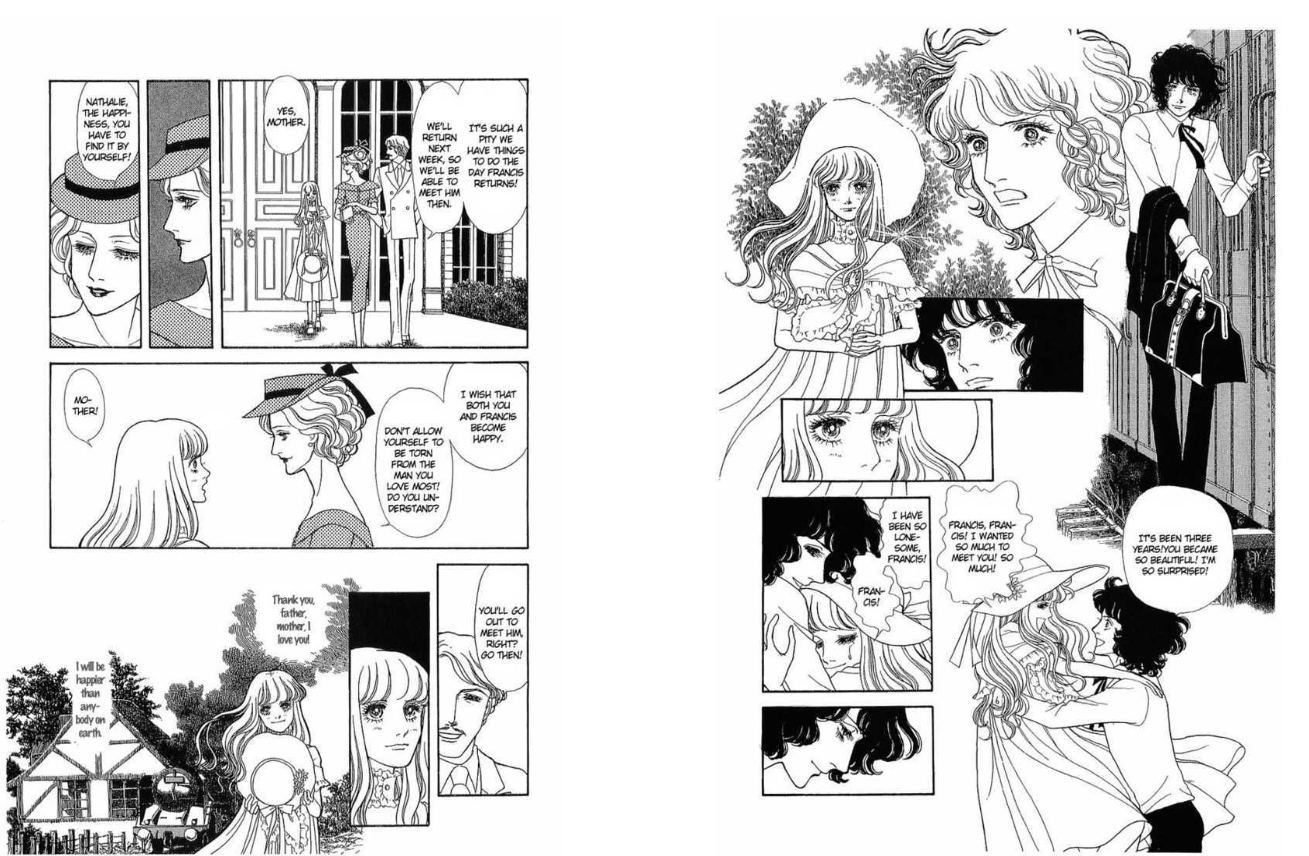
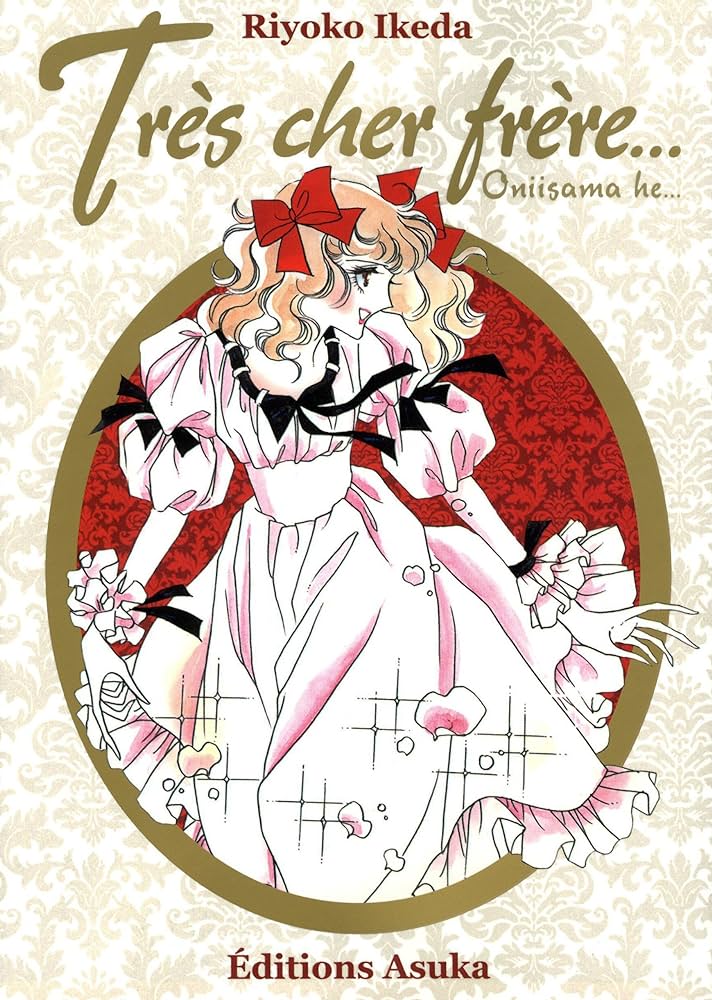
At the end of February, my wife received a care-package from her sister in Japan. She was doing some decluttering in their parents’ house and she sent my wife a bunch a manga that she had bought in the 70s. They are still in a perfect condition. That’s quite a memorabilia… It includes four manga series: the complete Versailles no bara by Riyoko IKEDA (10 vol.), the complete Designer by Yukari Ichijo (2 vol.), the complete Tea Time by Yukari Ichijo (2 vol.), and the first two volumes (of seven) of Suna no Shiro also by Yukari Ichijo. My wife never got to read the end of the latter because she left Japan. She particularly liked Yukari Ichijo, not because she cared much about her stories, but mostly because she greatly appreciated her shōjo style.

Everybody knows about IKEDA’s Versailles no Bara, but ICHIJO is not very well known in the West. However, Yukari ICHIJO (一条ゆかり) is an important and popular mangaka in Japan as she has published nearly fifty titles and received a couple of prizes for her work: the Kodansha Manga Award  for Yūkan Club in 1986 and the Japan Media Arts Festival Excellence Prize for Pride in 2007.

Her real name is Noriko Fujimoto and, even if she is considered to have greatly contributed to the development of Shōjo manga with her beautiful style and was actually born in 1949, she is generally NOT considered a member of the the Year 24 Group, probably because her themes, narratives and art style are more traditional and less “innovative” than the works of the Group.

Several of her titles were adapted as TV dramas (Designer, Tadashii Ren’ai no Susume, Suna no Shiro), movie (Pride) or anime OVA (Yūkan Club). So it is no surprise that her most well known titles are Yukan Club (1981) and Pride (2003). Her works are generally typical shōjo manga offering romantic thrillers stories with themes of conflits or family problems. For more information: AniListANNAsianWikiGoogleManga UpdatesWikipedia (Jp / Fr).

I often complained that manga publishers don’t tap enough (or even at all) into the goldmine of manga published in the 70s and 80s. There is a veritable untapped mine of manga out there that I wish were picked up for translation. That’s why I would like to introduce you, as best as I could, to those three titles that I have in my hands (but cannot read!):

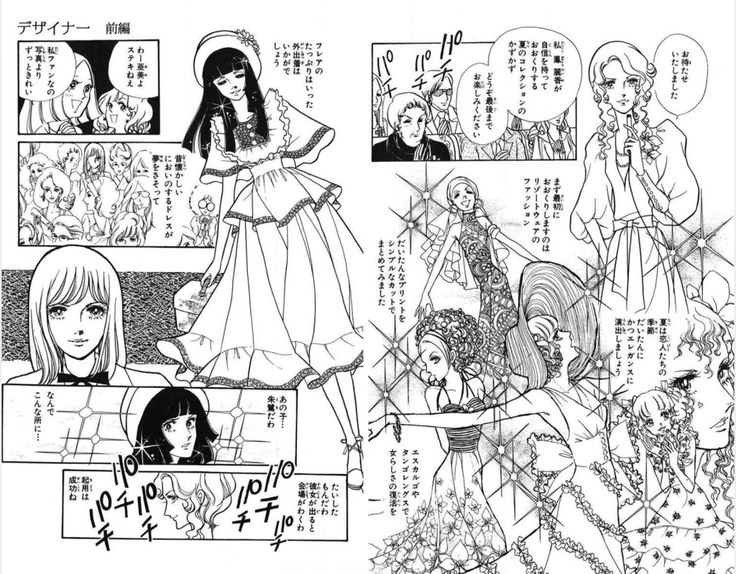
デザイナー / Designer

A melodrama about professional success and revenge. It is the story of Ami, a successful model, and her rivalry with Reika, a fashion designer. However, Ami doesn’t know who her parents were and when she discover her mother’s identity, she will only seek revenge on the woman who abandoned her. 2 vol., 1974, serialized in Ribon (Shueisha). For more information: ANNGoodreadsGoogleManga UpdatesWikipedia Jp.

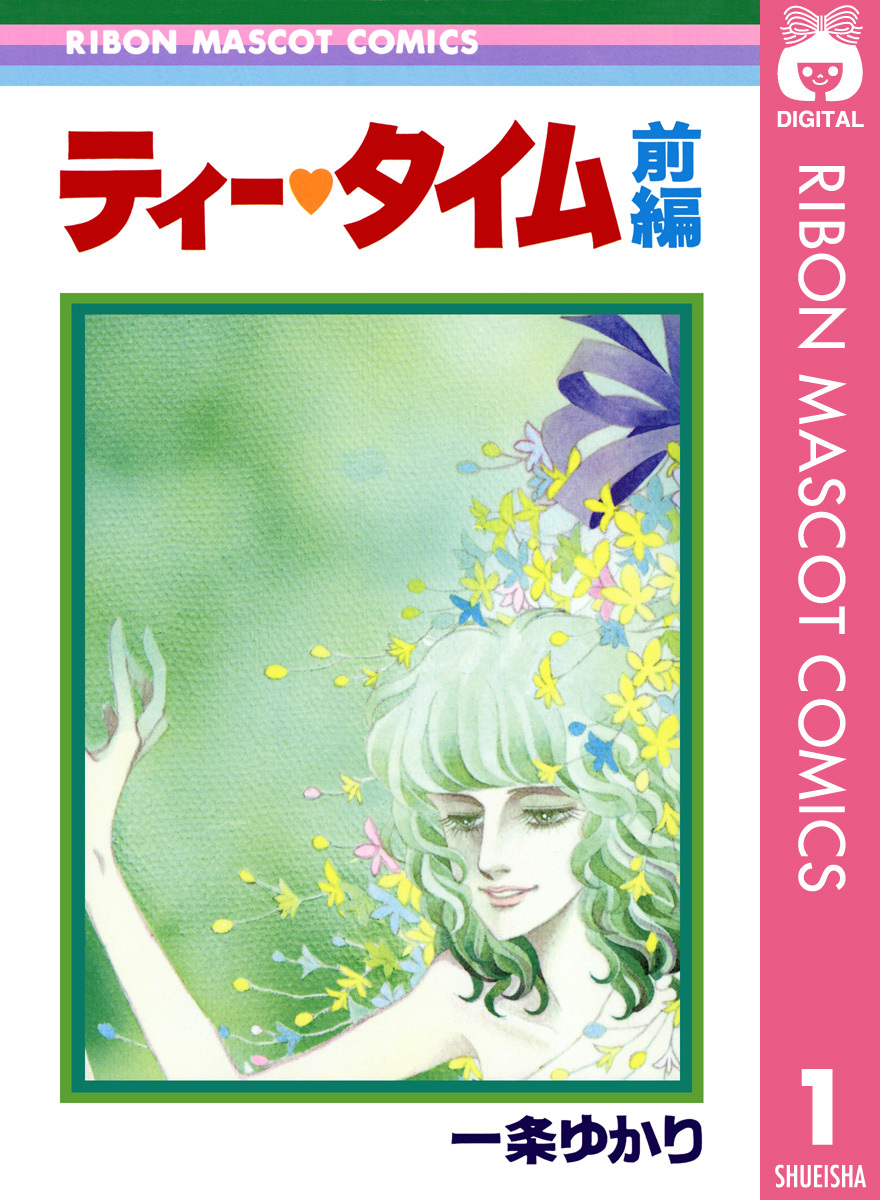
ティー♥︎タイム / Tea Time

This manga offers us, in two parts, a school romance about the love lives of three handsome, but tortured boys. Shion lives in the mansion where his sister committed suicide. As a tribute to her, he swore never to love anyone again. At his new high school, he reunites with his old friends Souji and Kaoru… and then he meet Shirakawa Mai… It also includes five short stories: He… (彼… / Kare…; 24 p), Beware of Jill (ジルにご用心 / Jiru ni goyōshin; 47 p), How about the bride? (花嫁はいかが⁉︎ / Hanayome wa ikaga⁉; 24 p), Night Fairy (夜のフェアリー / Yoru no fearī; 23 p), and Yukari’s Mini Mini Melhen (ゆかりのミニミニめるへん / Yukari no mini mini meruhen; 2 p).  2 vol., 1976, serialized in Ribon (Shueisha). For more information: Amazon JpGoogleManga UpdatesShueishaShueisha Reader.

砂の城 / The sand castle

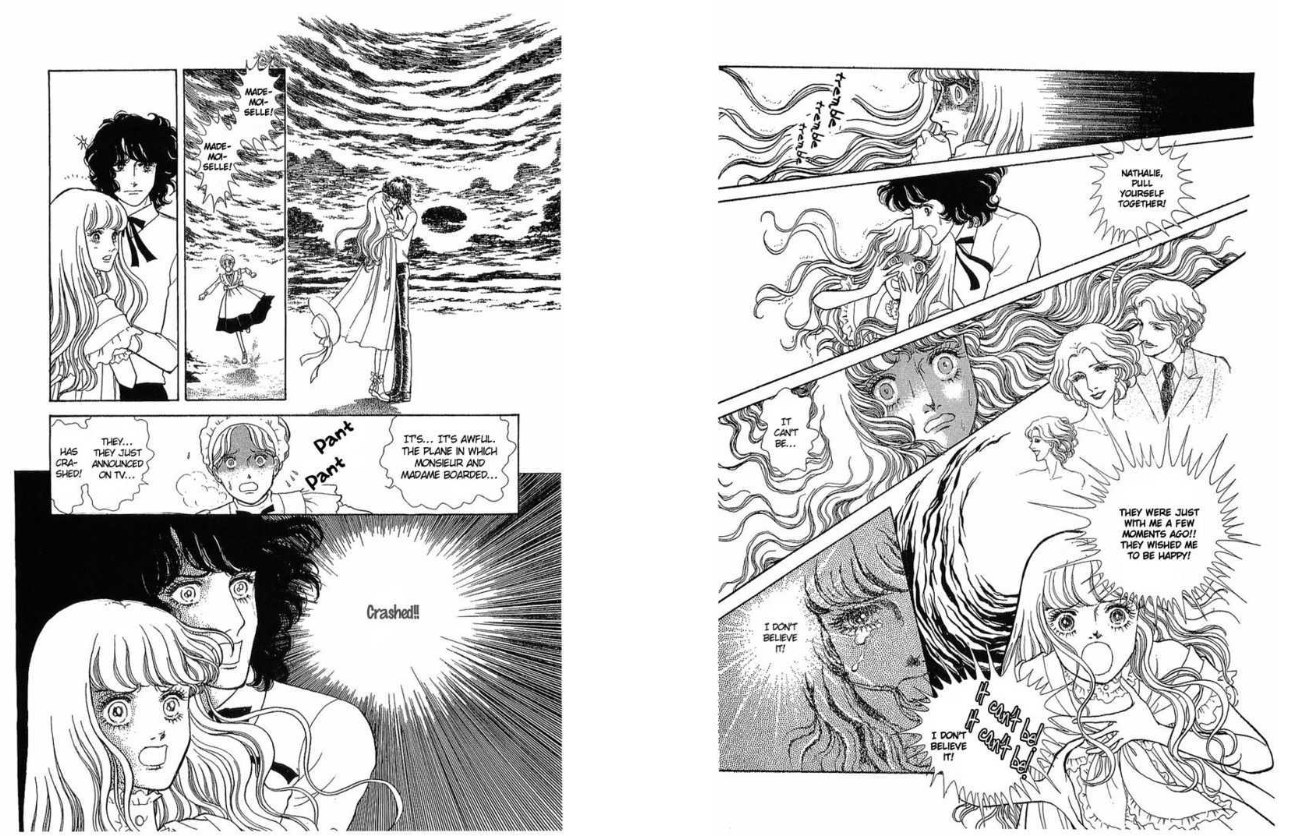
Suna no Shiro depicts the forbidden love of a young couple and their complicated feelings. “In a quiet area of France during WWII, a very young orphan boy was left on the steps of a large mansion on the same day that a daughter was born to the bourgeois family living there. From that day on, Francis and Natalie grew up together and found themselves falling deeply in love. As talk of their marriage began to stir, Natalie suddenly lost her parents to a plane crash, leaving her aunt as her guardian. This aunt, vehemently opposed to Natalie’s engagement to a mere orphan, drove Natalie and Francis to run away together. Unfortunately, they were caught. Rather than be torn apart from each other, Natalie and Francis decide to spend eternity together by jumping off a cliff….” [from MangaUpdates] However, in a cruel twist of fate, both survived, neither knowing what happened to the other. Francis has lost his memory, marries and has a son. When both Francis and his wife tragically die, Natalie decides to take in the boy, but, with time, his resemblance to Francis haunts her… 7 vol., 1977-1981, serialized in Ribon (Shueisha). This manga is available as scanlation (Jshoujo Scans). It was also adapted into a Fuji TV daytime drama in 1997. For more information: GoodreadsManga UpdatesMyAnimeListMyDramaList • Wikipedia [JP / EN].

[ Traduire ]

Anime & manga update [002.025.228]

Anime & manga update: Manben

Another update on Manben: The latest episodes of the NHK World documentary series Manben: Behind the Scenes of Manga with Urasawa Naoki (which introduces us to mangaka like Shigeru Mizuki, Nishi Keiko, Chiba Tetsuya, or Iwamoto Nao) is about Morohoshi Daijiro, a master of mystery. We see him ink a draft of the stand-alone short story 俺が増える(“Ore ga Fueru” / lit. “I will increase”) for the ongoing anthology Daijiro Morohoshi Theater (Moroboshi daijirō gekijō serialized in Shogakukan’s Big Comic Zōkan-gō [Big Comic Special] and compiled in vol. 3 — of six tankōbon so far). The episode originally aired in Japan in November 2020 (available on Youtube), but the English version just aired on July 16, 2025 (at 09:10 PM) and July 17, 2025 (at 03:10 AM, 09:10 AM, and 03:10 PM) and should be soon available to view as VOD (Video on Demand).

Daijiro Morohoshi is a mangaka specializing in strange, horror, mystery or folklore stories. In 1970, he made his debut in COM magazine. In 1974, he was selected for the 7th Tezuka Award for the short story “Seibutsu Toshi” and he won the fourth Tezuka Osamu Cultural Prize in 2000 with Saiyū Yōenden. His works have not been very successful and he is not very well known in the West (his only works translated are BOX: Qu’y a-t-il dans la boite? published in French by Le Lézard Noir and Shiori et Shimiko partially (5 vol.) published in French by Doki Doki), but he received enormous recognition from his peers (he is known as the “manga artist of manga artist”) particularly for his detailed style. His majors works are Yōkai Hunter (1974), Mud Men [1975-82], Ankoku Shinwa [1976], Kōshi Ankokuden [1977-78] and Saiyū Yōenden [1983, ongoing].

For more info: ANNManga Updates • Wikipedia [ENFRJP]

[ Traduire ]

Anime & manga update [002.025.208]

Anime & manga update

Update: Young Magazine English version

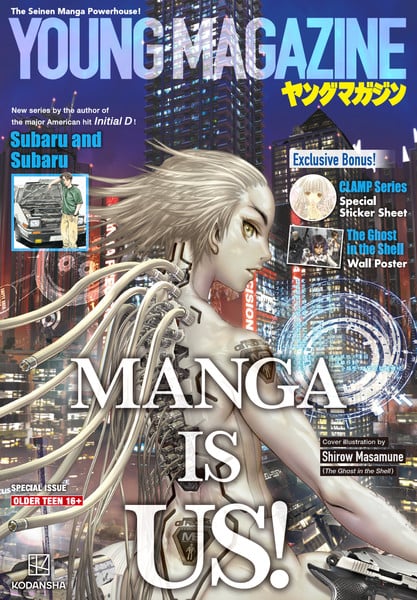
NHK World News reports that Kodansha  announced that, to commemorate the magazine’s 45th anniversary, it is releasing a special English-language edition of Young Magazine, its popular magazine for young adults. According to NHK World Japan, “Young Magazine USA will have about 1,000 pages featuring 20 titles on themes including Sci-Fi and cyberpunk.” Kodansha will hand out the special edition at Anime NYC in August 21-24 and at Kinokuniya  bookstores in the US from August 21 to November 10. It is unclear if this will be a one-shot edition or if more issues of the magazine are planned. According to ANN, “Readers will be able to vote for their favorites among 16 eligible titles, with the winners earning serialization on the K MANGA App.” [Sources: ANNNHK World Japan]

The Professionals

Another interesting TV series on NHK WORLD Japan is “The Professionals“ about “exceptional people who are breaking new ground and making a difference in their area of expertise.” There are currently eight episodes available. Yesterday, I watched an interesting episode about Honda Tsuneyuki, a toy developer who designs capsule toys. He introduced capsule toys of unprecedented size: 7-centimetre ! In this documentary, we follow him as he is producing the capsule toy of a big Gundam head.

A Tiny Universe in the Palm of Your Hand: Honda Tsuneyuki, Toy Developer” aired July 25 (10:10 PM) and July 26 (06:10 AM, 11:10 AM, 05:10 PM), but should be available as VOD soon.

Anime & Manga Explosion !

The latest episode of the NHK WORLD Japan documentary series “Anime & Manga Explosion !” is about anime and manga adapting mythological themes. The first part tells us about the anime adaptation of Masami Kurumada’s manga Saint Seiya directed by Morishita Kozo. The second part talks about a manga inspired by the Japanese folk tale of Momotaro (with a serious twist!): Tougen Anki by Yura Urushibara — which has just started airing on Nippon TV as an anime adaptation by Studio Hibari under the direction of Ato Nonaka. In this episode they mentioned Anime News Network !

Classic Tales Reborn: SAINT SEIYA / TOUGEN ANKI” aired July 26 (11:10 PM) and July 27 (05:10 AM, 10:10 AM, 04:10 PM), but should be available as VOD soon. There are eight episodes of  Anime & Manga Explosion !” currently available as Video On Demand (VOD).

[ Traduire ]

Anime & manga updates [002.025.194]

Anime & manga updates

Manben

I’ve talked about “Manben” a couple of years ago, but here’s another update.

The latest episodes of the NHK World documentary series Manben: Behind the Scenes of Manga with Urasawa Naoki (which introduces us to mangaka like Shigeru Mizuki, Nishi Keiko or Chiba Tetsuya) is about Iwamoto Nao, a popular shojo manga artist known for her rich worlds of fantasy, romance, and adventure. Over a four-day period, we see her work on pages for Seven Knights of the Marronnier Kingdom. The episode originally aired in Japan in October 2020, but the English version just aired on July 12, 2025 (at 09:10 PM) and July 13, 2025 (at 03:10 AM, 09:10 AM, and 03:10 PM) and should be soon available to view as VOD (Video on Demand).

Iwamoto Nao (岩本 ナオ) is a shōjo mangaka who made her debut when she received the 10th Gekkan Flowers Comic Audition Golden Flower Award for her work “Sono Kanojo no Sonzai” which was subsequently published in the May 2004 issue of Monthly Flowers. She also received in 2009 the 55th Shogakukan Manga Awards in Shojo category for Machi de Uwasa no Tengu no Ko. She is mostly known for the latter as well as for Kin no Kuni Mizu no Kuni and Marronnier Oukoku no Shichinin no Kishi, but she has published more than half a dozen titles:

  • スケルトンインザクローゼット [Sukeruton in za Kuroozetto / Skeleton in the Closet] : a collection of 7 stories, serialized in Flowers, Shogakukan, 2005.
  • イエスタデイ、イエス ア デイ[Iesutadi Iesu a Di / Yesterday, Yes a Day] : serialized in Flowers, Shogakukan, 2006, 1 vol.
  • あめなしむらやくば さんぎょうか けん かんこうがかり [Amenashi-mura Yakuba Sangyou-ka ken Kankougakari ]: serialized in Rinka, 2007, 3 vol.
  • 町でうわさの天狗の子 [Machi de Uwasa no Tengu no Ko / lit. “The Tengu Child Rumored in Town”] : serialized in Flowers, Shogakukan, 2007, 12 vol. Translated in French by Kazé as Spiritual Princess. [Nelligan]
  • ジャイキリ読んで〇〇してきました [Jaikiri Yonde Maru Maru Shite Kimashita / lit. “I Started Doing 〇〇 After Reading Giant Killing”] : an essay manga published in “Giant Killing extra”, Kodansha, 2010.
  • 金の国水の国 [Kin no Kuni Mizu no Kuni / lit. “Gold Kingdom and Water Kingdom”] : serialized in Flowers, Shogakukan, 2014, 1 vol. It was adapted into an anime movie in 2023 and translated in English by Seven Seas. Also translated in French by Akata as Les noces de l’or et de l’eau.
  • 七叶树王国的七名骑士 [Marronnier Oukoku no Shichinin no Kishi / lit. “Seven famous swordsmen of the Seven Leaf Kingdom”] : serialized in Flowers, Shogakukan, 2016, 10 vol., ongoing series. Translated in French by Akata as Les 7 chevaliers du royaume des Marronniers.
  • 岩本ナオ 古今東西しごと集 [Iwamoto Nao Kokon Touzai Shigoto-shuu / lit. “Nao Iwamoto: A collection of work from around the world, past and present”] : an anthology collecting 4 stories to celebrate her 15th year anniversary in the industry, Shogakukan, 2019.

[ AniListANNGoodreadsLesLibrairesMangaUpdatesNelliganWikipedia ]

Léviathan

The anime adaption of Scott Westerfeld‘s young adult novel series, Leviathan, is now available on Netflix. Produced by Studio Orange (Trigun Stampede, Beastars), it is set in an early twentieth century alternate steampunk past and tells the story of an Austrian fugitive prince and a Scottish airman in disguise who find themselves aboard the HMS Leviathan, a genetically engineered airship, fighting mechanized war machines in order to prevent a world war.

I have now watch half of the twelve episodes of the series and I must say that I am VERY impressed with this anime. It is quite faithful to the original book (of course, like all adaptation, there are a few shortcuts here and there, and some changes, but it is very respectful of the original) and the animation is of very high quality. It is somewhat reminiscent of Gundam (character designs) and Miyazaki (particularly the watercolour storyboard of the end credits by Christopher Ferreira & Alex Alice). It is an excellent work that I strongly recommend to all anime fans, particularly if you already know the novels or if you are interested in alternate history and steampunk.

Leviathan, Japan, 2025, anime series, 12 episodes of 25 min.: Dir.: Christophe Ferreira; Scr.: Yuichiro Kido, Yukata Yasunaga (based on Scott Westerfeld’s novels); Studio: Qubic, Orange; Anim. Prod.: Tokuya Ogawa, Daigo Ikeda; Voice dir.: Yoshimi Iide;  Char. Des.: Ayumi Kurashima;  Mecha des.: Takehiko Hoashi, Shinobu Tsuneki;  Creature des.: Le Yamamura;  Art dir.: Tadashi Nakajima;  Ed.: Edit Room Seyama, Rie Matsubara; Mus.: Nobuko Toda, Kazuma Jinnouchi, Joe Hisaishi (op & closing theme); Prod.: Katrina Minett, Yoshihiro Watanabe; Distr.: Netflix; Cast: Natsumi Fujiwara (Dylan), Ayumu Murase (Alek), Shunsuke Sakuya (Volger), Yasuhiro Mamiya (Klopp), Mie Sonozaki (Dr. Nora Barlow), Ivan Shibata (Newkirk), Fairouz Ai (Lilit), Hiroki Touchi (Tesla), Ikuko Tani (Nene), Genta Nakamura (Hoffman), Daichi Hayashi (Rigby), Satoshi Niwa (Matthews), Naoto Kobayashi (Thomas), Yukitaro Namura (Hirst), Michio Hazama (George Darwin), Takahiro Fujiwara (Pavel), Naomi Kusumi (Zaven), Tessyo Genda (Sultan).

[ ANNIMDbWikipedia ]

[ Traduire ]

Une rose seule

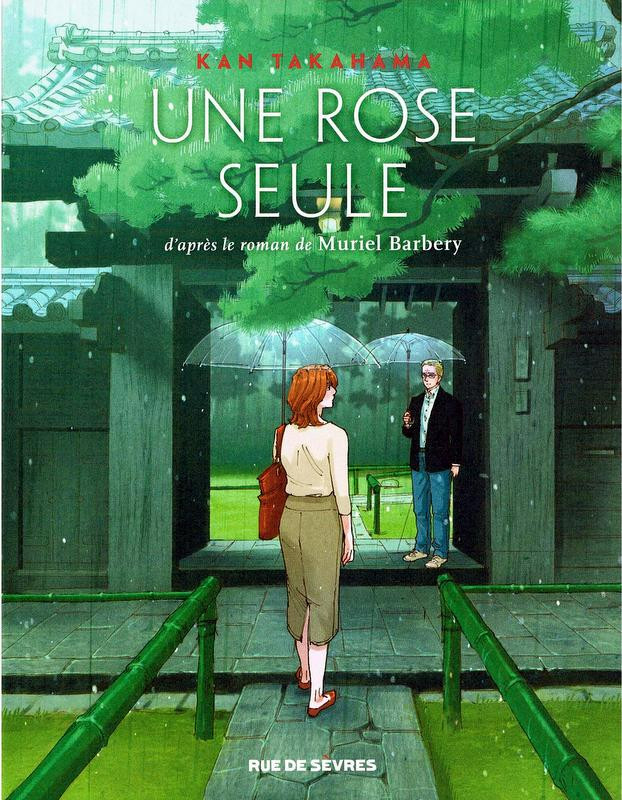
“Rose arrive au Japon pour la première fois de sa vie, sur les traces d’un père qu’elle n’a jamais connu. Celui-ci, décédé depuis peu, lui avait laissé une lettre à son intention, l’invitant à se rendre dans ce pays si lointain qui est en partie le sien. Accueillie à Kyoto, elle est guidée par Paul, l’assistant de son père, à travers un itinéraire imaginé par le défunt, semé de temples et de jardins, d’émotions et de rencontres, qui va lui permettre dépasser l’amertume et la colère liées à l’absence pour se laisser emporter par le tourbillon de ses origines enfin retrouvées.”

“Kan Takahama dépeint avec subtilité les tourments intérieurs et l’intimité des sentiments dans cette réinterprétation lumineuse du récit d Muriel Barbery.”

[Texte du site de l’éditeur; voir aussi la couverture arrière]

(Attention, lire l’avertissement de possible divulgacheurs)

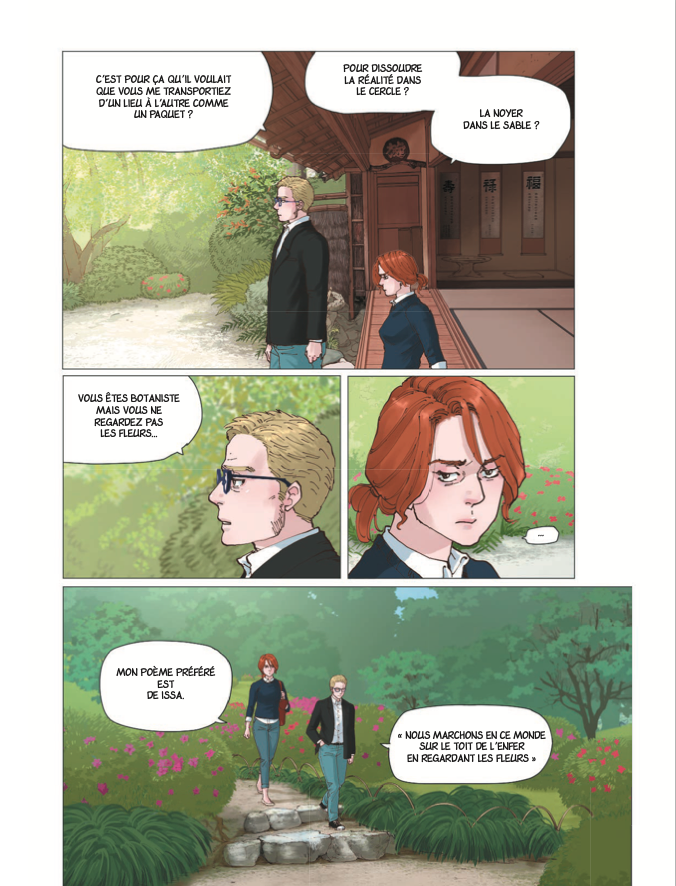
Une rose seule [薔薇が咲くとき / Bara ga Saku Toki / lit. “Quand les roses fleurissent”] est un manga seinen tout en couleurs de Kan Takahama. Il a d’abord été prépublié en format électronique dans Torch en 2023, puis compilé en volume chez Leed en 2024. Il a été traduit en français chez Rue de Sèvres. Takahama, qui semble se spécialiser dans les histoires aux relations amoureuses complexes et difficiles, adapte ici un roman éponyme de Muriel Barbery (L’Élégance du hérisson). Elle nous offre ainsi avec une grande sensibilité une quête d’identité à travers la détresse morale, le deuil et enfin l’acceptation de soi, puis de l’autre et enfin l’amour. Le style un peu particulier, mais très beau, de Takahama se prête bien à ce genre de récit. Une lecture agréable et touchante.

Je note deux entrevues avec Barbery et Takahama sur TV5 et Youtube qui méritent qu’on y jette un coup d’oeil.

Une rose seule, par Kan Takahama (d’après le roman de Muriel Barbery [Actes Sud, 2020]; traduction et adaptation par Corinne Quentin). Paris: Rue de Sèvres, août 2024. 224 pages. 21.4 x 27.5 cm. 22.00 € / $42.95 Can. ISBN 978-2-81020-079-5. Pour un lectorat jeune adulte (14+). Sens de lecture occidental.

Vous trouverez plus d’information sur les sites suivants:

[ AmazonGoodreadsGoogleNelliganWikipediaWorldCat ]

© Rue de Sèvres édition 2024

[ Translate ]

Isabella Bird vol. 11

“Le cruel Charles Maries refuse de laisser Ito, son employé aux yeux de la loi, continuer son périple avec Miss Bird. Décidée à récupérer son guide-interprète, l’aventurière fait donc au botaniste une proposition qu’il ne peut pas décliner : le jeune japonais l’accompagnera à Biratori, mais il en profitera pour recueillir des échantillons de plantes. Un présent, plus aucun obstacle ne se dresse entre Isabella et la suite de son voyage ! Il est temps pour elle de rencontrer les mystérieux Aïnous, ce peuple à la culture bien particulière et dont l’Occident sait si peu de choses…

Lancez-vous à la découverte d’un Japon traditionnel désormais disparu à travers les yeux de l’intrépide Isabella Bird ! Basé sur les écrits réels de l’aventurière, Isabella Bird, femme exploratrice est un récit passionnant sur la rencontre de deux mondes, dessiné avec un rare souci du détail par Taiga Sassa, nouveau talent prometteur !”

[Texte de la couverture arrière]

(Attention, lire l’avertissement de possible divulgacheurs)

Isabella Bird, femme exploratrice (ふしぎの国のバード / Fushigi no Kuni no bādo [Bird] / littéralement: “Bird au pays des merveilles”) nous offre le récit de voyage de la célèbre exploratrice britannique au Japon du début de l’ère Meiji en se basant sur sa correspondance avec sa soeur Henrietta qui fut publiée en 1880 sous le titre Unbeaten Tracks in Japan. Écrit et dessiné par Taiga Sassa, ce manga seinen historique a d’abord été publié en feuilletons dans le magazine Harta (Enterbrain), puis compilé en volumes chez Kadokawa. Le premier volume est paru en mai 2015 et le plus récent volume, le douzième, est paru au Japon en décembre 2024. J’ai commenté tous les volumes précédents.

Ce manga nous fait le récit très romancé de l’expédition d’Isabella Bird à Hokkaidō, nous offrant une fenêtre intéressante sur le Japon de l’ère Meiji. Isabella arrive enfin à Hokkaidō et a un premier contact avec les Aïnous. Elle se rends compte toutefois que son séjour ne sera pas sans difficultés. Si le récit est un peu inégal, la qualité du dessin, précis et détaillé, est notable. L’aspect ethnologique du récit n’est pas sans rappeler Golden Kamuy, qui offre une histoire un peu similaire mais souvent plus humoristique et surtout beaucoup plus violente. L’ouvrage nous offre donc une lecture à la fois agréable, distrayante mais aussi très instructive. Un manga indispensable surtout pour les amateurs d’histoire et de culture Japonaise. 

Isabella Bird, femme exploratrice T.11 par Taiga SASSA. Paris: Ki-oon (Coll. Kizuna), août 2024. 208 pg, , 13 x 18 cm, 7,95 € / $15.95 Can., ISBN 979-10-327-1740-0. Pour lectorat adolescent (12+).

Vous trouverez plus d’information sur les sites suivants:

[ AmazonGoodreadsGoogleNelliganWikipediaWorldCat ]

© Taiga Sassa 2024.

[ Translate ]

Olympia Kyklos vol. 7

“Un nouveau péril menace la cité de Démétrios. Cette fois, c’est une épidémie qui menace de décimer Tritona ! Alors que ses concitoyens sont au plus mal, Démétrios est sommé une fois de plus par le patriarche de trouver une idée qui sauvera les siens. Sport, manga, théâtre, musique : au gré de ses allers-retours avec l’époque contemporaine, le jeune peintre sur céramiques a déjà prouvé les vertus de l’expression de soi sous bien des formes. Saura-t-il relever cet ultime défi alors qu’il atterrit dans un Japon en pleine pandémie de Covid ? Et si un autre voyageur temporel lui apportait un concours inespéré ?” [Texte de la couverture arrière]

Olympia kyklos (オリンピア・キュクロス / lit. “Cercles Olympique”) est un manga seinen par Mari Yamazaki qui a été sérialisé au Japon dans le magazine bimensuel Grand Jump entre mars 2018 et juillet 2022 avant d’être compilé en sept volumes chez Shueisha. Cette série humoristique consacré aux sports olympiques et à la résilience humaine, se conclut alors que Tritonia est menacée par une épidémie mortelle. Démétrios se retrouve une fois de plus transporté par Zeus à Tokyopolis, pour y découvrir comment les japonais gèrent-ils la pandémie de COVID-19.  Pour fournir au héros une solution, Yamazaki croise le récit avec une autre de ses séries de manga: Thermae Romae. L’ingénieur romain Lucius construira donc une station thermale à Tritonia, car en plus du port du masque, une bonne hygiène (se laver les mains!) est la meilleurs façon de combattre l’épidémie (dans la mesure où l’on garde ses distances). Une excellente série, hilarante, mais aussi très didactique. 

Olympia Kyklos vol. 7 par Mari Yamazaki.  Bruxelles: Casterman (Coll. Sakka), septembre 2024. 208 pages, 13.2 x 18.1 cm, 8,45 € / $C 15.95, ISBN 978-2-203-24030-8. Pour lectorat adolescent (14+).

Voir mes commentaires des volumes précédents. 

Vous trouverez plus d’information sur les sites suivants:

[ AmazonGoodreadsGoogleNelliganWikipediaWorldCat ]

© 2018 Mari Yamazaki. All Right Reserved.

[ Translate ]

Anime update [002.025.0054]

Beastars

One of the latest episodes of the NHK World documentary series Anime Manga Explosion is dedicated to the manga and anime Beastars. It first aired on NHK World on December 28, 2024, but was broadcast again this weekend. It is available as Video On Demand (VOD) until December 29, 2025.

Beastars is “a popular manga that uses a world of anthropomorphic animals to explore modern social issues. Through an exclusive interview with creator Itagaki Paru, learn how BEASTARS came to life and the passion behind it. Plus, take a behind-the-scenes look at the anime’s final season and the innovations that enhance its realism.”

Beastars is a shōnen manga by Paru Itagaki that was first serialized in Weekly Shōnen Champion from September 2016 to October 2020 before being compiled in 22 volumes by Akita Shoten. It was adapted into an anime by Studio Orange under the direction of Shin’ichi Matsumi and is airing on Fuji TV‘s +Ultra programming block since October 10, 2019. There are 36 episodes so far. It has been licensed on Netflix.

[ Traduire ]

Wangan Police Station

When I was producing the Protoculture Addicts magazine in the ’90s and early 2000s, I used to watch a lot of Japanese TV drama thanks to friends in Japan and in the U.S. who were recording them and sending us copies. I was greatly enjoying those shows and I must admit that I miss them. One of the shows I liked a lot was Odoru Daisôsasen, a police procedural comedy. A few months ago I noticed that Netflix started adding to their lineup Japanese TV drama like Jin, Asura, The Makanai, Okura: Cold Case Investigation, Shinjuku Field Hospital, Quartet, etc.

I recently said to my wife, “I just hope that Netflix will add nice shows like Odoru Daisôsasen…” and, to my astonishment, I discovered a couple of weeks ago that Odoru Daisôsasen was indeed offered on Netflix ! I started watching it again. Of course, the quality of the picture is not as good as what we see today and the screen aspect ratio is almost square (after all it was produced in 1997), but it was still funny, interesting, entertaining and very enjoyable. I remembered that we published an article in the magazine about the show and I decided to share with you here a slightly updated version of this article (or you can read the original illustrated article here, in PDF — Enjoy!).

Go to Netflix and have a look, I am sure you will like it. [CJP]

> Please, read the warning for possible spoilers <<

Odoru Daisosasen

By Miyako Matsuda (From Protoculture Addicts #60: 15-18)

Overview

Odoru Daisôsasen (“The Big Dancing Criminal Investigation Line”) TV series is sometimes called Dancing Detective, sometimes Rhythm & Police, but it’s mainly called Wangan Police Station (WPS) among North American anime otaku. If you’re a Patlabor fan, you will absolutely love this TV series which started in January 1997 and became a super hit in Japan! Up ’till now [in May 2000], there are eleven TV episodes, three TV Special “movies,” and a theatrical release (Bayside Shakedown The Movie, which was shown at the Montréal World Film Festival ’99 — see PA#59: 15; three more movies will be added later [in 2003, 2010, 2012], plus three spin-off movies [two in 2005, and one in 2024] and a new movie is coming in 2026). In fact, the TV series was so popular that, according to news reports, over 3000 fans waited in line all night to be able to see the premiere of the movie and to meet the director & the actors at the Nichigeki Toho Theatre in the fashionable district of Yuraku-cho in Tokyo. We heard that it has also become very popular among Japanese anime otaku and that, at the Comic Market, many fans dressed like Detective Sergeant Aoshima, the main character of this show! Odoru Daisôsasen surely became a big phenomenon! The TV series and TV Specials are already available on videos (in Japanese) by Pony Canyon, and we do hope that a North American releaser will pick this title up some day to bring this very interesting human story to English-speaking fans.

“Wangan” means Bayside. It’s the fictitious name of the police station, located near the Rainbow Bridge and Tokyo Bay. In fact, this show’s world is quite real! We viewers know that it’s fiction, with lots of fictitious small details, to reflect today’s Japan and its youth culture. In one episode, we see a character named Noguchi who’s an anime otaku (he loves the Sailor Moon-like character Pink Sapphire!) and a stalker! And there is this place called “The Image Club” where customers go and can meet girls who wear anime & TV characters’ costumes, etc. We all know it’s a fictitious TV show and yet, this Wangan world is very real, as if we’re part of the show. If we enter Wangan’s world, we all know these things exist! 

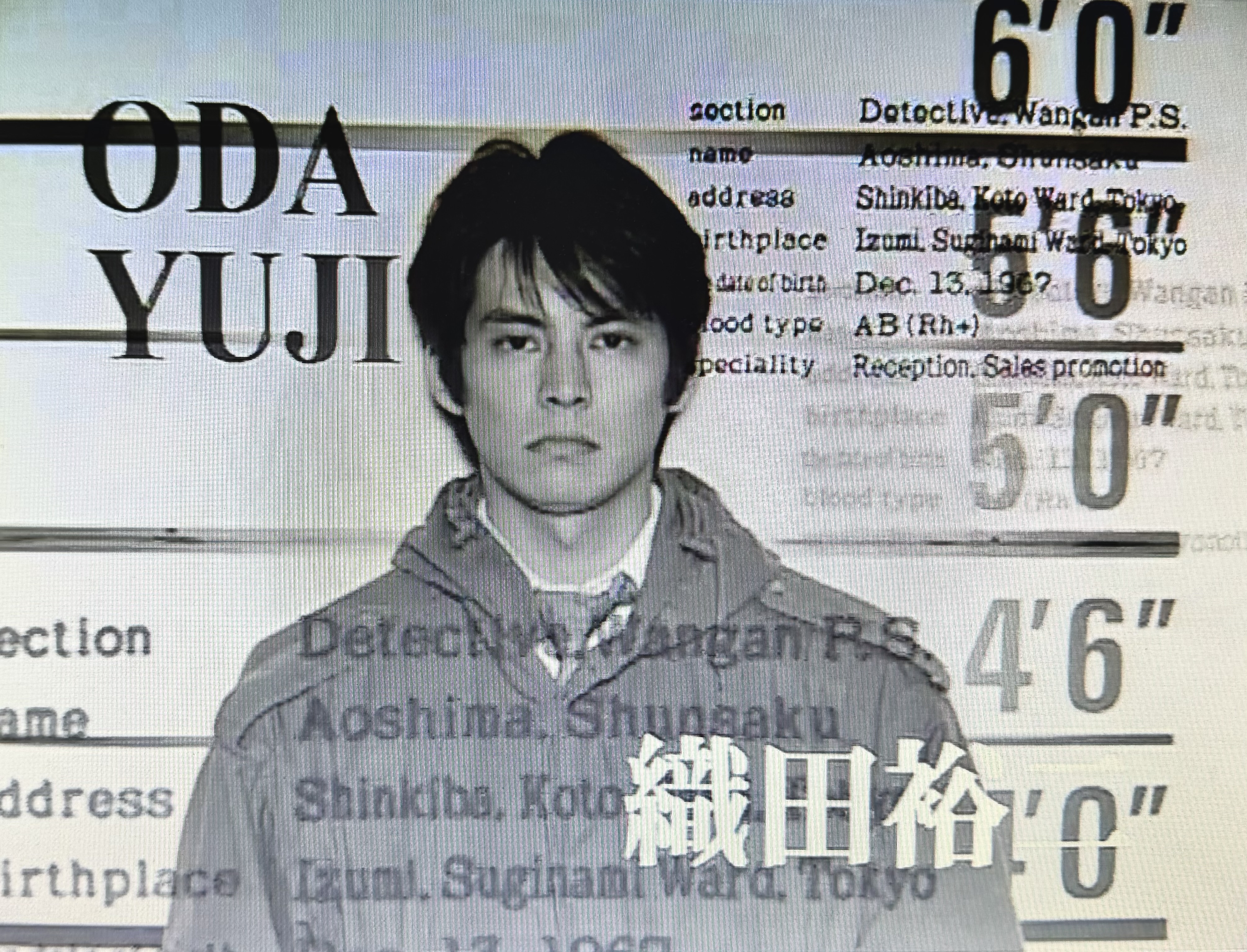
The main character, Sunsaku Aoshima, is played by none other than Yuji Oda, who’s quite charming and all viewers would feel empathy and love his honesty. Aoshima-kun is a Police Sergeant. He always introduces himself to the people he meets saying, “I’m Police Sergeant Aoshima, the same name as Tokyo prefectural governor!” The reason why we begin to like Aoshima-kun immediately is that he’s NOT an ordinary cop. He used to be a salesman in a computer company, but he was bored, so he quit his job and became a cop! He’s just like any of us: he wants excitement in his life and he wants justice! But of course, our lives don’t always go the way we want and life is full of disappointments! Just like many of us, he wants to be a “cool” cop, and yet, he faces many hardships and disappointments. This is why many people become fans of this show, I think!

Wangan Police Station saga was created by Director Katsuyuki Motohiro (who’s in his 30s and you’d definitely feel the fresh air of youth while you’re watching this show!) and screenplay writer Ryoichi Kimizuka, and lots of enthusiastic crew members. The more we watch this show, one episode to the next, we start feeling tremendous empathy toward all its characters. American TV shows like ER, Chicago Hope, etc., are great in their own way, but it is rare to see a show like WPS which can offer a full range of joy, anger, sadness, and enjoyment, captivating us by the strength of its story and its refreshing new views of society. The way each character speaks reminds us of who they are and that they are part of a vertically structured society (which is probably similar to the American police forces & military). Also, WPS world’s criminals are really psycho & weirdos (an anime otaku psycho, an insurance salesman murderer, a gigolo drug dealer, an intelligent psycho bomber, etc.) who also reflect our own times. Interestingly, computers and the internet are often part of the story…

After viewing, you’ll feel like clapping your hands with its theme song “Love Somebody”. Highly Recommended!! [MM; with contributions by CJP]

Odoru Daisôsasen (踊る大捜査線 / lit. “The Big Dancing Investigation Line”), a.k.a. Dancing Detective, Wangan Police Station, Bayside Shakedown, Rhythm and Police; Japan, TV Drama, 11 eps (45 min.) + 3 specials (100 min.) + 4 movies; aired on: Fuji TV (FNS) Tuesdays at 21:00 from January 7 to March 18, 1997; Dir.: Katsuyuki Motohiro, Kensaku Sawada; Scr.: Ryoichi Kimizuka; Prod.: Chihiro Kameyama, Shôji Hidefumi; Cast: Yuji Oda (Shunsaku Aoshima), Toshiro Yanagiba (Shinji Muroi), Eri Fukasu (Sumire Onda), Miki Mizuno (Yukino Kashiwagi), Chosuke Ikariya (Heihachiro Waku), Yusuke Santa Maria (Masayoshi Mashita), Takehiko Ono (Kengo Hakamada), Soichiro Kitamura (Kanda),Kenta Sadoi (Jiro Uozumi).

Reference: Kinema Junpo #1269 (01/98): 26-63. For more information you can check out those web sites:

[ AsianWikiFuji TVIMDbNetflixOfficialPrime Jp •  Wikipedia ]

Special thanks to Junpei Kamada & Vincent R. Wilson who provided the videos.

© 1997-98 Fuji Television Network, Inc.

Characters

Sunsaku AOSHIMA
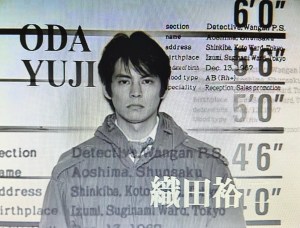
Wangan Police Station Criminal Case department police sergeant. He is the main character of this story. He used to be a salesperson in a computer company but, due to boredom & disputes among private companies, he quit & became a police sergeant. He began to feel sadness & great frustration inside Wangan Police Station because of unreasonable bureaucracy, but he’s very optimistic and began to change people around him. He’s basically “an eternal kid” himself, who loves children, and he is very sincere. Actor: Yuji Oda.

Sumire ONDA

Wangan Police Station theft department police sergeant. Until she met Aoshima-kun, she used to be like an office lady of Wangan Police Station. She was attacked by a psycho-criminal in the past and has a deep scar in her heart. She looks cold outwardly, but inside she’s naive & gentle. She never forgives a criminal who abuses women. Actress: Eri Fukatsu.

Heihachiro WAKU

Wangan Police Station detective leading officer. He is like Japan’s Morgan Freeman! He’s a role model for Aoshima-kun who looks up to him at all times. Six years ago, his young detective partner officer was murdered. When he met Aoshima, he decided to dedicate his life to catching criminals. A man of justice with very philosophical words. Actor Chôsuke Ikariya is absolutely perfect for this role.

Shinji MUROI

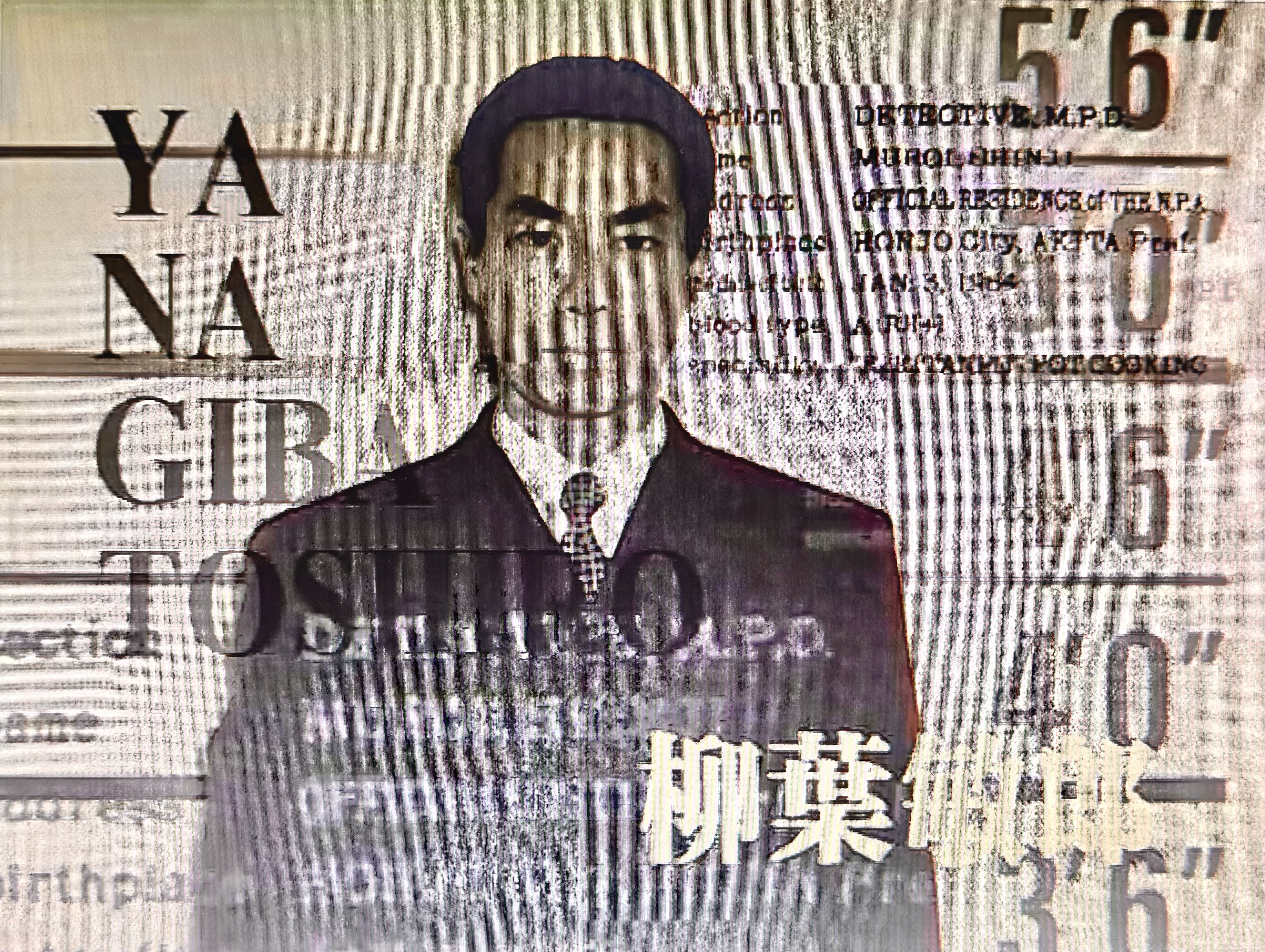
The Metropolitan Police Board Criminal Councillor. He’s the elite of Japan’s National Government officer. When he met Aoshima-kun, his policy changed, to be more caring, and he tries to be flexible to deal with things case by case. He doesn’t talk very much, but has the courage of his convictions and is very brave. He knits his brows a lot (frowning makes wrinkles appear between his eyes, which characterize him). He’s originally from Akita Prefecture of Northern Japan. When he meets people from his prefecture, he starts talking with his thick dialect. Because of that, other city officers who graduated from Tokyo University look down on him. He is elite, but very human. Actor: Toshiro Yanagiba.

Yukino KASHIWAGI
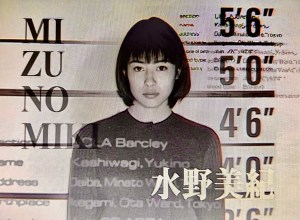
Wangan Police Station traffic department lady officer. She was the daughter of a murdered victim, and couldn’t talk for a while due to her great emotional shock. Aoshima-kun helps her to get back to social life and she becomes a criminal case officer sergeant. Actress: Miki Mizuno.

Masayoshi MASHITA

Wangan Police Station Detective. He’s the son of an elite officer of the Metropolitan Police Board and he wants to go “up” as a professional officer. He is cheerful, full of wit and loved by everyone. Actor: Yusuke Santa Maria.

The Three Amigos

Wangan Police Station chief detectives. They are called “The Three Amigos” due to the fact that they are always together and that they constantly flatter top officers to secure their salary. Actors: Soichiro Kitamura, Akira Saito, Takehiko Ono.

Synopses

>> Please, read the warning for possible spoilers <<

1. Salary-man Police Officer & His First Difficult Case 

Aoshima-kun, a 29-year-old police sergeant arrives for his first assignment at the Wangan Police Station  with enthusiasm, but Sergeant Sumire Onda totally ignores him. When he arrives at his first murder scene, he is treated as a nuisance. He meets the elite officer Muroi, but Detective Waku takes him away. In his office, all members act separately and they don’t even look like serious officers. Aoshima-kun is disappointed. The first job he gets is to be a driver for Councillor Muroi, to bring him to the General Hospital to see a daughter of the murder victim. She can’t talk due to her emotional shock, but Ashima approaches her gently. He also has to investigate a suspicious insurance salesman named Tanaka. He finds some comfort talking with Tanaka, but later discovers that Tanaka, bored by his routine job, is the murderer they were looking for! Ashima is shocked, “That man could have been me”. 

2. The delivered goods of love & revenge

Detective Waku is targetted by a police-killer named Yamabe. In the past, Waku-san has hit him during an inquiry, and that’s why Yamabe killed another police officer in revenge, Councillor Muroi thinks. Meanwhile, a fancy chair is delivered to Wangan Police Station for Waku-san, who thinks it is a gift from someone in the Police station that took pity of his old age & badly aching back. He sits… then, something is very wrong! There is a bomb under the chair and he can’t get up. Ashima-kun tries to help, but, accidentally, touches a wire and he can’t move at all either! During the ordeal, every member of Wangan Station offers their opinion. Finally, the Special Force arrives and both of them are saved on time. Muroi-san having behaved as a “gentleman”, the criminal Yamabe says to him,”I won’t take my revenge on you” before being taken away.

3. The erased report and her incident

Sergeant Sumire-chan is investigating a theft case, but the criminal is the son of a high government official named Tetsuya, and Sumire is ordered to stop investigating the case! She becomes angry and brings Keiko & Aoshima to a jail cell and stays there to protest the decision. Councillor Muroi arrives at Wangan station to talk to her, letting her know that she can investigate as long as she doesn’t bring the case to the media. Aoshima gets angry also, and shouts at Councillor Muroi, “The police station is not like a private sector company, right?!” Meanwhile the thief Tetsuya shows no remorse and Aoshima gets even angrier! Aoshima is scolded by Tetsuya’s lawyer, but Councillor Muroi protects him. Muroi says, “I shall become a top officer!” Aoshima smiles at him.

4. A girl’s tears and the pride of police officer 

Councillor Muroi is beginning to like Aoshima-kun very much, and wants him to be his subordinate. Muroi gives to Aoshima a chance to arrest the criminal Ooki, who’s a serial robber. Aoshima arrives at the nightclub to arrest him, but he sees a girl who is attacked by a violent man. Instead of arresting Ooki, Aoshima chooses to help the girl who is being abused. Councillor Muroi is extremely upset by this failure. However, Detective Waku & the other Wangan Police Station members, who were listening on the radio, go out to find and arrest Oaki, and bring him to Muroi.

5. Can’t hear her screaming voice!

Sergeant Sumire Onda is attacked on the way home. The criminal, Noguchi, is obsessed by her and has previously attacked her! Fortunately, Sumire-chan isn’t injured much, but Noguchi sends her a videotape of her apartment! He confuses Sergent Sumire with the anime character Pink Sapphire, and since she rejected him, he’s planning to take revenge on her. He’s a terrible stalker! About the same time, two other crimes are committed in the same way, and Detective Mashita retraces Noguchi through the Internet! Sumire agreed to become a decoy. In a parking lot, Aoshima looses sight of Sumire, and she’s again attacked by Noguchi, but, fortunately, Muroi arrives in time to save her and arrest the psycho-criminal Noguchi.

6. A Waiting Detective & her love and truth

Wangan police station is full of joy with the presence of a young girl entertainer, but Aoshima & Waku-san are on a stakeout to catch a drug dealer. Aoshima is shocked to find out that Ms. Yukino, the victim’s daughter in the first episode, is involved! Councillor Muroi doesn’t even remember her and when she receives a package with drugs, she’s arrested. She was a gal-pal of the drug dealer Iwase when she was a student in Los Angeles, but knew nothing of his drug dealings. Aoshima purposely makes her angry & she hits him, so he can arrest her and keep her from being brought to the headquarters. Ashima now has 48 hours to find and arrest the drug dealer Iwase.

7. 48 hours time limit

Waku-san brings Aoshima to meet his informant, Tatsumura (nicknamed the “mole”), to get a lead on Iwase. They succeeded in getting the list of Iwase’s former gal pals. Meanwhile, Ms. Yukino tells Aoshima about a gal named Ayako Sumida. The very next day, Aoshima succeeds to sneak in the company where Sumida’s gal works to get more information on her. While Detective Mashita & Sergeant Sumire are trying to kill the time and keep Ms. Yukino longer in Wangan station, finally, Detective Waku & Aoshima, who followed Ms. Sumida, arrive at the station with the drug dealer Iwase for Muroi to arrest him publicly. Waku says to Aoshima, “Go to the top, if you want to do the right thing!”

8. Farewell our beloved detective

The HQ hires “The Profiling Team,” three young nerd detectives who think they can solve any crimes just at looking at all the data on their computer! Detective Waku is furious for being ignored and leaves to investigate by his own old-fashioned way. Meanwhile, Sumire-chan is taking care of a little girl, Ai, who was alone in her parents’ house when it was visited by a thief. Councillor Muroi also feels great “doubt” for this trendy scientific crime-solving method and those brainy kids from the university. The Profiling Team thinks the criminal they are looking for is a man named Shibuya. Detective Waku rather suspects a man named Kubota. Muroi orders to check both suspects and it turns out that Kubota is the thief whom Sumire was looking for. Shibuya was indeed the criminal as the team said, but they realize how difficult it is to confront a criminal! Aoshima is the one who succeeds in making Shibuya confess.

9. Wangan Police Station Big Panic! Danger to Sergeant Aoshima. 

An unemployed student tries to commit suicide, and Detective Waku & Aoshima succeeds in stoping him. Councillor Muroi asks them to protect the mistress of a suspect murderer. She is very selfish, saying that, “I never asked him to murder anyone!” Aoshima & the other station members can’t stand her. Meanwhile, Aoshima finds a suspicious man looking around the station and relay the information to Muroi by fax, but receives no reply. The mistress is released for lack of evidence, and, on her way out, an elder brother of the victim (the suspect spotted by Aoshima) attacks her. Aoshima tried to stop him, but gets stabbed! Thanks to the lucky charm he always carries, Aoshima survives, but he gets angry at Muroi for not helping him earlier. Muroi feels great responsibility. “This was my fault,” and he promises to do more…

10. The Deadly Bullet: Detective’s tears were erased by the rain. 

Tatsumura (the “mole”) gives Detective Waku information about an old murder case where the victim was a police officer. This case is important to Waku-san, but he will retire in a week, so he decides to do things his own way. Aoshima asks Muroi for help but without success (bureaucracy!). Waku finally arrests a man named Toshi, who bragged of being a cop killer, but admits he was just doing like his buddy Anzai, who just came back from the Philippines. Anzai is an illegal gun dealer with a big scar on the face. At the same time, Ms. Yukino is coming back from her police entry exam and Mashita offers to walk her home. On their way, Mashita stops a man acting suspiciously. The man, who has a scar on the face, shots Mashita! Yukino screams! Later, all Wangan members are distributed weapons and they are looking for evidence under the heavy rain…

11. Farewell Sergeant Aoshima

Detective Mashita is in the hospital, heavily injured. Wangan station members find out information about Anzai on Detective Mashita’s internet homepage! Aoshima & Sumire go to see a man named Shiraishi, and they accidentally meet Anzai in the “Image Club” — a place where men buy prostitutes wearing anime costumes! Anzai starts shooting at Aoshima, so he had no choice but to shoot back. Instead of helping each other, the top elite bureaucrats are worried about the appearances. Councillor Muroi gets furious, and runs from the office. Aoshima & Muroi finally find the bar where Anzai is, after asking Yamabe about the location. Finally, they can arrest Anzai. Detective Waku says he wants Aoshima to continue his work after his retirement. He leaves Wangan Station saying, “I’m leaving, but Wangan Station doesn’t die as long as you have Aoshima.” A week later, Councillor Muroi & Aoshima receive their punishment for not obeying orders, but Aoshima is happy, saying to Muroi, “You, you stay on top for me!” Both smile at each other. Several days later, Aoshima starts his new assignment as an officer in a neighbourhood Police Box. On the street, he encounters an old lady, Mrs. Yoshida, who gave him his precious lucky charm!

The End of the Year Police Special

The year ’97 is almost over. With the help of Councillor Muroi, Ashima can come back to the Wangan Police Station after a long (longer than planned!) absence, but no one wants him in any department! He ends up in the Traffic Department with Ms. Yukino, but gets involved with an injury case at an elementary school. Then, he is sent to Life Safety Department and then to another Department, and another! During all this time, he is still investigating the elementary school incident and finally arrests a young drug addict named “Kagami.” Kagami somehow sneaks out while the station’s staff is distracted and takes one of the Three Amigos hostages with a gun! It turns out that Kagami is also a murderer wanted by the Metropolitan Police HQ! The elite officer Shinjo says, “For his crime he deserves death” and tries to shoot Kagami, but at the right moment Councillor Muroi calls the Special Force, S.A.T., and Kagami is finally arrested!

Wangan Side Story: The Female Cop Story

Ms. Natsumi Shinohara arrives at the Wangan Police Station after graduating from the Police Academy to be a Police Lady in the Traffic Department. She shows the newcomers’ enthusiasm, but her hopes are destroyed when she is put under the responsibility of Ms. Kuwano, a “natural-born old maid” & very inflexible female cop. Natsumi finally gets tired of being pushed around! She screams after going through so many unpleasant incidents, “If you’re right, I’m quitting!” Later, Natsumi gets accidentally involved with a criminal whom the police HQ had been looking for. She is asked to chase the criminal’s car, and Kuwano is assisting her through the radio. Natsumi succeeds in hitting the criminal’s car and arrests him. After the incident, Kuwano is transferred and Natsumi shows her respect by saluting, “We’re all police officers”.

The Autumn Crime Eradication Special

Aoshima-kun comes back to Wangan station after a month of investigation under cover. After an arson incident, the criminal and the woman who ordered him to commit the crime are arrested and Aoshima is asked to pick them up. Somehow, the woman escapes. Aoshima and Sumire are punished for letting her escape, especially Sumire who seems sympathetic to the woman who had been abused by her boyfriend. Councillor Muroi wants Aoshima to follow Sumire and report her activities. He is also tapping the telephone wire of Wangan station to investigate both Aoshima & Sumire! Ashima accuses him of betrayal & treachery. The woman is arrested by Shinjo, but Aoshima also insists on investigating the victim (the woman’s boyfriend and abuser) equally. Sumire is furious for finding out that she was tapped. Even after the arrest, all members feel betrayed and this incident had deepened the emotional split among Wangan members.

Japanese Movies at the 1999 MWFF

Odoru Daisôsasen: The Movie (Bayside Shakedown)

By Miyako Matsuda (From Protoculture Addicts #59: 15)

This very original Police show will totally charm you! Bayside Shakedown was the English language title at the 1999 Montreal World Film Festival, but the original title is Odoru Daisôsasen The Movie: Wangansho Shijo Saiaku No 3-kakan, which means “The Dancing Large Criminal Investigation Line Movie: The Worst 3 Days In Wangan Police Station History” (gee, too long, eh?). It is also known by fans as Rhythm & Police or Wangan Police Station. Actually, it was a super popular hit TV show in Japan (it started in January 1997 and there were eleven 45-min. episodes, followed by four TV Specials — we will cover this series in a future issue of the magazine), so it is no surprise that they brought those characters back in a movie! Both the series and the movie have very comical scenes that make you laugh, as well as some serious ones (like exposing the ugly politics among Japanese bureaucrats), that make you think. In any case, it’s captivating and you can’t take your eyes off the screen!

It tells the everyday life story of Wangan (Bayside) Precinct Police Station in Tokyo: murder cases, petty thefts, kidnapping cases, etc. In a way, it’s like many other cop shows, but the storytelling is very original and those characters are charming. The leading character is Detective Aoshima-kun (played by Yuji Oda) who’s young and idealistic. He used to be an office worker in a computer company, but he was bored to death and longed for being a cool police detective. So, he quit the job to join Wangan Police Station. However, he is quickly disillusioned. He thought that being a detective would mean arresting criminals and doing murder investigations, but finds his work paralyzed by police stations’ territorial disputes spawned from the Japanese vertically structured society and bureaucracy. Maybe that job is just as bad as in the private sector? The local cops are always pushed around by the Headquarters’ officers and warned to keep their noses out of the investigations despite the fact that Wangan people know the area better. Being so helpless makes Aoshima feel despaired, but, having befriended Inspector Muroi, from Headquarters, he convinces him to try helping citizens instead of just being an elite bureaucrat.

Another great character is Detective Waku (nicknamed “The Japanese Morgan Freeman”!), an old and extremely philosophical cop who plays the role of a mentor for Aoshima. As a guest appearance, we can also see Ms. Kyoko Koizumi (a former Japanese idol singer nicknamed “Kyon Kyon”) who plays a psycho! This female character, a nurse who became unemployed, is like a child living in her own world and she kills people who want to die. She’s a really scary character. Well, actually in Bayside Shakedown The Movie, all criminals are “psychos” who can’t grow up and remain children psychologically. A bunch of teenagers kidnap a company’s president and they think that’s a game! Time has really changed. Now, with the Internet, where psychos and criminals can communicate and exchange ideas, the nature of crime itself has changed.

The director, Mr. Katsuyuki Motohiro, is very young. Born in 1965, his background is in TV, where he directed several variety shows and dramas. The movie still has this “TV show” feel, but Director Motohiro also gives an incredible tempo to the storytelling by using dynamic film angles, slow motion, fast paced shots, etc. It is really like dancing! We must add that Mr. Ryoichi Kimizuka did a fantastic job with this very entertaining script. We can feel a real empathy towards those police characters! The balance is very good between action & reflection, humour & drama. Finally, all this is very well supported by an excellent soundtrack by Akihiko Matsumoto. The music makes a great difference and gives more punch to the story!

After seeing this film, I really felt good and I wanted to see more (luckily, we were able to find the TV series). We highly recommend this movie. You won’t be disappointed! Hopefully, some North American releaser will eventually release both the TV series and the movie in English. [MM]

Odoru Daisôsasen The Movie (踊る大捜査線 THE MOVIE). Japan, 1998, 119 min. Dir.: Kasuyuki Motohiro; Script: Ryoichi Kimizuka; Phot.: Osamu Fujishi; Mus.: Akihiko Matsumono; Prod.: Fuji TV/Pony Canyon; Cast: Yuji Oda, Toshiro Yanagiba, Eri Fukasu, Miki Mizuno, Kyoko Koizumi, Chosuke Ikariya, Takehiko Ono, Soichiro Kitamura, Akira Saito, Masayoshi Mashita, Yusuke Santa Maria, Kenta Sadoi, Toshio Kakei.

Source: Kinema Jumpo #1269 (11-98): 26-63. For more information you can check out those web sites:

[ AsianWikiIMDbOfficial webpageRotten TomatoesWikipedia ]

[ Traduire ]

Anime update [002.025.026]

Studio Pierrot

I have already covered much the documentaries about anime and manga on NHK World. There are two shows in particular that are of interest: first, Manben: Behind the Scenes of Manga with Urasawa Naoki (talking about artists like Shigeru Mizuki or Yasuhiko Yoshikazu) and, second, Anime Manga Explosion (talking about the Patlabor Revival, Music in anime : Girl Band Anime or the Legendary Producer Maruyama Masao).

The latest episode of Anime-Manga Explosion is dedicated to Studio Pierrot. It is airing January 25th and 26th on NHK World and should be available soon as Video On Demand (VOD). Studio Pierrot (株式会社ぴえろ / Kabushiki-gaisha Piero) was created forty-five years ago, in May 1979, and produced several famous anime like Urusei Yatsura, Area 88, Kimagure Orange Road, YuYu Hakusho, Here is Greenwood, Fushigi Yûgi, Neo Ranga, GTO, Plastic Little, Key the Metal Idol, Hikaru no Go, The Twelve Kingdoms, Naruto, Bleach, etc., although the documentary focuses only on those last two titles.

If you are interested into anime and its history, you should have a look

[ Traduire ]

The Boy and the Heron

“After his mother’s death, young Mahito moves to her hometown, where a mysterious heron leads him into a fantastic realm shared by the living and the dead.” [Description from Netflix]

>> Please, read the warning for possible spoilers <<

The Boy and the Heron (君たちはどう生きるか / Kimitachi wa dō ikiru ka / lit. “How do you live?”) is the 12th feature-length movie directed by Miyazaki (despite having announced his retirement several time). It is inspired by his childhood and by Genzaburo Yoshino’s 1937 novel How Do You Live? which Miyazaki has read as a boy and is considering as one of his favourites books. The production lasted for seven years.

During WW2, after the fire-bombing of Tokyo, the twelve year-old Mahito moves to his family’s estate in the countryside. His sick mother has died and his father has remarried his mother’s sister.  He feels watched by a strange grey heron. On the expansive estate, there’s an old tower built by his Great-Uncle and that is said to be cursed. He is told to keep away, but, as all teenagers, doesn’t listen. In a coming-of-age experience, the talking heron guides him into a strange parallel world out of time.

This is the weirdest of all Miyazaki’s movies. It is a mish-mash of everything: biographical elements, bits and pieces of most of his previous movies (even from his book Shuna’s Journey), the myth of Orpheus who visits the underworld to save his wife Eurydice, and even Snow White and the seven dwarves (in this case represented by seven old and ugly maids) ! It is a trip through the mind of Miyazaki (maybe he is the Master of the Tower and each of the doors of the tower leads to one of his universe?). It can be a very simple story (a boy saves his aunt/step mom from the meta universe or the boy has a feverish dream following a bad head injury ?) or a very complex metaphysical allegory that doesn’t make much sense. You choose. However, what ever you think of the story the fact remains that it is an incredibly beautiful hand-drawn animation (the backgrounds are really stunning and the effects when the boy runs through the burning streets of Tokyo are quite impressive). A must-see movie particularly if you are a fan of Miyazaki.

TheBoyAAndTheHeronThe Boy and the Heron : Japan, 2023, 124m, Japanese with English subtitles; Dir. & Scr.: Hayao Miyazaki; Art Dir.: Yôji Takeshige; Anim. Dir. & Char. Design: Takeshi Honda; Phot.: Atsushi Okui; Ed.: Rie Matsubara, Takeshi Seyama, Akane Shiraishi; Music: Joe Hisaishi; Prod.: Toshio Suzuki (Studio Ghibli); Distr.: Toho; Cast: Soma Santoki (Mahito Maki), Masaki Suda (The Grey Heron), Kô Shibasaki (Kiriko), Aimyon (Himi), Yoshino Kimura (Natsuko), Takuya Kimura (father: Shoichi Maki), Jun Kunimura (The Parakeet King), Shohei Hino (Great-Uncle). Rated PG. It has received a score of 97% on Rottentomatoes, 91% on Metacritic and 7.4 / 10 on IMDb. With a box office of US$294.2 million, it’s the highest-grossing Japanese film. It also received several awards: Academy Awards, the BAFTA Awards, the Golden Globes, and the Japanese Film Academy. stars-3-5

To learn more about this title you can consult the following web sites:

[ GoogleIMDbNetflixTIFFWikipedia ]

Also, you can check the official trailer on Youtube:

[ Traduire ]

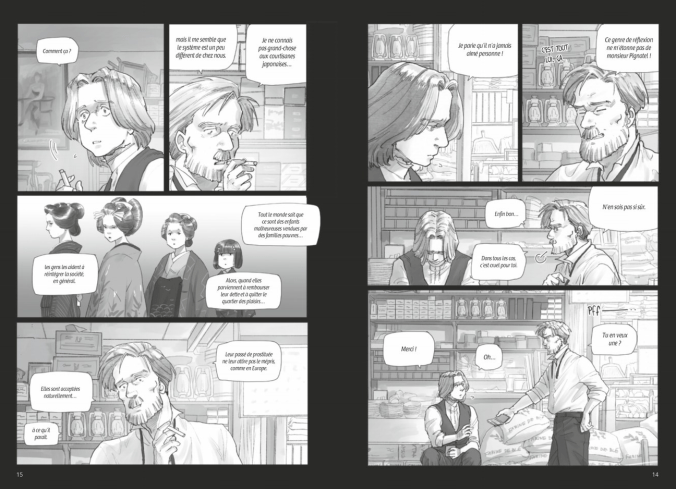
Ma vie en 24 images par seconde

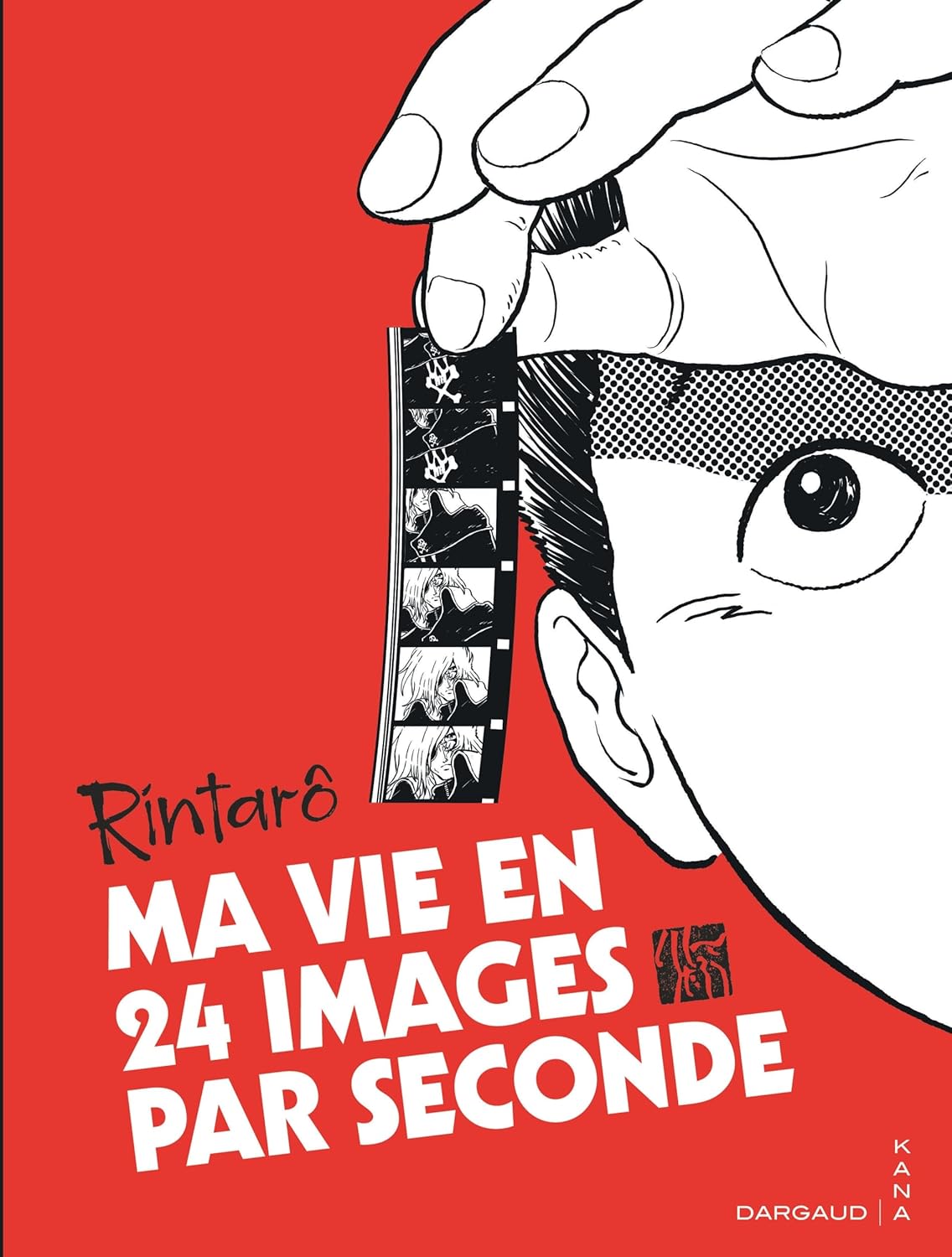
MaVieEn24ImagesSec-cov“Un parcours hors du commun qui va nous mener du Japon d’après-guerre jusqu’en 2001 et la sortie du film Metropolis. Un parcours fait de rencontres, d’opportunités, de soirées interminables, de jazz, de cigarettes, mais surtout de cinéma. Une passion qui lui a été transmise par son père et qui lui donnera très tôt l’envie de devenir réalisateur. Et c’est le cinéma d’animation qui lui offrira cette opportunité. Autre figure incontournable de ce parcours, celle d’Osamu Tezuka auprès duquel il va travailler des années, notamment sur la première série d’animation : Astro. Puis Rintaro prendra son envol et se verra confier la réalisation d’autres œuvres auxquelles il apportera sa créativité et qui deviendront des réalisations clés de l’histoire de l’animation japonaise : Le Serpent blanc, Sabu et Ichi, Capitaine Albator, Galaxy Express 999, etc. Si le cinéma d’animation japonais est devenu une référence mondiale, c’est en bonne partie grâce à lui.” [Texte du site de l’éditeur]

“Quand un maître de l’animation japonaise se lance dans la création de sa première BD, c’est pour nous raconter son histoire. Un parcours hors du commun qui va nous mener du Japon d’après-guerre jusqu’en 2001 et la sortie du film Metropolis. Un parcours fait de rencontres, d’opportunités, de soirées interminables, de jazz, de cigarettes, mais surtout de cinéma. Une passion qui lui a été transmise par son père et qui lui donnera très tôt l’envie de devenir réalisateur. Et c’est le cinéma d’animation qui lui offrira cette opportunité. Autre figure incontournable de ce parcours, celle d’Osamu Tezuka auprès duquel il va travailler des années, notamment sur la première série d’animation : Astro Boy. Puis Rintarô prendra son envol et se verra confier la réalisation d’autres œuvres auxquelles il apportera sa créativité et qui deviendront des réalisations clés de l’histoire de l’animation japonaise : Le Serpent blanc, Sabu et Ichi, Capitaine Albator, Galaxy Express 999, etc.” [Texte de la couverture arrière]

(Attention, lire l’avertissement de possibles divulgâcheurs)

MaVieEn24ImagesSec-p020

Pg 20

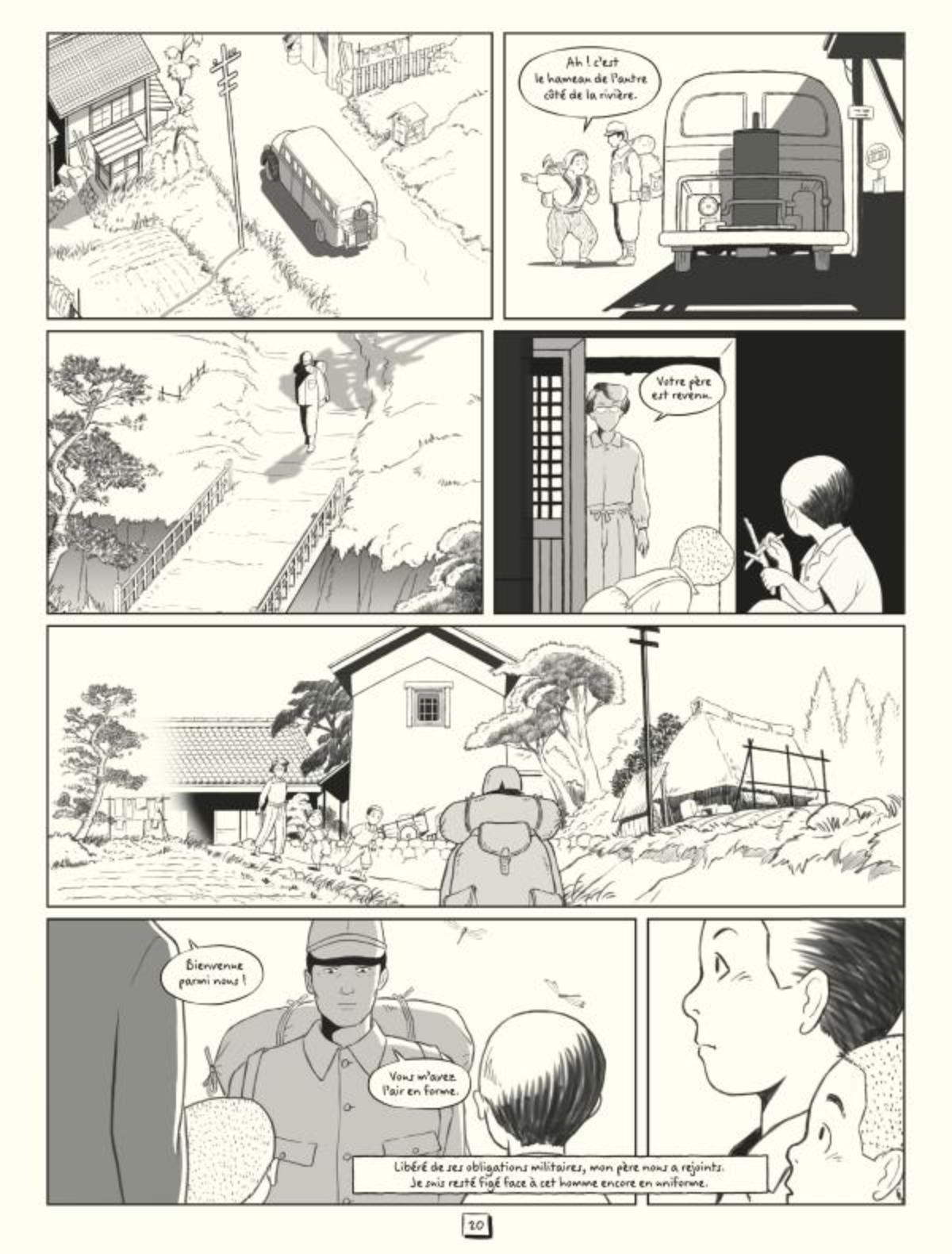
Cette autobiographie en manga du réalisateur Rintarô (Shigeyuki Hayashi de son vrai nom) est un ouvrage extraordinaire. Car non seulement il raconte le déroulement de sa jeunesse et de sa carrière, mais c’est aussi toute l’histoire de l’animation japonaise qu’il nous décrit. Le seul bémol est qu’il le fait dans un style graphique très dépouillé qui n’utilise que de simples traits d’encrage ou de crayonné, presque sans la moindre trame ou ombrage. Il a beau avoir été un grand réalisateur (mais aussi coloriste, intervaliste, superviseur, etc.), mais cela ne fait pas de lui un grand mangaka ! Toutefois la scénarisation et la narration de son récit sont excellentes. Son nom m’était familier, mais j’ai tout de même été surpris de l’importance que son travail a eue dans l’histoire de l’animation japonaise, remontant aussi loin que Le Serpent blanc en 1958 et sur des titres aussi célèbres que Astro, Le Roi Léo, Albator, Galaxy Express 999, Harmagedon, L’épée de Kamui ou encore Métropolis ! 

C’est donc un ouvrage très intéressant, à lire absolument si vous êtes amateur d’animation japonaise.

Ma vie en 24 images par seconde, par Rintarô (Traduction par Shoko Takahashi). Bruxelles: Dargaud / Kana (Coll. Made In), janvier 2024. 256 pages, 22.5 x 29.8 cm, 27.90€ / $C 48.95, ISBN 978-2-5050-7638-4. Pour un lectorat adolescent (14+). stars-3-5

Vous trouverez plus d’information sur les sites suivants:

[ AmazonGoodreadsGoogleNelliganWikipediaWorldCat ]

© 2024 Rintaro • Kana / Dargaud (Dargaud-Lombard s.a)

[ Translate ]

Patlabor Revival

The latest episode of NHK World’s documentary series Anime Manga Explosion (see my article “Anime and manga on NHK World”) is dedicated to Patlabor. The show aired on NHK World Saturday 28 and Sunday 29th, but it should be available for viewing on demand (VOD) soon. [update 2024/09/30: it’s now available on VOD]

In Patlabor, Tokyo had been destroyed in a big earthquake and, in order to rebuild it, Japanese created heavy construction machines (more power suits than robots) called “Labors” to do the work. But what to do if someone steals a labor in order to rub a bank? The answer: you make the police drive their own labors instead of cars — and the Patrol Labors (Pat-Labor) were born. The show puts emphasis not on the mecha themselves but on the characters as it follows the daily life of the personnel of a police station (Section 2): the officers who are piloting the labors and the mechanics who are doing their maintenance, as well as their entourage.

Created by Headgear (a group composed by manga artist Masami Yūki, director Mamoru Oshii, screenwriter Kazunori Itō, mecha designer Yutaka Izubuchi, and character designer Akemi Takada), the series first appeared as a 22-volume manga (serialized in Weekly Shonen Sunday between March 23 1988 and May 11 2994) and two OVA series (7 episodes released between April 1988 and June 1989, as well as 16 episodes released in 1990–1992). It was quickly followed, among others, by a 47-episode TV series (aired in 1989–1990), three movies (1989, 1993, 2002) and seven light novels (1990-1994). There was even a 7-episode live-action TV series (2014-2015)! 

However, today’s anime fans probably never heard of this excellent series. The best way to make them discover Patlabor, was to reboot the series (it’s a trend: we have recently seen announced the revival of Ghost in the Shell, Ranma 1/2 and even The Rose of Versailles). Therefore a new Patlabor series titled Patlabor EZY was announced in November 2016 as part of the 35th anniversary of the series. It would feature entirely new characters. Recently it was announced that it would be produced by J.C.Staff and would air in 2026. The series is directed by Yutaka Izubuchi (original mechanical designer), with a script by Kazunori Itō, character designs by Masami Yūki, mecha designs by Kanetake Ebikawa & Toshiaki Ihara, art designs by Masanori Kikuchi & Yuta Akiyama, animation direction by Takamitsu Satou, CG direction by Yoshinori Moriizumi, and music by Kenji Kawai. Akemi Takada is also contributing to the costume designs and Tarō Maki (Genco) is producing.

If you want to have an idea of what this new series looks like, you can watch the Patlabor Special of the Anime Manga Explosion documentary on NHK World. I just hope that, when this series is released, it will also be available in North America.

[ Traduire ]

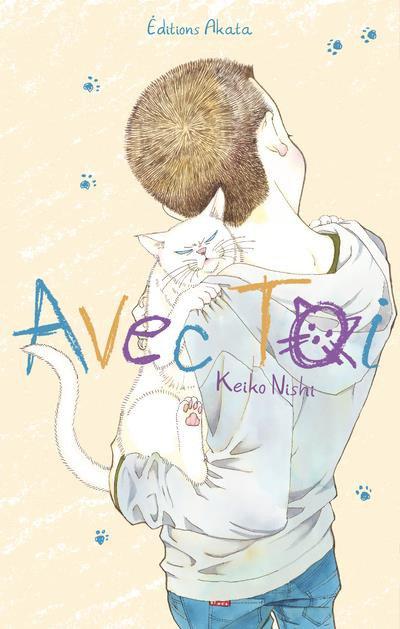
Avec Toi

AvecToi-cov“Quand Wataru, alors âgé de cinq ans, décide de recueillir un chat errant, il se doute bien que son terrible père refusera de le garder au sein de son foyer. Pourtant, devant la détresse et la solitude de son fils, mais aussi la détermination du chaton, ce salarié d’ordinaire impassible finit par céder… Au fil des années, Shirô, chat de gouttière sauvé in extremis, deviendra un membre incontournable de cette famille japonaise comme les autres.”

[Texte du site de l’éditeur et de la couverture arrière]


(Attention, lire l’avertissement de possibles divulgâcheurs)

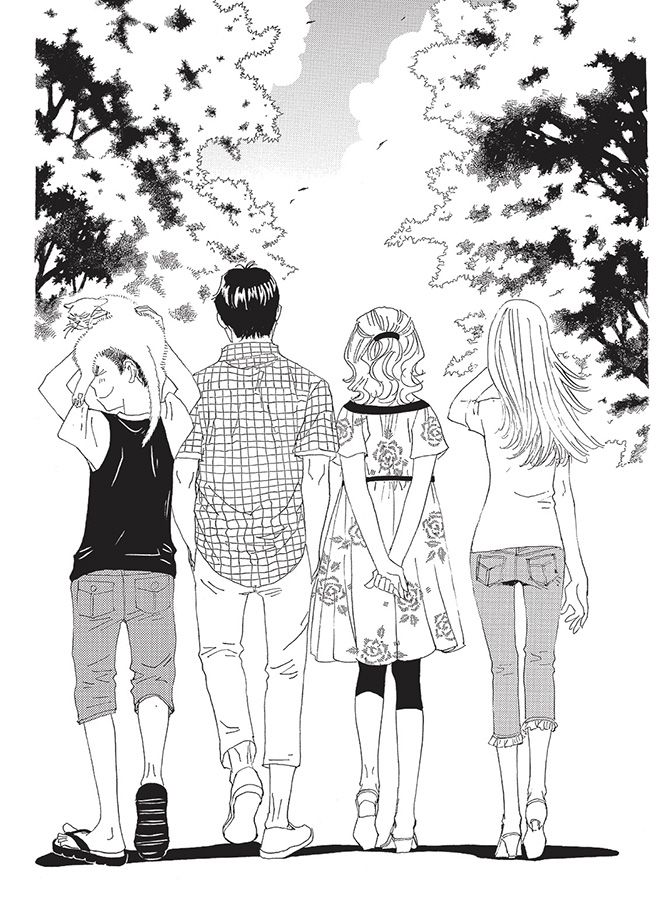
AvecToi-p057

p. 57

Avec toi [シロがいて / Shiro ga Ite / lit. “Shiro est là”] est un manga josei par Keiko Nishi. Il a été prépublié dans le magazine trimestriel Zōkan [Special] Flowers (du numéro d’hiver 2015 au numéro du printemps 2018) avant d’être compilé en un seul volume chez Shōgakukan en mai 2018. J’ai découvert cette auteure grâce à la série documentaire “Manben” sur NHK World (voir mon article à ce sujet) qui consacre un épisode à Keiko Nishi (où nous l’observons dessiner des pages de Hatsukoi no Sekai). On la présente comme une mangaka de talent, avec plus d’une trentaine d’années d’expérience, qui se spécialise dans les histoires shōjo et josei romantiques caractérisées par une imagerie élégante, des personnages féminins un peu maladroits et le fait qu’elle tend à représenter les émotions des personnages sans utiliser de mots. Parmi ses œuvres, j’ai déjà commenté Voyage au bout de l’été et Ane no kekkon.

Il s’agit d’une chronique familiale qui s’étend sur une vingtaine d’années où le quotidien d’une famille japonaise typique nous est révélé à travers le chat qu’ils ont adopté : un père antipathique qui travaille trop et a une maîtresse, une mère attentionnée, un jeune garçon qui ne rencontre pas les attentes de son père et fugue pour partir sa propre entreprise avec des copains, une jeune fille qui peine trouver le bonheur… Le récit touchant de la vie d’un chat qui lève le voile sur une société qui est loin d’être idéale…

Avec toi est un très bon manga qui nous offre une histoire intéressante, mais dont la fluidité de la narration est plutôt inégale. Le dessin de Keiko Nishi possède un trait fin, mais simple qui rend la lecture encore plus agréable. J’ai déjà décrit son style comme “élégant”, mais dans le cas de ce one-shot les visages des personnages sont parfois caricaturaux, sans doute afin d’alléger le ton du récit. Une très bonne lecture.

Avec toi, par Keiko Nishi (Traduction: Sébastien Ludmann). Rancon: Édition Akata (Coll. Medium), novembre 2019. 192 pages, 11.2 x 17.6 cm, 7.10 € / $12.95 CAN, ISBN 978-2-36-974-776-5. Pour un lectorat adolescent (14+). stars-3-5

Vous trouverez plus d’information sur les sites suivants:

[ AmazonGoodreadsGoogleNelliganWikipediaWorldCat ]

© 2018 Keiko Nishi. © 2019 Éditions Akata pour l’édition française.

[ Translate ]

Les Saisons d’Ohgishima 4

LesSaisonsdOhgishima-4-cov“1868, Nagasaki. Alors que le Japon entre dans l’ère Meiji, les partisans de la restauration impériale issus du sud du pays affrontent les derniers défenseurs du shogunat d’Edo lors de la guerre de Boshin. Mais la vie suit son cours à Nagasaki, où Tamao, qui poursuit sa formation de courtisane, voit les vagues du temps emporter un à un ceux qu’elle aime.

Après Le Dernier Envol du papillon et La Lanterne de Nyx, découvrez la dernière partie de la “trilogie de Nagasaki”, par Kan Takahama, lauréate du Grand Prix Osamu Tezuka en 2020.” 

[Texte du site de l’éditeur et du rabat intérieur; voir aussi la couverture arrière]

(Attention, lire l’avertissement de possibles divulgâcheurs)

Les saisons d’Ohgishima (扇島歳時記 / Oogishima Saijiki / lit. “Registres saisonniers d’Ohgishima”) est un manga seinen par Kan Takahama qui a d’abord été prépublié dans les périodiques Torch et Comic Ran en 2019-2022 avant d’être compilé en quatre volumes chez Leed Publishing en 2020-22. Il a été traduit en français chez Glénat. Takahama est une mangaka qui est très populaire en France. Son sujet de prédilection est les relations amoureuses complexes et difficiles, mais elle s’est également intéressé au manga seinen historique, en particulier avec sa “Trilogie de Nagasaki” qui se déroule un peu avant et au tout début de l’ère Meiji (et dont j’ai déjà commenté les deux premières parties: Le Dernier envol du papillon et La lanterne de Nyx, ainsi que les premier, second et troisième volumes des Saisons d’Ohgishima).

Le récit se conclut avec ce quatrième volume. La capitale Edo, où siège le gouvernement, a été renommée Tokyo et c’est le début de l’ère Meiji.  Toutefois, la guerre fait toujours rage dans le Nord et Kojiro se retrouve au cœur de ces combats sanglants. Il craint de succomber à la malédiction de sa famille et de devenir un démon, mais son père se sacrifie pour le faire revenir à Nagasaki. Ganji se livre à la prison et avoue être un Kirishitan mais le soldat de garde le laisse partir. Il a alors une discussion franche avec Mademoiselle Oura. Victor désespère de ne pas pouvoir émanciper Tamao. Sakunosuke disparaît de la maison close et, l’état de santé de Rikiya s’étant dégradé, elle retourne chez elle. Momotoshi veut faire fortune pour pouvoir retourner en Europe. Alors que le monde change autour d’elle, Tama est devenue mature…

Un manga très intéressant et beau, caractérisé par le style un peu particulier de Kan Takahama — angulaire, un peu brouillon, qui utilise beaucoup de trames et de ton de gris ce qui donne de la dimension et de l’originalité à son dessin, qui s’est d’ailleurs beaucoup amélioré depuis le debut de sa trilogie. L’aspect le plus fascinant de ce manga c’est qu’à travers le récit de la vie quotidienne des personnages, Takahama nous fait découvrir la culture et les mœurs d’une période de transition qui constitue sans aucun doute l’époque la plus intéressante de toute l’histoire japonaise. Il nous offre une agréable lecture, à la fois divertissante et instructive, incontournable pour tous amateurs de Takahama ou d’histoire japonaise.

Il ne nous reste plus qu’à attendre patiemment la traduction française, inévitable, du prochain manga de Takahama: Shishi to Botan (獅子と牡丹 / lit. “Le lion et la pivoine”) couramment en prépublication dans Torch. Il traite d’un sujet plutôt similaire, car il raconte l’histoire de Akira Tominaga, un acheteur d’or d’Amakusa qui entreprend une quête pour retrouver les trésors cachés des Kirishitan.

Les saisons d’Ohgishima t.4,  par Kan Takahama (traduction par Yohan Leclerc). Grenoble: Éditions Glénat (Coll. Seinen, Roman Graphique), mars 2024. 224 pages, 14.5 x 21.0 cm, 10.95 € / $18.95 Can, ISBN 978-2-344-05730-8. Pour un lectorat jeune adulte (16+). Extraits disponibles. stars-3-5

Vous trouverez plus d’information sur les sites suivants:

[ AmazonGoodreadsGoogleNelliganWikipediaWorldCat ]

© Kan Takahama. © 2024 Éditions Glénat pour la traduction française.

[ Translate ]

Music in anime

One of the aspects of anime that I always found interesting is the music and the use of songs (but not just in opening and closing credits). It is something that we would not find in western animation of my childhood. The western animations were usually cheaply done and the scripts were quite simple. I am not sure when it started in Japan, but I have noticed it mostly in shows from the eighties, like Macross (1982), Mospeada (1983), Megazone 23 (particularly part II, 1986) or Bubblegum Crisis (1987-1991). The presence of music and lyrics in the shows was very sophisticated and was used to enhanced the emotion of the characters or emphasized the drama of a situation, like a battle scene. When it was well done it was really awe inspiring.

The concept was perpetuated through all the Macross sequels, but particularly with Macross Plus (1994-1995) and Macross 7 (manga: 1994-2001, anime: 1995, 1997-1998), and it was push even further with the creation of anime about music like Beck (manga: 1999-2008, anime: 2004-2005), Black Heaven (anime: 1999), Nana (manga: 2000-2009, anime: 2006-2007), Nodame Cantabile (manga: 2001-2010, anime: 2007-2010), La Corda d’Oro (manga: 2003-2011, anime: 2006-2007), or Carol & Tuesday (2019) — just to name a few.

Now it is an integral aspect of mostly all anime and much has been written about it (Crunchyroll, Google, My Anime List). We certainly talked a lot about Japanese music in Protoculture Addicts (particularly with the series of articles by James S Taylor titled “The Modern Japanese Music Database” which started in issue #57 — we used to have an index of old articles on the defunct magazine website and I intend to eventually make it available on a new website in a near future).

Today, while watching a documentary on NHK World (see my article “Anime and manga on NHK World”) part of the Anime Manga Explosion series, I learned about another increasingly popular genre of music anime: the Girl Band Anime that focuses on the life and tribulation of… girl bands. They talk about anime series like BanG Dream! (2017-2020) or Bocchi  The Rock! (2022) which features authentic guitar rock scenes and where voice actors form real live bands.

In the last decades I’ve been mostly reading manga, but documentary like this makes me want to watch more anime…

On this subject, you can read also my article “Memorable Music.”

[ Traduire ]

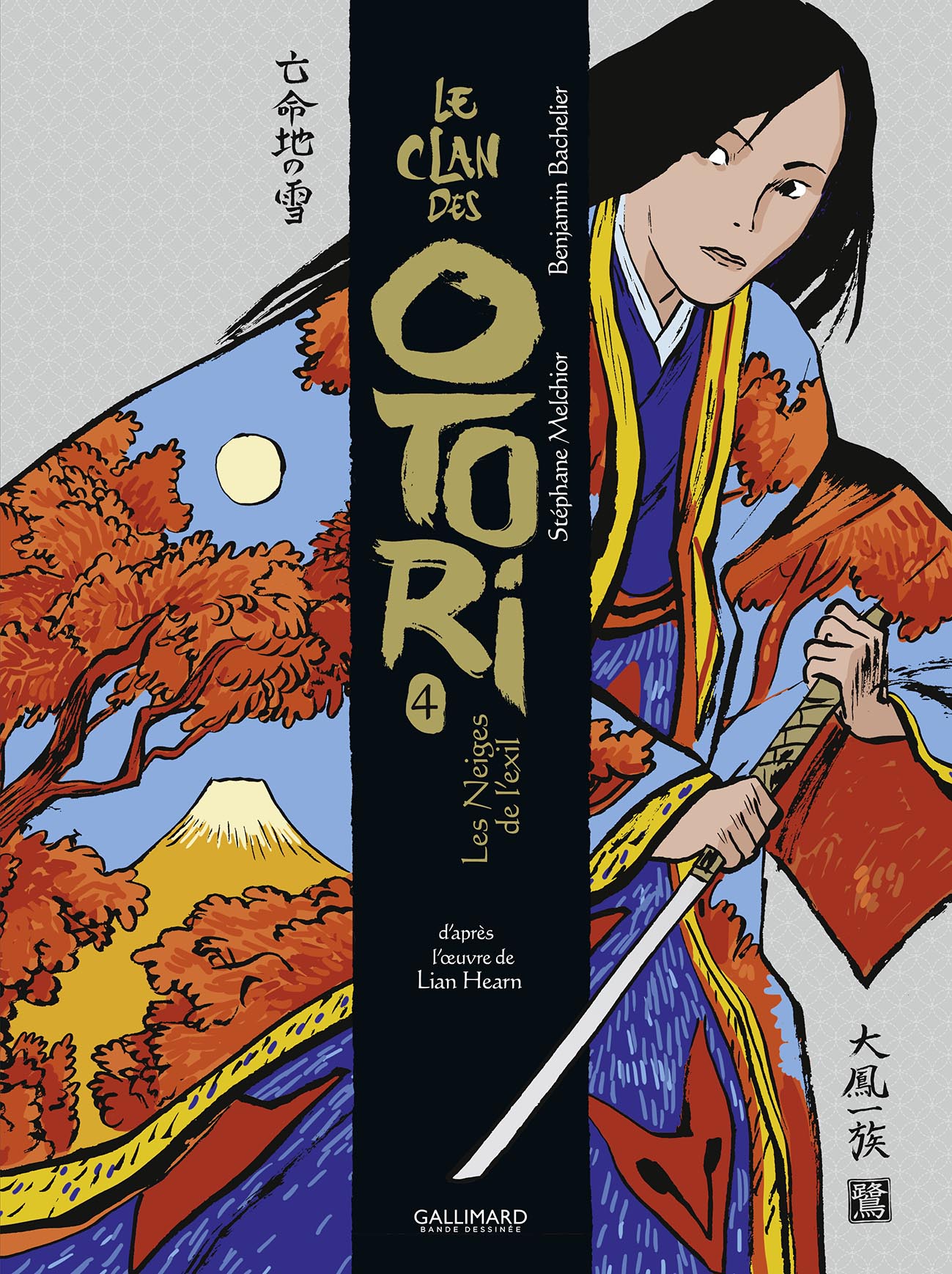
Le clan des Otori t.4: Les Neiges de l’exil

J04814_LeClanDesOtori_T4_COUV.inddUne fresque puissante au cœur d’un Japon médiéval fantastique sublime: le début du deuxième cycle. 

L’assassinat du sanguinaire chef des Tohan, sire Iida, a renversé l’échiquier politique des Trois Pays. L’heure est aux alliances, mais Takeo et Kaede, tous deux héritiers légitimes de leurs clans, poursuivent d’autres desseins. Fuites, secrets, traques, magie, séduction… Leurs ennemis sont partout. Dissimulés, prêts à frapper.”

[Texte du site de l’éditeur et de la couverture arrière]

(Attention, lire l’avertissement de possibles divulgâcheurs)

Le Clan des Otori est une bande dessinée par Stéphane Melchior et Benjamin Bachelier qui adapte la série de romans de fantasy historique Tales of the Otori par Lian Hearn, inspirée par le Japon féodal. J’ai déjà commenté le premier et le second tome, ainsi que le troisième volet qui conclut le premier cycle du récit (basé sur le premier volume, Across the Nightingale Floor parut en 2002). Le second cycle adapte le deuxième tome de la série, Grass for His Pillow parut en 2003.

ClanDesOtori-4-p006

T. 4, p. 6

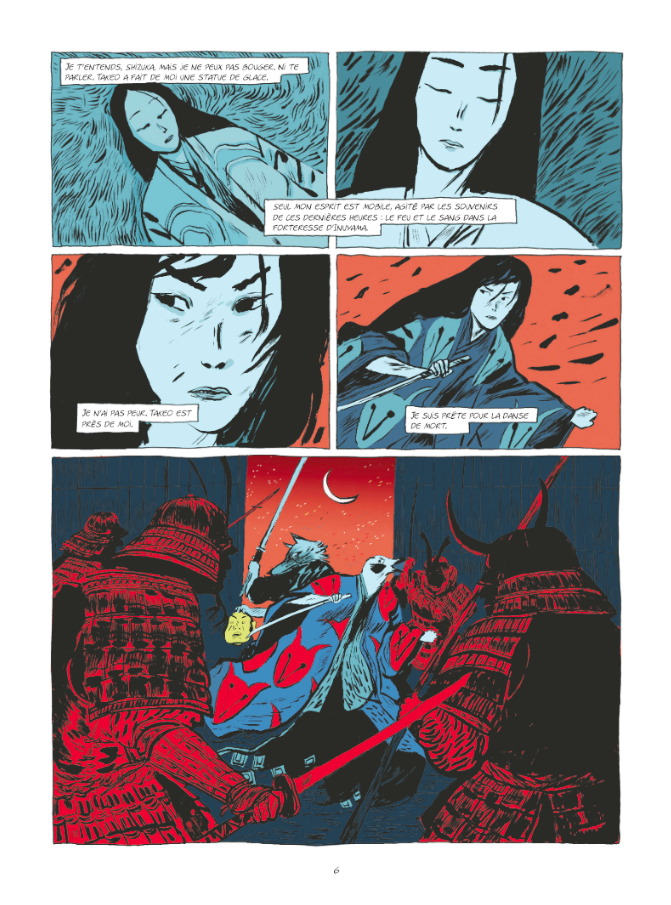
Takeo, que l’on nomme maintenant Minoru, se cache à Yamagata le temps que les choses se calment. Il est protégé par la Tribu mais est en fait prisonnier sous la surveillance d’Akio qui lui est plutôt hostile. Héritier présomptif de l’autorité de la Tribu, sa présence gêne les ambitions du cousin de son père, Kotaro, et de son neveu, Akio. Mais Takeo n’est pas intéressé au pouvoir. On le cache au sein d’une troupe de théâtre saltimbanque. Quant à Kaede, elle donne son allégeance à Araï Daiichi, le nouveau maître des Trois Pays depuis la mort de Iida Sadamu. Elle obtient la permission de retourner chez elle. Maintenant héritière tant des Shirakawa que des Maruyama, on la dit enceinte de Otori Shigeru (en fait, l’enfant est de Takeo). Elle retrouve son domaine de Shirakawa dévasté, sa mère morte et son père gravement blessé. Si elle veut trouver sa place sur l’échiquier du pouvoir, elle doit se faire des alliés.

Cette bande dessinée nous offre une très bonne adaptation du roman de Lian Hearn. C’est un beau récit, captivant, qui se lit bien malgré la complexité des intrigues qui opposent les différentes factions politiques ou religieuses (les clans de Rohan, Seishuu, Otori, Nogushi, la Tribu, les Invisibles, etc.). Si j’apprécie beaucoup moins le style du dessin, brouillon avec des couleurs criardes (qui n’est pas sans rappeler celui de Sfar), celui-ci exprime toutefois bien le récit et ne distrait pas de la lecture. C’est donc une très bonne BD qui nous permet de découvrir plus aisément la série de romans et qui plaira certainement aux amateurs de culture japonaise.

Le Clan des Otori  t. 4: Les Neiges de l’exil, par Stéphane Melchior (texte, d’après l’œuvre de Lian Hearn) et Benjamin Bachelier (dessin). Paris: Gallimard BD (Coll. Fétiche), mars 2024. 88 pages, 23.7 x 31.7 cm, 18.95 € / $C 37.95, ISBN 9782075197007. Pour lectorat adolescent (12+). Extraits disponibles. stars-3-5

Vous trouverez plus d’information sur les sites suivants:

[ AmazonGoodreadsGoogleNelliganWikipediaWorldCat ]

© Liam Hearn, 2003. © Gallimard 2024 pour la présente édition.

[ Translate ]

Yawara #15

yawara-15-cov“L’œuvre incontournable d’un narrateur hors pair. L’auteur de Monster, Pluto, et Asadora! vous entraîne dans le quotidien ordinaire d’une judoka extraordinaire !”

“Depuis toute petite, Yawara Inokuma a été entraînée par son grand-père Jigorô Inokuma, un champion de judo, qui voit en elle une future star de la discipline. Il a été annoncé que les JO de Barcelone accueilleraient enfin la discipline féminine dans la compétition. Jigorô rêve donc de faire de sa petite-fille la première championne olympique féminine de judo. Mais contrairement aux attentes de son aïeul, la jeune fille ne rêve que de mode, d’amour, d’idol… Bref, elle n’aspire qu’à une vie d’adolescente ordinaire, loin des entraînements et des compétitions. Mais c’est sans compter son talent inné pour le judo, que son entourage ne lui permettra pas d’oublier…!”

[Texte du site de l’éditeur; voir aussi la couverture arrière]

(Attention, lire l’avertissement de possibles divulgâcheurs)

Yawara! (やわら!) est une œuvre de jeunesse de l’excellent mangaka Naoki Urusawa. Elle a originalement été prépubliée entre avril 1987 et octobre 1993 dans l’hebdomadaire seinen Big Comic Spirits, puis compilé en vingt-neuf volumes (tankōbon) chez Shōgakukan. Il y a eu une réédition en format Kanzenban (“collector edition”) de vingt volumes en 2013-15. C’est cette dernière édition qui est publiée en français chez Big Kana. Il y a seize volumes de parus jusqu’à maintenant (les deux suivants paraîtront en juillet et octobre 2024). J’ai déjà commenté les premier, second, troisième, quatrième, cinquième, sixième, les septième et huitième, les neuvième, dixième, onzième, douzième, treizième ainsi que le quatorzième volumes.  

Pour une série relativement frivole, ce quinzième volume nous offre une surprise avec deux sérieux rebondissements (si vous ne voulez pas en savoir plus, ARRÊTEZ DE LIRE ce paragraphe immédiatement !). Malgré tous ses efforts, Hanazono perd de justesse le tournoi Shôjiki de judo universitaire masculin pour la région du Kantô. Toutefois, Fujiko le considère comme son champion et ils deviennent définitivement un couple. Saut dans le temps: Fujiko remporte le tournoi international de judo féminin de Fukuoka dans la catégorie des moins de 61 kg et Yawara fait de même pour les moins de 48 kg. Toutefois, peu de temps après, Fujiko doit abandonner sa carrière d’athlète, car elle est enceinte. Fujiko et Hanazono se marient. Autre saut dans le temps: Cela fait maintenant un an que Yawara travaille à Tsurukame Travel tout en s’entraînant et elle a hâte aux jeux de Barcelone où elle pourra enfin affronter son amie Jody. Après une tournée d’entraînement en Europe, Sayaka Honami est de retour à Tokyo et elle met de nouveau Yawara au défi de l’affronter au championnat par catégories (étape éliminatoire pour les Olympiques)! Toutefois, coup de théâtre, Yawara découvre par hasard que son père, Kojirô, est l’entraîneur de Sayaka ! Yawara est troublée par le fait, qu’à l’âge de cinq ans, elle a vaincu son père lors d’un entraînement et que celui ait par la suite disparu pour perfectionner son judo. Elle se sent responsable d’avoir brisé sa famille et croit qu’il est devenu le coach de sa rivale pour la vaincre. Elle refuse donc d’humilier une seconde fois son père en battant Sayaka et déclare forfait au championnat national. Elle déçoit beaucoup de gens par son absence à Barcelone…

Yawara est en général un manga assez bon, car c’est à la fois un shonen (par son récit sportif) et un shojo (du fait que c’est une comédie romantique). Il mélange en effet avec brio une histoire captivante remplie d’action sportive avec des personnages attachants, mais troublés par de cocasses imbroglios (amoureux ou autres) et cible ainsi un lectorat beaucoup plus large. Le style de Urasawa est plutôt classique et simple, mais est aussi assez beau et très efficace dans son expression de la narration. Toutefois, ce volume, en nous offrant des rebondissements inattendus et un récit beaucoup plus mature que les précédents, devient très intéressant.  C’est donc une excellente lecture qui est non seulement agréable, mais aussi plutôt amusante. Chaudement recommandé.

Yawara t. 15, par Naoki Urasawa. Bruxelles: Kana (Coll. Big Kana), janvier 2024. 322 pages, B&W (8 pages en “couleurs”), 14.8 x 21 cm, 15.50 € / $C 26.95, ISBN 978-2-5050-8661-1. Sens de lecture originale. Pour un lectorat adolescent (12+). stars-4-0

Vous trouverez plus d’information sur les sites suivants:

[ AmazonGoodreadsGoogleNelliganWikipediaWorldCat ]

Lire aussi mes commentaires sur les volumes précédents.

© 2014 Naoki Urasawa. All right reserved. © Kana (Dargaud-Lombard) 2024 pour l’édition française.  

Blue Period #14

BluePeriod-14-cov“Durant les vacances d’été, Yatora est convié à suivre Momoyo et Hachiro dans leur ville natale, Hiroshima. Accompagnés de Yotasuke et de Yakumo, ils se rendent à la maison familiale de Momoyo pour travailler sur les oeuvres qu’ils vont présenter à des concours. Yatora va alors découvrir que c’est là que ses trois camarades se sont rencontrés et qu’ils ont été poussés par une quatrième personne, aujourd’hui décédée, à emprunter le chemin de l’art…”

[Texte du site de l’éditeur et de la couverture arrière]

(Attention, lire l’avertissement de possible divulgacheurs)

Blue period (ブルーピリオド / Burū Piriodo) est un manga seinen sur l’art écrit et illustré par Tsubasa Yamaguchi qui est sérialisé depuis juin 2017 dans Monthly Afternoon et a été compilé jusqu’à maintenant en quinze volumes chez Kōdansha. La version anglaise est publiée aux USA par Kodansha (quatorze volumes de disponibles) et la version française est publiée chez Pika. Il a remporté plusieurs prix en 2020 (le Manga Taishō et le Kōdansha manga shō; nominé aussi pour le Tezuka Osamu bunka shō) et a été adapté en une série télévisée d’animation en 2021 (douze épisodes animé par le studio Seven Arcs sous la direction de Koji Masunari et Katsuya Asano, sur un scénario de Reiko Yoshida; diffusée sur MBS, TBS, AT-X et sur Netflix). J’ai déjà commenté les trois premiers volumes, les trois suivants, les volumes sept et huit, ainsi que les volumes neuf, dix (en anglais), onze / douze et treize.

BluePeriod-14-p004-005

Vol. 14, pp. 4-5

Ce quatorzième volume se concentre surtout sur le passé de Yakumo Murai et comment Yakumo, Momoyo et Kenji ont rencontré Sanada. 

Malgré le style graphique plutôt moyen et le fait que le récit piétine un peu, ce manga reste une lecture intéressante et agréable qui traite des angoisses d’un jeune adulte qui cherche sa place dans le monde de l’art. Un manga plutôt moyen, à lire si le monde de l’art vous intéresse.

Blue period vol. 14 par Tsubasa Yamaguchi (traduction par Nathalie Lejeune). Vanves: Pika (Coll. Seinen), février 2024. 192 pages, 13.5 x 18.3 cm, 7 € 70 /  $22.95 Can, ISBN 978-2-8116-8478-5, Pour lectorat adolescent (12+). stars-2-5

Vous trouverez plus d’information sur les sites suivants:

[ AmazonGoodreadsGoogleNelliganWikipediaWorldCat ]

© 2023 Tsubasa Yamaguchi. All rights reserved.

[ Translate ]

Olympia Kyklos #6

OlympiaKyklos-6-covAprès Thermæ Romæ, la nouvelle comédie de Mari Yamazaki !

Démétrios cherche un moyen de redonner vie à sa cité natale, plongée dans la misère après l’organisation hasardeuse d’olympiades qui ont tourné au fiasco. Sa rencontre avec le Kabuki dans le Japon contemporain pourrait-elle lui donner les outils pour faire face à l’absurdité de l’existence ? Cette fois encore, le jeune athlète et peintre sur céramiques trouvera-t-il des réponses dans cette nouvelle forme d’expression de soi ?”

[Texte du site de l’éditeur et de la couverture arrière]

(Attention, lire l’avertissement de possible divulgacheurs)

Olympia kyklos (オリンピア・キュクロス / lit. “Cercles Olympiques”) est un manga seinen par Mari Yamazaki qui a été sérialisé au Japon dans le magazine bimensuel Grand Jump entre mars 2018 et juillet 2022 avant d’être compilé en sept volumes chez Shueisha. Il a été traduit en français chez Casterman. C’est une comédie du style de Thermae Romae (voir aussi mon commentaire sur cette série), mais qui se situe cette fois dans l’antiquité grecque et traite de sujets autour du thème des jeux olympiques. Le manga a sans aucun doute été créé en anticipation des Jeux olympiques de Tokyo de 2020 (mais qui furent reportés à l’année suivante à cause de la pandémie de Covid-19). J’ai déjà commenté les trois premiers volumes ainsi que les quatrième et cinquième tomes.

Le village de Démétrios vit maintenant dans la misère depuis qu’il s’est endetté en essayant d’organiser ses propres jeux olympiques.  Il se remémore qu’il a été lui même orphelin et pauvre, alors il veut faire tout ce qu’il peut pour aider, mais quoi? La performance kabuki de Shôta lui a rappelé une leçon de son enfance: l’absurdité et la colère alimentent le désir de survivre! Il retrouve son vieux maître, devenu esclave dans les ruches du village voisin, et fait la rencontre de l’aède Achaïos qui accepte de l’aider à créer une pièce de théâtre qui ravivera l’espoir de son village. Pour les aider, Zeus utilise sa foudre pour les transporter dans un live house de “Tokyopolis” où ils découvrent le pouvoir enchanteur de… la musique moderne grâce à l’auteur-compositeur Saizô (qui est aussi helléniste). Ils découvrent également le bouddhisme (un moine leur parle du roi grec Ménandre qui suivait les enseignements de Bouddha) et le cinéma (en visionnant Les Sept Samouraïs de Kurosawa!). Ils apprennent à chanter et à jouer de la guitare et retournent au village de Tritonia pour le sauver avec une chanson!

Cette série de manga, qui brille par le superbe style détaillé et précis de Mari Yamazaki, nous offre encore une fois une lecture agréable qui s’avère non seulement divertissante de par ses mises en situation humoristique, mais introduit également les lecteurs à différents aspects de la culture japonaise. Dans ce volume, Yamazaki critique particulièrement la tenue de méga-jeux olympiques qui coûtent une fortune aux villes organisatrices et qui ont perdu l’esprit sportif d’origine au détriment de considérations plus politiques. C’est un très bon manga que je recommande fortement. La série se termine avec le prochain volume.

Olympia Kyklos, vol. 6, par Mari Yamazaki (traduit par Wladimir Labaere & Ryoko Sekiguchi). Bruxelles: Casterman (Coll. Sakka), février 2024. 192 pages, 13.1 x 17.9 cm, 8,45 € / $C 15.95, ISBN 978-2-203-24015-5. Pour lectorat adolescent (14+). stars-3-5

Vous trouverez plus d’information sur les sites suivants:

[ AmazonGoodreadsGoogleNelliganWikipediaWorldCat ]

© 2018 Mari Yamazaki. All Right Reserved.

[ Translate ]

Anime and manga on NHK World

If you are a fan of anime and manga there is two documentary TV series on NHK World Japan that will definitely interest you.

The first one is “Anime Manga Explosion” for which there is still a few episodes available on Video On Demand:

The second series is Manben: Behind the scenes of manga with Urasawa Naoki which also has a few episodes available on Video On Demand:

I have already talked about this second series on the blog (“Urasawa Naoki no Manben”). There was an interesting fan site that was offering all the episodes in VOD but it is unfortunately no longer available. However, the episodes can be found on Youtube (Season 1, Season 2, Season 3, Season 4, Season 5: Neo episodes 1-13 ).  You can also find more information on its wikipedia (jp) page or on the official web site.

List of episodes (Neo series):

  1. Chiba Tetsuya (Ashita no Joe [Wikipedia]) aired October 01 , 2020
  2. Nao Iwamoto (Yesterday: Yes a DayThe Seven Knights of the Marronnier Kingdom [Manga Updates]) aired October 08 , 2020
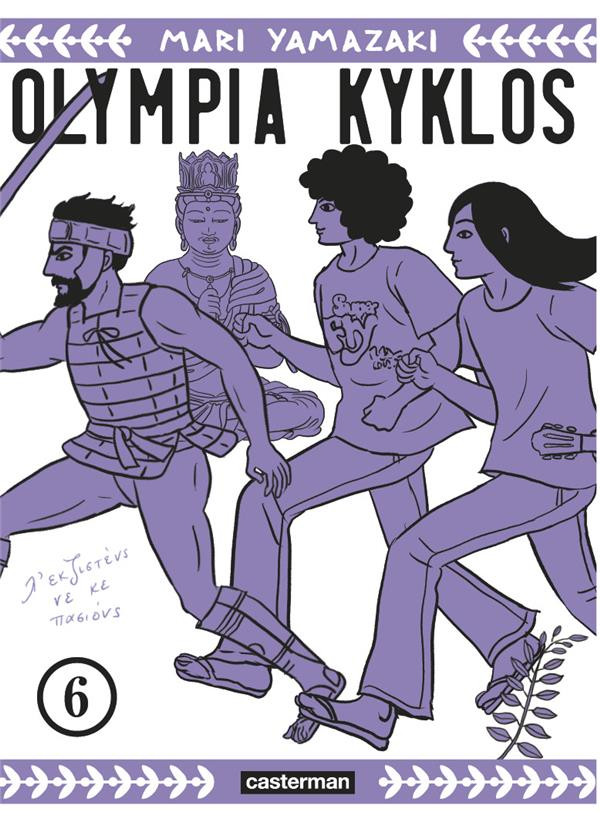
  3. Sugimura Shinichi (All NudeCigarette Anthology [Manga Updates]) aired October 15 , 2020
  4. Yukinobu Hoshino (2001 Nights [Wikipedia]) aired October 22 2020, avail. in VOD
  5. Daijiro Morohoshi (Yōkai Hunter, Saiyū Yōenden [Wikipedia]) aired November 12, 2020
  6. Keiko Nishi (Sanban-chō Hagiwara-ya no Bijin, Love Song [Wikipedia]) aired November 19, 2020
  7. Fuyumi Soryo (Boyfriend, MARS, ES, Cesare, Marie Antoinette [Wikipedia]) aired December 10, 2020, avail. in VOD
  8. Shinichi Sakamoto (The Climber, Innocent, Innocent Rouge [Wikipedia]) aired December 17, 2020
  9. Yushikazu Yasuhiko (Arion, Venus Wars, Joan, M.S. Gundam: The Origin [Wikipedia]) — See my comment
  10. Haruko Kashiwagi (Hanazono Merry go Round (Initiation), Onimushi (Rivage) [ANN]) aired June 16, 2021
  11. Shuzo Oshimi (Blood on the Tracks, Okaeri Arisu [Wikipedia]) aired June 23, 2021
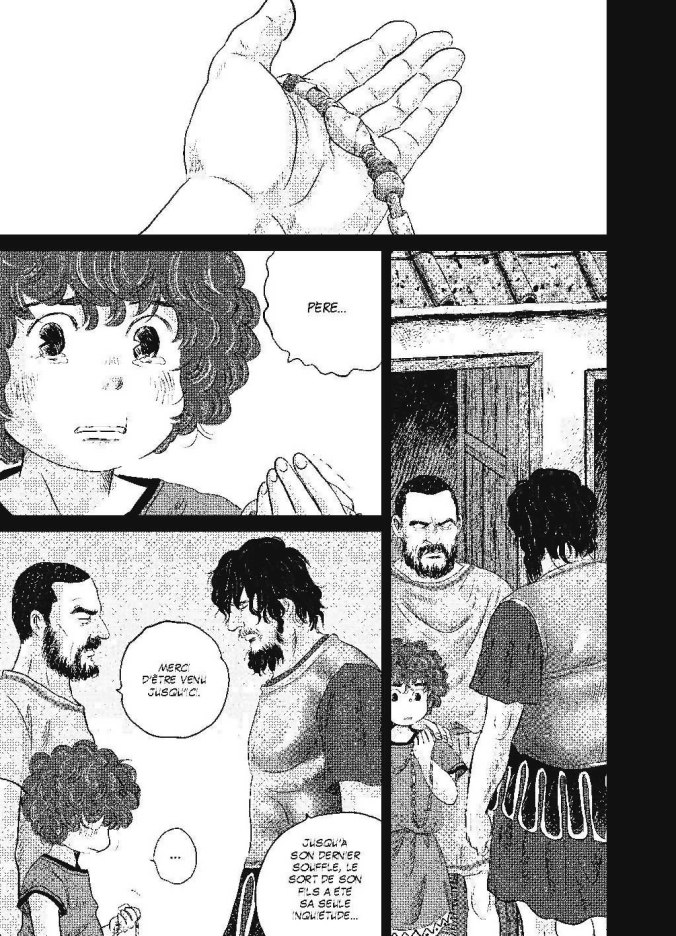
  12. Wataru Watanabe (Yowamushi Pedal [manga Updates]) aired March 2nd, 2022, avail in VOD
  13. Yasuko Aoike (From Eroica with Love [Wikipedia]) aired March 9th, 2022
  14. Hideki Arai (The World is mine, Kiichi [Wikipedia]) aired in March 16, 2022
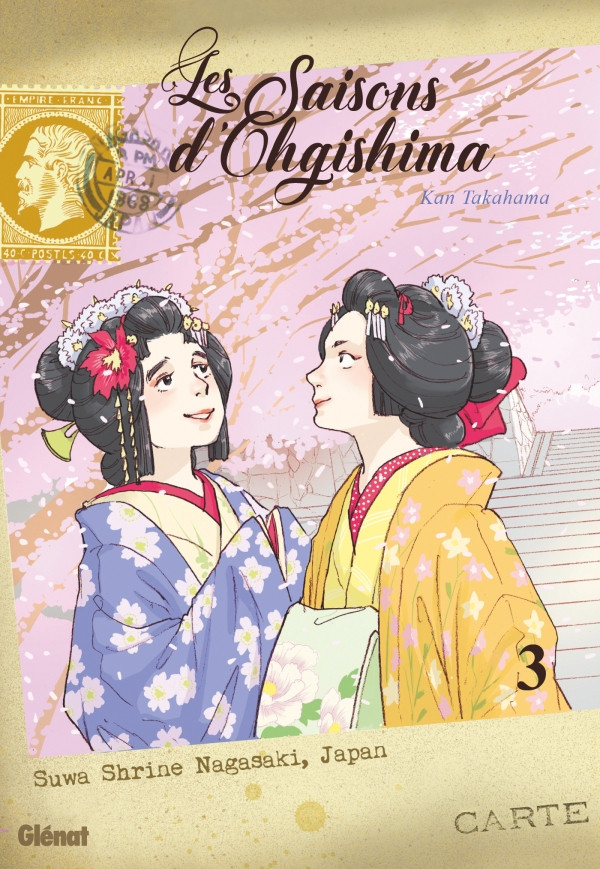
  15. Osamu Tezuka (Astroboy, Black Jack, Buddha [Wikipedia]) aired February 4th 2023, avail. in VOD. Another Osamu Tezuka Special aired February 17, 2023.
  16. Minase Ai (Hachimitsu ni Hatsukoi, Koi Furu Colorful [Manga Updates]) aired February 11, 2023, avail. in VOD
  17. Katsuya Terada (The Monkey King [Wikipedia]) aired February 18, 2023
  18. Kazuhiko Shimamoto (Honō no Tenkōsei [Wikipedia]) aired February 25, 2023
  19. Shigeru Mizuki (GeGeGe no Kitaro [Wikipedia]), aired March 18th 2024

Update (2024/06/02): Another documentary series is Anime Sanctuaries presenting real-life locations on which anime are based. One episode available in VOD covers Akihabara (location for Love Live!) and another one, airing June 4th, covers Kamiichi in Toyama (location for Wolf Children).

[ Traduire ]

Les Saisons d’Ohgishima 3

SaisonsdOhgishima-3-cov“1868, Nagasaki, à la veille de la révolution de Meiji. Pris dans la tourmente qui agite leur pays, Tamao, Sakunosuke, Victor, Ganji, Kei, Momotoshi et Kojiro doivent tous faire face aux changements inexorables qui se profilent au rythme des saisons.

Après Le Dernier Envol du papillon et La Lanterne de Nyx, découvrez la dernière partie de la “trilogie de Nagasaki”, par Kan Takahama — lauréate du 24e Grand Prix Osamu Tezuka en 2020.” 

[Texte du site de l’éditeur et du rabat intérieur; voir aussi la couverture arrière]

(Attention, lire l’avertissement de possible divulgacheurs)

SaisonsdOhgishima-3-p009

Vol. 3, p 9

Les saisons d’Ohgishima (扇島歳時記 / Oogishima Saijiki / lit. “Registres saisonniers d’Ohgishima”) est un manga seinen par Kan Takahama qui a d’abord été prépublié dans les périodiques Torch et Comic Ran en 2019-2022 avant d’être compilé en volumes chez Leed Publishing (série complète de quatre tomes) en 2020-22. Il a été traduit en français chez Glénat en octobre 2022 (avec un deuxième tome paru en février 2023, un troisième en octobre 2023 et le dernier tome en avril 2024). Takahama est une mangaka au style particulier et qui est très populaire en France. Son sujet de prédilection est les relations amoureuses complexes et difficiles, mais elle s’est également intéressé au manga seinen historique, en particulier avec sa “Trilogie de Nagasaki” qui se déroule un peu avant et au tout début de l’ère Meiji (et dont j’ai déjà commenté les deux premières parties: Le Dernier envol du papillon et La lanterne de Nyx, ainsi que les premier et second volumes des Saisons d’Ohgishima).

Devant un futur incertain provoqué par la guerre civile et l’instauration d’un nouveau gouvernement à Nagasaki, les différents personnages du récit sont appréhensifs mais la vie suit son cours. L’unité de Kojiro suit un nouvel entraînement pour apprendre les techniques militaires occidentales mais il décide de se joindre aux combats qui font rage dans le nord. Momotoshi veut se lancer en affaires pour se faire valoir auprès de sa mère. Victor voudrait émanciper Tamao mais son père s’y oppose. Ganji souffre d’être secrètement un Kirishitan alors que ses camarades qui vivent leur foi ouvertement sont condamné à l’exil. Tamao commence à recevoir son éducation de courtisane

Les saisons d’Ohgishima est un très beau manga malgré le style un peu particulier de Kan Takahama (quoiqu’il s’améliore d’année en année — ou alors on apprends plus à l’apprécier). Les personnages sont attachants et il est captivant de suivre leurs activités quotidiennes. Il nous offre une agréable lecture qui est à la fois divertissante et instructive puisque ce manga nous fait découvrir une période mouvementé qui constitue sans aucun doute l’époque la plus intéressante de toute l’histoire japonaise. Il ne reste plus qu’un tome, déjà paru au Japon et qui paraîtra au début d’avril en France. J’ai bien hâte de voir comment cela va se terminer… À lire absolument surtout si vous êtes un fan de Takahama ou que l’histoire du Japon vous intéresse.

Kan Takahama s’est déjà lancé dans de nouveaux projets. Après avoir participé au collectif Découvrir Tokyo en manga (publié en 2020 chez Petit à Petit), elle adapte en manga le roman Une rose seule de Muriel Barbery (薔薇が咲くとき / Bara ga Saku Toki / Lit. “Quand les roses fleurissent”, sérialisé dans Torch et Ginza Mag en 2023 et qui sera publié simultanément chez Leed au Japon et chez un éditeur français en 2024). De plus, la trilogie de Nagasaki l’ayant amené à faire beaucoup de recherches sur les Kirishitan, elle débute un nouveau manga qui raconte l’histoire de Akira Tominaga, un acheteur d’or d’Amakusa qui entreprend une quête pour retrouver les trésors cachés des Kakure Kirishitan (獅子と牡丹 / Shishi to Botan / lit. “Le lion et la pivoine”, couramment en prépublication dans Torch). Vivement la parution (inévitable) en français!

Les saisons d’Ohgishima t.3,  par Kan Takahama (traduction par Yohan Leclerc). Grenoble: Éditions Glénat (Coll. Seinen, Roman Graphique), octobre 2023. 224 pages, 14.9 x 21.2 cm, 10.95 € / $18.95 Can, ISBN 978-2-344-05729-2. Pour un lectorat jeune adulte (16+). Extraits disponibles. stars-3-5

Vous trouverez plus d’information sur les sites suivants:

[ AmazonGoodreadsGoogleNelliganWikipediaWorldCat ]

© Kan Takahama. © 2023 Éditions Glénat pour la traduction française.

[ Translate ]

Confidences d’une prostituée

ConfidencesDuneProstituée-cov“Naomi, ancienne femme de plaisir, en a vu passer des hommes… Aussi, aujourd’hui, quand la nuit tombe, elle aime conter les histoires de ses anciennes camarades d’infortunes. Dans un Japon en proie aux doutes et aux crises, en plein changements, suivez les vies tragiques de prostituées qui, trop souvent, ont été dupées par les hommes…

Chef d’œuvre caché de Takao Saitô, Confidences d’une prostituée est l’une de ses oeuvres les plus personnelles, qu’il a dessiné 1972, pour l’éditeur Kodansha. A travers elle, il rend hommage aux femmes qu’il rencontrait quand, à dix-huit ans, il a dû travailler dans le salon de coiffure de son père, qui se situait juste en face du « nouveau district d’Imazoto », quartier chaud d’Osaka. De ses propres mots, cette oeuvre est pour lui, comme une sobre « déclaration d’amour » adressée à ces femmes. A travers les différents récits qu’il nous propose, on découvre un Japon en proie à de nombreuses difficultés. Cynique, sans aucun doute, ce titre permet pourtant de découvrir une facette plus humaine du travail de son auteur. [Texte du site de l’éditeur]

Nuit après nuit, une femme conte dans l’intimité de son foyer le quotidien de prostituées d’une époque désormais révolue. Du nom de Naomi, cette ancienne dame de compagnie a été témoin de mille et une histoires, des plus tragiques aux plus cocasses, toutes teintées d’une lancinante mélancolie. Au fil de ses récits, elle dévoile les espoirs et les secrets de celles qui aspiraient à vivre avec dignité dans un Japon pris dans un tourbillon de changements.

Avec une sensibilité et une douceur extraordinaires, Takao Saitô livre à travers Confidences d’une prostituée une « sobre déclaration d’amour » aux femmes des quartiers des plaisirs. Publiée en 1972, cette œuvre résolument personnelle révèle un aspect jusque-là inédit de son immense bibliographie.“ [Texte de la couverture arrière]

(Attention, lire l’avertissement de possible divulgacheurs)

Confidences d’une prostituée (娼婦ナオミ夜話 / Shōfu Naomi Yobanashi / lit. “Discussion nocturne avec la prostituée Naomi”) est un gekiga (quoiqu’on peut aussi le considéré comme un manga seinen) par Takao Saitô qui a d’abord été publié en feuilletons dans le magazine hebdomadaire Gendai entre mars et décembre 1972 avant d’être compilé en un volume chez Kôdansha en 1973. Il a été republié chez Leed en septembre 1986 et en avril 2016 dans la collection Big Comics Special de Shôgakukan. Il a été publié en français dans la collection Héritage de Akata en octobre 2023. Takao Saitô est surtout connu pour ses mangas réalistes noirs d’action, particulièrement Golgo 13 (qui est considéré comme le manga le plus long). Ce manga intimiste et sensible a donc une place exceptionnelle dans son oeuvre.

L’histoire se déroule dans les années ’60 ou 70. À travers dix courts récits, la vieille dame Naomi, ancienne prostituée du faubourg Sawashima (à ne pas confondre avec Shinmachi, le quartier où les courtisanes (geishas) divertissaient la classe supérieure de la société), dans le quartier des plaisirs d’Osaka, raconte à divers interlocuteurs ce qu’était la vie des prostituées à la fin de l’ère Taishô, dans les années ’20, et au début de l’ère Showa (jusqu’à ce que la prostitution soit abolie au Japon en 1956).

Confidences d’une prostituée nous offre un récit dur et tragique mais aussi très humain et sensible. En recueillant ces histoires entendues dans le salon de coiffure de son père et en les transmettant au travers d’un manga, Takao Saitô préserve ainsi un témoignage précieux de la petite histoire du Japon d’avant-guerre. Ce propos fort intéressant est assez bien illustré par le style réaliste de Saitô qui s’apparente aux mangas dramatique pour adultes (gekiga, littéralement “dessins dramatiques“) traitant de sujets plus sombre et sérieux et  caractérisé par un style angulaire et cinématique, fait de hachures sombres et des lignes granuleuses. Un très bon manga qui mérite d’être lu surtout si l’histoire et la culture japonaise vous intéresse.

Confidences d’une prostituée, par Takao Saitô. Rancon: Akata (Coll. Héritage), octobre 2023. 340 pages, 14.7 x 21.0 cm, 16.99 € / 31,95 $ Can, ISBN 978-2-38212-248-8. Pour un lectorat jeune adulte (16+, sexe, nudité). Sens de lecture japonais (de droite à gauche). Extraits disponibles. stars-3-5

Vous trouverez plus d’information sur les sites suivants:

[ AmazonGoodreadsGoogleNelliganWikipediaWorldCat ]

© Takao Saitô, 2016. © S.A.S. Akata, 2023 pour l’édition française. All rights reserved.

[ Translate ]

Très cher frère…

“Drame humain sensible, passionné et élégant, Très cher frère… est l’un des chefs-d’œuvre de Riyoko Ikeda. Cette série à l’esthétisme léché, écrite à la suite de La Rose de Versailles, nous entraîne dans un monde dominé par les violentes passions de jeunes filles en quête d’amour et de reconnaissance.

Misonoo Nanako fait son entrée à la prestigieuse école pour filles Seiran. Elle est admise, contre tout attente, dans un cercle privé réunissant les filles les plus belles et les plus riches du lycée. Ce club très fermé est dirigé par l’une des plus irréprochables élèves de l’établissement : Ichinomiya Fukiko, dite Mlle Miya. Nanako, tiraillée entre ses camarades qui la jalousent et l’ambiance idyllique qui règne au club, est bouleversée, mais elle trouve du réconfort en écrivant à un étudiant qu’elle a rencontré quelques mois auparavant et qu’elle considère comme le grand frère qu’elle n’a jamais eu.”  [Texte de la couverture arrière]

(Attention, lire l’avertissement de possible divulgacheurs)

Très cher frère… (おにいさまへ… / Oniisama e…) est un manga shōjo par Riyoko Ikeda qui a d’abord été publié en feuilletons dans le périodique hebdomadaire Margaret (#12 à 39, 1974) avant d’être compilé en trois volumes chez Shueisha en août 1975. Il a été re-publié en deux volumes chez Chuokoron Shinsha en 1994 et 2002, puis en un seul volume chez Fairbell en 2006. C’est cette dernière édition qui a été publiée en français chez Asuka en 2009 et Kazé en 2013. Il a également été adapté en une version animée de trente-neuf épisodes produite par Tezuka Productions sous la direction de Osamu Dezaki (disponible en version sous-titrée anglaise sur RetroCrush). C’est l’un des deux seuls titres de Riyoko Ikeda (avec La Rose de Versailles) a avoir été traduit en français.

Ce manga nous raconte l’histoire de Nanako Misonoo, une adolescente de seize ans qui entre au lycée (école secondaire) prestigieux de Seiran. Contre toute attente elle est choisie comme membre de la Sororité, un club social conçu pour divertir et promouvoir l’élite de l’école (inspiré par les Sorority des universités américaines). Cela lui attire la jalousie et la haine des autres étudiantes qui ne la considèrent pas qualifiée. Elle se retrouve prise au centre d’un écheveau de relations affectives complexes où l’on retrouve surtout son amie d’enfance Tomoko, l’obsessive Mariko, les “Trois Magnifiques“ (la présidente de la Sororité Fukiko [aka Miya-sama] et les androgynes Kaoru [aka Prince Kaoru, sportive et maladive] et Rei [aka Saint-Just, la rebelle hantée et toxicomane], ainsi que les garçons Henmi et son meilleur ami Takashi. Nanako réussi à faire face à tous les potins et drames de la vie étudiante grâce à la correspondance qu’elle entretient avec Henmi, un jeune universitaire et professeur suppléant qu’elle a rencontré dans un cours du soir et qu’elle considère comme son “grand frère“. Malgré tout le drame qui entoure Nanako, le récit semble se diriger vers une fin heureuse… Toutefois, à la dernière page, le manga se termine sur une note tragique ! [Le récit de l’animé a été modifié afin d’offrir une fin véritablement heureuse]

Très cher frère… est donc un drame romantique qui traite avec brio de nombreux sujets difficiles, comme la cruauté inhérente des jeunes collégiennes, la fluidité des genres, le féminisme, les amours interdits, le divorce, le cancer, la disparité entre les classes sociales, l’intimidation, le suicide, le tout enrobé dans l’anxiété naturelle de l’adolescence !  Le récit, très poétique à sa façon, est propulsé par une narration majestueusement adepte qui prends tous son sens en étant soutenu et illustré merveilleusement par le style superbe et innovateur de Ikeda. 

J’ai déjà beaucoup parlé de la place importante du Groupe de  l’an 24 dans le manga lors de mon commentaire sur Le coeur de Thomas par Moto Hagio. De plus, la “Postface” du manga (pp. 462-63), par Josselin Moneyron (directeur éditorial de Kazé Manga en 2013), nous introduit très brièvement au Groupe de l’an 24 (notamment composé de Moto Hagio et Riyoko Ikeda) qui a redéfinit tous les codes du manga shōjo moderne. “À partir d’un style visuel qui rappelle le dessin de mode, elles construisent des planches à la mise en page éclatée, bien plus expressionniste  et symboliste que réaliste. (…) Les décors disparaissent pour laisser la place à des représentations des émotions ressenties qui bordent à l’abstraction. (…) Ikeda met en scène un monde d’âmes torturées, d’amours ambiguës, d’où transpire sa vision libertaire de l’existence. (…) elle représente ici une élite en pleine déliquescence, enfermée dans une univers “laid et froid“, et glorifie les personnages qui, en marge de ce modèle dominant et malgré leurs violentes névroses, essaient de vivres libres, d’aimer en paix.“ Écrit en 1975, juste après la parution de La Rose de Versailles, Très cher frère… apparait dans l’oeuvre de Ikeda comme le pendant féminin au Coeur de Thomas de Moto Hagio (publié à la même époque) qui présentait une intrigue romantique similaire mais se déroulant dans un pensionnat pour jeunes garçons. 

Très cher frère… est définitivement un chef d’oeuvre classique à lire absolument pour tout amateurs de manga shōjo. Malheureusement, ce titre est maintenant épuisé. On peut certes trouver des copies usagés sur eBay (à 140€ !) ou sur Amazon (à $347.33 !) mais c’est un peu cher pour mon budget. Toutefois, grâce à la magie du prêt entre bibliothèque (car la copie de la BANQ a été perdue), j’ai pu mettre la main sur une copie de la Bibliothèque Municipale de Lyon. Il reste à souhaiter que ce manga sera reprit par un nouvel éditeur pour le rendre accessible à une nouvelle génération de lecteurs. L’éditeur le plus probable pour une telle réédition serait sans aucun doute Akata, qui vient d’ailleurs d’annoncer au Festival d’Angoulême la publication de plusieurs manga dans sa Collection Héritage, notamment Le Coeur de Thomas (un manga shōjo par Moto Hagio à paraître en 2025) et 10 Billion Days and 100 Billion Nights (un manga shônen par Moto Hagio à paraître en janvier 2025).

Très cher frère…, par Riyoko Ikeda. Paris: Asuka Éditions, septembre 2009. 486 pages, ISBN 978-2-84965-626-6. Pour un lectorat adolescent (14+). Sens de lecture original (de droite à gauche).

Vous trouverez plus d’information sur les sites suivants:

[ AmazonGoodreadsGoogleWikipediaWorldCat ]

© Riyoko Ikeda, 2006. All rights reserved.

[ Translate ]

Blue Period #13

BluePeriod-13-cov“Grâce à sa rencontre avec Kirio Fuji, la présidente du collectif d’artistes No Marks, Yatora sent un vent nouveau souffler sur son approche de l’art. Malgré son admiration pour ce personnage charismatique, le jeune homme ne sait pas réellement à qui il a affaire et est encore hésitant sur la façon dont il doit la fréquenter. Cependant, son influence lui permettra peut-être de casser le mur qui l’empêchait d’avancer…”

[Texte du site de l’éditeur et de la couverture arrière]

(Attention, lire l’avertissement de possible divulgacheurs)

Blue period (ブルーピリオド / Burū Piriodo) est un manga seinen sur l’art écrit et illustré par Tsubasa Yamaguchi qui est sérialisé depuis juin 2017 dans Monthly Afternoon et a été compilé jusqu’à maintenant en quinze volumes chez Kōdansha. La version anglaise est publiée aux USA par Kodansha (treize volumes de disponibles) et la version française est publiée chez Pika (treize tomes de disponibles et le quatorze est à paraître en février 2024). Il a remporté plusieurs prix en 2020 (le Manga Taishō et le Kōdansha manga shō; nominé aussi pour le Tezuka Osamu bunka shō) et a été adapté en une série télévisée d’animation en 2021 (douze épisodes animé par le studio Seven Arcs sous la direction de Koji Masunari et Katsuya Asano, sur un scénario de Reiko Yoshida; diffusée sur MBS, TBS, AT-X et sur Netflix). J’ai déjà commenté les trois premiers volumes, les trois suivants, les volumes sept et huit, ainsi que les volumes neuf, dix (en anglais), onze et douze.

BluePeriod-13-p046-047

vol. 13, pp. 46-47

Malgré l’opinion négative que son entourage a du collectif No Marks, Yatora est très satisfait d’y avoir passé du temps car cela lui a redonné confiance et lui permet de produire avec succès le dernier projet du premier semestre de sa deuxième année à l’Université. Pour les vacances d’été le groupe décide d’aller chez Momoyo à Hiroshima car ses parents ont un hangar qui sert d’atelier et chacun pourra y produire une oeuvre à présenter à un concours. En chemin, ils s’arrêtent sur la bord de la route pour dormir mais finissent par visiter une maison hantée!

Malgré le style graphique plutôt moyen et le fait que le récit piétine un peu, ce manga reste une lecture intéressante et agréable qui traite des angoisses d’un jeune adulte qui cherche sa place dans le monde de l’art.

Blue period vol. 13 par Tsubasa Yamaguchi (traduction par Nathalie Lejeune). Vanves: Pika (Coll. Seinen), juin 2023. 192 pages, 13.0 x 18.1 cm, 7 € 70 /  $16.99 Can, ISBN 978-2-8116-8137-1, Pour lectorat adolescent (12+). stars-3-0

Vous trouverez plus d’information sur les sites suivants:

[ AmazonGoodreadsGoogleNelliganWikipediaWorldCat ]

© 2022 Tsubasa Yamaguchi. All rights reserved.

[ Translate ]

Samurai non grata

SamuraiNonGrata-cov“En Europe, en France, à Paris notamment, les vies de trois personnes s’entrecroisent au gré d’affaires et d’enquêtes. Yoshiaki Hongo, tout d’abord, polyglotte, fils d’un banquier japonais qui a beaucoup voyagé, qui travaille comme “passeur” ou “marchand de biens”. Narcissique, il aime la musculation, il aime sculpter son corps, ce qui contraste avec son manque d’endurance lorsqu’il est dans un lit avec une femme. Rintarô Norimizu, ex-membre de la force de défense japonaise, ex-soldat de la légion étrangère, combattant au Tchad, mercenaire en Lybie, et qui aujourd’hui vend ses services aux plus offrants. Et enfin, Fuchi, vietnamienne d’origine chinoise, mannequin pour les magazines de mode, qui a fui Saigon en hélicoptère à l’âge de cinq ans, et qui aime user de ses charmes, pour arriver à ses fins. À travers quatre enquêtes indépendantes, on suit les mésaventures de ces personnages atypiques, parfois opposés et parfois destinés à s’associer.”

[Texte du site de l’éditeur; voir aussi la couverture arrière]

(Attention, lire l’avertissement de possible divulgacheurs)

SamuraiNonGrata-p012

Page 12

Samurai Non Grata (サムライ・ノングラータ / Samurai non gurāta / en latin lit. “samouraï qui n’est pas bienvenu”) est un manga seinen écrit par Toshihiro Yahagi et illustré par Jirō Taniguchi qui a été publié en feuilleton dans la magazine Goro en 1990-1991 avant d’être compilé en deux volumes chez Shôgakukan en août et octobre 1991 (ré-édité en un volume chez Free Style en octobre 2009 et en juin 2022 — c’est cette édition qui a été traduite en français chez Pika Graphic en novembre 2022). 

Ce volumineux manga nous offre quatre histoires (“Samurai non grata” [144 p.], “Les 25 heures du Mans” [56 p.], “Les 8%” [130 p.] et “Cent yens de solitude” [119 p.]) qui racontent les mésaventures d’un commerçant qui sert d’intermédiaire dans des affaires louches, de son ami ancien mercenaire qui est le gérant de son appartement parisien et d’une modèle vietnamienne qui croise leur chemin de temps en temps. On y retrouve beaucoup d’action mais la complexité du récit et la narration confuse rend la lecture plutôt pénible. Heureusement, il y a le superbe dessin de Taniguchi, dans un style clair et précis, qui sauve un peu la situation et rend la lecture du manga un peu plus agréable. À lire seulement pour les amateurs de Taniguchi…

Samurai non grata, par Toshihiro Yahagi (scénario) et Jirō Taniguchi (dessin). Vanves: Pika Éditions (Coll. Pika Graphic), novembre 2022. 456 pages, 17.0 x 24.0 cm, 22.00 € / $37.95 Can, ISBN 978-2-8116-6305-6. Pour un lectorat adolescent (14+). Extrait disponible. stars-2-5

Vous trouverez plus d’information sur les sites suivants:

[ AmazonGoodreadsGoogleNelliganWikipediaWorldCat ]

© PAPIER / Jiro Taniguchi, Toshihiro Yahagi, 2009. © 2022 Pika Éditions pour l’édition française.

[ Translate ]

Isabella Bird #10

IsabellaBird-10-covLe Japon du XIXe siècle hors des sentiers battus ! Après un trajet mouvementé durant lequel ils ont dû faire face à de nombreux imprévus, Isabella et Ito ont finalement réussi à rallier l’île d’Ezo et la ville de Hakodate. Accueillie par le Dr Hepburn et le consul britannique, l’exploratrice s’apprête à embarquer pour la dernière étape de son voyage, qui devrait la mener au hameau aïnou de Biratori.

C’est malheureusement sans compter la présence sur place de Charles Maries, le précédent employeur d’Ito. Le chasseur de plantes semble prêt à tout pour reprendre le jeune homme à son service… que l’intéressé le veuille ou non ! Le temps des adieux est-il venu pour Isabella et son guide-interprète ?

Lancez-vous à la découverte d’un Japon traditionnel désormais disparu à travers les yeux de l’intrépide Isabella Bird ! Basé sur les écrits réels de l’aventurière, Isabella Bird, femme exploratrice est un récit passionnant sur la rencontre de deux mondes, dessiné avec un rare souci du détail par Taiga Sassa, nouveau talent prometteur !”

[Texte du site de l’éditeur et de la couverture arrière]

(Attention, lire l’avertissement de possible divulgacheurs)

Isabella Bird, femme exploratrice (ふしぎの国のバード / Fushigi no Kuni no bādo [Bird] / littéralement: “Bird au pays des merveilles”) nous offre le récit de voyage de la célèbre exploratrice britannique au Japon du début de l’ère Meiji en se basant sur sa correspondance avec sa soeur Henrietta qui fut publiée en 1880 sous le titre Unbeaten Tracks in Japan. Écrit et dessiné par Taiga Sassa, ce manga seinen historique a d’abord été publié en feuilletons dans le magazine Harta (Enterbrain), puis compilé en volumes chez Kadokawa. Le premier volume est paru en mai 2015 et le plus récent volume, le dixième, est paru au Japon en février 2023. J’ai commenté tous  les volumes précédents.

IsabellaBird-10-p38-39

vol. 10, pp. 38-39


Le récit de ce volume se divise en trois partie. D’abord, le Dr James Hepburn et Richard Eusden (consul Britannique en poste à Hakodate) tentent d’aider Isabella Bird à négocier une entente avec Charles Maries sur l’emploi du guide-interprète Itō Tsurukichi. Toutefois Maries est intraitable et refuse de laisser son employé servir de guide à Bird pour le reste de son expédition à Ezo (Hokkaidō). Plus tard Bird rends visite à Maries sur la ferme expérimentale de Nanae où il est consultant et lui fait une contre-proposition qu’il accepte finalement. Par la suite, alors qu’elle fait les préparatifs pour son expédition avec Ito, Isabella fait la rencontre de Henry Siebold (fils de Philipp Siebold) qui lui raconte les premiers contacts peu reluisant entre l’Occident et les Aïnous et qui s’apprête lui-même à se rendre à Biratori, la devançant de peu! Finalement, la troisième partie du récit nous raconte l’expédition de Charles Maries à Ezo l’année précédente, où il fait la découverte dans les monts Hakkoda du fameux sapin Morobi, plus touffu et plus résistant, qu’il nomme Abies Mariesi.

Ce manga nous fait le récit très romancé de l’expédition d’Isabella Bird à Hokkaidō, nous offrant une fenêtre intéressante sur le Japon de l’ère Meiji. Si le récit est un peu inégal, la qualité du dessin, précis et détaillé, est notable. L’ouvrage nous offre donc une lecture à la fois agréable, distrayante mais aussi très instructive. Un manga indispensable surtout pour les amateurs d’histoire et de culture Japonaise. 

Isabella Bird, femme exploratrice T.10 par Taiga SASSA. Paris: Ki-oon (Coll. Kizuna), août 2023. 224 pg, , 13 x 18 cm, 7,95 € / $14.95 Can., ISBN 979-10-327-1352-5. Pour lectorat adolescent (12+). stars-3-5

Vous trouverez plus d’information sur les sites suivants:

[ AmazonGoodreadsGoogleNelliganWikipediaWorldCat ]

© Taiga Sassa 2023.

[ Translate ]