The life in the time of the coronavirus continues… I’ve now been in self-isolation for over a week (actually for about ten days) and I am doing well. There are no signs of any symptoms so far and I am in good shape (physically and mentally) — although I still suffers from kidney stones from time to time. I try to stay fit by doing at least an hour of walking (if possible reaching ten thousand steps) and thirty minutes of cardio (by shovelling the backyard or sweeping the driveway) every day — while keeping my distance from people which is really not a problem for me. Unfortunately we had a couple of days of rain and I couldn’t reach my goals during that time.
I also stay fit mentally by keeping busy with my blog and doing stuff around the house. First, all this reading is a great help in lowering my tsundoku pile. Second, since I am theoretically still working for the library, I try to do some reference work by writing as much reading suggestions and comments as possible. I have everything I need here to keep busy.
The moral is good — despite spending lots of time watching the news, both local and American. I really don’t mind the isolation. Now-a-day — with tons of books & Dvds, the television and the internet to make the mind travel — can we really be isolated anymore? In a way, the only apprehension is about going back to work and ending this very productive streak. However, the way things are going, I don’t think I have to worry about that for a while…
In the meantime, things are not doing so well around the world. We seem to cope well here in Quebec, but the situation looks dire in Europe and, particularly, in the U.S.. Here are some links to keep yourself informed:
J’ai vu sur FB quelqu’un qui demandait quelle série de manga je voudrais avoir sous la main si j’étais en confinement sur une île déserte (ou à la maison en cas d’épidémie?)… Je n’ai évidemment pas pu résister à donner mon opinion…
J’ai répondu “Probablement “Détective Conan” (97 vol.) ou “Les gouttes de dieu” (62 vol.) parce que c’est long et c’est intéressant…” En effet, la plupart des grosses séries sont des shonen insipides mais il y a toute de même quelques séries qui sont assez intéressantes pour stimuler l’intellect.
En me basant sur une liste des longues séries de manga au Japon, j’ai concocté cette liste des vingt-cinq longues séries (de plus de quarante volumes) traduites en français (je ne garanti pas que c’est exhaustif):
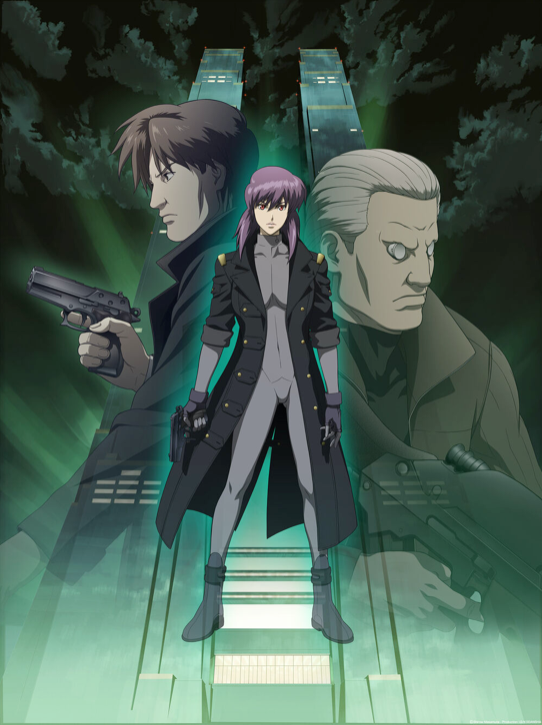
Ghost in the Shell: S.A.C.—Solid State Society is the third movie since 1995’s Ghost in the Shell anime adaptation. This feature-length TV movie was broadcast on Skyperfect! in September 2006 and released on DVD by Bandai Visual in November of the same year. Fantasia 2007 treated the fans by screening this excellent cyberpunk anime on the big screen! Directed by Production I.G.’s Kenji Kamiyama, fans can enjoy yet another high-tech sci-fi story, which is set in 2034, Tokyo. The timeline is two years after the last TV series (2nd GIG), as Japan is still dealing with the Asian refugee problems.
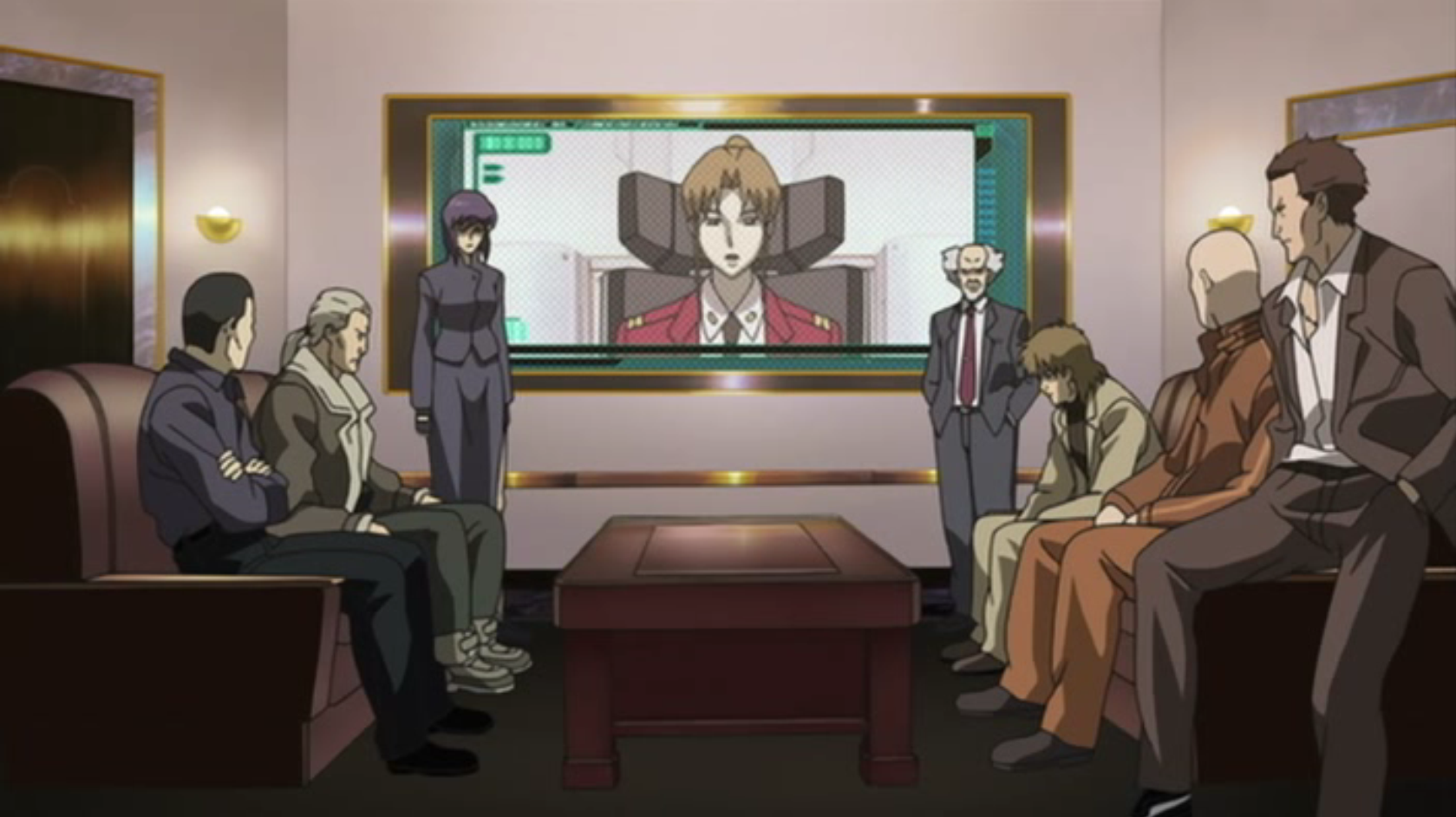
Major Motoko Kusanagi left Section 9 — Japan’s elite anti-terrorist unit — and was missing for over two years. She left because she felt that by acting alone she could investigate more discreetly (using multiple cyber bodies), more freely (without the irritating political oversight) and therefore more efficiently. For Batou, the absence of Motoko leaves his work meaningless and he picks & chooses the case he’s working on, taking assignments only when he thinks it might bring him closer to her. With the Major’s departure and Batou refusing assignments, Togusa was forced to become the leader of the team as her successor. Togusa is, as usual, a man of justice. Married and having two children, he’s different from the other team members who are all single — including the aging Chief Aramaki who has been struggling to deal with the fact that Section 9 has to move on without the Major. Other members such as Saito and Ishikawa keep their positions as network expert or sniper. All Section 9’s characters are extremely honest and act with a sense of justice and responsibility. They’re all faithful to their convictions as they were in the TV series.
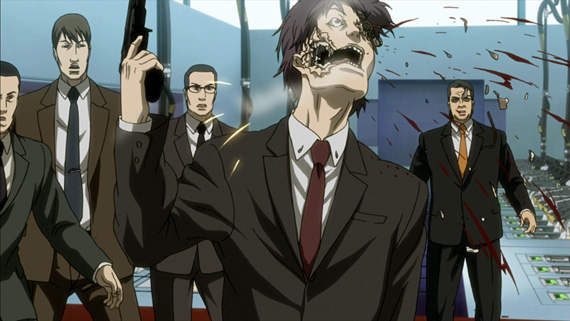
Section 9 hired 20 rookies, and their latest mission is to solve a case involving politically charged hostages. Somehow, one of the terrorist suspects committed suicide on the spot, leaving a strange message: “The Puppeteer is coming”. At the same time, many other mysterious cases keep taking place, including one where a huge amount of abused children seem to have been kidnapped by an organization of ultranationalist retirees. What links all those cases together? It seems to be the work of a super-intelligent hacker who has been manipulating all this, but to do what exactly, no one knows…
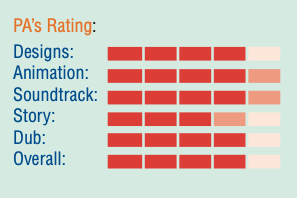
This movie is first class entertainment. Like the previous movies, it offers great music and superb animation. It has all the complex socio-political background of the previous TV series and maintains the series’ trademark cyberpunk feeling, but Director Kamiyama injected the storyline with so many themes — such as mass suicide, terrorism, biochemical weapons, kidnapping, old folks’ problems and child abuse — and subplots that the story gets confusing. It’s not easy to follow what’s happening in this extremely intricate movie. After the screening I was not quite sure of what I had just watched and who the Puppeteer really was! It’s one of those cases where you really need to purchase the DVD and watch the key scenes several time in order to be able to really enjoy the complexity of the movie.
In my humble opinion, I think that Director Kamiyama should have simplified and streamlined the storyline, maybe sticking with Togusa’s plot-line. I bet the viewers could have felt more empathy towards the movie if it was a little less complex. The animation itself has an overwhelming beauty, but, using all the great animation technology and talent of Production I.G., I think Director Kamiyama could have created a masterpiece, if he had just come up with a more coherent story. In the end, the true identity of the Puppeteer is still not very clear — but maybe Director Kamiyama kept it mysterious on purpose?
—miyako
Kôkaku Kidôtai: Stand Alone Complex — Solid State Society. Japan, 2006, 109 min.; Dir.: Kenji Kamiyama; Scr.: Kenji Kamiyama, Shôtaro Suga, Yoshiki Sakurai; Phot.: Kôji Tanaka; Ed.: Junichi Uematsu; Art Dir.: Yusuke Takeda; Char. Des.: Hajime Shimomura, Takayuki Goto, Tetsuya Nishio; Mechan. Des.: Kenji Teraoka, Shinobu Tsuneki; Mus.: Yoko Kanno; Prod.: Production I.G.; Distr.: Bandai, Manga Entertainment; Cast: Atsuko Tanaka (Motoko Kusanagi), Akio Ohtsuka (Batou), Kouichi Yamadera (Togusa), Kazuya Tatekabe (Col. Tonoda), Masuo Amada (Col. Ka Gae-Ru), Osamu Saka (Daisuke Aramaki), Takashi Onozuka (Pazu), Tarô Yamaguchi (Boma), Toru Ohkawa (Saito), Yutaka Nakano (Ishikawa), Yuya Uchida (Takaaki Koshiki), Dai Sugiyama (Proto), Nana Yamauchi (Togusa’s daughter), Yoshiko Sakakibara (Prime Minister Kayabuki). Available on R2 Dvd in Japan (BCBA-2606, 109 min., ¥9800) and on R1 Dvd in North America (Bandai/Manga Entertainment, #25176, Bilingual Dvd, 109 min., $19.98 US [Limited edition: $39.98 US], rated 13+).
• • •
In 2034, two years after the departure of Major Motoko Kusanagi (after the events of the TV series, Stand Alone Complex, which starts in 2030 and before the second movie, Innocence, set in 2032), Togusa is now in charge of Section 9, which has been expanded with the addition of several new recruits. Batou, frustrated to have been left behind by the Major, is still looking for her and therefore picks & chooses only the cases that seem related to his quest. A string of strange incidents — starting with a series of suicides, followed by the kidnapping of many children, and an economical conspiracy plotted by a group of old ultra-nationalists — seem to lead to a mysterious super-hacker nicknamed the “puppeteer.” The Major is carrying her own parallel investigation — which leads Batou to suspect her of being the puppeteer. In the end, the real identity of the perpetrator is the most surprising revelation of all.
This movie is directed by Kenji Kamiyama, the same person who directed the Stand Alone Complex TV series. It is therefore not surprising to find here the same excellent quality of production, as much in the design as in the animation. However, if the director succeeded to masterfully tie up all the elements of the story in the TV series, he seems to have difficulty to do the same in a movie format. Solid State Society feels like a long TV episode where he tries to compress the storyline of an entire series. There are too many sub-plots and the different elements of the story are mixed together in such a complex way that it sometimes lacks coherence and the viewers get confused (it took me at least two viewings to understand the complexity of the plot and even then I am not sure I understood everything correctly).
The timeline of the various series and movies seems confusing as well. The first movie is supposed to be set in 2029, while Solid State Society is set in 2034. It is not clear exactly when Major Kusanagi left Section 9. Also, they should have encountered the Puppet Master / Puppeteer before (in the first movie), but no mention is made of a prior encounter as if the first movie never happened. In fact, it feels like Solid State Society is a retelling of the encounter between the Major and the Puppeteer.
Despite the complex socio-political themes and the beautiful animation, Solid State Society does not have the same depth than the previous movies (directed by Mamoru Oshii) and it certainly doesn’t have the same contemplative beauty. It is a very nice movie, but it is much more demanding to the viewers than the TV series and even the previous movies — which you all need to have seen to really appreciate and understand this movie — so I would recommend it mainly to the die-hard Ghost In The Shell fans. Nevertheless, Solid State Society (and GITS in general) is the epitome of intelligent cyberpunk anime (a genre that, unfortunately, we don’t see often). Finally, I must add that the Limited Steelbook case edition (which contains three discs: one disc with the main feature, one disc full of extras, and the Solid State Society soundtrack CD) is totally awesome.
—clodjee
Bandai / Manga Entertainment, #25176 (ISBN 978-1-59409-831-4), Bilingual Dvd, 109 min., $19.98 US (Limited Edition: $39.98 US), rated 13+ (Violence). See back cover.
Pour oublier: le travail dès que possible
Ce sont les nuits qui sont les plus pénibles
Sa présence était comme une drogue dans mon sang
Me désintoxiquer des souvenirs réminescent
La douceur de ses lèvres, sa grande tendresse
Le goût de sa sève, ses promptes caresses
Mais surtout sa sollicitude à l’égard de ma détresse
Mon destin s’est accompli et la vie doit suivre son cours
Je suis éveillé, je ne suis plus aveugle, ni sourd
J’ai besoin d’action, de présences, plus qu’avant
Et maintenant seule l’obscurité me terrifie horriblement
Jamais je n’oublierai…
Nos destins se sont rencontré…
Elle m’a grandi, a illuminé mon obscurité…
Elle est toujours là, j’espère au moins son amitié…
Et avec équilibre, espoir de continuité…
Necesito un guia Usted es muy hermosa Usted me gusta muchisimo Yo te quiero
Mucha gracias por su atension, dispenseme… Cuendo puedo volver a verle?
1988-12-10
2.6 AFTERTHOUGHT
Mais ce ne sont là que des mots, des évidences
Qui sont, quant tout est fini, bien vide de sens
Quel est le poids des impressions anarchiques
Véhiculés par des clichés pathétiques
Devant ce qui fut si magique ?
1988-12-17
Le rêveur gris
Morwajal
Note: Voici les deux derniers morceaux de ce long poème sur ce qu’un bref idylle m’a appris de la vie. Comme toujours il s’agit de vers éclectiques, sans formes précises, ni métrique. Vous noterez deux brèves strophes en espagnol (nous nous échangions parfois de petits billets dans la langue de Cervantes) [pour la traduction demandez à Mr. Google!]… Voir les parties un (IIa: 2.1-2.2), deux (IIb: 2.3) et trois (IIc: 2.4) de cet ensemble. Le poète du dimanche n’en a pas encore fini puisque j’ai toujours dans mon sac quelques fragments épars.
Ghost in the Shell: Stand Alone Complex was a big hit in 2003 and Japanese DVD sales did great, so the creative team at Production I.G. decided to bring out a second season (titled “2nd Gig”). Now fans can look forward to another 26 episodes of cyber-political intrigue and action.
I can easily imagine that director Kenji Kamiyama was under a great deal of stress, with his work being compared with Mamoru Oshii’s Innocence, and to meet the fans’ expectations after the first season! Despite the high stakes, the young director was up to the task and I think he did a marvellous job. The “2nd Gig” is even better and more intriguing than the first season. He succeeded totally in creating his own world, telling the story in his own personal style, and we don’t even feel the need to compare his series with Oshii’s movie. Each has its own merit.
Kamiyama not only respected Masamune Shirow’s original manga, but he gave it life by detailing, even more so than Oshii’s movies did, its near-futuristic setting defined by the interaction of humanity and technology in a complex Asian geo-political environment. His strong, captivating storytelling is very well supported by the superb animation, the beautiful and elaborate artwork and an enchanting soundtrack. It is so great to see that there is such a great new talent in Japan, able to create a serious and intelligent story that can both entertain our senses and stimulate our mind. It is not surprising that both seasons of the TV series have received a great deal of acclaim, not only from anime fans, but also from those who seek serious science fiction shows.
As the “2nd Gig” starts, Section 9, which had been dissolved at the end of the 1st season, is resuming its job as an anti-cyberterrorist mobile unit. Although the team has returned, their work isn’t easy, and many difficulties lie ahead of them. The Japanese political landscape is changing and the government is keeping a close eye on their special police. The “Laughing Man” case might be solved, but it doesn’t take long for another terrorist organization, “The Individual Eleven,” to show up. Who are they? Are they the result of another “Stand Alone Complex”? They seem to be stirring up an uprising against the Asian immigrants and refugees. Could it be that simple? But some other politically-motivated forces seem to be at work. Can Major Motoko Kusanagi and her team unravel the complex overlapping political plots before they affect the nature of the government?
Technology might be omnipresent in Stand Alone Complex, but it is not overwhelming. In the “2nd Gig,” Director Kamiyama and Production I.G. keep an even greater focus on the human side of the story by exploring the characters’ hearts and emotions — even in the case of some of the terrorists. Each key member of Section 9 has a dedicated episode where we learn more about their past and personality. It is not done simply to paint a richer background; every single bit of information has its meaning. They also give a more humane face to the government (more likeable than the usual fat, corrupt, old minister) with the new Japanese prime minister, a young, good-looking lady who embodies the beauties (and sometime ineptitudes) of democracy. In contrast, there is the ugly face of Gohda, a shady character who embodies the threat of militarism. Also, the intelligent Tachikoma robots (their name means “standing, spinning top”) are back with a new, expanded sidekick role (definitely inspired by Motoko’s cute “helper” programs in the Man-Machine Interface manga). With their cute voices and comical comments, they give a human feel to the technology.
The terrorism and the Asian refugees’ problems seem to be an allusion to the Palestinian question and to some conspiracy theories that surfaced after 9/11 in Europe and in Japan (such as, American right wing groups being behind 9/11 in order to justify military action abroad and domestically limit civil liberties). But it is only used to emphasize the fact that, even in the future, terrorism — the favorite style of warfare of the 21st Century — is still omnipresent and we still haven’t found a way to deal with it. Despite all the advanced technology, humanity is still facing tremendous problems (war, pollution, corruption, poverty, overpopulation, crime). Nothing changes, and even the future’s future is still uncertain. Is there a solution to the crisis? Is there a possibility for us humans to be saved? The answer in “2nd Gig” might be in the origami cranes that appear in some episodes and that symbolize the prayers for peace and salvation. All we can do is, like Section 9, act with courage and determination (even if it means going against the rules sometimes), pray and hope for the best!
In conclusion, “2nd GIG” is even better than the first season. While still very political, dealing with terrorism and immigration problems, it also elaborates on more of the personal history of each of the main characters, including Major Kusanagi. The cyberpunk political intrigue is at moments a little complex, but it is the most intelligent anime series I have ever seen and it is superbly animated. It’s not all action, there’s also drama — and I did cry a few times. A real masterpiece! Of course, such an exceptionally excellent anime series cannot be seen only on TV. You have to purchase the DVD to watch it over and over again, to enjoy all the minute details of this superb animation and share the experience with your friends! And if after that you want more, the series was followed by a movie: Solid State Society.
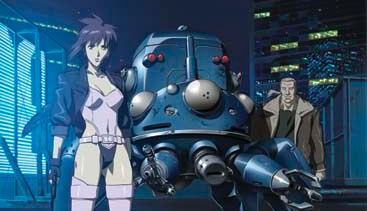
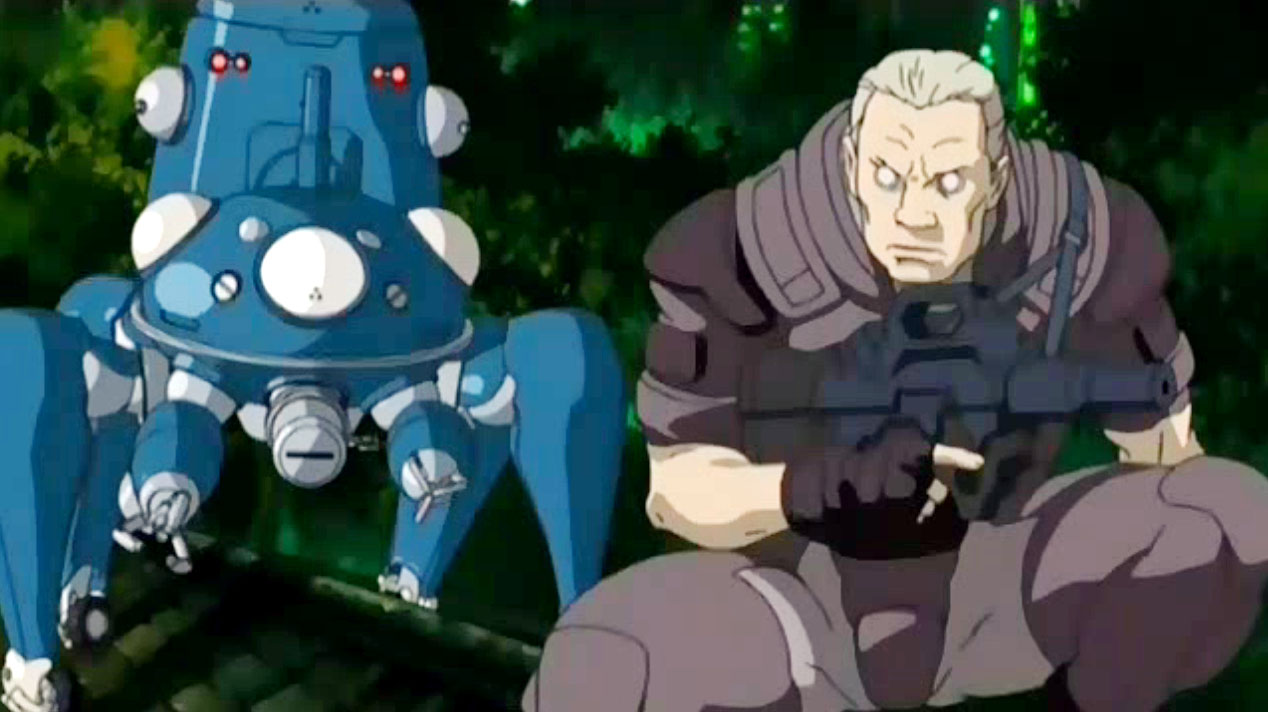
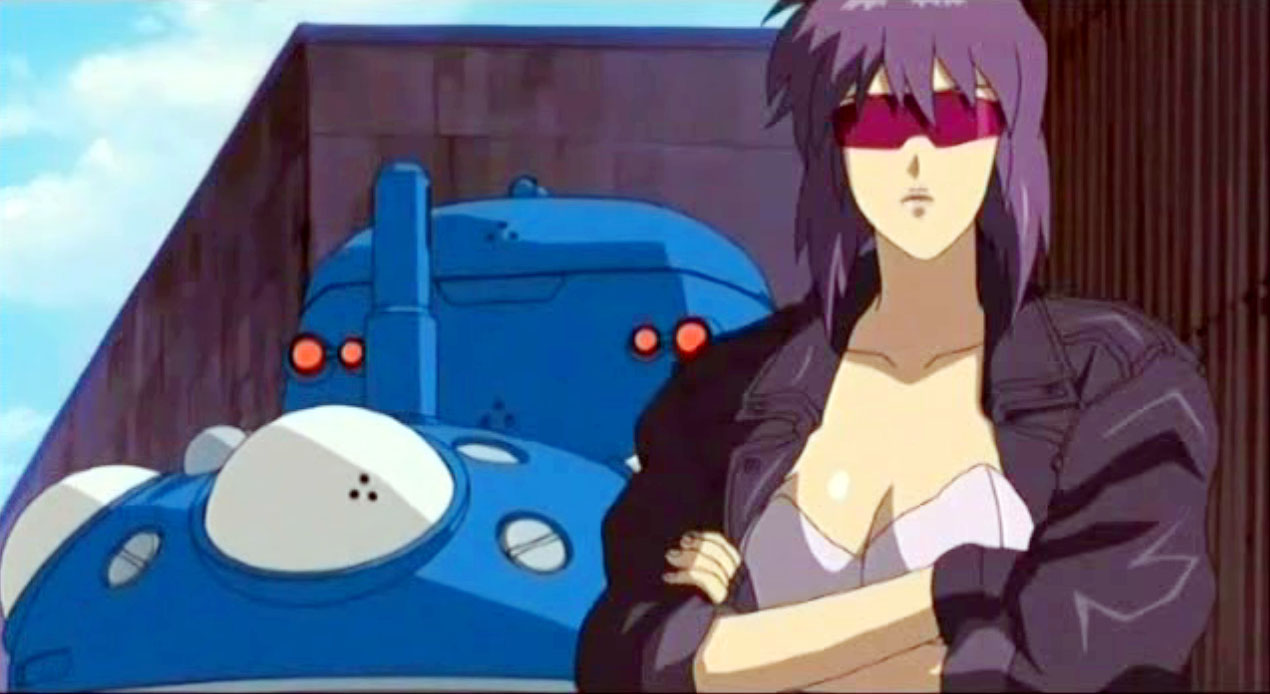
With the TV version of Ghost in the Shell (Kokaku Kidotai) director Kenji Kamiyama (and his production team — including the full support of original creator Shirow Masamune) is bringing a new dimension to the standard police detective drama adding a techno-cyberpunk flavour. Not only is this a very high quality show visually (HD full-digital screen to satisfy even the most hard-core fan!), but it is also full of exciting, intelligent storytelling. You can see that the writers really put forward their best efforts to attract viewers.
The story is set in a future Tokyo populated with high-tech doohickeys, and lots of cyborgs and androids. Fans of Ghost in the Shell find out immediately that this story is quite different from the manga or games. It’s a kind of alternate world created for the TV series, closer to what was already developed for the movie. The manga is funny and set in a fictitious future (lots of made-up names) where Section 9 is an international anti-terrorist unit. The TV series’ setting feels less like a militaristic anti-terrorist outfit and more like a special police force dealing with cyber crimes. It is more serious and more realistic. Nevertheless, like the movie, which was based mostly on the manga, the TV series is using bits and pieces of the manga’s story. We could consider the TV series as a prequel to the movie, whereas the new manga, Man-Machine Interface, is the direct sequel of the original manga.
So what do they mean by “Stand Alone Complex”? It could mean that the series is mostly made of stand alone episodes (self contained stories), with a few more complex episodes (the “Laughing Man” story arc). However, episode 6 also provides another explanation: it refers to the fact that Laughing Man’s imitators are independent copycats, created without an original. To me it seems that Production I.G.’s writers want to make the point that “It’s extremely difficult and almost impossible today to stand alone in this complex society of computers and networks.” Each episode throws enormous amounts of technical information and detail about computers, science and politics for the viewer to digest. At first, for an average nincompoop like myself, the contents of this show can be too much, but with a bit of patience it’s certainly educational. I think, in a way, it’s charming to see so much information on technology. Compared to ordinary anime shows, the amount of dialogue and information is quite huge.
You really have to sit down and watch this TV show over and over again to catch the small details and to understand better. In this respect it shares much in common with its source, the manga. On the other hand, despite all this, the show can also be watched as an intelligent police/detective drama. The viewers can try to solve crimes with Section 9 members and get great satisfaction to see the conclusion of each cyber-crimes case. But don’t think that the show is as slow paced as the film — there is still a lot of action!
The characters seem to be like normal humans, but in fact most of them are cyborgs (or with some sort of cybernetic enhancement). I wonder if, in the near future, when humans begin to replace body-parts to improve their lives and live more comfortably, we’ll have different kinds of crimes? It’s the same type of premise as in Patlabor : if technology takes us there, the nature of crime will change. Of course we’re all human, but how in the world can we live and “stand” with our own personalities in this extremely complex society of the future? In this show, all criminals are making statements of a kind (politically, individually or otherwise).
This is certainly a strong series evolved from speculative fiction, with excellent (and exotic Russian sounding) music by Yoko Kannno (Cowboy Bebop, Escaflowne and Macross Plus) and viewers will enjoy this full-action crime fighting anime! In our opinion, this series clearly shows one thing: good writing and storytelling make a great difference! There are many shows with high quality visuals, but with weak stories. Ghost in the Shell is one of the best shows to come down the road in the last few years and hearkens back to a period where stories and strong characters were the main focus. I’d like to send out enthusiastic applause to the creators of this show!
Despite its high quality animation and intelligent story, the show has a few annoying details: the original opening is much better than the 3D one which starts with episode 3 and there are some technical impossibilities (like the cloaking devices which are not consistent with those in the movie).
This anime won’t disappoint you — in fact, you’ll be totally hooked! A must see show that I’d recommend to anyone. In order to understand the TV series a bit better it is recommended to have seen the movie or read the manga (you would already know the characters and technological background), but you will probably manage anyway if you just dive straight in (you’ll find some helpful information, right after the jump). The series was very well received with critics’ rating of 8.5 on IMDb and of 67% / 100% on Rotten Tomatoes. Enjoy !
De la cinquantaine d’espèce de lémuriens de Madagascar, dix-sept ont disparu avec l’arrivée des premiers humains il y a au moins quatre mille ans. On voit ici (à gauche), le crâne d’un spécimen de l’une de ces espèces disparues, qui atteignait une taille impressionnante (1.2 m). Le Megaladapisedwardsi est une espèce du genre Megaladapisqui était similaire au koala. Elle appartient à la famille des Megaladapidae et de l’ordre des Primates. (Sources: Fiche signalétique de l’exposition, Wikipedia [FR / EN]).
Le spécimen de droite a été déterré dans les douves de la Tour de Londres en 1937. Il s’agit d’un lion de Barbarie, originaire de l’Afrique du Nord, qui appartenait sans doute à une ménagerie d’animaux exotiques conservée pour divertir la cour à une époque où la Tour servait encore de palais royale (probablement au XIIIe siècle). Il était caractérisé par une impressionnante crinière, plus volumineuse et plus sombre que le lion africain. C’est une sous-espèce du Panthera leo, appartenant au genre Panthera, à la famille des Felidae et à l’ordre Carnivora. (Sources: Fiche signalétique de l’exposition, Wikipedia [FR / EN]).
This superb book is an Official Guide to the Stand Alone Complex TV series and offers an in-depth analysis of the background story as well as the production development. It features an introduction to the Ghost In The Shell’s world (manga, movies, video games, etc.), character profiles and designs, mechanical designs, synopses and background notes for the first 19 episodes, interviews with the creative staff and an essay on the science of Ghost In The Shell. It also includes an exclusive 90-min. DVD with never-before-seen footage, a documentary on the digital animation techniques used for the series and more interviews with the staff and cast.
This type of high-quality art book usually comes in a larger format, but if the 6 x 8.5 inches size is more practical it also means fewer and smaller illustrations presented in a more cramped layout. Still, the Official Log is quite useful when it comes to better understanding the complex story of the Ghost In The Shell TV series. It is a must-have for all serious anime fans!
Ghost in the Shell: Stand Alone Complex Official Log, Vol. 1 (by collective; editor, Robert Place Napton). [Cypress, CA] : Bandai / Manga Entertainment / Production I.G., October 2005. 148 pages (64 in colour) [DVD: Cat.# 25180, Subtitled, 90 min.]; Limited Edition (only 15,000 copy released), $49.98 US, rated 13+, ISBN: 1-59409-571-X.
Review originally published in PA #87 : 63 (December 2005 / January 2006). There is also a second volume but I haven’t seen it and therefore cannot comment on it. The book is old but seems to still be available online.
I’ll continue on the thematic of Ghost in the shell for a little while… I dug out those two reviews of the original GITS manga respectively published in PA #83: 20 (March-April 2005) and PA #84: 20 (June-July 2005) — however I have relativized the original rating. Note that I had already (briefly) reviewed those manga along with the live-action movie and that I have also reviewed The Ghost in the Shell Perfect Edition, tome 1.5 : [ Human Error Processer ]on this blog.
Ghost In The Shell
A totally superb book! This second edition offers the original Japanese size (5.75” x 8.25” which is a smaller, more convenient size than the original English edition, but still easy to read contrary to the 4” x 6” of Lone Wolf & Cub) and some extra pages that were originally cut because they were too racy (hence the 18+ rating and the parental advisory for explicit content). It is a nice thick book, with glossy paper, that has a good feel when held. Shirow’s artwork might be of variable quality, varying from the beautiful colour illustrations to the sketchy SD characters, but his story is solid and profound (although a little too technical by moments). Most of this first volume offers the framework for the first movie (with some variations and more details), but you can also find a few ideas that were used for the Stand Alone Complex TV series, and the sixth chapter is the basis for the story of the second movie. A classic and a must.
Like the first volume, this one is really a superb book. Even more than the first, since there is three time more colour pages, the designs are much nicer and the art is more detailed (particularly in the colour pages – however, a problem in the reproduction of the screen-tone sometimes creates an annoying shimmering effect in the B&W art). It is a more mature work. The story is more serious and complex, to the point that it becomes difficult to follow and understand. That’s the major drawback of the book. Motoko has merged with the Puppet Master and swims freely in the virtual sea of information. She has moved to the private sector and works as the head of security for Poseidon Industrial. Her new nature allows her to move from one artificial body to another, which is quite convenient in her line of work, but makes the story even more confusing. On top of that you have Shirow’s philosophical reflection on life, intelligence and existence. Besides the main character, the story of this book has not much to do with the first part. The art is sublime and the story challenging. A must.
“Ghost in the Shell: Stand Alone Complex takes place in the year 2030, in the fictional Japanese city of New Port. The story follows the members of Public Security Section 9, a special-operations task-force made up of former military officers and police detectives. The manga presents individual cases that Section 9 investigates, along with an ongoing, more serious investigation into the serial killer and hacker known only as “The Laughing Man.””
“Volume 1: No mission too dangerous. No case too cold. When a high-ranking government official is kidnapped, the Prime Minister must call in his top crime fighting force known as Section 9. Led by the beautiful (and deadly) Major Kusanagi, the cybernetically enhanced squad must use all their skill to take down the kidnappers and rescue the hostages. But that’s only half of the mission; can Kusanagi and company find out who’s behind the kidnapping, and, more importantly, just what they’re after? Find out in this thrilling first volume of The Ghost in the Shell: Stand Alone Complex!”
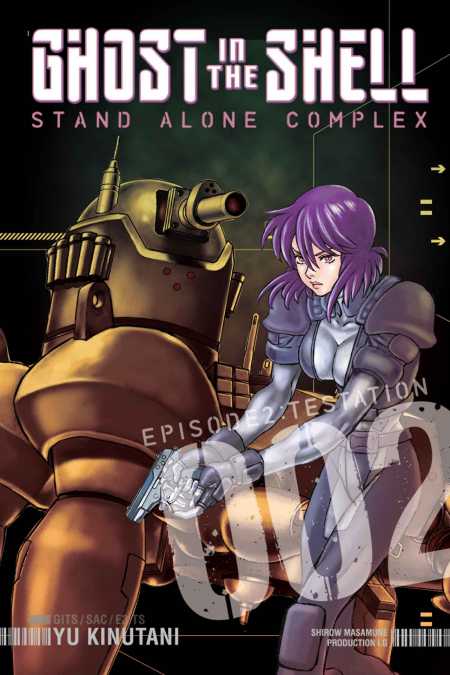
“Volume 2: The best offense is a strong defence? An advanced tech tank is on the loose and appears hell bent on heading into the city. To make matters worse, it has impenetrable defenses and all conventional efforts to stop its progress have failed. Now it’s up to Major Kusanagi and Section 9 to find a way to stop the tank’s inexorable march toward an unknown fate in the city!”
“Volume 3: Identifying the enigmatic hero. Marcelo Jarti, the hero of a democratic revolution, and South American drug dealer, has been coming to Japan periodically and no one knows why. The Major and Section 9 track his movements after he makes his latest appearance in the country. They are determined to figure out the meaning of his visits, but following Jarti leads to more than they could have possibly expected …”
“Volume 4: The power of misdirection. Section 9 receives a tip that a criminal group from Henan is planning on attacking a financial institution. To prevent the attack, Section 9 infiltrates the secret base of the criminals. The mission goes well and the threat is neutralized … or is it? Something is amiss, and Major Kusanagi and Section 9 must act quickly in order to stop the criminals from achieving their true goal.”
“Volume 5: Ageless new world. 16 years ago a terrorist group called the “New World Brigade” kidnapped a young girl named Eka Tokura. However, recent photos of Eka have surfaced and she appears to look exactly as she did 16 years ago. To investigate this mystery, the special unit of the Maritime Safety Agency was dispatched to a man-made island off the coast of Okinawa that has been seized by the Brigade. However, communication with the special unit has been lost, leaving this island and the Brigade in a shroud of secrets. Section 9 is tasked with the job of finding out what happened on this man-made island and discovering the truth behind Eka’s age-defying looks.”
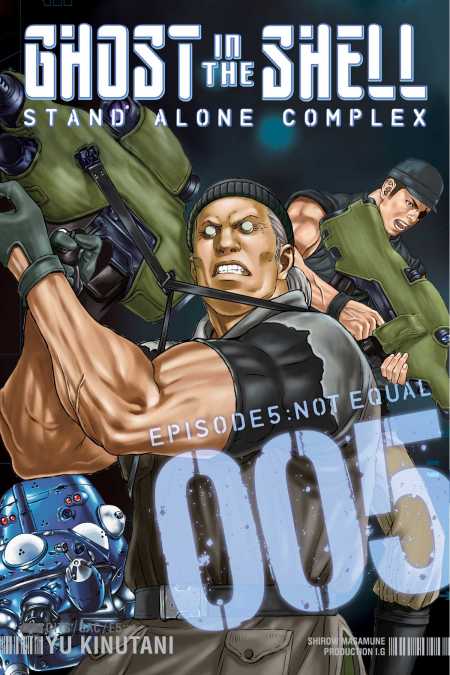
I have already introduced the Ghost in the shell story created by Masamune Shirow when I talked about the live-action adaptation and the book 1.5 of the manga. However, my favourite part of GITS franchise was the anime TV series Stand Alone Complex. It is a police story with lots of human drama set in a post-cyberpunk environment. The TV series format allowed to make a great deal of character development for all the protagonists, the members of Section 9 Public Security unit. Usually, an anime is based on a manga but exceptionally, in this case, it is the opposite: the anime TV series came first (in 2002-2005) and this manga is a VERY faithful adaptation of a selection of five episodes (out of the fifty-two episodes of the TV series).
I like Ghost in the shell in general because it is a great cyberpunk story: people can get cyber-enhancements, the internet (the “network”) is everything, everywhere and can be used in unimaginable ways. The story also has strong social and political aspects, as it give a glimpse of a fascinating techno-dystopian future (which seems popular in Japan). In this context the “ghost” refer to the aspect of the mind that makes it unique and self-aware (the soul) even when it is digitized and uploaded to a cyber-brain or to the net, the “shell” is the body (biological or cybernetic) and the “standalones” are those who “remain outside the system” (not cyber-enhanced? air-gapped?).
Vol. 1, p. 8
Vol. 1, p. 9
Vol. 1, p. 10
Vol. 3, p. 85
However, I prefer the Stand Alone Complex series (both anime and manga) because I feel it offers the best designs (mostly of the characters) and storytelling (its TV series format allows for more development of both the characters and storyline). The anime movie (directed by Mamoru Oshii) was awesome but really too philosophical. By side-stepping the “puppet master” story arc, SAC is able to tell more stories of the most interesting character, Major Motoko Kusanagi, and to develop her background story in a very interesting way. Similarly, the orignal manga by Masamune Shirow is superb but the art is too detailed and the story too complex to be easily enjoyed. Shirow’s art also lacks consistency, looking sometimes very serious and sometimes (to be humorous) quite caricatural. With this new manga by Yu Kinutani the art is cleaner, more serious and steady while still being detailed enough. It is therefore much more enjoyable. The storytelling and layout follow closely the TV series (often even adding more scenes to make the action easier to follow in a static medium) so it almost feels like a storyboard.
Each volume of the manga series is adapting one episode of the TV anime. Volume one retell the story from episode 1 “Section 9”, vol. 2 covers the episode 2 “Testation”, vol. 3 recount the episode 7 “Idolater”, vol. 4 is about the episode 14 “¥€$” and vol. 5 give us its take on the episode 13 “Not Equal”. Volumes 1 and 4 also include three bonus short stories from the “Tachikoma Days” manga by Masayuki Yamamoto. Those are funny episodes involving the multi-legged artificial intelligence tanks (think tanks) called the Tachikoma — echoing the capsule video at the end of each episode of the TV series.
Vol. 3, p. 205
One annoying thing from Ghost in the shell (mostly for feminists and people unfamiliar with the franchise) is the way the Major is dressing: in a very provocative and sexy way. This is part fan service, of course, but the character has also a reason to do so. A full-cyber body (even if it has a generous feminine shape) feels and looks a bit cold and asexual, therefore the Major wears very alluring clothing to claim and express her femininity.I imagine she might think something like “with a body like this it’s better to show it” or maybe, feeling a little like a doll, she wants to dress like one. It also offers an element of surprise: nobody expects someone looking like her to be so strong and kick-ass!
Finally, my greatest disappointment about the GITS Stand Alone Complex manga series is that there are only five volumes. I guess it would have taken too much work and time to adapt all fifty-two episodes of the TV series. It is just too bad. However, if you want more, you still have the TV series — which was also complemented by three novels (available from Dark Horse), two OVA (The Laughing Man, Individual Eleven) and a movie (GITS: SAC – Solid State Society)…
I am already a big fan of GITS and of cyberpunk stories, but I particularly like this manga series because it offers strong designs and art, excellent storytelling and constitute an easy read. It is quite enjoyable if you like investigative stories with lots of action (sometime quite violent), rich socio-political themes and that are set in a cyberpunk future. I must admit that it has been a long time since I took so much pleasure in the reading a manga. I highly recommend it.
For more information you can consult the following web sites:
Avec l’épidémie de Coronavirus et les mesures de distanciation sociale qui en découlent beaucoup de gens se retrouvent isolés chez eux avec pas grand chose à faire sinon d’écouter la télévision, la radio ou de lire. Avec la fermeture des bibliothèques, des librairies et des cinémas, les gens n’ont plus d’opportunités de se procurer de quoi les occuper. Et peu ont la chance d’avoir une grosse collection de livres et de Dvds à la maison (moi, je n’ai rien à craindre, j’ai de quoi m’occuper pour plus d’une décennie si nécessaire!).
Bien sûr, il reste toujours l’internet où l’on peut télécharger des livres numériques (ebooks / livrels) ou visionner des films en continu (streaming). J’ai récemment mis en ligne une liste de suggestions de sites et de ressources à cet effet. Toutefois, il y a encore beaucoup de gens qui, pour des raison économique, n’ont pas accès à l’internet ou des personnes âgés qui trouvent tout ça un peu trop compliqué. Alors on retrouve plusieurs initiatives sur FB ou ailleurs pour prêter ou donner des livres à ceux qui en ont besoins. Des initiatives dans le genre du projet de microbibliothèques que la ville avait parti en 2015 (j’ignore si ce projet fonctionne encore mais il existe sûrement des projets similaires). Toutefois, aujourd’hui, j’aimerais vous parler d’un projet en particulier.
Dans la région du Grand Lévis, mon neveu — l’auteur Sébastien Chartrand — a décidé d’y aller de sa modeste contribution et de mettre le tier de sa collection personnelle (quelques deux-mille livres) disponible pour prêter à ceux qui en ont désespérément besoin. Il a démarré un site internet — le Livrensac de Lévis — où il explique son projet et donne la liste des titres disponibles. Les livres sont désinfectés à la lingette Lysol et placés dans un sac ziploc avant d’être livré à la porte ou dans la boîte aux lettres de ceux qui en font la demande! C’est une initiative tellement intéressante que même le journal local, le journal de Lévis, y consacre un article !
Il m’écrivait ce matin:
“J’aurais aimé pouvoir montrer à tout le monde le visage radieux des personnes âgées qui m’envoyaient la main par la fenêtre durant ma livraison de samedi, et le garçon qui sautillait sur place quand j’ai déposé ma pile de BD sur le pas de la porte…”
“J’espère vraiment que je vais réussir à rejoindre un maximum de gens isolés. Je demande aux gens de faire connaître. Ça va réduire, peut-être, l’envie de sortir de certains entêtés et donner envie à d’autres personnes d’imiter l’initiative dans d’autres régions…”
J’admire grandement sa compassion et son courage. C’est toujours une grande joie de partager notre passion pour les livres (je le ressens souvent en bibliothèques) mais j’ai eut trop de mauvaises expériences à prêter les miens (j’ai perdu trace de plusieurs d’entre eux) que je n’oserais jamais me lancer dans une telle entreprise. Je préfère laisser passer la crise et lire paisiblement en écoutant du smooth jazz à la radio ou blogger sur ma “safe-house” en toute sécurité. Alors, je te lève mon chapeau, neveu !
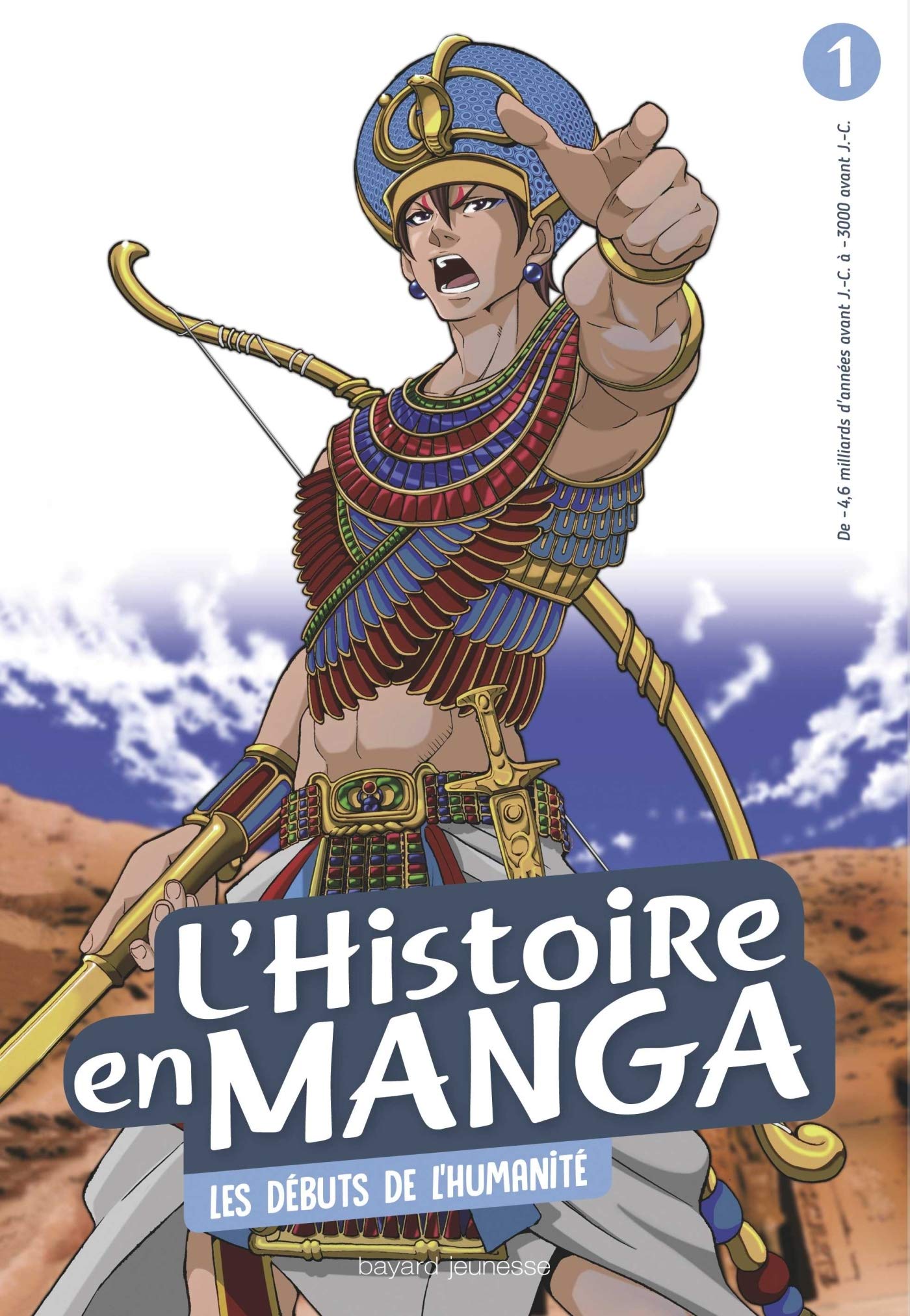
“L’Histoire en Manga: Une collection pour découvrir toute l’Histoire en image.”
“De la guerre de Troie racontée par Homère à l’émergence de la démocratie athénienne, des conquêtes d’Alexandre le Grand à la naissance de la culture grecque, du règne de César à la naissance du christianisme, ce manga raconte… l’antiquité grecque et romaine.”
“170 pages de bandes dessinées pour plonger avec plaisir dans l’Histoire… avec en + … des pages explicatives pour chaque chapitre, un cahier documentaire en fin d’ouvrage pour restituer les évènements dans leur contexte, des frises chronologiques, et des cartes…”
L’artiste a changé et on note une amélioration dans la qualité du dessin. La narration et le découpage du récit est conçu pour son effet dramatique afin de préserver l’intérêt du lecteur malgré le sujet un peu trop académique. Cette fois, je n’ai pas noté de fautes orthographiques ou factuelles (ce qu’il ne veut pas dire qu’il n’y en a pas). Toutefois, le principal défaut de l’ouvrage réside dans le fait que l’on tente de raconter plus de trois-mille ans d’histoire en moins de deux-cent pages. On y présente donc que les faits saillants d’une histoire pourtant riche en détails. Périclès est traité en à peine deux pages! Trente-six pages pour César et la République romaine (avec quelques pages consacrées à Cléopâtre — qui faisait d’ailleurs la couverture de l’édition japonaise) et à peine vingt-cinq pages pour l’Empire romain qui n’est d’ailleurs présenté qu’à travers l’histoire du Christianisme… Un cours éclair donc.
C’est néanmoins un bon manga éducatif qui peut servir à introduire le lecteur (jeune ou adulte) à l’histoire du monde d’une façon intéressante et divertissante.
L’Histoire en Manga: T. 2, L’antiquité grecque et romaine, par Fûta Kanta (dessin) et Hidehisa Nanbô (texte) (Traduction par Aurélien Estager). Montrouge: Bayard Jeunesse, septembre 2017. 192 pages, 16 x 23.5 cm, 12,90 € / $C 24.95. ISBN 978-2-7470-8391-1. Pour lectorat adolescent (11+ ans).
Vous trouverez plus d’information sur les sites suivants:
Je croyais conserver l’affection intime de ma belle
Mais elle n’était pas prête, c’était trop exiger d’elle
Le rideau tombait sur l’acte final, tout était fini
La réalité est vraiment une planche pourrie
J’ai tant pleuré alors, que me reste-t-il, qu’ai-je fait ?
J’avais tant besoin d’elle, rien n’avais plus de sens
Pendant quelques jours j’ai comme été en transe
Il me fallait me reprendre, tirer un trait
J’ai fait le bilan. De l’amour? Je la connaissais si peu
Comment ai-je pu espérer réduire cet amour, le limiter ?
Le cacher au fonds de mon coeur, l’oublier dans un creux ?
Je me suis déçu moi-même. N’avais-je rien appris à aimer ?
J’aurais voulu pouvoir lui crier ma haine
Pour faire le vide, et oublier ma peine
Mais je l’aimais encore et trop fort
Seule la litanie contre la peur m’offrait un réconfort
1988-12-09
Le rêveur gris
Morwajal
Note: Quatrième partie d’un long poème consacré à une expérience amoureuse. Encore une fois, il s’agit de quatre quatrainshétérométriques qui riment mais pas selon un schéma constant (AABB ABBA ABAB AABB)… On note une référence à Philip K. Dick ainsi qu’à la série de romans Dune de Frank Herbert. Intéressant. Voir les deux premières parties (IIa: 2.1-2.2) et la troisième partie (IIb: 2.3). À suivre…
There is not much we can do besides sleeping, taking walks in the park (while keeping our distance from other people), reading books, watching TV series or movies, or using the internet to virtually travel elsewhere. We took a little time to gather for you a few suggestions of places where you can find pleasurable distractions. Enjoy !
Reading
All libraries are closed but — if you don’t already have a good book collection at home or a nearby book store — you can always rely on digital books. Beside the obvious commercial options (Amazon, Audible, Barnes & Noble, Kobo), here are a few suggestions to find free digital books:
I am now on indefinite leave
It would feel like staycation —
If it was not for this doomsday vibes
The coronavirus (COVID-19) unleashed itself on an unprepared world. Now, we are all in self-confinement to create the social distancing necessary to slow down the onslaught. Therefore the library is closed. We worked for about a week without the public (it was quite fun), but now they have sent us back home (with pay!). I am glad because I was worried that travelling everyday on the bus and the subway would put my family at risk (one of my siblings is immunosuppressed). The governments (both federal, provincial and municipal) asked us to stay home, so we do. I don’t know how long it will last; it might be anything from two weeks to two months.
I will take advantage of that time to catch up on my reading and movie viewing, do a little clean-up in the house and maybe (if it last for a while) start gardening. I will definitively blog more during this period, mostly to post my reading or viewing comments but also to try to entertain you with bits of knowledge and wisdom. I have already post a list of activities everyone can do during this confinement period.
Hopefully everything will be well. In the meantime, please stay all safe.
Ce grand oiseau originaire de l’Île Maurice (dans l’océan Indien) est surtout connu pour son extinction qui s’est produite à peine quatre-vingt-dix ans après ses premiers contacts avec l’être humain (des marins hollandais en 1598). Étrangement il ne subsiste aucun squelette complet de dodo. Il était gros (un mètre de haut environ), lent, incapable de voler et plutôt docile (ce qui en faisait une proie facile). Cette espèce appartient au genre Raphus (sous-famille des Raphidae), à la famille desColumbidae (oui, oui, il est apparenté aux pigeons!), et à l’ordre des Columbiformes. (Sources: fiche signalétique de l’exposition, Wikipedia).
La fiche signalétique qui était a proximité de cette plante ornemental l’identifiait comme une Acanthe de Hongrie (Bear’s breeches en anglais ou Acanthus hungaricus) ce qui semble clairement erroné si l’on se fit aux images de la documentation trouvée en ligne. Toutefois, quelques minutes plus tard, j’ai prit la photographie suivante dont la fiche signalétique m’apparait beaucoup plus juste:
Il s’agit de la Phlox paniculé (Garden phlox en anglais ou Phlox paniculata en latin). C’est une plante à fleurs de la classe des Magnoliopsida, de l’ordre des Solanales, de la famille des Polemoniaceae et du genre Phlox. Plus précisément c’est un exemple du cultivar “Eden’s Smile”. Le premier cliché (un peu plus haut) appartient sans doute à un cultivar différent (elle est plus touffue mais les fleurs semblent très similaires). Comment savoir avec ces fiches signalétiques vagabondes ! (Sources: Wikipedia) [ Translate ]
Amour et raison ne s’entendent pas
Les règles du jeu était simple, et nous n’étions pas las
Mais je savais que la douleur viendrait au bout du compte
Je devais agir, tout dire, pour éviter la honte
Je me suis emporté, je n’avais rien connu de tel
J’ai été hors-jeu, j’avais de l’amour pour elle
Tout perdre, son affection, telle était ma peur
Mais la mortelle morsure libérerait mon coeur
J’ai sonné la cruelle retraite
Je devais chercher l’oubli, en pure perte
J’ai fait le bilan, j’avais tant appris
Je devais rester éveiller, conserver l’acquis
J’avais ouvert mon coeur et éviter le pire
Je devais vivre avec et si possible en rire
Secoué aux tréfonds de mon âme pour avoir dit “j’AIME”
Tellement changé que jamais plus je ne serais le même
1988-12-06
Le rêveur gris
Morwajal
Note: Troisième partie de cette série chroniquant une brève mais très intense expérience amoureuse. Quatre quatrains hétérométriques mais qui riment cette fois (tous en AABB). L’ensemble (en six parties — voir partie IIa) écrit en un peu plus deux semaines. Intéressant. À suivre…
“L’éditeur scolaire japonais GAKKEN propose une collection de 12 tomes racontant l’histoire du monde. Dessins typiques du manga, couleurs saturées, scénario avec personnages servent à illustrer les grands épisodes de l’histoire.
Dans ce premier tome on découvre les débuts de l’humanité; le big bang, puis la Préhistoire et l’Antiquité égyptienne. Des pages chronologiques encadrent l’ouvrage. Un cahier de 32 pages documentaires richement illustrées vient étoffer les informations distillées dans les épisodes, ainsi que de nombreux compléments regroupés en fin de chapitre.”
J’ai déjà mentionné dans un billet (”Educational Manga“) que les mangas, en plus d’être très divertissants, pouvaient avoir une grande valeur éducative. Au-delà des adaptations de grands classiques littéraires et des nombreux mangas historiques, il existe au Japon plusieurs séries de manga qui ont pour but d’introduire auprès d’un public jeune l’histoire du Japon ou du monde d’une manière pédagogique, voir même encyclopédique. Il s’agit des Gakushū manga ou manga d’apprentissage.
Je n’aurait jamais cru pouvoir lire ce genre de manga en traduction. Et pourtant, en novembre dernier, en périphérie du Salon du Livre de Montréal, j’ai découvert chez Bayard Jeunesse une collection qui nous raconte L’Histoire en manga(mes deux sujets favoris!). La collection comporte (pour l’instant) huit volumes: v.1 Les débuts de l’humanité, v.2 L’antiquité grecque et romaine, v.3 L’Inde et la Chine antiques, v.4 D’Attila à Guillaume le Conquérant, v.5 De l’empire mongol à la Guerre de Cent ans, v.6 La Renaissance et les grandes découvertes, v.7 L’Histoire en Europe de la Reine Elisabeth à Napoléon (incluant la révolution industrielle), v.8 De la conquête de l’Amérique à la Commune de Paris. L’édition originale japonaise comporte douze volumes (il en resterait donc quatre à paraître).
Le premier volume, originalement intitulé Gakken Manga — Nouvelle Histoire du Monde, Volume 1: Les Temps préhistoriques et l’Orient ancien [ 学研まんが NEW世界の歴史 第1卷 先史時代と古代オリエント / Gakken Manga nyū Sekai no Rekishi 1Kan: Senshi Jidai to Kodai Oriento], nous introduit à l’histoire des débuts de l’Humanité, de la préhistoire au moyen-orient ancient. Le récit utilise comme prétexte trois collégiens turbulents qui se font coller en punition un exposé sur les débuts de l’humanité qu’ils réalisent grâce à l’aide de leur professeur de physique.
Évidemment, dans ce genre de manga documentaire, la qualité graphique n’est pas vraiment une priorité alors le dessin est plutôt moyen — mais il est en couleurs. Aussi, compte tenu de l’ampleur du sujet, on nous raconte tout cela en accéléré (moins de deux cents pages pour couvrir quelques millions d’années d’histoire!). Et bien sûr on retrouve plusieurs fautes d’orthographes et quelques erreurs factuelles (ou de frappe? Possiblement due à la traduction ou au lettreur?). Par exemple, on place la révolution agricole à “59 000 ans avant notre ère” alors que l’on voulait probablement dire 9500 ans… Mais dans l’ensemble c’est assez juste et c’est complété par un dossier qui reprend l’information couverte par le manga sous forme de texte.
Page 12
Page 38
Même si ce genre de manga s’adresse surtout à un public jeune (onze ans et plus), cela reste intéressant pour tout âge. Au Japon, ces mangas sont souvent utilisé comme des manuels scolaires alors pourquoi n’en ferions-nous pas autant ici? Cela reste une bonne lecture relativement divertissante et assez éducative. C’est sans aucun doute l’ouvrage idéal pour intéresser un jeune lecteur à l’histoire du monde.
L’Histoire en Manga: T. 1, Les débuts de l’humanité, par Hirofumi Katô (dessin) et Hidehisa Nanbô (texte) (Traduction par Aurélien Estager). Montrouge: Bayard Jeunesse, septembre 2017. 192 pages, 16 x 23.5 cm, 12,90 € / $C 24.95. ISBN 978-2-7470-8390-4. Pour lectorat adolescent (11+ ans).
Vous trouverez plus d’information sur les sites suivants:
La semaine dernière j’ai observé cet oiseau dans le parc. Ce serait un Cardinal rouge [Northern Cardinal en anglais] — malgré le contre-jour il me semble rouge (c’est donc un mâle), il a la huppe caractéristique et son chant est fort comparable aux exemples que j’ai trouvé dans les documents de référence. Le cardinal est un grand pinson à crête de l’ordre des Passeriformes, de la famille des Cardinalidae et de du genre Cardinalis. Vivement le printemps !
Ce petit arbuste ornemental est une plante de la classe des Magnoliopsida, de l’ordre des Dipsacales, et de la famille des Caprifoliaceae. Le genre Weigelacomprend une douzaine d’espèces (ici la fiche signalétique ne précise pas laquelle, mais c’est probablement la Weigela florida). Il s’agirait du cultivar “Black and White” (nommé ainsi à cause du contraste entre le feuillage vert puis violet foncé et les fleurs blanches). Les fleurs (qui font de deux à quatre centimètres de long) ont une corolle à cinq lobes généralement rose ou rouge, parfois blanche mais rarement jaune, produite en petits corymbes de plusieurs fleurs. La floraison se fait au début de l’été (mai-juin). J’ai toutefois un doute sur l’exactitude de la fiche signalétique (ci-contre) car si les illustrations de la documentation consultée m’apparaissent similaire à ma photographie, les corymbes de la “Black and White” ne semblent pas aussi touffues et compactes… (Sources: Wikipedia et plusieurs sites horticoles) [ Translate ]
Une glace épaisse enfermait l’océan de mon coeur
Malgré la brise une tempête ravageait ma torpeur
Des vagues énormes secouaient mon essence
Des tourbillons immenses sapaient mon univers rance
La rage de mon impuissance obnubilait toute connaissance
1988-11-28
(2.2) ENCOUNTER IN DARKNESS
Alors que mon obscurité était ainsi ravagée
Je connu cette expérience inusité
Une petite lumière à la recherche d’une présence
M’appris comment embraser mon essence
En ces quelques petites journées
J’en découvris plus sur l’humanité
Que durant les vingt dernières années
Affection, sollicitude, tout n’était pas vain
Je devins subitement plus humain
1988-12-01
Le rêveur gris
Morwajal
Note: Quand on aime on vit! Une autre série de poèmes en forme libre trouvée profondément dans mes cahiers de notes… d’il y a trente-deux ans! À suivre…
When we love we live! Another series of free form poetry found deep in my notebooks… from thirty-two years ago! To be continued…
“While walking home from work one evening, Jeff Manning is struck by a car and killed. Not one but two women fall to pieces at the news: his wife, Claire, and his co-worker Tish. Reeling from her loss, Claire must comfort her grieving son and contend with funeral arrangements, well-meaning family members and the arrival of Jeff’s estranged brother — her ex-boyfriend — Tim.
With Tish’s co-workers in the dark about her connection to Jeff outside the workplace, she volunteers to attend the funeral on the company’s behalf, but only she knows the true risk of inserting herself into the wreckage of Jeff’s life. Told through the three voices of Jeff, Tish and Claire, Hidden explores the complexity of relationships, our personal choices and the responsibilities we have to the ones we love.”
My wife is a member of the Montreal’s Sherlock Holmes fan club, called The Bimetallic Question. Every year in January they are holding a formal dinner to celebrate his birthday. They always have a special guest speaker to talk about his/her work and share thoughts about a Sherlockian topic. It is usually a local writer or a Gazette columnist. Last year it was Montreal mystery writer Christopher Huang (I read and commented his book A Gentleman’s murder on this blog). This year on January 18th, being available, I decided to come with my wife to this “Master’s Birthday” dinner to meet this colourful crowd I was hearing so much about but mostly to listen to the guest speaker, writer Catherine McKenzie [ Biblio • FB • Goodreads • Google • Web ].
Born and raised in Montreal, she studied law at McGill University and now practices litigation in a boutique law firm. She has published nearly a dozen books: Spin (2009), Arranged (May 2012), Forgotten (October 2012), Hidden (2013), Spun (2014), Smoke (2015), Fractured (2016), The murder game (written in 2007 but only published in 2016 under the pen name Julie Apple — and used as plot device in Fractured), The good liar (2018), and — her latest— I’ll never tell (2019). Her next book (coming in June 2020) will be You Can’t Catch Me. She has also co-written First Street, a serialized audiobook, and published short stories in a couple of anthologies (J.T. Ellison’s A Thousand doors; J. McFetridge & J. Filippi’s Montreal Noir).
A brief sample of McKenzie presentation
I chose to read Hidden by chance, selecting it among the titles available at the library (as I couldn’t get her latest title on time to start reading it before her guest appearance at the dinner). Because McKenzie was invited to speak at the club dinner, I assumed that she was a mystery or crime writer, but Hidden is neither. McKenzie started her career writing Women’s fiction (sometimes called Chick-lit). With Hidden (and later with Fractured and The good liar) she moved into Psychological fiction with a slight touch of a thriller. Although her characters often move in the legal world (law firms and courts), she starts putting elements of crime fiction into her writing only with I’ll never tell and You can’t catch me.
Hidden is very well written. It offers a compelling story about grief and adultery that knows how to keep the interest of the reader. Her characters sound quite true, so when the storytelling builds up with tension you really feel for them. She even manage a little twist at the end. I enjoyed reading this novel but couldn’t avoid being annoyed by the narration at the first person, done by three different characters — including the guy who died at the beginning of the novel! That’s rather unusual. I would have preferred that she put the name of the narrating character in the title of each chapter (I’ve seen this in other books). That way it would not have taken me a few pages into each new chapter before figuring out who the narrator was this time…
I also noticed that she “lied” in her presentation at the club. When asked if she based her characters on herself she said categorically “no”, arguing that when editors say “write about what you know“ it is a misconception that authors write about themselves. In the contrary, my experience in the literary world tells me that writers (consciously or not) always put a part of themselves into some of their characters. McKenzie characters are often working in the legal world so she clearly uses part of “what she knows” (her own experience as a woman, as a mother, as a lawyer) to create the setting of her fictions. In Hidden (p. 303), Jeff accused Tish of having lied about her golf handicap but she answers that she told him about her bad putting when they first met, adding “I have perfect recall of conversations.” McKenzie used this exact sentence, verbatim, during her presentation as she was explaining that she was sometimes using in her books real conversations she had had or had heard. I rest my case.
Hidden was a very good reading. I enjoyed it greatly. It’s nice sometimes to read a simple book about the complex life of everyday people. I’ll certainly try to read more of Catherine McKenzie’s work.
Hidden, by Catherine McKenzie. Toronto: HarperCollins, June 2013. 360 pages, 14 x 21.5 in, $C 19.99. ISBN 978-1-44341-190-5. For young adult (16+).
For more information you can consult the following web sites:
Therefore I gave myself very strict purchasing guidelines. I was looking for a 16th or 17th century edition, preferably with vellum or pigskin bindings, in average condition, about a subject related to classical authors (like Cicero, Pliny, Suetonius, etc.) and for a price under two-hundred dollars. I would have probably also considered any 18th century editions with veal or sheepskin bindings, in good condition and about a really interesting historical subject or a 19th century book about one of my current interests (a book by Isabella Bird [because of the manga about her travels in Japan] or a Bradshaw’s guide [because of Michael Portillo’s Great British Railway Journeys BBC documentary series]). But I found and purchased nothing. I am proud of myself!
There was a few interesting books but they were all outside my criteria and quite expensive (certainly over $500 and several even in the thousands, up to $4500 for one!). It really seemed overpriced even despite their good condition. I saw only two books within my budget, at $125 and $150, both at the table of François Côté (from whom I purchased last time). One I had already seen at the previous book fair (Disputationes de argumentis, quibus efficitur Christum prius fuisse, quam in utero Beatae Virginis secundum carnem conciperetur [questionnement théologique sur la Vierge Marie], par Josua Placeus, in-4, 1660, $125) and another one also on an ecclesiastical subject (I already have too many of those!). Maybe I’ll find a great treasure at the next book fair.
Speaking of which: the 37th Montreal Antiquarian Book Fair will be held on September 26-27 (Saturday: 12h00-18h00, Sunday: 11h00-17h00) at Pavillon McCornell of Concordia University (1400 De Maisonneuve Blvd West). It’s organized by the Confrérie de la Librairie Ancienne du Québec (unfortunately the link to both their FB and web page seem dead).
“If you are cold, tea will warm you; if you are too heated, it will cool you; If you are depressed, it will cheer you; If you are excited, it will calm you.” ― William Ewart Gladstone








 With the TV version of Ghost in the Shell (Kokaku Kidotai) director Kenji Kamiyama (and his production team — including the full support of original creator Shirow Masamune) is bringing a new dimension to the standard police detective drama adding a techno-cyberpunk flavour. Not only is this a very high quality show visually (HD full-digital screen to satisfy even the most hard-core fan!), but it is also full of exciting, intelligent storytelling. You can see that the writers really put forward their best efforts to attract viewers.

























 Clodjee's Safe-House