La Porte

La_Porte-covSôsuke et O-Yone vivent avec le poids d’un secret qui ombre de mélancolie leur amour tendre et leur jeunesse. L’heure est-elle venue de payer leur dette ? Pour savoir ce qu’il en est vraiment, Sôsuke se retrouve devant la porte d’un temple zen.

Un grand roman de Sōseki magistralement adapté en manga, dans le décor attachant du Japon d’il y a cent ans.”

[Texte du site de l’éditeur et de la couverture arrière]

Les Éditions Philippe Picquier se spécialisent dans la publication d’auteur japonais. Récemment ils ont commencé à inclure dans leur catalogue des adaptations en manga de classique de la littérature japonaise. En général, le style graphique de ces adaptations est très simple, alors que l’effort est surtout mis sur l’adaptation du texte (de façon assez similaire à la fameuse collection “Classiques” chez Soleil). Toutefois, même si ces mangas ne paie pas trop de mine visuellement, ils sont plutôt intéressant à lire car il nous font (re-)découvrir des classiques.

La Porte (門 / Mon) est une adaptation du roman éponyme de Natsume Sōseki par INOUE Daisuke (un ancien élève de Tezuka). Le roman original a été publié au Japon en 1910 — c’est le dixième roman de Sōseki, qui est surtout connu pour Je suis un chat (1905) et Botchan (1906). L’adaptation a été sérialisé dans Garaku no Mori et publié au Japon par Homesha en 2010.
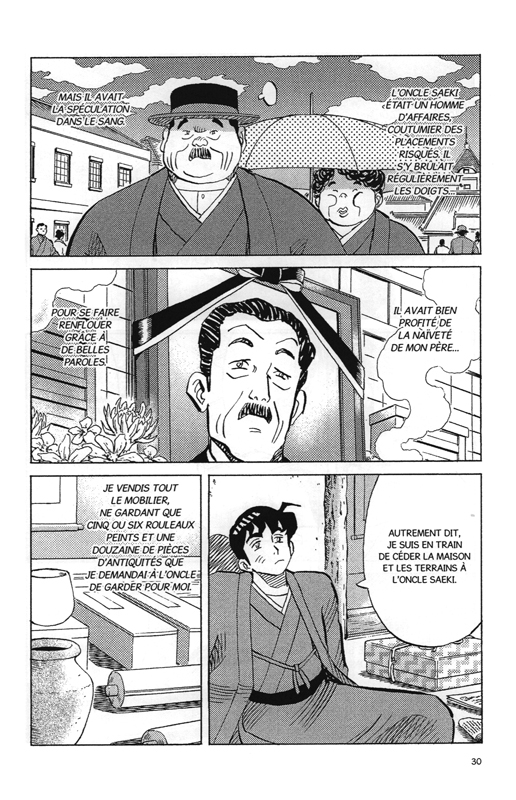
La_Porte-p030

Page 30

Nonaka Sōsuke est un jeune fonctionnaire mélancolique et indécis (un grand flanc mou comme on dirait ici) qui mène une vie ennuyeuse avec son épouse O-Yone. On découvre leur parcours, leur vie quotidienne: O-Yone tombe malade, Koroku — le jeune frère de Sōsuke — leur rend visite, ils apprennent que leur oncle a dilapidé leur héritage et, surtout, le secret qui les ronge nous est révélé. O-Yone était la fiancé de Yasui, un ami de Sōsuke, mais ils tombèrent amoureux l’un de l’autre et s’enfuir ensemble. Cette union répréhensible les mis au banc de la société et la culpabilité garda leur mariage infécond. L’angoisse de sa situation étant devenue intolérable, Sōsuke veut changer sa vie et décide d’aller méditer dans un temple zen. Mais il doit réaliser que c’est au-delà de ses capacités et que la porte de l’éveil lui restera fermé.

L’histoire, qui ne semble pas progresser ni apporter de résolution aux personnages, nous apparait comme incomplète. Mais peut-être était-ce là le sujet dont Sōseki voulait traiter: Sōsuke découvrant ses limites et ses responsabilités… même si il lui est impossible de changer son destin. Cela constitue sans doute une intéressante réflection philosophique mais demeure peu divertissant. En effet, le style sobre et épuré (un peu trop simple à mon goût) de INOUE et le récit lent et contemplatif de SÔSEKI en fait une lecture un peu morne. Toutefois, La Porte nous permet de découvrir l’oeuvre de Sōseki et d’avoir un aperçu de la vie quotidienne à l’ère Meiji. C’est donc décevant mais quand même intéressant.

La porte par INOUE Daisuke (dessin) et SÔSEKI (texte). Arles: Éditions Philippe Picquier, février 2018. 224 p., 15 x 22 cm, 15,50€  / C$ 27.95. ISBN 978-2-8097-1275-9. Extrait disponible sur le site de l’éditeur. Pour lectorat adolescent (14+). stars-2-5

Vous trouverez plus d’information sur les sites suivants:

[ AmazonBiblioGoodreadsGoogleWikipediaWorldCat ]

© Inoue Daisuke / HomeSha, 2010. © Éditions Philippe Picquier pour la traduction française – Tous droits réservés.

[ Translate ]

Capsules

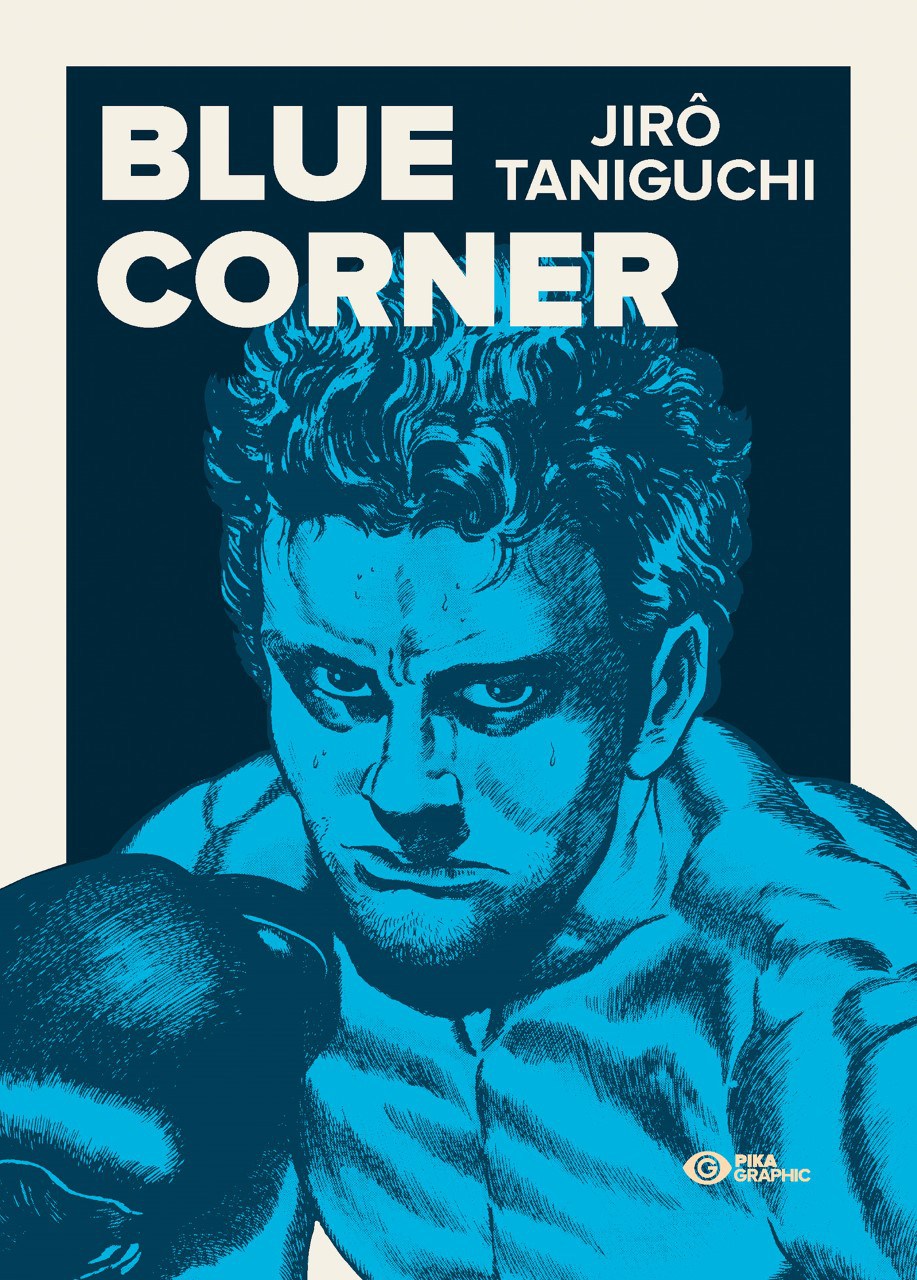
Blue Corner

bluecorner-covBlue Corner nous dépeint le destin d’un challenger de boxe pas comme les autres. Il s’appelle Reggae, il boxe en poids léger. Son palmarès : 12 victoires par KO pour 20 défaites par autant de KO. Pourtant, les connaisseurs savent apprécier le coup de poing dévastateur de ce combattant enfermé dans un mutisme qui ne fait que contribuer à son mythe. Et quand il croise le chemin d’un promoteur qui voit en lui un roi sans couronne, la vie de ce boxeur va dévier vers le tortueux chemin de la ceinture de champion, là où il n’y a pas de place pour le scrupule.

[Texte de la couverture arrière]

J’ai découvert ce manga il y a plus d’un an et il m’a fallut du temps avant d’en arriver à le lire… Le récit est très ordinaire mais cela demeure tout de même un lecture assez intéressante car il nous fait voir le Taniguchi des années ’80, celui qui racontait des histoires d’action. Très peu d’oeuvres de cette période ont été traduite jusqu’à maintenant.

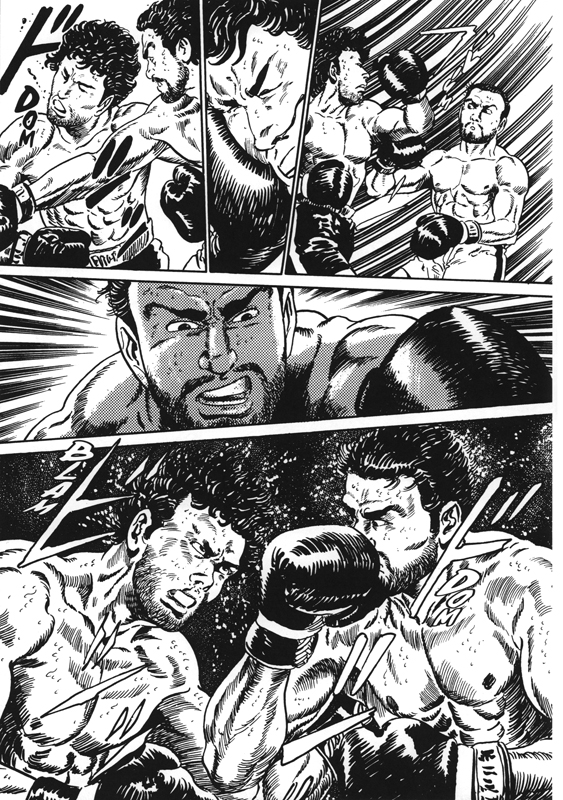
BlueCorner-p066

Page 66

Publié au Japon sous le titre Combattant Bleu (青の戦士 / Ao no Senshi / Blue Fighter) par Futabasha en mars 1982, Blue Corner est illustré par Jiro Taniguchi et écrit par Caribu Marley (pseudonyme de Tsuchiya Garon surtout connu pour avoir scénarisé Old Boy, illustré par Nobuaki Minegishi). Cette oeuvre de jeunesse de Taniguchi nous offre un manga seinen de sport, bien documenté et dédié au monde de la boxe — un sujet un peu similaire à Garôden qu’il publiera dix ans plus tard et qui était, lui, consacré à la lutte. Car bien avant de produire ses manga consacrés à la nature (Blanco, Le Sommet des dieux, L’Homme de la Toundra, Seton) ou encore à la réminescence et à la déambulation introspective (Le journal de mon père, Le Gourmet solitaire, Quartier lointain, Le promeneur), Taniguchi a eut une période où il a dessiné des manga d’action, empreint de violence (Trouble is my business [1980], Enemigo [1985], Tokyo Killers [1986, publié en anglais par Viz sous le titre Hotel Harbour View], Garôden [1989-90]). Sa mort en février 2017 nous prive de nouvelles oeuvres, mais heureusement des éditeurs comme Pika continuent de traduire ses vieilles productions. 

Dans ce manga, Taniguchi dépeint les coulisses de la boxe à travers l’histoire de Reggae, un combattant taciturne (si on ne tient pas compte des onomatopées, il dit à peine dix mots de tout le manga!) et mystérieux qui connait peu de succès jusqu’à ce que le hasard mette sur sa route un promoteur qui voit en lui un nouveau champion. Le récit nous fait découvrir la monté fulgurante du boxeur mais, à part les allusions au passé mystérieux du personnage, il n’offre que peu d’intérêt. Le véritable sujet de Taniguchi est de nous montrer le coulisses sombres du monde de la boxe où les combats se décident comme des transactions louches et maffieuses…

BlueCorner-p272

Page 272

Comme toutes les oeuvres de jeunesse de Taniguchi, il n’a pas encore développé le beau style graphique et narratif qui le caractérise et l’a rendu populaire. Non, s’il montre déjà un grand talent pour dépeindre efficacement les scènes d’action (à grand renfort de ligne de vitesse), son style demeure encore plutôt frustre. Il utilise beaucoup de traits pour dépeindre ses scènes ce qui fait que ses planches sont souvent sombre, comme si il y avait trop d’encre — on est donc assez est loin du style clair et précis de ses oeuvres plus récentes. Pour plus de détails sur la mise en contexte de cette période dans l’ensemble de  son oeuvre, je vous réfère à mon commentaire sur Garôden.

Blue Corner mérite certainement d’être lu, mais surtout si vous êtes un amateur inconditionnel de Taniguchi.

Blue Corner, par Jiro Taniguchi (dessin) et Caribu Marley (scénario). Paris: Pika (Coll. Pika Graphic, série Action), mai 2018. 288 pages, 172 x 242 mm, 18.00 € / $C 29.95, ISBN 978-2-8116-3830-6. Pour un lectorat jeune adulte (15+). stars-3-0

Vous trouverez plus d’information sur les sites suivants:

[ AmazonBiblioGoodreadsGoogleWikipediaWorldCat ]

© Pika Édition 2018 Marley, Caribu/Taniguchi

[ Translate ]

Capsules

Fantasia 2019

Fantasia-2019-bannerThe 23rd edition of the Fantasia International Film Festival, the top genre film festival in North America, will be held (mostly) at the Concordia Théâtre Hall from July 11 to August 1st 2019. The festival will open with Hideo Nakata latest movie, Sadako. It will also showcase over an hundred feature films & shorts in horror, sci-fi or fantasy genres and many filmmakers and actors will be attending to introduce their production — including Yamamoto Kiyoshi (Director of Brave Father Online – Our Story of Final Fantasy XIV), Yaguchi Shinobu & Kanekoa Ryon (director and producer of Dance with me), Makoto Tezuka (dir. of The Legend of the Stardust Brothers), Takahiro Umehara (dir. & writer for Moon in the hidden woods), Nao Yoshighai (retrospective), Oshiyama Kiyotaka (dir. of the short Shishigari) and Keita Amemiya (dir. of Garo and speaker of the Master Class on Wed July 31, 2019 7:00 PM at the York Amphitheatre). Tickets will be available at Concordia’s box office and online starting July 6th.

Movies from all over the world will be presented (including five from China, five from Hong Kong, twenty-four from South Korea and two from Taiwan), but here we are interested mostly in the forty-five production from Japan:

Anime

Live-Action

This year there’s lots of horror and lots of shorts, many anime and a few titles to watch closely (like Human Lost, The Relative worlds, Garo, Gintama 2, and The island of cats).

[ Traduire ]

Haikara-San: Here Comes Miss Modern

My wife read an interview of Waki Yamato in Fujin Kōron (a Japanese women’s public opinion magazine) where she was talking about a recent anime adaption of her manga Haikara-san. My wife, who enjoyed the manga when she was a teenager, told me she would like to see this animation. Therefore I obliged.

Haikara-san_ga_toru-manga

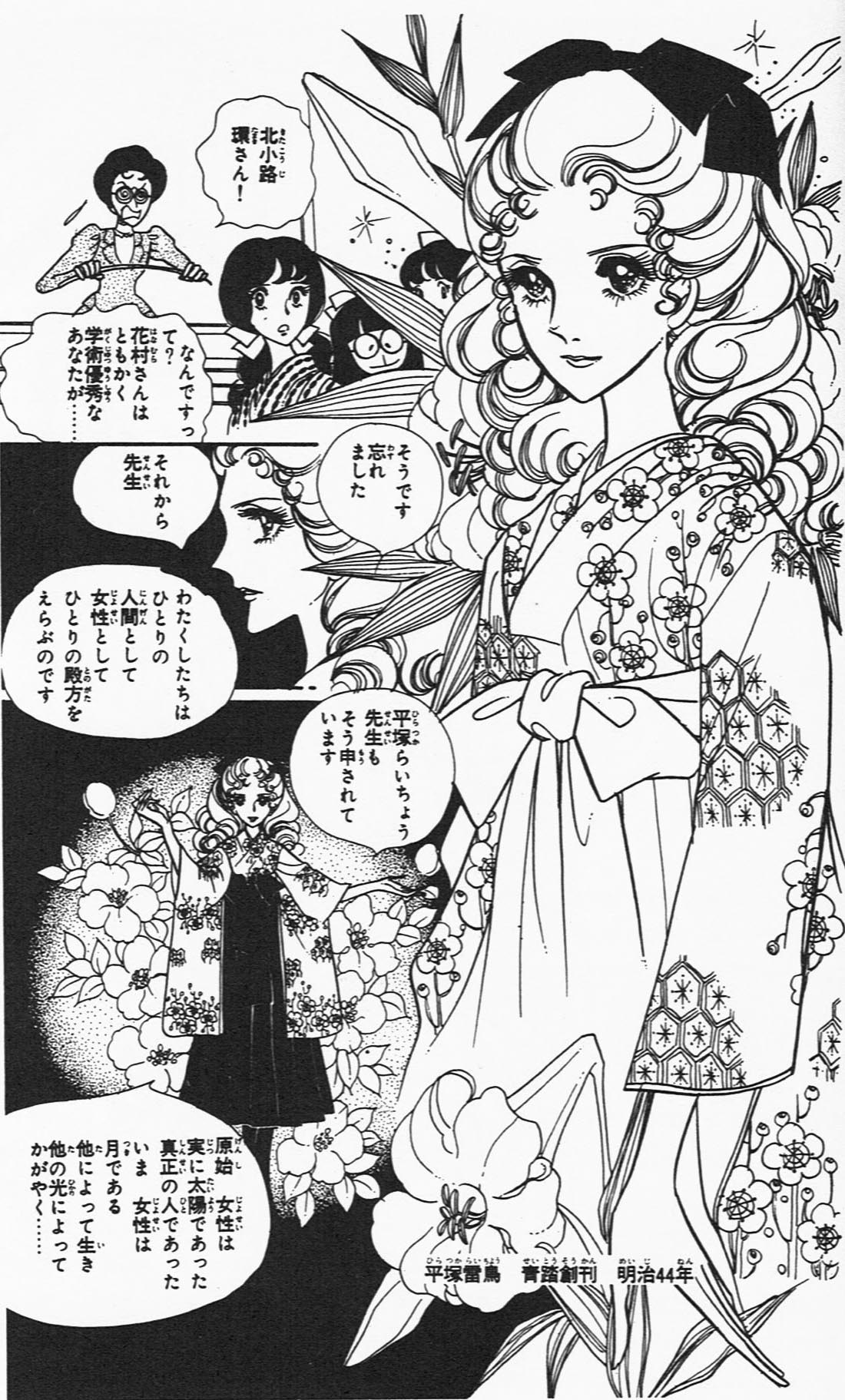
Excerpt from the manga (from Frederik L. Schodt Manga! Manga! The World of Japanese Comics, p. 90).

Haikara-San: Here Comes Miss Modern (はいからさんが通る / Haikara-san ga tōru) is one of those shōjo manga published in the 70s that I wish would be one day translated either in French or English so I could read them. This traditional shōjo style might not be very popular amongst today’s manga reader, but it was beautiful in many ways and their stories were always quite compelling. The manga was serialized in Shōjo Friend between 1975 and 1977 and compiled into 8 volumes by Kodansha. The manga was first adapted into an animated TV series (TV Asahi, 42 eps, 1978-1979), then into several live-action TV movies (on KTV in 1979, on Fuji TV in 1985, by Toei in 1987, and on TBS in 2002) and was even the subject of a Takarazuka revue in 2017. Finally, it was adapted into two anime movies: Gekijōban Haikara-san ga Tōru Zenpen – Benio, Hana no 17-sai  [劇場版 はいからさんが通る 前編 ~紅緒、花の17歳~ / lit. “Theatrical version, Here comes miss modern, first part: Benio, 17 years’ flower”] (November 2017, 97 mins, already available on Blu-ray from The Right Stuf) and Gekijōban Haikara-san ga Tōru Kōhen – Tokyo Dai Roman [劇場版 はいからさんが通る 後編 ~花の東京大ロマン~ / lit. “Theatrical version, Here comes miss modern, second part: Tokyo great romance of flower”] (October 2018, 105 mins). 

[ ¡ WARNING: The following MAY contain traces of spoilers! People allergic to the discussion of any plot’s elements before seeing/reading the story themselves are strongly advised to take the necessary precautions for their safety and should avoid reading further ! ]

Haikara-San-Movie1-bluRayIn the first movie, we follow the life of 17-year-old Benio Hanamura who was raised by her military father. She is a tomboy who likes to practise kendo with the girly neighbour Ranmaru (who was raised to become a kabuki actor). The story is set in the Taishō era, when Japan is trying to “occidentalize” itself. She wants to be “modern” and believes in a woman’s right to have a career and to marry for love. Unfortunately, her father want to arrange a marriage with one of his young subordinate, lieutenant Shinobu Ijuin, because their grand-parents were in love but could never marry and made the pact that the Hanamura and Ijuin families would be one day reunited. Benio refuses and tries to elope with Ranmaru, who is secretly in love with her. She also discovers that her best friend Tamaki is in love with Shinobu. She is nevertheless sent to Shinobu’s household to help and learn the domestic duties of a wife. As she is finally falling in love with him, she infuriates her father’s superior and Shinobu is sent to the front in Siberia. Not long after, he is reported missing in action or maybe dead…

The movie was written and directed by Kazuhiro Furuhashi, with character designs by Terumi Nishii, art direction by Kentaro Akiyama and music by Michiru Oshima. The cast includes Mamoru Miyano as Shinobu, Saori Hayami as Benio, Asami Seto as Tamaki, Yuuki Kaji as Ranmaru, and Unshō Ishizuka as Major Hanamura.

In the second movie, Benio tries to go on with her life and hopes that Shinobu might come back one day. In the meantime, she keeps taking care of his grandparents household and tries to find a job. After many unsuccessful attempts she is finally hired as reporter by a small newspaper headed by Tosei, a handsome but misogynistic editor (he’s literally allergic to women due to issues with his mother). She goes to Manchuria to investigate a band of rebels supposedly headed by a Japanese deserter. She meets with him and discovers he is Onijima, a friend of Shinobu in the army, who tells her how Shinobu got missing after saving his life. Later, back in Tokyo, she is covering the visit of a Russian noble couple in exile, Count Michaellov and countess Larisa. Benio is shocked to see that the count looks exactly like Shinobu. Actually, it’s him but he suffers from amnesia. Larisa saved and nursed him to replace her dead husband Sasha (who was in fact Shinobu’s younger half-brother, because Shinobu’s German mother left to marry a Russian noble—yes, I know, it’s complicated). When Shinobu eventually recovers his memory, he cannot marry Benio because he is now married to Larisa and feels indebted to her as she is dying of tuberculosis. Heartbroken, Benio decides to marry Tosei instead (who has discovered that he actually loves her). But on their wedding day the great Kanto earthquake occurs and Larisa finally dies of her disease. Benio and Shinobu can finally be reunited…

The second movie was directed by Toshiaki Kidokoro, with a script by Kazuhiro Furuhashi, character designs by Terumi Nishii, art direction by Kentaro Akiyama and music by Michiru Oshima. The cast includes, besides the cast from the first movie, Kazuya Nakai as Shingo Onijima, Maaya Sakamoto as Larisa, and Takahiro Sakurai as Tōsei Aoe. 

[ ¡ END of possible spoilers warning ! ]

Haikara-San movies are beautifully animated, with crisp, up-to-date quality animation (quite different from the style of late-70s anime, which tend not to age very well—although the TV series is now also available on blu-ray in Japan). The story offers typical Japanese romantic drama filled with lots of comedy. However, despite the funny antics of the characters, the story tackles very serious subjects like feminism and war. I enjoyed it a lot and I highly recommend you to, at least, have a look. If only someone would translated the manga… stars-3-5

For more information you can consult the following web sites:

[ ANNGoogleIMDbOfficialRight StufWikipediaYoutube ]


© 2017 Waki Yamato, Kodansha / “Haikara-san” Partners.

[ Traduire ]

A new beautiful era of harmony

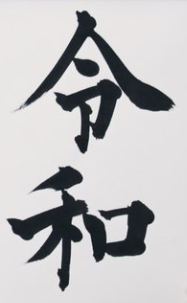
ReiwaThe Japanese government has announced last night that the name of the new Japanese era will be Reiwa (令和).

Each time that there is a new emperor, Japan’s calendar start a new era (時代 / jidai) or period (元年 / gannen). The era name (年号 / nengō or 元号 / gengō) is always selected carefully and has a great cultural significance. However, today it is mainly used only on government official paperwork (driving licenses, official calendar, etc.). Everyday use generally follows the Gregorian calendar. The previous era of modern Japan are Meiji (Prince Mutsuhito, 1868-1912), Taishō (Prince Yoshihito, 1912-1926), Shōwa (Hirohito, 1926-1989) and Heisei (Akihito, 1989-2019). Reiwa will be the 248th era name of Japanese history.

This change usually happens upon the death of the emperor, as his son ascend to the Chrysanthemum Throne. However, this time, the emperor Akihito chose to abdicate for health reason on April 30th and he will be succeeded by his elder son, Naruhito, on May 1st. Another departure from tradition is the fact that, in the past, the name was inspired by Chinese literature. This time, the panel of experts selected to choose the name took the idea from Japanese classical literature, as it is derived from the ancient poem anthology Man’yōshū. 

The first character of the name, Rei [], means good fortune (the “auspicious wave of energy of the plum blossoms carried by the wind”) and the second character, Wa [], means   gentle, harmonious or peace and tranquility.  It could therefore be translated as “fortunate harmony” or “auspicious harmony” (although some seems to translate it as “redolent harmony”).

The announcement was well received by the Japanese as they expect the name to embody their hope for a better future

[ Traduire ]

On the frontier

9782505069812_cg“Avec ses histoires « tranches de vie », qui vous feront voyager de la douce innocence de l’enfance aux désillusions de la vieillesse avec des personnages hauts en couleur, ce titre émouvant se doit de finir entre vos mains. Un recueil d’histoires courtes poignantes, remplies d’émotions et de poésie.”

On the frontier (辺境で 伊図透作品集 / Henkyo de – izu toru sakuhin-shu / lit. “At the frontier: Izu Toru Work Collection”) est un recueil rassemblant huit courtes premières oeuvres de Tôru Izu pré-publié entre 2007 et 2015 dans différents magazines. Il a été publié en 2016 chez Enterbrain (éditeur de Comic Beam). C’est le cinquième manga de Tôru Izu à être publié au Japon (après Mitsubachi no Kiss [ミツバチのキス / lit. “Kiss of the Killer Bee”, Futabasha, 2 vol., 2008], Onsa no Hibiki [おんさのひびき / lit. “Echo of the ancient time”, Futabasha, 3 vol., 2009], Ace [エイス, Kodansha, 3 vol., 2012], et Juuza no Uruna [銃座のウルナ / lit. “Urna of the gun turret”, Enterbrain, 6 vol. +, 2015]) mais le premier à être traduit en français.

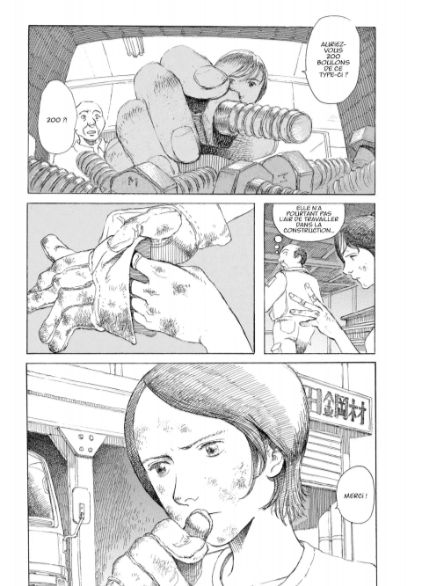
Screen Shot 2019-02-24 at 19.39.22Dans “Steel Blue” (Steel Blue, 30 pages), une jeune étudiante en arts graphique, Kako Amakasu, choisie de faire une sculpture comme projet de fin d’étude au lieu d’un dessin comme ses collègues. Elle prends comme matériaux un rail de chemin de fer et des boulons qu’elle soude ensemble. Malgré les difficultés et son inexpérience avec la technique, elle est assez satisfaite du résultat même s’il laisse les professeurs un peu perplexes. Pré-publié chez Futabasha dans le magazine Manga Action (Avril 2008). Lauréat du 5e prix de Manga Action récompensant les débutants. C’est mon histoire favorite du lot. stars-4-0


Dans “Lace tes chaussures!” (靴ひもを結べ!/ Kutsu himo o musube!, 30 pages), on retrouve une Kanako Amakasu plus jeune (en dernière année de secondaire, juste avant d’entrer au collège) qui s’inquiète de sa carrière et du fait qu’être une femme est limitatif. Elle trouve les garçon idiots. Pourtant, elle se lie d’amitié avec Eto et Sakai qui aiment jouer à chat perché sur les hauteurs. Elle admire leur insouciance mais les incite tout de même à penser à leur avenir… Cette histoire a été pré-publié dans Manga Action (Septembre 2008) et constitue la première apparition (sous des noms différents) des personnages de sa série Onsa no Hibiki. stars-3-0

Dans “Lace tes chaussures! Épisode hivernal” (靴ひもを結べ!・冬 / Kutsu himo o musube! Fuyu, 24 pages), Kô Mizuura (qui que n’a que quatre orteilles aux pieds) vit à l’orphelinat “La maison de Hibikigaoka” avec Satomi, Daisuke, et Takashi. Il a un petit boulot de distributeur de journaux mais n’aime pas le faire en hiver car il a froid au pieds. Il est amateur de chaussures et admire les bottes d’une serveuse de café mais ne croit pas pouvoir se les payer. Pré-publié dans Gekkan Comic Beam (septembre 2015). stars-3-0

Dans “On the frontier” (辺境で / Henkyō de, 42 pages), des hommes travaillent dure à la construction d’un chemin de fer dans un pays désertique mais froid qui n’est pas nommé (possiblement en Amérique du Sud?). Il s’agit d’une dictature où la guérilla fait rage. Les accidents de construction ne sont pas rares et souvent ils sont mortels. Un jeune se joint à l’équipe. C’est en fait un journaliste incognito mais il est découvert et exécuté… Toutefois, le contre-maître voit à le venger. Pré-publié dans Big Comic Spirits Casual (mai 2007) et lauréat du 59e prix Shinjin Komikku Taishô de Shōgakukan (débutant, catégorie seinen). J’aime bien. stars-3-5

Dans “”Laisse-moi” (ほっとけ / Hottoke, 16 pages), Mako s’inquiète pour Junki qui est dehors tard le soir à jouer seul car ses parents travaillent et ne sont jamais là. Elle s’inquiète aussi pour Eto que personne n’a vue depuis plusieurs jours. Elle trouve une excuse pour passer voir Junki, pensant qu’il s’ennui mais il s’amuse dans son imaginaire… Dans “Cerisier” (さくら / Sakura, 11 pages), des policiers visionnent une video où un jeune garçon se fait battre par un sadique. S’agit-il d’Eto? Dans “La pierre d’Union Soviétique” (ソ連の石 / Soren no ishi, 27 pages), Mako croise Eto dans le train. Il est plus sale et défraîchi qu’à l’habitude. Ils parlent de leur avenir. Eto lui remet une pierre qu’il dit avoir trouvé en Union Soviétique où il serait allé plusieurs fois comme passager clandestin. Il veut voyager autour du monde et découvrir les merveilles qui se font à l’étranger. Elle boude car elle ne veut pas qu’il reparte sans lui dire à elle et à Junki. Ces trois récits ont été publié à compte d’auteur (doujinshi?) dans le recueil Récits qui ont débordé puis sombré (あふれてしずんだお話たち / Afurete shizunda ohanashi-tachi, publié en décembre 2014 chez l’éditeur クリーク・アンド・リバー社 / Kurīku Ando ribā-sha / lit. “Ruisseau et rivière”). Le second est pratiquement incompréhensible et le plus intéressant du lot est le troisième. stars-2-5

Dans “Sans titre” (No Title, 40 pages), un gamin qui aime se balader sur les trains clandestinement et dit vouloir faire le tour du monde sans payer (Eto?) passe du temps avec les cheminots. Le vieux Duka lui montre les rudiment du métier. Mais celui est mis à la retraite et met fin à ses jours. Le jeune continue à se tenir avec le cheminots et McLintock s’occupe de lui un peu. C’est une histoire que Izu a créée avant de devenir mangaka. stars-3-0

Le style graphique de Tôru Izu, qui me semble influencé par celui de Leiji Matsumoto, est assez uniforme tout au long du volume. Par contre, les différentes histoires courtes sont de qualité et d’intérêt assez variable. Dans l’ensemble, le récit manque parfois de fluidité à un point où, dans certaine occasions, on se demande un peu ce qui se passe dans l’histoire. On the frontier demeure une bonne lecture et j’aimerais bien voir la traduction d’autres titres de cet auteur (comme Onsa no Hibiki, dont plusieurs histoires de ce livre semblent être la genèse, ou Juuza no Uruna qui a déjà été traduit en espagnol). La collection “Made In” de Kana semble offrir de nombreux auteurs peu connus mais intéressants et qui méritent probablement un coup d’oeil…

On the frontier : Recueil d’histoires courtes, par Tôru Izu (traduction par Pascale Simon). Bruxelles: Kana (Coll. Made In), mars 2018. 240 p., 14.8 x 21.0 cm, 15,00 € / $C 26.95. ISBN 978-2-5050-6981-2. Manga seinen pour public jeune adulte (14+). Un extrait est disponible sur le site de l’éditeur. Aussi disponible en format électronique sur iTunes. (Voir couverture arrière) stars-3-0

Pour en savoir plus vous pouvez consulter les sites suivants:

[ AmazonBiblioGoodreadsGoogleWorldCat ]

© 2016 IZU Toru. All rights reserved. Édition française © Kana (Dargaud-Lombard s.a.) 2018.

[ Translate ]

Memorable music

MacrossSOngCollectionAfter watching on NHK World a documentary on the songs of Studio Ghibli’s animated movies (like Nausicaä or Laputa), I started listening to an old playlist of anime background music (BGM) and songs collections from my late-20s and 30s. I had forgotten how much those tunes could get stuck in your head (particularly “Konya Wa Hurricane” from Bubblegum Crisis, “Ai-Oboe te i masuka” from Macross, the crashing song from Megazone 23 Part 2, or any songs from Kimagure Orange Road). I realize that this is something missing from recent anime that I’ve seen: memorable music. I really miss that. And it makes me sad — and very nostalgic!

My playlist also includes a few hits from great J-pop artists like Aikawa Nanase, Glay, Globe, Namie Amuro, TRF, Yoko Kanno and even a few Enka songs by Misora Hibari!

Do you have anime or J-pop favourite songs ?

[ Traduire ]

[ Update – 2019/02/23 ] For the curious, here’s the full playlist (recently augmented)—and I have added plenty of links so you can sample them :

Continue reading

Animeland #224

224-coverLa nostalgie n’aura jamais autant été d’actualité ! Cowboy Bebop, une des plus grandes séries animées, fête ses 20 ans cette année ! Retrouvez dans le magazine un dossier spécial consacré à ses créateurs, interviewés pour l’occasion.

Retrouvez aussi notre dossier éco, cette fois consacré aux fan-arts (et à leur business !), un dossier anime dédié à Monogatari, la rubrique pop-corn et ses reviews de films (Flavor of Youth, My Hero Academia: Two Heroes, Bungo Stray Dogs: Dead Apple…), les chroniques anime et manga, la suite de notre dossier manga consacré à L’Attaque des Titans, la review du jeu vidéo Octopath, notre rubrique Portrait de voix…

J’avais planifié de commenter AnimeLand régulièrement mais je me suis retrouvé assez occupé (et la bibliothèque où je le lis ne le reçoit pas toujours de façon très assidue — si j’avais un service de presse comme dans le bon vieux temps cela serait tellement plus simple!). Alors quand un nouveau numéro paraissait, je retournais simplement celui qui trainait sur le coin de mon bureau sans l’avoir commenté. J’ai donc passé quatre numéros sans les commenter. Toutefois, quand j’ai vu ce numéro “Double” (148 pages au lieu de 116, et dans un format légèrement plus grand) je me suis dis qu’il fallait absolument que j’en parle. Alors voilà…

D’abord, il faut rappeler que AnimeLand est sans conteste le meilleur magazine d’information (en dehors du Japon, bien sûr) sur l’anime et le manga (qui sont couvert en part égale, avec un peu d’espace consacré au cinéma, aux jeux vidéos et à la paraphernalia, i.e. figurines, modèles réduits, etc.). Que ce soit tant pour ses informations (voir leur fil de nouvelle sur le site internet: anime et manga), leur dossiers, interviews ou critiques, ce magazine demeure une lecture incontournable pour tout les fans qui se respecte.

Dans ce numéro (pour les détails voir le sommaire du numéro sur le site du magazine) j’ai été tout particulièrement intéressé à la sélection de séries télé de la rédaction (je note Holmes of Kyoto, une série de 12 épisodes sur Crunchyroll où le personnage et son assistante font des enquêtes) ainsi que sa sélection de mangas récents (je note La fille du temple aux chats [Makoto Ojiro, Soleil], Les montagnes hallucinées [Gô Tanabe adaptant H.P. Lovecraft!, Ki-oon], Le vieil homme et son chat [Nekkomaki, Casterman] et la réédition de La vie de Bouddha [Osamu Tezuka, Delcourt/Tonkam]), un article de huit pages sur la saga Monogatari, une série d’articles et d’interview qui célèbrent les 20 ans de Cowboy Bepop, un article sur Visions d’Escaflowne, un très intéressant article sur la dernière étape de production d’une animation: le compositing, un petit article sur Noise — le plus récent manga de Tetsuya Tsutsui chez Ki-oon, un article sur le mangaka Kenji Tsuruta (Spirit of Wonder, Emanon, L’Île errante), et un article sur Le signe des rêves de Naoki Urasawa.

Il y a tant de choses à découvrir dans un seul numéro d’AnimeLand! C’est beaucoup de petits sujets (une ou deux pages) ce qui me donne l’impression que les articles sont toujours trop courts… J’aimerais bien de temps en temps voir de véritable articles de fond avec analyse, présentation des personnages, synopsis des épisodes, interview avec le directeur, etc.

Dans un magazine comme AnimeLand, quand on a soif de découverte, même les publicités peuvent être une source d’information. J’ai ainsi appris qu’AnimeLand, en partenariat avec les éditions Ynnis, sortait le livre 100 Films d’animation japonais, un répertoire des films les plus marquants et qui constituera sans aucun doute une des rares références en français sur ce genre (208 pages, 29,90 €, paru en Octobre). Avec le même partenariat, le magazine a aussi annoncé la parution de Quiz Animeland, un jeu questionnaire qui permettra au amateurs de tester leurs connaissances manga et anime en 500 questions, divisées en cinq rubriques: manga, film, anime, classique et expert (14,95 €, novembre 2018). 

Je crois qu’AnimeLand a bien compris qu’une publication périodique ne peut être que marginalement profitable et que pour survivre il faut multiplier le plus possible les publications parallèles (c’est ce que j’avais l’intention de faire avec PA…). Depuis longtemps déjà, l’équipe du magazine produit de nombreux numéros spéciaux (AnimeLand X-Tra) et Hors-Série (dont le plus récent, dédié au mangas, passe en revue l’année 2018 en mangas) — que ma bibliothèque ne reçoit malheureusement pas! Depuis quelques années, ils ont aussi produits de nombreux livres (consacrés aux studios Disney ou Ghibli, au 30ème anniversaire du Club Dorothée ou au centenaire de l’animation Japonaise (que j’ai déjà commenté), ou encore à la culture japonaise (son quotidien, ses “stars”). Ces ouvrages ne sont toutefois pas toujours facile à trouver outre atlantique (encore une fois, des services de presse seraient appréciés!)…

Finalement, on ne s’ennui jamais avec AnimeLand. Et je suis impatient de voir le prochain numéro dédié à Gunnm (Battle Angel Alita) et Mirai, Ma Petite Soeur.

AnimeLand #224 — Octobre/Novembre 2018 [Collectif dirigé par Émilie Jollois et Christopher Macdonald]. Paris, AM Media Network, septembre 2018. 148 p. 12.00 € / C$18.40. ISSN 1148-0807. Lectorat adolescent (12+). stars-3-5

Pour plus d’information vous pouvez aussi consulter les sites suivants:

[ Amazon — Biblio — Goodreads — Wikipedia — WorldCat ]

Voir aussi mes commentaires sur des numéros précédents:

/  #217-218-219  /  #216  /  #214-215  /  #209  /  etc.  /

[ Translate ]

Découverte: Suggestions d’achats

En octobre dernier j’ai fait une liste de suggestions d’achats pour le bibliothécaire adulte de ma bibliothèque. Elle comprenait quelques mangas récents qu’il me semblaient essentiels d’avoir, des livres de cuisine japonaise en manga (une curiosité) ainsi qu’une série d’anthologies de littérature de l’imaginaire japonais que je trouvais intéressante à lire (particulièrement parce qu’elle contiens des histoires courtes de l’auteur KAJIO Shinji, dont l’oeuvre n’a pas encore été traduite ni en anglais, ni en français). Je la partage ici avec vous:

[ Translate ]

Moriarty vol. 1-2, Hikaru Miyoshi, Kana (Coll. Dark), Juin/Septembre 2018, 212/204 pgs, 9782505070733 / 9782505070740, 6,85€ / $12.95 Can ch. [ Amazon / Biblio / Goodreads ]

The Manga Cookbook: Japanese Bento Boxes, Main Dishes and More!, The Manga University Culinary Institute & Chihiro Hattori, Japanime Co. Ltd, December 2007, 158 pgs, 978-4921205072, $16.95. [ Amazon / Goodreads ]

The Manga Cookbook Vol. 2: More Popular and Delicious Japanese Dishes!, The Manga University Culinary Institute & Koda Tadashi, Japanime Co. Ltd, June 2017, 160 pgs, 978-4921205362, $16.95. [ Amazon / Goodreads ]

The Manga Cookbook Vol. 3: Japanese Fusion Food with Character!, The Manga University Culinary Institute & Ryo Katagiri, Japanime Co. Ltd., September 2018, 192 pgs, 978-4921205393, $19.95. [ Amazon / Goodreads ]

She and Her Cat, Vol. 1, Makoto Shinkai and Tsubasa Yamaguchi, Vertical Comics, Aout 2017, 180 Pages, 9781945054402, $12.95 US / $13.95 Can. [ Amazon / Goodreads ]

Le signe des rêves Vol. 1 & 2, Naoki Urasawa, Futuropolis (Coll. Louvre), Août/Octobre 2018, 144/136 pgs, 9782754825771 / 9782754825818, 20 € / $39.95 ch. [ Amazon / Biblio / Goodreads ] Voir mon commentaire du vol. 1 et du vol. 2.

Speculative Japan #1: Outstanding Tales of Japanese Science Fiction and Fantasy, by Gene van Troyer (Editor). Kurodahan Press, 2007, 290 pg. ISBN 9784902075267. Anthology that contains the short story “Reiko’s Universe Box” by KAJIO Shinji. [ Amazon / BiblioGoodreads ]

Speculative Japan #2: The Man Who Watched the Sea and Other Tales of Japanese Science Fiction and Fantasy. Kurodahan Press, 2011, 282 pg. ISBN 9784902075182. Anthology that contains the short story “Emanon: A Reminiscence” by KAJIO Shinji. [ Amazon / Goodreads ]

Speculative Japan #4: “Pearls for Mia” and Other Tales. Kurodahan Press, 2018, 272 pg. ISBN 978-4-902075-84-7. Contains the short story “Pearls for Mia”「美亜へ贈る真珠」by KAJIO Shinji. [ Amazon / Goodreads ]

Vampire! Tales of Blood and Roses from Japan. Kurodahan Press, to be released late 2019, pages TBD. ISBN 978-4-909473-00-4. Contains the short story “干し若” by KAJIO Shinji. 

Continue reading

Golden Globe: No Japanese winners

At the Golden Globe 2019, held on January 6th, the Hollywood Foreign Press Association has awarded Bohemian Rhapsody for the Best Motion Picture (Drama), Green Book for the Best Motion Picture (Musical or Comedy), Glen Close for Best Performance by an Actress in a Motion Picture (Drama), Rami Malek for Best Performance by an Actor in a Motion Picture (Drama), Olivia Colman for Best Performance by an Actress in a Motion Picture (Musical or Comedy), Christian Bale for Best Performance by an Actor in a Motion Picture (Musical or Comedy), and Alfonso Cuarón for Best Director.

Surprisingly (or is it, really?), I have not seen any of the nominated TV series either for Drama (The Americans [the winner], Bodyguard, Homecoming, Killing Eve, or Pose) or for Musical/Comedy (Barry, The Good Place, Kidding, The Kominsky Method [the winner] or The Marvelous Mrs. Maisel). And I am not sure I am interested. Although, I’d like to see  Bohemian Rhapsody, The Favourite or Crazy Rich Asians (when they comes out on dvd)…

However, the categories that interest us the most are those where Japanese movies were in nomination. Unfortunately, no Japanese movie received any award this year.

The Best Animated Motion Picture award went to Spider-Man: Into the Spider Verse. It is quite disappointing because I thought that Mirai had some chance. Even the heavily Japanese-inspired Isle of Dog [on which I commented] deserved the award better. That’s a shame.

The Best Foreign Language Motion Picture award went to the Mexican movie Roma. However I was really cheering for Shoplifters [the latest film by Hirokazu Kore-eda, which was shown at the FNC and commented by Claude R. BlouinAsianWiki / IMDb / Wikipedia]. It is just bad it didn’t win.

[ Traduire ]

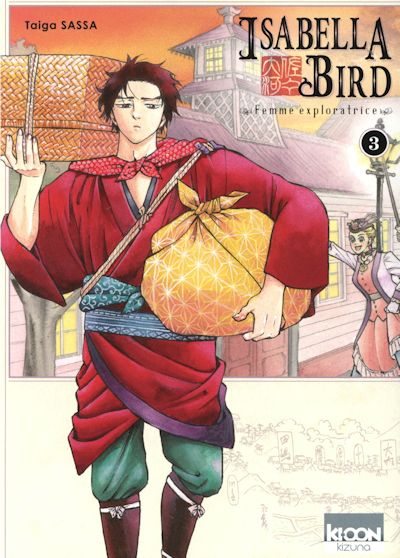
Isabella Bird: Femme Exploratrice, vol. 3

IsabellaBird-v3-cov“Le Japon du XIXe siècle hors des sentiers battus !”

“Pour rejoindre Niigata, première étape de son périple, Isabella Bird a choisi une voie secondaire, rarement empruntée par les voyageurs étrangers. Au fur et à mesure que l’intrépide exploratrice s’enfonce dans la campagne japonaise, l’agitation des grandes villes et la splendeur des sites historiques s’effacent devant la misère du monde rural… Aux divers chocs culturels s’ajoutent des conditions de voyage de plus en plus difficiles, si bien qu’Ito lui-même a du mal à faire face à cet aspect de son pays qu’il ignorait. Mais l’aventurière refuse de se laisser abattre, et c’est sans fléchir qu’elle s’engage sur le dernier tronçon de la route d’Aizu !”

“Lancez-vous à la découverte d’un Japon traditionnel désormais disparu à travers les yeux de l’intrépide Isabella Bird ! Basé sur les écrits réels de l’aventurière, Isabella Bird, femme exploratrice est un récit passionnant sur la rencontre d deux monde; dessiné avec un rare souci du détail par Taiga Sassa, un nouveau talent prometteur !”

[ Texte de la couverture arrière ]

Je continue la lecture de cette série dont j’ai déjà commenté le deux premiers volumes.

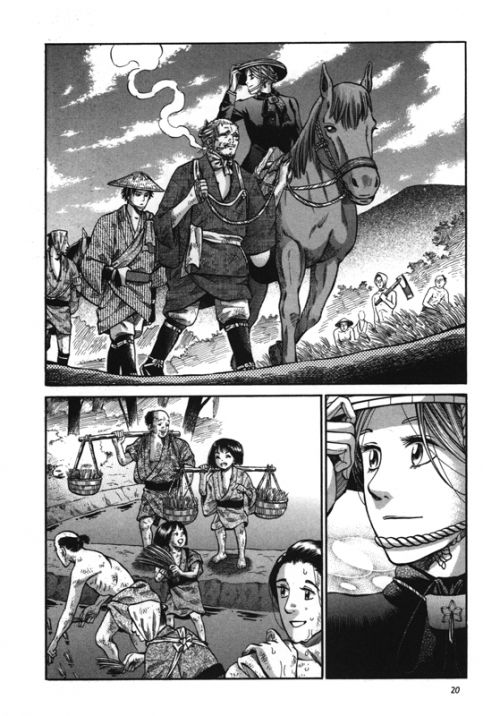
IsabellaBird-v3p010Juin 1878. L’exploratrice britannique Isabella Bird et son guide japonais Tsurukichi Ito continuent leur chemin sur la route d’Aizu en direction de l’île d’Ezo (Hokkaido). La route est difficile et les villages qu’ils rencontrent sont plongés dans une pauvreté si grande qu’elle surprend même Ito. Pourtant les villageois semblent travaillants et déterminés. Le palefrenier engagé pour prendre soin des chevaux leur explique que la région a été dévastée par la guerre de Boshin. L’armée de l’ouest, menée par les clans de Satsuma et de Chōshū, y a écrasé l’armée de l’est. Les paysans ont été enrôlés de force dans l’armée, beaucoup sont morts, les villages ont été pillés et brûlés. Dix ans plus tard la région n’a toujours pas récupéré. 

IsabellaBird-v3p020À Tsugawa (Aga), l’expédition fait des emplettes, Ito se bourre de friandises et prépare un repas gastronomique pour Isabella. Elle en profite pour commenter (à sa soeur, à qui elle écrit) que la gastronomie japonaise, par la propreté des ses instruments, “la parcimonie et la précision de chaque geste, la délicatesse de la présentation, l’incroyable variété des mets, absolument tout, est imprégné d’une beauté particulière”. Le lendemain, ils prennent une barque pour un voyage mouvementé sur le fleuve Agano jusqu’à Niigata, où Isabella passe quelques temps chez les Fyson. 

Pendant ce temps à Tokyo, un botaniste nommé Charles Maries rencontre le consul général Harry Parkes et James Hepburn car il désir poursuivre en justice Isabella parce qu’elle lui aurait volé son guide, Ito, qui était toujours sous contrat avec lui. Maries considère que son travail pour découvrir de nouvelles plantes est beaucoup plus important que les pérégrinations sans conséquences d’une simple voyageuse. Parkes objecte qu’au contraire l’intelligence sur la géographie et les moeurs des habitants de régions reculées fournit par les aventuriers est indispensable au développement de la diplomatie et des échanges commerciaux de l’Empire Britannique! Il lui refuse donc son support.

Isabella Bird est un autre manga historique au récit passionnant et instructif, mais aussi plein d’humour. La fluidité de l’action est assez bonne. Et, si le dessin est loin d’être parfait (parfois les proportions ou les expressions des personnages sont bizarres), il demeure très agréable à l’oeil et surtout bien détaillé pour donner une très bonne expérience de lecture. À travers le récit divertissant des aventures d’Isabella Bird, nous découvrons deux cultures assez opposées: celles de l’Angleterre Victorienne et celle du Japon de la restauration Meiji. C’est un sujet très intéressant et je recommande donc chaudement ce manga.

Isabella Bird, femme exploratrice T03 par Taiga SASSA. Paris: Ki-oon (Coll. Kizuna), avril 2018. 208 pg, , 13 x 18 cm, 7,90 € / $14.95 Can., ISBN 979-10-327-0248-2. Pour lectorat jeune (7+). stars-3-5

Vous trouverez plus d’information sur les sites suivants:

[ AmazonBiblioGoodreadsGoogleWikipediaWorldCat — Youtube ]

© 2016 Taiga Sassa. All Rights reserved.

[ Translate ]

Capsules

Japanese Film Festival

The 35th edition of the Montreal Japanese Film Festival will be held on Friday November 30th and Saturday December 1st at the Cinémathèque québécoise (web). There will be three Japanese films screened for free. The event is presented by the Japan Foundation (Toronto) and the Consulate General of Japan in Montreal. The films are in Japanese with English subtitles. Seating is limited and will be available on a first-come, first-served basis. No reservations is required but you’ll need to take a ticket at the box-office.

Karera_ga_Honki_de_Amu_Toki_wa-tpClose-Knit (彼らが本気で編むときは、/ Karera ga honki de amu toki wa / lit. “When they seriously knit”): Japan, drama, 2017, 127 mins; Dir.: Naoko Ogigami.

After being abandoned by her mother, 11-year-old Tomo is taken in by her uncle and his transgender girlfriend. Close-knit offers a heart-warming reflection on discrimination and ignorance and, more importantly, on the true meaning of family.

Screening on November 30 at 18:30.

[ AsianWiki / IMDb / JMDB / Official / Wikipedia / Youtube ]

Chihayafuru_Part_3-p001Chihayafuru: Musubi (ちはやふるー結びー / Chihayafuru – knot) : Japan, Youth drama, 2018, 127 min.; Dir.: Norihiro Koizumi.

The young members of a competitive karuta (classic Japanese playing cards) team stand together against the odds and the emotional turmoil they face, seeking to capture and hold on to a treasured moment forever. Can they overcome their opponents?

Screening on December 1 at 13:00.

[ AsianWiki / IMDb / Official / Wikipedia / Youtube ]

La_La_La_At_Rock_Bottom-p02La La La at Rock Bottom (味園ユニバース / Misono Yunibasu) : Japan, Drama, 2015, 103 min.; Dir.: Nobuhiro Yamashita.

Redemption is key in this humorous story about an amnesiac thug turned singer. A powerful and moving tale that reveals human complexity, baring charms and faults alike, and will make anyone want to believe in second chances. Added bonus: great musical moments!

Screening on December 1 at 15:15.

[ AsianWiki / IMDb / Official / Wikipedia / Youtube ]

[ Traduire ]

Festival du Nouveau Cinema 2018

FNC47-logo-horizontal-noir.png

The 47th edition of the Festival du Nouveau Cinema (FNC) will be held in various Montreal theatres (Cinema Impérial, du Musée, du Parc, Quartier Latin, Theatre Maisonneuve, Cinémathèque Québecoise, etc.) from October 3 to 14, 2018. In their own words, this festival is a gathering to “celebrate our shared passion for film, (…) for cinema of all types, from offbeat, one-of-a-kind niche works to crowd-pleasers to daringly innovative big events”.  It is “resolutely forward-looking, has long been the unfailing advocate of new technologies“ making it “the best place around to preview the cinema of tomorrow”!

This year, it will offers over three-hundred movies including ten from Japan (click on the links for details & schedule):

Press review:

[ Traduire ]

The Miracle of Crybaby Shottan

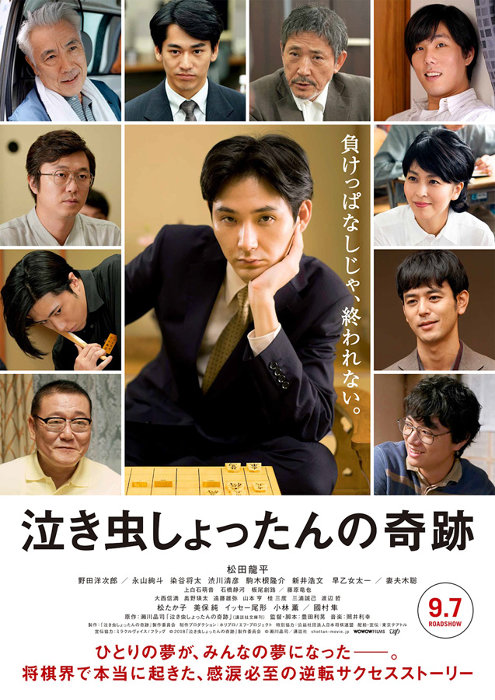
Nakimushi_Shottan_no_Kiseki-PosterBased on the true story of Shoji “Crybaby” Segawa, a talented player of shogi, a Japanese variant of chess. After rising quickly in a shore-kai, an organization that supervises professional shogi status, Shoji fails to fulfill the ironclad requirement of reaching the 4th rank by age 26. With the encouragement of his friends, he sets out to achieve the impossible: to be the first amateur to become a shogi professional. (FFM)

WARNING: May contain traces of spoilers! People allergic to the discussion of any plot’s elements before seeing a movie are strongly advised to take the necessary precautions for their safety and should avoid reading further.

This is a great feel-good movie based on the autobiographical book about the incredible career of Shoji Segawa, a Shōgi player. Shōgi  (将棋 / “The game of generals”) is a Japanese strategy board game very similar to chess (as you have a king, surrounded by his gold generals, his silver generals, rook and bishop, knights, lances and finally pawns pieces). We often see this type of “sport competition” story (where sport is often replaced by any possible type of occupation) in manga or anime (the best similar example is Hikaru no Go manga by Yumi Hotta & Takeshi Obata, which is about Go, but there are plenty of manga about shōgi like March Comes in Like a Lion) but it is rare to see this type of story in a live-action movie.

The movie has a strong cast of stars, so it is not surprising that the acting is quite good (although I’ve notice poor performances in the case of some minor characters). The photography is good enough (it’s not always optimum, but I guess it’s due to the attempt to give the picture a look of the 70s or 80s). The storytelling is, however, excellent considering that it is not easy to make such a subject interesting and to keep the attention of the audience while showing two guys sweating over a board game! The upbeat music and some comedic devices are very helpful for that.

Shoji Segawa (nicknamed Shottan) is a shy, introverted boy who has been interested in playing shōgi since elementary school. Encouraged by his school teacher and his father (Jun Kunimura), he improves his skill playing against his neighbour Yuya. They both go to a shōgi dojo where they are tutored by the local master (Issey Ogata). He is known for sometime crying after a game (hence the other nickname of “crybaby”). Learning that you can become a paid professional player of shōgi, Shottan (Ryuhei Matsuda) decide to apply to the shore-kai (the Japan shōgi Association’s apprentice school) but he doesn’t give his all and fails to reach the 4-dan level by age 26. A good part of the movie is dedicated to showing him agonizing over his chance of success (despite being a little overconfident) and over his failures. He finds himself in his late 20s, with no high school diploma, no job and becomes depressed. He eventually finds a salaryman job, but keeps playing shōgi for pleasure. He becomes quite skilled as an amateur player and, eventually in his 30s, gets some fame as the amateur who keep beating professionals (a miracle record of 17 wins and 5 losses!). He then starts fighting for the JSA to give him a second chance at becoming professional…

Strangely, nowhere in the movie they talk about the rules or strategy of the shōgi game. I guess, if the movie is solely aimed at a domestic Japanese audience, they assume that everyone know them. Anyway, the knowledge of the game is totally irrelevant to the story. The movie is more about fighting for your dream, learning the discipline (not being too distracted) and to play for the right reasons (not to win but just for the pleasure of it). It is interesting to note that the director, Toshiaki Toyoda, attempted himself to become a professional player when he was younger.

All in all, The Miracle of Crybaby Shottan is an upbeat biopic that provide a very good entertainment. Well worth watching.

The Miracle of Crybaby Shottan (泣き虫しょったんの奇跡 / Nakimushi Shottan no Kiseki): Japan, 2018, 127 mins; Dir./Scr.: Toshiaki Toyoda (based on the autobiographical novel of Shoji Segawa); Phot.: Norimichi Kasamatsu, Kôji Naoi; Ed.: Masaki Murakami; Prod.: Ryo Otaki, Kyôichi Mori; Cast: Ryûhei Matsuda (Shoji), Yôjirô Noda (Yuya), Shota Sometani, Kento Nagayama, Satoshi Tsumabuki, Kiyohiko Shibukawa, Ryusuke Komakine, Hirofumi Arai, Takako Matsu, Issey Ogata, Kaoru Kobayashi, Jun Miho, Jun Kunimura.

Screened at the Cineplex Quartier Latin 13 (Thu. 8/30 at 21:30) as part of the “Focus on World Cinema” program of the 42nd Montreal World Film Festival. There was a little more than half-a-dozen people in the theatre. stars-3-5

[ AsianWiki / IMDb /  Official  / Youtube ]

[ Traduire ]

Think Again, Junpei

JunpeiThinkAgain-posterJunpei, 21, is a lower-ranking yakuza. One day, his boss assigns him the mission to kill a high-ranking yakuza of a rival group. Junpei, who wants to be recognized by his clan, agrees. Junpei meets OL Kana and they spend the night together. He evokes with her the task that awaits her, and she is both worried and excited. She stays with him for three days until he carries out his mission. (FFM)

WARNING: May contain traces of spoilers! People allergic to the discussion of any plot’s elements before seeing a movie are strongly advised to take the necessary precautions for their safety and should avoid reading further.

This is a good movie for the younger crowd. It’s a yakuza movie with an existentialist tone. I don’t have anything bad to say on this movie: the photography is nice and clean, the acting is good, the storytelling fluid, the music is catchy and support well the story. However, I feel that there is something missing. It has all the looks of a feel-good movie and yet it ends badly for the main character (not surprising in a yakuza movie after all).

Junpei is a young wanna-be yakuza. He worships his aniki (“big brother”) and would do anything for him. However, he has a good nature, too good for him, as he likes to help people and has strong principles. In order to help a friend who has been wronged by a real-estate agency, he pays them a visit and play the tough yakuza. Unfortunately, the place is ran by a rival group. This initiative probably displeased his big boss because, not long after, he is asked to make a hit against a rival boss with little chance of survival. He is given money and told to enjoy himself for the three days before the scheduled hit.

A young woman working at the real-estate agency, Kana, noticed him and is impressed by his guts and looks. They hook up, make love — and fall in love. He goes back to his hometown to see his mother, they help a homeless man, etc. During all that time, Kana is tweeting (or using some equivalent app) their every moves, they every mood, and the tweetosphere is reacting, pondering weather killing people is bad (who still order hits on their competition, anyway?), how romantic they are, that they should forget the hit and elope, will Junpei survives the hit, etc. They plan to leave for a tropical island after it. Junpei goes ahead with the plan, because he is too loyal to avoid his responsibilities, even if he was told that his boss was using him to get promoted…

However, the boy Junpei is now a man. A good man who does the right thing (for a yakuza). He loves a woman. He takes his own decision. He has nothing to regret. In three days he has lived a whole life, more than many could boast for their entire existence. What is to live, but to live fully? And yet it feels sad. What a waste, some could say. But a yakuza’s story has an inescapable end. Is there a point to all of this?

I really enjoyed this philosophical yakuza movie. It’s both entertaining and food for thoughts, particularly for the younger generation who still have a life to live! It is well worth watching.

Think Again, Junpei (純平、考え直せ / Junpei, Kangae Naose): Japan, 2018, 95 mins; Dir.: Toshiyuki  Morioka; Scr.: Rumi Kakuta, Teru Kimura, Nami Kikkawa (based on a novel by Hideo Okuda); Phot: Shinji Kugimiya; Ed.: Naoki Watanabe; Prod.: Yukihiko Yamaguchi, Haruo Umekawa; Cast: Kisetsu Fujiwara, Shuhei Nomura, Yurina Yanagi, Reiko Kataoka, Manaka Kinoshita, Katsuya Maiguma, Suzuka Morita.

Screened at the Cinema Imperial (Thu. 8/30 at 16:30) as part of the “World Great” (Out of Competition) program of the 42nd Montreal World Film Festival. There was a little more than a dozen people in the theatre (but I was told that there was about fifty people in the previous day’s screening). stars-3-0

[ AsianWiki / IMDb /  Official  / Youtube ]

[ Traduire ]

Samurai’s Promise

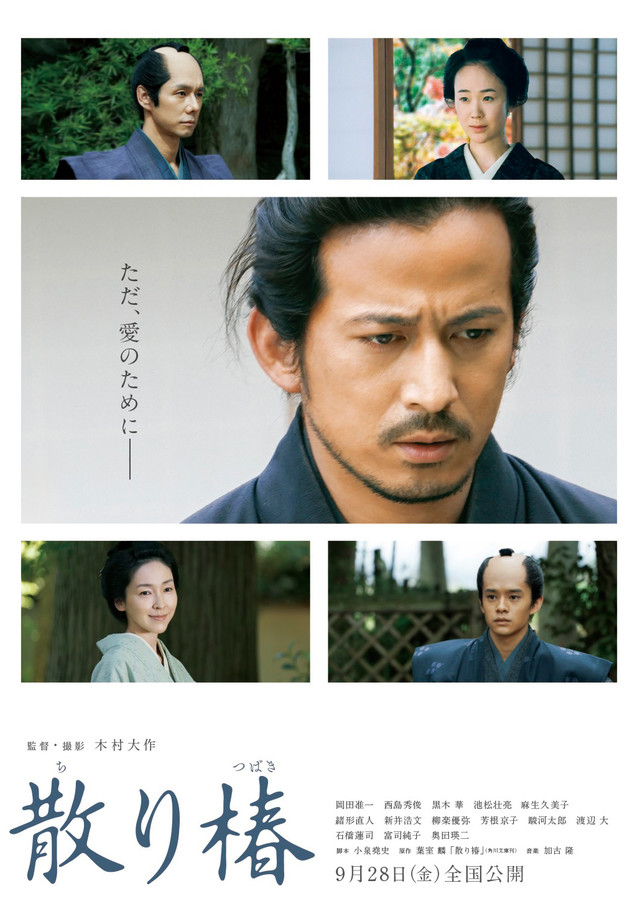
Chiri_Tsubaki-posterShinbei is exiled from his clan for investigating its activities too closely. Eight years later, when Shinbei’s dying wife pleads with him to go to help his former best friend, Umeme, he returns to the clan. Infighting has produced turmoil within the clan, allowing Shinbei to discover the truth behind incidents involving his wife and his friend. Confronting Umeme, he understands the reason for his wife’s last wish. (FFM)

This is a very good movie. Its most noticeable aspect is that it offers an excellent photography (which is not surprising since director Kimura acted as his own photography director, a job he has hold many times for other directors like Kinji Fukasaku, Yasuo Furuhata, or Shin’ichirô Sawai). He made great use of the superb location in the Toyama Prefecture (anciently the Etchû province) showing as backdrop the fantastic landscape of the Hida mountains in the Northern Japanese Alps. 

Another aspect that I quickly noticed was that the music was unfortunately very annoying. They used a soundtrack of classical music (which first accords sounded like The Godfather’s music by Nino Rota), playing it again and again recurrently. I think that, for a jidaigeki (samurai movie), a soundtrack of traditional Japanese music would have been better…

Shinbei (Jun’ichi Okada) is exiled from the clan after denouncing as corrupt a high-ranking officer of the clan — who is later mysteriously murdered leaving all the suspicion of culpability on Shinbei. Both Shinbei and his friend Uneme (Hidetoshi Nishijima) were courting Shino (Kumido Aso), but when Uneme’s family denies him the permission to wed Shino, she goes with Shinbei instead. The harsh condition of their exile put a toll on Shino’s health who eventually dies. She makes Shinbei promise to continue living, to go back to their village to observe the camellia falling in spring and to reconcile and help Uneme. When he tries to clear his name and find out the real assassin, he gets entangled in the complex politics of the clan…

Samurai’s Promise is a beautiful and interesting samurai movie. It has a smooth storytelling, although it is sometimes difficult (at the beginning) to understand who’s who and figure out all the plots and politics at play. The acting is good, and particularly the nice realistic combat scenes. It must not have been easy considering the fact that there was many fights in the rain or snow and that the dialogues were using an old form of Japanese. 
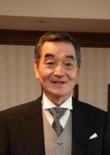
Of course, we should expect nothing less from such a veteran director. During his sixty-year career, Daisaku Kimura worked on over fifty films and won many awards. He started his career as camera assistant on Akira Kurosawa’s Hidden Fortress (1958). He worked five years with him (on movies like Yojimbo and Sanjuro) and he learned a lot during this time. Eventually, he cames to direct his own movies (Mt. Tsurugidake in 2009 and Climbing to Spring in 2014), mostly about mountain climbing. Samurai’s promise is his first jidaigeki and he made it as a tribute to Kurosawa. It is a beautiful and authentic movie, well worth watching. These days we don’t see much movies like this…

Samurai’s Promise (散り椿 / Chiri Tsubaki / lit. “Falling Camellia”): Japan, 2018, 111 mins; Dir./Phot.: Daisaku Kimura; Scr.: Takashi Koizumi (based on the novel by Rin Hamuro); Ed.: Tomoni Kikuchi; Mus.: Takashi Kako; Prod.: Yoshihiro Sato. Cast: Jun’ichi Okada, Hidetoshi Nishijima, Haru Kuroki, Hirofumi Arai, Kyôko Yoshine, Sosuke Ikematsu, Kumido Aso, Naoto Ogata.

Screened as opening movie (in the “World Competition” program) of the 42nd Montreal World Film Festival (at the Cinema Imperial on Thursday August 23, 2018 at 19:00). stars-3-5

[ AsianWiki / IMDb /  Official  / Youtube ]

[ Traduire ]

Life in Overtime

Owatta_Hito-posterSosuke Tashiro has a successful career in a large bank until he is transferred – or rather relegated – to a subsidiary until retirement. After decades of dedication to his work, he is lost and idle. He then decides to resume a professional activity, but realizes that the challenge is daunting. Over the course of two meetings, at the gym and at the adult education center, his life is on the move again. (FFM)

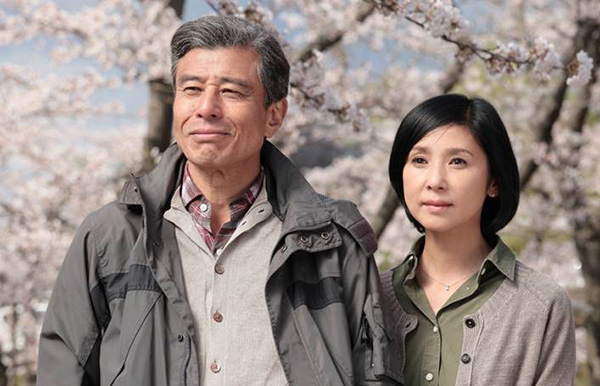
This is exactly the type of Japanese movie that I like the most: some sort of family drama that touches us (and often makes us cry) but which, in the end, makes us feel good and laugh. It is so perfectly enjoyable! And the seamless storytelling, the bright, well-framed and beautiful photography, as well as the nice soundtrack (particularly the beautiful song 「あなたはあなたのままでいい」 [Anatawa Anatano Mamadeii / “You can stay as you are”] by Miki Imai) really show the mark of an experienced filmmaker. Strangely, Hideo Nakata is mostly known for his horror movies (Ring, Chaos, Dark Water, Kaidan, etc.) so it is really surprising to see him direct for the first time a more traditional Japanese comedy! This is probably his way to tell us that he is not finished yet and that he can be a polyvalent creator. He does that brilliantly. Unfortunately, he didn’t arrive in time to present the movie and do the Q&A for the first screening at 11:30, and that was a great disappointment for me (I knew I should have gone to the 21:30 screening!). The quality of the production as well as Nakata’s fame makes of Life in Overtime a great contender for the competition. It is surely the best Japanese film I’ve seen at the festival so far this year.

Sosuke studied at the top university in Tokyo and finds himself on the path for an executive position at a large bank, but gets beaten by a rival and ends up finishing his career at a subsidiary branch. He already feels he’s a failure but, when he retires, he finds himself with no hobbies, no dreams, no job and no sympathy at home! What to do? He feels “Retirement is like a premature funeral (…) I don’t want my life to end like this!” It’s like the game is over but you continue to play in overtime in hope to finish on top (I like this idea)!

He tries to find a new purpose in order to make up for his failures. He looks for a new job but his impressive resume torpedoes his efforts. He considers going to graduate school to study literature, makes an attempt at a new romance or, after a chance meeting with the CEO of an IT company, try to start a new career but without any success. However, does it really matter as long as you have a life to enjoy?

Nakata succeeds in giving a realistic depiction of life struggles and relationships while tackling one of the hot topic of the decade: with its aging population, Japanese society has to deal with an ever increasing number of retirees. To keep them mentally and physically fit, it is important to make sure they feel their life is not finished yet and that they can make their experience or expertise valuable and useful to the society. It’s also a challenge on the domestic level as many couples, who never spent lots of time together because they were too busy working, find out that they don’t know much about what to do with each other! Retirement can surely be a shocking change but it is certainly not the end of your life (personally, I know very well that I’ll probably be even busier once I retired — in about 3192 days!). However, for some people, not knowing what to do or not feeling useful anymore can be an horrific experience and, in that aspect, maybe this is an horror movie after all…

Life in overtime, with its sadness and joy as well as its beautiful scenery, gives us plenty to ponder and an excellent movie experience. It is certainly a must see.

life_in_overtime

Life in Overtime (終わった人 / Owatta Hito / lit. “A finished man”): Japan, 2018, 125 mins; Dir.: Hideo Nakata; Scr.: Nonji Remoto (Based on the novel by Makiko Uchidate); Phot.: Koichi Saito; Prod.: Masatake Kondo; Cast: Hiroshi Tachi (Sosuke), Hitomi Kuroki (Chigusa), Ryoko Hirosue (Kuri), Asami Usuda (Michiko), Tomorowo Taguchi (Toshihiko), Tsubasa Imai. 

Screened at the Cinema Imperial (Sun. 08/26 at 11:30) as part of the “World Competition” program of the 42nd Montreal World Film Festivalstars-4-0

[ AsianWiki / IMDb / Official / Toei / Youtube ]

[ Traduire ]

Zone Out

Zone OutKindergarten teacher, Chinatsu is always in a state of stress. And it is at this moment that a pupil of her class is murdered. Totally distraught, Chinatsu begins to sink into a world of illusion that she can not control. (FFM)

I don’t know what they have put in the water of that city but all the characters in this movie offer a whole catalog of mental illness: Chinatsu, a kindergarten teacher, cracks under the pressure brought by all those helicopter parents and develops schizophrenia; her acupuncture doctor, Yuichi, suffers from Capgras syndrome; Naoto, a salesman bullied by his seniors, has nomophobia; Akamatsu, the convenience store clerk, suffers from Asperger; Mitsuki, Haruka’s mother, suffer from Munchausen syndrome, etc. I guess it was the purpose of the director to show with this docudrama-style movie what it is to have such illness and how difficult it can be for the families.

It is a very dark movie and the end result is, unfortunately, barely average. The storytelling is awkward and not particularly skillful, the photography feels amateurish and the acting is so-so — although, the main actress is very charming and switching the actors who plays the two Yuichi toward the end of the movie in order to unexpectedly show the schizophrenia of Chinatsu is, I must say, quite brilliant. Also, the movie is really not well served by the poor translation (in the subtitles). When I noticed two typos in the very first sentence of the movie, I knew that this would spell trouble! (unless they made it on purpose to make us feel crazy!) If it was not already obvious with the production quality, the horrible translation really smelled of tiny budget…

Finally, to really give a last pathetic impression, the absence of a translator for the Q&A at the end of the presentation (due to the minimalistic ressources of the festival this year — what? they couldn’t even find a volunteer to take up the task?) left the poor director and main actress at the mercy of their basic English language skills and made for such a laughable exchange that you could only feel sorry for them. 

However, undertaking such a difficult and serious subject requires some strength. I understand what the director was trying to achieve and I greatly appreciate his efforts (for that I give him extra points!). In a society that was repressed for so long, where you find a real epidemic of bullying (both at school and at the work place, including sexual harassment) and where an aging population is plagued by various forms of dementia, it is really not surprising to find that mental illness has become a great challenge in Japan today. Kudos to the director for trying to bring attention to this problem.

Zone Out / Regarder dans le vide (アウトゾーン / Out Zone): Japan, 2017, 115 mins; Dir.: Hiroshi Kanno; Scr.: Mari Takanashi; Phot.: Makoto Hayashi; Ed.: Aya Mitsuaka; Light.: Sousuke Yoshikado; Sound: Kazuyuki Tutiya; Mus.: Magumi Masui; Cast: Minami Matsunaka (Chinatsu), Masato Oki (Yuichi Akino), Kyoko Toyama (Kyoko), Gen Kuwayama (Naoto), Yusuke Ueda (Akamatsu), Yusuke Sugiyama (Yuichi Kagawa), Ben Hori (Hisashi Aoyama).

Screened at the Cinema Imperial (Sat. 8/25 at 16:30) as part of the “World Great” program (out of competition) of the 42nd Montreal World Film Festival. stars-2-0

[ IMDb ]

[ Traduire ]

Japanese movies at the FFM 2018

FFM2018-banner

FFM2018-posterThe 42nd Montreal World Film Festival will be held from August 23rd to September 3rd 2018. So far there is only seven eight Japanese films listed in the line-up. We will add more details as they are available.

Of course, the festival has had financial troubles for sometime and run on a very minimal staff, so we shouldn’t expect a smooth operation. It will certainly not be better than last year. But the most important part of the festival is that there is movies to watch. This year it will be the nineteenth year that we are covering this movie festival and we hope that it will recover from this difficult period and prosper for many years to come.

The schedule for the Cinema Imperial (CI) is now available (2018/08/22). And the schedule for the Cinéma Quartier Latin (QL) is now also available (2018/08/23). As for previous years, the closing film will be a mystery title to be screened for free at the Cinema Imperial Monday September 3rd at 18:30. 

The FFM just announced the awards for the 42nd Montreal’s World Film Festival and for the 49th Student Film Festival (2018/09/03).

Two Japanese movies won an award: Samurai’s Promise by Daisaku Kimura won for the Special Grand Prix of the Jury (Ex-aequo) and Hiroshi Tachi won the Best Actor award for his role in Life in overtime by Hideo Nakata.

Please, read our comments on the festival:


[ Traduire ]

Here is the Japanese movies line-up (after the jump) :

Continue reading

Fantasia 2018

fantasia2018

The 22nd edition of the Fantasia International Film Festival will be held in Montreal from July 12th to August 2nd 2018. It specializes in animated and live-action genre cinema (fantasy, horror, action, science-fiction, etc.), but mostly horror and asian action movies. It will open with Daniel Roby’s “Dans la brume” (a Canada-France co-production). As usual, the festival will be offering “over 125 features and 220 shorts, featuring the premieres of more than 100 cutting-edge visions from across the world.”

The asian movies line-up (our main interest here) includes eight movies from China (six from Hong Kong), twenty-four from South-Korea, one from Vietnam and, of course, twenty-eight from Japan (including six anime). Here’s the list of Japanese movies:

Anime

Live-Action

It is interesting to note that a large majority of those movies are manga or novel adaptations. I am particularly interested in seeing The Travelling Cat Chronicles and Tremble All You Want — unfortunately I don’t have time to attend the festival… Check the festival website for more details (description, cast & crew info, schedule, location, etc).

Update: You can read a comment (in French) by Claude R. Blouin on some of those movies, “Sept fantaisies japonaises au festival Fantasia 2018” (Shomingeki)

[ Traduire ]

Découverte: Isabella Bird, Femme exploratrice

IsabellaBird-extrait-cov“À la fin du XIXe siècle, le Japon s’ouvre au monde et s’occidentalise à marche forcée. Mais le pays reste un vrai mystère pour la plupart des Européens, ce qui en fait une destination de choix pour la célèbre exploratrice anglaise Isabella Bird ! Malgré son jeune âge, elle est déjà connue pour ses écrits sur les terres les plus sauvages. Isabella ne choisit jamais les chemins les plus faciles et, cette fois encore, elle étonne son entourage par son objectif incongru : Ezo, le territoire des Aïnous, une terre encore quasi inexplorée aux confins de l’archipel… Le voyage s’annonce long et difficile, mais rien n’arrête la pétillante jeune femme !

Accompagnée de son guide-interprète, le stoïque M. Ito, la jeune femme parcourt un pays en plein bouleversement. Dans ses lettres quotidiennes à sa sœur, elle narre avec sincérité et force détails la suite de chocs culturels qu’elle expérimente. Elle veut tout voir, tout essayer, quitte à endurer chaleur, fatigue, maladie ainsi que les sarcasmes de ses pairs !

Lancez-vous à la découverte d’un Japon traditionnel désormais disparu à travers les yeux de l’intrépide Isabella Bird ! Basé sur les écrits réels de l’aventurière, Isabella Bird, femme exploratrice est un récit passionnant sur la rencontre de deux mondes, dessiné avec un rare souci du détail par Taiga Sassa, nouveau talent prometteur !”

[Texte du site de l’éditeur]

Un des volumes de Reine d’Égypte que j’ai lu récemment comportait en cadeau un extrait de 42 pages (aussi disponible sur le site de l’éditeur). Cela m’a mis l’eau à la bouche alors je compte bien me procurer les premiers volumes afin de commenter cette série plus avant. En attendant, voici mes premières impressions.

IsabellaBird-LogoIsabella Bird, femme exploratrice (ふしぎの国のバード / Fushigi no Kuni no bādo [Bird] / littéralement: “Bird au pays des merveilles”) est sérialiszée depuis 2013 dans le magazine Harta de Enterbrain. La série est en cours avec 4 volumes parus au Japon, trois étant traduit en français jusqu’à maintenant (vol. 1: octobre 2017, vol. 2: décembre 2017, vol. 3: avril 2018). C’est le premier manga de l’auteur, Taiga SASSA. L’histoire est basée sur la correspondance de la célèbre exploratrice Isabella Bird avec sa soeur Henrietta (publié en Angleterre sous le titre Unbeaten Tracks in Japan, 1880).

C’est donc un manga historique et un travelogue sur le japon du 19e s. (ère Meiji) qui débute en 1878 alors que l’exploratrice arrive au Japon, un pays dont elle ne connait rien et dont elle espère visiter un des coins les plus reculer: l’île d’Ezo (Hokkaido) pour y rencontrer des Hainou. Elle sera accompagnée d’un jeune guide-interprète du nom de Tsurukichi Ito. Nous découvrons avec elle la culture japonaise.

Cela me semble très prometteur. Le style graphique rappelle beaucoup celui de Emma, un manga historique et une chronique sociale sur l’Angleterre victorienne par Kaoru Mori. J’ai bien hâte de lire les aventures d’Isabelle Bird.

Isabella Bird, femme exploratrice T01 par Taiga SASSA. Paris: Ki-oon (Coll. Kizuna), octobre 2017. 240 pg, , 13 x 18 cm, 7,90 € / $14.95 Can., ISBN 979-10-327-0166-9. Pour lectorat jeune (7+).

Vous trouverez plus d’information sur les sites suivants:

[ AmazonBiblioGoodreadsGoogleWikipediaWorldCat — Youtube ]

© 2015 Taiga Sassa KADOKAWA CORPORATION

[ Translate ]

Découvertes de janvier

Que ce soit en déballant des boites de nouveautés à la bibliothèque, en bouquinant dans une librairie ou en parcourant les nombreux dédales de l’internet je fais souvent la découverte de nouveautés littéraires qui m’avaient jusqu’alors échappées. Et généralement, je m’empresse de les partager avec vous.

Dans ce cas-ci, j’ai découvert le premier titre grâce à une entrée sur la page facebook de l’auteure. Les deux autres, je les ai découvert en feuilletant le dernier numéro du magazine Animeland. Le dernier je l’ai découvert sur le site de l’éditeur

Découvrez-les après le saut de page >>
Continue reading

Interviews

I recently stumbled on a couple of interviews I did in 2003-2004 when I was editor-in-chief for a magazine dedicated to Japanese popular culture (mostly anime and manga). It is strange to reminisce about this period of my life but I thought it would be amusing to share them with you here.

The first interview was done online with a couple of high-school students for a school assignment. It was done in French but I also translated it in English :

The second one was done with Fred Patten for an article in Comics Buyer’s Guide :


[ Traduire ]

Les rêveries d’un gourmet solitaire

Reveries-gourmet-solitaire-cov“La suite de l’un des chefs d’œuvres de Taniguchi.

Toujours en quête d’expériences culinaires aussi simples qu’essentielles, le gourmet solitaire laisse ses pas – et son appétit, le mener aux restaurants qui pourraient nourrir son corps et, plus que jamais, son esprit. Il peut chercher des valeurs sûres, mais ne s’interdit pas de se surprendre. La cuisine japonaise est son terrain de jeux de prédilection, mais il sait se faire gourmet sans frontières, notamment lorsqu’il est de passage en France.”

[ Texte de la couverture arrière et du site de l’éditeur ]

Continue reading

Discovery: Mujin

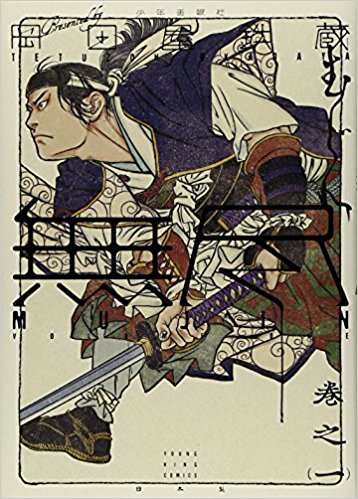
Mujin_1I read mostly manga and I am particularly interested in historical manga. Every now and then I discover a new one. Earlier this week, Imagine-nation — a TV show airing on NHK World and dedicated to Japanese pop culture — talked about the manga series Mujin by Tetuzoh Okadaya. The show first aired on Monday December 11 and will be available for streaming until December 19.

Tetuzoh Okadaya is a former doujin writer who publish regularly in Hakusensha‘s Hanamaru. She seems to specialize in boys love manga but has also dabbled in period drama. Her first manga, Tango no Otoko, has been translated in English (available as The Man of Tango from SuBLime, a yaoi / boys love publisher formed by the partnership between Viz and Animate). You can find more details about her on Baka Updates, Goodreads, Wikipedia and her official web page.

Mujin_v4p6Mujin (無尽 / むじん / lit. “ending” or “expiring”) is a historical manga set in the Bakumatsu period (late Edo period). It tells the story of real-life swordsman Hachiro Iba (1844-1869). He was a bakushin (Shogun’s personal guard) who lost his left arm in the Boshin war and became later the head of the “Yugekitai” (guerilla corps). He was a master of the Shingyōtō-ryū style and died at the battle of Hakodate. Not much is known about him (although he was famously illustrated by Yoshitoshi) so it leaves Tetuzoh Okadaya some freedom to develop her fictitious story around the character. Many manga are set in this fascinating period (Blade of the immortal, Hidamari no ki, Lone wolf and cub, Nobunaga Concerto, Nobunaga no chef, Ooku: The inner chamber, Rurouni Kenshin, Shigurui, Vagabond, etc.) but, unfortunately, this one is not available in English. Nonetheless, it seems quite interesting. (You can find more details on the manga on the Google-translated version of Wikipedia).

[ Traduire ]

JCCCM Craft and Food Sale

JCCCM_Craft_and_Food_Sale
JCCCM-logoYesterday, I went to the Japanese Canadian Cultural Centre of Montreal for their craft and food sale held each year in the beginning of December to raise funds and offer Christmas gifts opportunities. In previous years I bought some Japanese-style pottery but that potter was not at the sale this time. Instead I bought a trinket (a bag of acorns made of semi-precious stones — very nice) and my wife bought some of Masaki Endo’s Natto.

The sale is rather small as there is only a dozen vendors like Stephen H. Kawai (the guy selling those semi-precious acorns), Lou Hideyoshi’s Sekken SoapM of Leema’s custom made laptop & tablet kimono covers (cool!), Hiromi Ono’s Fleur DesignOnigiri Justice, Miyabi handmade soap, Sho-Raku-An Japanese calligraphy, Hana Hana Kokoro Handmade, Kimono Vintage (Wow! see also their web page), etc. If you are interested in Japanese-style goods and culture those kind of places are worth checking.

Découverte: le dernier manga de Taniguchi

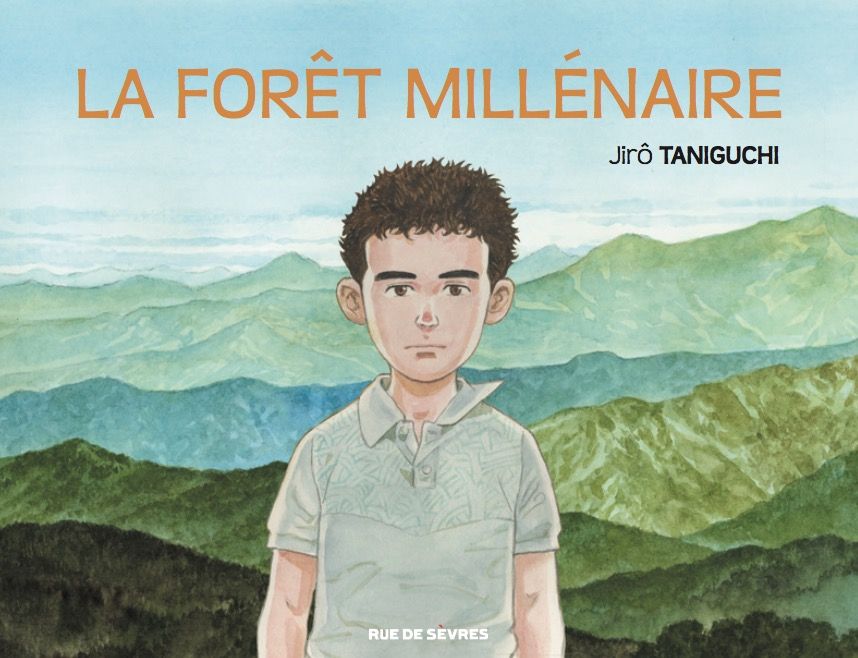
la-foret-millenaire-covIl y a quelques semaines j’ai découvert sur le site de Animeland (et puis dans un article du #217) qu’un dernier manga de Jiro Taniguchi devait paraître à la fin de septembre (disponible ici probablement à la fin octobre). Il s’agit d’un projet que Taniguchi produisait pour l’éditeur Rue de Sèvres et qui devait paraître simultanément en France et au Japon. Le projet était inachevé lors de son décès en février (l’histoire devait comporter au moins cinq volumes) mais l’éditeur à tout de même décidé de le publier, agrémenté du storyboard du reste de l’histoire, d’illustrations, d’un interview avec son éditeur japonais et de tout un dossier éditorial en hommage à l’auteur.

Continuer la lecture après le saut de page >>

Continue reading

Ishiguro gets Nobel Prize in literature !

British writer Kazuo Ishiguro (mostly known for his books The remains of the day [1989] and Never let me go [2005], which were both adapted into movies) has received the 2017 Nobel Prize in Literature. The award was announced on October 5th. Sara Danius, the secretary of the Swedish Academy, said that his novels showed “great emotional force” as he was uncovering “the abyss beneath our illusory sense of connection with the world.” She also described his style as a “mix of Jane Austen, comedy of manners and Franz Kafka.” His recurrent themes seem to be identity, memory, time and self-delusion.

Kazuo Ishiguro was born in Nagasaki, Japan, in 1954 but moved to Surrey, England, at age five because of his father’s work as an oceanographer for the NOCS. He always stayed close to his Japanese roots because, until age fifteen, he had planned to go back to Japan but, instead, his family decided to settle in England (he received British citizenship in 1982). He graduated from UKC in English and Philosophy in 1978 and received a Master in creative writing from UEA in 1980.  Before starting his writing career in 1982, he wanted to be a musician and worked as a social worker. Strangely, his life background and relationship with Japan is very similar with Belgian author Amélie Nothomb and their writings share some themes.

To celebrate Ishiguro’s Nobel Prize, NHK World re-broadcasted a two-part special where the writer gives a lecture about his work. Originally broadcasted on October 22nd and November 5th 2016, the show is titled “First Class [in literature], Kazuo Ishiguro: My Secret of Writing” and is still available for streaming until October 25th, 2017 [Part 1 and Part 2]. It is also partly available on Youtube [in English and in Japanese]. It is very interesting and well worth watching.

Sources: BBC, Le Devoir, Goodreads, HazLitt, Japan Times, NHK World, Wikipedia.

[ Traduire ]

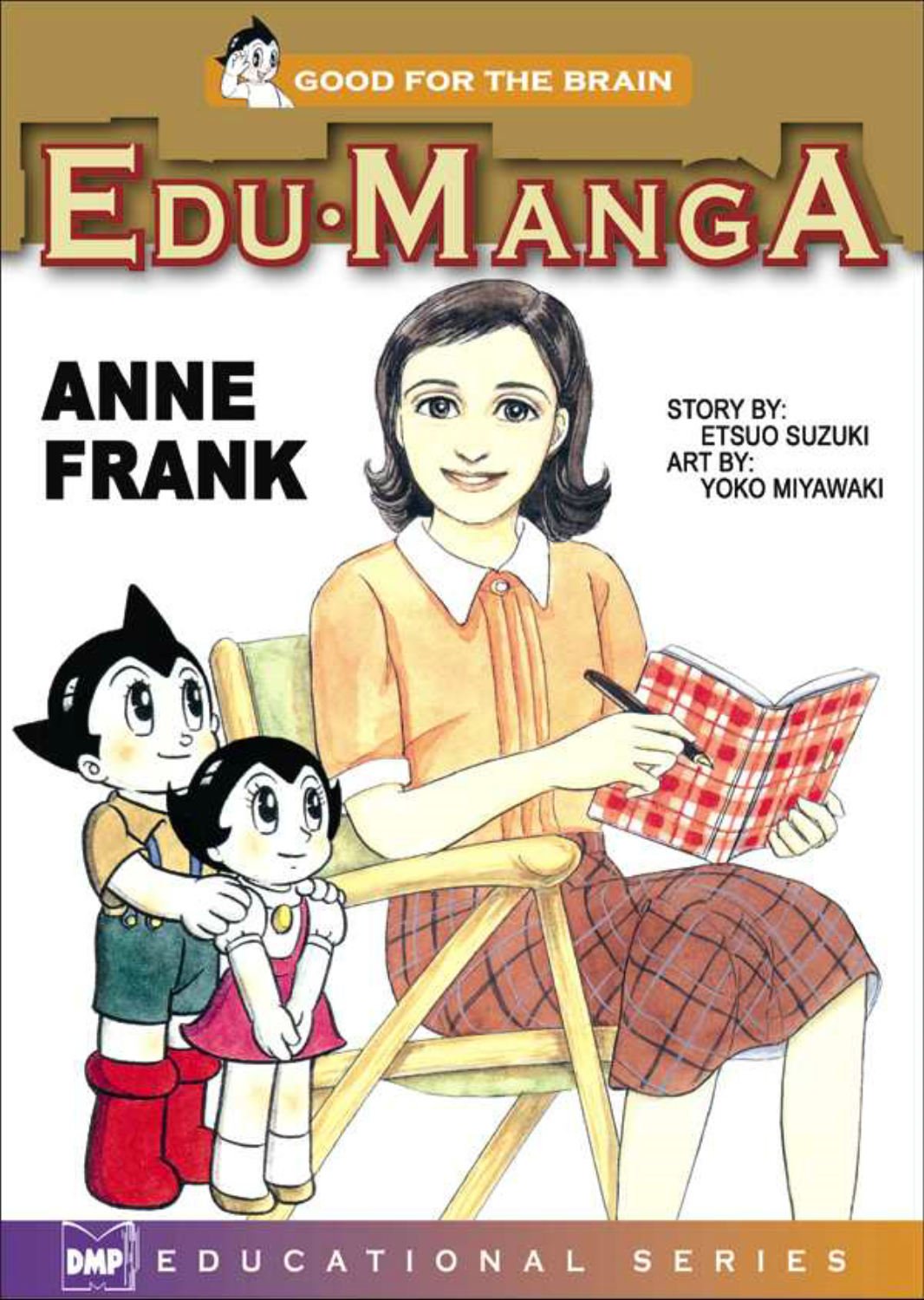
Edu-Manga: Anne Frank

Edumanga-Anne-Frank-cov“For two years, Anne Frank and her family lived in hiding from the Nazis in a secret annex. Though her young life was threatened on a daily basis, Anne channeled all of her fears and dreams into the pages of a private diary. Anne kept her hope for peace alive in the midst of the tragedy of war. Her indomitable spirit lives on to this day in the words of her very special diary.”

“Astro Boy can’t wait for you to meet this incredible young girl! Join him as he shares the day-to-day life of Anne Frank, her family, and the time they spent in the secret annex. Anne’s strength of spirit and joy in the face of impossible odds come together to create one of the most inspiring stories of our time.” (Text from the back cover)

Continue reading