A day at the museum [002.025.364]

Kent Monkman

My wife wanted to see this exhibit at the museum, so we renewed our annual membership that had lapsed since the Covid. Knowledge often comes through the arts, so it was time to have an even more cultured life. We’ll try to go visit the museum at least once a month and there are a few interesting shows coming this year. This one was a good exhibit to start with.

Kent Monkman (born in 1965) is a  Two-Spirited visual artist, member of the ocêkwi sîpiy (Fisher River Cree Nation). Through his interdisciplinary art, he explores the complexities of historical and contemporary Indigenous experiences by using themes of colonization, sexuality, loss, and resilience. His gender-fluid alter ego, Miss Chief Eagle Testickle, often appears in his work.

Monkman is an incredibly talented artist who mixes classic themes and influences loaded with symbolism and humour, very realistic and detailed portrays, beautiful Canadian landscapes and political messages about gender and native rights. It’s a very provocative and interesting exhibit that was well worth the effort to go out in the frigid temperature of late December. I am just a little disappointed to learn that he doesn’t work alone, but with the support of a whole studio. Although, it is understandable that, today, a collective effort is needed to produced such detailed and huge historical paintings. I warmly recommend to visit this show.

The exhibit “Kent Monkman: History Is Painted by the Victors” will be displayed at the Montreal Museum of Fine Arts until March 8, 2026.

Délit / Delinquency

[ iPhone 17 Pro, PMR, 2025/12/16 ]

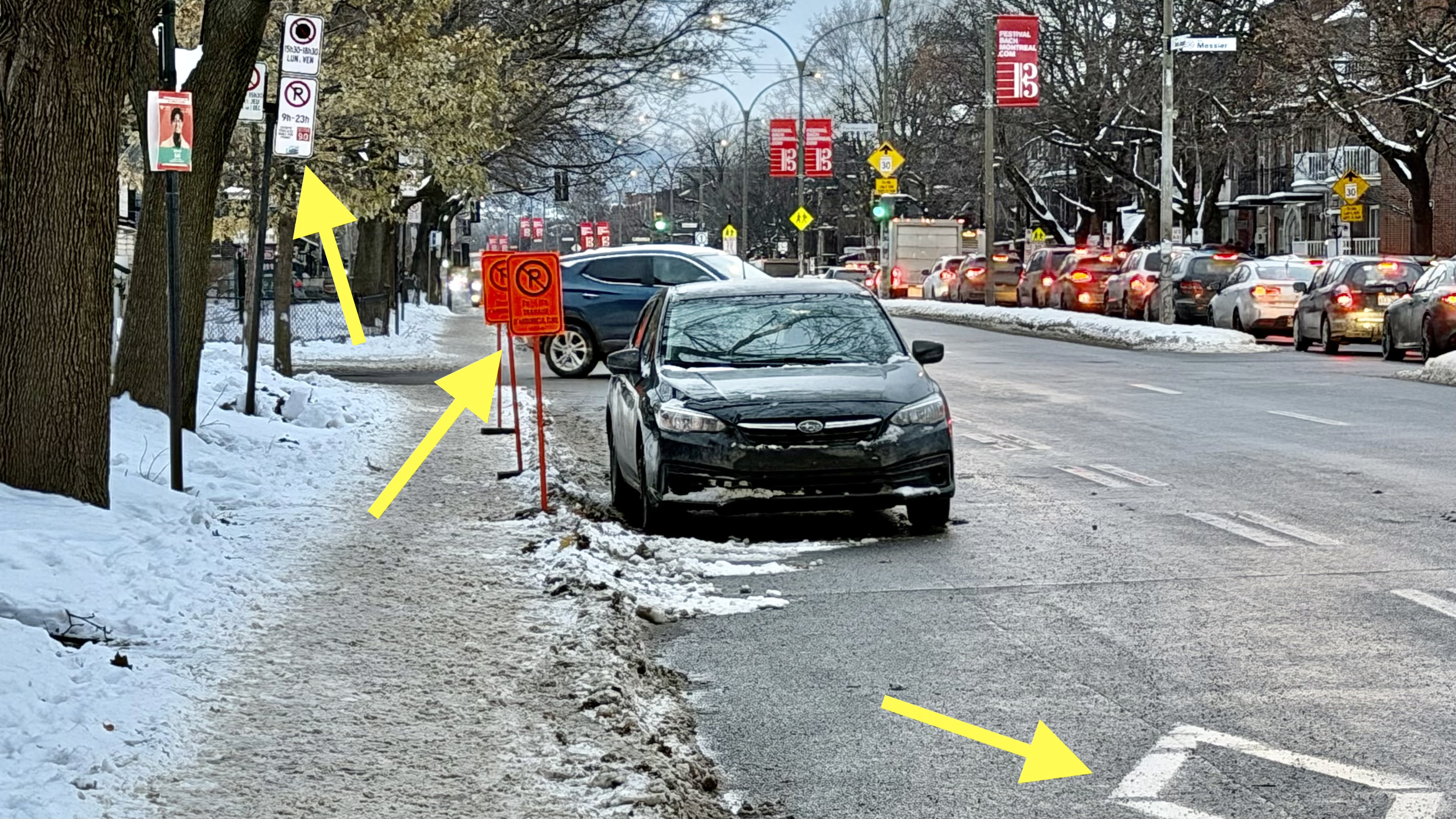
Combien d’interdictions que ça prend pour empêcher quelqu’un de se stationner ?! Y’a plus d’respect ! Ni pour la loi ni pour autrui… Le tissu social se désagrège… Que nous réserve l’avenir ? • How many signs does it take to stop someone from parking there?! People have only contempt for the law or their fellow citizen… The social fabric is disintegrating… What does the future hold for us?

Cogitationes me / Thoughts for myself [002.025.350]

VIII. It is still so true (and even more now)

Lately, I couldn’t stop thinking about the opening scene of the first episode of the 2012 TV series The Newsroom. What the anchor Will McAvoy (Jeff Daniels) says in that scene is still so true despite the fact it was aired thirteen years ago — and I feel it is even more pertinent today. The first season of the show was the best. All the political TV drama series by Aaron  Sorkin (mostly The West Wing in 1999-2006 [154 episodes] and The Newsroom in 2012-14 [25 episodes]) deserves a good viewing. They are not only entertaining, but it also makes you reflect on the nature of a strong democracy. Unfortunately, The West Wing is no longer available via streaming in Canada (not even on Crave), but The Newsroom is available on Crave/HBO. The famous opening scene is also available on YouTube (although in an edited version; another version is also edited.). I encourage you to have a look:

Pensée pour moi-même [002.024.281]

Sur l’arrêté ministériel 2024-15

J’aimerais faire quelques commentaires sur l’ “Arrêté numéro 2024-15 de la ministre des Transports et de la Mobilité durable en date du 26 juillet 2024” concernant l’interdiction d’accès aux chemins publics de “certains véhicules motorisés qui ont l’apparence d’une motocyclette” (munis d’appui-pieds ou d’une plateforme, roues semi-pleines qui n’ont pas de rayons à broches, carrosserie, vitesse supérieure à 32 km/h ou moteur de plus de 500 watts, non immatriculé), car ils constituent “un risque pour la sécurité des personnes ou des biens”. 

Je trouve que cet arrêté ministériel est tout à fait absurde, car il ne s’attaque pas au véritable problème de la sécurité routière et il est beaucoup trop imprécis.

Il ne fait aucun sens de publier un arrêté ministériel sans avoir préalablement fait des études ou de la consultation avec les milieux concernés. On lance simplement un arrêté et l’on attend de voir la réaction. Ce n’est pas une façon de règlementer ou de gouverner. Cet arrêté semble simplement répondre aux inquiétudes d’une partie de la population quant à la sécurité des pistes cyclables sans avoir cherché à approfondir sur le sujet. Il n’est donc que le résultat d’une réaction populiste.

L’arrêté ne donne qu’une description très vague de ces “véhicules motorisés qui ont l’apparence d’une motocyclette”.  Il ne précise nulle part ce qu’est “la marque nationale de sécurité ou l’étiquette de conformité”, quelle en est son apparence et où la trouve-t-on. Le site du ministère des Transports ou de la SAAQ devrait offrir des descriptions plus précises, une liste de types de véhicules interdits, avec des exemples, ou tout au moins offrir un processus (à la SAAQ ou dans un poste de police de quartier) pour faire vérifier si notre véhicule est conforme aux normes de sécurité ou le faire homologuer. Au contraire, l’arrêté n’offre aucune ligne directrice précise.

L’arrêté n’est d’ailleurs pas très efficace puisque, jusqu’à maintenant, je n’ai pas entendu parler de personnes ayant reçu des contraventions ou ayant eu leur véhicule saisi et cela malgré un article de La Presse (daté du 2 août 2024) titrant “Le SPVM assure qu’il appliquera le règlement” où le SPVM affirme qu’il “appliquera sans délai le règlement interdisant les scooters électriques non immatriculés et imposera des amendes au besoin”. Je continue pourtant à voir sur la route autant de ces scooters électriques qu’avant.

Dans les articles que j’ai lus dans les médias, les gens semblent surtout se plaindre que les scooters électriques sont dangereux sur les pistes cyclables parce qu’ils sont beaucoup plus lourds que les bicyclettes. Or, l’arrêté ministériel ne fait aucune mention du critère de poids. Cela serait pourtant un facteur intéressant pour classer les véhicules par catégories. À quel niveau un véhicule motorisé est-il considéré comme trop lourd pour circuler sur une piste cyclable ? Un vélo standard pèse entre 7 et 15 kg. Une bicyclette électrique standard (incluant le Bixi électrique) pèse entre 25 et 35 kg. Un scooter électrique pèse environ 80 kg et une motocyclette électrique pèse environ 120 kg. Où mettre la limite ? L’arrêté ne mentionne rien à ce sujet. Rien non plus sur quels véhicules a le droit de circuler sur les pistes cyclables. Doit-on permettre les tri- et quadriporteurs ? Les skateboards (électriques ou non) ? Les trottinettes (électriques ou non) ? Les unis-roues ? Ces véhicules sont beaucoup plus lents que les bicyclettes et peuvent donc constituer un danger pour les cyclistes. Pourquoi l’arrêté cible-t-il uniquement les scooters ?

En ciblant largement les scooters électriques, l’arrêté pénalise collectivement un groupe de personnes qui utilisent ces véhicules pour d’excellentes raisons, fort louables: ils ne peuvent pas se permettre un véhicule plus dispendieux et n’ont pas de permis de conduire (l’usager typique étant étudiant ou livreur de restaurant), par soucis pour l’environnement ils choisissent un véhicule électrique afin de contribuer à réduire le nombre de voitures sur les routes et ainsi polluer moins que le ferait un véhicule à essence. Étrangement, les scooters à essence (dont les moteurs à deux temps sont extrêmement polluants) ne sont aucunement pénalisés ! Ceci va complètement à l’encontre de la politique d’électrification des transports du gouvernement.

Interdire globalement toute une catégorie de véhicule, sans avis préalable et sans proposer la moindre solution, est une position assez radicale et intenable. Il faudrait mieux définir la catégorie de véhicule interdit et aussi proposer des alternatives. Peut-être qu’une partie de ces véhicules devrait dorénavant être immatriculée ? Peut-être que certains véhicules, au lieu d’être complètement interdit de circuler, devraient simplement être interdit de circuler sur les pistes cyclables (quoi que les scooters et les motos électriques sont déjà interdits de circuler sur les pistes cyclables). Et, si une catégorie de véhicules est définitivement interdite de circuler, il faudrait offrir des compensations financières aux gens qui ont acheter un tel véhicule en toute bonne foi, pour les meilleures raisons du monde, qui se sont fait dire par le vendeur que cela était tout à fait légal, et qui maintenant se retrouve avec un véhicule totalement inutile, bon pour la ferraille.

J’aimerais maintenant citer en exemple mon cas personnel. Durant la COVID-19, afin d’éviter la possible contagion des transports en commun, je me suis acheté une bicyclette électrique afin de me rendre au travail. Il s’agit d’un Écolo Lithium de Greenpower HQ que j’ai payé environ $2000 avec accessoires. Malheureusement, il remplit plusieurs des critères énoncés dans l’arrêté ministériel: les roues s’apparentent à celle d’une motocyclette et une carrosserie recouvre une partie du cadre. Toutefois, il comporte un pédalier fonctionnel, il ne possède pas de plateforme appui-pied, son moteur n’excède pas 500 watts et sa vitesse est limitée à 32 km/h. Mais il pèse plus qu’une bicyclette électrique (80 kg) et la carrosserie, ainsi que le fait qu’il ait un large siège banane au lieu d’une selle, lui donne définitivement l’apparence d’un scooter. C’est pourtant techniquement une bicyclette électrique. Il possède d’ailleurs un autocollant qui dit “Ce véhicule est une bicyclette assistée et rencontre la norme 2(1) du règlement sur la sécurité des véhicules automobiles du Canada.” Le vendeur m’a clairement dit que c’était une bicyclette électrique qui ne nécessitait aucun permis et qui pouvait rouler sur les pistes cyclables. Mon Écolo est-il couvert par l’interdiction de circuler de l’arrêté ministériel ? Ce n’est vraiment pas clair. Et s’il l’était, serais-je indemnisé financièrement pour cet achat inutile ? Ne voulant cependant pas prendre la chance d’écoper d’une contravention, je me suis donc récemment acheté une véritable bicyclette électrique de type fat-bike: un RadExpand 5 de RadPower, qui ne pèse que 28 kg et que j’ai payé environ $2300 (avec accessoires, livraison et assemblage). Il ne rencontre aucun des critères énoncés par l’arrêté ministériel, mais, comme le fabricant est américain, il ne comporte nulle part l’indication qu’il est conforme à “la marque nationale de sécurité” (peu importe ce que c’est). Est-il donc légal de rouler avec ce véhicule au Québec ? J’aimerais bien que les règlements en la matière soient plus clairs et précis…

Finalement, cette question de la sécurité routière n’est pas un problème de véhicules qui ne sont pas sécuritaires. C’est un problème de gens qui conduisent des véhicules de façon non sécuritaire et qui ne respectent pas le Code de la route. Bannir un type de véhicule ou un autre n’y changera absolument rien. Il faut juste être plus sévère et consistant dans l’application des règlements existants (plus de policiers sur la route et les pistes cyclables) et faire des campagnes de sensibilisation. Tous les jours, en me rendant au travail (un trajet d’une vingtaine de minutes), je constate au moins une dizaine d’infractions: cyclistes et automobilistes qui ne font pas leurs arrêts, qui brûlent une lumière rouge, des piétons qui traversent n’importe où, sans regarder, sur une lumière rouge, des véhicules qui n’ont pas le droit de circuler dans une piste cyclable (skateboard, piéton avec poussette de bébé, joggeurs, véhicules stationnés, camions d’entrepreneur, etc.), de jeunes enfants à deux sur un scooter électrique, sans casques, et qui roulent PLUS VITE que moi (!), sans compter les pistes cyclables dangereuses, car mal entretenues (trous, bosses, jonchées de graviers, débris, déchets, poubelles, tas de feuilles mortes, etc.).

Non, cet arrêté ministériel ne changera rien à la sécurité routière.

Documentation:

Ajouts

(Note : cet article a été envoyé en tant que lettre de commentaire à la SAAQ et au ministère des Transports, ainsi qu’à quelques médias)

[ Translate ] [ eBike ]

Cogitationes me / Thoughts for myself [002.023.258]

VII. Thoughts (of the day) on imperialism

A friend from Africa was recently explaining to me the non-aligned (or developing/third) world’s perspective on the war in Ukraine. He was saying that the West outrage over the Russian invasion is total hypocrisy. His argument is that America and European countries have been doing (and continue doing) the same type of agression to many other countries without creating any outrage so why should it be different with Russia ? I totally agree that no agression from any country against another should be tolerated. No country should be allowed to steal ressources or territory from another. On that aspect, the United Nations is a total failure. 

The problem is that Western (and Chinese) agressions are generally more subtle and perverse as they try to exercise political influence or economic domination without actually putting boots on the ground and killing people. It is more difficult to identify and to criticize. America has done it all over the world (but more notably in South America) and France has done it mostly in the Maghreb and West Africa (but also in the West Indies, Indochina and South Pacific). China is doing it in the Indo-Pacific (notably with its slow demographic invasion of Tibet) and in Africa through their “Belt and Road Initiative”. However, this imperialism is mostly economic and cultural, but bloodless — with rare exceptions like France in Algeria or the USA in VietnamIrak or Afghanistan). What the Russians are doing is the first large-scale invasion of a country since Nazi’s Germany invaded Europe. When his attempt at political and economical influences failed, Putin tried to take control with a quick military operation that also failed, so now he is punishing the Ukrainian with a campaign of total destruction of their territory and, ultimately, genocide. From my point of view, it is so much worse than standard economic imperialism. There is simply no equivalence here.

Some are also of the opinion that Putin was simply responding to the western agression against his sphere of influence. Like Hitler was trying to create a thousand-year Reich dominating all Europe, Putin want to recreate -not the former Soviet Union– but Catherine the Great’s Russian Empire. For that he needs the agricultural ressources of Ukraine and a better access to the Black Sea for his fleet. The “pressure“ of the West is just a pretext for him to invade. The West cannot be blamed here since it is not a case where NATO is trying to steal Ukraine from the Russian influence, but it’s rather the Ukrainians who want to join NATO and the European Union to escape the corrupt and criminal politics of Putin’s mafia-like oligarchic regime. Would it be nice if no country ever bothered to interfere in another country’s affairs ?

[ Traduire ]

Notable News [002.023.253]

Notable News (Spring 2020 – Summer 2023)

I used to regularly post those status reports where I was summarizing all the notable news that happened in my life and around the world during the last week, month, quarter or year in the form of a “scrap-book” of interesting links (scrap-linking?). With the pandemic I got too busy with my life and I neglected to do so. I recently tried to clean up my old emails and notes and I will now attempt to catch up on the last three years…

On the domestic front a lot has happened during those three years. My health has taken a down turn with frequent migraines and many small issues that make me feel much older. There are no day without pain, but life goes on. I have changed job: I used to work as a library assistant in a municipal library but I am now an office clerk in the technology resources department of a municipal law enforcement agency. My wife, who was a waitress and kitchen assistant in a Japanese restaurant, has stopped working with the pandemic and is now dedicating her life to gardening and painting. I am still reading and writing not as much as I should and probably watching too much television. I can’t wait for retirement (only 1350 days left!) so I could have more time to dedicate to my writing. I started biking to go to work in the summer. However, over all, life has been the same usual routine.

On the world stage nothing much has changed. 2020 was all about COVID-19, the global economic recession brought by the pandemic, and the U.S. presidential election which was won by Joe Biden. If 2020 was one of the worse years in recent memory, 2021 was not much better as the pandemic persevered with various variants and Trump, refusing to accept defeat, conspired to overthrow the U.S. government, this conspiracy culminating with his supporters attacking the Capitol in an attempt to prevent the election certification. The delayed 2020 Summer Olympics were finally held in Japan and science scored a few wins with the creation of COVID vaccines, the launch of the James Webb Space Telescope and the landing on Mars of the rover Perseverance, carrying the drone Ingenuity — which made the first powered flight of a man-made object on another planet! 

In 2022, the pandemic was easing enough to start removing most restrictions and mitigation measures. Unfortunately the year was marred by tragedy and disasters: the Atlantic hurricanes Fiona and Ian, the most powerful volcano eruption of the century in Tonga, the assassination of Shinzo Abe, the death of Queen Elizabeth II and, most notably, the Russian invasion of Ukraine. The FIFA World Cup (unfortunately held in Qatar) and the Winter Olympics (unfortunately held in Beijing, China) were not enough to cheer us up. 

So far 2023 has been marked by a difficult economy, the continuation of the Russian invasion of Ukraine (which highlights the European cowardice as well as the weakness and failure of both NATO and the United Nations) mitigated by the start of the Ukrainian counteroffensive, and a resurgence of the Trump craziness (this time generated by his legal troubles — if you are a crook, traitor, fraudster, racketeer and rapist the law tends to catch up to you eventually). However, the main lesson of this year should be that the increasing occurence and strength of the storms, forest fires, flooding, heat waves, droughts, etc., are a clear sign that the climate change is happening faster than expected and that humanity (now eight billion strong) must act NOW before it is too late to mitigate, slow and eventually reverse those drastic changes. Unfortunately, it is also clear that no governments is ready to implement measures that would go far enough to be even slightly effective. The measures must be not superficial (individual) but systemic (societal) in order to really reduce our greenhouse gases emissions by diminishing the number of cars, the use of fossil fuels and the environmental destruction mostly caused by agricultural and food industry. At the same time we must try to reverse the trend with the use of sustainable energy, agriculture and transport, environmental restauration and tree planting, carbon capture, etc. One countermeasure won’t be enough. We must try them all at the same time if humanity wants to have a chance to survive the next couple of centuries…

Through all this I tried to stay acquainted with the affairs of the world and gathered a few notable news & links — which I now share with you after the jump (in both french or english, slightly categorized, but in no particular order — note that, to save on coding time, the links will NOT open in a new window as usual). Many of those links and news will probably be obsolete…

[ Traduire ]

Continue reading

Liste d’obstacles rencontrés sur une piste cyclable

  • De nombreux trous et bosses !!! (Bouches d’égoût trop basses, travaux de voirie mal repavé, etc.)
  • Graviers, déchets et débris divers repoussés par les voitures sur le côté de la route
  • Branches d’arbres
  • Verres brisés (bouteilles cassées mais surtout vitres d’auto brisées lors de cambriolages)
  • Piétons ou joggeurs qui pensent que c’est une extension du trottoir 
  • Papa / maman qui courent en poussant le carrosse de bébé
  • Écureuils qui ne savent pas trop dans quelle direction déguerpir 
  • Sacs de vidanges
  • Bacs de recyclage
  • Entrepreneurs (toitures, plomberies, électriciens, etc.) stationnant leur camion
  • Travaux de voirie qui omettent de se signaler en début de rue et ne fournissent pas de voie d’évitement
  • Citoyens qui y stationnent leur véhicule (par ignorance, indifférence ou protestation)
  • Cyclistes qui circulent à deux de large tout en jasant tranquillement
  • Adultes ou enfants circulant, parfois en zig-zagant, en trottinette (“scooter”) électriques ou pas (qui, étrangement, ne sont pas autorisées sur les pistes cyclables)
  • Gros tas de feuilles mortes

Et j’en oubli sûrement plusieurs autres…

J’ai circulé en vélo électrique tout l’été pour me rendre au travail (une quinzaine de kilomètres par jour) et il n’y a pas une journée où je n’ai pas vue une piste cyclable obstruée par l’un ou l’autre de ces obstacles. Alors, Mme la Mairesse Valérie Plante, c’est beau faire des tas de belles pistes cyclables mais encore faut-il qu’elles soient praticables! 

C’est pas surprenant que l’on voit de plus en plus de vélos de montagne  et de “fat-bike” dans le rues de la ville car circuler dans les pistes cyclables de Montréal c’est presque comme faire du moto-cross ! J’ai changé le siège de mon vélo pour un plus confortable mais cela demeure dur sur le derrière !

Avec des rues et des pistes aussi sales c’est pas surprenant non plus que j’ai fait deux crevaisons! L’une avec un morceau de verre brisé et l’autre avec une broche de métal (brocheuse industrielle). Il faudrait peut-être songer à nettoyer les pistes cyclables plus souvent…

Je suis toute de même très reconnaissant d’avoir un bon système de piste cyclable pour me déplacer en ville même s’il n’est pas parfait. Voilà, c’était mes réflexions de fin de saison avant de commencer à songer à ranger mon vélo pour l’hiver…

[ Translate ]

Bug, vol. 3

Bug-3-covTroisième volet de la saga planétaire d’Enki Bilal.

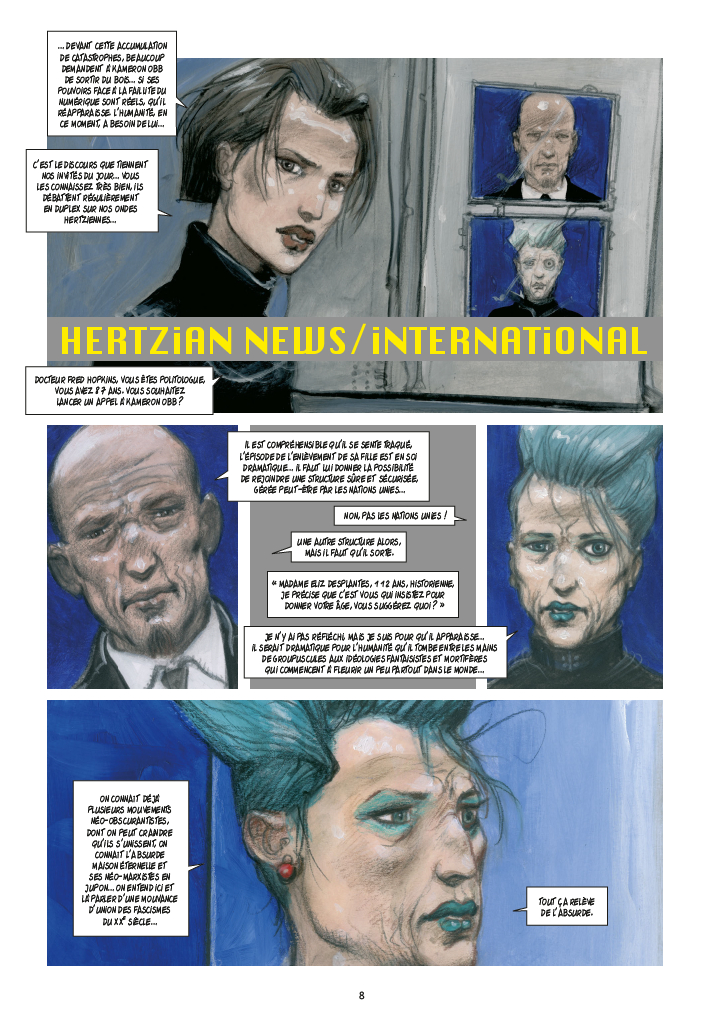
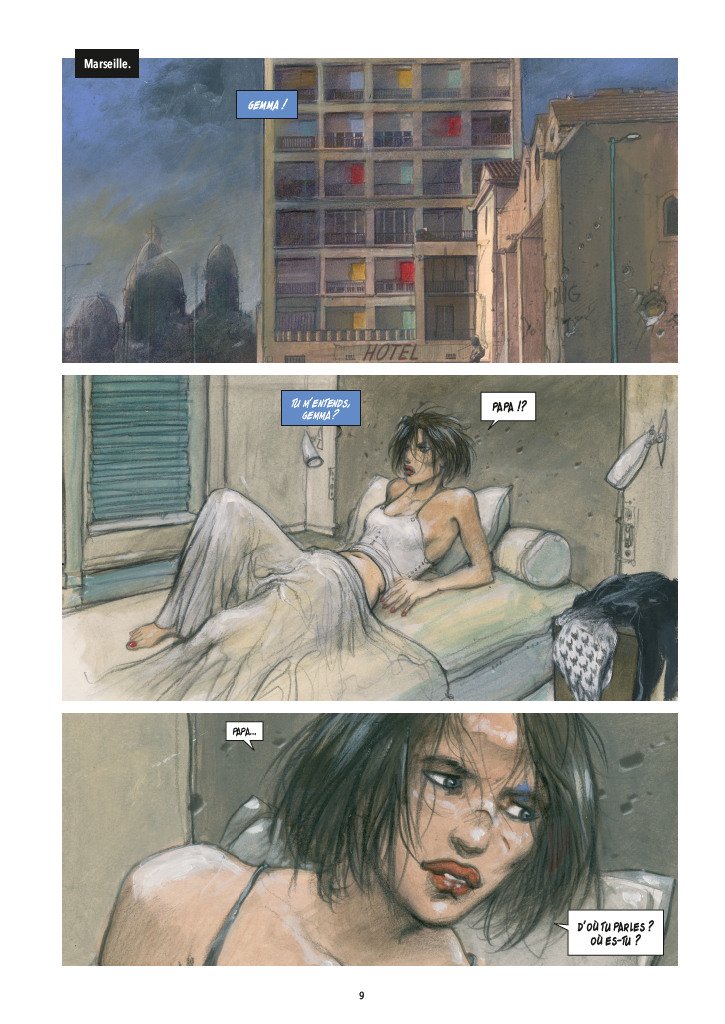
Alors que le grand Bug planétaire a rendu impossible l’accès aux données numériques, l’hypermnésique Kameron Obb est la proie de toutes les convoitises. Traqué à travers le monde par des instances gouvernementales autant que par des groupuscules contestataires, il réussit à communiquer avec sa fille, elle-même kidnappée par de mystérieux ravisseurs… Mais quelle est la véritable nature du Bug ? Est-ce seulement une catastrophe technologique ou bien la conséquence d’une véritable attaque contre l’Humanité ?

Dans ce troisième épisode, Enki Bilal se régale dans la mise en scène de nombreuses femmes puissantes, avec une suite de rebondissements et de séquences spectaculaires ponctué de réflexions satiriques aussi inattendues que réjouissantes…”

[Texte du site de l’éditeur; voir aussi la couverture arrière]

(Attention, lire l’avertissement de possible divulgacheurs)

Bug-3-p43

Vol 3, p. 43

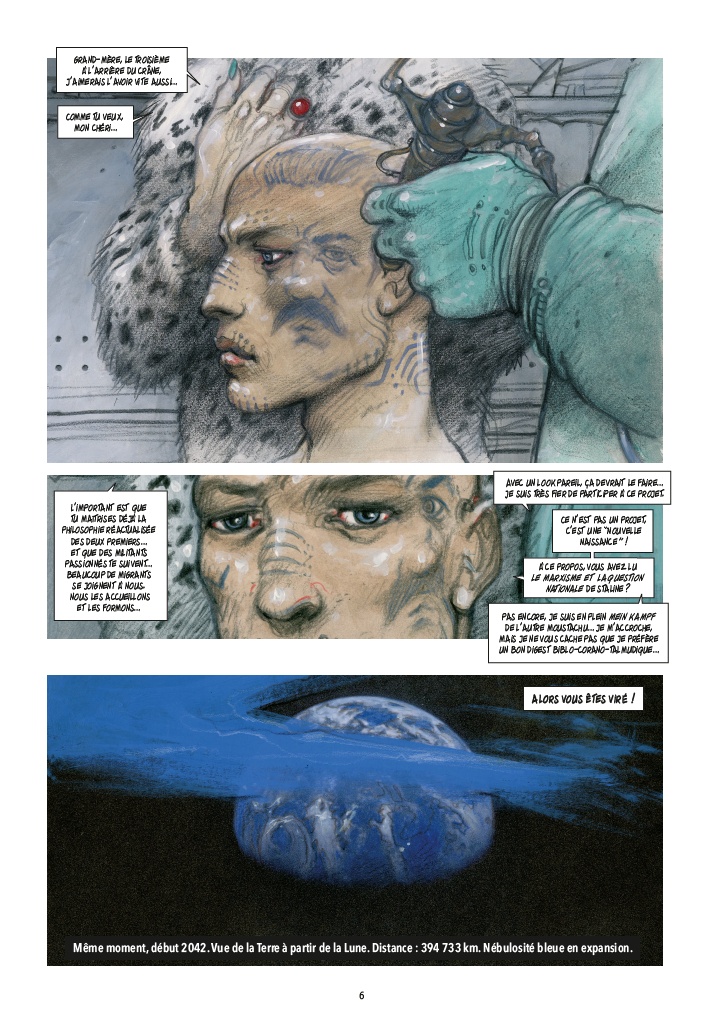
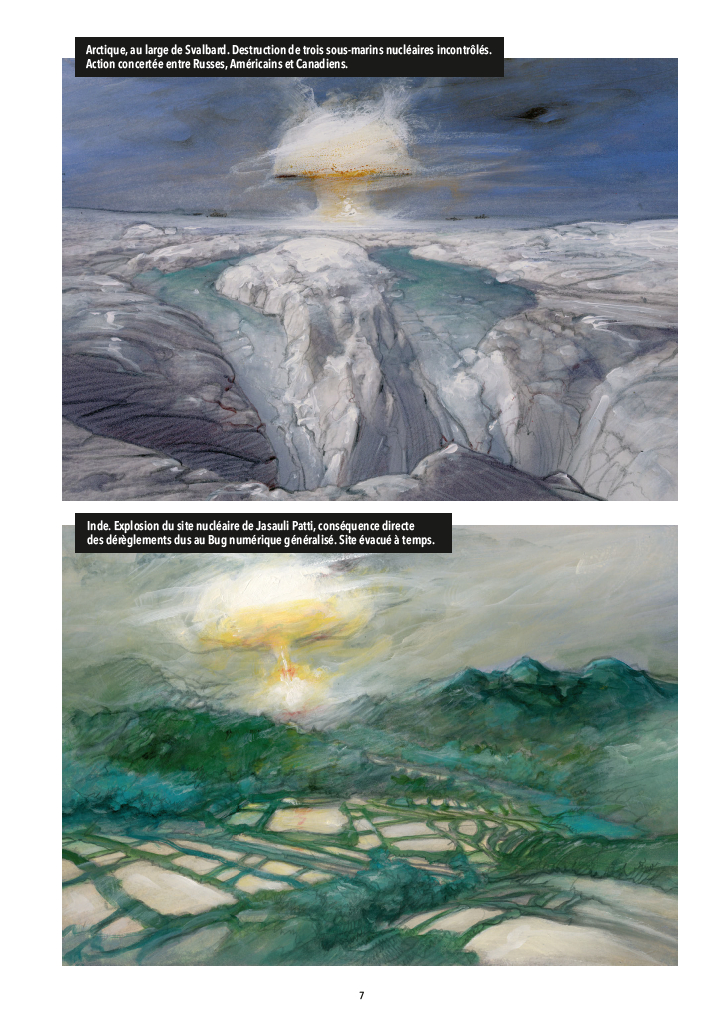
Le récit se poursuit… (voir mes commentaires des premiers et second volumes). 2042. Que se passerait-il si toute la technologie qui contrôle notre monde, nos villes, nos vies, notre corps même (par des implants), cessait subitement de fonctionner? Alors que la planète est plongée dans le chaos, Kameron Obb (seul survivant d’une expédition vers Mars) lui semble le récipiendaire de TOUTES les mémoires électroniques du monde. Cela en fait un homme recherché et convoité. Prisonnier d’un groupe Néo-Marxiste-Féministe, il est kidnappé cette fois par la tsarine de la Nouvelle Russie Sibérienne. Tous veulent qu’il rétablisse leur système électronique… Une nébulosité bleue approche de l’orbite terrestre… Pendant ce temps, sa fille Gemma, sauvée par Junia, la compagne de fortune de Obb, retourne à Paris pour tenter de sauver le monde du chaos. Junia tente de libérer Obb d’une haute tour au large de Barcelone, mais il n’y est plus et elle est capturé par les Néo-Marxiste. Obb s’évade de Sibérie à bord d’un chasseur Sukhoi-77 pour rejoindre Gemma et sauver la présidente française de ses implants. Puis il va libérer Junia. Un nouveau groupuscule entre en jeu, le STALLER (STAline-hitLER, des néo-fascistes). Ils ont capturé le millionaire Awden Marxoe (le patron de Obb) qui semble en possession d’une information capitale sur le Bug. Pour la première fois, Obb est contacté par l’Entité Bleue… Quelle sont les véritables intentions de cette entité? Aurait-il été manipulé par une force malveillante? Deux courants bleus semblent lutter en lui. Il perd le contrôle du Sukhoi et il se retrouve avec Junia sur une plage de Lampedusa en Libye. Il a de la fièvre, tombe dans le coma. Il se réveil amnésique! 

Bilal demeure encore et toujours un incontournable. Surtout à cause de son superbe dessin. Un style qui mélange brillamment crayonné et peinture, tons sombres et vifs, détails et flous. Dans cette nouvelle série (en cinq tomes), Bilal critique notre sur-dépendance de la technologie et se moque grandement de la radicalisation idéologique du XXIe siècle. Le récit est bien mené, captivant mais semble piétiner un peu. Toutefois, ce tome se termine sur un point tournant et le prochaine volume nous apportera sans doute des réponses. Vivement la suite!

Bug, livre 3, par Enki Bilal. Bruxelles: Casterman, mars 2022. 82 pages, 19.1 x 26.9 cm, 18,00 € (ePub/PDF: 12,99 €) / $34.60 Can. ISBN 978-2-203-20228-3. Pour lectorat jeune adulte (14+). stars-3-0

Vous trouverez plus d’information sur les sites suivants:

[ AmazonGoodreadsGoogleNelliganWikipediaWorldCat ]

© Casterman 2022

[ Translate ]

cogitationes me / Thoughts for myself [002.022.178]

VI. Thoughts (of the day) on human rights 

If you make your laws according to your religion and your moral then you are not a democracy. Your are a theocracy and you are no better than the Talibans. The Funding Fathers of the United States wrote the Constitution on the basis of the Separation of Church and State to avoid anything resembling what they wanted to escape — the totalitarianism and domination of a monarchy. If you go this way you are going backward…

Nobody is in favour of abortion. No one want an abortion. It is a solution that you take in last resort when you have exhausted all other possibilities (planned parenthood, contraceptive, adoption, etc.) and you have no other choices. Bad things happen (incest, rape, health issues for the baby, the mother or both) and if the need arise a woman should have the choice. No woman should be forced into a pregnancy that put her physical, mental or economical health in jeopardy. (Democrats and defenders of women’s rights should have better messaging!)

If you take away the right of women to chose what would be next? The same-sex marriage? The mixed-race marriage? The voting right of minorities? According to the extreme right none of those are guaranteed in the American Constitution. They say that life begins at conception (although some scientists say that a human brain is not completely formed until five or six year-old…) and therefore all those frozen embryos must be considered human. If they take full power of the country we could see the day when they force some women (Prisoners? Minorities? Underprivileged?) to carry those frozen embryos to term… Then we would not be far from what is considered science-fiction today (The Handmaid’s Tale anyone?)…

People will defend a right that they want. They will fight harder to defend a right that they had and lost… The Future will always be a struggle. Ours might be a socio-political war!

And now, for something completely different, maybe the worse war crime is for Europa to coward in front of the Russian scarecrow’s nuclear bluff, leaving the Ukrainians alone to stop the tide of his juvenile and dystopic anger ???

[ Traduire ]

Shades: A Tale of Two Presidents

Shades-covFrom Pete Souza, the #1 New York Times bestselling author of Obama: An Intimate Portrait, comes a potent commentary on the Presidency — and our country.

As Chief Official White House Photographer, Pete Souza spent more time alongside President Barack Obama than almost anyone else. His years photographing the President gave him an intimate behind-the-scenes view of the unique gravity of the Office of the Presidency — and the tremendous responsibility that comes with it. 

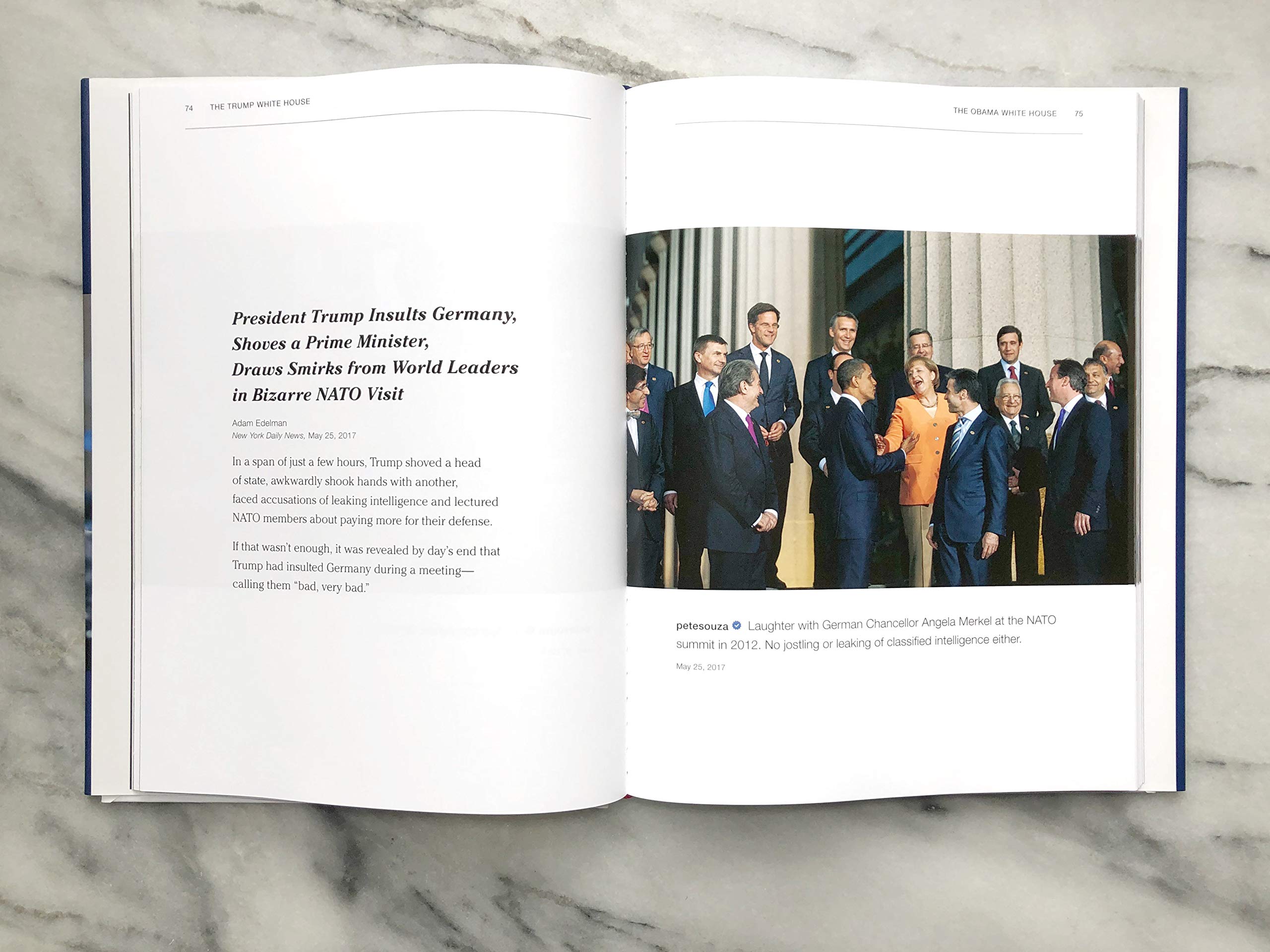
Now, as a concerned citizen observing the Trump administration, he is standing up and speaking out. Shade is a portrait in Presidential contrasts, telling the tale of the Obama and Trump administrations through a series of visual juxtapositions. Here, more than one hundred of Souza’s unforgettable images of President Obama deliver new power and meaning when framed by the tweets, news headlines, and quotes that defined the first 500 days of the Trump White House. 

What began with Souza’s Instagram posts soon after President Trump’s inauguration in January 2017 has become a potent commentary on the state of the Presidency, and our country. Some call this “throwing shade.” Souza calls it telling the truth. 

In Shade, Souza’s photographs are more than a rejoinder to the chaos, abuses of power, and destructive policies that now define our nation’s highest office. They are a reminder of a President we could believe in, and a courageous defense of American values.

[Text from publisher’s website]

Shades_p74-75This makes us realize how great it is NOT to “hear” Trump’s tweets anymore. Shades is a great coffee-table book made mostly of pictures taken during Obama’s presidency with short captions contrasting the subject of the photo with some stupid comment or action from Trump that day (or the day before) and that Souza posted on his Instagram account. Putting a picture on the internet is great fun, but publishing it in a picture book really immortalized it for posterity. It is a quick read, but you can admire the pictures as long as you want. That’s a great book.

Shades: A Tale of Two Presidents, by Pete Souza. New York: Little, Brown & Co, October 2018. 240 pg., Hardcover, 7 x 9.25 in., $12.99 US / $16.99 Can. ISBN: 978-0-316-42182-9. stars-3-0

For more information you can check the following websites:

[ AmazonGoodreadsGoogleNelliganWikipediaWorldCat ]

© 2018 by Pete Souza

[ Traduire ]

On Tyranny (Tim Snyder)

On-Tyranny-cov“The Founding Fathers tried to protect us from the threat they knew, the tyranny that overcame ancient democracy. Today, our political order faces new threats, not unlike the totalitarianism of the twentieth century. We are no wiser than the Europeans who saw democracy yield to fascism, Nazism, or communism. Our one advantage is that we might learn from their experience.
On Tyranny is a call to arms and a guide to resistance, with invaluable ideas for how we can preserve our freedoms in the uncertain years to come.”

[Text from publisher’s website ; see also the backcover]

This is a tinny and short book (almost a pamphlet) that warns democracy in America is in danger, compares the current situation with how democracy died in Europe and, through twenty lessons of history, teaches us how to fight to protect it. The book opens with a quote by Leszek Kolakowski: “In politics, being deceived is no excuse.”

After a brief introduction about “History and Tyranny”, Snyder offers us twenty lessons: 1. Do no obey in advance: “most of the power of authoritarianism is freely given (…) a citizen who adapts in this way is teaching power what it can do”; 2. Defend institutions: “It is institutions that help us to preserve decency (…) choose an institution (…) an take its side”; 3. Beware of the one-party state: “The parties that (…) suppressed rivals (…) exploited a historic moment to make political life impossible for their opponent. So (…) support (…) the rules of democratic elections”; 4. Take responsibility for the face of the world: “Notice the swastikas and the other signs of hate”; 5. Remember professional ethics: “When political leaders set a negative example, professional commitments to just practice become more important. (…)authoritarians need obedient civil servants”; 6. Be wary of paramilitaries: “When the men with guns who have always claimed to be against the system start wearing uniforms and marching with torches (…), the end is nigh. When the pro-leader paramilitary and the official police and military intermingle, the end has come”; 7. Be reflective if you must be armed: “If you carry a weapon in public service (…) be ready to say no”; 8. Stand out: “The moment you set an example (…) others will follow”; 9. Be kind to our language: “Think up your own way of speaking (…) separate yourself from the internet. Read books”; 10. Believe in truth: “To abandon the facts is to abandon freedom”; 11. Investigate: “Figure things out for yourself (…) subscrib[e] to print media”; 12. Make eye contact and small talk: “stay in touch with your surroundings, break down social barriers, and understand whom you should and should not trust”; 13. Practice corporeal politics: “Get outside (…) Make new friends and march with them”; 14. Establish a private life: “Consider using alternative forms of the internet (…) Tyrants set the hook on which to hang you”; 15. Contribute to good causes: “Be active in organizations (…) pick a charity or two (…) you will have made a free choice that supports civil society and helps other to do good”; 16. Learn from peers in other countries: “no country is going to find a solution by itself”; 17. Listen for dangerous words: “extremism, terrorism, emergency, exception (…) the treacherous use of patriotic vocabulary”; 18. Be calm when the unthinkable arrives: “Modern tyranny is terror management (…) terrorist attacks (…), disaster, (…) suspension of freedom of expression, (…) right to a fair trail”; 19. Be a patriot: “set a good exemple (…) for the generations to come”; 20. Be as courageous as you can: “If none of us is prepared to die for freedom, then all of us will die under tyranny.” He concludes with an epilogue about “History and Liberty.”

In other words: Complacency is the death of democracy. Hear that republicans? Wow. Everything in this book is so true. It should be read by everyone because the fight for our life is not over yet… It is a short but quite interesting reading. Well worth the time. 

On Tyranny; Twenty Lessons From The Twentieth Century, by Timothy Snyder. New York: Tim Duggan Books (an imprint of Crown Publishing, a division of Penguin Random House), February 2017. 128 pg., Softcover, 4-3/8 x 6-1/4, 9.99 US / $13.50 Can. ISBN: 978-0-8041-9011-4. stars-3-0

For more information you can check the following websites:

[ AmazonBiblioGoodreadsGoogleWikipediaWorldCat ]

© 2017 by Timothy Snyder

[ Traduire ]

Thought of the day [002.020.282]

Debate after-thoughts

The VP debate was more civil but no one really answered the questions and Mike Pence was lying so much that, for an instant, I had the vision of the moderator being struck in the heart by the elongated nose of Pensoccio ! He was mild-mannered and yet as disrespectful as his master would have been to Kamala Harris. He should not even have been there as he should have been in quarantine in Washington because he was exposed to infected people and should be ready to take over the presidency if — gods forbid — something would happen to Trump.

All in all, it was another annoying debate that won’t change anyone’s opinion since everybody is already disgusted by American politics under this presidency. We cannot be nauseated more than we already are… However, Harris did well, stood her ground (I like the looks she gave Pence) but I am wondering if she should have avoided playing the same game and honestly answer more questions instead. On the other hand, Pence was so bland that he looked like a doll (Dull? Undead?). Even the fly on his head lost interest and flew over the cuckoo’s nest… Meanwhile Trump is planning to use his contagious personality in another rally hoping to make his campaign viral… Could it be a fetal mistake?

I can’t wait for November turd…

[ Traduire ? ]

March, vol. 2-3

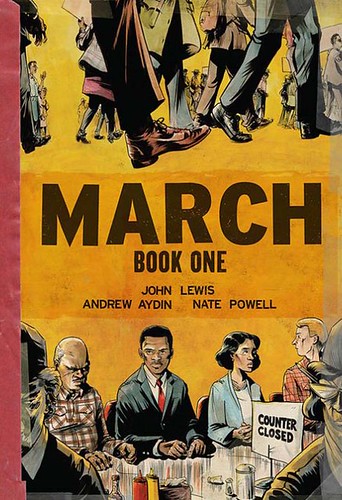
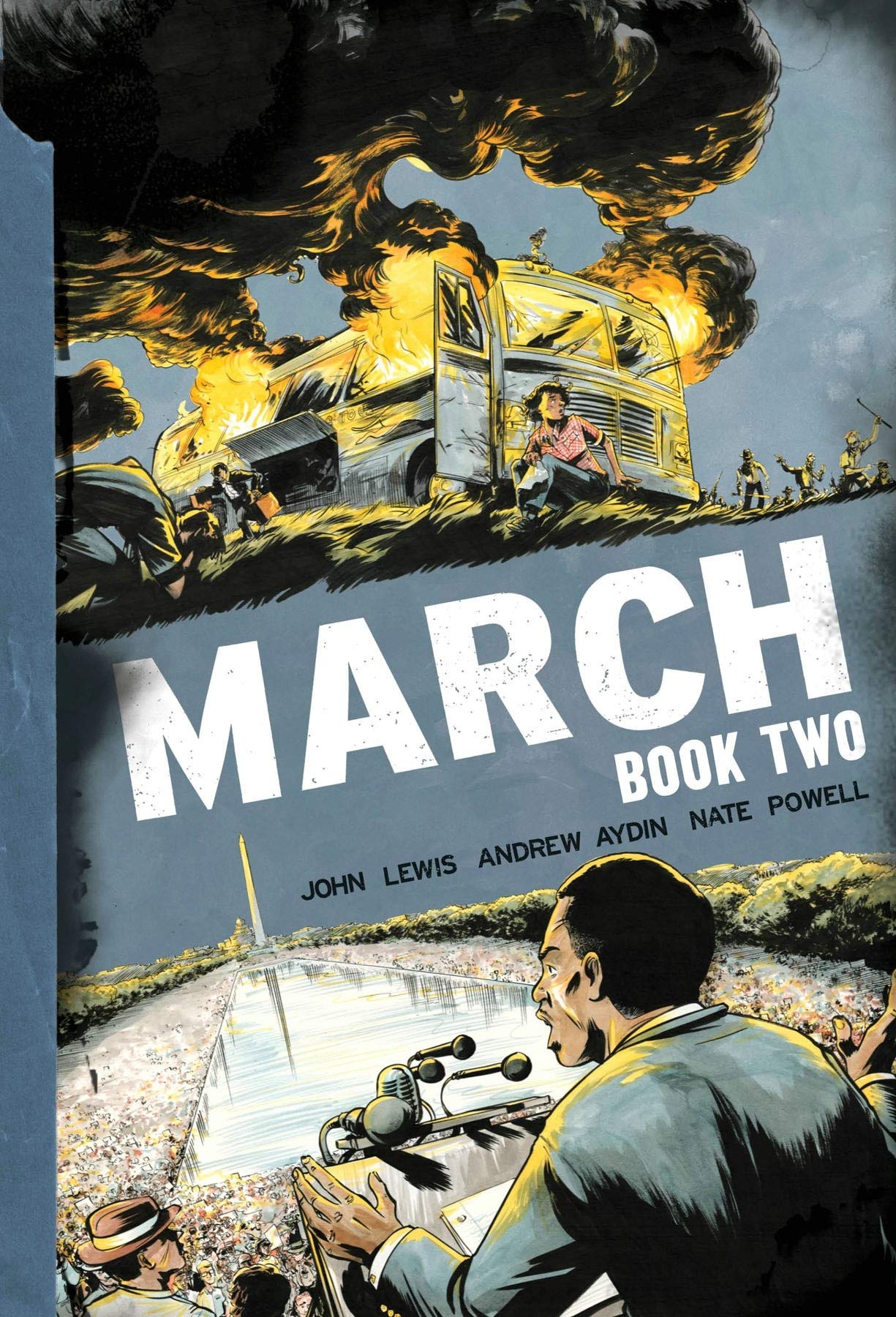
Three years ago, in order to celebrate the Black History Month, I commented on the first volume of this biographical comics by John Lewis. And last month, as I was talking about the Congressman death, I urged people to read this series. Then it occurred to me that I should follow my own advice and read volume two and three…

Book Two

March-Book-Two-cov“After the success of the Nashville sit-in campaign, John Lewis is more committed than ever to changing the world through nonviolence — but as he and his fellow Freedom Riders board a bus into the vicious heart of the deep south, they will be tested like never before. Faced with beatings, police brutality, imprisonment, arson, and even murder, the movement’s young activists place their lives on the line while internal conflicts threaten to tear them apart.

But their courage will attract the notice of powerful allies, from Martin Luther King, Jr. to Attorney General Robert F. Kennedy… and once Lewis is elected chairman of the Student Nonviolent Coordinating Committee, this 23-year-old will be thrust into the national spotlight, becoming one of the “Big Six” leaders of the civil rights movement and a central figure in the landmark 1963 March on Washington for Jobs and Freedom.”

[Text from publisher’s website and the inside flap; see also the back cover]

March: Book Two, by Congressman John Lewis, Andrew Aydin, and Nate Powell. Marietta GA: Top Shelf Productions, January 2015. 192 pg., Softcover, 6.5″ x 9.5″, 19.95 US / $25.95 Can. ISBN: 978-1-60309-400-9.

Book Three

March-Book-Three-cov“By the fall of 1963, the Civil Rights Movement has penetrated deep into the American consciousness, and as chairman of the Student Nonviolent Coordinating Committee, John Lewis is guiding the tip of the spear. Through relentless direct action, SNCC continues to force the nation to confront its own blatant injustice, but for every step forward, the danger grows more intense: Jim Crow strikes back through legal tricks, intimidation, violence, and death. The only hope for lasting change is to give voice to the millions of Americans silenced by voter suppression: “One Man, One Vote.”

To carry out their nonviolent revolution, Lewis and an army of young activists launch a series of innovative campaigns, including the Freedom Vote, Mississippi Freedom Summer, and an all-out battle for the soul of the Democratic Party waged live on national television. With these new struggles come new allies, new opponents, and an unpredictable new president who might be both at once. But fractures within the movement are deepening … even as 25-year-old John Lewis prepares to risk everything in a historic showdown high above the Alabama river, in a town called Selma.”

[Text from publisher’s website and the inside flap; see also the back cover]

March: Book Three, by Congressman John Lewis, Andrew Aydin, and Nate Powell. Marietta GA: Top Shelf Productions, August 2016. 256 pg., Softcover, 6.5″ x 9.5″, 19.99 US / $25.95 Can. ISBN: 978-1-60309-402-3.

After introducing John Lewis in Book One and explaining how he cames to be involved in the civil rights movement by joining the Nashville students nonviolent protests against segregation, we see him pushing forward, in Book Two, by participating in the Freedom Riders actions. His determination, despite the increasingly violent response to the movement, bring him to a leadership position as the chairman of the SNCC and to a speaking spot at the landmark March on Washington.

Book Two, pages 47 & 150

In Book Three, Lewis is involved with the organization of the Mississippi Freedom Summer. College students flock to the South to register as many as possible Black voters. Despite the fact that the Fifteenth Amendment gave the African-Americans the right to vote, they were facing unjust registration suppression (poll taxes and literacy tests). The project goal was to publicize and counteract this injustice, but it was met with great terror and intimidation (including the tragic events recalled in the movie Mississipi Burning). They also created the Mississippi Freedom Democratic Party in order to put delegates at the Democratic National Convention with great controversy. It failed but prompted Lyndon B. Johnson to pass the Civil Rights Act of 1964. The protests, and the violent response from the South authorities, continue to escalate up to the march from Selma to Montgomery (on March 7, 1965) where Lewis led six-hundred marchers across the Edmund Pettus Bridge and was gravely wounded. This event was a turning point that brought national and international attention to the question and prompted Johnson to pass the Voting Rights Act of 1965. Interestingly, through the recounting of his involvement, Lewis doesn’t shy from talking about the dissent within the various civil rights organizations (mainly the SNCC, CORE, NAACP, and SCLC) and even to sometimes criticize the positions of Martin Luther King or Malcom X.

Book Three, pages 30 & 86

The storytelling of March is excellent and compelling. It is well supported and illustrated by the pretty good black and white art of Nate Powell. However it is sometime quite dark (lots of ink!) and the text in some speech balloons is way too small for my eyes — I guess the artist wanted to express the sound level of distant speech. This book is a real history lesson, and the perfect way to learn about the Civil Right Movement.

Strangely, everything I read in this comics sounds familiar. It seems that what’s happening right nowBlack Lives Matter, the increasing violence against minorities and even from the government itself — is eerily similar to the situation during the civil rights movement. We all thought that our society had made great progress since then, but sixty years later we realize that we find ourselves at the same point! The disease is apparently running deeper. It laid more or less dormant for a while but seems to have been awaken by the “insult” of having a black president, creating a slow resentment. Now, with the strong encouragement and even its institutionalization by President Trump,  there’s an increasingly strong push back against all civil rights (of the ethnic origin, sexual orientation, gender or all sort of minorities) by the conservative Republicans (mostly the religious right). The United States are really in need of strong and comprehensive reforms to address this pervasive problem…

History is repeating itself (to quote Battlestar Galactica, “All this has happened before, and all this will happen again” — which seems inspired by the Bible, Ecclesiastes 1:9) but it shouldn’t ! That’s why reading this comic is extremely important. If you understand the problem of the civil rights in the fifties and sixties — the what, why, who, where and how of it — you will understand what’s happening now: what it means, why it is so important. And maybe we will start to see how all this pervasive ethno-socio-economic inequity could be solved. 

Reading this book is an absolute must. It is an easy way to understand a complex problem that affects all our lives — but mostly the black lives. It really matter. Read it. Now. stars-4-0

For more information you can check the following websites:

[ AmazonBiblioGoodreadsGoogleWikipediaWorldCat ]

© 2015-2016 John Lewis and Andrew Aydin.

[ Traduire ]

RIP John Lewis

March-Lewis-covSadly, Congressman John Lewis died yesterday [BBCCNNGoogle  NYTUSA Today]. He was a hero of the American Civil Right Movement, one of the “Big Six”. In March 1965, he received a severe head injury during the “Bloody Sunday” as he led protesters across the Edmund Pettus Bridge while attempting to march from Selma to Montgomery. Since 1988 he has held a seat at the U.S. House of Representatives for Georgia’s 5th congressional district. He must be remembered for his accomplishments which are even more important in the midst of the Black Lives Matter movement.

I also want to remind everybody that John Lewis (in collaboration with Andrew Aydin and Nate Powell) wrote a biographical comic book retelling his struggle. More than ever it is worth a look…

[ AmazonBiblioGoodreadsWikipediaWorldCat ]

[ Traduire ]

Pictorial chronicle [002.020.113]

Jour de la Terre

[ iPhone 11 Pro, le printemps dans VSP, 2020/04/20-22]

En ce jour de la Terre il est important d’avoir une bonne pensée pour cette planète qui nous nourrit et nous fait vivre malgré tous les abus que nous lui faisons subir. Cette année-ci est bien spéciale puisque c’est non seulement le cinquantième anniversaire de l’événement mais aussi parce que le confinement et la distanciation sociale que nous expérimentons en raison de la COVID-19 nous fait réaliser qu’il est possible et facile de réduire nos déplacements et notre consommation afin d’alléger le fardeau que l’humain impose à la planète. C’est quelque chose que nous devrions essayer de faire tous les jours de toutes les années. Pour la pérennité de la planète… [ Translate ]

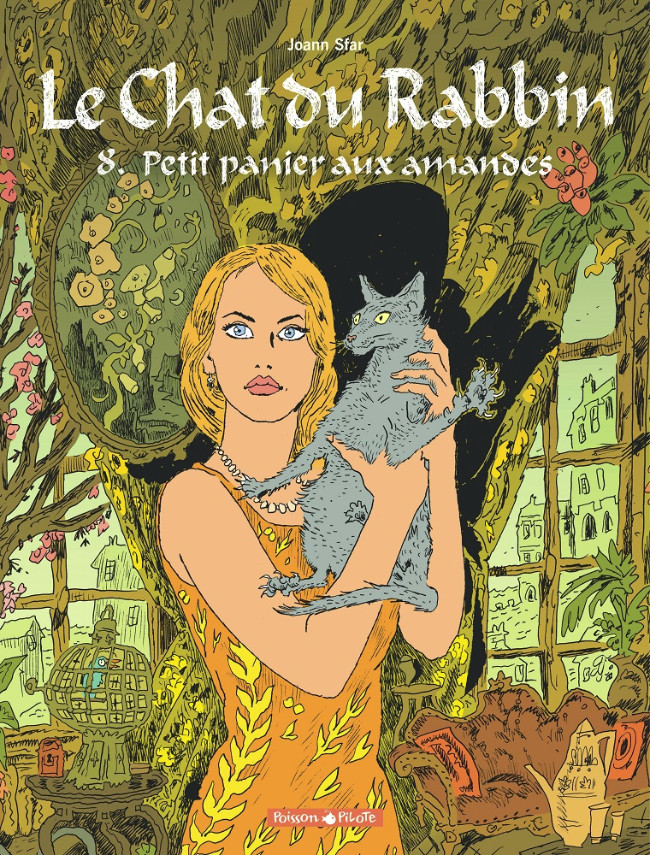
Le chat du rabbin 9. La reine du Shabbat

le_chat_du_rabbin_9-cov“Le rabbin revient sur un élément ancien, fondateur du principe de départ de la série mythique de Joann Sfar. Le jour de l’enterrement de sa femme, il décide de garder un chat. Le chat. Pour Zlabya. Pour ne pas « être deux ». Des années plus tard, le chat se mit à parler. Un événement hors du commun qui questionna le rabbin sur sa foi, ses croyances, autant qu’il joua un rôle dans le désir de liberté et d’indépendance de la jeune Zlabya. Nous suivons Zlabya dans une aventure située entre le tome 1 et 2.”

[Texte du site de l’éditeur; voir aussi la couverture arrière]

le_chat_du_rabbin_9-p09

Page 9

Le Malka des Lions raconte à des enfants incrédules l’histoire du chat du rabbin. Comme preuve il leur présente la longue tresse coupée de Zlabya, puis raconte l’histoire du jour où, se sentant incomprise, elle avait fugué de la maison et s’est fait passé pour un homme afin de pouvoir sortir avec sa copine Oreillette sans se faire emmerder par les hommes. Une fable féministe où Sfar ne manque pas, comme toujours, d’écorcher la religion (particulièrement la sienne, le judaïsme) au passage. Il discours sur l’absurdité de la religion et sur la névrose du juif, qui étouffe car il se sent pris entre les règles religieuses qui interdisent trop de choses et l’étrange hostilité du monde (l’antisémitisme). Si la situation est oppressante pour le juif Maghrébins, elle l’est d’autant plus pour la femme juive…

le_chat_du_rabbin_9-p10

Page 10

J’avais peur que le chat du rabbin n’ait plus rien à dire mais, rassurez-vous, Sfar a plus d’un tour dans son sac. Grâce à un judicieux retour en arrière le félin philosophe retrouve toute sa verve. Il récapitule d’abord l’histoire du chat, et donc l’album est un peu lent à partir, mais dès la page quarante-six c’est le début du véritable récit. J’aime bien l’écriture de Sfar qui aborde des sujets difficiles avec humour. Il y a toujours quelques bon gags dans ses albums. J’adore l’épisode où, tant bien que mal, le rabbin essai de donner son sermon à la synagogue et ses ouailles n’arrêtent pas de l’interrompre: “C’est vrai peut-être que les juifs c’est les meilleurs pour raconter les histoires juives. Mais raconter une histoire juive à des juifs, pardon, mais c’est la croix.” 

J’avais trouvé les derniers albums un peu décevants mais celui-ci nous offre à nouveau un récit fort, intéressant, intriguant et divertissant. Par contre, j’ai toujours des réserves quand au style de Sfar, caractérisé par les planches à six cases (il s’y tient les trois-quart de l’album), son dessin ondulant qui donne aux planches une apparence un peu brouillonne et criarde, de même que le texte des bulles parfois difficile à déchiffrer. Mais, bon, c’est son style: avec le temps on s’y habitue et ce n’est plus une distraction. Ses histoires sont suffisamment enrichissantes et amusantes pour qu’on lui pardonne cet écart.

Comme toujours (et même plus) c’est une excellente lecture. À lire absolument, surtout pour les amateurs de chats et de métaphysique! Et Sfar nous annonce déjà un dixième album intitulé “Retournez chez vous!”

Le chat du rabbin, 9: La Reine de Shabbat, par Joann Sfar. Paris: Dargaud (Coll. Poisson Pilote), octobre 2019. 76 pages. 22.5 x 29.8 cm, 15,00 € / $C 26.95, ISBN 978-2205-07950-0. Pour lectorat adolescent (12 ans et plus). stars-4-0

Vous trouverez plus d’information sur les sites suivants:

[ AmazonBiblioGoodreadsGoogleWikipediaWorldCat ]

© Dargaud 2019.

Voir aussi mes commentaires sur les volumes précédents:

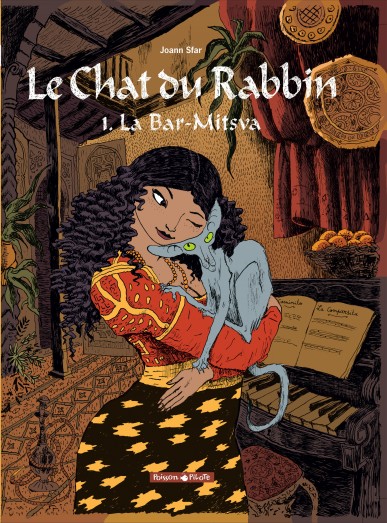
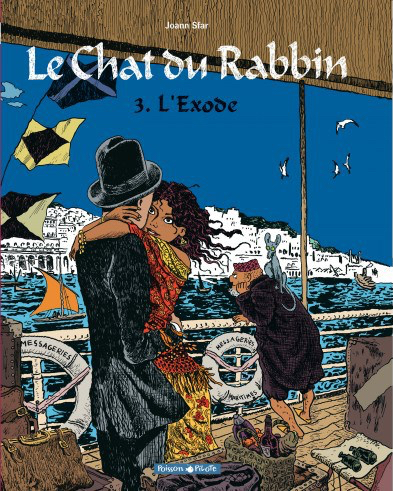
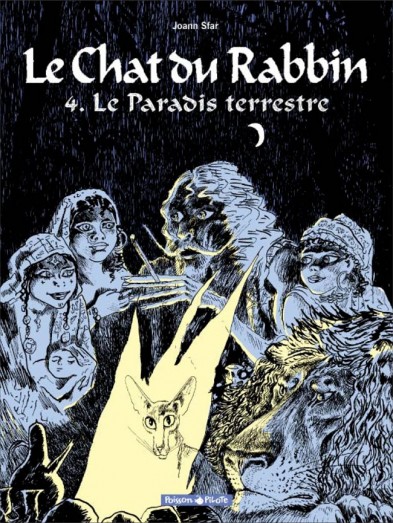
chat-rabbin-tome-1-bar-mitsva chat-rabbin-2-malka-lions chat-rabbin-3-exode chat-rabbin-4-paradis-terrestre
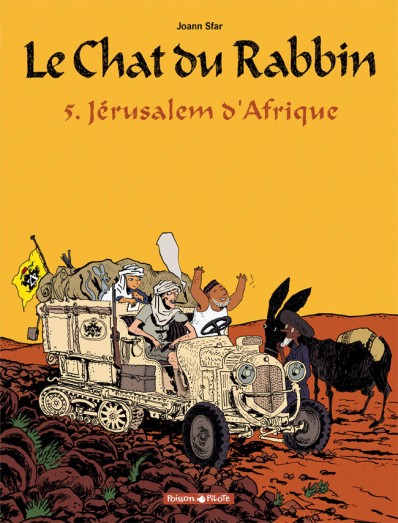
chat-rabbin-5-jerusalem-d-afrique chat_du_rabbin_6-cov Chat_du_Rabbin-v7-cov ChatDuRabbin08-cov

[ Translate ]

They called us enemy

They-Called-Us-EnemyGeorge Takei has captured hearts and minds worldwide with his captivating stage presence and outspoken commitment to equal rights. But long before he braved new frontiers in Star Trek, he woke up as a four-year-old boy to find his own birth country at war with his father’s—and their entire family forced from their home into an uncertain future.

In a stunning graphic memoir, Takei revisits his haunting childhood in American concentration camps, as one of over 100,000 Japanese Americans imprisoned by the U.S. government during World War II. Experience the forces that shaped an American icon—and America itself—in this gripping tale of courage, country, loyalty, and love.

[Text from the publisher’s site; see also the backcover]

The second season of the TV series The Terror, subtitled Infamy, was set in a Japanese-American internment camp around old Japanese ghost stories. It was quite interesting (stars-3-5). George Takei, of Star Trek fame, who had experienced the camps in his childhood, was asked to be a consultant and, since he is also an actor, to be a member of the cast. He incorporated a lot of his own experience into the TV series. This comic memoir, where Takei recounts the whole traumatic experience of the internment camps, could be a good companion book to the TV series.

They-Called-Us-Enemy-banner

The storytelling is excellent as it not only chronicles the daily life of his family inside the camp, how he felt as a four-year-old and what was the impact on his later life, but it also tells us of the journey that brought him to want to share this story. However, if it is presented has a book for all ages, it should probably more appropriately targets a teenage readership as the story is very serious, with references to policies and politics that kids would probably not understand.

The artwork is generally nice but often a little crude and simplistic with an overuse of screentone to add shades and textures. The story would have been better served by a more professional graphic style. However, this look was probably chosen to make the book feel more accessible.

Overall, it is a very interesting comics about an important (but little known) part of American history that should be a mandatory reading in civics or history classes all over America. A must (particularly now).

They called us enemy, co-written by George Takei, Justin Eisinger, Steven Scott, and illustrated by Harmony Becker. Marietta: Top Shelf Comics (imprint of IDW Publishing), July 2019. 208 pages, 6.5 x 19 in, $US 19.99 / $C 25.99. ISBN 978-1-60309-450-4. For teenage readers (12+). stars-3-5

For more information you can consult the following web sites:

[ AmazonBiblioGoodreadsGoogleWikipediaWorldCat ]

© 2019 George Takei

[ Traduire ]

Capsules

Jour du souvenir

Souvenons-nous de quoi, au juste ?
Que de chair à cannon il a fallut servir…
Pour les intérêts d’un empire mourant ?

Qu’on nous avait promis que ce serait…
Une guerre pour qu’il n’y en ait plus jamais ?
Que pour les autres on meure vaillamment…
Mais refusons d’agir pour assurer l’avenir ?

Moi, j’oublierais volontiers ces temps injuste !

Morwajal
2019/11/11

[ Translate ]

Festival Végane 2019

VeganFest2019

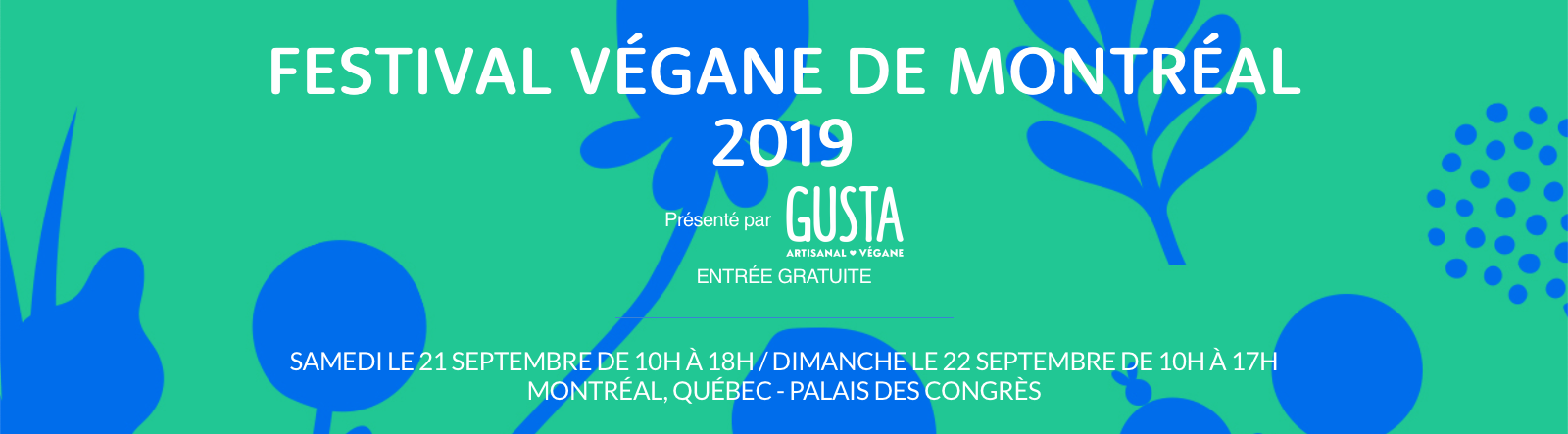
Cette année, je suis encore aller faire un tour au Festival Végane de Montréal (je l’avais aussi visité en 2016 et 2018). Non pas que je sois moi-même végane (partisan du véganisme ou végétalisme intégral, à ne pas confondre avec les habitants de la planète Vega — les méchants de Goldorak ou du système stellaire) mais par simple curiosité, pour explorer les nouvelles tendances de l’alimentation santé. 

Le Festival Végane de Montréal se tenait donc au Palais des Congrès les samedi 21 et dimanche 22 septembre 2019. La foule était au rendez-vous et il y avait de nombreux exposants — malheureusement d’année en année il semble que ce soit toujours les même. La salle de conférence était un peu plus accessible que l’année précédente mais on y retrouvait surtout des démonstrations culinaires (alors que les premières années il y avait surtout des organisations socio-politiques qui parlaient des enjeux véganes: protection des animaux, agriculture urbaine, lutte contre l’industrie pharmaco-agro-alimentaire, etc. — cette année ces organisations étaient relégué à la dernière allée, au fond du salon). C’était donc un peu décevant mais tout de même toujours assez informatif…

Continuez la lecture (plus de détails et photos) après le saut de page >>

[ Translate ]

Continue reading

About Greta

She was in the news a lot lately, but I didn’t pay much attention until I saw her speech at the U.N. Climate Action Summit this morning. It was an incredible speech, beautiful and emotional. It shows that she is an incredible girl.  Greta Thunberg was raised in a strongly cultured environment (her grandfather is/was an actor, her father is an actor and writer and her mother is an opera singer!) so it is not a surprise that she is well awaken to the state of the world. She started protesting alone, but finally won many followers. She gaves many speeches (you can also watch her TED speech) and published a book about them. She crossed an ocean in a sail boat to come deliver that latest speech. And yet, she is just a teenager.

She also received lots of criticisms from morons: they complained about her looks (yes, she’s sixteen but looks like she’s ten), about her mental health (she suffers from Asperger’s syndrome), accused her of not writing her own speeches, of being manipulated. She responded that such personal attacks only show that her detractors have “no argument or nothing else to say”. Indeed. And, frankly, who cares? It is simply beautiful to see such idealism, courage and determination in a young person. People should just admire that and not try to ruin it merely because they are mean or jealous.

Some people also complained that such idealism won’t amount to anything. Yes, it’s cute to see a teenage girl do all those things, but it will not move the mountains that need to be moved to succeed in saving the planet. At best, they say, it is a distraction. After all, mass shootings like Sandy Hook or Stoneman Douglas H.S. (despite the short-lived activism of some of its students) failed to change anything in the U.S. gun law… Why should it be different with this wave of protestations and manifestations ? To that I answer: Why not? What do we have to lose as we realize more and more that our planet is indeed on fire? Certainly, it cannot do any harm. It will build up and eventually the back of the proverbial camel will break…

Greta actions are great. They are an inspiration to all, but mostly to her own generation. Yes, the young people tend to be apathetic and rarely vote or express opinion. But that seems to be changing now. The U.S. mid-term elections of 2018 is the proof as more young people, more women and more minorities voted. Also more women, more minorities and younger candidates (including the infamous “Squad”) were elected. It shows that the ground is finally moving and activism is changing. Hopefully, the ball will keep rolling and might bring real change this time. And Greta will be a great inspiration.

Greta’s Books

No One Is Too Small to Make a Difference (Penguin, 2019, 80 pg, $9.99): a collection of Greta’s speech. [ AmazonGoodreadsPenguinWikipediaWorldCat ]

Rejoignez-nous : #grèvepourleclimat (Kero, 2019, 30 pg, $4.95): extracts from Greta’s speech at the 2019 Davos forum. [ AmazonGoodreadsWorldCat ]

Our house is on fire: Scenes of a Family and a Planet in Crisis, by Malena Ernman with Greta, Beata and Svante Thunberg. (Penguin, 288 pg, £16.99, to be released on 2020/03/05; originally published in Swedish on 2018/08/23): A biography of Swedish opera singer Malena Ernman where, among other things, she recounts (with the collaboration of her husband Svante Thunberg and daughters Greta and Beata) how Greta came to be involved in climate activism. [ GoodreadsPenguinWikipedia ]

All this reminds me of Bill Nye The Science Guy’s speech about the planet being on fire on HBO’s Last Week Tonight with John Oliver (2019/05/12). Here’s the short clip but you can find the whole video on Youtube:

Will the people in power finally listen? Nothing individuals like us can do will help much (of course we can do our part with the three Rs: reduce, reuse, and recycle — and we can get involved in activism!). The only solution is political: we must pressure — by all means possible — the politicians so they enact the necessary changes to save the planet, to save ourselves. Changes like stopping being so darn dependant on fossil energy, like investing all we can in renewable energy (solar, wind, etc.), like passing laws to force everyone to do their part (like forbidding gas engines in car starting in five years from now for new cars, and ten years from now for ALL cars — switching to electric or fuel cell engines), or like really sticking to the Paris Agreement, like promoting sustainability at all levels, like changing society itself, like the Green New Deal, etc. This is our last chance. For the future generations.

Unfortunately, it probably won’t change anything. Humans are stupid and because of that we are most likely doomed. However, we are also driven, moved and inspired by hope…

[ Traduire ]

Puzzling young TV drama

This week-end I watched a few episodes of two puzzling Teen/YA TV drama with enigmatic titles.

Pandora

pandora-posterSet in the year 2199, a young woman who has lost everything finds a new life at Earth’s Space Training Academy where she learns to defend the galaxy from intergalactic threats.

The first one is titled Pandora and is a Star Trek wannabe with poor special effects and quite average acting — after all they are young adults in college so maybe it’s normal if they sound contrived. With just two episodes it is difficult to judge the writing, but so far it is intriguing enough that I might watch more. After all, series like the original Star Trek or Doctor Who have managed very well despite their low-budget production. Everything is in the writing. We shall see. It airs Tuesdays on The CW at 20:00 ET. It’s too early to have a rating on aggregators (but IMDb gives it a 3.8). stars-2-5

To learn more about this title you can consult the following web sites:

[ CW GoogleIMDbWikipedia ]

Capsules

Euphoria

MV5BMDMzZDkyNzEtYTY5Ni00NzlhLWI4MzUtY2UzNjNmMjI1YzIzXkEyXkFqcGdeQXVyMDM2NDM2MQ@@._V1_A group of high school students navigates drugs, sex, identity, trauma, social media, love and friendship.

The second is a teen drama based on a 2012 Israeli series and is titled Euphoria. So far seven episodes have already aired but I’ve seen only the latest. It is diverse, brutal, scary even, sometimes psychedelic, but seems brilliantly written with generally pretty good acting. It is really modern: filmed video clip style, crazy fast-paced, with lots of violence and nudity, and, of course, it is making use of social media as narrative device. The main character is a bipolar drug addict who’s trying to make sense of her world… A little exhausting to watch, but promising. It airs Sundays on HBO at 22:00 ET. It has been rated 79% on Rotten Tomatoes and 8.2 on IMDb. stars-3-0

To learn more about this title you can consult the following web sites:

[ GoogleHBOIMDbWikipedia ]

[ Traduire ]

Capsules

Gentleman Jack

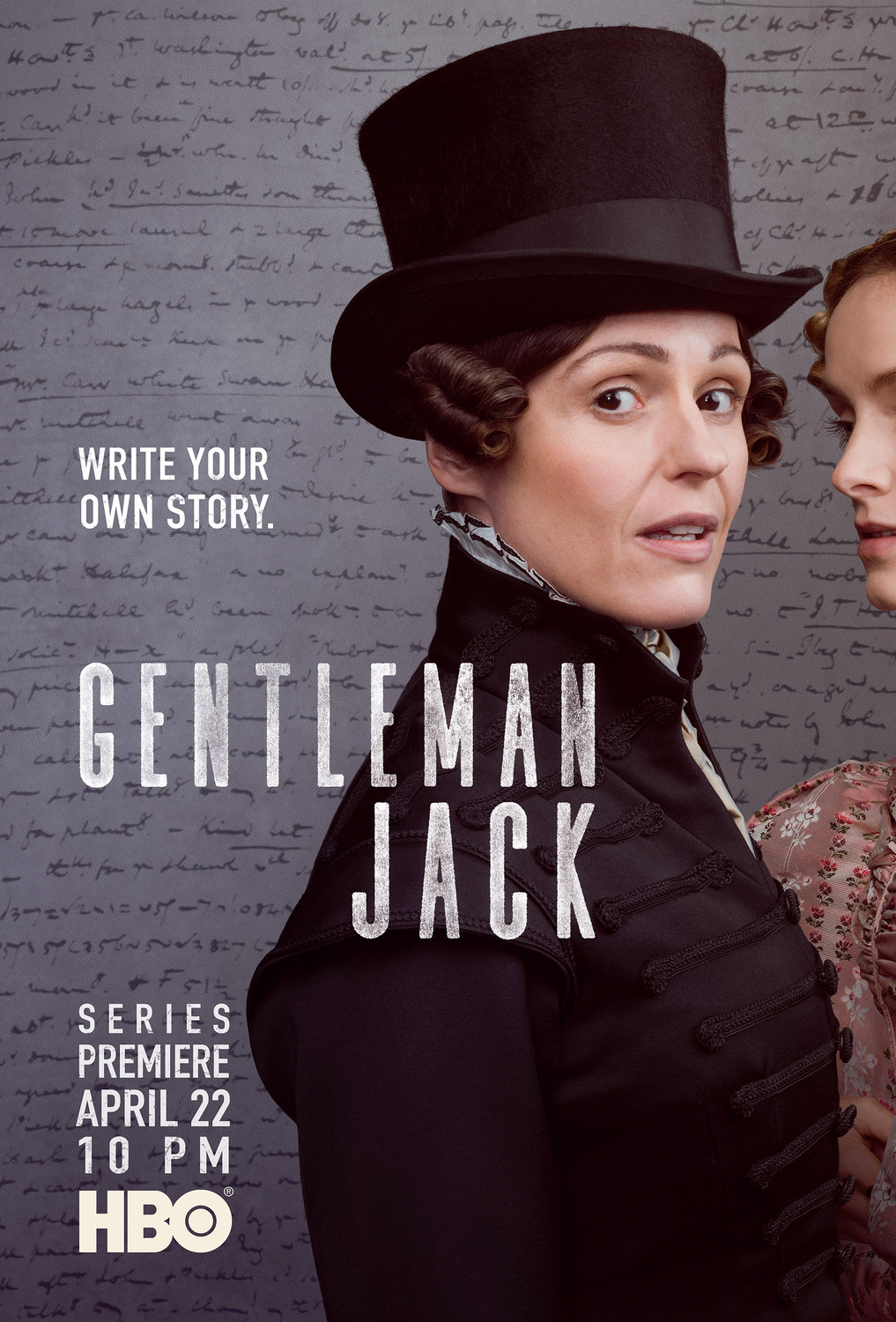
GentlemanJack-posterThis is another fascinating TV series that I am compelled to introduce to my readership. HBO has finally realized what PBS knew for a long time: well produced costume drama British TV series can be very popular in America too! They are now starting to co-produced Brit TV series in order to bring them over this side of the Atlantic, but their choice of titles is more edgy or controversial than what PBS is doing. And I am very grateful for that.

Gentleman Jack tells the story of Anne Lister, a landowner and industrialist from Halifax, West Yorkshire. She is known for being the first well-documented “modern lesbian”, as she left coded diaries chronicling in details her daily life, including her romantic relationships and the workings of her Shibden Hall estate and business. Set in 1832, the series mostly tells about her venture in coal mining and her relationship with Ann Walker. It started mainly for the challenge of the conquest and partly for financial interest, but she quickly becomes quite fond of the wealthy heiress. First, I was shocked by how she was planning to win her affection, but I quickly realized that if a man would have been doing the same thing it would have appeared totally normal! 

The acting is excellent (Lister is played by Suranne Jones and Walker by Sophie Rundle) and the story (created by Sally Wainwright) is well written and quite funny. The series is interesting not only because it displays the beautiful English countryside and makes us discover the eccentricity, boldness and modernity of Anne Lister, but above all because it opens a window on the way of life of the English country folks and small nobility at a time when everything is about the change. 

Gentleman Jack is an excellent historical drama that deserves your attention. It was well received by the critics (with ratings of 8.0 on IMDb and of 87% / 93% on Rotten Tomatoes). The first eight-episode season just ended, but it is still streaming on HBO. A second season has already been announced. I can’t wait to hear again the ending credits’ catchy tune by O’Hooley & Tidow!stars-4-0

To learn more about this title you can consult the following web sites:

[ GoogleHBOIMDbOfficialWikipedia ]

[ Traduire ]

Capsules

Chernobyl

Chernobyl_2019_MiniseriesI really must bring this TV mini-series to your attention. Chernobyl is a superb five-part historical TV drama co-produced by HBO and Sky UK. It is about the events that led to and the aftermath of the nuclear reactor disaster that occurred in north Ukraine on April 26th 1986. The story focuses mostly on the scientist Valery Legasov (played by Jared Harris) who is sent to the site of the disaster, along with the Council of Ministers’ deputy chairman Boris Shcherbina (played by Stellan Skarsgård), to assess the damage and oversee the cleanup effort. Legasov also ask his colleague Ulana Khomyuk to investigate the cause of the reactor explosion. 

The storytelling is surprisingly accurate (although a few facts were tweeked for dramatization purpose). It tells a dark, somber story but, on top of that, the ambiance of the show itself (the sets that look like you were really in the 80s soviet era, the solemn music, the slow pace of the show) create a dark, oppressive (almost horrific) feeling that is quite depressive. However, that’s what makes the show so spot on. 

The accuracy is such that even the selected actors looks like the part (although they are — and speak — mostly British English, but the acting is so good that you don’t really care). The only character that didn’t historically exist was Ulana Khomyuk (played by Emily Watson) which was created as a composite character representing all the scientists that worked along Valery Legasov. They even shot in Ukraine and Lithuania to get the soviet vibe of the location. The last episode concludes with a “where are they now”-style epilogue that explains what happened after and shows real footage of the characters and events (on a backdrop of gloomy Russian chorus). It is really chilling!

It is an incredible miniseries, very well crafted, visually stunning in how everything look so drab and grey, quite compelling and that rings so true. It shows the extent of the human stupidity and the deep flaws of the USSR society and political system. However, the message is also extremely pertinent for today as it poses the question “What is the cost of lies?” (in an obvious reference to the Trump White House)… A must see.

I am not the only one who greatly appreciated this series as it was very well received by the critics (ratings of 9.6 on IMDb and of 96% on Rotten Tomatoes). To learn more about this series you can check the accompanying podcast where screenwriter Craig Mazin discuss the production (available on Youtube, Spotify or Apple) and the series is still available for streaming on HBO.stars-4-5

To learn more about this title you can consult the following web sites:

[ GoogleHBOIMDbWikipedia ]

[ Traduire ]

Capsules

Vérité évidente en soi?

Une expérience récente m’a fait me questionner sur le racisme et la controverse du “racisme inversé.” Un collègue (d’origine haïtienne) me faisait remarquer que si un blanc dit “il y a trop de noirs ici” ce serait définitivement du racisme. Par contre, lorsqu’un noir dit “il y a trop de blancs ici” (ou similairement “il n’y a pas assez de noirs ici”) ce n’est pas considéré comme du racisme. Pourtant, me disait-il, c’est exactement la même situation (en miroir) et c’est donc dans les faits aussi du racisme. Ou plutôt, c’est ce que bien des gens considère comme du “racisme inversé.” Pourtant, on fait tout un plat en décriant ce concept, en affirmant fortement que le “racisme inversé” n’existe pas, que c’est un mythe.

J’ai beaucoup de difficulté à comprendre cette controverse car j’ai moi-même souvent eut l’impression de subir ce racisme inversé. Pour moi, quand on me fait sentir mal simplement parce que je suis blanc ou que l’on me traite de raciste — moi qui pourtant fait toujours beaucoup d’efforts pour traiter les gens équitablement (cela arrive surtout quand je critique ou fait un reproche à une personne qui passe devant moi dans une ligne d’attente ou qui ne respecte pas un règlement; C’est sans doute un mécanisme de défense quand ils sont pris en défaut, de tout de suite sortir la carte du racisme même si elle n’est pas justifiée). Je ne peux certainement pas comprendre toute l’horreur de subir le racisme (quoi que je vois et ressens ce que mon épouse expérimente parfois) mais je crois pouvoir en comprendre la frustration — ce n’est certes pas amusant de constamment subir l’oppression juste à cause de la couleur de sa peau (alors que pourtant on ne fait jamais de discrimination parce que les gens sont blonds ou roux ou qu’ils ont les yeux bleus ou de gros nez). 

Cela ne devrait pas exister et c’est exaspérant et enrageant de le subir. Ce n’est toutefois pas une raison de passer ses frustrations sur les autres qui eux ne vous ont jamais rien fait. Je comprend que l’oppressé puisse développer de la haine pour l’oppresseur mais si il projète cette haine avec violence (verbale ou physique) contre lui (ou toute autre personne qui lui ressemble sans nécessairement ÊTRE un oppresseur lui-même) cela en fait un acte tout aussi répréhensible, et l’oppressé sombre aussi bas dans l’abîme moral que l’oppresseur. Cela ne fait que renforcer le mépris ou la haine de l’oppresseur, ou de la faire naître chez celui qui, jusqu’alors, n’avait aucune raison de la ressentir. C’est ainsi que se perpétue la haine dans un cycle éternel et que le feu du racisme couve toujours quelques part. Il faut l’éteindre, l’éradiquer à tout jamais. Car, au bout du compte, il n’y aura toujours qu’une seule race d’hommes sur terre: la race humaine.

L’argument contre le “racisme inversé” est que c’est la défense des blancs pour justifier leur racisme. Ce serait l’invention du mouvement alt-right, des suprémacistes blancs et des opposants à la discrimination positive. Il n’en demeure pas moins que le “racisme inversé” est un fait — mais est-il aussi grave que le racisme? Le problème tient en fait à la définition que chacun donne au “racisme inversé” et même au racisme. Peut être que le gens ne parlent pas de la même chose… Si il n’y a pas de concensus (un example est la différence de définition du “racisme inversé” entre les pages française et anglaise de Wikipedia!), on s’entend généralement à définir le racisme comme étant une oppression et exploitation perpétrée par une race dominante contre un groupe minoritaire (par exemple l’esclavage). Les minorités raciales ou ethniques n’ayant pas le pouvoir économique et/ou politique de nuire aux intérêts de la majorité blanche, il ne peut donc pas y avoir de “racisme inversé”. Dans ce cas-ci, il serait donc plus juste de parler de préjudice racial ou de discrimination inversée. Ou alors si une personne a de la haine envers une autre personne parce qu’elle est différente, c’est de la xénophobie. Au delà de tout cet excès de “political correctness”, je crois que c’est jouer avec les mots. Dans l’esprit du commun des mortels, si tu haït l’autre parce qu’il est d’une race différente, c’est du racisme peu importe la race ou le statut sociale.

Sidebar: Qui a oppressé qui en premier?… On en revient à un paradoxe du type de l’oeuf et de la poule qui me rappel beaucoup mon propre questionnement sur l’origine de la souveraineté au Québec: le canadien-anglais hait-il le québécois parce qu’il est souverainiste? Ou le québécois hait-il l’anglais parce qu’il est oppressé? Et est-il souverainiste parce qu’il hait l’anglais qui lui tape dessus parce qu’il est souverainiste? Allez donc savoir où tout cela a commencé! Probablement parce que le québécois hait l’anglais qui l’a conquit et, après une tentative échouée de génocide culturel (lisez le rapport Durham), il l’a oppressé en le gardant longtemps peu éduqué et pauvre. L’anglais hait le québécois qui persiste à être différent (catholique et francophone) et rebel. Mon père, qui a beaucoup voyagé dans l’ouest canadien dans les années ’50 et ’60, a été témoin de cette haine des anglais (voitures avec des plaques d’immatriculation du Québec prisent pour cibles, travailleur québécois tabassés, etc.) et c’est ce qui l’a rendu souverainiste. Ce n’est sans doute pas par hasard que Vallières nous a appelé les “nègres” blancs d’Amérique… Enfin, je m’égare.

Je comprend parfaitement que ce serait une fausse équivalence de prendre la “discrimination” faite envers les blancs par les noirs et de la comparer avec tout l’historique du racisme que ceux-ci ont subi (particulièrement dans le cas des noirs américains et du lourd passé de l’esclavage). De la même manière, la “discrimination” qui m’est faite lorsque l’on me traite de raciste (et la tentative d’intimidation que cela représente) n’est AUCUNEMENT comparable à l’échelle de l’humiliation, de la frustration  et de l’oppression ressenti par la personne de couleurs qui subie le racisme. Toutefois, de mon point de vue, ce que je ressent est de l’oppression aussi — juste à plus petite échelle — et qui ne devrait pas être rendue triviale juste parce que je suis blanc. C’est un peu la faute des média qui ont perpétué le mythe du noir violent et criminel — d’où la réaction immanquable de la vieille dame qui resserre sa sacoche contre elle quand un jeune noir entre dans la pièce ou monte dans l’autobus. Un mythe qui est exploité tant d’un côté comme de l’autre pour générer la peur et un malaise sociale… Et bien sûr, indépendamment de son appartenance ethnique, c’est d’abord le caractère et l’éducation d’un individu qui le fait agir de façon stupide, irréfléchie ou inconsidérée.

Je trouve quand même au peu insignifiant tout ce pointage de doigts, ce “il a commencé en premier” et ce “il me hait plus que je le hait”. Cela en est presque enfantin. Le racisme, peu importe qui le commet, est un acte condamnable. En bout du compte, toute le monde devrait être respectueux envers l’autre — peu importe la couleur de sa peau ou sa culture d’origine. Point.

Note: Le titre de ce billet, “Self evident truth?”, fait référence à la Déclaration d’indépendance Américaine qui proclame “Nous soutenons que ces vérités vont de soi, que tous les hommes sont créés égaux.” C’est beau l’idéalisme…

(Mise à jour: 2019/03/10)

[ Translate ]

Electoral conundrum

On October 1st the population of Quebec will have to vote to put their favourite candidates in the National Assembly. I find myself in quite an electoral conundrum since the lack of leadership makes it impossible to find anyone worth of my support. Every party has good ideas, but also so many stupid ones. I began this reflection when my union started a campaign advocating not voting for either the Liberals or the CAQ because “they are all the same” and that “we deserve better”… But if not them, who?

Continue reading

In liberfacies

Against Facebook

I am really getting fed up with Facebook. It is an exceedingly time-consuming activity (chronophagios) that really gives little rewards — I means besides watching cat videos and stalking (um, I means, keeping in contact with) friends. More and more it has become the kingdom of fake news, as people constantly pass their expressed opinions as news (or as news-worthy).

Not only Facebook is doing very little to prevent foreign agencies to try to influence our minds through fake posting or advertising but, at the same time, they block legitimate ads from museums around the world because it is deemed offensive or subversive ! Incredible! How comes a bunch a geeks who know so little about the world become arbiters of morality and political decency ? They’re such a great influence over our minds (and our children’s minds) and yet, there is no one to oversee their policies? Inacceptable!

Of course, I would not be so inflamed by their ignominious policies if I would not have been touched personally by it. I am busy and I don’t have time to post on my blog, on Facebook, on Tweeter, on Instagram, etc. So I concentrate on what’s the most important to me (the medium that I can control the most) — my blog — and I just automatically repeat each (or most) post on the other social media to increase diffusion of my art and thoughts. However, a recent change in policies brought by Facebook is blocking this automatic reposting! What? They let the Russian pass through but they block my book reviews and cats’ pictures?! That’s unconscionable !

That I learned recently from a WordPress email:

“Starting August 1, 2018, third-party tools can no longer share posts automatically to Facebook Profiles. This includes Publicize, the WordPress.com tool that connects your site to major social media platforms (like Twitter, LinkedIn, and Facebook).”

They explain that if my content is linked to a Facebook Profile (a personal account), then Publicize will no longer be able to share my posts to Facebook, but it will still work if it’s a Facebook Page (public profiles allowing “artists, public figures, businesses, brands, organizations and nonprofits connect with their fans or customers”) that is connected to my site. I have only two options if I still want my Facebook followers to see my posts : create a link manually or convert my Facebook Profile to a Page ! They continue:

While Facebook says it is introducing this change to improve their platform and prevent the misuse of personal profiles, we believe that eliminating cross-posting from WordPress is another step back in Facebook’s support of the open web, especially since it affects people’s ability to interact with their network (unless they’re willing to pay for visibility) We know that this might cause a disruption in the way you and your Facebook followers interact, and if you’d like to share your concerns with Facebook, we urge you to head to their Help Community to speak out.

Damn you Facebook! Improving your platform? You means improving your profits by making changes that would favour the commercial use of your application! What about the users, the people who made your product famous (and create its value) ? Oh, yes, that’s true: since we know that WE are your product it is getting more difficult to fleece us, so you reorient your business model!

So, if you were wondering why I am posting very little on Facebook lately, well, that’s the reason. Now, I will probably share my posts manually for a while (for the most important entries) and maybe consider to eventually create a Page, but I am also quite seriously considering withdrawing completely from Facebook…

What do you think about that? (please comment)

And don’t hesitate to let Facebook know what I think of their stupid policies!

(note: the title is in latin)

[ Traduire ]

American Made

AmericanMade-poster

Poster art

This movie is presented as a biopic but it’s really just “inspired” by the life of Barry Seal. It’s nevertheless enjoyable to see Tom Cruise play in a comedy — although this story should really be a tragedy since it’s about how Reagan’s government was trying to prevent communism to prevail in Central America by arming the Nicaraguan Contras against the Sandinistas using drug smugglers. It doesn’t end well for Seal but the light tone of the movie makes the heavy subject entertaining enough to be enjoyable — while we should have been puking in disgust instead… stars-2-5


[ AmazonBiblioGoogleIMdBWikipediaYoutube ]

[ Traduire ]Capsules